
Sports
Sri Lanka to mend fences with veterans

by Rex Clementine
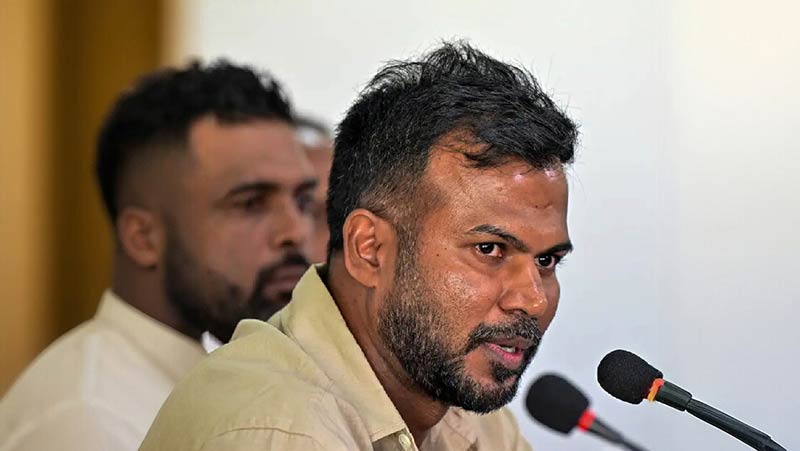
In recent years, Sri Lanka Cricket has wielded the axe on senior players with an almost clinical ruthlessness, but the tide seems to be turning. Current Chairman of Selectors, Upul Tharanga, has hinted at a more measured and amicable approach, emphasizing dialogue and mutual understanding with the seasoned campaigners before making any decisive moves.
Last month, Sri Lanka embarked on a tour of South Africa sitting pretty in third place on the World Test Championship (WTC) table, with a golden ticket to the final at Lord’s next June tantalizingly within reach. But the tour ended in a crushing 2-0 series loss, punctuated by an ignominious collapse in Durban, where the team was skittled out for a paltry 42 runs in just 14 overs—their lowest total in Test cricket history.
The fallout from the debacle turned the spotlight on former captains Dimuth Karunaratne and Angelo Mathews. Mathews scratched together 102 runs in four innings without a single half-century, while Karunaratne fared even worse, amassing a dismal 27 runs and falling to Kagiso Rabada in all four innings—a true case of a rabbit caught in the headlights.
At 36, Karunaratne’s form has been on the wane, with a barren streak stretching to 19 innings without a century this year. Mathews, a year older at 37, has managed just one hundred in 18 innings. Yet, their illustrious careers speak volumes: Mathews’ 8042 Test runs place him third among Sri Lanka’s all-time leading scorers, while Karunaratne’s 7165 runs earn him the fourth spot.
With Sri Lanka’s WTC hopes now hanging by a thread, some voices argue it’s time to turn the page and invest in youth to lay the foundation for the next WTC cycle.
“We’ll have a conversation with them to understand their future plans,” Tharanga said. “Yes, it’s a home series, which presents a great opportunity to blood young talent. But at the same time, Dimuth and Angelo are seasoned campaigners who’ve been pivotal for us over the years.”
Both Tests against Australia are slated for Galle, a venue where the duo have a stellar track record. Tharanga believes their experience could still tip the scales. “Even though our position in the WTC isn’t ideal, there’s the motivation to reclaim the Warne–Murali Trophy. Both players bring a wealth of experience and can still contribute.”
Tharanga also pointed out that Karunaratne is on the brink of a major milestone: 100 Test matches. “Dimuth has been a true servant of Sri Lankan cricket, and reaching 100 Tests is a rare feat. It’s only fair to give him the chance to achieve that landmark.”
When Tharanga took the reins this year, Sri Lanka Cricket was in shambles. The team had hit rock bottom, finishing the 2023 World Cup in ninth place and missing out on the Champions Trophy for the first time in history. It was a bitter pill to swallow for a nation that had been part of every ICC tournament since 1975.
But with meticulous planning and backing the right players, Tharanga and his panel have sparked a remarkable turnaround. In 2024, Sri Lanka notched up wins over heavyweights New Zealand and West Indies in white-ball cricket, broke a 27-year drought by winning an ODI series against India, and secured a rare Test victory in England after a decade.
“We’re pleased with the strides we’ve made,” Tharanga reflected. “We’ve had to make some tough calls, but it’s rewarding to see the batters stepping up to finish games and the bowlers improving their fitness, which has been instrumental in winning matches. Fielding, too, has seen a marked improvement. That said, we could’ve done better in the T20 World Cup in the USA, and missing out on a WTC final spot stings, especially after the South Africa tour.”
One of Tharanga’s boldest moves was backing Kamindu Mendis. The left-hander has been nothing short of sensational, becoming one of only six players to cross the 1000-run mark in Tests this year. In the process, he matched the legendary Don Bradman as the third-fastest batter to reach the milestone.
“That was a calculated gamble that paid off,” Tharanga admitted. “We were leaning heavily on Sadeera Samarawickrama, but a few wicketkeeping issues forced us to rethink. Kamindu’s consistency across all three formats caught our eye, and he grabbed the opportunity with both hands. His performances in Tests have been extraordinary this year. In white-ball cricket, he has room to grow, and his bowling – both off-spin and left-arm orthodox – adds crucial balance to the side.”
While Sri Lanka have shored up their performances at home, the real test lies overseas. The upcoming tour of New Zealand looms large, presenting a chance to prove they can win in foreign conditions.
“We’ve laid a solid foundation, but the journey is far from over,” Tharanga said. “Winning overseas is the next frontier, and we’re determined to take that challenge head-on.”
Courtesy: telecomasia.net







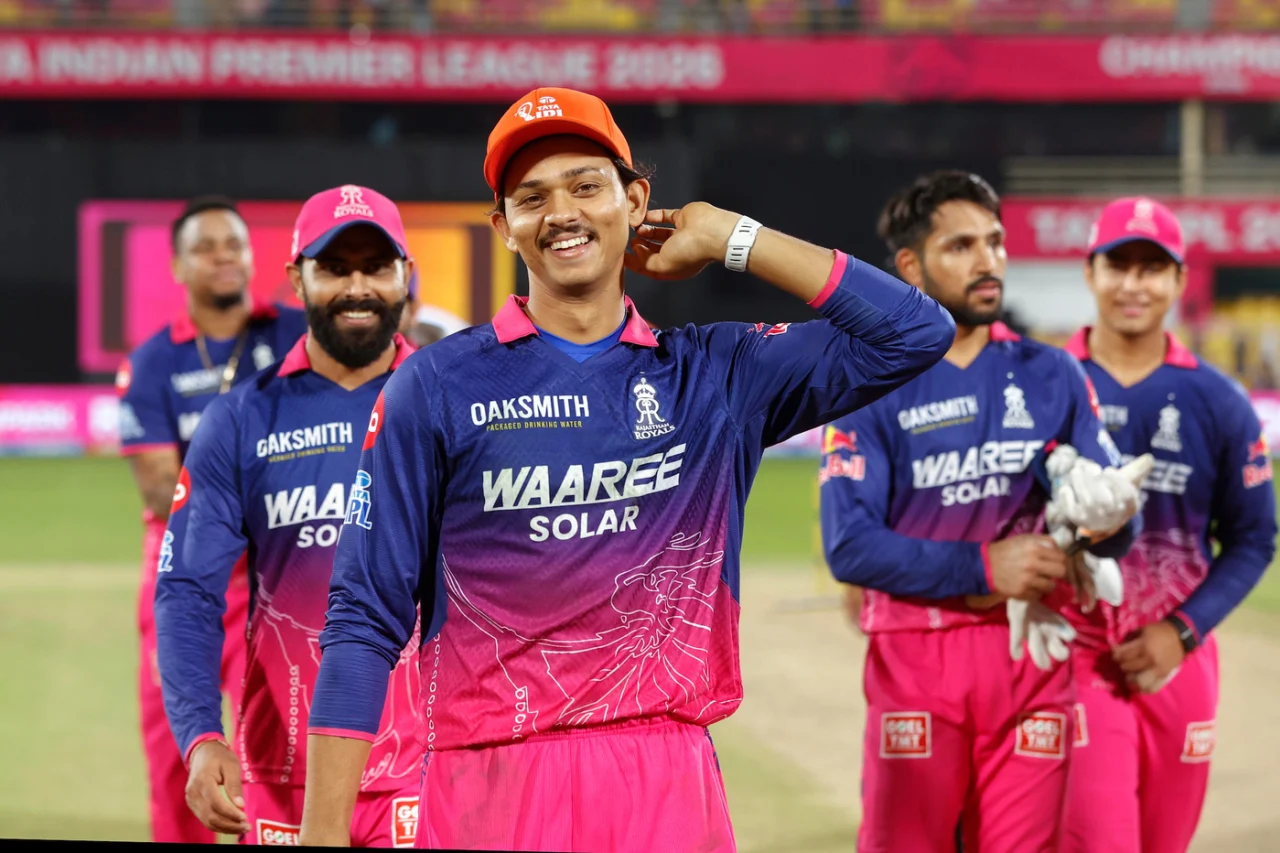
Heavy rain in Guwahati delayed the start of the match between Rajasthan Royals (RR) and Mumbai Indians (MI) by more than two and a half hours. And when play finally began at 10.10 pm, there was another storm awaiting MI.
RR’s openers Yashasvi Jaiswal and Vaibhav Sooriyavanshi ransacked 80 runs in five overs. Sooryavanshi was eventually dismissed for 39 off 14, but Jaiswal rampaged unbeaten through the 11-over innings, scoring 77 off 32 to power RR to 150 for 3.
In reply, MI lost three wickets inside the powerplay, which was reduced to 3.2 overs, and were eventually restricted to 123 for 9. Jofra Archer had provided the first breakthrough, and Sandeep Sharma, Nandre Burger and Ravi Bishnoi picked up two wickets apiece. RR moved to the top of the points table with three wins in three games, while MI suffered their second successive defeat.
Sooryavanshi and Jaiswal don’t need to be told to be aggressive, and that natural instinct was heightened in a rain-shortened contest. If there was any moisture in the pitch due to the weather, there was no evidence of it in the powerplay. MI chose to give the first over not to Trent Boult but to Deepak Chahar and Jaiswal tore into him: 4, 6, 4, 0, 4, 4.
Then came the highly-anticipated battle: 15-year old Vaibhav Sooryavanshi facing Jasprit Bumrah for the first time in his fledgling career. How would he approach one of the greatest bowlers in the game? Bumrah’s first ball was a slot ball. Sooryavanshi played the delivery and not the deliverer, and smashed it over the long-on boundary. The strike rotated back to him over the next two balls, and when Bumrah tested him with an off-pace delivery, Sooryavanshi swivelled and pulled him for another six over deep backward square leg. Round one – 13 off 5 balls – to Sooryavanshi.
Boult came on for the third over and Jaiswal cleared the deep square leg boundary twice and Sooryavanshi once, and by the time the 20-ball powerplay was finished, RR were 59 for 0.
Jaiswal is usually boom or bust against MI. Before this match, he had two centuries and five scores of less than 15 in eight innings against them. On Tuesday, he went boom again, smashing four fours and three sixes in his first nine deliveries. He got to fifty off 23 balls by cracking Hardik Pandya through point.
Sooryavanshi fell to the golden arm of Shardul Thakur, Dhruv Jurel and Riyan Parag fell to the mystery spin of AM Ghazanfar, but Jaiswal didn’t stop. He clobbered Bumrah for a straight six and picked three fours off Shardul in the final over to take RR to 150.
Like they had with the ball, MI suffered 20 balls of powerplay mayhem with the bat. Facing an asking rate of nearly 14, Ryan Rickelton swung Jofra Archer for six over deep midwicket but then top-edged another pull and was caught by Jurel running back. Suryakumar Yadav paddled Nandre Burger for the flattest of sixes over fine leg but was deceived by a hard-length offcutter and caught at deep backward square a ball later. Rohit was pinned lbw for the sixth time in 13 IPL innings by Sandeep. While RR’s powerplay score was 59 for 0; MI responded with 29 for 3.
The pitch had become a little tacky as the match progressed and the RR quicks adapted by using their cutters to good effect. Legspinner Ravi Bishnoi extended his lead at the top of the Purple Cap charts by dismissing Hardik and Tilak Varma in his first over, reducing MI to 46 for 5 after five overs. He should have had a third in his next over, when Sherfane Rutherford miscued to long-on but Jaiswal dropped the chance.
With the required rate soaring to past 17 an over, Naman Dhir and Rutherford tried to revive the chase with a partnership of 47 in 17 balls. But any slim hope MI may have had was extinguished when Sandeep dived forward at short third to take a low catch to end Rutherford’s innings. Burger, Sandeep and Archer closed out the innings to seal RR’s victory by 27 runs.
Brief scores: [11 overs per team]
Rajasthan Royals 150 for 3 in 11 overs (Yashasvi Jaiswal 77*, Vaibhav Sooryavanshi 39, Riyan Parag 20; Shardul Thakur 1-36, AM Ghazanfar 2-21) beat Mumbai Indians 123 for 9 in 11 overs (Tilak Varma 14, Sherfane Rutherford 25, Naman Dhir 25; Jofra Archer 1-17, Nandre Burger 2-21, Sandeep Sharma 2-26, Tushar Deshpande 1-29, Ravi Bishnoi 2-25) by 27 runs
[Cricinfo]

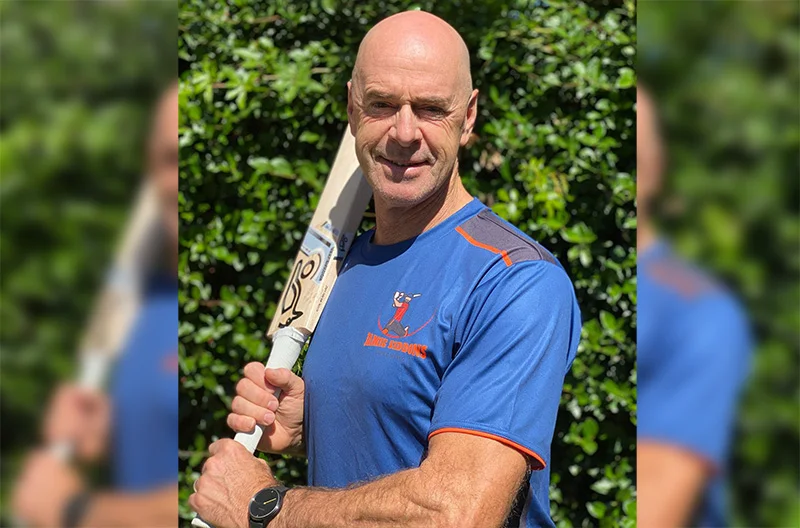
Sri Lanka have turned to seasoned Australian campaigner Jammie Siddons to steady the ship and sharpen their edge, with the new women’s head coach making it clear that toppling heavyweights, not merely making up the numbers, will be the name of the game.
Siddons, a well-travelled coach with miles on the clock, has set his sights firmly on the upcoming Women’s World Cup in England, where Sri Lanka will open proceedings against the hosts at Edgbaston in June. It’s a baptism by fire, England in their own backyard, but the message from the dressing room is simple: try and beat top teams regularly.
Drawn alongside England, West Indies, New Zealand, Ireland and Scotland in a six-team group, Sri Lanka know there’s little room for passengers. It’s sink or swim.
“The World Cup is our big focus and we’ve got some tough games coming up,” Siddons told reporters on the sidelines of a floodlit training session at the CCC. “England at home will be a hard nut to crack. West Indies and New Zealand are quality sides as well.”
Before the main event, Sri Lanka will have a dress rehearsal in Bangladesh, a chance to blood fresh faces.
“We’re heading to Bangladesh before the World Cup and that gives us an opportunity to look at some of the new players coming through,” Siddons added, casting an eye on the next crop.
Sri Lanka’s women have made steady strides over the past two years under Rumesh Rathnayake, but as any seasoned observer will tell you, fine margins often decide games at this level and there are still a few loose ends to tie up.
Fielding, particularly in the deep, has been their Achilles’ heel. Dropped catches have cost them dear, while a lack of firepower with the bat has meant they’ve often been caught playing catch-up against the game’s heavyweights; Australia, England and India.
“From a bowling perspective, we need a few more tricks in the bag. The girls have to develop variations, slower balls, cutters and cut down the boundaries. That’s something we’ve been working on,” he said, underlining the need to outthink rather than outmuscle opponents.
For years, Sri Lanka have leaned heavily on the broad shoulders of Chamari Atapattu, their talisman, their match-winner, their go-to player when the chips are down. Siddons knows that while Chamari remains the crown jewel, cricket is no one-woman show.
“She’s our major player and we’ve depended a lot on her,” he admitted. “But we need a few more to put their hands up. Chamari still has plenty to offer.”
Encouragingly, Siddons has already spotted bright talents in the pace department, a rare commodity in the women’s game in Sri Lanka.
“I’ve seen a couple of very exciting fast bowling talents who haven’t played much yet. They could be key for us,” he said, hinting at new-ball options that could ruffle a few feathers.
Off the field, Sri Lanka Cricket has invested heavily over the last five years, the board has cast the net wide taking the game to schools, strengthening domestic competitions and ensuring a steady pipeline of talent.
There has been no shortage of cricket either, with bilateral series home and away giving players valuable time in the middle. The Under-19 side is currently cutting its teeth in Australia, while development squads are being kept busy with regular tours and fixtures.
Central contracts and match fees are now part of the furniture, a far cry from the hand-to-mouth existence of yesteryear, though there remains room for improvement.
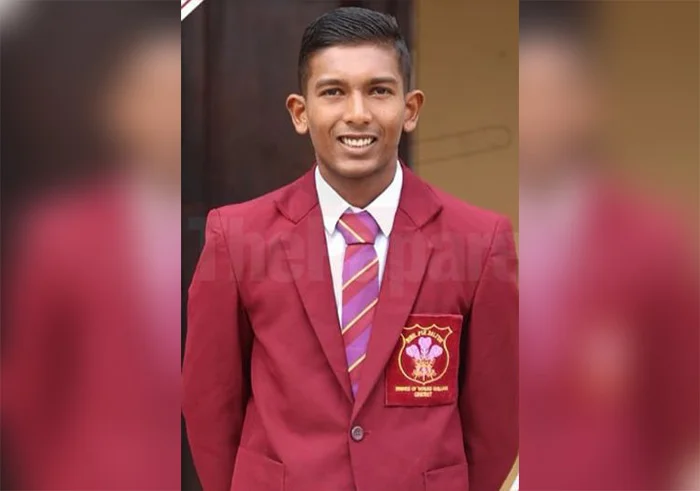
An absorbing contest is on the cards during the morning session on the final day as the next 28 overs are likely to decide the finalist from the first semi final of the Under 19 Division I Tier ‘A’ tournament between St. Joseph’s College and Prince of Wales College at the D.H.H. Ground, Madampella today.
The semi-final moved towards a tense first innings finish after Prince of Wales reached 242 for five at stumps on the second day in reply to St. Joseph’s commanding first innings total of 354.
Open batsman Thusindu Deemantha played a remarkable innings of patience and determination, remaining unbeaten on 102 to keep the Cambrians’ hopes alive. His knock clearly reflected Prince of Wales’ strategy of batting for first innings points against the strong Darley Road outfit.
Deemantha displayed admirable grit to anchor the innings, facing as many as 248 deliveries during his stay at the crease. His unbeaten century included eight boundaries and he is set to resume his innings for a third consecutive day today after having first walked in to bat on Monday evening.
From the outset it was evident that Prince of Wales were aiming to stretch their innings as long as possible in pursuit of first innings advantage. According to tournament regulations, the first innings is restricted to 120 overs and the Cambrians now have 28 overs remaining to surpass the Josephian total.
St. Joseph’s bowlers will be eager to make early breakthroughs and expose the lower order to their formidable spin trio of Vigneswaran Akash, Vishwa Peiris and Nushan Perera. The three spinners dominated proceedings on the second day, accounting for 76 of the 92 overs bowled to Prince of Wales.
While Nushan Perera and Vishwa Peiris maintained tight control with economy rates below 2.5 runs per over, Akash bowled his 20 overs for just over three runs an over. Peiris was the most successful among them with two wickets.
For Prince of Wales, Oshan Maneesha contributed a valuable 38 runs while Gavesha Fernando played an important supporting role. Fernando joined Deemantha in a crucial 108-run fourth wicket partnership that steadied the innings and carried the Cambrians closer to the Josephian total.
With Deemantha firmly set at the crease and the Cambrians still needing to close the gap, the opening session today promises a gripping battle as both teams fight for a place in the final. (RF)

Trump announces two-week ceasefire as Iran agrees to reopen Hormuz Strait

Yashasvi Jaiswal powers Royals past Mumbai Indians in 11-over thrash

Showers will occur at several places in the Western, Sabaragamuwa, Southern and North-western provinces and in Kandy, Nuwara-Eliya and Monaragala districts after 1.00 p.m.

The Sun is directly overhead Warakapola, Aranayaka, Gampola, Bibile, Inginiyagala, and Akkaraipattu at about 12:12 noon today (08)

AKD admits import of substandard coal, blames technicalities and supplier

‘Sri Lanka – China relations: Community with a Shared Future’ launched

‘Dates have the highest sugar content to fight Coronavirus’

Sunday Island 27 December – Headlines

#SundayIsland 17th December – Headlines

Sunday Island – 28th March

Sunday Island Headlines – 21 March

Sunday Island – 21st February – Headlines
-

 Features4 days ago
Ranjith Siyambalapitiya turns custodian of a rare living collection
-

 News7 days ago
2025 GCE AL: 62% qualify for Uni entrance; results of 111 suspended
-

 News4 days ago
Global ‘Walk for Peace’ to be held in Lanka
-

 Editorial7 days ago
Search for Easter Sunday terror mastermind
-

 News2 days ago
Lankan-origin actress Subashini found dead in India
-

 Opinion6 days ago
Hidden truth of Sri Lanka’s debt story: The untold narrative behind the report
-

 Opinion7 days ago
Is there hope for Palestine?
-

 Features4 days ago
Beyond the Blue Skies: A Tribute to Captain Elmo Jayawardena