
Sports
Sri Lanka record second win in Masters Hockey World Cup History

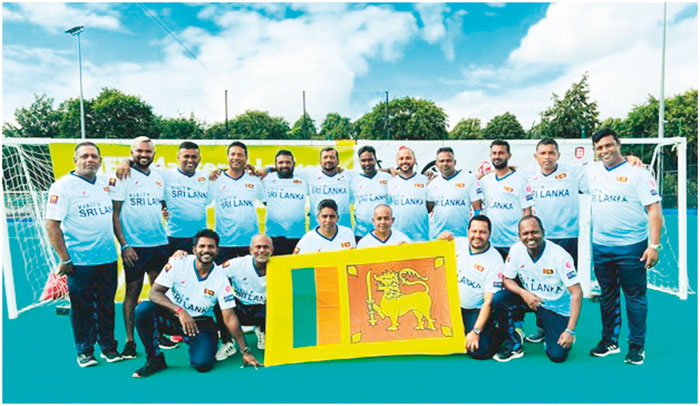
Sri Lanka Masters over 40 hockey team recorded its second win in the Masters World Cup history when they beat Italy 4-3 in the ranking games at the sport’s prestigious veteran tournament held in Nottingham, England.
Sri Lanka’s over 40 team, which lost all six round-robin matches against the World’s top European veteran hockey teams by big margins in Group A, put its house in order to win the crucial match in the 14-nation tournament.
Italy also lost all six group matches by margins less than that of Sri Lanka’s in Group B.
The match was crucial for the both teams to avoid being ranked at the last position in this year’s Masters World Cup.
The game was evenly poised, but Sri Lanka took the lead at the 11th minute when Sampath Subasinghe scored the first goal to a rebound for a penalty corner hit by vice-captain and Sri Lanka’s center forward Nadith Kudagama.
Duncan Devendra scored the second goal via a penalty stroke at the 17th minute and made it 2-0.
However, Italy fought back with Andrea Graziano scoring a field goal. Later, Sri Lanka defender Sanjay Edgar scored the third goal just before the half time to end the first half 3-1.
Italy fought back hard in the second half producing nail-biting moments. The European team, which beat Sri Lanka in the last 2018 Masters’ World Cup 2-1, scored at the 51st minute, snatching Sri Lanka’s weakly defended moment with Malluzzo Michele scoring a field goal.
However, an excellent forward combination of Nadith Kudagama, Mahesh Matiwala, and Duncan Devendra breached through the Italian defence and scored Sri Lanka’s fourth goal at the 60th minute of the game. Devendra netted the ball to score his fourth goal in the 2022 World Cup.
Italy skipper Alessandro Onano scored their third goal at the 67th minute of the game via a field goal and reduced the margin to 4-3. Sri Lanka saw some nervous moments in the last three minutes as Italy forwards breached Sri Lankan’s defence many times, but they held steady to finish the game in their favour to be ranked 13th in the 14-nation World Cup.
Sri Lanka was ranked 14th in the last World Cup held in Barcelona, Spain in 2018, which saw the participation of 15 nations.
It was Sri Lanka over 40 team’s second win at the Masters’ World Cup history. They recorded the first win against Denmark 2-1 in Spain, when they played the debut World Cup.
The men team’s main sponsor was Sri Lanka Tourism Promotion Bureau and co-sponsor was Nippon Paint Lanka (Pvt) Ltd, while Sri Lankan Airlines was the official airline partner for the team.
The team, which was in the toughest group, lost to Germany by 11-0 in the first game, but fought back well against the mighty France to minimize the margin of loss by 5-1 goals. However, it saw four disastrous defeats from then onwards, losing to the hosts England by 12-0, Wales by 12-1, Ireland by 16-0, and South Africa by 15-0.
All the teams in the A group in which Sri Lanka’s over 40 team was included, won the game against equal ranked team in the B group. It partly explains Sri Lanka’s defeat in the round robin matches amid injuries for four players while both the coach and team manager were also forced to play due to visa rejections for at least three players. The team had only 16 14 players excluding the coach and manager instead of 18.
Over 35 Men’s and over 40 Women’s Sri Lanka teams failed to impress in this year’s World Cup.
The over 35 Men’s team was ranked last among the 10 nations participated in the World Cup after it lost the ranking game against Wales by 0-11. In the group games, they lost the games against Spain 9-0, England 15-0, Ghana 11-1, and South Africa 18-0. The only goal for the team against Ghana was scored by Rasiah Sathya.
The over 35 men’s team also comprised only 15 players instead of full 18 players.
Sri Lanka’s women’s team, led by Manoji Pradeepika Koralage, competed in over 40-category and had a similar experience suffering a massive 22-0 defeat at the hands of England.
The women’ team also lacked key players due to visa rejections. They lost the first game against Ghana 5-0 followed by losses to USA 9-0, Germany by 15-0, Scotland 11-0 and England 22-0. They also lost their ranking game against Spain 13-0.
The hosts England won all age category finals, while Ireland (0ver 35 women), South Africa (Over 35 men), Argentina (Over 45 women), and Australia (Over 45 men) became the runners up in the 10-day tournament which saw the participation of a total of 19 countries in different age categories.

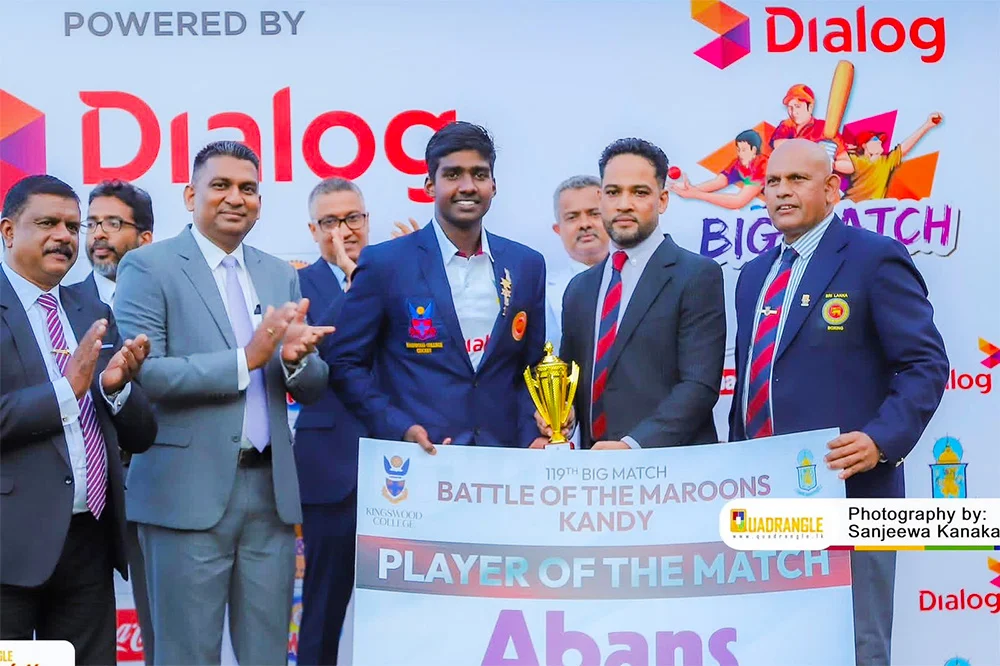
Kingswood College are riding high on confidence after ending a decades-long wait for victory against arch rivals Dharmaraja in their annual Big Match, but the Kandy school has little time to celebrate as they now shift focus towards securing promotion to Division I in the Under-19 Schools Cricket tournament.
Following their historic triumph on Sunday, Kingswood will next compete in the knockout stage of the Division II Tier ‘A’ competition. Victories in both the quarter-final and semi-final will secure the much-anticipated promotion to the Division I of the premier Under-19 cricket tournament.
Kingswood had spent several seasons in Division II before coming under the guidance of coach Susantha Basnayaka. Their steady progress over the last few years saw them reach the final of the Division II Tier B tournament last season, which earned them promotion to the Tier ‘A’ segment. That gradual development has now placed them on the brink of Division I status.
The school has also gained recognition for producing players capable of performing at the national junior level. One such product is Kavija Gamage, who represented Sri Lanka at the last ICC Under-19 Youth World Cup.
Gamage delivered a remarkable all-round performance to lead Kingswood’s historic win — their first Big Match victory over Dharmaraja in more than 60 years — and was undoubtedly the standout performer of the contest.
No player in the big match season had dominated a game as comprehensively as Gamage, whose contributions with both bat and ball helped Kingswood punch above their weight against a side competing in a higher division.
Despite Kingswood’s growing strength, Dharmaraja entered the encounter as favourites, having held the Big Match trophy for an unprecedented 68 years.
Gamage’s influence was felt from the very first innings. Batting on a difficult surface, he produced a superb knock of 112 — the only score above 20 in the Kingswood innings. His 149-ball effort included 13 fours and two sixes as Kingswood struggled against the bowling of Sasith Bandara (5/80), Sumeda Prasad (2/37) and Keshan Gunawardhana (3/53).
Coach Basnayaka later described the innings as the turning point of the match.
”The century in the first innings was the turning point. We were six wickets down for 99 runs at one stage. Kavija’s century helped us recover and post a formidable total on a difficult wicket,” Basnayaka told The Island.
In the second innings, Kingswood adopted a more aggressive approach as they aimed to accelerate the scoring before declaring. Gamage once again rose to the occasion.
”Our plan was to score as much as possible in the first 15 overs in the morning and declare. Kavija was in his 90s at the end of those overs and we decided to declare after he reached the century,” Basnayaka explained.
Opening batsman Aadhel Sheriff provided excellent support during that phase. Sheriff — the team’s leading run scorer of the season with more than 700 runs — shared a valuable 70-run stand with Gamage for the third wicket.
Gamage went on to complete his second century of the match with an unbeaten 100 off just 80 deliveries, striking six fours and five sixes as Kingswood declared soon afterwards.
Dharmaraja, chasing the target, were eventually bowled out for 166. Spinner Kenula Pihilianga delivered a match-winning spell to claim a remarkable match haul of 11 wickets, while Gamage capped off his outstanding performance by finishing with eight wickets in the match.
While Kingswood now look ahead to the possibility of earning promotion to Division I, Dharmaraja face a contrasting challenge. They currently sit at the bottom of their Division I Tier ‘B’ group and are battling to avoid relegation.
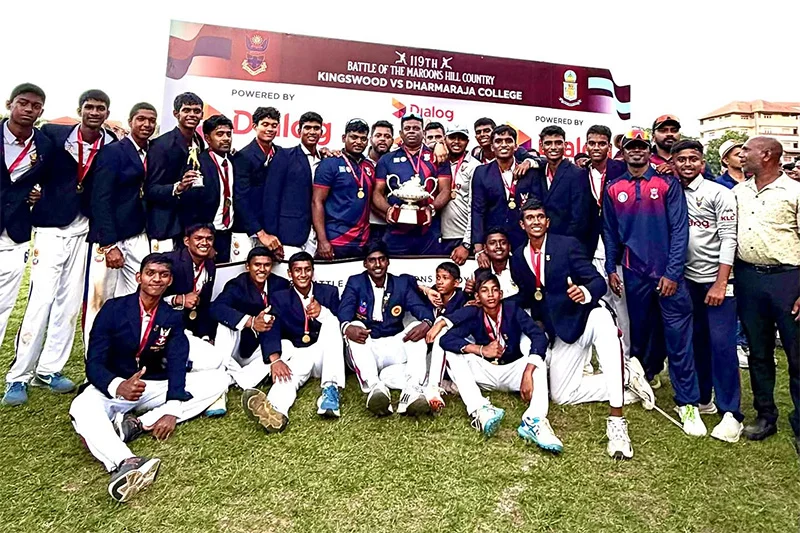
Kingswood team celebrate after recording a historic victory. Coach Susantha Basnayaka is seen in the centre with the trophy.
by Reemus Fernando
Sports
JF&I Packaging, Stafford Motors, Home Lands, Acuity Analytics, Maliban Biscuits, CDB and LOLC Insurance register wins on Saturday

15TH STAFFORD MOTORS – MCA G DIVISION T20 LEAGUE CRICKET TOURNAMENT
JF&I Packaging, Stafford Motors, Home Lands, Acuity Analytics, Maliban Biscuits, CDB and LOLC Insurance registered wins in the league stage matches of the Stafford Motors – MCA G division cricket tournament continued on Saturday [20].
At the D S Senanayake grounds on Saturday morning JF&I Packaging anchored by two half tons from Chamath Yatawara and Dinesh Viswajith, overcame CIC Holdings by seven wickets. In the afternoon game, Stafford Motors [the sponsors of the tournament]defeated Coats Thread by 96 runs. Gajindu Yasas smashed 77 runs in 38 balls which included a dozen boundaries and two sixes for the victors.
At the Nalanda College grounds, Thevindu Senarathne made a quick fire unbeaten 91 off 42 balls with five fours and nine towering sixes to help Home Lands win the game with five wickets in hand an 10 balls to spare.Yohan Ravishka scored 55 off 33 balls for Allianz Insurance. In the afternoon game Prabath de Silva [56*] and Nadeera Ranathunga [34] puton a 91 run stand for the first wicket to help Acuity Analytics register their first win in four outings
At the University of Colombo grounds Mohamed Shilmi smashed an unbeaten 101 off 64 balls with a dozen boundaries and two sixes for Maliban Biscuits and followed it up with a four wicket haul [4-15] to see his team win by 136 runs. In the afternoon game Isuru Jayaranga smashed 0 runs off 51 balls to help CDB ‘B’ overcome WSO2 by seven wickets with two overs to spare.
In the only game played at Dharmapala College ground on Saturday, Malith de Silva scored 53 runs to help LOLC Insurance post 128/5 against MAS Active Kreeda, which their bowlers defended successfully.
Scores:
At D S Senanayake Grounds
JF&I Packaging by 7 wickets
CIC Holdings
154/7 in 20 overs [Eranga Madushan 19, Achala Jayalath 59, Tharaka Jayarathna 12, Anushan Bandara 32, Shehan Jayasinghe 16*; Dihan Darshan 2-21, Chamath Yatawara 2-11, Dinesh Vishwajith 1-29, Gayan Hasanka 1-20]
JF&I Packaging
155/3 in 19.1 overs [Chamath Yatawara 57, Dhanushka Kevitiyagala 12, Dinesh Viswajith 54, Sarinda Malavige 13*, Gayan Hasanka 11*]
Stafford Motors by 96 runs
Stafford Motors
214/7 in 20 overs [Gajindu Yasas 77, Vihanga Malith 14, Shanaka Sampath 46, Sanjaya Fernando 39, Vuishwa Rajapaksha 15; Thusha Malintha 2-24, Arun Nagalingam 2-34, Thilina Gunathilaka 1-60, Heshan Madushanka 1-36]
Coats Thread Exports
118/8 in 20 overs [Duminda de Costa 42, Heshan Madushanka 11, Naveen Pradeep 12,Thushan Malintha 13; Janith Maduwantha 1-22, Shanaka Sampah 2-10, Dammika Kumara 1-18, Venura Nisalitha 1-06, Sajeewa Vishan 1-10, Ravindralal Wimalasena 1-06]
At Nalanda College Grounds:
Home Lands by five wickets
Allianz Insurance
162/10 in 18.4 overs [Yohan Ravishka 55, Charinda Fernando 26, Ranga Dias 35, Dinesh Ranathnga 18; Sanura Dias 2-34, Umesh Lakshan 1-21, Thiwanka Ginige 3-21, Suranga Gamage 2-48, Reshan Basnayake 2-18]
Home Lands
168/5 in 18.2 overs [Suranga Gamage 13, Thevindu Senarathne 91*, Sehan Herath 26, Prasad Karunarathne 25*; Mayura Ranasinghe 1-35, Charinda Fernando 1-27, Ranga Dias 1-18, Sameera Fernando 1-32]
Acuity Analytics by nine wickets
99X
112/10 in 18.5 overs [Yasith Fernando 18, Kirulu Samarakoon 22, Saranga Liyanage 20, Prasanna Lakmal 24*; Prabath de Silva 3-21, Mihindu Samarasinghe 2—14. Maheshwarn Vinthakaran 1-10, Kasun Hettige 3-08, Hamdhan Othman 1-06]
Acuity Analytics
114/1 in 9.4 overs [Prabath de Silva 56*, Nadeera Ranathunga 34; Ishrath Raji 1-24]
At University of Colombo:
Mohamed Shilmi stars with bat and ball in Maliban Biscuits’ 136 run win
Maliban Biscuits ‘B’
229/4 in 20 overs [Tharinda Siriwardena 15, Mohamed Shilmi 101*, Manchuka Nadun Kumara 67, Anjula Perera 12; Tharindu Almeida 1-15, Nisal Perera 2-32]
Jetwing Travels
93/10 in 17.5 overs [Ranusha Pigera 11, Budhdhika Chathuranga 10, Dinuka Peiris 18, Ashan Wijerathne 16*; Chamara Rathnayake 1-18, Dilip Sandaruwan 2-20, Chathuranga Dewapriya 2-22, Mohamed Shilmi 4-15, Dilan Chathuranga Alwis 1-14]
CDB ‘B’ by seven wickets
WSO2 151/7 in 20 overs [Isuru Ruhunage 44, Osanda Herath 52, Dev Wijewardena 30*; Vishwa Dhananjaya 2-07, Praveen Abeysinghe 1-27, Chamod Madushan 1-27, Dasun Senevirathne 2-14]
CDB ‘B’
152/3 in 18.0 overs [Chathuranga Dikkumbura 40, Isuru Jayaranga 70, Themira Niyomal 15*, Dhanushka Dharmasiri 10, Chamathkar Namith 12*; Rakitha Rupasinghe 1-21, Dimuthu Madushan 2-26]
At Dharmapala College Grounds;
LOLC Insurance by 10 runs
LOLC Insurance
128/5 in 20 overs [Malith de Alwis 53, Asanka de Silva 20, Hashan Shalinda 29*, Chamara Thennakon 11*; Pasindu Wijesinghe 1-23, Anju Amaradasa 1-25, Muruganravi Muralitharan 1-14, Chamath Sumithraarachchi 1-16]
MAS Active Kreeda
118/8 in 20 overs [Adeesha Miyusara 12, Anju Amaradasa 50, Subuthi Ranathunga 18; Chamara Thennakon 2-26, Dinesh Chathuranga 3-10, Tharinduu Mohan 1-21, Neranjaya Madushanka 2-18]
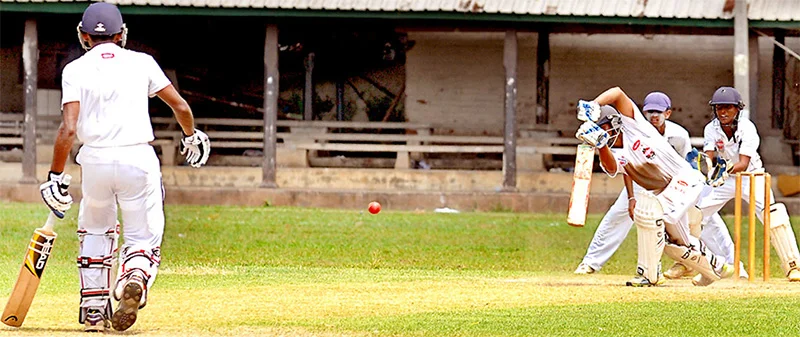
Big match rivals St. Joseph’s and St. Peter’s and St. Sebastian’s and Prince of Wales are set to meet each other once again when the knockout stage of the Under 19 Division I Tier A tournament gets underway on March 26.
The four teams are among the top four teams in their respective groups at the end of the league stage of the Tier A tournament.
St. Joseph’s are set to meet arch rivals St. Peter’s in one of the quarter-finals at BOI ground on Thursday, while Moratu rivals St. Sebastian’s and Prince of Wales are scheduled to compete in another at Mount Lavinia from March 28.
In the other two quarter-finals of the Division I Tier A tournament, Royal will encounter Mahanama from 2nd April at Madampella and Trinity meet Nalanda from 29th March at Kuruvita.
Meanwhile another pair of Big Match rivals St. Anne’s and Maliyadeva Kurunegala are set to meet in the Tier B quarter finals.
Tier B Schedule
25-27 March:
Sri Sumangala Panadura V Sri Dharmaloka Kelaniya at Kuruvita
3 – 5 April:
Wesley College V Devapathiraja Rathgama (B3) at Surrey Ground Maggona
30 March to1 April:
St. Benedict’s Kotahena V St. Joseph Vaz’s Wennappuwa at Campbell Park
Date not finalized for St. Anne’s Kurunegala V Maliyadeva Kurunegala (RF)

Russia launches 948 drones at Ukraine in largest attack over 24-hour period

Oil at $150 will trigger global recession, says boss of financial giant BlackRock

Showers will occur at several places in the Western and Sabaragamuwa provinces and in Galle and Matara districts after 2.00 pm

Senior citizens above 70 years to receive March allowances on Thursday (26)

CEB Engineers warn public to be prepared for power cuts after New Year

Japanese boost to Sri J’pura Hospital, an outright gift from Tokyo during JRJ rule

‘Dates have the highest sugar content to fight Coronavirus’

Sunday Island 27 December – Headlines

#SundayIsland 17th December – Headlines

Sunday Island – 28th March

Sunday Island Headlines – 21 March

Sunday Island – 21st February – Headlines
-

 Features2 days ago
Trincomalee oil tank farm: An engineering marvel
-

 News6 days ago
Bailey Bridge inaugurated at Chilaw
-

 News5 days ago
CIABOC tells court Kapila gave Rs 60 mn to MR and Rs. 20 mn to Priyankara
-

 News6 days ago
Pay hike demand: CEB workers climb down from 40 % to 15–20%
-

 Features5 days ago
Science and diplomacy in a changing world
-

 News4 days ago
Colombo, Oslo steps up efforts to strengthen bilateral cooperation in key environmental priority areas
-

 News2 days ago
Substandard coal deepens energy crisis, warns former CEB Chief
-

 Features6 days ago
Illegal solar push ravages Hambantota elephant habitat: Environmentalist warns of deepening crisis