
News
Sri Lanka Rajapaksa clan presses for imperial presidency

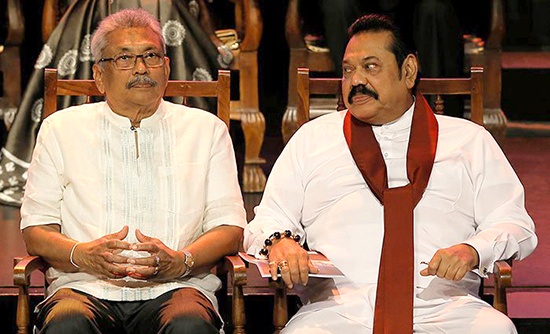
Constitutional amendment includes free hand to appoint justices and police chiefs
MARWAAN MACAN-MARKAR,
Asia regional correspondent
COLOMBO —
Sri Lanka’s political pendulum is swinging toward a strong, centralized state in the grip of an executive president with sweeping authoritarian powers, fulfilling a goal of the Rajapaksas, the South Asian nation’s most influential political clan.
The government of the ruling Rajapaksa siblings — President Gotabaya Rajapaksa and Prime Minister Mahinda Rajapaksa — has now set the stage for an imperial presidency. It did so by introducing a constitutional amendment in parliament, where the Sri Lanka Podujana Peramuna, the brothers’ political vehicle, enjoys an invincible majority.
The amendment, which would be the 20th, seeks to enshrine absolute presidential powers, complete with legal immunity for the hawkish Gotabaya, the younger of the two, during his term in office. The change would also free Gotabaya of existing parliamentary checks on executive authority and reduce the role of the prime minister to that of a rubber stamp for presidential decisions.
Other clauses would give the executive president a free hand to appoint the chief justice and judges of the Supreme Court and other high courts; he would also choose the police chief.
In addition, the amendment paves the way for a Sri Lankan who has dual nationality to be a parliamentarian. This would enable Basil Rajapaksa, another sibling and U.S. national, to become a lawmaker and a minister in the Rajapaksa administration.
Rajapaksa allies argue that an all-powerful executive echoes the political mood in the country, where the brothers have tapped into an ultranationalist, majoritarian sentiment to win two decisive electoral victories, in November’s presidential balloting and in August parliamentary elections.
The SLPP won the backing of the Sinhala-Buddhists, the country’s majority ethnic community, with a campaign for a centralized government anchored by a strongman president to succeed a right-of-center administration that was divisive, dysfunctional and prone to backstabbing to settle political scores.
“The people have given [Gotabaya] a huge mandate, and after that are we to clip his wings so that he can’t do the job?” asked Gamini Lakshman Peiris, education minister and head of the ruling SLPP. “Is it right that we do not empower the president as that is what the people wanted?”
Peiris was asking his rhetorical questions last week during a news conference.
His jabs came ahead of a Supreme Court session that will hear 39 petitions filed by opponents of the 20th amendment. Since the nation’s legislative and judicial systems do not accept any court challenges on laws passed by parliament, most of the petitioners — ranging from opposition lawmakers to political activists — are rushing to push the justices to rule that the amendment needs to be approved by a national referendum, in addition to it needing to win a two-thirds majority in the 225-member parliament.
Lawyers expect the judges to examine the amendment’s potential to undermine entrenched clauses in the constitution that protect the sovereignty of the people. “The problem with the 20th amendment,” said Sudarshana Gunawardena, a Sri Lankan human rights lawyer, “is that certain clauses give the president powers, such as when to dissolve the parliament, that will affect the people’s sovereignty. The court may also take note of the concerns expressed by a group of retired judges and the Bar Association [of Sri Lanka] about the amendment because they are knowledgeable about constitutional matters.”
History favors the Rajapaksas. Previous amendments to the 1978 constitution have not been subject to a national referendum. Parliament’s makeup also favors the brothers, whose political juggernaut has given the SLPP 145 seats. The party is confident of attracting five more votes from smaller parties to meet the two-thirds threshold.
Sri Lankans have had a taste of Rajapaksa political dominance before, during elder-brother Mahinda’s nearly 10-year presidency, which ended with his shock defeat in January 2015. That decade was marked by an authoritarian character and by the brothers presiding over an administration that saw government troops defeat the Tamil Tiger separatist, ending a nearly 30-year ethnic war. The tough-talking Gotabaya served as Mahinda’s defense secretary during the term.
The proposed amendment has generated a heated debate in the mainstream media, led by liberal and progressive-minded academics, legal experts and civil society activists. They have expressed alarm at the country regressing 40 years, to a period that gave Sri Lankans their first taste of the 1978 charter — a blueprint for an elected autocrat written by Sri Lanka’s first executive president, Junius Richard Jayewardene.
“It appears that the framework of 20A has sought inspirations from wrong constitutional models, at home and abroad, that are devoid of any democratic normative content,” wrote Jayadeva Uyangoda, a former professor of political science at the Colombo University. “The lessons that seem to have been learned are all partisan, narrow-minded, politically shortsighted, and therefore, wrong ones.”
In taking this route, the Rajapaksas are expected to face questions from India over the 13th amendment, which New Delhi shaped during the early stages of the Tamil separatist struggle. That amendment secured devolution of power and established provincial councils, enabling the Tamils, Sri Lanka’s largest minority who live in the north and eastern provinces, to elect regional leaders.
“By further entrenching powers in the executive president, 20A undermines democracy in a major way, and by omission or commission it will undermine 13A,” said Ahilan Kadirgamar, a senior sociology lecturer at Jaffna University in northern Sri Lanka. “Minorities already took a stand about their concerns of rising authoritarianism by their massive number of votes against the president at the November elections.”
The constitutional tinkering comes as the Rajapaksa administration struggles to breathe life into the anemic economy it inherited. On Monday, Moody’s Investors Service made the Rajapaksas’ job more difficult by downgrading Sri Lanka’s ratings two notches, to Caa1, from B2. The global ratings agency pointed to wide budget deficits and external pressures from ballooning foreign debts.
Moody’s already considered Sri Lanakan government debt speculative and high risk before the downgrade.
The $88 billion economy, drained of income by the pandemic, is expected to shrink by 0.5% this year after growing 2.3% in 2019, its worst showing in nearly two decades. Sri Lanka’s foreign debt is $55 billion. “Combined with slower nominal GDP growth and a weaker exchange rate, the government’s debt burden will rise to around 100% of GDP, above the Caa-rated media of 86% of GDP,” Moody’s wrote.
The Rajapaksas’ allies argue that turning around the economy requires a strong president. “Foreign investors ask us if Sri Lanka has a 10-year plan and if it can guarantee 10 years of political stability and policy consistency,” Anura Fernando, general secretary of Viyathmaga, a network of professionals shaping Gotabaya’s policies, told Nikkei Asia. “We need one strong person making executive decisions as a way to build confidence and make Sri Lanka attractive for foreign investors.”
Local businesses share a similar sentiment in the wake of the “chaos and policy inconsistency” of the previous government. “A strong president and policy stability has worked thrice before after the ‘78 constitution,” said a well-connected business insider. “Those years we saw steady growth and foreign capital flowed in. It does where there is stability and opportunity. … That is a fact.”
Gotabaya is not waiting for the amendment. Frustrated by bureaucratic red tape that has come in the way of his plans for efficiency, he launched a broadside against officials who refused to act on his orders.
“President Gotabaya Rajapaksa has directed the officials to treat all verbal orders issued for the common good of the people as circulars to be implemented,” the president’s office said in a statement. “Those who neglect this will face stern action.” (Nikkei Asia)


AKD’s request to Harsha:
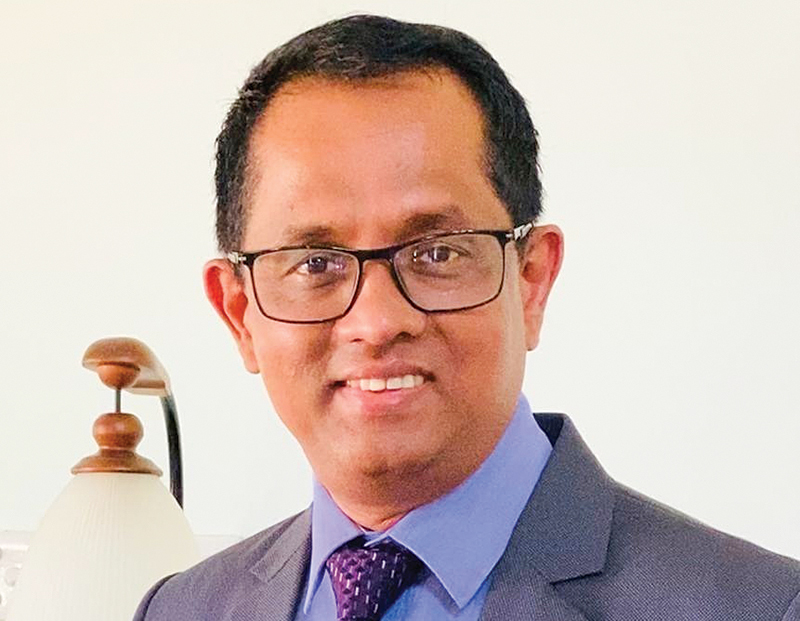
Speaker Dr. Jagath Wickramaratne has frustrated an attempt by Chairman of the Committee on Public Finance (CoPF) Dr. Harsha de Silva, MP, to intervene to settle the continuing dispute over the appointment of a new Auditor General.
Dr. De Silva yesterday told The Island he had recently written to all members of the Constitutional Council (CC) drawing their attention to the urgent need to address the issue at hand. The AG’s position remains vacant since 08 Dec, 2025. AG W.P.C. Wickremanayake retired in April and since then there have been a couple of Acting appointments. The CC has declined to endorse any of President Dissanayake’s nominees as the AG.
Asked whether he had taken up the issue with the CC following President Anura Kumara Dissanayake soliciting his support in this regard, MP de Silva said that he had written to CC members as agreed with the President.
The former UNPer and one-time State Minister said: “I did so, giving due respect to CC’s independence, underscoring the critical importance in them working with the President to resolve the crisis. I alluded to the need to have transparency in public financial management during this post-cyclone period where large amounts of funds are being transacted on multiple fronts, both domestic and foreign.”
Responding to another query, Dr. De Silva emphasised that he had clarified that the President must send the names of qualified and experienced persons to the CC for consideration. “However, these letters were returned to me by the Speaker, without being delivered to members of the CC. The Speaker didn’t give an explanation. Thus, except for members who are MPs who had been copied via email by my committee office, others never received my letter of concern. Even though I questioned, in Parliament, the basis of his refusal to forward my communication to the members of the CC of which he is Chairman, no answer was given.”
The CC consists of Dr. Jagath Wickramaratne, Speaker and Chairman of the 10-member body. Dr. Harini Amarasuriya, Prime Minister, Sajith Premadasa, Leader of the Opposition, Bimal Rathnayake, Aboobucker Athambawa, Ajith P. Perera, Sivagnanam Shritharan, and three civil society members namely Dr. Prathap Ramanujam, Dr. Dilkushi Anula Wijesundere and Dr. Dinesha Samararatne. None of the President’s nominees could obtain CC’s approval as all of them were rejected by the CC.
The present CC was introduced by the 21st Amendment to the Constitution which was endorsed on 31 October 2022.
Both the Bar Association of Sri Lanka (BASL) and the Transparency International Sri Lanka Chapter recently requested President Dissanayake, in writing, to propose a suitable person to the post of AG. The BASL, in another statement that dealt with the forthcoming vacancies in the CC due to three civil society members completing their terms, declared its concern over possible attempts by the President and the NPP government to fill the vacancies with rubber stamps.
The three civil society members will complete their terms on 18 January. In terms of Article 41E of the Constitution, the CC meets at least twice every month, and may meet as often as may be necessary. The Chairman presides at all meetings of the CC and in the absence of the Chairman, the Prime Minister, and in the absence of the Prime Minister, the Leader of the Opposition presides at the meetings of the CC.
Asked whether the CC could be disrupted due to the end of civil society members’ terms, an authoritative official pointed out that in case new appointments were not made the current members could continue.
The Parliament has not so far called for applications to fill the forthcoming vacancies.
by Shamindra Ferdinando ✍️

The NPP government’s coal procurement process has once again come under scrutiny following allegations by the Frontline Socialist Party (FSP) that substandard coal has been imported for power generation and that tender procedures were manipulated to favour a specific supplier.
Addressing the media after a party meeting in Maharagama on Saturday, FSP Education Secretary Pubudu Jagoda said a test report issued by the government laboratory at the Lakvijaya Power Plant had confirmed that the latest coal shipment unloaded in Sri Lanka did not meet the required quality standards. According to the report, the coal’s calorific value ranged between 5,600 and 5,800 kilocalories per kilo, below the 5,900–6,200 kCal/kg range specified in tender requirements.
Jagoda warned that lower calorific value coal would require higher volumes to generate the same amount of electricity, increasing costs significantly. Preliminary estimates, he said, indicated an additional financial burden of around Rs. 7,500 million, which might eventually be passed on to consumers through higher electricity tariffs.
The FSP also accused the government of tailoring procurement rules to benefit the Indian supplier, which has deposited bonds for long-term coal supply for the upcoming season. Jagoda alleged that tender conditions had been altered to accommodate the company, pointing to changes in coal reserve requirements. Under the 2021 Sri Lanka Coal Registration Document, suppliers were required to maintain a minimum reserve of one million metric tonnes with a gross calorific value of 5,900 kCal/kg. This threshold, he said, had been reduced to 100,000 metric tonnes in the 2025 document which is a 90% reduction raising serious concerns.
He further cited past allegations against the Indian company, including findings in a 2016 Auditor General’s report that the company violated procurement guidelines regarding a rice supply contract with Sathosa in 2014. Jagoda also referred to legal issues involving individuals linked to the company, and the suspension of a representative by the International Cricket Council in 2019 over match-fixing allegations.
Beyond company-specific concerns, Jagoda criticised what he described as systemic manipulation of the coal tender process. He questioned why the coal tender, typically called in February or March, was delayed until July, despite electricity being declared an essential service. He also alleged that the tender submission period had been progressively shortened from the internationally accepted six weeks to five weeks, and now reportedly to three giving an unfair advantage to suppliers with existing stock.
The Ministry of Energy has recently issued an amended tender to procure 4.5 million metric tonnes of coal for the Lanka Coal Company for the 2025/26 and 2026/27 periods, following the cancellation of an earlier tender.
Jagoda warned that delays and irregularities could lead to coal shortages, higher spot market purchases, increased electricity costs, and even power cuts if hydropower generation falls short. He called for urgent investigations into the procurement process, insisting that the burden of alleged mismanagement and corruption must not be transferred to the public.
by Chaminda Silva ✍️

SJB Gampaha District MP Prasad Siriwardhana has been summoned to the CID today (12) for questioning in connection with a statement he made on a private television channel regarding education reforms.
He was earlier asked to report to the CID on 10 January to make a statement. However, as Siriwardhana had notified the authorities that he was unable to appear on that day, he was subsequently asked to come today.
Siriwardhana is one of the critics of the shortcomings of the education reforms introduced by the NPP government.

BCB’s integrity unit finds ‘credible suspicion’ during BPL

Devine’s 95 trumps Lee, Wolvaardt fifties in see-saw thriller

Fairly heavy showers about 75 mm are likely at some places in the Western, North-western and Sabaragamuwa provinces

President proposes; Speaker disposes

Sri Lanka loses Rs.7.5 bn due to coal tender irregularities: FSP

CID summons SJB MP for criticising education reforms

‘Dates have the highest sugar content to fight Coronavirus’

Sunday Island 27 December – Headlines

#SundayIsland 17th December – Headlines

Sunday Island – 28th March

Sunday Island Headlines – 21 March

Sunday Island – 21st February – Headlines
-
 News1 day ago
Sajith: Ashoka Chakra replaces Dharmachakra in Buddhism textbook
-

 Business1 day ago
Dialog and UnionPay International Join Forces to Elevate Sri Lanka’s Digital Payment Landscape
-

 Features1 day ago
The Paradox of Trump Power: Contested Authoritarian at Home, Uncontested Bully Abroad
-

 News6 days ago
Interception of SL fishing craft by Seychelles: Trawler owners demand international investigation
-

 News1 day ago
Level I landslide early warnings issued to the Districts of Badulla, Kandy, Matale and Nuwara-Eliya extended
-

 Features1 day ago
Subject:Whatever happened to (my) three million dollars?
-
 News6 days ago
Broad support emerges for Faiszer’s sweeping proposals on long- delayed divorce and personal law reforms
-

 News1 day ago
65 withdrawn cases re-filed by Govt, PM tells Parliament