Connect with us

Latest News

Sri Lanka hope for top-order upturn, if rain stays away

Published

on

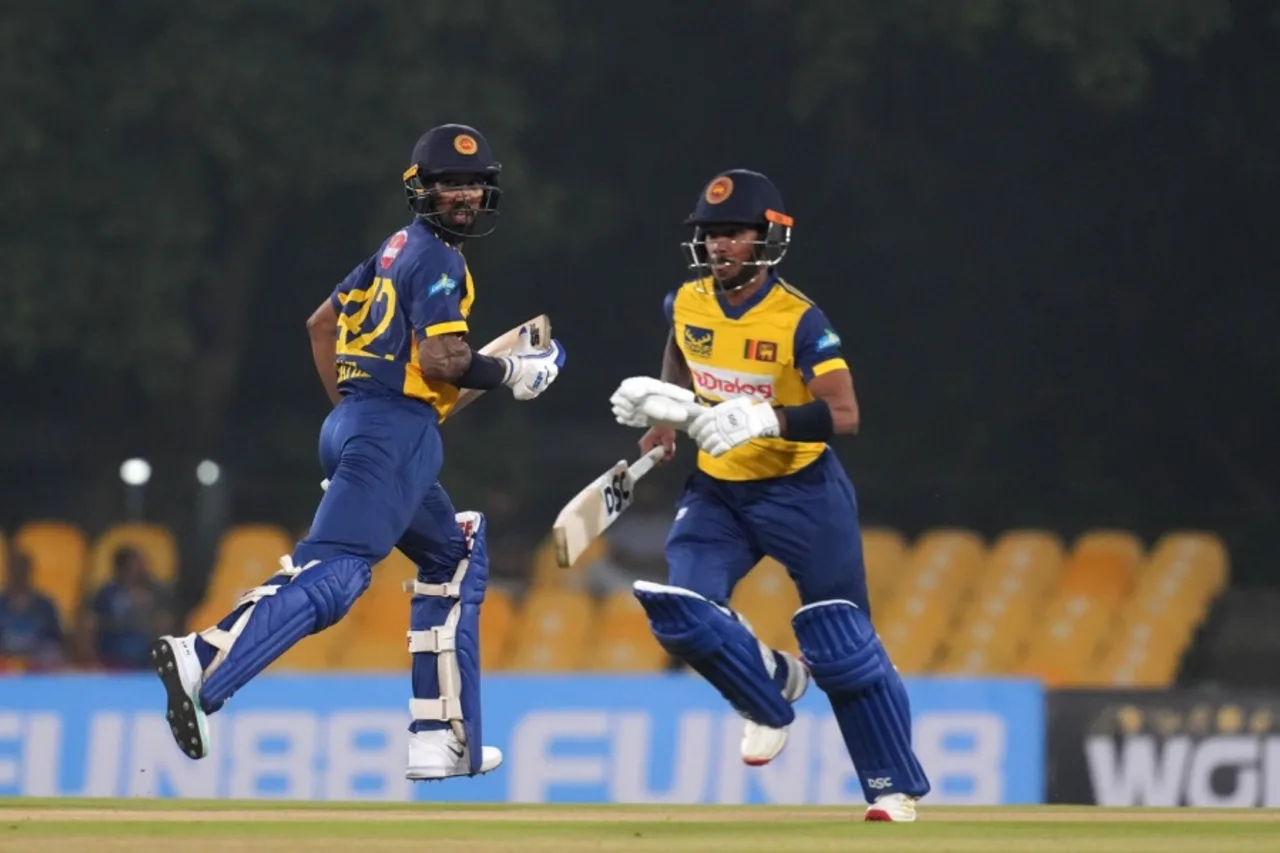
Openers Kamil Mishara and Pathum Nissanka will hope to soothe Sri Lanka's batting worries [Cricinfo]

That Sri Lanka is experiencing an especially nasty north-east monsoon over the past several months is clear. It washed out many of the Womes World Cup matches slated for October. In December, Cyclone Ditwah delivered some of the most devastating weather to ever hit the island. Now, deep into January, which is generally one of Sri Lanka’s driest months, Friday’s match was washed out without a ball bowled. The forecast looks slightly better for Sunday, but forecasts don’t tend to mean much in this part of the country.

Whatever happens in terms of the weather, it is clear that as Sri Lanka arrive on the doorstep of another T20 World Cup, there is the usual attendant instability. The captain has been switched out but the team is still losing against good opposition. The top order is being rejigged frequently, and consistent scores are not forthcoming. There are strong elements in the attack – such as the bowling of Dushmantha Chameera and Wanindu Hasaranga – but there is fragility elsewhere. It might not take much to turn things around, though. The raw materials of a decent T20 side are there.

Pakistan, meanwhile, will have mostly cooled their heels since Wednesday. Head coach Mike Hesson described their big win in the first T20I as “very clinical”, praising not only the bowling that decked Sri Lanka for 128 but the top-order batters who aced the chase as well. Their only big work-on was the fielding, he thought.

That they are putting up such performances while key players, such as Babar Azam, are away at the Big Bash League is especially impressive. If they are to put together a good campaign in the forthcoming World Cup, Wednesday’s win might have been the day they planted their flag in Sri Lanka. So far, and notwithstanding the weather, these conditions seem to suit them.

In the T20I tri-series in Pakistan last month, Pakistan opener Sahibzada Farhan had topped the run list, hitting 191 runs at a strike rate of 146.92. He has now made a bright start in Sri Lanka, hitting 51 off 36 in his first innings on the island. Farhan was especially good at taking down Nuwan Thushara, which caused significant problems for Sri Lanka, who require early wickets from the round-arm seamer. Farhan’s dominance will make Sri Lanka think twice about playing Thushara in this match.

Second on the run chart from the tri-series last month was Kamil Mishara with 169 runs at a strike rate of 138.52. He couldn’t get going on Wednesday, registering a three-ball duck after spooning a catch to mid off. But he has shown glimpses of serious talent at the top level. Impactful innings in this series and the one to come against England will likely seal his spot at the top of the order.

The Dambulla surface for the first ODI was conducive to spin. As it is increasingly difficult to predict weather patterns on this tropical island (thanks, climate change), the rains may roll through again.

Pakistan may see no need to change their XI but, Sri Lanka may consider bringing in Matheesha Pathirana for Thushara, which will mean Dasun Shanaka is required to bowl with the new ball.

Pakistan (probable): Sahibzada Farhan, Saim Ayub, Fakhar Zaman, Salman Agha (capt),  Usman Khan (wk), Mohammad Nawaz,  Shadab Khan,  Faheem Ashraf,  Mohammad Wasim, Salman Mirza,  Abrar Ahmed.

Sri Lanka (probable):  Pathum Nissanka, Kamil Mishara,  Kusal Mendis (wk), Dhananjaya de Silva, Charith Asalanka,  Dasun Shanaka (capt),  Janith Liyanage, Wanindu Hasaranga,  Dushmantha Chameera,  Maheesh Theekshana,  Matheesha Pathirana/Nuwan Thushara.

[Cricinfo]



Continue Reading
Click to comment

Leave a Reply

Your email address will not be published. Required fields are marked *

Latest News

Trump names Tony Blair, Jared Kushner to Gaza ‘Board of Peace’

Published

on

By

Former British Prime Minister Tony Blair has been widely condemned for backing the US-led 'war on terror' and joining the US invasion of Iraq in 2003 [File: Aljazeera]

President Donald Trump has named former British Prime Minister Tony Blair to his so-called “Board of Peace”, which is expected to oversee the United States president’s 20-point plan to end Israel’s genocidal war against Palestinians in Gaza.

The White House said on Friday that Blair would be among the board’s founding executive members, alongside Trump’s son-in-law Jared Kushner, US Secretary of State Marco Rubio and the US special envoy to the Middle East, Steve Witkoff.

The other members are Marc Rowan, the CEO of Apollo Global Management; World Bank Group President Ajay Banga; and Robert Gabriel, a US deputy national security adviser.

The board members “will oversee a defined portfolio critical to Gaza’s stabilization and long-term success”, the White House said, including “governance capacity-building, regional relations, reconstruction, investment attraction, large-scale funding, and capital mobilization “.

Bulgarian diplomat and former senior United Nations official Nickolav Mladenoy will serve as the High Representative for Gaza, according to the statement.

The announcement also named members of a Gaza Executive Board, aimed at supporting governance and services in Gaza. Blair, Kushner and Witkoff were also named to the board, along with Turkish Foreign Minister Hakan Fidan, Qatari diplomat Ali Al Thawadi and others.

The United Nations special envoy, Nickolay Mladenov, speaks during a press conference in Jerusalem on June 25, 2020. The government of Israeli Prime Minister Benjamin Netanyahu has said it could begin the process to annex Jewish settlements in the West Bank as well as the strategic Jordan Valley from July 1. The plan -- endorsed by Washington -- would see the creation of a Palestinian state, but on reduced territory, and without Palestinians' core demand of a capital in east Jerusalem. (Photo by Menahem KAHANA / AFP)
Nickolay Mladenov speaks during a news conference in 2020 [File: Aljazeera]

In addition, the White House said that US Major-General Jasper Jeffers has been appointed as Commander of the International Stabilisation Force for Gaza.

Jeffers, who is the current commander of US special forces, would lead the force in a range of areas, including security operations, delivering humanitarian aid and supporting “comprehensive demilitarization”, the White House said.

While the US has long supported Israel’s demand that Hamas surrender all of its weapons, the Palestinian group has said it wants guarantees before doing so.

The Gaza Executive Board will support the Office of the High Representative and a National Committee for the Administration of Gaza (NCAG), headed up by Ali Shaath, which is expected to handle day-to-day governance in Gaza in lieu of Hamas.

Shaath is a former Deputy Minister of Transportation for the Palestinian Authority, who is from Khan Younis in Gaza but based in the occupied West Bank.

Ali Shaath, head of the Palestinian technocratic committee for managing the Gaza Strip, arrives at a hotel in Cairo on January 16, 2026. Gaza native and former Palestinian Authority deputy minister Ali Shaath will head the new technocratic committee set to administer the devastated Gaza Strip, mediating countries announced on January 14. A seasoned civil servant largely unknown to the wider public, Shaath was born in the southern city of Khan Yunis in 1958, later leaving to study in Cairo, a family member told AFP. (Photo by Mohammed Abed / AFP)
Ali Shaath, head of the Palestinian technocratic committee for managing the Gaza Strip, arrives at a hotel in Cairo on January 16, 2026 [Aljazeera]

Hamas had previously said it was ready to abandon its governing duties in the enclave as outlined under the Trump plan.

There was no immediate response from Hamas and other Palestinian political factions to the makeup of the Board of Peace’s executive board.

The White House announcement on Friday comes just days after Witkoff announced the launch of the second phase of the US-brokered plan to end Israel’s war on Gaza, which has killed more than 71,000 Palestinians since October 2023.

The US administration has said Trump’s plan is “moving from ceasefire to demilitarization, technocratic governance, and reconstruction”.

But Palestinians have questioned what that will mean in practice, as Israel continues to carry out deadly attacks across the coastal enclave and restrict deliveries of humanitarian aid, in violation of the US-brokered ceasefire deal that came into effect in October.

A 10-year-old girl, a 16-year-old boy and an elderly woman were killed in Israeli attacks on Gaza on Friday, as members of a planned Palestinian technocratic committee sat down for the first time in Cairo to prepare for the rollout of phase two of Trump’s plan.

The participation of Blair, who served as British prime minister from 1997 to 2007, has also been a major point of contention, after his name was floated as a possible candidate for the Board of Peace months ago.

The former United Kingdom Labour Party leader strongly supported the US-led so-called “war on terror” in the early 2000s, and joined then-US President George W Bush’s 2003 invasion of Iraq.

Kushner, Trump’s son-in-law and another newly-named executive board member, is also a staunch supporter of Israel who previously suggested that Palestinians are incapable of self-governance.

Kushner’s family also has strong ties to Israeli Prime Minister Benjamin Netanyahu, who is wanted by the International Criminal Court for alleged war crimes committed in Gaza.

In 2024, Kushner underscored that Gaza has “very valuable” waterfront property, saying that Israel should “move the people out and then clean it up”.

Al Jazeera’s Mike Hanna, reporting from Washington, DC, noted that some of the people nominated by Trump will be “members of both the Board of Peace and of the executive board for Gaza”.

“It would appear from this structure outline that the Board of Peace has the overarching responsibility, but dealing with the nuts and bolts on the ground in transition will be the Gaza Executive Board,” Hanna said.

Hanna also noted that Mladenov’s role as the High Representative for Gaza shows that there will be a UN component, considering the Bulgarian diplomat was previously the UN’s top envoy to the region from 2015-2020.

“There is a UN component in this, which is very important, given the differences between the US and the UN in recent years,” Hanna said.

“To have the UN viably involved in the reconstruction of Gaza is utterly essential for these boards, the Board of Peace and the administration board, to have a semblance of credibility,” he added.

Criticism of the board also emerged swiftly.

Ashish Prashar, who worked as an aide to Blair between 2010 and 2012, called for rejecting international trusteeship over Gaza, stating in a post on social media that “the future of Palestine should only be decided by Palestinians”.

“It appears the only qualification for joining the Gaza ‘peace board’ is to have a strong track record of endorsing (and arming) Israel’s project of genocide, apartheid and ethnic cleansing, and criminalising those who oppose it,” Prashar told Al Jazeera in a statement.

“Trump’s Gaza ‘Board of Peace’ was just a pilot project. All states who signed off on it are the ones who paved the way for Trump’s next ‘Boards of Peace’ in Venezuela, Ukraine and any other place the extractionist American regime wants to take next,” he said.

[Aljazeera]

Continue Reading

Latest News

ICC officials to meet BCB in Bangladesh to solve T20 World Cup impasse

Published

on

By

Bangladesh are currently scheduled to play all their group-stage games in India [Cricinfo]

The ICC has decided to send officials to Dhaka this weekend to meet the BCB’s top brass in a bid to resolve the impasse over Bangladesh travelling to India for the T20 World Cup that starts in three weeks.

The ICC’s team is expected to provide the BCB with security details including an independent assessment as part of the discussions. The development comes days after the BCB reiterated its stance of not sending Bangladesh to play in co-hosts India’s venues owing to “security concerns.” So far meetings and discussions have taken place via video conference; this will be the first time the two parties will meet in person.

During the January 13 virtual meeting, the BCB asked the ICC to move Bangladesh, who are placed in Group C, outside India. However, the ICC said it would not tweak the original schedule, with the tournament start date – February 7 – less than a month away. Bangladesh are scheduled to play on that opening day, against West Indies, in Kolkata.

With relations between India and Bangladesh tense in recent times, the BCB sent a letter to ICC on January 4 stating it would not be safe for Bangladesh to travel to India for the World Cup where its four group matches are scheduled. That was in response to the BCCI “authorising” Kolkata Knight Riders to release Bangladesh left arm fast bowler Mustafizur Rahman. No specific reason was given for that decision.

A Risk Assessment report for the World Cup, compiled by an independent security agency, and accessed by ESPNcricinfo, says the threat to teams playing in India is in the moderate-high band but there is “no information to indicate a direct threat against participating teams.”

The ICC shared that security assessment report with the BCB in their last call, which indicated no specific or heightened threat to the Bangladesh cricket team in India. The assessment was shared with the BCB’s security team and concluded there was no overall threat to the side, but pointed to low to moderate risks in some venues and low to nil in others – standard ICC categorisations around the world that do not ordinarily constitute sufficient reason to move games.

[Cricinfo]

Continue Reading

Latest News

U – 19 World Cup: Hogan’s ton helps Australia brush aside Ireland

Published

on

By

Steven Hogan celebrates his century [Cricinfo]

Steven Hogan’s century, which included a 186-run stand with Nitesh Samuel, helped Australia brush aside Ireland for an eight wicket win in Windhoek.

After being put in to bat, Ireland openers James West and Freddie Ogillby were off to a slow start, before John James struck to remove West for 11. Sebastian Dijkstra was the next one to go, with Charles Lachmund pinning him in front in the 18th over. That brought Rob O’Brien to the crease, who then slowly rebuilt the innings in Ogilby’s company to put up a 43-run stand.

Offspinner Will Malajczuk, however, denied Ogilby his half-century, having him caught behind for 49 in the 29th over. O’Brien continued to build steadily and found the boundaries occasionally, before departing for a 98-ball 79 in the 49th over, helping push Ireland’s total to 235.

Australia got off to a strong start in the chase, with Malajczuk hitting a four and six in the first over. After he fell in the third over, Samuel and Hogan continued to build towards the target, scoring their half-centuries off 62 balls and 50 balls respectively. Their 100-run stand came up in the 21st over, and Hogan continued to find boundaries, bringing up his ton off 97 balls in the 32nd over.

Medium-pacer Luke Murray provided the breakthrough in the 36th over, having Hogan caught behind for 115. In his 111-ball stay, Hogan hit 11 fours and a six. By then, Australia needed only another 20 runs to win. Ollie Peake then joined Samuel, who finished unbeaten on 77, and together they completed the chase with 62 balls remaining to get Australia off to a rollicking start.

Brief scores:
Australia Under 19s  237 for 2 in 37.2 overs (Steven Hogan 115, Nitesh Samuel 77*; Luke  Murray 1-46) beat Ireland Under 19s  235 for 7 in 50 overs (Freddie Ogilby 49, Rob O’Brien 79; Charles  Lachmund 3-41) by eight wickets

[Cricinfo]

Continue Reading

Trending