
News
Sri Lanka caught in low-productivity trap: IPS


ECONOMYNEXT —Six consecutive quarters of negative economic growth in Sri Lanka has led to lower wage rates and discouraged workforce participation and skill development, lowering productivity levels and creating a low productivity trap, the Institute of Policy Studies (IPS) said.
Real wages also decreased after high inflation following the 2022 currency crisis.
At a recent discussion, IPS researchers said the negative growth recorded up to the third quarter of 2023 which had a direct impact on the labour market and the resultant “low productivity trap” has hampered further economic recovery.
The discussion held at the launch of the institute’s State of the Economy 2024 report focused on issues within three key aspects of Sri Lanka’s economy: the education sector, labour market, and public sector.
IPS Research Officer Suresh Ranasinghe noted that, between 2018 and 2023, Sri Lanka’s labour force participation rate fell from 51.8 percent to 48.6 percent, while the employment-to-population ratio dropped from 49.5 percent to 46.3 percent. According to Ranasignhe, some of the main issues within Sri Lanka’s labour market include rising labour market inactivity, declining labour productivity and employment growth, and declining high-skilled employment.
“While all three sectors – agriculture, industry, and services – observed negative average labour productivity from 2018 to 2023, the ICT sector stands out, with the highest output per worker.”
IPS said in a statement on Tuesday October 15 that the discussion had focused on the need to invest in technology, infrastructure, and skill development, particularly within the agriculture sector. Given the ICT sector’s high productivity, recommendations included offering VAT exemptions and bridging the existing skill gap within the sector through targeted interventions.
“Only 20 percent of the total workers held high-skilled jobs in 2023, a decline from 23 percent in 2018, mainly due to a decrease in the share of Managers, Senior Officials, and Legislators,” said Ranasinghe.
One potential reason for this decline was the emigration of high-skilled workers during the pandemic and economic crisis, as they sought better wages abroad due to declining real wages in Sri Lanka. To retain the remaining high-skilled workers, the importance of providing competitive salaries and benefits was pointed out by speakers at the event.
“In the long term, expanding knowledge-based industries, supporting persistent professional development, and revising public sector policies are important to foster high-skilled employment.”
Rationalising public sector employment was also a point of discussion at the event.
Sri Lanka’s public sector accounts for 15 percent of total employment and 35 percent of formal employment, while it consumes 26 percent of public expenditure and 5 percent of GDP, said IPS. Notably, public sector employment has increased by about 60 percent since 2005. However, “Sri Lanka’s government performance is considered ‘poor’ as per the Worldwide Governance Index (WGI), with the government effectiveness being negative 0.65.”
“The rise in inactivity, particularly among youth, is likely linked to education disruptions. To tackle this, the session highlighted the importance of promoting and improving the quality of Technical and Vocational Education and Training (TVET), focusing on access for vulnerable youth and improving public perceptions, as well as supporting entrepreneurship initiatives to create sustainable employment opportunities,” IPS said in its statement.
IPS Research Fellow Lakmini Fernando discussed the importance of improving public sector efficiency. She noted how government expenditure has a declining trend (47 percent decline from 1990 to 2023) while spending on wages remains stable (5 percent). While high government expenditure crowds out investments, it lowers prospects for growth. Fernando recommended introducing a new public management approach, which provides an immediate pay rise while ensuring the right size of the public sector. An effective public sector is essential for improving education planning and enabling strategic interventions in the labour market, she said.
Overall, Fernando noted that improving administrative operations, downsizing the sector, and addressing barriers that lead to policy failures were important. A debate ensued during the Q&A session on downsizing the sector and whether or not the public sector deserves a pay rise. “The minimum monthly wages of all types of public employee levels are below the expenditure benchmark of LKR 68,056,” said Fernando, suggesting that to ensure successful policy implementation, the government needs to create an environment that supports adopting changes.
The institute also noted that education equips individuals with the knowledge and skills necessary for a productive and competitive workforce and fosters creativity and problem-solving abilities essential for driving innovation and technological advancements.



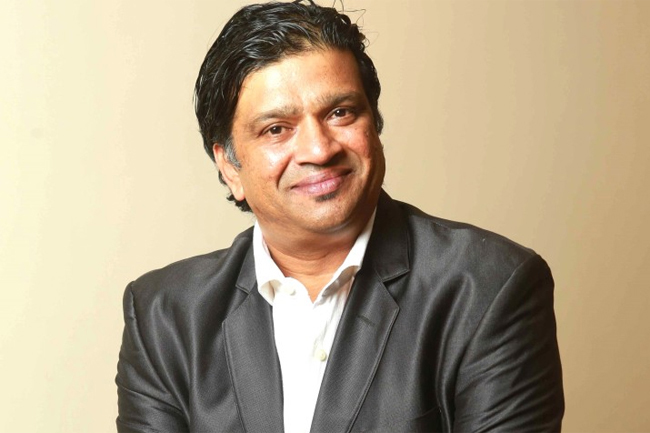
Only one Member of Parliament has chosen not to receive the salaries and allowances entitled to MPs, Prime Minister Dr. Harini Amarasuriya revealed in Parliament last Thursday, shedding light on the financial perks enjoyed by members of the Tenth Parliament.
Speaking on Thursday (Feb. 19) in response to a question from SJB Badulla District MP Chaminda Wijesiri, the Prime Minister outlined the full range of pay and allowances provided to parliamentarians.
According to Dr. Amarasuriya, MPs receive a monthly allowance of Rs. 54,285, an entertainment allowance of Rs. 1,000, and a driver’s allowance of Rs. 3,500—though MPs provided with a driver through the Ministry of Public Security and Parliamentary Affairs are not eligible for the driver’s allowance.
Additional benefits include a telephone allowance of Rs. 50,000, a transport allowance of Rs. 15,000, and an office allowance of Rs. 100,000. MPs are also paid a daily sitting allowance of Rs. 2,500 for attending parliamentary sessions, with an additional Rs. 2,500 per day for participation in parliamentary sittings and Rs. 2,500 per day as a committee allowance.
Committee meetings held on non-parliament sitting days also attract Rs. 2,500 per day.
Fuel allowances are provided based on the distance between an MP’s electoral district and Parliament. National List MPs are entitled to a monthly allocation equivalent to 419.76 litres of diesel at the market price on the first day of each month.
Despite the comprehensive benefits, only SJB Badulla District MP Nayana Wasalathilaka has opted not to draw a salary or allowances. Dr. Amarasuriya said that in accordance with a written notification submitted by MP Wasalathilaka on August 20, 2025, payments have been suspended since that date.
The Prime Minister also confirmed that she, along with the Speaker, Deputy Speaker, committee chairs, ministers, deputy ministers, the Opposition Leader, and senior opposition whips, have all informed the Secretary-General of Parliament in writing that they will not claim the fuel allowance.
Challenging the ruling party’s voluntary pledge to forgo salaries, MP Wijesiri pointed out that all MPs except Wasalathilaka continue to receive their salaries and allowances. “On one hand you speak about the people’s mandate, which is good. But the mandate also included people who said they would voluntarily serve in this Parliament without salaries. Today we have been able to prove, Hon. Speaker, that except for one SJB MP, the other 224 Members are drawing parliamentary salaries,” he said.
The Prime Minister responded by defending the political culture and practice of allocating portions of MPs’ salaries to party funds. Referring to previous practices by the JVP and NPP, she said: “It is no secret to the country that the JVP has for a long time not personally taken MPs’ salaries or any allowances. I think the entire country knows that these go to a party fund. That is not new, nor is it something special to mention. The NPP operates in the same way. That too is not new; it is the culture of our political movement.”
When MP Wijesiri posed a supplementary question asking whether diverting salaries to party funds was an indirect method of taking care of MPs, Dr. Amarasuriya said: “There is no issue there. No question was raised; the Member made a statement. What we have seen throughout this week is an inability to understand our political culture and practice, and a clash with decisions taken by political movements that misused public funds. What is coming out is a certain mindset. That is why there is such an effort to find fault with the 159. None of these facts are new to people. He did not ask a question, so I have nothing to answer.”
The disclosures come days after the Government moved to abolish the parliamentary pension, a measure that has sparked renewed debate over MP compensation and the transparency of funds allocation.
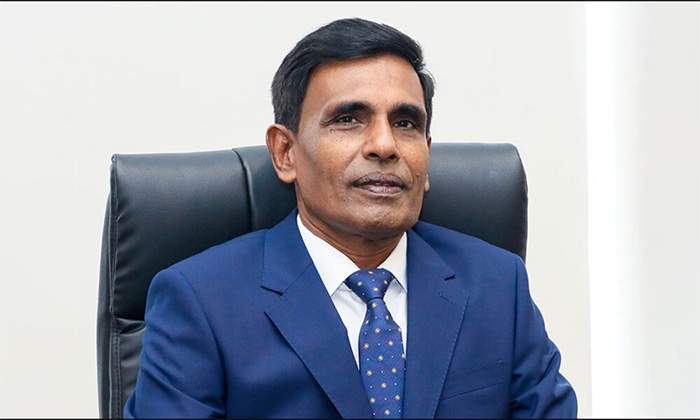
Public Security and Parliamentary Affairs Minister Ananda Wijepala on Friday (20) disclosed in Parliament details of properties and assets allegedly acquired through illegal activities by suspects arrested in raids carried out since September last year.
The Minister made the disclosure in response to a question raised by MP Ravindra Bandara, stating that the identified assets have been frozen pending further investigations.
He said the assets include properties belonging to several alleged organised crime figures, among them Mandinu Padmasiri, alias ‘Kehelbaddara Padme’, who was arrested last year.
Listing the assets in the House, the Minister said Hapugoda Arachchige Kankanamge Duminda Dilruk has assets worth Rs. 23 million frozen, including a van, a motorcycle, a house and a roller gate.
In the case of Kandaiya Kalamogan, two motorboats have been identified, although their value has not yet been assessed.
Dilum Tharaka Balasuriya is reported to own a two-storey house situated on 15 perches of land with a face value of Rs. 800,000.
Assets belonging to Mohammad Harish Mohammad and Mohammad Shiyam were frozen on January 21, 2026. While the total value has not yet been assessed, five vehicles were confiscated from the former and a car from the latter.
Wijesuriya Mahaduruge Uditha Iroshan Wijesiri has assets valued at Rs. 5 million, including a lorry, while Indika Pathmakumara’s assets include a cab worth Rs. 2.5 million and a bank account containing Rs. 1 million.
Lahiru Sampath is reported to own a three-wheeler valued at Rs. 1.8 million.
According to the Minister, Hettiarachchige Dona Sriyani Chandralatha possesses a four-storey house and 14.7 perches of land valued at Rs. 60 million.
Mandinu Padmasiri, alias ‘Kehelbaddara Padme’, owns 20 perches of land with partially constructed buildings valued at Rs. 30 million and a half-finished six-room building worth Rs. 20 million, the Minister said.
Patabendi Maddumage Shehan Sathsara, alias ‘Dehi Bale Malli’, has five multi-day fishing trawlers valued at Rs. 200 million and a two-storey house with 15.8 perches of land worth Rs. 50 million.
The Minister further disclosed that Jayasinghege Maduranga Sampath owns a cab worth Rs. 5.4 million, a van valued at Rs. 14.5 million, five bank accounts containing Rs. 73.03 million, another account with Rs. 160,328.88 and USD 544, and Rs. 283 million in cash.
Adhikari Samantha Perera is reported to own 10.10 perches of land valued at Rs. 5 million and one acre and 1.5 perches of land worth Rs. 13 million.The Minister said investigations are continuing in respect of the suspects and the frozen assets.
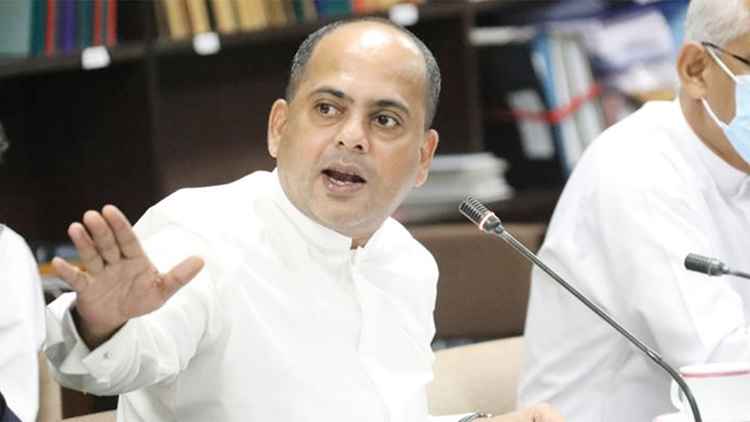
The entire coal procurement process was rigged, the main Opposition SJB alleged in Parliament on Friday, accusing Energy Minister Eng. Kumara Jayakody of misleading the Cabinet and the National Procurement Committee to favour a supplier of substandard coal for the Lakvijaya Coal Power Plant in Norochcholai.
Moving an adjournment debate on the energy crisis, SJB Colombo District MP S.M. Marikkar charged that the losses incurred from the importation of inferior coal must be fully computed and recovered from those responsible, including damage caused to machinery, additional power generation costs and environmental harm.
He said the SJB had exposed the issue both inside and outside Parliament, alleging that the Government was attempting to cover up large-scale irregularities in the 2026 coal procurement process.
Marikkar claimed that serious fraud, corruption and procedural violations had taken place from the outset. He pointed out that the standard 42-day procurement period had been curtailed to 21 days, thereby restricting competition and preventing many qualified companies from participating.
He further alleged that key eligibility criteria had been diluted, including the requirement that a supplier must have imported 500,000 metric tonnes of coal over the past three years. This threshold, he said, had been reduced to 100,000 metric tonnes to enable smaller firms to qualify.
According to the MP, despite instructions issued by the Committee on Public Finance and the Auditor General regarding the procurement process, the Minister had misled the Cabinet and the National Procurement Committee to deviate from the approved procedure in order to favour a particular company that subsequently supplied substandard coal.
Marikkar alleged that the first, third and fourth shipments had contained inferior coal, which had been mixed with existing higher-quality stocks and used at the Norochcholai plant. He said the resulting losses to the power generation system would far exceed the reported US$ 2 million fine imposed on the importer.
He also highlighted alleged irregularities in the tender process, claiming that the chairman of the tender board had withdrawn after decisions were taken and had failed to attend subsequent meetings.The MP further charged that the Government was attempting to justify impending power cuts by citing a purported shortage of coal.

Showers or thundershowers will occur at most part of the Island after 1.00 p.m.

Only single MP refuses salary as Parliament details pays and allowances

Illegal assets of underworld figures frozen since September, Minister tells parliament

Entire coal procurement rigged, SJB charges minister over substandard fuel

WNPS demands immediate ban on illegal construction

CID probes suspect lawyer’s multi-million-rupee money trail in Sanjeewa murder case

‘Dates have the highest sugar content to fight Coronavirus’

Sunday Island 27 December – Headlines

#SundayIsland 17th December – Headlines

Sunday Island – 28th March

Sunday Island Headlines – 21 March

Sunday Island – 21st February – Headlines
-

 Business6 days ago
Ministry of Brands to launch Sri Lanka’s first off-price retail destination
-

 Latest News1 day ago
New Zealand meet familiar opponents Pakistan at spin-friendly Premadasa
-

 Latest News1 day ago
Tariffs ruling is major blow to Trump’s second-term agenda
-

 Latest News1 day ago
ECB push back at Pakistan ‘shadow-ban’ reports ahead of Hundred auction
-
 Features6 days ago
Giants in our backyard: Why Sri Lanka’s Blue Whales matter to the world
-
 Sports3 days ago
Old and new at the SSC, just like Pakistan
-
 News5 days ago
IMF MD here
-
 Business5 days ago
Green Minds: A new platform to rethink environmental governance in Sri Lanka