
Latest News
Spain starts evacuating virus-hit cruise ship in Tenerife


Spain has started evacuating passengers from a hantavirus-stricken cruise ship anchored near Tenerife in the Canary Islands.
Health Minister Mónica García said the operation was “proceeding normally” and that all passengers on board the MS Hondius were still asymptomatic.
They will be divided into groups by nationality and ferried to the coast in small boats. Charter planes will be on the tarmac at the local airport, ready to repatriate them to their home countries.
Fourteen Spanish nationals will be the first to disembark, then those flown out by the Netherlands, including Dutch, Greek and German passengers, and part of the crew.
Other flights are poised to leave after that, including to the UK and US. The last evacuation flight is expected to leave on Monday to Australia.
With a long camera lens, passengers could be seen wandering around on the deck of the ship, or at the windows, all in white medical face masks, as the first evacuation took place.
Several sat socially distanced on the small evacuation boat, filming and taking photos as they approached land, where they were met by officials in white protective suits.
The Hondius pulled into the port of Granadilla before dawn on Sunday, a month after the first passenger died on board.
The sun then rose to reveal it anchored offshore, with military police boats on patrol and a major operation unfolding on land to help more than 100 passengers and crew disembark.
At about 07:00 (06:00 GMT) on Sunday, medical teams went on board to check everyone for signs of the virus.
There have been meticulous preparations to receive the ship, which won’t be permitted to reach shore: a security perimeter of one nautical mile was enforced around it as it approached the island.
Dozens of intensive care specialists are on stand-by at the Candelaria hospital in Tenerife in case anyone from the Hondius becomes seriously ill during the transfer. A strict isolation facility has one bed fully equipped to deal with infectious diseases, complete with testing kit and a ventilator.
“We are absolutely ready,” chief intensive care doctor Mar Martin told me on the unit, where large numbers of protective suits, masks and gloves are already piled up for staff.
“We’ve never seen [hantavirus] before – but it’s a virus, with some complications, just like we manage every day. We are fully trained for that.”
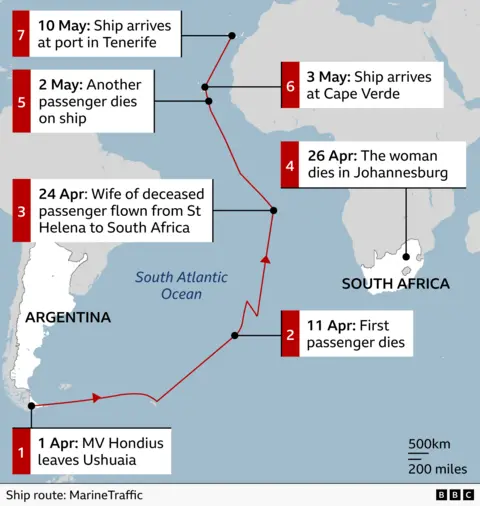
The complex operation to prevent the rare Andes strain of this virus spreading is described by Spain’s health minister as “unprecedented”.
On Saturday, she stressed that the risk of contagion for the general population was low. “We believe that alarmism, misinformation and confusion are contrary to the basic principles of preserving public health.”
Security measures in the port, an industrial facility in the south of Tenerife, increased notably on Saturday. Spain’s military police and disaster response teams have both set up large reception tents and access to the waterfront is restricted.
Spanish nationals leaving the ship will be flown to Madrid, where they face a mandatory quarantine in the Gomez Ulla military hospital. Complete isolation would be gruelling – the virus has an incubation period of up to nine weeks – and it is not clear how long people in Spain or elsewhere will be quarantined.
The head of the World Health Organization (WHO) Tedros Adhanom Ghebreyesus, now in Tenerife to oversee the disembarking, has praised the authorities for their “solid and effective response” to this outbreak.
It has been linked to a landfill site in the southernmost tip of Argentina, popular with birdwatchers. The virus is carried there by rodents, and it’s rare for it to pass between people, but three cruise passengers have died.
The WHO boss has urged nervous Spaniards to trust those in charge of the evacuation.
“Your concern is legitimate, because of the experience of Covid: that trauma is still in our minds,” he acknowledged. But he added that the risk of wider contagion now was low “because of how the virus works, and because of how the Spanish government has prepared to avoid any problem”.
There was some anger here when people learned the Hondius was being diverted to their island.
On Friday, a group of port workers gathered outside the local parliament in noisy protest, concerned that safety measures were not strong enough.
Then very late last night, all the carefully laid plans were briefly thrown into chaos when the president of the Canary Islands, Fernando Clavijo, said he would refuse to permit the ship into port as the disembarkation could not be done in a day. The central government in Madrid had to intervene.
Clavijo then claimed on TV that a rat carrying the hantavirus might “get off the ship in the middle of the night and endanger the people of the Canary Islands”. The health secretary had to come out and insist that such a scenario was “not a risk”.

In general, people on the island seem reassured that the risk is low.
“The virus is dangerous, of course. But they say you need to have very close contact to get it,” a woman named Jennifer told me, out walking with her child in Tenerife’s capital Santa Cruz.
“If we’re careful, we hope it’s not too serious.”
Not everyone will disembark in Tenerife from the Hondius: some 30 crew members will stay on board to take the cruise ship back to the Netherlands. But for most, there is at last an end in sight to weeks of fear and uncertainty at sea.
Now come the long weeks of quarantine.

[BBC]

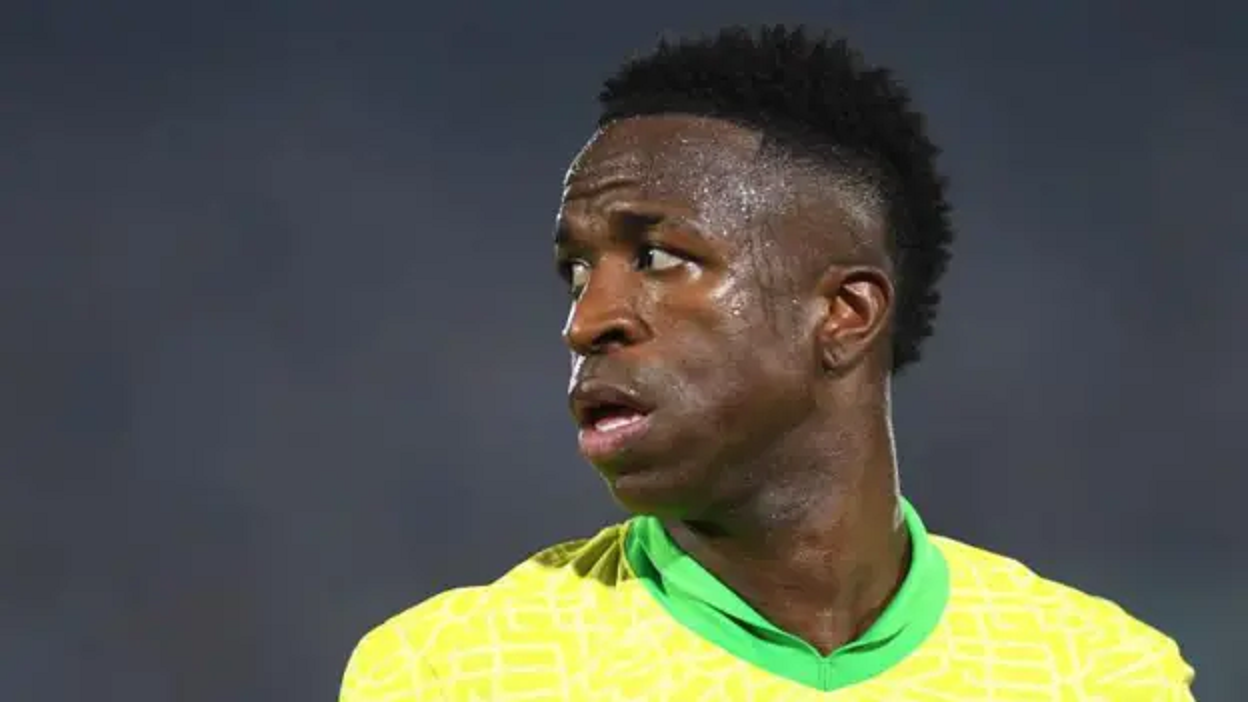
Vinicius Jr spared Brazil the embarrassment of defeat in an opening World Cup match for the first since 1934 as his spectacular solo goal earned a draw for the five-time winners against Morocco at the New York New Jersey Stadium.
Brazil fell behind in the 21st minute when Ismael Saibari lifted the ball over the onrushing Alisson Becker from outside the area following a lapse in communication between the Liverpool goalkeeper and his defenders, Gabriel and Marquinhos.
It was the first time the African champions had scored against South American opposition at the World Cup, having failed to do so against Peru in 1970 and Brazil in 1998.
Morocco continued to dominate and, by the 30th minute, had registered 12 shots – the most Brazil have faced in a World Cup match since their encounter with Mexico in 2018.
But as Mohamed Ouahbi’s side failed to capitalise on their advantage, Brazil drew level 13 minutes before the break through Vinicius.
Making his 50th appearance for the Selecao, he collected a ball from Bruno Guimaraes inside the area, cut inside, and unleashed a fierce strike past Yassine Bounou.
Former West Ham midfielder Lucas Paqueta almost put Brazil ahead in first-half stoppage time, but his acrobatic effort was tipped behind for a corner.
With several members of Brazil’s triumphant 2002 squad watching on in New Jersey – including Ronaldo, Kaka and Roberto Carlos – Carlo Ancelotti’s side began to move through the gears after the break.
And although chances were at a premium for both sides, Raphinha came closest to finding an elusive second when he narrowly failed to connect with Guimaraes’ low-driven cross across the face of goal.
The draw means Morocco’s wait to win their opening game at a World Cup goes on, while Brazil’s remarkable 92‑year unbeaten first-match record remains intact.
On a night full of history for Brazil, this lethargic display is unlikely to live long in the memory.
Brazil’s last World Cup game on US soil was also a forgettable performance, the only final to finish 0-0 after 120 minutes before they defeated Italy on penalties in 1994.
Now, 32 years on from that game in Pasadena, the Selecao are led by a foreign manager at the tournament for the first time as they look to win the World Cup for only the second time since then.
But if Ancelotti’s remit is nothing less than delivering a sixth World Cup success, he will have been far from satisifed with what he saw at MetLife Stadium.
Brazil started sluggishly and looked unusually open, struggling to retain possession or match Morocco’s intensity in the sweltering New Jersey heat.
It resulted in an underwhelming display that, for long periods, looked set to end Brazil’s remarkable 92-year unbeaten record in opening matches of the World Cup.
That was until they were bailed out by the individual brilliance of Vinicius – a sight supporters of the national team have demanded more of since his senior debut in 2019.
It is unlikely to be the last moment of magic we see from the forward this summer.
If Brazil are to reach the final on 19 July, Ancelotti may have little choice but to rely heavily on the man who helped deliver Champions League success during their time together at Real Madrid.
Morocco face Scotland at Boston Stadium on 19 June (23:00 BST), while Brazil take on Haiti at Philadelphia Stadium on 20 June (01:30 BST)
[BBC Sports]
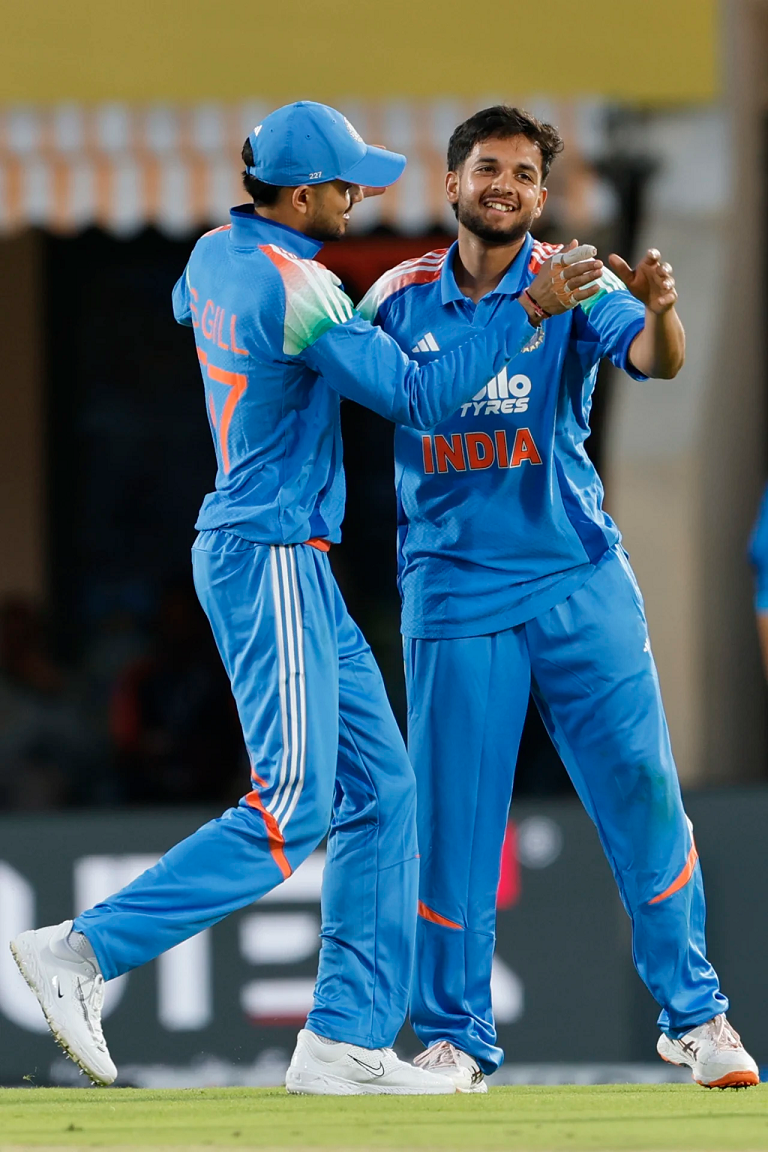
Debutants Harsh Dubey and Gurnoor Brar claimed three wickets each, while Shubman Gill slammed a fluent 66-ball 84 not out as India eased past Afghanistan in the rain-reduced opening ODI in Dharamsala, by seven wickets.
Scheduled to begin at 1.30pm local time, the match was delayed by more than four hours due to persistent drizzle and reduced to 25 overs a side. Once the weather cleared, Rahmanullah Gurbaz dazzled with a sublime 51-ball 102, the fastest century by an Afghanistan batter and his ninth in ODIs. But the rest of the batters failed to create much impact as Afghanistan folded for 194 in 24.5 overs. Arshdeep Singh and Nitish Kumar Reddy also picked up two wickets apiece.
The Indian batters did not break much of a sweat in the 195 chase. Rohit Sharma was run out for 16 but Gill held firm, recording his 18th ODI half-century, while also becoming the second-fastest batter to breach the 3000-run mark in ODIs. Ishan Kishan scored 34 off 22 while KL Rahul ended with an unbeaten 39 off 19 and hit the winning runs as India took 22.5 overs to close the chase and take a 1-0 lead in the three-match series.
The first innings revolved around Gurbaz. He had his moments – he should have been lbw on 14, but India failed to review, and also run out on 30 – but kept the Afghanistan innings ticking after India had the visitors in early trouble. Gurbaz waltzed down the track first ball of the shortened innings and missed, and then crashed Arshdeep for four and six to collect 11 off the first over.
Gurnoor cranked up the pace right away and was rewarded with just his fifth ball when Ibrahim Zadran spooned a leading edge to mid-off. Arshdeep then pinned Sediqullah Atal in front of the stumps before taking out Rahmat Shah who mistimed over square leg, with Dubey taking a smart catch running back.
At 26 for 3 inside five overs, Afghanistan were in danger of collapsing in a heap but Gurbaz arrested the slide. He dominated the 116-run fourth-wicket stand in 11 overs, scoring 82 in the partnerships with Hashmatullah Shahidi. He struck Prasidh Krishna for two fours in the seventh over and then took on Dubey, smashing him for a four and six before reaching his fifty off 25 balls by depositing him over deep midwicket.
A flicked-scoop off Prasidh helped Gurbaz race through the 60s before he took a special liking to Washington Sundar, thumping him for a four and two sixes in the 12th over. Shahidi, at the other end, did his job collecting the odd boundary and rotating the strike but the Afghanistan innings was all about Gurbaz. He reached 94 with a supreme six over long-off and got his century off 48 balls with a brace to deep midwicket in the 15th over. Going at 9.33 an over after 15, Afghanistan were looking at a score in excess of 220 but India came back brilliantly.
Reddy flattened Gurbaz’s middle stump in the 16th over, while Dubey claimed his maiden international wicket by nipping out Shahidi in the next. Azmatullah Omarzai hit Dubey for two sixes, but perished to the same bowler soon after. Gill took a one-handed stunner at slip, leaping to his left and grabbing a thick outside edge off AM Ghazanfar’s blade as Afghanistan slipped to 182 for 8 after 22 overs. Rashid Khan hit two fours before Gurnoor ended the Afghanistan innings.
India were 7 for 0 without a legal ball bowled as Omarzai began the innings with five wides, a no-ball and another wide. He then pinned Rohit on the right glove with a bouncer in a first over full of drama. Rohit needed the physio’s attention multiple times but he soon found his groove, punching debutant Ziaur Rahman past backward point and then pulling Omarzai for a six and four.
Gill opened his account with a sublime back-foot cover drive and then square drove Ghazanfar as India reached 40 for 0 after six overs. Afghanistan found a ray of hope when a misunderstanding between Rohit and Gill resulted in a run-out. Rohit ticked Ghazanfar to the left of midwicket and set off, with Gill, who found the bowler in his way, having his glove up. Rohit had, meanwhile, run halfway and failed to make it back despite a dive.
Kishan, playing his first ODI since October 2023, quickly found his groove. He added 70 off 43 balls with Gill to keep the India innings going. The two collected boundaries in almost every over, ensuring the required rate was always in check. They took on Mohammad Nabi with Kishan first hitting him for a four and six in the tenth over before Gill smoked him for a six and two fours in the 12th to bring up a 37-ball fifty.
Kishan was undone by a Rashid googly as he charged down the track and lost his off stump after missing the line. Shreyas Iyer looked rusty during his 12 off 15 balls but Rahul immediately injected momentum into the chase. He started with a ramp over deep third and with India needing 33 off 24, smashed Ziaur for 6, 4, 4 and then ended the 22nd over with an effortless six over deep extra cover.
Rahul and Gill added an unbroken 53 off 32 balls for the fourth wicket with Rahul hitting the winning runs off Mohammad Saleem. For Afghanistan, only Rashid and Ziaur managed a wicket each.
SCORES:
India 195 for 3 in 22.5 overs (Shubman Gill 84*, KL Rahul 39*, Ishan Kishan 34; Rashid Khan 1-37) beat Afghanistan 194 in 24.5 overs (Rahmanullah Gurbaz 102, Hashmatullah Shahidi 27, Azmatullah Omarzai 26; Gurnoor Brar 3-27, Harsh Dubey 3-47, Arshdeep Singh 2-27, Nitish Kumar Reddy 2-31) by seven wickets
[Cricinfo]
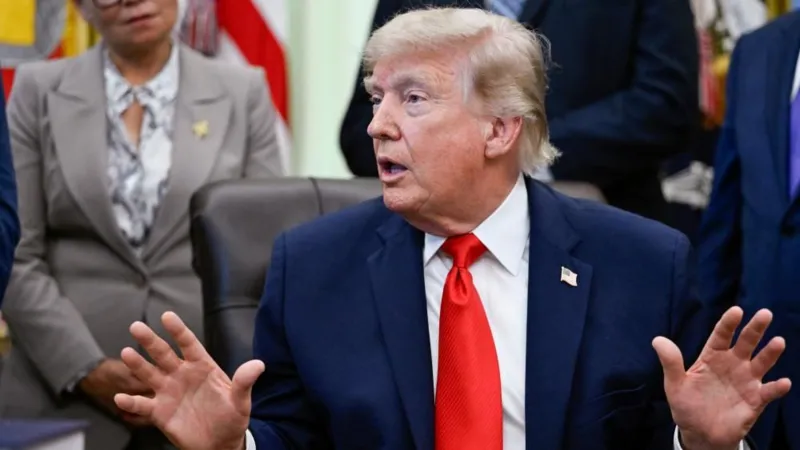
President Donald Trump has said a deal to end fighting between the US and Iran is scheduled to be signed on Sunday, after Iran cast doubt on the timing.
In a post on social media, Trump said the Strait of Hormuz, a key shipping route, would be “open to all” once the deal is agreed.
Pakistan, a key mediator, also said the deal was expected to be finalised within 24 hours and they were “preparing for the electronic signing”.
Before Trump’s comments, Iranian foreign ministry spokesman Esmaeil Baghaei expressed caution over the timeline, saying: “We will have to wait and see about the exact date of the signing of the memorandum of understanding, although it will not be tomorrow.”
In a post on Truth Social, Trump wrote: “The Deal is scheduled to get signed tomorrow, and immediately after it is signed, the Hormuz Strait is OPEN TO ALL.”
In an apparent reference to Iran’s enriched uranium stockpiles, Trump said that “at the appropriate time, when all is calm, we will go in and get the Nuclear Dust”, adding it would later be destroyed.
For decades, Iran has been accused by Western countries of trying to build a nuclear weapon. It has denied the accusations saying its programme is for peaceful purposes – to generate electricity and for research purposes.
Trump also warned that if things would not “work out quickly, easily and smoothly”, Washington had “the ultimate alternative, hopefully never to be used again!”
Earlier on Saturday, Pakistani Prime Minister Shehbaz Sharif said that “we are closer to a peace deal than ever before”.
“With finalisation likely expected in the next 24 hours, Pakistan is preparing for the electronic signing of the peace deal immediately after, followed by technical level talks next week,” Sharif wrote on X.
On Friday, Iran’s Foreign Minister Seyed Abbas Araghchi said that a deal with the US was close.
The agreement envisaged an end to the conflict between Israel and Hezbollah in Lebanon, he said.
Araghchi told Iran’s state TV that the deal included reopening the Strait of Hormuz and also the lifting of a US blockade of Iranian ports.
However, he said talks on Iran’s nuclear programme would begin later.
US officials have confirmed some of the details of the agreement, saying economic benefits for Iran would depend on Tehran meeting its obligations.
Previous reports from the US had suggested Lebanon may not be part of this deal – with Iran reportedly insisting on it.
In recent months, variations of an agreement have been expected several times but have not been completed in the later stages.
The war began with US and Israeli strikes across Iran on 28 February, prompting Iran to attack Israel and US-allied states in the Gulf – as well as effectively closing the Strait of Hormuz, a key shipping route for the world’s oil and liquefied natural gas.
Despite having agreed a ceasefire in April, the US and Iran have exchanged intermittent fire, including two rounds of tit-for-tat strikes this week.
[BBC]

Vinicus Jr recues draw for Brazil against Morocco

Kidnapped Nigerian retired general dies in captivity

Switzerland to vote on plan to cap population at 10 million

Gill, Rahul seal India’s chase for 1-0 lead after Gurbaz century

Trump says US-Iran deal to be signed on Sunday as Tehran casts doubt on timing

Litchfield, spinners hand Australia big win over South Africa

‘Dates have the highest sugar content to fight Coronavirus’

Sunday Island 27 December – Headlines

#SundayIsland 17th December – Headlines

Sunday Island – 28th March

Sunday Island Headlines – 21 March

Sunday Island – 21st February – Headlines
-

 Editorial6 days ago
Probe Sallay’s complaint
-

 News4 days ago
Local firms move millions of dollars overseas for phantom imports: Govt.
-
 News2 days ago
CIABOC summons Yoshitha over his participation in British Navy training programme
-
 Midweek Review4 days ago
July 09: An inexcusable overall security failure and exceptional contingency plan
-

 Opinion5 days ago
Could Sri Lanka once again face an economic crisis similar to 2022?
-

 News4 days ago
AI raises concerns over arrest of Sallay and rapper under PTA
-
 News5 days ago
Sallay refuses to end hunger strike unless probe is taken out of CID led by Shani
-
 Latest News5 days ago
Iran and Israel say they will pause strikes but warn of retaliation if ceasefire breached again