
Business
South Asian Nitrogen Hub (SANH) Research Study at Dilmah’s Queensberry Estate


Working to Understand the Impact of Nitrogen Pollution from Ammonia on South Asian Forest Ecosystems
Since 2020, the UKRI GCRF South Asian Nitrogen Hub (SANH), in collaboration with Dilmah Tea, Dilmah Conservation, and the University of Peradeniya, has been conducting a study on the impact of ammonia pollution within a tropical forest ecosystem.
A news release on the subject from Dilmah explained emissions of ammonia to air represent a form of nitrogen waste, which is mainly lost from fertilizers and manures, reducing productive output in agriculture.
The project partners established an experimental site within the Rilagala Forest Sanctuary, adjacent to the Dilmah Queensberry Estate. Notably, South Asia has become a hot spot for nitrogen waste, leading Sri Lanka to lead international ambition to halve nitrogen waste by 2030, as declared during the Colombo Declaration of UN Day in 2019. The experimental site has now become a permanent monitoring plot.
Nitrogen, essential for food and protein production, poses a significant threat due to the excessive nitrogen waste generated from fossil fuel burning and the overuse of fertilizers. One key form of nitrogen release into the environment is ammonia, which can have adverse impacts on natural ecosystems and formation of fine particulate matter air pollution, which is damaging for human health.
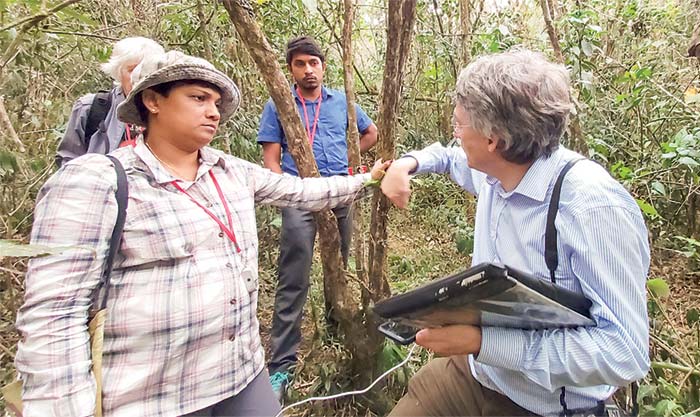
The SANH research project addresses the pressing need for baseline data on the consequences of nitrogen pollution in much understudied South Asian Forest ecosystems, aiming to provide crucial insights for sustainable nitrogen management policies.
An integral part of this research involves the innovative use of a controlled ammonia enhancement system in forests, making it one of only two such sites globally. In this system the atmospheric ammonia pollution equivalent to a small farm is simulated. A system was developed to release ammonia only under specific wind conditions, ensuring it reaches designated areas where lichen and vegetation research plots are located.
The UKRI GCRF South Asian Nitrogen Hub (SANH) collaborates with 32 leading research organizations across South Asia and the UK. In Sri Lanka, the research team is led by Professor S.P. Nissanka of the University of Peradeniya, in partnership with the Hub lead Prof. Mark Sutton, of the UK Centre for Ecology & Hydrology, Edinburgh. Specific expertise is provided by Dr. Gothamie Weerakoon, an internationally renowned lichen expert based at the Natural History Museum, London who previously collaborated with Dilmah Tea on a book about lichens and Dr. Ajinkya Deshpande, an environmental ecologist at UKCEH.
Professor Nissanka commented: “This is a superb opportunity for Sri Lanka to demonstrate its international leadership in both nitrogen science and policy. The Rilagala experiment on ammonia is the first of its kind in the whole of Asia”.
Professor Sutton added, “We are looking at work to raise awareness by better understanding the key threats. For example, seeing how nitrogen pollution is damaging coral reefs, exacerbating the problem of climate change with coral bleaching, seeing how nitrogen is affecting forest biodiversity, which is little studied, and finally we are looking at bringing those fluxes and flows together.”
Dr. Deshpande, emphasized “This experiment serves as a platform on which other institutes can build, using it as an example of the critical importance of data collection. Our methodology can be replicated elsewhere, broadening the impact of our work.”
In 2020, a research site was established at 1600 meters within the Rilagala Forest Reserve, which had been surrounded by Queensberry Estate tea plantations for nearly two centuries. This site offered ideal conditions and a rich biodiversity of lichen species, serving as effective bioindicators for monitoring nitrogen pollution.
Dr. Gothamie Weerakoon, said “The conclusions drawn from this data are crucial for sustainable farming, crop development, and improved livelihoods. If other corporate sector organizations who support such research, like Dilmah, come forward, it will illuminate the future of Sri Lanka and South Asia.”
Dilmah’s Climate Change Research Centre at Queensberry Estate in Nawalapitiya, the only privately owned climate change center in Sri Lanka, has provided unwavering logistics support to the SANH team, even during the COVID-19 pandemic and economic crises, demonstrating their dedication to climate change research. Local student researchers working on the project are supported by Dilmah through the Climate Research Centre, offering them valuable exposure to international collaborators, and raising awareness about the impact of climate change.


Sri Lanka’s economic strategy continues to focus on exports, productivity and fiscal consolidation.
Yet one of the country’s most valuable assets — its forests and traditional forest-based farming systems — remains largely absent from economic planning. This is no longer an environmental oversight. It is a business risk.
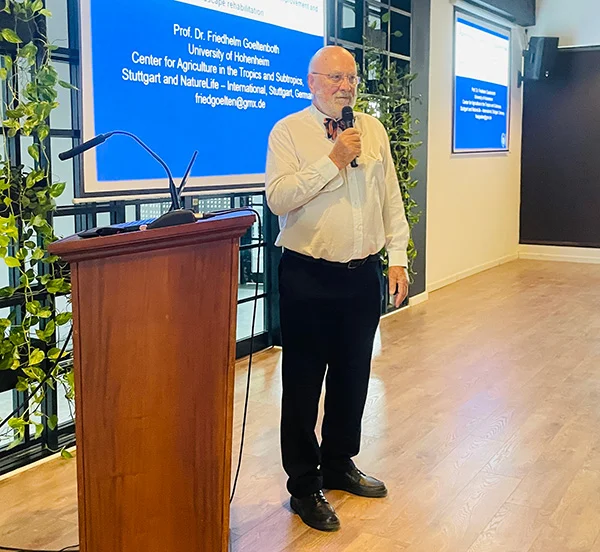
At a recent Dilmah Genesis Thought Leadership Series lecture in Colombo, tropical ecology expert Professor Friedhelm Goeltenboth delivered a clear message: once forests are destroyed, the economic value they provide is lost permanently.
What replaces them — monoculture plantations — may appear efficient, but over time they generate declining yields, rising input costs and growing exposure to climate shocks.
From a financial perspective, this is asset depletion, not development.
Monoculture systems simplify production but externalise costs. Soil erosion, fertiliser dependency, water stress and biodiversity loss eventually hit farmers, banks, insurers and the state.
Sri Lanka is already seeing the consequences through falling productivity and rising agricultural vulnerability.
Forest-integrated farming offers a different model — one that treats land as a multi-income asset.
Spices such as cinnamon, pepper, cardamom and nutmeg can be grown under shade alongside fruit, timber and fibre crops, stabilising income while protecting soil and water. For lenders and insurers, diversified systems reduce risk. For exporters, they support traceability, sustainability certification and premium pricing.
The strongest business opportunity lies in carbon markets. Voluntary carbon markets allow companies to offset emissions by funding verified forest conservation and restoration.
Across Southeast Asia, communities now earn income simply by protecting forests that store carbon.
Sri Lanka has the scientific capacity to enter this space. Farmers can collect data; experts can certify it. What is missing is a coordinated national framework that allows communities and corporates to participate efficiently.
Carbon revenue will not replace agriculture, but it can stabilise it — providing income during crop maturation and creating a new form of export: environmental services.
Ignoring this opportunity carries downside risk.
Biodiversity loss, pollinator decline and climate volatility threaten long-term agricultural productivity. Forests are not sentimental assets; they are economic infrastructure.
Sri Lanka’s recovery cannot be built on short-term extraction. If the country wants resilient growth, it must start recognising the real value of what is still standing, he added.
By Ifham Nizam

Sri Lanka batting coach Vikram Rathour has hailed middle-order batter Pavan Rathnayake as one of the finest players of spin in the modern game, saying the youngster’s nimble footwork and velvet touch were a “breath of fresh air” for a side long troubled by the turning ball.
Drafted in for the second T20I after Sri Lanka’s familiar struggles against spin, Rathnayake looked anything but overawed by England’s seasoned tweakers, skipping down the track with sure feet and working the ball into gaps with soft hands.
“He is one of the better players when it comes to using the feet,” Rathour told reporters. “I haven’t seen too many in this generation do it as well as he does. That is really impressive and a good sign for Sri Lankan cricket.”
Sri Lanka went down in a last-over nail-biter but there were silver linings despite the hosts being a bowler short. Eshan Malinga was forced out after dislocating his left shoulder and has been ruled out for at least four weeks, a blow that ends his World Cup hopes. Dilshan Madushanka, Pramod Madushan and Nuwan Thushara have been placed on standby.
 Power hitting remains Sri Lanka’s Achilles’ heel and Rathour, who carries an impressive CV from India’s T20 World Cup triumph two years ago, pointed to a few grey areas in the batting blueprint.
“There are two components to T20 batting,” he said. “One is power hitting, but the surfaces here, especially in Colombo, are not that conducive to clearing the ropes. The wickets are slow and the ball doesn’t come on to the bat. The other component, just as important, is range as a batting unit.”
Even when Sri Lanka lifted the T20 World Cup in 2014 they were not blessed with a dressing room full of big hitters, relying instead on sharp running, clever placement and a mastery of spin. Rathour preached a similar mantra.
“If you are not a team that hits a lot of sixes, you can still find plenty of fours by utilising the whole ground,” he said. “Most of them sweep well, reverse sweep and use their feet. That is encouraging. If you don’t have the brute power, you can make up for it by using angles and scoring square of the wicket.
“These wickets perhaps suit that style more. They are not the easiest surfaces to hit sixes, and I’m okay with that. If they can use their feet and the angles well, that is as good.”
Rex Clementine
at Pallekele
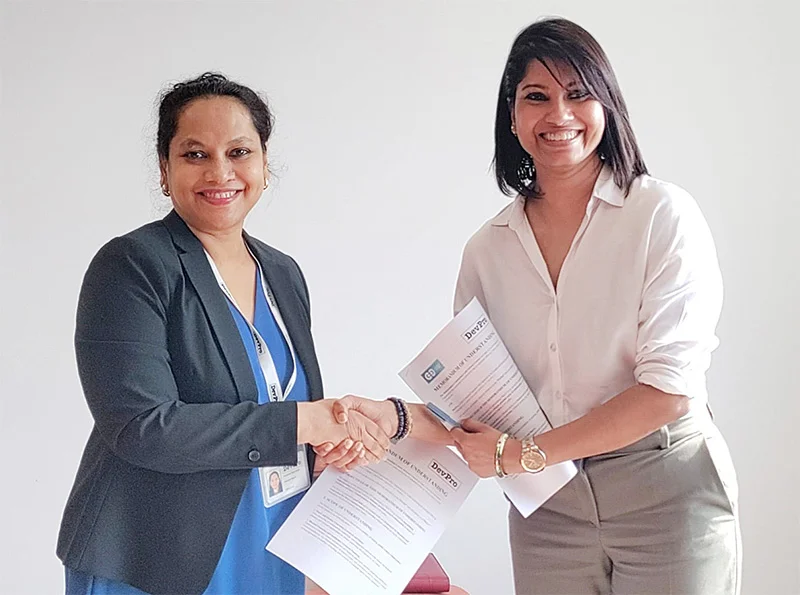
Sri Lanka’s dairy and livestock sector is central to food security, rural livelihoods, and national nutrition, yet continues to face challenges related to productivity, climate vulnerability, market access, and financing.
In this context, Connect to Care and DevPro have entered into a formal partnership through a Memorandum of Understanding (MoU) to support Sri Lanka’s journey towards dairy self-sufficiency.
A core objective of DevPro is to strengthen inclusive and resilient dairy value chains by empowering smallholder farmers through technical assistance, capacity building, climate-resilient practices, and market-oriented approaches, building on its extensive field presence across Sri Lanka.
A core objective of Connect to Care is to support the achievement of dairy self-sufficiency by 2033, as outlined in the national development manifesto, with an interim target of 75% self-sufficiency by 2029.
By strengthening local dairy production and value chains, this effort will also help reduce Sri Lanka’s dependence on imported dairy products, while improving farmer incomes and domestic supply resilience.
The partnership will focus on climate-smart dairy development, multi-stakeholder coordination, and exploring blended finance and PPP models—providing a structured platform for development partners and the private sector to engage in scalable action.

Somali woman executed for murdering a child in a case that sparked outrage

Last over in multi-day cricket to continue despite a wicket after latest amendments to Laws

England will bat first in 3rd ODI

Members of the National Student Parliament meet PM

Sri Lanka aim to overcome disarray and end trophy drought

Mrs. I.J. Aberathne appointed Director General of the Department of Trade and Investment Policy

‘Dates have the highest sugar content to fight Coronavirus’

Sunday Island 27 December – Headlines

#SundayIsland 17th December – Headlines

Sunday Island – 28th March

Sunday Island Headlines – 21 March

Sunday Island – 21st February – Headlines
-
 Opinion5 days ago
Sri Lanka, the Stars,and statesmen
-
 Business6 days ago
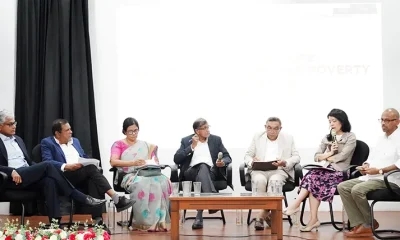
Climate risks, poverty, and recovery financing in focus at CEPA policy panel
-

 Business4 days ago
Hayleys Mobility ushering in a new era of premium sustainable mobility
-

 Business4 days ago
Advice Lab unveils new 13,000+ sqft office, marking major expansion in financial services BPO to Australia
-
 Business4 days ago
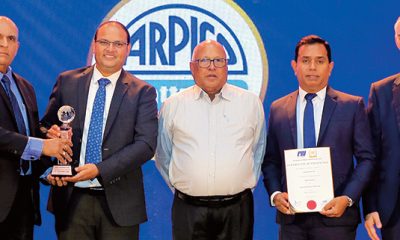
Arpico NextGen Mattress gains recognition for innovation
-

 Business17 hours ago
SLIM-Kantar People’s Awards 2026 to recognise Sri Lanka’s most trusted brands and personalities
-

 Business3 days ago
Altair issues over 100+ title deeds post ownership change
-

 Business3 days ago
Sri Lanka opens first country pavilion at London exhibition