
News
Socialist Alliance calls on govt. to take immediate and principled action in defence of Cuba


The Executive Committee of the Socialist Alliance yesterday strongly condemned what it described as an escalation of the United States’ “imperialist siege” against Cuba, and called on the Sri Lankan Government to take immediate and principled action in defence of Havana.
In a statement issued by its General Secretary, Dr. G. Weerasinghe, the Alliance, comprising the Communist Party of Sri Lanka, Lanka Sama Samaja Party, Democratic Left Front and Sri Lanka Mahajana Party, accused Washington of intensifying its decades-long blockade by disrupting Cuba’s vital energy supplies.
The statement said that after restricting Venezuela’s oil exports to Cuba, the United States had now pressured Mexico to halt its oil shipments to the island, which reportedly accounted for more than 40 percent of Cuba’s imports. This, it said, had effectively transformed an already “inhumane blockade” into a “total siege”, threatening power generation, production and the livelihoods of ordinary Cubans.
Full text of the statement, titled ‘Condemnation of US Imperialist Siege Against Cuba and Call for Sri Lanka Government to Act’: The Executive Committee of the Socialist Alliance (Communist Party of Sri Lanka, Lanka Sama Samaja Party, Democratic Left Front, Sri Lanka Mahajana Party) vehemently condemns the latest escalation of the decades-long criminal blockade against the Republic of Cuba by the United States of America. Washington, having already strangled Venezuela’s oil exports to the island, has now pressured the Mexican government into halting its crucial oil shipments, which constituted over 40% of Cuba’s imports. This calculated move transforms an inhumane blockade into a total siege, directly targeting power generation, production, and the livelihood of the Cuban people, with the explicit goal of provoking economic collapse and forcible regime change.
This act of economic warfare constitutes a blatant assault on Cuban sovereignty and a violation of all norms of international law and justice. It continues a pattern of US imperialist aggression across the hemisphere, treating nations as mere possessions to be dominated, as seen in the undermining of sovereignty in Argentina and the subjugation of Greenland. The US administration’s strategy of “blitzkrieg” seeks rapidly to crush independent nations, with Cuba as a primary target, before turning its focus to its global strategic confrontations – much as Hitler’s Nazi regime invaded and occupied Austria, Czechoslovakia and Poland before facing the Allied Powers in the Second World War.
Sri Lanka has a profound debt of gratitude to Cuba. During our nation’s most challenging hours of internal conflict, Cuba selflessly dispatched doctors to provide humanitarian medical assistance to our people in need, without conditions or political demands. This solidarity stands in stark contrast to the coercive and destructive policies of the United States.
We, therefore, issue a firm call to the Government of Sri Lanka: it is time to demonstrate principled courage and unequivocal solidarity. We urge the government immediately and forcefully to:
1. Publicly condemn the US-driven economic siege of Cuba at the United Nations and all relevant international forums.
2. Co-sponsor and rally support for the annual UN General Assembly resolution demanding an end to the US blockade against Cuba.
3. Explore all bilateral and multilateral avenues to provide tangible support to Cuba in overcoming this engineered crisis.
We demand all progressive anti-imperialist political forces, civil organisations and individuals to stand resolutely against the attempt of US imperialists to suffocate heroic Cuba and its people with this most inhuman blockade.
Silence in the face of such blatant coercion is complicity. The people of Sri Lanka remember friends in times of need. Now is the moment to stand with Cuba, as they stood with us. The imperialist strategy of economic strangulation today against Cuba is a threat to the sovereignty of all independent nations tomorrow. As Comrade Che Guevara stated, our greatest challenge is imperialism. It is a challenge we must resist together.

News
USD 2 mn bribe: CID ordered to arrest Shasheendra R, warrant issued against ex-SriLankan CEO’s wife
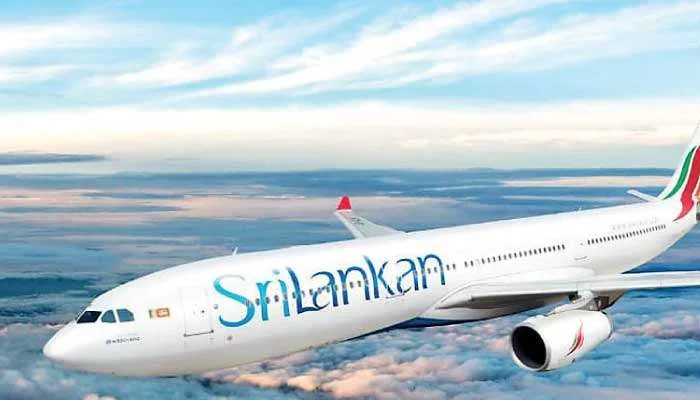
Colombo Fort Magistrate Isuru Neththikumara has directed the Criminal Investigation Department (CID) to arrest former SriLankan Airlines board member Shasheendra Rajapaksa and produced him in court in connection with the ongoing probe into the Airbus deal during his uncle President Mahinda Rajapaksa’s second term.
The Magistrate sought an explanation from the CID regarding the delay in executing the arrest warrant in respect of Shasheendra Rajapaksa when the case was taken up yesterday (22).
Neththikumara issued a warrant on Priyanka Nayomali Wijenayake, the wife of former SriLankan Chief Executive Officer Kapila Chandrasena, over the investigations into the Airbus transaction.
The Chandrasenas have been accused of receiving US 2 mn bribe to facilitate the transaction.
The Commission to Investigate Allegations of Bribery or Corruption (CIABOC) is also inquiring into the Airbus deal. The Magistrate further ordered that the case pending before the Court be called again on May 20.
News
Lanka faces crisis of conscience over fate of animals: Call for compassion, law reform, and ethical responsibility

Sri Lanka’s long-standing challenges in animal welfare have once again come into sharp focus, as conservationists and activists renew calls for urgent legal reform, humane population management, and stronger habitat protection for wildlife.
In a detailed appeal addressed to Venerable Bhikkhu Pannakara of the Huong Dạo Vipassana Bhavana Centre in Fort Worth, Texas, a group of Sri Lankan animal rights activists and conservationists outlined what they describe as an escalating humanitarian and ecological crisis affecting both street animals and wildlife.
“We respectfully and warmly welcome you, together with the venerable monks and dear Aloka, to Sri Lanka,” the letter begins, acknowledging the monk’s spiritual mission and his association with compassionate initiatives for animals.
The appeal highlights Sri Lanka’s estimated street dog population—believed to be around three million—describing their widespread suffering due to inadequate sterilisation programmes, limited adoption systems, and lack of sustained national policy intervention. It notes that many animals live in conditions marked by disease, injury, starvation, and neglect, with survival largely dependent on community goodwill and under-supported volunteer networks.
The letter also draws attention to the worsening Human–Elephant Conflict, which remains one of Sri Lanka’s most pressing conservation issues.
Citing recent data, the activists note that between 2016 and recent years, more than 3,700 elephants have died due to various causes, including habitat loss, electrocution, gunshot wounds, and use of explosive bait to maim and eventually kill the majestic animals. In 2023 alone, 488 elephant deaths and 187 human fatalities were recorded, while early figures from the current year also indicate continued losses.
Forest cover, now estimated at less than 16%, has forced elephants into human settlements in search of food, intensifying the conflict and deepening ecological stress.
“These are not just statistics; they reflect a deep imbalance between development and ecological responsibility,” said Panchali Panapitiya, speaking on behalf of the group.
She emphasised that elephants, revered culturally and religiously in Sri Lanka, are increasingly becoming “internally displaced beings,” pushed out of their natural corridors and exposed to constant risk.
A central concern raised in the letter is Sri Lanka’s outdated legal structure for animal protection. The current law, the Prevention of Cruelty to Animals Ordinance of 1907, is described by activists as insufficient for modern animal welfare standards.
Despite years of discussion, a comprehensive Animal Welfare Bill has yet to be enacted, leaving what activists describe as a critical legal gap.
“The absence of updated legislation means cruelty often goes inadequately punished, and systemic protection for animals remains weak,” said Panchali Panapitiya.
The group has urged the government to prioritise the long-delayed Animal Welfare Bill, introduce nationwide sterilisation and adoption programmes for street dogs, and strengthen protection of elephant habitats and migratory corridors.
They also call for science-based wildlife management policies, stronger enforcement against cruelty, and improved coordination between wildlife authorities and local communities.
“These issues are not separate—they are interconnected aspects of how a society treats the most vulnerable forms of life,” Panapitiya noted.
The letter frames the issue not only as a policy matter but also as a moral and spiritual responsibility, invoking Buddhist principles of karuṇa (compassion) and metta (loving-kindness).
It expresses hope that with the guidance of the visiting monastic delegation, greater awareness can be built around animal welfare challenges in Sri Lanka, and that renewed attention can be directed toward ethical coexistence between humans and animals.
“We humbly seek your guidance and compassionate support in bringing attention to this suffering,” the letter states, adding that Sri Lanka has the potential to become a society that truly embodies compassion toward all living beings.
As Sri Lanka continues to grapple with environmental pressures, urban expansion, and biodiversity loss, animal rights advocates argue that the issue is no longer peripheral but central to the country’s ethical and ecological future.
For activists like Panchali Panapitiya and her colleagues, the message is clear: reform is overdue, compassion is urgent, and the responsibility is shared across both policy-makers and citizens.
Only through legal modernisation, habitat protection, and a cultural shift toward empathy, they argue, can Sri Lanka begin to address what they describe as a silent but growing crisis affecting countless sentient beings across the island.
By Ifham Nizam
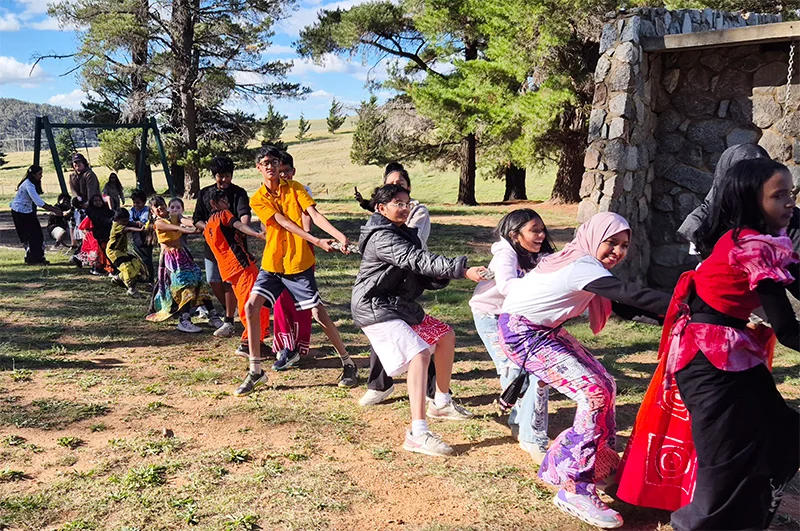
The Sri Lankan community in Cooma, Australia, celebrated their sixth consecutive Sinhala and Tamil New Year festival on 12 April.
Despite a cold autumn morning, participants arrived from Canberra and coastal Merimbula over 120 km away, dressed in vibrant coloured batiks including the auspicious red.
The ceremony began with the lighting of the traditional oil lamp by invited guests, including local dignitaries and the Sri Lankan Deputy High Commissioner Vishwanath Aponsu.
Yvi Henderson, head of the Cooma Multicultural Centre, praised the organisers, led by Udaya Liyanage, for preserving community traditions and values.
The festival featured traditional Sri Lankan foods like Kiribath, Kavum, Kokis, Asmi prepared by the women and ‘Kaludodol,’ prepared overnight by a group of men.
Games for children and adults followed, including blindfolded activities and tug-of-war, enjoyed by all attendees.
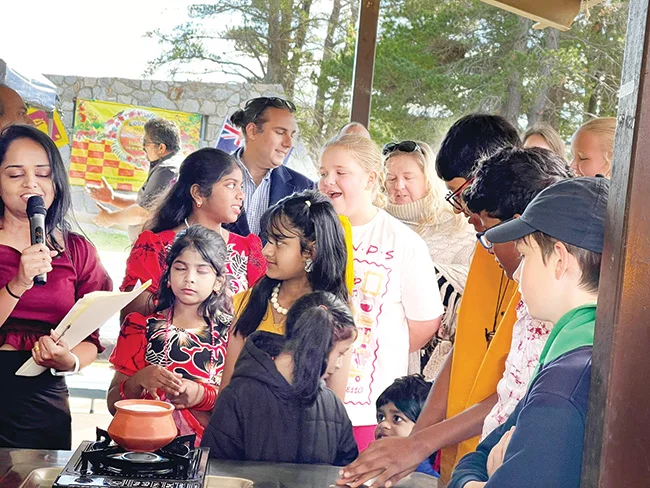
Boiling the pot of milk

USD 2 mn bribe: CID ordered to arrest Shasheendra R, warrant issued against ex-SriLankan CEO’s wife

Lanka faces crisis of conscience over fate of animals: Call for compassion, law reform, and ethical responsibility

Sri Lankan Community praised for preserving traditions and values in Australia

Seylan Bank well-positioned for growth as core performance strengthens

All-round Athapaththu helps Sri Lanka level series against Bangladesh

Terrorism financing and terrorist assets

‘Dates have the highest sugar content to fight Coronavirus’

Sunday Island 27 December – Headlines

#SundayIsland 17th December – Headlines

Sunday Island – 28th March

Sunday Island Headlines – 21 March

Sunday Island – 21st February – Headlines
-
 News2 days ago
Rs 13 bn NDB fraud: Int’l forensic audit ordered
-

 Business5 days ago
Harnessing nature’s wisdom: Experts highlight “Resist–Align” path to resilience
-

 News5 days ago
Gratiaen Trust announces longlist for the 33rd Annual Gratiaen Prize
-

 Opinion3 days ago
Shutting roof top solar panels – a crime
-

 News4 days ago
From Nuwara Eliya to Dubai: Isha Holdings markets Agri products abroad
-
 Latest News6 days ago
Singapore Zoo’s first Sri Lankan leopard cubs make their public debut
-
 News5 days ago
Heroin haul transported on 50-million-rupee contract
-
 News3 days ago
Church calls for Deputy Defence Minister’s removal, establishment of Independent Prosecutor’s Office