
Features
Socialism with Chinese characteristics for the new area

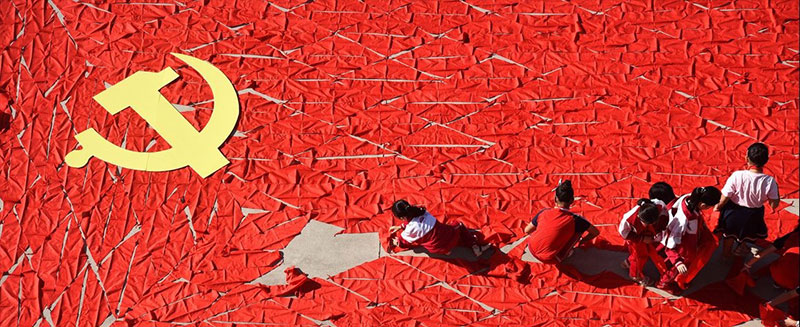
During my visit to China for the Second Global South Think Tank Dialogue, I frequently encountered the phrase “Socialism with Chinese Characteristics for the New Era.” This concept has been central to China’s governance and economic strategy, driving its transformation into the world’s second-largest economy. While many nations that adopted communism as a political ideology have struggled with stagnation and inefficiency, China’s unique approach to socialism has facilitated industrialization, poverty alleviation, and large-scale infrastructure development at an unprecedented pace.
At Marga Institute, our focus is to critically examine development models that best align with Sri Lanka’s economic, social, and political realities. As a research organization and think tank, we analyze development through multiple lenses—economic, social, political, environmental, and value-based. It was this interdisciplinary approach that heightened my curiosity when I attended a presentation on President Xi Jinping’s thought on Socialism with Chinese Characteristics for a New Era at the Party School of the Communist Party of China in Nanning City, Guangxi Province.
This article does not seek to advocate for communism or socialism, nor does it claim expertise in political science or geopolitics. Instead, it aims to explore how political structures impact development and how the Chinese Communist Party (CCP) has been organized to meet the nation’s evolving socio-economic needs.
Key Questions for Sri Lanka’s Development Trajectory
From a research perspective, China’s governance model raises several critical questions for Sri Lanka:
· Given Sri Lanka’s economic challenges and welfare-driven state structure, what aspects of socialism could be adapted to achieve a minimum of 5% GDP growth and overcome the economic crisis?
· What reforms are needed in Sri Lanka’s planning mechanisms to drive sustainable, long-term economic growth?
· How should the current ruling party, National People’s Power, be structured to effectively address development needs?
While this article does not focus on the structural aspects of the Chinese Communist Party or how Sri Lankan political parties could adapt similar models, it aims to shed light on the first two research questions—how economic planning and development strategies can be better structured in Sri Lanka.
Understanding Socialism with Chinese Characteristics
During my time in China, I engaged in discussions with Chinese academics and officials, as well as representatives from universities and think tanks across the Global South—including Bangladesh, Georgia, Tajikistan, Indonesia, Myanmar, Malaysia, Nepal, Pakistan, and Vietnam. Based on these conversations, here’s my understanding of Socialism with Chinese Characteristics and its role in China’s development success.
Key Features of Socialism with Chinese Characteristics
1. A Market-Driven Economy with State Oversight
Unlike traditional socialist economies that rely entirely on state control, China follows a “socialist market economy”—a hybrid model that allows both state intervention and market-driven growth.
State-Owned Enterprises (SOEs) dominate key sectors such as energy, finance, and infrastructure, but private businesses, foreign investment, and competition are encouraged.
A dual-track approach ensures that both government planning and market forces shape economic progress.
2. The Communist Party as the Central Authority
The CCP remains the core of political, economic, and social decision-making, ensuring long-term stability and continuity.
Unlike multiparty democracies, where frequent government changes can disrupt policies, China’s centralized leadership enables consistent economic planning.
Political reforms are gradual and carefully managed to prevent instability rather than allowing rapid democratization.
3. Pragmatic & Gradual Economic Reform
Deng Xiaoping’s “Reform and Opening-Up” introduced foreign investments, economic liberalization, and Special Economic Zones (SEZs) to drive growth.
Unlike the Soviet model, which relied on rigid central planning, China tested economic reforms regionally before scaling them up nationwide.
Policy decisions are practical and results-oriented, focused on economic success rather than ideological rigidity.
4. State-Led Development & Long-Term Planning
China’s Five-Year Plans set clear economic and social priorities, ensuring predictability and structured growth.
Heavy investments in infrastructure, technology, and education have fueled modernization and global competitiveness.
Urbanization and industrialization are state-managed to balance economic growth with social stability.
5. A Focus on Poverty Reduction & Social Welfare
China claims that it has successfully lifted over 800 million people out of poverty—one of the largest poverty alleviation efforts in history.
Unlike Western welfare models, China’s system prioritizes job creation, rural development, and regional economic balancing over direct cash assistance.
The goal is to build a “moderately prosperous society” ensuring economic development and social welfare go hand in hand.
6. Nationalism & Cultural Identity as Unifying Forces
Confucian values—such as social harmony, collective responsibility, and respect for authority—shape China’s governance and economic policies.
Economic success is tied to national pride, strengthening public support for the CCP’s leadership.
Initiatives like the Belt and Road Initiative (BRI) highlight China’s global ambitions while reinforcing sovereignty.
7. Stability Over Western-Style Democracy
China rejects Western liberal democracy, arguing that rapid political shifts could lead to instability and economic stagnation—as seen in the collapse of the Soviet Union.
Political dissent is tightly controlled through censorship, surveillance, and regulation of civil society to maintain social order.
The emphasis remains on economic growth, social harmony, and centralized decision-making, rather than multiparty governance.
What Sri Lanka may adapt from China’s example
China’s development strategy has leveraged its geographical advantages, modernized agriculture and industry, improved transport and port infrastructure, expanded e-commerce, and pursued green, bio-friendly food production. The broader goal has been to build a healthy, prosperous nation through long-term strategic planning and state-led development initiatives.
While China’s model cannot be wholesale replicated in Sri Lanka, there are key aspects in planning, governance, and economic strategy that merit further exploration. Sri Lanka’s challenge lies in balancing state-led development with economic liberalization, ensuring policies are both practical and sustainable.
China’s approach to socialism has defied conventional expectations. While many traditional socialist economies have struggled, China has strategically combined state intervention with market mechanisms—leading to rapid economic growth and global influence. This model raises important questions for Sri Lanka’s long-term planning, particularly in the context of its current financial crisis and development challenges.
As Sri Lanka navigates a critical period of economic uncertainty, understanding different governance and economic models is essential. By studying China’s development path, alongside global best practices, Sri Lanka can identify sustainable solutions that align with its unique socio-economic landscape—fostering inclusive and long-term economic growth.
While China’s centralized system enables swift decision-making and implementation, it leaves little room for dissent. In contrast, Sri Lanka’s democratic framework allows for debate and opposition, but this often results in prolonged delays in executing critical economic policies. Protests and political resistance have frequently obstructed reforms that could have propelled the country forward—whether it be the introduction of private universities to expand higher education opportunities or the now-abandoned Light Rail Transit (LRT) project that promised to revolutionize urban transport.
The question remains: Are these challenges simply a reflection of Sri Lanka’s political culture, or do external geopolitical factors play a role in fueling instability? Unlike China, Sri Lanka does not have a single-party hierarchy that can push through reforms without resistance. However, this also means that space for public discourse and criticism remains intact. The challenge for Sri Lanka is to strike a balance—ensuring that necessary reforms can be implemented efficiently while upholding democratic principles and public accountability.
Executive Vice Chairman- Marga Institute

Features
Conduct transparent and truthful investigation to reveal the truth behind Easter Sunday massacre

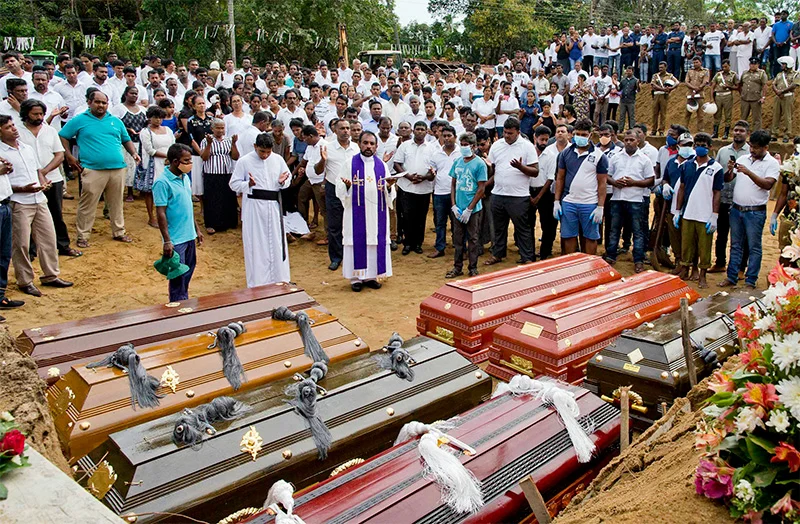
(Speech delivered, in Colombo, by His Eminence Malcolm Cardinal Ranjith at the Seventh Year Commemoration of the Easter Sunday Bomb Victims)
Most Venerable Omalpe Sobitha Nayaka Thero, Ven. Sirs, Most Rev. Dr. Andrzej Józwowicz, Apostolic Nuncio in Sri Lanka, Most Rev. Dushantha Rodrigo, Bishop of Colombo of the Anglican Church, Most Rev. Anton Ranjith, Auxiliary Bishop of Colombo and the Apostolic Administrator of the Diocese of Batticaloa, His Excellency Andre Franchè, Permanent Representative of the United Nations in Sri Lanka, Rev.
Kannan Kurukkal of the Hindu Community, dear Moulavi Rev. Masook Shajeer, dear Rev. Fathers, brothers and sisters, family members of the Easter 2019 attack victims, Your Excellencies, members of the Diplomatic Corps, Hon. Ministers, Members of Parliament, Distinguished guests and beloved brethren,
TERROR ATTACKS
I wish to first of all thankfully welcome all of you who have accepted our invitation to join us in this 7th Anniversary commemoration ceremony of the Easter Sunday bomb attacks which took place on 21st April 2019. We are aware that due to these destructive attacks 278 people lost their lives and more than 500 people received injuries which harmed them seriously or partially. It also rendered a severe blow to the economy of Sri Lanka and dangerously disturbed the atmosphere of reconciliation and unity that was by then painstakingly established between the different religions and ethnic groups in the aftermath of the 30-year war. St. Anthony’s Church, Kochchikade, where we are now gathered, St. Sebastian’s Church, Katuwapitiya, in Negombo, Zion Church of the Pentecostal Communion in Batticaloa, Cinnamon Grand Hotel, Shangri-La Hotel Colombo, Kingsbury Hotel and Tropical Inn Hotel in Colombo were the scenes of the seven bomb explosions that caused a serious bloodbath killing or maiming fully or partially the innocent worshipers in the Churches and the tourists and staff in the tourist hotels. We cannot but remember that, among the dead there were 68 children. There were 45 tourists from 14 countries who also lost their lives.
HIDDEN AGENDA
That there was a subtle but sure attempt to again create ethnic and religious disharmony in the country through these bomb attacks became clearer to us from the fact that having realised that their attempts to create inter racial and religious disturbances in the aftermath of these attacks had miserably failed due to the constant appeals made by religious leaders for calm, these plotters organised provocative attacks on the Muslim community in the Negombo Poruthota area two weeks after the April 21st attacks, on the night of the 5th May and, once again, on the 11th, 12th and 13th May starting from the Nattandiya-Madampe area, through Kotaramulla to Minuwangoda, throwing stones at Muslim houses and setting Muslim establishments on fire. One Muslim devotee was killed. The Presidential Commission of Inquiry into the Easter attacks has, in its final report, in volume one, Chapter 27, spoken extensively of these subsequent provocations. The report has clearly stated that certain Police officers and security personnel had neglected their duty and had done nothing much to control the situation during these sad second series of incidents. I wish to affirm that it is equally important to investigate as to who organised these subsequent attacks. This may have a link to the main attacks on 21st April 2019. One must also verify as to whether anyone in the security establishment prevented those responsible from controlling these attacks as and when they began. In any case looking at these subsequent provocations at creating ethnic strife, one can conclude that some people who disliked the religious leaders’ move to calm down the atmosphere after the Easter attacks, wanted to somehow create strife among the religious and ethnic communities by these subsequent provocations. In this regard, we observe that the Presidential Commission of Inquiry, too, has gone on to identify several persons involved in these post-Easter Sunday attack violent incidents in the aforementioned Chapter 27, who should be further investigated, as there is a real possibility that such acts were linked to the main attack.
In any case we have to gratefully affirm that, it is due to the deep commitment of the Most Venerable Ittepane Dhammalankara Maha Nayaka Thero, the head of the Kotte Chapter of the Siyam Maha Nikaya, and Ven. Omalpe Sobitha Nayaka Thero, who is present here with us today, who joined me in appealing for calm constantly then, over repeated press conferences given, that we succeeded in preventing any violence from breaking out in the aftermath of these bomb attacks.
CULTURE OF MURDER
What we, who organising this commemoration, ask of all those in authority is to kindly inquire into these attacks with severity and seriousness and to reveal to us as to who really was behind them. We state so in the light of the fact that in Sri Lanka, over several past decades, there had come into being a dangerous tendency to let murder, disappearances and political assassinations be buried in the sands of time without any proper investigation or inquiry. This nationally disastrous policy which began in the ’70s, still continues to haunt us as a nation. It is a very sad situation indeed. The rule of law, which had been gradually weakened over this period, especially through political interference, had become a slave of selfishness, political bankruptcy, enthroning of falsity and criminality. The tragedy of all of this, is the spreading of falsity in order to suppress the truth, daring to challenge uprightness and lawfulness within a culture of corruption, leading society into a situation where holders of wealth and power determine the truth and enjoy all the benefits thus leading society into a vortex of evil and the country into a situation of serious moral and spiritual hypocrisy and decay. In this background where values have lost their importance, affecting social discipline and resulting in the deterioration of the most important value of respect for the rule of law, sense of discipline, respect for human life and dignity, civilized and principled behaviour are all seen to be moving away from our society.
What is most distressing is the fact that political leaders had developed a culture where they instrumentalised the security establishment to get them to do illegal acts, violating all codes of decency and good order.
In such a situation searching for the truth, behind some of the major acts of violence and terror that have marked our recent history, has become extremely difficult and cumbersome. An honest search for the truth behind some of the murders, disappearances and acts of corruption has become extremely difficult due to political interference and lying. Even though there is constitutional support for the faithful execution of the law, due to the fact that the institutions guiding these processes are run by people who think and act politically, abusing their freedom and authority, truth will never emerge and often looks so unreachable and distant. We face a question as to whether these institutions or persons handling the search for the truth and manning them do ever comprehend the untold pain that the victims of this violence continue to experience. We do not understand how some people can become so cruel as to do everything in their power to block or obstruct or even willfully seek to mislead these investigations with their own politically motivated fairy tales.
What is surprising is that, when investigations on several of the other past murders and assassinations, as well as disappearances, are also being conducted, some people who have never spoken about those investigations seem to be super interested in airing out their own so called presentations and views on the Easter Sunday 2019 attacks all the time. It is the only matter on which they seem to be active. We ask them why? Is it because of a fear that the truth may finally be found and it is likely to hurt them? What I see in these interferences is an attempt to hide the truth or to sabotage the investigations from taking their objective path. The attempt by these forces, who seem to represent certain political orientations, to block the investigators, from conducting their search for the truth freely, from questioning important players behind the Easter attacks, from engaging in a search for the truth behind new revelations that have surfaced lately, is to be clearly condemned. The attempt by some people to present their own theories concerning these attacks neglecting the possibility that there could have been other hands behind these attacks is also to be flatly rejected. The Easter attacks need to be investigated in all their different aspects, nuances, new revelations, contradictions in evidence that seems to disapprove a purely one-sided analysis. The insistence by one particular political orientation in Sri Lanka to lay the blame only on one group of people, ignoring all the contradictory evidence that has since emerged, is indicative of a certain fear on their side that if all the evidence is sifted through a more complex picture, involving the past political leaders of the country in this attack, could emerge. Else one cannot understand as to why the people representing these political orientations are so excited about the manner in which these investigations are now being conducted.
OTHER ELEMENTS
The Presidential Commission of Inquiry which investigated the Easter Sunday 2019 massacre
, mentioned in its final report that due to time constraints and other factors it could not look into some of the matters that needed special attention. Among these as indicated in the first volume of their report – pages 93-94, the Commission calls upon the authorities to investigate into the role of “Abu Hind” in the plot. On this matter the Commission in the same volume quotes Hadia the wife of Zahran Hasheem, whose evidence is reported in the 17th Chapter of the first volume, pages 218, 219 and 220 and pages 82 and 222. In that statement, Hadiya mentioned that each time her husband was on a call with this “Abu Hind” he asked her to leave the place. The Commission report also affirms that this person, “Abu Hind,” was mentioned again by the then Director of State Intelligence, Nilantha Jayawardena, in his own evidence before the Commission [First Volume p. 218]. And so, it is important to further investigate and find out who this secretive person “Abu Hind” was and whether he had any connection to the Easter Sunday attacks. Indeed, the Commission report does call upon the CID to investigate this matter further [ref. Volume 1 p. 222].
Second, the report of the Presidential Commission of Inquiry has decreed as follows on the matter concerning Sarah Jasmin, the wife of Hashtoon, the bomber who blew himself up at St. Sebastian’s Church, Katuwapitiya: “the COI received evidence of two witnesses who testified that Sara was seen alive after the Easter Sunday attacks and had fled to India. In her testimony Hadiya said that after the blast at Sainthamaruthu on 26th April 2019, she lost consciousness. After she regained it, she could faintly hear a voice of a woman which sounded like Sarah. The DNA analysis with the mother of Sarah did not establish that Sarah had died in the blast. In view of this testimony the COI recommends that investigations into Sarah be continued ….” [p. 223, PCOI Final Report Vol. 1].
Another riddle to be solved on this matter is that of verifying if any higher up political or security figure was involved in ordering repeated DNA tests on the alleged piece of spinal bone found at the site of the Sainthamaruthu blast seeking to attribute it to Sarah and to conclude that indeed she died in that blast and did not survive, as alleged by other evidence including that of Hadiya, the wife of Zaharan. Finding out as to what really happened to Sarah after this blast is important as she is said to have known a lot of information about these attacks as the wife of one of the main suicide bombers, Hashtoon.
Third, it has been mentioned in evidence on 16th December 2020 before the PCOI by Chief Inspector Sampath Kumara that all data in the cellular phone and the laptop handed over by the then SIS Director Nilantha Jayawardena to the CID had been found to have been deleted. This is a serious matter and one has to investigate as to whether the said officer Nilantha Jayawardena deliberately erased off all these vital data in order to hide facts pertaining to the attacks and if so why he did that. Further, one needs to investigate thoroughly as to why this same officer tried to mislead the public on the murder of the two policemen at a check point in Batticaloa [Vavunathivu] seeking to protect Zaharan’s group who were the real authors of that murder which was, however, wrongly attributed by Jayawardena to an ex-LTTE cadre. One has to find out as to who prompted this officer to mislead the investigations into these murders and why?
Fourth, it is extremely important to find out as to why, when certain high up officials of the Police and the Security establishment were warned about these attacks several times, by the Indian intelligence services, well ahead of time, they did not take any effective action to prevent them and whether there was a superior involvement in this their gross inaction.
Fifth, it has been reported that the FBI investigations had handed over to the CID, the Internet Protocol [IP] address of a person who spoke frequently with Zaharan Hasheem and “when this person was arrested and was being questioned by the officers of the CID, the then Director of Military Intelligence, Brigadier Chula Kodithuwakku was sent by the Ministry of Defence to prevent the CID from detaining and questioning this person stating that since this person’s activities are a part of a secret military intelligence operation and it would affect national security, he cannot be questioned.” [No. 59 of the FR Petition presented by Shani Abeysekera before the Supreme Court]. We need to find out as to why and who blocked that investigation from proceeding. Who sought to protect the Military Intelligence and the Ministry of Defence from being investigated and why. We demand answers for that too.
Sixth, it has been found by now that the person who had used a pen name called “sonic-sonic” and had been in close contact with a person called “Matale Zaharan” or “Podi Zaharan”, had induced the latter to call a top level member of the ISIS overseas with whom he was in touch and plead with them to claim ownership for the Easter Sunday attacks in order to cover up the real authors behind these attacks. Why was this officer of the State Intelligence Service keen to get the ISIS to claim ownership of the attacks? Still intriguing is the fact that when investigations on the role of “sonic-sonic” or IP Bandara were proceeding the State Intelligence Service intervened urging the CID not to investigate this further as it was a matter of national security. Who then decided that contacts between State Intelligence and the ISIS was a matter of national security and why? We need to study this issue, too.
Seventh, it is necessary to investigate the matter concerning an instruction purported to have been given by the then DIG Deshabandu Tennakoon via telephone to two police officers who had sought to check the contents of a suspicious lorry exiting the Gelanigama gate of the southern highway and to let it pass through. The call had been given at 3.00 a.m. in the morning of the 5th April 2019. Why was the DIG himself giving these instructions and at that hour? What was being transported? Where was it going to in Panadura? Were the contents of that lorry transported elsewhere before or after the attacks? Where was it transported to from Panadura? It is known that Zaharan Hasheem and his team were staying at a rented house in Walana, Panadura, before the Easter attacks.
THE PAIN OF THE VICTIMS
It has to be affirmed at this point that all these years the families of those who lost their loved ones are in deep sorrow and pain, coming to us often sharing such pain with us and asking us as to when they will know the truth about those who perpetrated this crime. Since then there have been two committees and a Presidential Commission that conducted inquiries. Several smaller level committees, too, were appointed. And it is five years since the 1st volume (containing recommendations) of the Presidential Commission was published. The other volumes however, are still a secret.
And so in this kind of secretiveness the search for truth has become a cause of deep pain to all of us. Since most of those who died were Catholic faithful, and since these attacks took place in our churches, on our most holy day, Easter Sunday, the search for the truth behind these attacks becomes our basic right, that of the victim families as well as of the Church. The search for all those responsible for these murders and destruction is a right not only of the victims but of all of us, citizens of this country, and it is the duty of those in charge of the country to render justice to us on this in a fair and transparent manner.
HIDING THE TRUTH
It has to be sadly affirmed that, unlike the present leaders of the country, almost all the power holders since these sad incidents in 2019, including former Presidents, Heads of the Police and the AGs department officials instead of sincerely finding out as to who and what was behind these dastardly attacks, tried their best to confuse the public, muddle up the investigations and appointing all kinds of committees with highly suspect investigators in order to come out with conclusions crafted by them, tried to sabotage the truth from emerging.
The incumbent government that came to power in 2024 is indeed taking a more positive attitude with regard to the Easter massacre. Yet certain officials of the “deep state” are seeking to obstruct the smooth flow of these investigations. For example, in spite of the fact that the PCOI had given clear directives to the Attorney General and to that department to take clear legal and disciplinary actions against some of the political figures, officials of the security establishment and organisations for criminal neglect of duty, very little has so far been done on this matter by them.
At the same time, what is emerging through the latest investigations pointing to the involvement of some top-level officials of the security establishment in these attacks, especially from evidence found in the British Channel Four TV programme, need to be courageously explored. This kind of investigation seems to have rubbed a raw nerve among certain political groups who are reacting to these in a most revealing way, revealing the possibility that these investigations are indeed on the right track. These politically oriented reactions seem to be the result of a certain fear and anger at the possibility that they too might be exposed in some way.
And this also means that if anyone, sitting in high positions in any area of life be it in the political arena, the security establishment or in the commercial field, if found to have had any link should be called upon to give evidence or be prosecuted without considering the service they rendered in the past. No person is above the law and cannot go unpunished if found to have been involved even if that person has served the country with dedication earlier. Such persons indeed are expected to behave better even after their actions of heroism. If a good person does an evil deed he is accountable for that. Our call to investigate, question, hold to account anyone involved is not a condemnation of everyone else involved in that service.
If an official of the security establishment is involved in a crime he, too, is liable before the law. To interpret bringing before the law of any such security official as betrayal of one’s country, is totally lop sided and wrong. Truth and justice overrides all such petty considerations and we strongly condemn the instrumentalisation of such a false sense of patriotism by certain parties in this case. We want to know the truth in its totality and that is our right.
On 6th October 2024, His Excellency the President of Sri Lanka on a visit to St. Sebastian’s Church, Katuwapitiya, pledged to a gathering of Easter attack victims and well-wishers of their families that he will not allow
“the sands of time to bury the truth“ behind these attacks and so we call upon him to make that promise a reality by conducting a full, transparent and truthful investigation into these murders and to reveal the truth behind this brutal massacre courageously.
OUR PRAYER
Here we draw strength in the faith we profess. Justice belongs to the Lord. The blood that was shed was of innocent men, women and children which cries out to heaven for justice. The Lord we know will surely heed this prayer somehow, someday.
He will surely render us justice. Until then our struggle will continue.
We are grateful to every one of you for the fraternity you show us in this pursuit. We wish you God’s abundant blessings.

It has become fashionable to criticise the US for its recent conduct toward Iran. This is not an attempt to defend or rationalise the US’s actions. Rather, it seeks to inject perspective into an increasingly a historical debate. What is often missing is institutional memory: An understanding of how the present international order was constructed and the conditions under which it emerged.
The “rules-based order” was forged in the aftermath of two catastrophic wars. Earlier efforts had faltered. Woodrow Wilson’s proposal for a League of Nations after World War I was rejected by the US Senate. Yet, it introduced a lasting premise: International order could be consciously designed, not left solely to shifting power balances. That premise returned after World War II. The Dumbarton Oaks process laid the groundwork for the UN, while Bretton Woods established the global financial architecture.
These frameworks shaped modern norms of security, finance, trade, and governance. The US played the central role in this design, providing leadership even as it engaged selectively- remaining outside certain frameworks while shaping others. This underscored a central reality: Power and principle have always coexisted uneasily within it.
This order most be understood against the destruction that preceded it. Industrial warfare, aerial bombardment, and weapons capable of unprecedented devastation reshaped both the ethics and limits of conflict. The post-war system emerged from this trauma, anchored in a fragile consensus of “never again”, even as authority remained concentrated among five powers.
The rise of China, the re-emergence of India, and the growing assertiveness of Russia and regional powers are reshaping the global balance. Technological disruption and renewed competition over energy and resources are transforming the nature of power. In this environment, some American strategists argue that the US risks strategic drift Iran, in this view, becomes more than a regional issue; it serves as a platform for signalling resolve – not only to Tehran, but to Beijing and beyond. Actions taken in one theatre are intended to shape perceptions of credibility across multiple fronts.
Recent actions suggest that while the US retains unmatched military reach, it has exercised a level of restraint. The avoidance of escalation into the most extreme forms of warfare indicates that certain thresholds in great-power conflict remain intact. If current trends persist-where power increasingly substitutes for principle — this won’t remain a uniquely American dilemma.
Other major powers may face similar choices. As capabilities expand, the temptation to act outside established norms may grow. What begins as a context-specific deviation can harden into accepted practice. This is the paradox of great power transition: What begins as an exception risk becoming a precedent The question now is whether existing systems are capable of renewal. Ad hoc frameworks may stabilise the present, but risk orphaning the future. Without a broader framework, they risk managing disorder rather than designing order. The Dumbarton Oaks process was a structured diplomatic effort shaped by competing visions and compromise. A contemporary equivalent would be more complex, reflecting a more diffuse distribution of power and lower levels of trust Such an effort must include the US, China, India, the EU, Russia, and other key powers.
India could serve as a credible convenor capable of bridging divides. Its position -engaged with multiple powers yet not formally aligned – gives it a degree of convening legitimacy. Nalanda-the world’s first university – offers an appropriate symbolic setting for such dialogue, evoking knowledge exchange across civilisations rather than competition among them.
Milinda Moragoda is a former cabinet minister and diplomat from Sri Lanka and founder of the Pathfinder Foundation, a strategic affairs think tank could be contacted atemail@milinda.org. This article was published in Hindustan Times on 2026.04.19)
By Milinda Moragoda

The combination of father and daughter, Shafi and Jana, as a duo, turned out to be a very rewarding experience, indeed, and now they have advanced to Section 8 – a high-energy, funk-driven, jazz-oriented live band, blending pop, rock, funk, country, and jazz.
Guitar wizard Shafi is a highly accomplished lead guitarist with extensive international experience, having performed across Germany, Australia, the Maldives, Canada, and multiple global destinations.

Shafi: Guitar wizard, at the helm of Section 8

Jana: Dynamic and captivating lead vocalist
He is best known as a lead guitarist of Wildfire, one of Sri Lanka’s most recognised bands, while Jana is a dynamic and captivating lead vocalist with over a decade of professional performing experience.
Jana’s musical journey started early, through choir, laying the foundation for her strong vocal control and confident stage presence.
Having also performed with various local bands, and collaborated with seasoned musicians, Jana has developed a versatile style that blends energy, emotion, and audience connection.
The father and daughter combination performed in the Maldives for two years and then returned home and formed Section 8, combining international stage experience with a sharp understanding of what it takes to move a crowd.
In fact, Shafi and Jana performed together, as a duo, for over seven years, including long-term overseas contracts, building a strong musical partnership and a deep understanding of international audiences and live entertainment standards.
Section 8 is relatively new to the scene – just two years old – but the outfit has already built a strong reputation, performing at private events, weddings, bars, and concerts.
The band is known for its adaptability, professionalism, and engaging stage presence, and consistently delivers a premium live entertainment experience, focused on energy, groove, and audience connection.
Section 8 is also a popular name across Sri Lanka’s live music circuit, regularly performing at venues such as Gatz, Jazzabel, Honey Beach, and The Main Sports Bar, as well as across the southern coast, including Hikkaduwa, Ahangama, Mirissa, and Galle.
What’s more, they performed two consecutive years at Petti Mirissa for their New Year’s gala, captivating international audiences present with high-energy performance, specially designed for large-scale celebrations.
With a strong following among international visitors, the band has become a standout act within the tourist entertainment scene, as well.
Their performances are tailored to diverse audiences, blending international hits with dance-driven sets, while also incorporating strong jazz influences that add depth, musicianship, and versatility to their sound.
The rest of the members of Section 8 are also extremely talented and experienced musicians:
Suresh – Drummer, with over 20 years of international experience.
Dimantha – Keyboardist, with global exposure across multiple countries.
Dilhara – Bassist and multi-instrumentalist, also a composer and producer, with technical expertise.
-
 News1 day ago
Rs 13 bn NDB fraud: Int’l forensic audit ordered
-

 Business4 days ago
Harnessing nature’s wisdom: Experts highlight “Resist–Align” path to resilience
-

 News7 days ago
PNS TAIMUR & ASLAT set sail from Colombo
-

 News4 days ago
Gratiaen Trust announces longlist for the 33rd Annual Gratiaen Prize
-

 News3 days ago
From Nuwara Eliya to Dubai: Isha Holdings markets Agri products abroad
-

 Opinion2 days ago
Shutting roof top solar panels – a crime
-
 News4 days ago
Heroin haul transported on 50-million-rupee contract
-

 Latest News6 days ago
Singapore Zoo’s first Sri Lankan leopard cubs make their public debut