
News
SLPP’s opposition to privatisation and restructuring discarded: Mahinda, too, votes for Electricity (Amendment) Bill

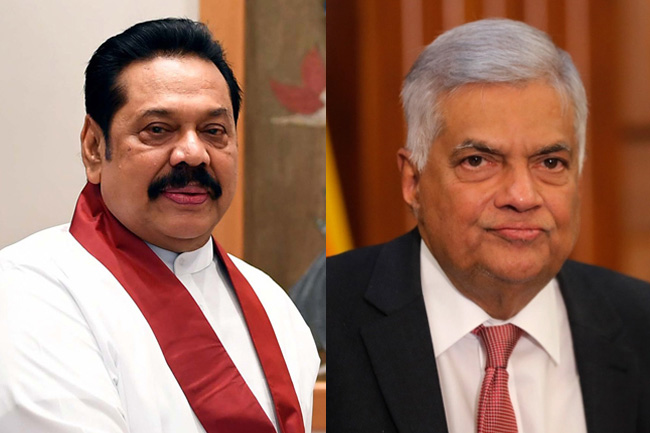
Over a dozen SJB MPs, Maithripala skip vote
By Shamindra Ferdinando
In spite of differences between President Ranil Wickremesinghe and the Sri Lanka Podujana Peramuna (SLPP) over the latter’s call for early General Election, a consensus seems to be emerging on the overall political strategy with the ruling party voting for the Sri Lanka Electricity Amendment Bill, political sources say.
The SLPP has so far declined to officially endorse Ranil Wickremesinghe candidature at the forthcoming Presidential Election though several members publicly supported the UNP leader.
SLPP leader Mahinda Rajapaksa, in spite of publicly declaring his opposition to the government privatization and restructuring plan, voted for the Bill along with his elder brother Chamal Rajapaksa, MP, his son, Shashendra Rajapaksa and General Secretary Sagara Kariyawasam, who recently warned of the SLPP withdrawing support to the government.
However, SLPP National List MP Namal Rajapaksa skipped the vote. Namal Rajapaksa was among about 10 SLPPers absent at the time of the voting.
During the debate JJB MP Vijitha Herath declared that the Bill was enacted to pave the way for the Adanis.
The Supreme Court determined the Bill as a whole is inconsistent with Article 12(1) of the Constitution and shall only be passed by the special majority of Parliament required under Article 84 (2). This inconsistency shall however cease if Clause 1(2) and Clause 1(3) were amended, the SC declared.
Political sources said that the SLPP’s stand was surprising against the backdrop of former President Mahinda Rajapaksa’s declaration on May 12 that the privatization and restructuring programme of the government should he stopped, pending the conclusion of the Presidential Poll later this year.
The following MPs voted for the Bill: Prime Minister Dinesh Gunawardena, Leader of the House Susil Premjayantha, Bandula Gunawardena, Wijeyadasa Rajapakse, Gamini Lokuge, Rear Admiral (retd.) Sarath Weerasekera, Major (retd.) Pradeep Undugoda, Premanath C. Dolawatte, Madura Withanage, Nalin Fernando, Lasantha Alagiyawanna, A.H.M. Fowzie (SJB), Indika Anuruddha, Sisira Jayakody, Prasanna Ranaweera, Nimal Lanza, Kokila Harshani Gunawardena, Milan Jayatilleke, Upul Mahendra Rajapaksa, Sahan Pradeep Vithana, Vudura Wickremanayake, Piyal Nishantha de Silva, Anupa Pasqual, Rohitha Abeygunawardena, Sanjeewa Edirimanne, Lalith Warnakumara Manju, Dilum Amunugama, Lohan Ratwatte, Anuradha Jayarathna, Mahindananda Aluthgamage, Pramitha Bandara Tennakoon, Rohana Dissanayake, Janaka Bandara Tennakoon, Nalaka Bandara Kottegoda, Jeevan Thondaman, S.B. Dissanayake, C. B. Ratnayake, M. Rameshwaram, Ramesh Pathirana, Manusha Nanayakkara, Mohan de Silva, Geetha Kumarasinghe, Sampath Atukorale, Isuru Dodangoda, Kanchana Wijesekera, D.V. Chanaka, Ajith Rajapaksha, Chamal Rajapaksha, Douglas Devananda, Carder Masthan, Seevanesathurai Chandrakanthan, Wimalaweera Dissanayake, S.M.M. Musharaff, D. Weerasinghe, Kapila Nuwan Atukorale, Mahinda Rajapaksa, D. B. Herath, Shantha Bandara, Johnston Fernando, U.K. Sumith Udukumbura, Samanpriya Herath, Anura Priyadarshana Yapa, Ashoka Priyantha, Priyankara Jayaratne, Ali Sabri Raheem, Shehan Semasinghe, S.M. Chandrasena, S. C. Muthukumarana, M. G. Weerasena, Siripala Gamlath, Jagath Samarawickrema, Nimal Siripala de Silva, Thenuka Vidanagamage, A Aravinda Kumar, Janaka Tissakuttiarachchi, Major (retd) Sudarshana Denipitiya, Vijitha Berugoda, Shashendra Rajapaksha, Dr. Gayashan Nawanandana, Kumarasiri Ratnayake, Pavitradevi Wanniarachchi, Janaka Wakkumbura, Premalal Jayasekera, John Seneviratne, Akila Saliya Ellawela, Muditha Prishanthi, Ranjith Siyambalapitiya, Kanaka Herath, Tharaka Balasuriya, Sudath Manjula, Rajika Wickremesinghe, Ali Sabry, Tiran Alles, Dr. Seetha Armbepola, Suren Raghavan, Wajira Abeywardena, Jayantha Ketagoda, Sagara Kariyawasam, Yadamini Gunawardena, Manjula Disanayake, Ranjith Bandara, Jayantha Weerasinghe and Mohamed Faleel Marjan.
Of the 103 MPs who voted for the Bill, two represented the SJB (Manusha Nanayakkara and A.H.M. Fowzie).
Sources said that Udayakantha Gunatilleke, though being present in Parliament at the time of the voting, hadn’t voted. The JJB’s three MPs -Anurta Kuamar Dissanayake, Vijitha Herath and Dr. Harini Amarasuriya – voted against the Bill, whereas the 10-member Tamil National Alliance (TNA) abstained.
Twenty MPs who had been elected on the SLPP ticket at the last General Election voted against the Bill, along with 36 SJB MPs. The SJB won 54 seats at the last General Election.
Former President Maithripala Sirisena (SLPP/Polonnaruwa) skipped the vote, whereas other SLFP MPs voted for the Bill. They included Wijeyadasa Rajapakse and Nimal Siripala de Silva, leading two factions in the SLFP.
Sources said that the SLPP’s backing for the Bill meant that the May 12 statement regarding their opposition to privatization and restructuring was not relevant.
They said that the SLPP was most likely to support the Economic Transformation Bill (ETB) that had been challenged by the SJB in the Supreme Court.
The Supreme Court summarized the Constitutionality of Sri Lanka Electricity Bill as follows:
The Bill as a whole is inconsistent with Article 12(1) of the Constitution and shall only be passed by a special majority of Parliament required under Article 84 (2). This inconsistency shall however cease if Clause 1(2) and Clause 1(3) are amended as set out in the summary of the Determination of the Supreme Court.
Clauses 3(6) (a) and 10(1) (c) are inconsistent with Article 12(1) of the Constitution and shall only be passed by the special majority required under Article 84(2). However, the inconsistency shall cease if those Clauses are amended as set out in the summary of the Determination of the Supreme Court.
The first proviso to Clause 11(1) of the Bill is inconsistent with Article 12(1) of the Constitution and shall only be passed by the special majority of Parliament required under Article 84 (2). However, the said inconsistency shall cease if the Clause is amended as set out in the summary of the Determination of the Supreme Court.
Clause 17 is inconsistent with Article 12(1) of the Constitution and shall only be passed by the special majority of Parliament required under Article 84(2). The said inconsistency shall however cease and Clause 17 may be passed by a simple majority if the Clause is amended as set out in the summary of the Determination of the Supreme Court.
Clause 18(3) (e) (ii) of the Bill is inconsistent with the provisions of Article 12(1) and shall only be passed by the special majority of Parliament required under Article 84(2). The said inconsistency shall however cease if Clause 18(3) is amended as set out in the Summary of the Determination of the Supreme Court.
Clause 18(3) (f) of the Bill is inconsistent with Article 12(1) and Article 14(1) (g) of the Constitution and shall only be passed by the special majority of Parliament required under Article 84(2). However, the said inconsistency shall cease if the Clause 18(3) (f) is amended as set out in the summary of the Determination of the Supreme Court.
Clause 18(5) (b) (ii) is inconsistent with Article 12(1) of the Constitution and shall only be passed by the special majority of Parliament required under Article 84(2). The said inconsistency shall however cease if Clause 18(5) (b) (ii) is amended as set out in the summary of the Determination of the Supreme Court.
Clause 21 and Clause 23 are inconsistent with Article 12(1) of the Constitution and shall only be passed by the special majority of Parliament required under Article 84(2). The said inconsistency shall however cease if those Clauses are amended as set out in the summary of the Determination of the Supreme Court.
Clause 38 (2) of the Bill is inconsistent with Article 12(1) of the Constitution and shall only be passed by the special majority required under Article 84(2). The said inconsistency shall cease if Clause 38(2) is amended as per the summary of the Determination of the Supreme Court.
Clause 48 is violative of Article 4(a) read together with Article 3 and 76 and hence needs to be passed by the special majority of Parliament and approved by the People at a Referendum.
The definition of ‘national grid’ in Clause 53 of the Bill is inconsistent with Article 12(1) of the Constitution and shall be passed by the special majority of Parliament required under Article 84(2). However, the said inconsistency shall cease if the said definition is amended as set out in the summary of the Determination of the Supreme Court.


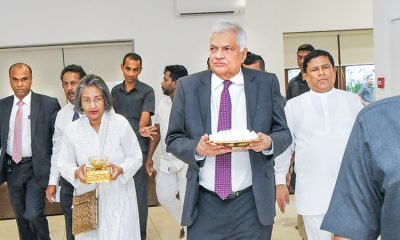





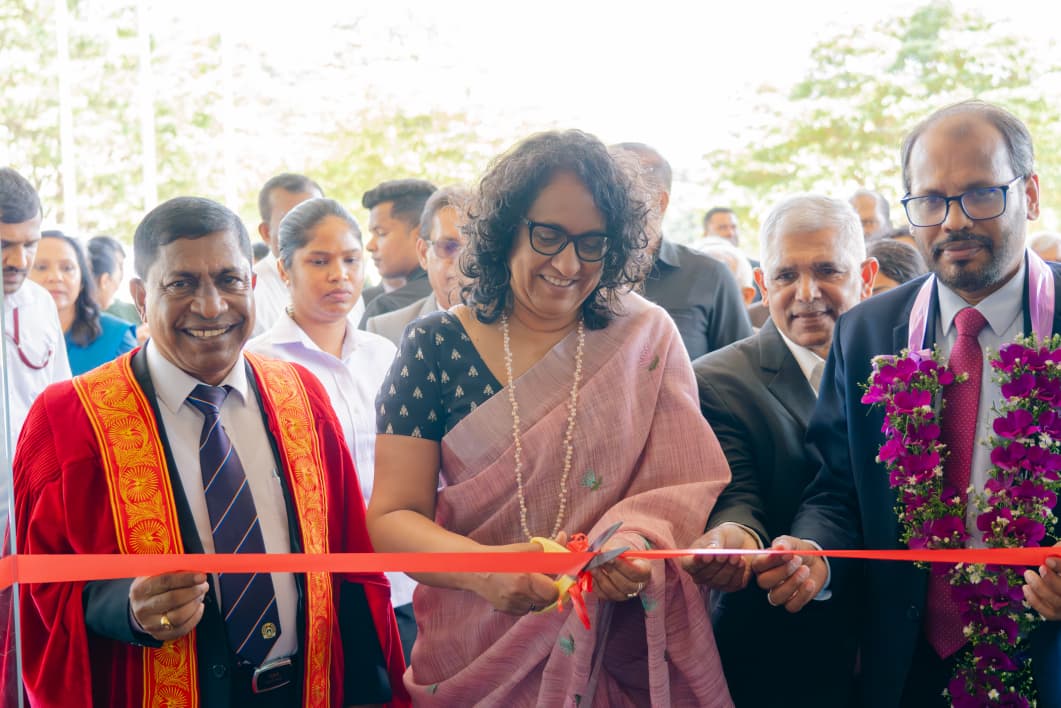
Prime Minister Dr. Harini Amarasuriya stated that promoting the local industrial sector is one of the key priorities of the Government.
The Prime Minister made these remarks while attending the official opening ceremony of the INCO 2026 Industrial Exhibition on 13 th of March, which is being held for the 20th consecutive year at the BMICH Exhibition Center.
The INCO 2026 Industrial Exhibition, organized by the Institution of Incorporated Engineers, Sri Lanka (IIESL), will be held from March 13 to 15.
Addressing at the event, Prime Minister stated:
“The engineering sector is a key driving force in addressing practical challenges faced by a country while enhancing efficiency and safety. In particular, the contribution extended by exhibitions of this nature encourages the student community to engage in innovation.
The Government has implemented several measures to accelerate the country’s industrial development. Notably, the National Industry Information System (NIIS) has established a centralized digital platform to collect data related to the country’s economic and industrial activities. The Government is also taking steps to provide necessary financial support to industrialists through Revolving Funds.
It is also noteworthy that this year’s exhibition has attracted international participation, creating opportunities for local entrepreneurs to explore new markets and gain exposure to international technologies. With the participation of engineers, students, and entrepreneurs, this exhibition marks an important step toward the country’s industrial future”.
The event was attended by the Chairman of the Export Development Board Mangala Wijesinghe, Chairman of the National Paper Company Limited Upali Rathnayake, President of the Institution of Incorporated Engineers, Sri Lanka Engineer Ananda Gunawardena, along with local and foreign investors, entrepreneurs, and industrialists.

(Prime Minister’s Media Division)

Chief Magistrate draws CB attention to massive drain in foreign exchange through cryptocurrency deals
Colombo Chief Magistrate Asanga S. Bodaragama yesterday observed that loopholes in actions carried out by State financial institutions, under the Foreign Exchange Act, had enabled funds in Sri Lanka to be transferred overseas, through cryptocurrency transactions.
The Magistrate said immediate steps should be taken to curb such activities and to educate the public, and directed that the matter be brought to the attention of the Central Bank of Sri Lanka.
He noted that cryptocurrency transactions carried out, using modern technology without approval from the Central Bank, had taken place without adequate public awareness, adding that incidents of the nature were increasingly being reported before courts.
The Magistrate observed that investigations into such incidents appeared to be confined to court proceedings alone and emphasised that the Central Bank, as the country’s principal financial regulator, together with other relevant institutions, should take appropriate measures and raise public awareness in the interest of the public and the country.
He also said the Criminal Investigation Department and the Central Bank should take steps to educate the public on such financial frauds and introduce a proper mechanism to address the issue.
The court further observed that many individuals had exploited loopholes in the Foreign Exchange Act and related procedures to commit financial fraud, and stressed that the Central Bank should take necessary action upon being apprised of such matters.
The Magistrate made these observations when a case relating to an alleged Rs. 290 million fraud at a well-known private bank was taken up before court yesterday. The suspects are alleged to have fraudulently obtained public funds through cryptocurrency transactions using accounts on Binance.
The Magistrate also directed the Criminal Investigation Department to expedite investigations into the disappearance of Rs. 290 million and report progress to court.Observing that the incident was not an ordinary case, the Magistrate instructed the CID to take prompt action to prevent similar frauds carried out through Binance platforms.
Making further observations, the Magistrate noted that the suspects had been produced before court, over the past three months, in connection with the incident, and stressed that investigations should be completed promptly by gathering all relevant information.
He earlier observed that the case did not involve a minor offence, such as ordinary theft, but a serious matter concerning the fraudulent misappropriation of public funds, through Binance accounts, and emphasised the need for swift action to prevent such crimes.
Nineteen suspects, connected to the incident, had earlier been remanded and subsequently released on bail.
The case was fixed to be called again on 15 May .

The Sri Lanka Computer Emergency Readiness Team (SLCERT) has issued a public advisory urging internet users to exercise caution when engaging with online advertisements in the run-up to the festive season.
Senior Information Security Engineer at SLCERT, Charuka Damunupola, said that several incidents of online scams had already been reported to the organisation during the first two months of this year.
He warned that with the approaching Sinhala and Tamil New Year, the risk of fraudulent advertisements and malicious links, appearing online, was likely to increase, often disguised as discount offers, cash prizes, or special promotional deals.
Damunupola noted that such links frequently redirect users to fraudulent websites designed to harvest personal information and other sensitive data.
He further cautioned that during the Vesak and Poson festive periods, scammers may attempt to collect user data through deceptive schemes promoted under various guises, including campaigns such as ‘Poson Maha Data Dansala.’
SLCERT has, therefore, urged the public to remain vigilant and exercise caution when clicking on unsolicited links or advertisements encountered online.

Agha calls for ‘sportsman spirit’ after controversial dismissal

US embassy in Baghdad hit by strike as Trump says military targets ‘obliterated’ on Iran’s key oil island

Showers or thundershowers will occur at several places in the Western, Sabaragamuwa, Central, North-western and Uva provinces and in Galle, Matara, Mannar and Anuradhapura districts after 2.00 pm.

Bahrain & Saudi Arabia Grands Prix to be cancelled

Pink Floyd guitar sold for record-breaking $14.6m

Promoting Local Industries is a key priority of the Government – PM

‘Dates have the highest sugar content to fight Coronavirus’

Sunday Island 27 December – Headlines

#SundayIsland 17th December – Headlines

Sunday Island – 28th March

Sunday Island Headlines – 21 March

Sunday Island – 21st February – Headlines
-
 News6 days ago
Repatriation of Iranian naval personnel Sri Lanka’s call: Washington
-
 Features6 days ago
Winds of Change:Geopolitics at the crossroads of South and Southeast Asia
-

 News5 days ago
Prof. Dunusinghe warns Lanka at serious risk due to ME war
-

 Sports4 days ago
Royal start favourites in historic Battle of the Blues
-

 Sports3 days ago
The 147th Royal–Thomian and 175 Years of the School by the Sea
-

 News3 days ago
Historic address by BASL President at the Supreme Court of India
-
 Business7 days ago
Seven decades of sartorial excellence: The legacy of Linton Master Tailors in Kandy
-

 News4 days ago
CEBEU warns of operational disruptions amid uncertainty over CEB restructuring