
News
SLPP dissidents ask AG if Adani Group represents govt. of India

By Shamindra Ferdinando
The rebel SLPP group has demanded to know whether Adani Green Energy Ltd., represents the government of India.It has raised this question in the wake of Sri Lanka declaring its intention to consider the proposed construction of two wind and solar power parks in Mannar (286 Megawatt) and Pooneryn (234 megawatt) in terms of Government to Government basis as required by Section 43(4)(c) (1) of the Electricity Act No 20 of 2009.
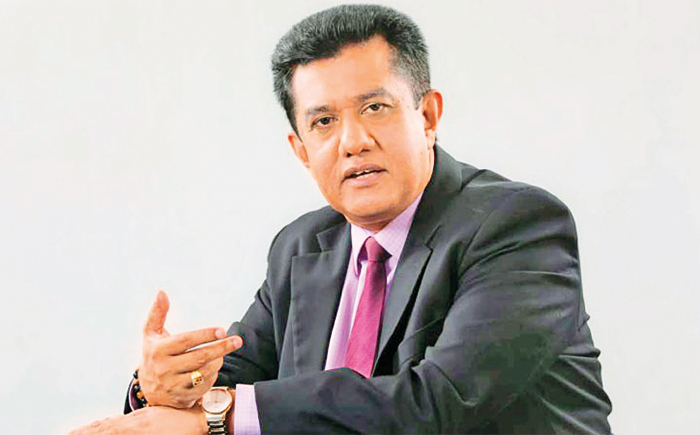
Prof. Charitha Herath discussed the issues at his weekly media briefing held at the Nawala Office of Nidahasa Janatha Sabhawa on Tuesday (29). The group consists of 12 MPs, including former External Affairs Minister Prof. G.L. Peiris and ex-Power and Energy Minister Dullas Alahapperuma.
The one-time Media Ministry Secretary alleged that Power and Energy Minister Kanchana Wijesekera had sought cabinet approval to categorise the Indian conglomerate as a government entity to circumvent the Electricity Act.
Prof. Herath said that Attorney General Sanjay Rajaratnam’s opinion on this contentious issue should be obtained without further delay. The AG should clarify the status of the government-to-government agreements and say whether Adani projects could be categorised under them, he said.
Having briefly dealt with Indo-Lanka relations over the past couple of decades, including the direct intervention here that led to the 1987 accord, he explained how the Wickremesinghe-Rajapaksa government advanced ousted
President Gotabaya Rajapaksa’s project with Adani group finalised in March 2022.
Prof. Herath recalled the then CEB Chairman M. M. C. Ferdinando’s disclosure regarding Indian PM Modi pressing President Rajapaksa on the proposed Adani projects and the circumstances the official retracted those remarks made at a meeting of the Committee on Public Enterprises (COPE). Lawmaker Herath urged the media to reexamine that episode against the backdrop of President Wickremesinghe building on Rajapaksa-Adani agreement.
The academic said that the issues should be apprised taking into consideration the agreements India and Sri Lanka entered into during President Wickremesinghe’s two-day visit to New Delhi last month. Minister Wijesekera was a member of the government delegation.
MP Herath said that another matter of grave concern is the move to deviate from the Electricity Act in respect of the proposed establishment of a Kilinochchi-Habarana 400 kv backbone transmission line. Although the private sector had been allowed to engage in electricity generation, the CEB remained the only transmission licensee, Prof. Herath pointed out, adding that the government justified the Adani investment amounting to USD 135 mn on the basis of its inability to make available required funding for the project.
According to the relevant Cabinet paper dated Aug. 14, 2023 seen by The Island, the total cost of the on-grid renewable energy development project is USD 442 mn and restricted to wind power for want of free land for solar power projects. Contrary to the Electricity Act, the cabinet paper directed that the CEB to seek proposal in this regard specifically from the Adani group.
Prof. Herath questioned whether the government carried out New Delhi’s dictates regardless of consequences. How one conglomerate could be granted special status at the expense of the law of the land? the first time entrant to parliament asked.
At the onset of the briefing, Prof. Herath appreciated the stand taken by the Catholic Church on the controversial proposal to establish a bridge between Sri Lanka and India. Referring to Archbishop of Colombo Malcolm Cardinal Ranjith’s declaration that such a move should be subject to a referendum, the MP said that the consequences could be quite catastrophic and irreversible.
Prof. Herath compared the Colombo Port City with the proposed bridge-building project while stressing that the incumbent President chosen by parliament to complete the remainder of Gotabaya Rajapaksa’s five year term couldn’t take such far reaching decisions. The MP said that the then government revised the Administrative District Act No 22 of 1955 to bring the reclaimed land under the Colombo district. Prof. Herath asked constitutional experts to examine whether Sri Lanka’s boundaries could be changed as the President desired.
Acknowledging that the SJB and JJB (Jathika Jana Balawegaya) had declared Sajith Premadasa and Anura Kumara Dissanayake as their respective candidates, Prof. Herath stressed the responsibility on their part to adopt a common strategy. Responding to queries, MP Herath pointed out how the entire Opposition regardless of differences backed Maithripala Sirisena at the 2015 presidential poll to bring Mahinda Rajapaksa’s reign to an end.
Declaring that Wickremesinghe social market economic policies had failed and certainly didn’t have the slightest chance to succeed in current environment, Prof. Herath said that foreign policy pursued by President Wickremesinghe could cause an unprecedented crisis against the backdrop of China and India seeking favoured status here.









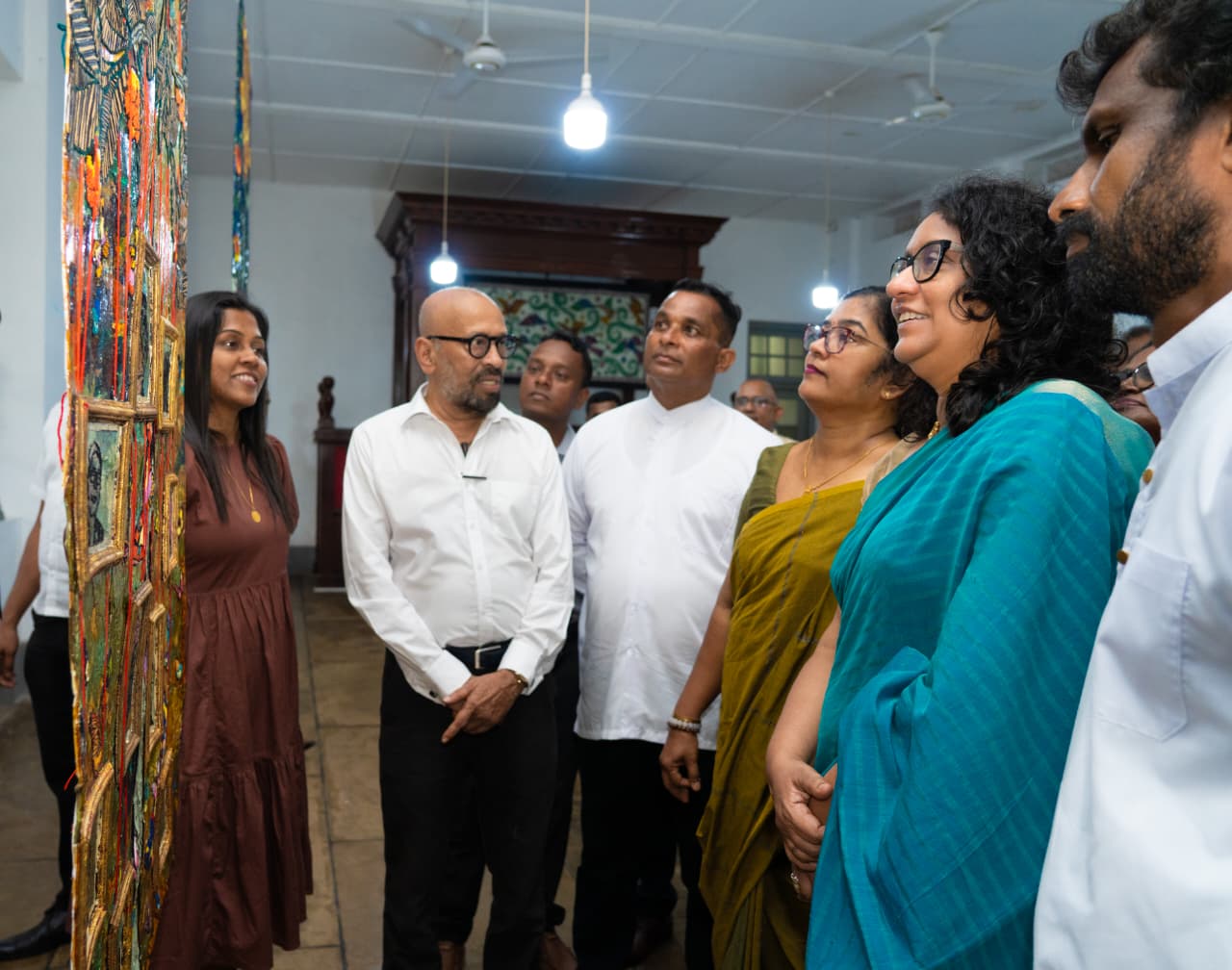
The inaugural ceremony of the Matara Festival for the Arts, featuring a wide range of creations by local and international artists, was held on February 19 at the Old High Court premises of the Matara Fort, under the patronage of Prime Minister Dr. Harini Amarasuriya.
The festival, centred around the Old High Court premises in Matara and the auditorium of the Matara District Secretariat, will be open to the public from 20 to 23 of February. The festival will be featured by visual art exhibitions, short film screenings, Kala Pola, and a series of workshops conducted by experts.
The inaugural event was attended by the Minister of Women and Child Affairs, Ms. Saroja Paulraj, along with artists, guests, and a large number of schoolchildren.
(Prime Minister’s Media Division)
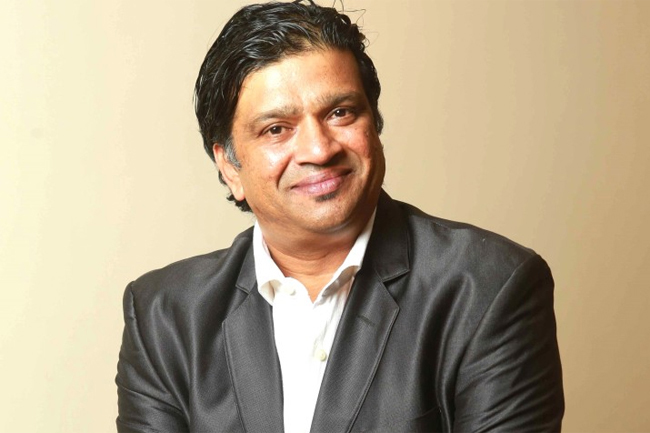
Only one Member of Parliament has chosen not to receive the salaries and allowances entitled to MPs, Prime Minister Dr. Harini Amarasuriya revealed in Parliament last Thursday, shedding light on the financial perks enjoyed by members of the Tenth Parliament.
Speaking on Thursday (Feb. 19) in response to a question from SJB Badulla District MP Chaminda Wijesiri, the Prime Minister outlined the full range of pay and allowances provided to parliamentarians.
According to Dr. Amarasuriya, MPs receive a monthly allowance of Rs. 54,285, an entertainment allowance of Rs. 1,000, and a driver’s allowance of Rs. 3,500—though MPs provided with a driver through the Ministry of Public Security and Parliamentary Affairs are not eligible for the driver’s allowance.
Additional benefits include a telephone allowance of Rs. 50,000, a transport allowance of Rs. 15,000, and an office allowance of Rs. 100,000. MPs are also paid a daily sitting allowance of Rs. 2,500 for attending parliamentary sessions, with an additional Rs. 2,500 per day for participation in parliamentary sittings and Rs. 2,500 per day as a committee allowance.
Committee meetings held on non-parliament sitting days also attract Rs. 2,500 per day.
Fuel allowances are provided based on the distance between an MP’s electoral district and Parliament. National List MPs are entitled to a monthly allocation equivalent to 419.76 litres of diesel at the market price on the first day of each month.
Despite the comprehensive benefits, only SJB Badulla District MP Nayana Wasalathilaka has opted not to draw a salary or allowances. Dr. Amarasuriya said that in accordance with a written notification submitted by MP Wasalathilaka on August 20, 2025, payments have been suspended since that date.
The Prime Minister also confirmed that she, along with the Speaker, Deputy Speaker, committee chairs, ministers, deputy ministers, the Opposition Leader, and senior opposition whips, have all informed the Secretary-General of Parliament in writing that they will not claim the fuel allowance.
Challenging the ruling party’s voluntary pledge to forgo salaries, MP Wijesiri pointed out that all MPs except Wasalathilaka continue to receive their salaries and allowances. “On one hand you speak about the people’s mandate, which is good. But the mandate also included people who said they would voluntarily serve in this Parliament without salaries. Today we have been able to prove, Hon. Speaker, that except for one SJB MP, the other 224 Members are drawing parliamentary salaries,” he said.
The Prime Minister responded by defending the political culture and practice of allocating portions of MPs’ salaries to party funds. Referring to previous practices by the JVP and NPP, she said: “It is no secret to the country that the JVP has for a long time not personally taken MPs’ salaries or any allowances. I think the entire country knows that these go to a party fund. That is not new, nor is it something special to mention. The NPP operates in the same way. That too is not new; it is the culture of our political movement.”
When MP Wijesiri posed a supplementary question asking whether diverting salaries to party funds was an indirect method of taking care of MPs, Dr. Amarasuriya said: “There is no issue there. No question was raised; the Member made a statement. What we have seen throughout this week is an inability to understand our political culture and practice, and a clash with decisions taken by political movements that misused public funds. What is coming out is a certain mindset. That is why there is such an effort to find fault with the 159. None of these facts are new to people. He did not ask a question, so I have nothing to answer.”
The disclosures come days after the Government moved to abolish the parliamentary pension, a measure that has sparked renewed debate over MP compensation and the transparency of funds allocation.
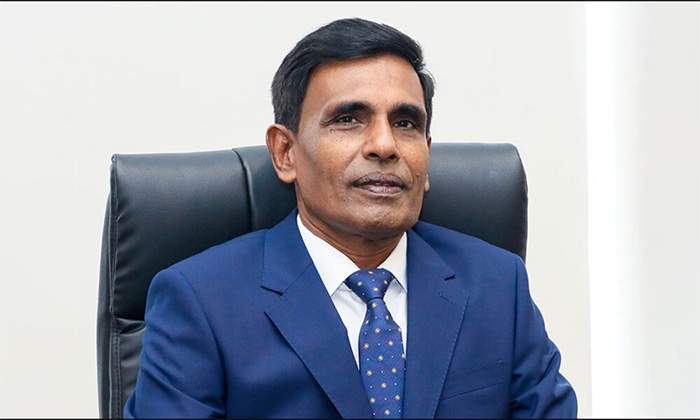
Public Security and Parliamentary Affairs Minister Ananda Wijepala on Friday (20) disclosed in Parliament details of properties and assets allegedly acquired through illegal activities by suspects arrested in raids carried out since September last year.
The Minister made the disclosure in response to a question raised by MP Ravindra Bandara, stating that the identified assets have been frozen pending further investigations.
He said the assets include properties belonging to several alleged organised crime figures, among them Mandinu Padmasiri, alias ‘Kehelbaddara Padme’, who was arrested last year.
Listing the assets in the House, the Minister said Hapugoda Arachchige Kankanamge Duminda Dilruk has assets worth Rs. 23 million frozen, including a van, a motorcycle, a house and a roller gate.
In the case of Kandaiya Kalamogan, two motorboats have been identified, although their value has not yet been assessed.
Dilum Tharaka Balasuriya is reported to own a two-storey house situated on 15 perches of land with a face value of Rs. 800,000.
Assets belonging to Mohammad Harish Mohammad and Mohammad Shiyam were frozen on January 21, 2026. While the total value has not yet been assessed, five vehicles were confiscated from the former and a car from the latter.
Wijesuriya Mahaduruge Uditha Iroshan Wijesiri has assets valued at Rs. 5 million, including a lorry, while Indika Pathmakumara’s assets include a cab worth Rs. 2.5 million and a bank account containing Rs. 1 million.
Lahiru Sampath is reported to own a three-wheeler valued at Rs. 1.8 million.
According to the Minister, Hettiarachchige Dona Sriyani Chandralatha possesses a four-storey house and 14.7 perches of land valued at Rs. 60 million.
Mandinu Padmasiri, alias ‘Kehelbaddara Padme’, owns 20 perches of land with partially constructed buildings valued at Rs. 30 million and a half-finished six-room building worth Rs. 20 million, the Minister said.
Patabendi Maddumage Shehan Sathsara, alias ‘Dehi Bale Malli’, has five multi-day fishing trawlers valued at Rs. 200 million and a two-storey house with 15.8 perches of land worth Rs. 50 million.
The Minister further disclosed that Jayasinghege Maduranga Sampath owns a cab worth Rs. 5.4 million, a van valued at Rs. 14.5 million, five bank accounts containing Rs. 73.03 million, another account with Rs. 160,328.88 and USD 544, and Rs. 283 million in cash.
Adhikari Samantha Perera is reported to own 10.10 perches of land valued at Rs. 5 million and one acre and 1.5 perches of land worth Rs. 13 million.The Minister said investigations are continuing in respect of the suspects and the frozen assets.

More than 1,500 Venezuelan political prisoners apply for amnesty

Six races, six golds – Klaebo’s historic Olympics

India, South Africa meet in the final before the final

Matara Festival for the Arts’ inaugurated by the Prime Minister

Showers or thundershowers will occur at most part of the Island after 1.00 p.m.

Only single MP refuses salary as Parliament details pays and allowances

‘Dates have the highest sugar content to fight Coronavirus’

Sunday Island 27 December – Headlines

#SundayIsland 17th December – Headlines

Sunday Island – 28th March

Sunday Island Headlines – 21 March

Sunday Island – 21st February – Headlines
-

 Business6 days ago
Ministry of Brands to launch Sri Lanka’s first off-price retail destination
-

 Latest News2 days ago
New Zealand meet familiar opponents Pakistan at spin-friendly Premadasa
-

 Latest News2 days ago
Tariffs ruling is major blow to Trump’s second-term agenda
-

 Latest News2 days ago
ECB push back at Pakistan ‘shadow-ban’ reports ahead of Hundred auction
-

 Features6 days ago
Giants in our backyard: Why Sri Lanka’s Blue Whales matter to the world
-
 Sports3 days ago
Old and new at the SSC, just like Pakistan
-
 News5 days ago
IMF MD here
-

 News2 days ago
Construction begins on country’s largest solar power project in Hambantota