
News
SJB warns of move to privatise highwaysax


By Saman Indrajith
Giving state lands and projects to family members and relations was better than giving them to the Chinese, the SJB says.
SJB Kegalle District MP Kabir Hashim, opening the debate under the expenditure heads of the Ministry of Highways during the third reading debate on Budget 2021, said that the government was giving away state lands to Chinese investors.
“Isn’t handing over the lands to the Chinese on lease the first step towards privatisation? The decisions of the Highways Ministry are not taken by Minister Johnston Fernando or his Secretary R.W.R. Premasiri, but Secretary to the President, Dr P.B. Jayasundara.”
“Minister Johnston Fernando and his Secretary Premasiri are both talented persons. But their talent is not fully utilised. The Highways Ministry is very important. About one million people visit Colombo and 300,000 vehicles enter the city daily. Owing to traffic congestion, which leads to the waste of fuel and time we lose Rs. 1,000 million a day. Since I identified this problem we have launched several projects, including the New Kelani Bridge on pillars covering 2.5 km at a cost of Rs Rs. 40,000. The 9.5 km long outer circular highway connecting Kadawatha-Kerawalapitiya commenced after paying compensation to those who had lost lands to the project so the vehicles could now go from Mattala to Katunayake straight. We commenced a road on pillars from the Ingurukade junction via Chaithya Road to Galle Face.
“I think Minister Fernando is capable of continuing with the good work we initiated. Under the highways portfolio, there are 12,496 km. Some 34,000 km are under the Provincial Councils. There are 75,000 km of rural roads. Taken together there are roads measuring 120,000 km in the entire country. It is said that under your government all roads would be carpeted. This is something we have to wait and see. There are problems. All rural roads are under Minister Nimal Lanza. He has about 75,000 km under his purview. If we remove the roads under the Provincial Councils, the Minister Johnston will have only roads under the Road Development Authority and the Highways. There is a plan as per a Cabinet decision on Oct 12 to remove the Highways from Minister Johnston and be placed under a company headed by the Treasury Secretary. This is a joke. Both Secretary Premasiri and Minister Johnston Fernando are capable people. Then, why is this plan to set up a separate company? This is a plan with a hidden agenda. I table the Cabinet press briefing release. As per the press release the company to be set up would have the total responsibility of management of all highways. Although it is said that the said company is being set up under the Treasury, speculation is rife that a Singaporean company will be brought in and it will have 49 percent ownership and the Treasury 51 percent for 30 years. This is the first step towards privatising the highways. It is said that the lands coming under the Highways Ministry too would be given to them. What are those lands? The lands are those in and around Maradana, Beria Lake and the Manning Market. These will be finally given to the Chinese.
Prison Management and Prisoners Rehabilitation State Minister:
Lohan Ratwatte: You were the plantations minister once. Didn’t you give the lands of the Plantations Ministry to the kith and kin of yours?
MP Hashim:
It is better to give the lands to the family members and relatives than to the Chinese. Your government is giving state lands for 30 years to the Chinese.



… warn of dire consequences
A group of trade unions and civil society groups has requested President Anura Kumara Dissanayake to abandon his government’s controversial plan for the proposed tripartite management of the EPF.
The group has told the President: “We strongly object to the government’s plan to transfer the EPF to a tripartite board—jointly promoted by the Employers’ Federation of Ceylon (EFC), International Monetary Fund (IMF) and the International Labour Organisation (ILO)—and to increase the investments of those funds within private equity and debt markets.
“While the EFC and the government jointly project this plan as a ‘modern governance framework’, it poses a serious threat to the EPF’s financial stability, fiduciary conduct, and returns to workers’ life savings, with severe consequences for broader macroeconomic stability. Rather than replacing the corruption existing in the public sector, this tripartite framework paves the way for a corporate takeover of the EPF. Through this, the fund is exposed to unlawful business practices such as insider trading using internal information of EPF investments, conflicts of interest and corporate bailouts of unstable private companies.
“Sri Lanka’s corporate sector has a tremendously negative track record, which you alluded to during your victorious election campaign in 2024. This was recently unravelled by the multi-billion-dollar illicit capital flight through trade misinvoicing, which your administration is now actively working to curb in the imports sector.
“The recent banking sector fraud exceeds Rs. 13 billion; widespread corporate tax evasion destabilised the fiscal position (Sri Lanka Auditor General’s Department Annual Reports) and consequently inflated the tax burden on the general public. The EFC has found it convenient to remain silent about these crimes, possibly assuming that their silence would preserve their social standing. Considering this inherent corruption within Sri Lanka’s corporate sector and its disregard to the living standards of the general public, there is no realistic basis to integrate corporate interests to actively manage the EPF. The corporate sector of Sri Lanka has not developed sufficiently on technical and ethical grounds to safely entrust the largest retirement savings pool in the country. The EPF is a captive fund that has no mechanism for the owners to divest if the management is corrupt. This further increases the possibility of corporate fraud when the management of the fund is jointly held with the corporate sector.
“Furthermore, during the recent public discussion with trade unions, Deputy Minister of Finance Dr. Anila Jayantha pointed out that the domestic debt restructuring (DDR) would inflict a loss of Rs. 600 billion to the EPF. Our independent calculations—formally submitted as an affidavit to the Supreme Court approved by the Federation of University Teachers’ Associations in 2024—reveal that nominal loss alone is Rs. 634.4 billion. When factoring in foreclosed reinvestment returns, the true loss skyrockets to Rs. 1,711 billion, wiping out 48% of the fund’s projected gross income for the 2023 – 2028 period. Under the pretext of safeguarding the banking system, this colossal robbery preserved high yields on government bonds held by commercial banks and high-net-worth individuals, subsequently reaping them astronomical profits. Now, the exact same plunder is rearing its head again disguised as a tripartite committee.”
“The main arguments supporting our resistance and viable alternatives for optimising EPF management directly under the Central Bank of Sri Lanka (CBSL), are outlined below.
“Objections to the government’s tripartite proposal:
1. The “International best practice and conflict of interest fallacies”
The government holds that tripartite management of pension funds is the “international best practice” and that there is a “conflict of interest” in CBSL managing the EPF. They are key pillars justifying government’s tripartite proposal.
These two positions are shockingly misleading given that four of the five largest pension funds in the world, in Norway, Japan, the U.S., and Singapore, are managed directly by state bodies or central banks. Therefore, ‘international best practice’ in pension fund management is the exact opposite of what the government and the IMF are proposing. We hence reject these baseless positions.
2. Corporate captivity and bailouts
It is clear that the EFC is desperately pushing for this proposal at a time of global uncertainty, to cushion the effects of the crisis and maximise gains. Under corporate influence within the proposed tripartite board, the private conglomerates can use the multi-trillion-rupee EPF to continue their unstable commercial operations without having to risk their own capital or savings to do so. This will severely erode the financial stability of the EPF and its returns.
3. Risk of front running
“Because the EPF is a colossal fund, its investment decisions can alter asset prices. This creates immense monetary value for the information generated by its investment decisions. Corporate representatives on the proposed tripartite board will be perfectly positioned to use this information to trade ahead of the EPF (front-running), buying assets cheaply and dumping them onto the EPF at inflated prices for guaranteed corporate gain, resulting in a reduction of returns to the EPF.
4. Unavoidable loopholes
“Presence of a separate group of investment analysts, trade union representatives and government officials within the proposed tripartite structure cannot prevent pre-market corporate access to EPF’s investment decisions. Investment proposals made by the analysts has to be first approved by the proposed tripartite committee, making it impossible to prevent corporate access to insider information on EPF investments.”
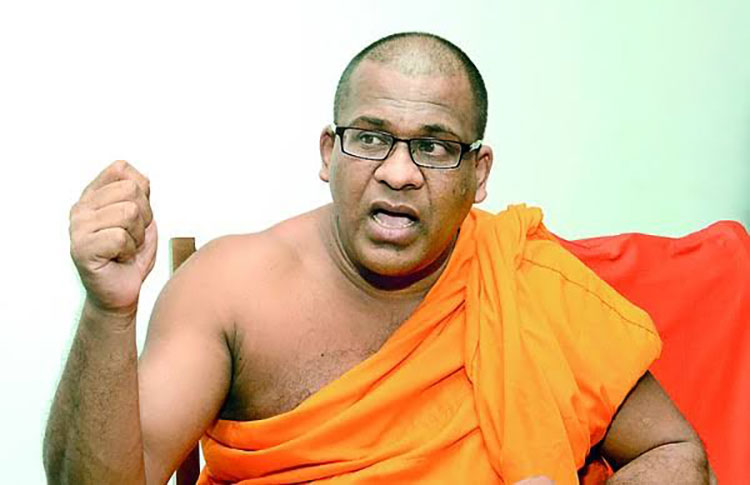
The Colombo High Court and Court of Appeal yesterday issued arrest warrants for the Bodu Bala Sena general secretary Galagoda Aththe Gnanasara in a case involving an alleged statement insulting Islam.
The arrest warrants were issued on Tuesday and Wednesday. The Court of Appeal issued an open warrant two weeks after the court rescinded the presidential pardon granted to the thera when he was serving a six-year term for contempt of court.
The Appeals Court also imposed a travel ban on the monk and ordered that the Controller General of Immigration and Emigration be informed of the restriction.
The case was taken up before Colombo High Court Judge Buddhika C. Ragala. Gnanasara Thera was not present when the case was called.
A medical report was submitted stating that Thera was unwell, while his sureties also failed to appear before court. His counsel, Asoka Weerasuriya, told court that his client wished to bring the case to an early conclusion and that representations had been made to the Attorney General in that regard.
However, after considering the submissions, the High Court judge said he was not satisfied with the medical report submitted on behalf of the accused. The court also noted the failure of the sureties to appear.
The judge subsequently ordered that Gnanasara Thera be arrested and produced before court.The Attorney General filed the case under provisions of the Penal Code, alleging that remarks made by Gnanasara Thera concerning the Holy Quran amounted to an insult to Islam.
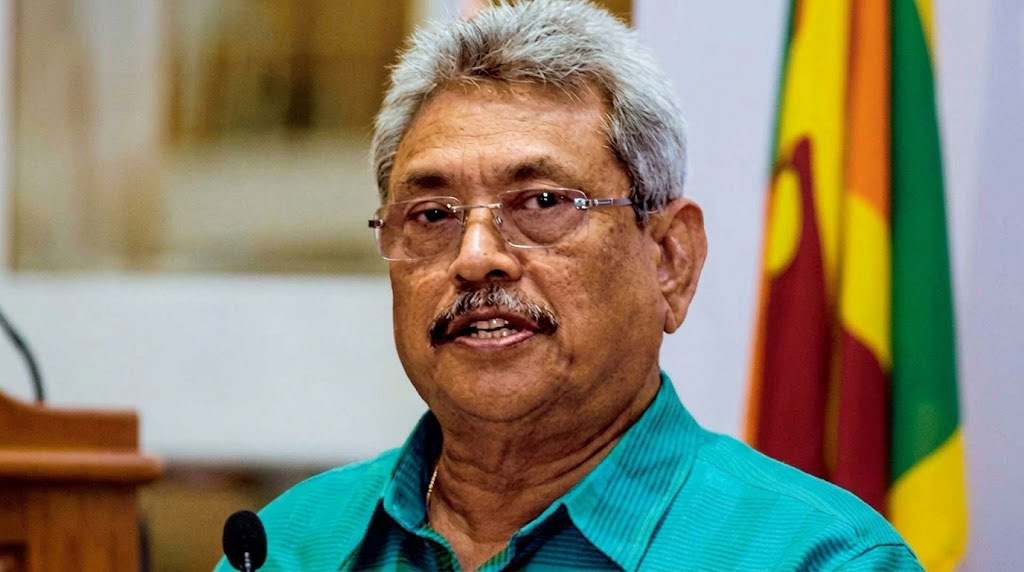
A two-member bench comprising Court of Appeal President Justice Rohantha Abeysuriya and Justice Sarath Dissanayake yesterday (1) dismissed a writ petition filed by former President Gotabaya Rajapaksa seeking judicial intervention to prevent his arrest under the Prevention of Terrorism Act (PTA) in connection with the ongoing investigations into 2019 Easter Sunday terror attacks.
The writ petition was rejected in limine.
In the petition, the former President cited Inspector General of Police Priyantha Weerasooriya, Criminal Investigation Department (CID) Director Shani Abeysekera, the Officer-in-Charge of the CID’s Special Investigations Unit and the Attorney General as respondents. The ex-President sought the court intervention after the arrest of former head of the State Intelligence Service (SIS) retired Maj. Gen. Suresh Sallay over the Easter Sunday attacks.
Since then , former Director of Directorate of Military Intelligence (DMI) has been named as a suspect.
Earlier, the Fort Magistrate’s Court imposed a travel ban on him in relation to investigations stemming from allegations made by Asad Moulana in the Channel 4 documentary on the Easter attacks.

Showers or thundershowers will occur in most parts of the island after 1.00 p.m.

Unions resist tripartite EPF management plan

Two arrest warrants issued for Gnanasara thera

CA dismisses GR’s writ petition against arrest

ADB-backed virtual net metering project faces policy contradiction

Media action group flays NPP over new anti-terrorism law

‘Dates have the highest sugar content to fight Coronavirus’

Sunday Island 27 December – Headlines

#SundayIsland 17th December – Headlines

Sunday Island – 28th March

Sunday Island Headlines – 21 March

Sunday Island – 21st February – Headlines
-

 Editorial6 days ago
Birth of a bad law
-

 News4 days ago
Police remove Thileepan statue in Jaffna
-

 News6 days ago
TIN mandatory for key transactions from Nov. 1
-

 Features4 days ago
The 22nd Amendment, constitutional recovery and illiberal slippage
-

 Features4 days ago
Of foreigners as CEOs of Lankan ventures
-

 News4 days ago
Sajith rejects Jt. Opp. protest sabotage claim; SJB TU chief demands remedial action
-

 Latest News2 days ago
Gold winner Tharanga gets brand-new Honda Vezel from SLAAJ
-

 Features3 days ago
Thailand’s biggest new global star …