
News
SJB, FSP agree on common agenda


Focus on abolition of Executive Presidency
BY SHMAINDRA FERNANDO
SJB MP Kabir Hashim, MP, says the main Opposition party and the Frontline Socialist Party (FSP) have recently agreed on the abolition of the Executive Presidency.Hashim yesterday (20) told The Island that they agreed on empowering Parliament at the expense of the Executive President.The SJB and FSP delegations met at the Opposition Leader’s Office at , Sir Marcus Fernando Mawatha this week. The SJB delegation consisted of lawmakers, General Secretary Ranjith Madduma Bandara, Kabir Hashim, Eran Wickremaratne and Mujubur Rahuman whereas the FSP was represented by Central Committee members, Pubudu Jagoda and Duminda Nagamuwa.The SJB, offshoot of the UNP, secured the recognition of the Election Commission in Feb 2020 while the FSP is yet to be registered as a political party.
Lawmaker Hashim said that the SJB was keen to discuss the current situation with all political parties represented in Parliament and out as part of the overall efforts to reach agreement on a common programme.Referring to the proposals made by the Bar Association of Sri Lanka (BASL) to resolve the political crisis that would be a prerequisite for addressing the economic downturn, lawmaker Hashim said that the SJB and the FSP agreed on the need for President Gotabaya Rajapaksa to agree on a timeline for him to step-down.Responding to The Island queries, one-time UNP Chairman said that the SJB could work together with the FSP on both political and economic issues. The talks took place amidst the FSP, the breakaway faction of the JVP, was consolidating its position as the spearhead of the ongoing protest campaign meant to force President Gotabaya Rajapaksa to step down.
MP Hashim said that they agreed to prepare a document meant for future cooperation. Asked whether they have scheduled another meeting with the FSP, the Kegalle District MP said that they were keen to prepare a working document before they next meet for talks.The top SJB spokesperson said that in spite of swearing in UNP leader Ranil Wickremesinghe as the Prime Minister, the President was on a difficult wicket.Lawmaker Hashim said the SJB was also engaged in talks with the JVP though the deliberations weren’t at official level. “We are proceeding with efforts to finalize a common agenda meant to restore normalcy. We had talks with the BASL, industry leaders as well as civil society,” MP Hashim said.Asked whether the SJB had met Premier Wickremesinghe or sought a meeting with him, MP Hashim said that when Dr. Harsha de Silva raised a spate of issues at hand, especially the recent hard default, the Premier assured the Parliament that party leaders would be fully briefed pertaining to the current situation.Lawmaker Hashim was referring to the first occasion Sri Lanka experienced a hard default as the grace period for the International Sovereign Bonds (ISB) Coupon payment lapsed on May 18. Last month Sri Lanka announced a pre-emptive negotiated default ofall outstanding debt as at April 12.On April 18 the ISB Coupon worth $ 78 million fell due and those had 30 days to obtain “Consent Solicitation” from all ISB holders for payment suspension by May 18.
FSP spokesperson Pubudu Jagoda told The Island that the party discussed the developing situation with some political parties, including the SJB and ’43 Brigade’ led by SJB MP Patali Champika Ranawaka. The FSP delegation comprised Central Committee members, Pubudu Jagoda, Duminda Nagamuwa and Sanjeewa Bandara. MP Patali Champika Ranawaka and Attorney-at-Law Shiral Lakthilake represented the ‘43 Brigade.’Jagoda said that the ’43 Brigade’ was of the view the executive presidential system should be retained with necessary amendments.According to Jagoda, the Eksath Samajawadi Pakshaya and the Tamil National Alliance (TNA) agreed that the executive presidency should be abolished. FSP leader Kumar Gunaratnam and Pubudu Jagoda had represented the party whereas Jaffna District MP M.A. Sumanthiran, PC, and Shanakiyan Rasamanickam represented the TNA.
Jagoda said that the current environment was conducive for building a common agenda that could accommodate the vast majority of political parties represented in Parliament and other groups bent on abolishing the executive presidency.He emphasized the pivotal importance of a common response to what Jagoda termed the government crackdown in Colombo, its suburbs and the provinces where over 1,000 persons had been arrested by the police in connection with the ongoing investigations into mob assaults ignited following unprovoked attacks on those demanding the resignation of the President and the Premier.

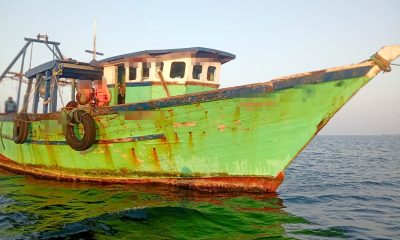



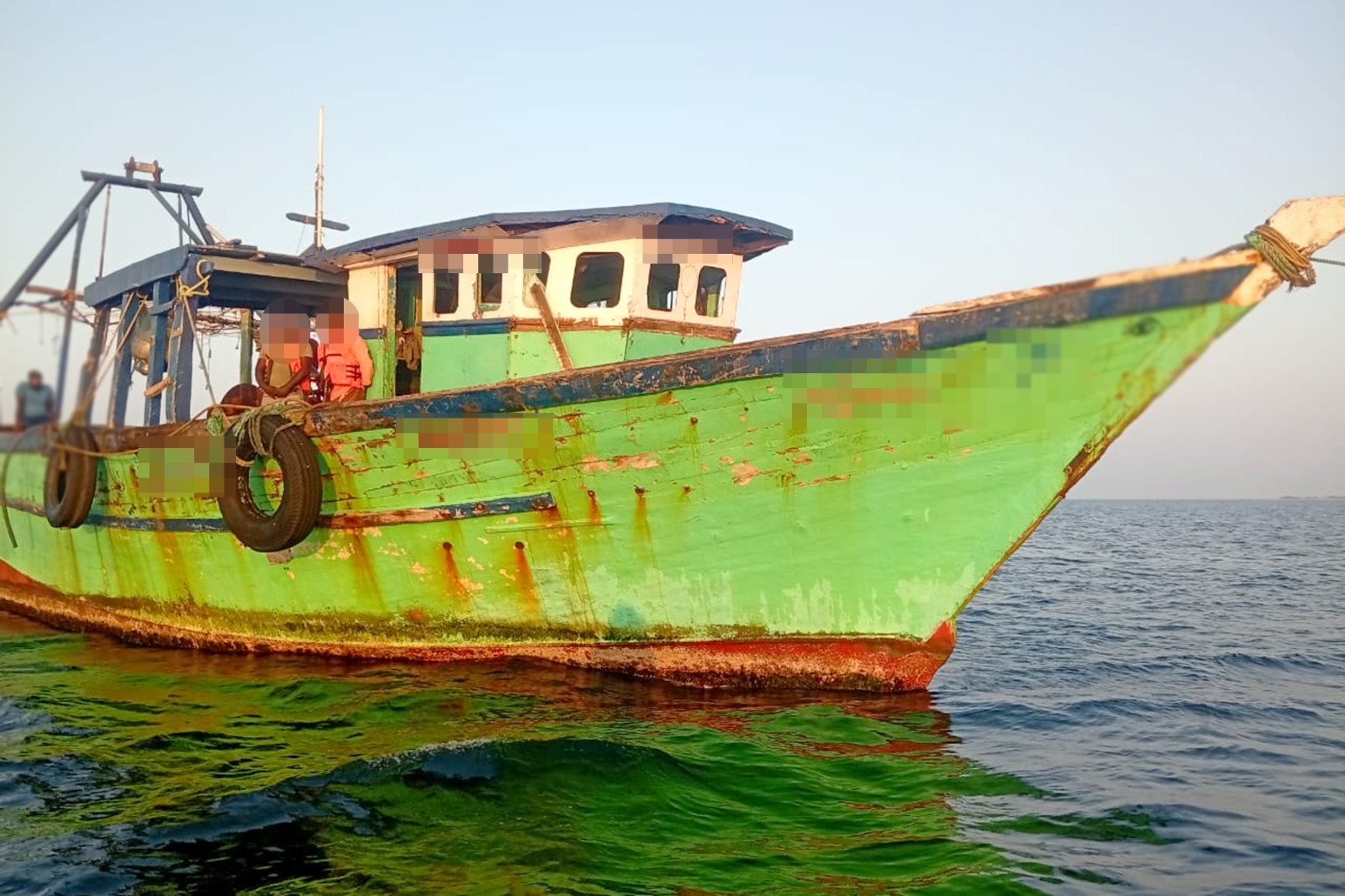
During an operation conducted in the dark hours of 11 Mar 26, the Sri Lanka Navy seized an Indian fishing boat and apprehended 02 Indian fishermen while they were poaching in Sri Lankan waters, in the sea area North of Mannar.
The North Central Naval Command spotted a group of Indian fishing boats engaging in illegal fishing, trespassing into Sri Lankan waters. In response, naval craft of the North Central Naval Command were deployed to drive away those Indian fishing boats from island waters off Mannar.
The seized boat (01) and Indian fishermen (02) were handed over to the Fisheries Inspector of Kilinochchi for onward legal proceedings.

The bodies of 84 Iranian sailors killed in a torpedo attack by a US submarine last week in the Indian Ocean are due to be flown home on Friday, Sri Lanka’s defence ministry has said.
The seamen were among 130 thought to be aboard the Iranian warship, the Iris Dena, when it was sunk on 4 March about 40km (25 miles) from Sri Lanka’s southern coastline.
A police escort transferred bodies to Mattala Rajapaksa International Airport on Friday morning for the repatriation to Iran, after they were stored in two freezers at Galle National Hospital.
Sri Lanka said 32 sailors rescued by its navy after the torpedo attack “will remain in Sri Lanka”, according to news agency AFP.
A magistrate in the Sri Lankan city of Galle ordered that the 84 bodies should be released to the Iranian embassy.
US Defense Secretary Pete Hegseth said shortly after the sinking that the Iranian warship had died a “quiet death”.
Iran’s Foreign Minister Abbas Araghchi said the US had “perpetrated an atrocity at sea, 2,000 miles away from Iran’s shores”, adding that “the US will come to bitterly regret precedent it has set”.
Video released by the US Department of Defense after the incident showed a ship being struck, causing the stern to rise up before exploding.
The Iris Dena had been returning from a military exercise hosted by India when it was attacked.
Its sinking in international waters came during the current US-Israeli war with Iran and marked a dramatic widening of the conflict.
Iran has since launched retaliatory strikes across the Middle East – targeting Gulf countries allied with the US.
Latest News
Safeguarding linguistic heritage is not only a cultural responsibility, but also a shared commitment to preserving the diversity of our world – PM

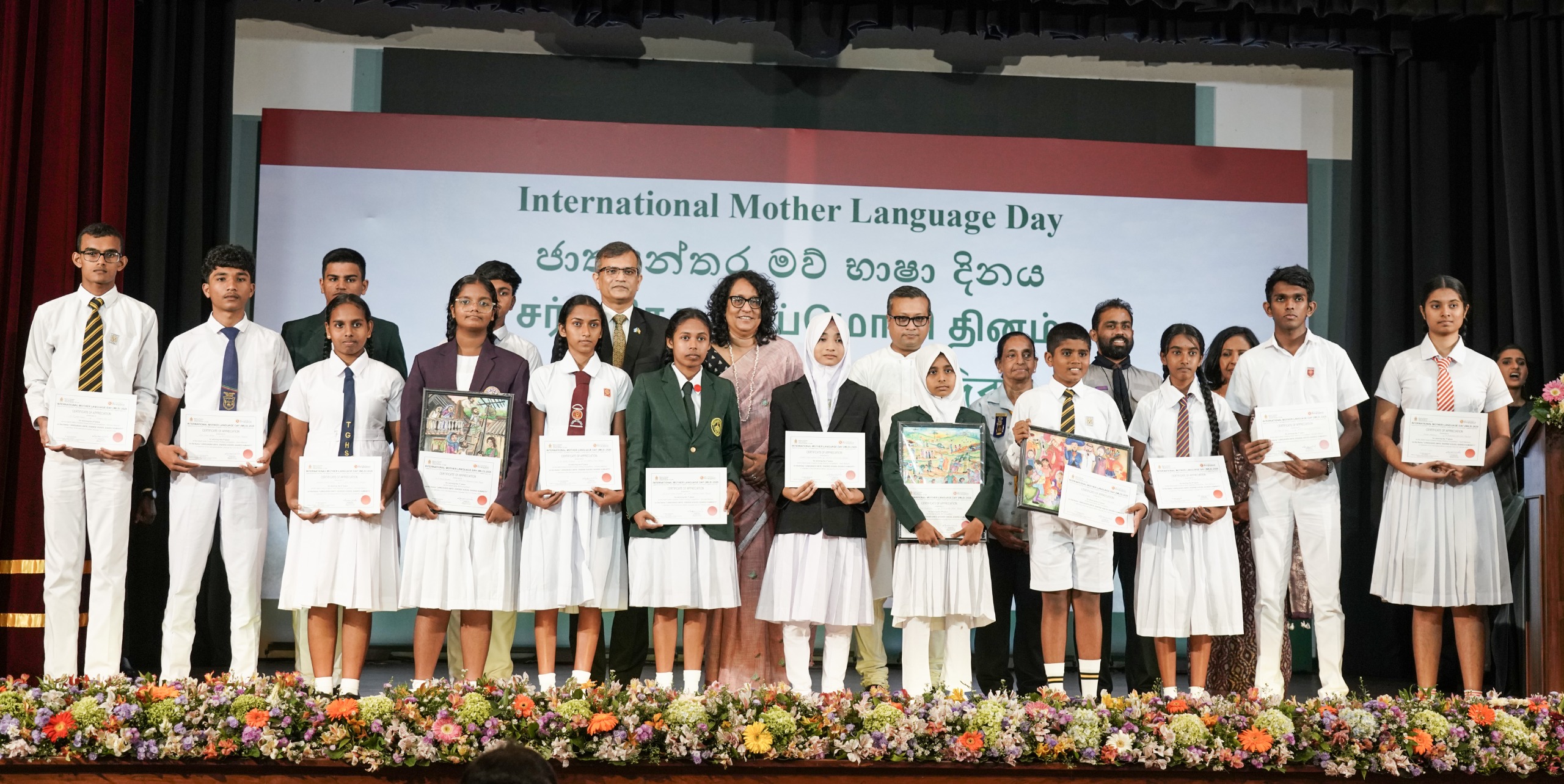
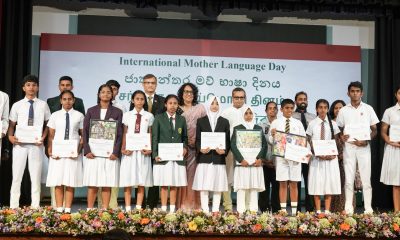
Minister of Education, Higher Education and Vocational Education Prime Minister Dr. Harini Amarasuriya participated as the Chief Guest in the special event organized to commemorate International Mother Languages Day 2026 on 13 March 2026 at the New Arts Theatre of the University of Colombo. The event was held under the theme ’Languages Unite: Diverse Voices, Shared Humanity’.
The event was jointly organized by the High Commission of Bangladesh and the Ministry of Education of Sri Lanka with the support of the United Nations, the Sri Lanka Scout Association, and the Sri Lanka Girl Guides Association.
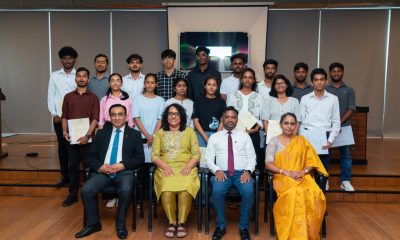
Certificates and awards were presented to school winners of the painting, essay, and short video creation competitions organized in conjunction with the celebration of International Mother Language Day 2026.
Addressing the occasion, the Prime Minister Dr. Harini Amarasuriya stated:
“International Mother Language Day stands as a powerful reminder of the profound connection between language, identity, and dignity.
This global observance owes its origins to the visionary initiative of the People’s Republic of Bangladesh. Bangladesh’s advocacy transformed a national commemoration into a global movement one that celebrates the rich mosaic of humanity’s linguistic heritage.
Sri Lanka’s language diversity reflects the richness of our pluralistic heritage. This diversity should not be seen as a challenge to be managed, but as a strength to be valued and cherished.
When we protect language rights, we nurture social harmony. When we promote multilingual education, we empower future generations. And when we listen to one another in our own languages, we affirm each other’s humanity. At a time when divisions can easily take root, respect for linguistic diversity can instead serve as a bridge of empathy and cooperation.
In an increasingly digital age, we must also reflect on the importance of preserving linguistic diversity in cyberspace. Thousands of languages around the world remain vulnerable. Without conscious efforts in education, technology, and policy, many risk fading into silence. Safeguarding linguistic heritage is therefore not only a cultural responsibility, but also a shared commitment to preserving the diversity of our world”.
The Prime Minister remarked that the partnership between Sri Lanka and Bangladesh continues to grow in friendship and cooperation with the shared commitment to multilateralism, cultural understanding, and people-to-people engagement strengthens the bonds between the two nations.
The event was attended by the Bangladesh High Commissioner, Andalib Elias, Deputy Speaker Dr. Rizvie Salih, Secretary to the Prime Minister Pradeep Saputhanthri, FAO Country Representative for Sri Lanka and Maldives Vimlendra Sharan, Chief Commissioner of the Sri Lanka Girl Guides Association Dr. Kushantha Herath, diplomatic crops, members of the Sri Lanka Scout Association, and the Sri Lanka Girl Guides Association and students.
[Prime Minister’s media division]

Navy seizes an Indian fishing boat poaching in Mannar seas

Bodies of 84 Iranian sailors killed in US torpedo strike to be repatriated

Four crew members killed after US refuelling plane crashes in Iraq

Safeguarding linguistic heritage is not only a cultural responsibility, but also a shared commitment to preserving the diversity of our world – PM

This is not an ordinary scholarship programme. It defines the future vision of our country – PM

West Indies name unchanged squad for home T20Is against Australia

‘Dates have the highest sugar content to fight Coronavirus’

Sunday Island 27 December – Headlines

#SundayIsland 17th December – Headlines

Sunday Island – 28th March

Sunday Island Headlines – 21 March

Sunday Island – 21st February – Headlines
-

 News7 days ago
Peradeniya Uni issues alert over leopards in its premises
-

 News5 days ago
Repatriation of Iranian naval personnel Sri Lanka’s call: Washington
-

 News7 days ago
Wife raises alarm over Sallay’s detention under PTA
-
 Features5 days ago
Winds of Change:Geopolitics at the crossroads of South and Southeast Asia
-

 News4 days ago
Prof. Dunusinghe warns Lanka at serious risk due to ME war
-

 Sports3 days ago
Royal start favourites in historic Battle of the Blues
-

 Latest News7 days ago
Heat Index at ‘Caution Level’ in the Sabaragamuwa province and, Colombo, Gampaha, Kurunegala, Anuradhapura, Vavuniya, Hambanthota and Monaragala districts
-

 Features7 days ago
The final voyage of the Iranian warship sunk by the US