
News
SJB alleges agro-chemical supply disrupted amidst plans to create monopoly in lucrative market

‘Govt.’s failure to meet requirement has led to the smuggling of deadly substances from India’
By Shamindra Ferdinando
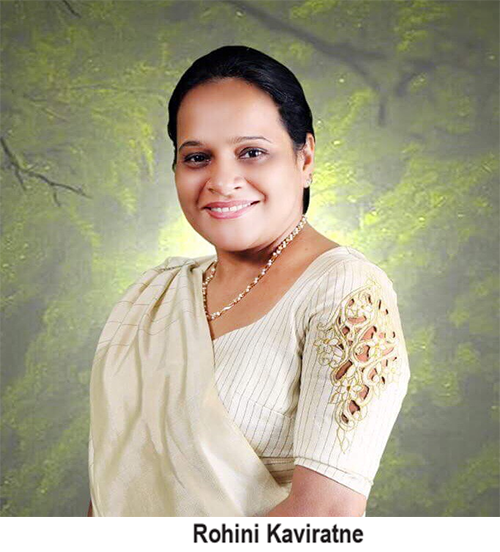
Samagi Jana Balavegaya (SJB) lawmaker Rohini Kaviratne says the government is yet to explain how it intends to ensure sufficient supply of agro-chemicals for the Maha season.
Pointing out that the Maha season is three weeks away; Matale District MP Kaviratne insists the government still seems uncertain about a proper distribution scheme. The Sri Lanka Podujana Peramuna (SLPP) continues to cause uncertainty among the farmer community, thereby undermining the vital occupation that feeds the country, the former UNPer says.
Asked whether SJB had genuinely intervened on behalf of the farming community, MP Kaviratne said that she recently raised the entire gamut of issues with Agriculture Ministry Secretary Senior Professor Uditha K. Jayasinghe.
How could land be prepared without agro-chemicals, MP Kaviratne asked, urging the Agriculture Ministry to respond to farmers’ concerns, instead of simply following the government agenda.
Due to the failure on the part of the government to provide sufficient supply of agro-chemicals, questionable stocks were being smuggled in from India in fishing trawlers to the Eastern Province, Mannar, as well as the South, the MP alleged in her letter to the Agriculture Ministry Secretary.
Lawmaker Kaviratne pointed out that Jayasinghe who headed the Agriculture Faculty, Wayamba University couldn’t be unaware of the pivotal requirement for both fertiliser and agro-chemicals for commercial cultivation.
Jayasinghe succeeded Senior Administrative Officer Rohana Pushpakumara in June this year. The Agriculture Minister brought in Pushpakumara after the resignation of Maj. Gen. Sudantha Perera, President Gotabaya Rajapaksa’s first choice as Secretary to the Ministry of Agriculture.
Lawmaker Kaviratne maintained that the Agriculture Ministry, too, was in turmoil as were almost all other ministries. “As a result, key sectors are in chaos. Agriculture is no exception. The way the decision-makers had handled the agriculture sector is evidence that the SLPP is bent on pursuing its own agenda even at the expense of the community,” she claimed.
Commenting on a Cabinet paper submitted by the Agriculture Ministry recently, MP Kaviratne alleged that an attempt was being made to create a monopoly in the lucrative agro-chemical import business. The lawmaker questioned the rationale in handing over a staggering 87 percent of the import share to one company against the backdrop of the crisis caused by pursuing a similar strategy in respect of sugar trade.
The SJB spokesperson pointed out how the government restricted the number of sugar importers. At that time, the SLPP won the election, altogether there had been 67 sugar importers, MP Kaviratne said. Subsequently, the number of sugar importers had been brought down to 12 and duty on kilo of imported sugar slashed from Rs 50 to 25 cents, at the expense of the Treasury, paving the way for those with political connections to hoard massive stocks of imported sugar after paying a pittance as tax, the MP said.
Lawmaker Kaviratne said that since Sri Lanka opened up her economy in 1977 during the JRJ presidency, there hadn’t been previous attempts to create a monopoly in agro-chemical imports. The government had now paved the way for smuggling of agro-chemicals from India and the formation of a black market trade, the MP alleged, claiming that those in power had dealt a deadly blow to agriculture.
Kaviratne asked whether the SLPP was pursuing an agenda meant to destroy agriculture.
Responding to another query, MP Kaviratne said that the resignation of two Secretaries to the Agriculture Ministry, too, couldn’t be ignored. Perhaps, Maj. Gen. Perera and senior administrative officer Pushpakumara hadn’t been able to follow unpalatable political directives hence the decision to quit, MP Kaviratne said.
She charged that while pretending the government had initiated a major drive to promote organic farming in fact the country was now opened up to deadly agro-chemicals.
The MP alleged that the SLPP had jeopardised the livelihood of about 30 percent of the population dependent on agriculture and was following an unexplained strategy inimical to the overall well being of the country.
Referring to the recent media coverage of countrywide fertiliser shortage, MP Kaviratne claimed that the government wanted to discourage reportage of the issue. Some of those protesting against fertiliser shortage had been harassed while some sections of the media had been warned of punitive measures, she claimed.
The proposed move to make available agro-chemicals through Govijana Seva centres would cause serious inconvenience to the farming community, she asserted.

Sri Lanka’s president says his government turned down a request from the United States to land two US combat aircraft at a civilian airport earlier this month.
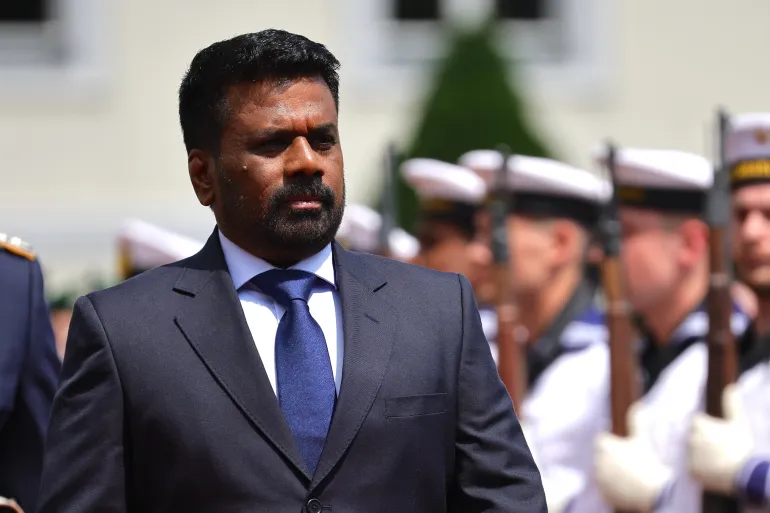
President Anura Kumara Dissanayake told Sri Lanka’s parliament on Friday that Washington had requested permission for the aircraft to land at Mattala Rajapaksa International Airport in southern Sri Lanka from March 4 to 8.
The request was made on February 26, two days before the US and Israel launched their military offensive against Iran.
“They wanted to bring two warplanes armed with eight antiship missiles from a base in Djibouti”, Dissanayake told lawmakers. “We turned down the request to maintain Sri Lanka’s neutrality”, he added to applause.
The US-Israeli war on Iran has sparked widespread concern globally, as Iranian missile and drone attacks across the wider Middle East have sent energy prices soaring and fuelled fears of a widening conflict.
US President Donald Trump has also been pressuring Washington’s allies to show more support for the war, slamming NATO countries as “cowards” for refusing to help secure the Strait of Hormuz.
Iran has essentially shuttered the critical Gulf waterway amid the war, forcing leaders around the world to scramble to try to offset the effects on their economies and energy supplies.
Amid the turmoil, many countries have refused to get directly involved in the war while calling for urgent de-escalation.
On Friday, Switzerland announced that it would halt any weapons exports to the US that could be used in military operations against Iran, citing its longstanding policy of neutrality.
“The export of war materiel to countries involved in the international armed conflict with Iran cannot be authorised for the duration of the conflict”, the Swiss government said.
Sri Lanka’s president also cited his country’s neutrality in the decision to deny the US request to land the two aircraft at Matalla airport earlier this month.
Dissanayake said he had received another request that same day, on February 26, from Iran to seek permission for three naval vessels to make a goodwill visit to Sri Lanka.
“With two requests before us, the decision was clear,” he said, noting that the government denied both to avoid taking sides as signs of escalating conflict emerged.
“Had we said ‘yes’ to Iran, we would have had to say ‘yes’ to the US, as well”, Dissanayake added.
In early March, Sri Lanka’s navy rescued 32 Iranian crew off IRIS Dena after it was torpedoed by a US submarine off the country’s coast, killing at least 84 people.
Days later, Sri Lanka evacuated more than 200 crew members from a second Iranian vessel, IRIS Bushehr, after the ship requested assistance from Colombo.
[Aljazeera]

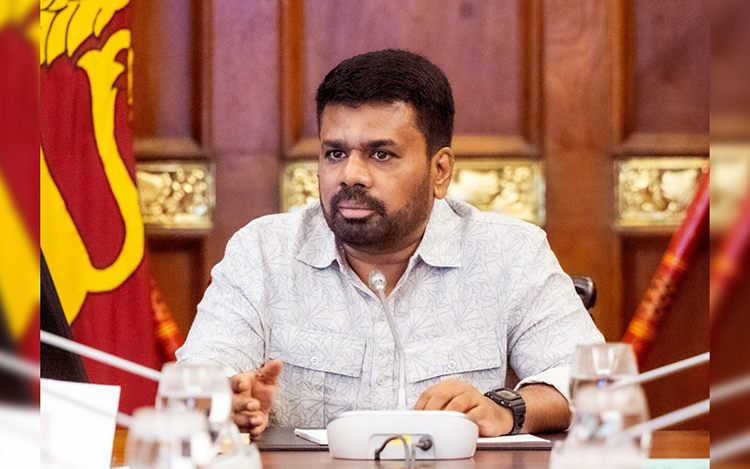
Sri Lanka refused the request by three Iranian ships to come to Sri Lanka on a goodwill visit and the request by the United States to land two of its fighter jets in Mattala, President Anura Kumara Dissanayake told Parliament yesterday.
“Sri Lanka maintained neutrality by refusing the two requests by both the US and Iran,” he said.
President Dissanayake provided a clarification on domestic fuel prices in light of rising crude oil prices in the global market and subsequent fuel price increases in other countries, triggered by the ongoing crisis in the Middle East.
The President highlighted that the Ceylon Petroleum Corporation (CPC) currently supplies 57% of the country’s fuel requirements, while the remaining 43% is supplied by the private sector.
He further noted that private sector suppliers have requested pricing that reflects current global market rates for the fuel they import.
Accordingly, the President emphasised that a decisive decision on fuel price adjustments must be reached as expeditiously as possible to ensure the continuity of the national fuel supply.
Addressing the Parliament, the President stated that the current pricing formula dictates that for every one-dollar increase in global oil prices, domestic fuel prices must rise by Rs. 2.
He noted that the primary impact being faced is driven by the surge in global fuel prices rather than the depreciation of the rupee against the US dollar.
The President said that, globally, countries have been compelled to make difficult decisions regarding fuel costs, with price increases ranging from approximately 6% to 50%.
He added that while global prices have risen by as much as 49%, the domestic increase has been limited to 8%.
He further stated that Sri Lanka is currently facing a significant challenge in maintaining fuel supply.
The Ceylon Petroleum Corporation (CPC) accounts for 57% of the country’s fuel supply. He noted that had the CPC been the sole supplier, fluctuations could have been managed by offsetting current losses with future profits.
However, he said the private sector now controls 43% of the market, and their position is that if retail prices do not reflect the current landed cost of fuel, they will cease imports.
He added that, from a business perspective, this is a valid concern, as private companies reportedly incur a loss of approximately USD 55 million per shipment, which he said is unsustainable.
The President emphasised that the contribution of the private sector is essential to maintaining the national fuel supply, but noted that they will only participate if they are able to sell at cost-reflective prices.
He stressed that the issue of fuel pricing must, therefore, be addressed urgently.
He also pointed out that under the existing Act, companies are permitted to increase prices; however, the maximum retail price is determined by the Ceylon Petroleum Corporation.
“Although we have entered into agreements with these private companies, the necessary legislative amendments to the Act have not yet been finalised,” he noted.
Regarding government revenue, the President stated that tax income from fuel currently stands at Rs. 20 billion, compared to Rs. 240 billion generated last year from taxes on diesel.
Latest News
Heat Index likely to increase up to ‘Caution level’ at some places in the Western, Sabaragamuwa, North-central, Southern and North-western provinces and in Monaragala, Mannar, Vavuniya and Mullaitivu districts

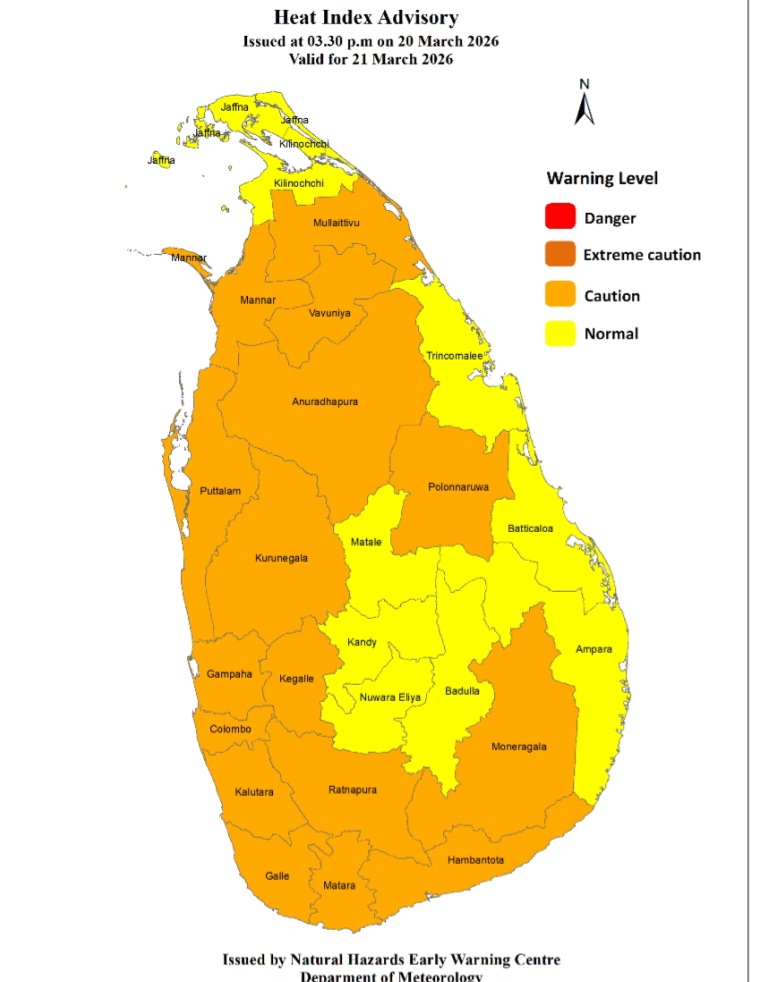
Warm Weather Advisory Issued by the Natural Hazards Early Warning Centre of the Department of Meteorology at 3.30 p.m. on 20 March 2026, valid for 21 March 2026
The public are warned that the Heat index, the temperature felt on human body is likely to increase up to ‘Caution level’ at some places in the Western, Sabaragamuwa, North-central, Southern and North-western provinces and in Monaragala, Mannar, Vavuniya and Mullaitivu districts.
The Heat Index Forecast is calculated by using relative humidity and maximum temperature and this is the condition that is felt on your body. This is not the forecast of maximum temperature. It is generated by the Department of Meteorology for the next day period and prepared by using global numerical weather prediction model data.
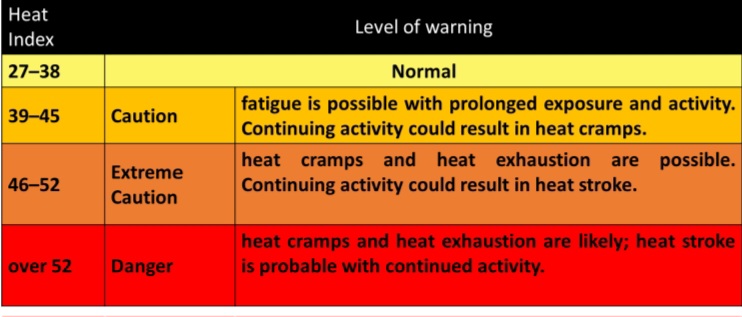
Effect of the heat index on human body is mentioned in the above table and it is prepared on the advice of the Ministry of Health and Indigenous Medical Services.
ACTION REQUIRED
Job sites: Stay hydrated and takes breaks in the shade as often as possible.
Indoors: Check up on the elderly and the sick.
Vehicles: Never leave children unattended.
Outdoors: Limit strenuous outdoor activities, find shade and stay hydrated.
Dress: Wear lightweight and white or light-colored clothing.
Note:
In addition, please refer to advisories issued by the Disaster Preparedness & Response Division, Ministry of Health in this regard as well. For further clarifications please contact 011-7446491

Sri Lanka says it denied US request to land two aircraft at Mattala airport

Eid celebrations dimmed by war and displacement across Middle East

Showers may occur at several places in the Western, Sabaragamuwa, Northwestern and Uva provinces and in Galle, Matara, Kandy and Nuwara-Eliya districts after 1.00 pm.

Iranian strikes on bases used by US caused $800m in damage, new analysis shows

President maintains Lanka has been even-handed in dealing with Iran and US

Heat Index likely to increase up to ‘Caution level’ at some places in the Western, Sabaragamuwa, North-central, Southern and North-western provinces and in Monaragala, Mannar, Vavuniya and Mullaitivu districts

‘Dates have the highest sugar content to fight Coronavirus’

Sunday Island 27 December – Headlines

#SundayIsland 17th December – Headlines

Sunday Island – 28th March

Sunday Island Headlines – 21 March

Sunday Island – 21st February – Headlines
-

 Business5 days ago
Browns EV launches fast-charging BAW E7 Pro at Rs. 5.8 million
-

 Life style6 days ago
From culture to empowerment: Indonesia’s vision for Sri Lanka
-

 News3 days ago
CIABOC questions Ex-President GR on house for CJ’s maid
-

 Life style6 days ago
Ranjith Fernando celebrates cricketing journey with Hob Nails to Spikes
-

 News4 days ago
Sri Lankan marine scientist Asha de Vos honoured at UNGA opening
-

 Features5 days ago
Achievements of the Hunduwa!
-

 Latest News6 days ago
QR code system will be implemented for fuel with effect from 06.00 a.m. today (15th)
-

 News4 days ago
Australian HC debunks misleading travel risk claims for Sri Lanka