
Editorial
Sirisena’s lament


Wednesday 29th March, 2023
Former President Maithripala Sirisena has requested the public to help him pay compensation for his lapses to prevent the Easter Sunday terror attacks in 2019. The Supreme Court (SC) has ordered him to pay Rs. 100 million as compensation. He would have the public believe that there are only three months left for him to carry out the SC order, and he will have to go to jail if he fails to do so. Whether anyone will be so stupid as to part with his or her money in a bid to prevent a politician from going to jail remains to be seen. What made Sirisena think that the discerning public will spend their hard-earned money to deny themselves the pleasure of seeing a political leader behind bars?
Sirisena is trying to make himself out to be so poor that he cannot raise Rs. 100 million! It is doubtful whether he will succeed in his endeavour. His has been a rags-to-riches story, and the same goes for all other Sri Lankan politicians. The people who enabled them to achieve success in life are still in rags, struggling to keep the wolf from the door!
Sirisena is one of the politicians who have mastered the art of pulling the wool over the eyes of the unsuspecting public. He took the masses for a right royal ride and achieved his presidential dream in 2015. He did so by shedding copious tears for the victims of the Rajapaksa misrule and promising to usher in good governance and throw the members of the Medamulana clan behind bars for their crimes, but a few years after securing the presidency, he unashamedly closed ranks with his betes noires and cocked a snook at the public. He famously used a cheap ballpoint pen to sign papers at his induction ceremony in January 2015 but did not scruple to allocate public funds with a generous hand for refurbishing a palatial state-owned house with a view to occupying it in retirement. Thankfully, his plan seems to have gone pear-shaped. He was more airborne than ‘chairborne’ as the President, and it will be interesting to know how much his numerous whirlybird rides and foreign travel cost the state coffers.
It is his abject failure to ensure public security, in his capacity as the President and Minister of Defence, that the SC has asked Sirisena to pay compensation for, and why on earth should the people help him? Sri Lankans, no doubt, deserve punishment for having elected failed politicians as their leaders over the years but, in our book, the suffering they are undergoing due to their country’s bankruptcy could be considered their comeuppance and no other punishment is required.
Gone are the days when the rich died poor in politics in this country after spending all their money for the good of the public. Today, the indigent and their families amass colossal amounts of wealth thanks to politics. None of the prodigal scions of the present-day political families have any discernible sources of income but are living the life of Riley, sporting expensive designer wear, moving about in flashy vehicles and having fairytale weddings while the children of the ordinary public are undergoing untold hardships and being tear-gassed and baton-charged for trying to win their rights.
A presidential election costs the candidates of the main political parties billions of rupees. How did Sirisena, who claims to be in penury, raise funds for his presidential election campaign? His younger brother, Dudley, is one of those who helped him financially.
Dudley is a member of the Rice Millers’ Mafia, which has earned notoriety for exploiting farmers and consumers alike with impunity. He would not have been able to achieve success without Sirisena’s backing. There are many others whom Sirisena helped in numerous ways; he even granted a presidential pardon to a convicted murderer on death row. It is up to them to provide him with necessary funds to pay compensation in keeping with the SC order, if he is really in need of money.


Tuesday 3rd February, 2026
There has been no let-up in pro-government propagandists’ social media attacks on Attorney General (AG) Parinda Ranasinghe. AG’s Department Legal Officers’ Association has raised concerns over unfounded and baseless personal attacks on AG Ranasinghe and some other officers of his department. A resolution unanimously adopted by the association at a special general meeting on 29 Jan., 2026, states that the attacks appear to be part of a coordinated effort to pressure the AG and his staff, potentially undermining the department’s independence. It has warned that the systematic abuse of social media to create a false sense of public dissatisfaction, and that unchecked intimidation could cause lasting harm to the rule of law, justice system, and public trust in democratic governance. One cannot but agree with them that the ongoing vilification campaign against the AG and some of his subordinates is part of a sinister campaign that must be unreservedly condemned.
The JVP-NPP government has been acting in a manner that blurs the line between the party and the state. It is apparently working according to a plan to enable the JVP to arrogate to itself the powers of vital state institutions and perpetuate its rule. However, it is not alone in having striven to do so. The late President J. R. Jayewardene did everything in his power to place his party and himself above the state, and President Mahinda Rajapaksa made a similar effort to ensure the perpetuation of his party’s rule. Thankfully, both leaders failed in that endeavour.
The legal officers of the AG’s Department have reaffirmed their full confidence in AG Ranasinghe, underscoring that the AG is accountable to the law and appropriate legal channels exist for addressing anyone’s grievances. The AG’s Department, they have said in their resolution, will continue to act strictly in accordance with the law and admissible evidence, resisting pressure from public rhetoric or media-driven narratives. They have expressed their gratitude to the Bar Association of Sri Lanka, legal professionals, and members of the public who voiced support for AG Ranasinghe, noting his integrity and the department’s commitment to its workload despite resource shortages.
Now that the legal officers of the AG’s Department have vowed to ‘continue to act strictly in accordance with the law and admissible evidence’, how do they propose to prevent governments from using their institution to protect politicians.
One may recall that in August 2025, the Mount Lavinia Magistrate hearing a case against Minister Wasantha Samarasinghe, Deputy Minister of Labour Mahinda Jayasinghe and Mayor of Kaduwela Ranjan Jayalal, asked the Colombo Fraud Investigation Bureau why it had submitted the investigation report to the AG before recording statements from the suspects. The police could not provide an answer––for obvious reasons. How could they tell the court that they had done so at the behest of the powers that be? President’s Counsel Maitree Gunaratne, representing the aggrieved party, said the court order to arrest the suspects had been ignored, and that the police had sought instructions of the AG to mislead the judiciary. Subsequently, the Magistrate received a transfer. When the case was taken up again in September 2025, the court noted that the case file had already been referred to the Attorney General for advice!
Thus, while using the AG’s Department to delay the judicial process and prevent the arrest of ruling party politicians, the NPP-JVP government wants it to go all out to have Opposition politicians arrested even before investigations against them get underway in earnest. The aforesaid forgery case is scheduled to be taken up in a few weeks, and it will be interesting to see what the AG’s advice to the Fraud Bureau is.
Everyone who cherishes democracy and the rule of law must stand firmly with the beleaguered AG and his department and help stop the country’s drift towards autocracy.


Monday 2nd February, 2026
Ranil Wickremesinghe, following his fortuitous elevation to the presidency in 2022, famously likened the unnervingly daunting task of saving a nosediving economy to Grusha crossing a collapsing rope bridge across an abyss, carrying a baby, in The Caucasian Chalk Circle. Thankfully, he completed that perilous journey, and handed over the baby to his successor President Anura Kumara Dissanayake. One can only hope that the baby will be safe.
As if the task of looking after one baby were not enough, President Dissanayake and Prime Minister Dr. Harini Amarasuriya have embarked on a journey across a different rope bridge, carrying another baby—educational reforms. There was absolutely no need for them to do so in a hurry. The critics of the government’s desperate efforts to impose its educational reforms on other key stakeholders, especially teachers, as a fait accompli, have pointed out that the JVP-led NPP is trying to implement what one of its predecessors crafted. Claiming that the government is seeking credit for Wickremesinghe’s educational reforms, a trade unionist has said President Dissanayake is strutting around, in Ranil’s trousers. The problem is not who is wearing whose trousers; it is that they are shoddily tailored and being worn the wrong way, back to front and inside out with waistband at the wrong level.
The ongoing controversy over educational reforms has taken a dramatic turn, with former Director General of the National Institute of Education (NIE) Prof. Gunapala Nanayakkara implying that some NIE bigwigs took the incumbent government for a ride. On Friday, speaking at a seminar, organised by the United Republic Front, on the educational reforms, Prof. Nanayakkara said the educational reforms the NPP government was trying to implement were based on the so-called Sedera proposals, and they had failed for want of proper leadership. Neither the Education Ministry nor the National Education Commission nor the NIE had provided proper leadership for the educational reforms, he said, revealing something that must have made the bigwigs of the incumbent government and its apologists see red.
Prof. Nanayakkara disclosed that in 2022 and 2023, the NIE had crafted hundreds of modules at a cost of Rs. 223 million. Those who were responsible for the module project faced an audit query; they were required to furnish proof of official approval for the project, Prof. Nanayakkara said, claiming that the NIE officials had craftily smuggled those modules into the current educational reform package in a bid to obtain cover approval. They had also prepared a PowerPoint presentation of the educational reforms, but it had left everyone none the wiser, he noted. This may be the reason why the government has not been able to meet the Opposition’s demand that a comprehensive document on its educational reforms be made public.
Interestingly, if Prof. Nanayakkara’s aforesaid claim is true, then one can argue that the modules at issue were prepared during the previous government, and therefore the Opposition, which bashes the incumbent government for a link to an adult website in the Grade 6 English module, is barking up the wrong tree. Or, is it possible that some modules were prepared during the current dispensation? The Education Ministry should reveal when the modules were prepared.
Prof. Nanayakkara’s claims are of crucial importance; they have shed light on another dimension of the educational reforms controversy. A separate probe should be conducted into the preparation of so many modules at a staggering cost, allegedly without formal authorisation. The government, however, cannot claim the assertion that some NIE bureaucrats took it for a ride in extenuation of its culpability, for it plunged head first into implementing the ill-conceived education reforms and has defended them ardently both in and outside Parliament. Now that it has given its imprimatur to the education reforms and started implementing them, there is no way it can disown the reform baby, as it were, much less absolve itself of the blame for them by throwing some NIE officials under the bus.

Past several months have seen some former ministers and ex-state officials being remanded and denied bail ‘to prevent interference with evidence-gathering processes and the intimidation of witnesses. Some of the offences they are charged with were allegedly committed years ago during previous governments. It is while in power that transgressors can cover their tracks by suppressing or eliminating evidence and influencing or intimidating witnesses. Those who are facing legal action for corruption must have resorted to such tactics while their parties were in power. The venal state officials accused of having aided and abetted such alleged transgressions for personal gain, too, must have done likewise. It is therefore doubtful whether holding them on remand for extended periods at present serves the intended purpose.
Politicians and officials should be arrested and remanded immediately after their transgressions come to light if interference with evidence and the intimidation of witnesses are to be prevented. If investigations had been launched into numerous corrupt deals exposed during the Mahinda Rajapaksa government, it would have been possible to bring those responsible for them to justice. Most members of that administration have got away with their corrupt deals.
Various international organisations campaigning against corruption, money laundering, etc., particularly Transparency International, the National Anti-Corruption Commission of Australia, and the United Nations Office on Drugs and Crime, have stressed the importance of swift probes. They have pointed out that investigating corruption immediately after instances thereof come to light is essential for multiple reasons. Early investigations help preserve evidence and deter concealment, which is very common in Sri Lanka. Corrupt politicians are known to hide documents, destroy records or influence witnesses, especially when they are in power. Evidence can be made to disappear making it harder for investigators to get at the truth if investigations are delayed. Equally, prompt investigations are a prerequisite for maintaining public trust in institutions, such as the Commission to Investigate Allegations of Bribery or Corruption, and the rule of law. Protracted delays in conducting investigations invariably create the impression that the system is corrupt, ineffective and biased. Early action increases the chances of successful prosecution and deterrence.
It is against this backdrop that several damning allegations of corruption against the incumbent government should be viewed. The JVP/NPP came to power, promising what it described as ‘a system change’ to eliminate bribery and corruption and other such social evils. But it is apparently emulating its predecessors in handling allegations against its senior members. It vilifies whistle-blowers, denies allegations and delays investigations. Worse, the CID is headed by a prominent member of the Retired Police Collective of the NPP, and its integrity is therefore compromised.
A huge stock of coal imported for power generation has been found to be substandard. The low calorific value of the coal has resulted in low power output per tonne, and engineers have warned that the use of low-quality coal could damage the machinery of the Norochchoalai power plant. Staggering losses the Ceylon Electricity Board has suffered by importing substandard coal are expected to be passed on to the public in the form of tariff hikes. The government is accused of having interfered with the tender process to facilitate the registration of the company which supplied the low-quality coal. What needs to be done immediately is to probe the allegation that the bidding process was delayed to enable the supplier concerned to be registered. A delay in launching an investigation into the alleged coal procurement racket will help the culprits cover their tracks.
A Parliamentary Select Committee (PSC) probe has been launched into the green-channelling of as many as 323 red-flagged freight containers through the Colombo Port in January 2025. The uninspected cargo may have included narcotics and lethal weapons, the Opposition has claimed. It has been alleged that the high-risk containers were released at the behest of a powerful minister. So, one can argue that the government helped cover his tracks before launching a parliamentary probe. Only the naïve will expect a PSC, dominated by the NPP MPs and headed by a minister, to reveal anything that is detrimental to the interests of the NPP government.
Keheliya Rambukwella was arrested over a procurement racket in the Health Ministry while he was a minister in the previous government. True, that beleaguered administration had to throw him to the wolves for want of a better alternative. But the fact remains that his arrest and remand helped protect the evidence-gathering process, among other things. Why no arrests have been made over the release of 323 high-risk containers without Customs inspection, and the procurement of substandard coal, under the ‘clean’ NPP government, is the question.

Shower will occur in the Northern, North-central, Eastern and Uva provinces and in Nuwara-Eliya and Matale districts

Interpol crackdown: Sri Lankan man among seven arrested in UK for human smuggling

Sri Lanka calls on global consular corps to protect nationals amid fishermen incident

Korean boost for Thriposha programme: Partnership worth USD 10 mn

Development Officers’ Association steps up protest campaign

‘Sri Lanka’s forests are undervalued economic assets — and markets are paying the price’

‘Dates have the highest sugar content to fight Coronavirus’

Sunday Island 27 December – Headlines

#SundayIsland 17th December – Headlines

Sunday Island – 28th March

Sunday Island Headlines – 21 March

Sunday Island – 21st February – Headlines
-
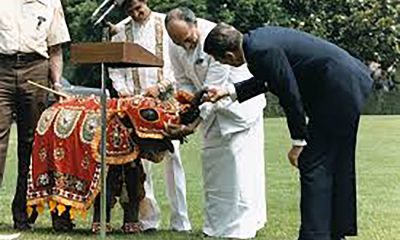
 Opinion4 days ago
Sri Lanka, the Stars,and statesmen
-
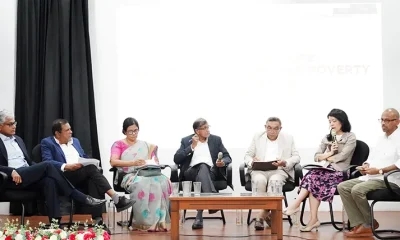
 Business5 days ago
Climate risks, poverty, and recovery financing in focus at CEPA policy panel
-

 Business3 days ago
Hayleys Mobility ushering in a new era of premium sustainable mobility
-
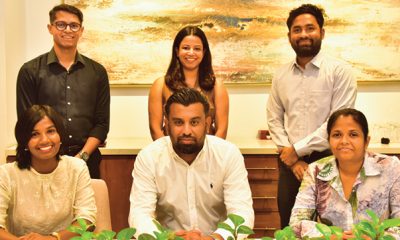
 Business3 days ago
Advice Lab unveils new 13,000+ sqft office, marking major expansion in financial services BPO to Australia
-
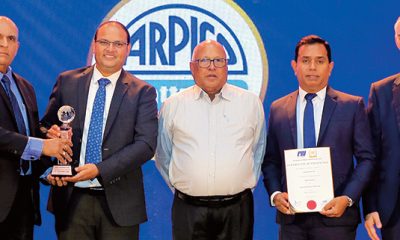
 Business3 days ago
Arpico NextGen Mattress gains recognition for innovation
-
 Business2 days ago
Altair issues over 100+ title deeds post ownership change
-

 Business2 days ago
Sri Lanka opens first country pavilion at London exhibition
-

 Editorial3 days ago
Govt. provoking TUs