
News
Significant contraction in profitability of SOE sector in first half of 2025


Eighteen out of 52 major state-owned enterprises (SOEs) have incurred losses in the first six months of 2025, worsening fiscal pressures on the government and taxpayers, according to the Mid-Year Fiscal Report released by the Ministry of Finance.
The report has revealed a significant contraction in the profitability of the SOE sector. During the first half of 2024, the 52 entities collectively posted profits of Rs. 280.7 billion. In contrast, their combined profit for the corresponding period in 2025 has dropped to Rs. 227.8 billion—a decline of more than Rs. 52 billion.
Among the largest loss-makers are the Ceylon Electricity Board (CEB), SriLankan Airlines and the Lanka Sugar Company, all of which have recorded steep reversals compared to previous years. The CEB has posted a pre-tax loss of Rs. 13.2 billion as at 30 June 2025, a dramatic fall from profits of Rs. 144 billion in 2024 and Rs. 57.6 billion in 2023.
SriLankan Airlines has also suffered a sharp downturn, recording a pre-tax loss of Rs. 12 billion between April and June alone. The airline’s cumulative losses now stand at a staggering Rs. 628 billion. Its equity position has deteriorated to a negative Rs. 415 billion, while total liabilities have risen to Rs. 606.7 billion.
A BBC report cited by the Finance Ministry attributes the airline’s continuing losses to inadequate revenue diversification and heavy debt-servicing obligations.
The Cabinet has already approved restructuring of long-overdue debt amounting to USD 210 million and Rs. 31.4 billion, to be serviced with Treasury involvement.
Meanwhile, Lanka Sugar Company Limited has recorded a pre-tax loss of Rs. 2.6 billion as at 30 June, compared to a loss of Rs. 1.9 billion in 2024 and a profit of Rs. 2.8 billion in 2023, reflecting further deterioration in performance.
Presenting the 2026 Budget, President Anura Kumara Dissanayake said political interference, weak financial discipline and patronage-based recruitment had turned several state entities into “a heavy burden on the economy.” He noted that a number of institutions had failed to pay bank loans, taxes or employee EPF/ETF contributions. The government has already allocated Rs. 11 billion to settle overdue employee benefits and outstanding taxes.
The President said the government would shut down institutions with no commercial, regulatory or administrative value, merge agencies performing overlapping functions and reorganise those that have diverged from their core mandates.
SOEs currently in the red include the CEB, SriLankan Airlines, Lanka Sugar Company, State Engineering Corporation, Lanka Sathosa, Hotel Developers (Lanka) Ltd, State Development and Construction Corporation, Sri Lanka Rupavahini Corporation, State Timber Corporation, ITN, SLBC, State Printing Corporation, Ceylon Fisheries Harbour Corporation, National Livestock Development Board, Janatha Estate Development Board, Sri Lanka State Plantation Corporation, Sri Lanka Cashew Corporation and the Ceylon Fisheries Corporation.
A number of institutions—among them Lanka Sugar Pvt Ltd, the Janatha Estate Development Board, SLSPC, SLRC, Ceylon Fisheries Corporation, NLDB, Elkaduwa Plantations Ltd, SLBC, North Sea Ltd and Lanka Ceramics JV Corporation—have been unable to meet EPF/ETF and tax obligations and now require direct Treasury support.
Despite the pressures, the Finance Ministry notes that several major SOEs have posted stronger results. State banks have reported a combined profitability increase of Rs. 65.5 billion in the first half of the year, while the Sri Lanka Ports Authority, National Water Supply and Drainage Board and Employees’ Trust Fund Board have also improved their performance.
The government has already begun the process of closing 33 inactive institutions by 2026 and restructuring others in line with new efficiency and governance targets.


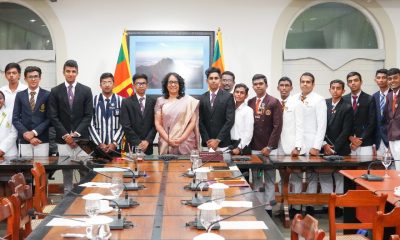

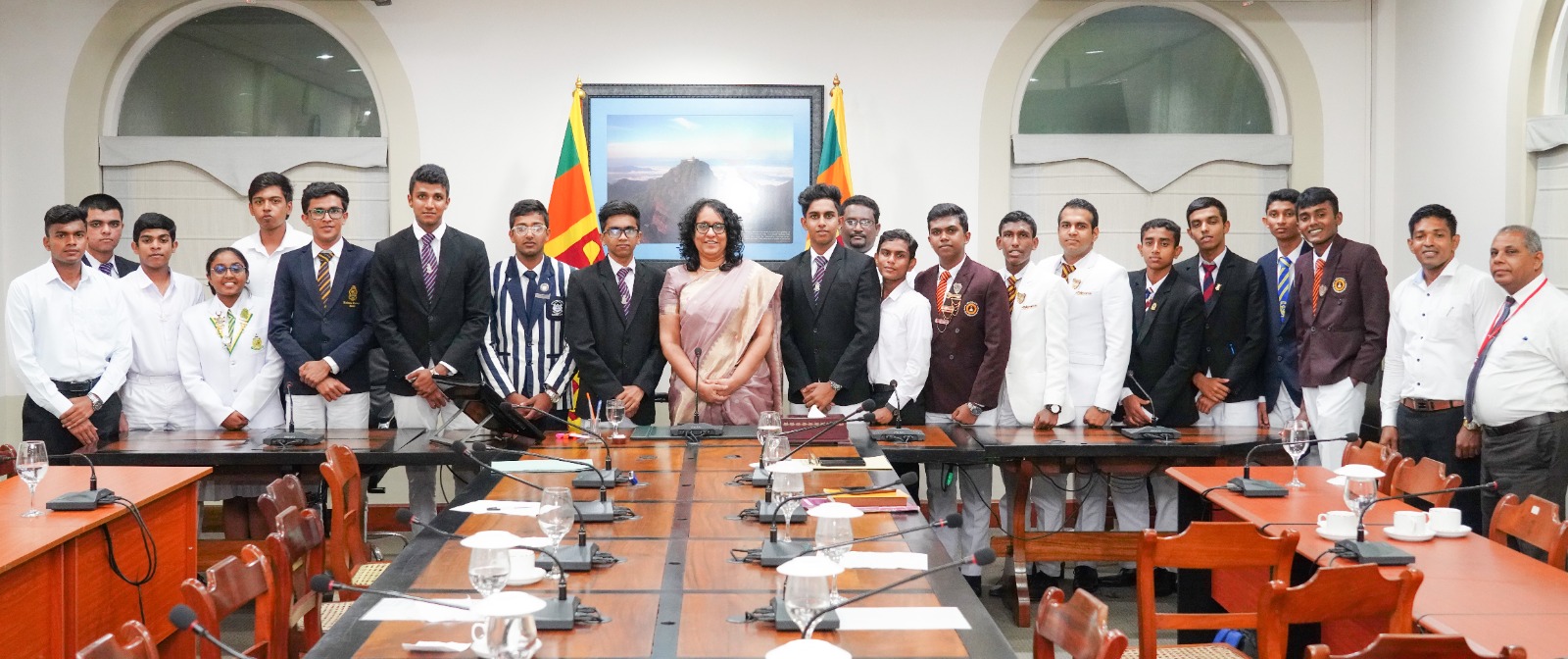
Members of the National Student Parliament met Prime Minister Dr. Harini Amarasuriya on Monday [02nd of February] at Temple Trees.
The representatives of the National Student Parliament, representing schools from across the island, visited the Temple Trees following their visit to the Presidential Secretariat and the Parliament.
Expressing her views on the occasion, Prime Minister Dr. Harini Amarasuriya stated,
“The new education reforms were recently initiated starting from Grade One. Discussions are currently underway to include students entering Grade Six this year into the new education reform process in the future. The education reforms will not be halted, and the government is committed to implementing them in a systematic manner without shortcomings”.
She further noted that the reforms are being carried out under five main pillars, with the government’s key objective being to reduce disparities and provide children with quality education, while also nurturing a socially responsible community enriched with human values such as compassion, love for the environment, and a strong sense of civic responsibility.
The occasion was attended by the Deputy Director of Education Kasun Gunarathne, along with officials from the Ministry of Education and representatives of the National Student Parliament.
[Prime Minister’s Media Division]
Latest News
Mrs. I.J. Aberathne appointed Director General of the Department of Trade and Investment Policy

The Cabinet of Ministers has approved the resolution presented by the President, in his capacity as the Minister of Finance, Planning, and Economic Development, to appoint Mrs. I.J. Aberathne to the post of Director General of the Department of Trade and Investment Policy with immediate effect.
News
Cabinet gives green light to provide equipment for the promotion of Aesthetic Education in schools

Although the teaching of art subjects such as music, dance, art, and drama under aesthetic education continues in the Sri Lankan school system, it has been observed that there is a severe shortage of equipment required for this purpose in many schools. Furthermore, a situation concerning the lack of modern equipment suitable for the needs of the children has also arisen, and it has been reported that most equipment available at present is outdated and dilapidated. It has been observed that this condition has an adverse effect on the quality of the aesthetic education and overall personality development of the children.
Therefore, the Cabinet of Ministers has approved the resolution presented by the Prime Minister in her capacity as the Minister of Education, Higher Education, and Vocational Education to implement a project for supplying aesthetic equipment for the promotion of aesthetic education in schools under an estimated cost of Rs. 1,215 million during the period of 2026 to 2028.

Somali woman executed for murdering a child in a case that sparked outrage

Last over in multi-day cricket to continue despite a wicket after latest amendments to Laws

England will bat first in 3rd ODI

Members of the National Student Parliament meet PM

Sri Lanka aim to overcome disarray and end trophy drought

Mrs. I.J. Aberathne appointed Director General of the Department of Trade and Investment Policy

‘Dates have the highest sugar content to fight Coronavirus’

Sunday Island 27 December – Headlines

#SundayIsland 17th December – Headlines

Sunday Island – 28th March

Sunday Island Headlines – 21 March

Sunday Island – 21st February – Headlines
-
 Opinion5 days ago
Sri Lanka, the Stars,and statesmen
-
 Business6 days ago
Climate risks, poverty, and recovery financing in focus at CEPA policy panel
-

 Business4 days ago
Hayleys Mobility ushering in a new era of premium sustainable mobility
-
 Business4 days ago
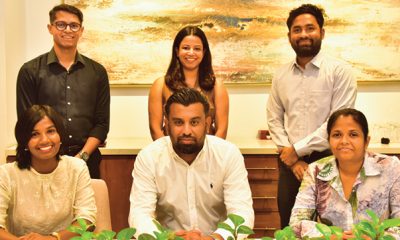
Advice Lab unveils new 13,000+ sqft office, marking major expansion in financial services BPO to Australia
-
 Business4 days ago
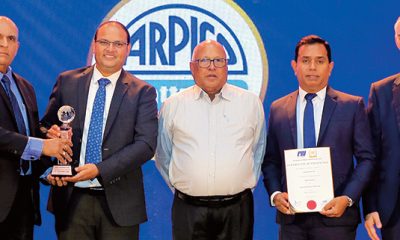
Arpico NextGen Mattress gains recognition for innovation
-

 Business17 hours ago
SLIM-Kantar People’s Awards 2026 to recognise Sri Lanka’s most trusted brands and personalities
-

 Business3 days ago
Altair issues over 100+ title deeds post ownership change
-
 Business3 days ago
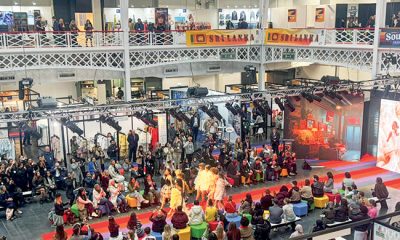
Sri Lanka opens first country pavilion at London exhibition