
News
Shared Values and Democracy in Asia

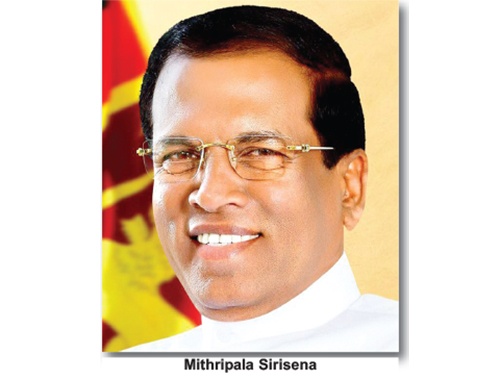
Ex-Prez Sirisena on “Shared Values and Democracy in Asia,”
Excellencies, Distinguished Participants, Ladies, and Gentlemen, Good afternoon Let me at the outset congratulate Excellency Suga Yoshihide, the Prime Minister of our cherished friend-Japan. I am extremely happy to address the Symposium on “Shared Values and Democracy in Asia,” following him, and Excellency Shree Narendra Modi, the Prime Minister of India- our great neighbour and friend.
I am reminded of the San Francisco Conference after the Second World War, where Excellency J R Jayewardene, our then Finance Minister, staunchly stood for Japan. Quoting from Dhammapada, he said, “We extend to Japan a hand of friendship, and trust… her people and ours may march together to enjoy the full dignity of human life in peace and prosperity.” Japan has achieved that wish. I consider the invitation to me echoes that friendship and trust.
Since Buddhist teachings mentor governance in Sri Lanka, I will initially touch upon how democratic and Buddhist values tally. Lord Buddha, emphasized the Sathara Sangraha Vasthu on treating the subjects. They were: dana (attached to giving-up and sharing), Priya Vachana (kind speech leading to mutual understanding), arthacharya (frugality and spirituality), and of samanatmatha (equality in dispensing justice without fear or favor). They are compatible with democratic governance principles.
Additionally, the Dasa Raja Dharma explains the virtues of the Buddhist ideal of Kingship. Democratic governance qualities are symbolized in them. For example, Dana projects to welfare, seela to morality, avihimsa to non-hatred, Shanthi to patience.
The Constitution of Sri Lanka ends with the following invocation:
‘Devo Vassatukalena
Sassasampatthi hetu cha
Phito bhavatu loko cha
Raja bhavatu dhammiko’
It meant: “May the rains be on time, may the farmers have a plentiful harvest, may the people prosper, and may the King be just.” The understanding is that as a consequence, the prosperity our governments wish is embedded in nature and the principles of good governance. This is how the Buddhist criteria bind with Sri Lankan governance
In my long political career, I successfully achieved peace, equality, freedom of expression, justice, etc., which are shared common values of democracy and Buddhism. In the first year in office of President itself, I shed the extraordinary powers of the presidency through a constitutional amendment. Appointments were made to the Superior Judiciary, membership of Human Rights, Public Service, Elections, and Police Commissions, etc., in a depoliticized and democratic manner.
Politics, when viewed from a lens of Machiavellian angle, one may comprehend that shedding unlimited power is foolish. Since a true democrat represents people he should follow his vision, not for his empowerment. I shed power knowing the potential personal loss. It was believing from the bottom of my heart the value of victorious democratic values.
During my presidency, a strong Right to Information Act was legalized. It was a victory for democratic values and human freedom.
As a father, I cannot imagine grief for a parent in a life that surpasses, seeing, hearing, the death or disappearance of a child. Respecting reconciliation, the establishment of the Office on Missing Persons and Office for Reparations was evidence for our shared democratic and humanitarian values. These echoed as positive democratic signals. Though I lost politically by deep rooting such democratic, humanitarian pillars, by fertilizing humanity I enjoyed incessant satisfaction.
In global politics, parallelly there are selfish efforts to exterminate these values. Some countries retreat from democracy to semi-authoritarianism, and even authoritarianism. Some leaders have withdrawn from humanitarian stances to the chagrin of champions of democracy. Sometimes it is despicable to observe how some democratic governments treat their minority communities, denying welfare and fundamental rights, behaving abusively, with hatred-in words and deeds. These are negative signals.
If we inquire into the root-causes for positive and negative signals, it transpires that they are symmetrically related to sharing or not-sharing democratic values. Even today these differentiations happen everywhere. Though this Symposium is Asia-centric, due to this universal spread, it transforms into an exercise of global value, validity, and appropriateness.
What is the clientele group affected by these values? One may say they belong to the politicians’ category. As President Barack Obama once stated in a democracy it is the citizen who is most important. I also believe that the citizen should be the owner and recipient of democratic values.
Therefore, citizens’ demands are the most important. What could be enjoyed by the citizen is the most important. It could be a multitude of challenges like upgrading the basic physical facilities, alleviating poverty, offering mental peace, erasing threats of wars and conflicts, enhancing humanitarianism and friendship with internationals, supporting the affected by disasters, saving the climate and environment for future generations, etc.
Most Symposium participants represent citizens. Since citizens are the most important factor, vigilance, constant monitoring, tending, etc become extremely important. In performing these, questioning, and scrutinizing the actions of citizens and their representatives become essential.
The checks and balances are provided in parliamentary institutions and Constitutions. The Public Accounts Committees, Petitions Committees, Standing Committees, etc., are our experiences. They are tools securing democratic values and independence.
As mentioned in the Constitution, the three pillars – the Executive, Legislature, and Judiciary- can perform decent democratic balancing. If one pillar steamrolls power over the other two, it will signify the death knell of democracy.
While we discuss democratic values, it is observed that other forces act to negate democratic values.
It is observed that some world powers increasingly project authoritarian influence beyond their borders by manipulation, through global propagandizing, using third-party proxies, lavishly throwing resources, or using military alliances. The battlefields of the First World are not located on their motherlands, but lands of less powerful nations. Remote controllers of war are in faraway powerful countries, away from the war fronts. Complaints are heard that some political leaders are bought-over by powerful nations. These are threats to democratic values.
Even in the developed world in firmly established democracies, we woefully observe appeals to populism, nationalism, chauvinism, and racism attracting social attention, raising their heads above democratic values, such as transparency, cooperation, rule of law, equality, etc.
Additionally, unfortunate challenges are observed emerging under the poisonous fangs and flags of organized terrorism. They carry out unsympathetic attacks. These events exhibit that democracy is open to the challenges of extremists and they are aware of how to pierce through to destabilize democracy. Therefore, the Region needs to be prepared and be on alert.
Our borders have become unrealistic with new technological development. A situation has arisen where we cannot escape cybercrimes, terrorist attacks, atomic radiation, etc. These do not care about borders.
The economic issues created especially by forcible encroachment of borders by COVID-19 has confirmed the fear of economic destabilization. This domestic and international deprivation created by it cannot be avoided in isolation. Therefore, we require the integrated cooperation of democratic countries.
Technology has effectively increased productivity, but divorced labour. In developed countries, this can result in retrenching labour or making them poor or exploited. It skews income distribution; reduces their purchasing power. It diminishes the demand for our products in their markets. It results in unemployment in our country. When it becomes acute, and no solutions are found for their problems from democracy or globalization, people degrade both and suspect them. The consequences are dangerous.
American President-elect Joe Biden once declared “Globalization has not been an unalloyed good. It has deepened the rift between those racing ahead at the top and those struggling to hang on in the middle or falling to the bottom.” With COVID 19, the status has worsened. As the new American President, we look forward to him and other developed nations for responses to us in Asia to escape from globalization impacts and the stresses of COVID-19.
If the common man does not receive positive responses, demagogues, cunning saviours, and charlatans will get opportunities to rouse people’s fear, win their vote and manipulate to divorce them from democratic values, instead of sharing democratic values.
They will attack democratic values. They will rouse emotional sentiments, deceive poverty-stricken, innocent, naïve people, and manipulate to gain political power. The powerful States, having trapped poor governments financially, may finally attempt to coerce those governments to execute anti-democratic procedures.
They will belittle freedom of expression; hack communication networks; delegitimize the independent judiciary, hamstring civil society by disparaging them as spies; use the internet and social media to disseminate misinformation and exacerbate internal divisions, etc. These deteriorate democratic values.
What we require is to develop democratic values to face future situations.
I may exemplify influences on one democratic value. The foundation of democracy lies in election systems. Having supported various political groups and elevating them to power we repent when we find them oriented to authoritarianism, and fail in solving peoples’ problems. The correct choice is the voters’ responsibility. Hence, it is important to educate the voters’ democratic social responsibility, their power, rights, obligations, and organizational processes.
Some developed countries complain of foreign interventions to electoral processes. This could be faced by any country. To counter, it is necessary to establish transparent monitoring systems on election functions and financing, money laundering processes, strengthening election-related institutions, the establishment of anti-corruption institutions, etc.
To achieve optimal results, steps should be taken to assist through democratic processes. Multilateral organizations such as the United Nations should motivate the weak parties. It is necessary to support the pulse-racing institutions in our societies such as the rule of law, protection from poverty, good governance, invasions, and pandemics, etc.
Our commitment should truly exhibit our acceptance of values such as equality, dignity, respect to the rule of law, honouring the independence of the Judiciary, balancing of separation of powers and freedoms of expression and demonstration, etc. Their outputs must reflect active democratic participation, success in democratic operations, and reduction of nasty ant- democratic violations in the society. The progress of democratic innovations and creativity are respected when everyone in the society is heard and weighed equally, citizens are empowered to hold their leaders to account through democratic institutions, no one is above the law. These processes must be our values and expectations.
Joe Biden, the American President-Elect once said that when Benjamin Franklin was exiting the Constitutional Convention, a group of citizens inquired “What kind of government the delegates had decided on?”. Benjamin Franklin had responded: “A Republic. If you can keep it.” What he meant was that there was a huge responsibility on the people to safeguard the democratic values.
Joe Biden later said: “Democracy demands diligence. Democracy demands engagement. And sometimes, democracy demands the sacrifice of its citizens.” Like for Franklin’s Republic, ‘maintaining’ a democracy is also a heavy challenge.
I believe that the participants at this symposium will commit to fulfilling the demands of diligence, engagement, and sacrifice. If we commit thus, we are certain of victory.
The nuclear disarmament and global peace champion, former Mayor of Nagasaki Ikko Itho San appealed in the Nagasaki Peace Declaration to join hands with the world’s citizens for disarmament and peace. He wished that “the bells of peace will ring loud and clear in the sky over Nagasaki.” I pray from the bottom of my heart that the ideas, recommendations, solutions, invigorating democratic values, generating from this Symposium, will one day ring loud and clear in the sky over Asia.
I wish the Symposium success.
I wish all a peaceful, happy, prosperous, and healthy New Year-2021.
Thank you very much for listening to me patiently.

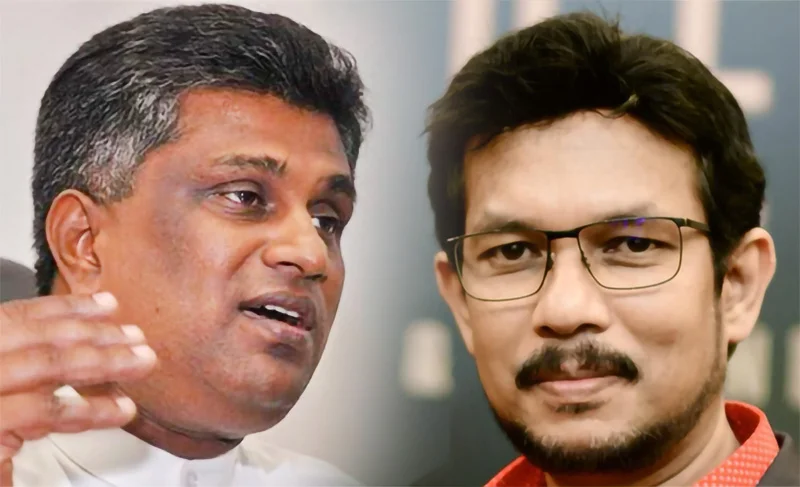
Allegation of doing business with state:
Civil society activist Oshala Herath has said that regardless of the political party one represents, all members of Parliament should abide by the law of the land. Herath said so when The Island sought his response to a report that he was planning to move court against Deputy Minister Eranga Weeraratne, Deputy Minister of Digital Economy, accused of holding the top positions at Omobio (Pvt.) and Eimsky Business Solutions (Pvt.) Ltd., at the time of the nominations, and took oaths as a National List MP of the NPP government.
President Anura Kumara Dissanayake is the Minister of Digital Economy, in addition to being Minister of Defence and Finance.
Herath is the Chairman of Abhinawa Niwahal Peramuna. Herath, whose legal challenge to SJB MP Diana Gamage over her citizenship issue, led to her removal from Parliament by the Supreme Court on 08 May, last year. He said the latest case underscored the responsibility on the part of political parties to ensure transparency in the nomination process as well as in the finalisation of National List.
Herath pointed out that the court rulings on petitions filed by him against two serving MPs were pending. He moved court against Jaffna District Independent MP Ramanathan Archchuna for handing over nominations to contest the 2024 November parliamentary elections without resigning from his post as a government medical officer. He also moved court against Minister of Rural Development, Social Security and Community Empowerment, Dr. Upali Pannilage, alleging that he had been an employee of the University of Ruhuna at the time he was declared an MP and subsequently appointed as a Cabinet Minister.
Our efforts to contact Deputy Minister Weeraratne were in vain. Our calls went unanswered.
Pointing out that there were many attorneys-at-law in the current Parliament, Herath emphasised the responsibility on their part to take up the issue. The Speaker should, on his own, inquire into such allegations in addition to the Parliamentary Privileges Committee stepping in, Herath said. Responding to another query, Herath said that such violations as well as cases of conflict of interests were far more serious than the recent controversy over NPP National List MP Asoka Ranwala’s educational qualifications.
SJB MP Ajith P. Perera told The Island that the Deputy Minister concerned admitted in Parliament that he had held top posts in the companies mentioned at the time he took oaths as an MP. Therefore, there couldn’t be any ambiguity with regard to his fault. Perera said that the conflict of interest issue involving NPPer was far more serious.
Referring to the issue at hand that had been first raised by SJB lawmaker Amila Prasad Siriwardena in Parliament during committee stage of the debate on the 2026 Budget, Attorney-at-Law Perera said that Weeraratne’s companies were engaged in mega business deals with the government. Declaring that they had secured contracts for government projects since 2019, Perera said that one of the companies Weeraratne was involved in had recently won a major contract from the incumbent government regarding the electronic ticketing system.
Kalutara District MP called for a comprehensive inquiry into the issue as the NPP had come to power, accusing all other political parties of waste, corruption, irregularities and mismanagement of state funds. MP Perera queried whether the current dispensation followed proper procedures in selecting Weeraratne’s company for the ticketing project
Both Herath and Perera urged the JVP and NPP to look into what they called the Weeraratne affair.
Over the years, several MPs had been disqualified to hold parliamentary seats. Dr. Rajitha Senaratne is one of them. When the Court of Appeal dismissed Dr. Senaratne from Parliament for being a supplier to the government, Ranil Wickremesinghe brought him back to Parliament, through the National List.
MP Perera said that since the last parliamentary election, the NPP had been embroiled in many controversies, including the release of 323 containers from the Colombo Port, in January this year, followed by signing of seven Memorandums of Understanding (MoUs)/agreements with India in April.
By Shamindra Ferdinando
The government has appealed to India for immediate help to overcome the serious shortage of life-saving drugs and injections.
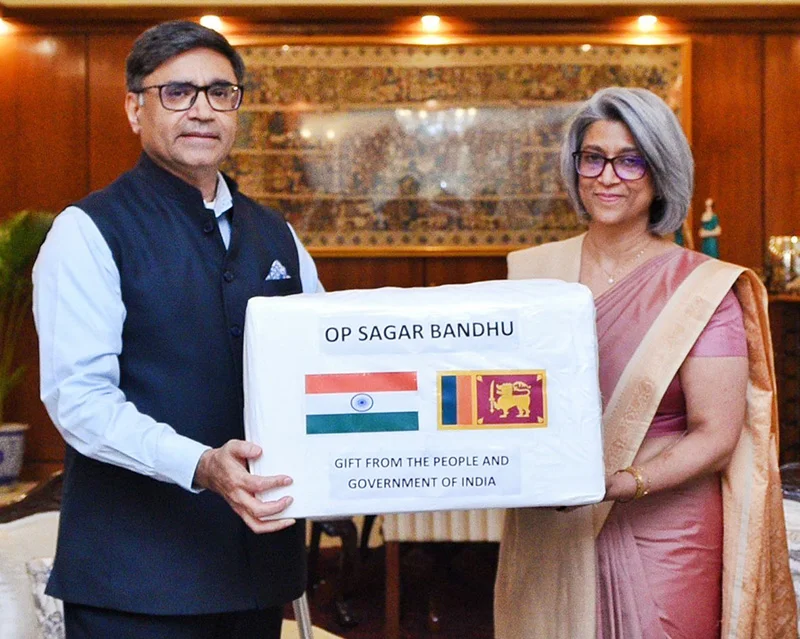
The Sri Lankan High Commission in New Delhi confirmed the appeal made by the government. The following is the text of statement issued by the Sri Lankan mission in New Delhi: “The Foreign Secretary of India, Vikram Misri, over the weekend handed over a consignment of urgently required essential medicines to Sri Lanka’s High Commissioner to India, Mahishini Colonne, in New Delhi. The assistance, extended in response to a request from the Government of Sri Lanka, forms part of Operation Sagar Bandhu, India’s humanitarian mission supporting Sri Lanka’s relief, recovery, and reconstruction efforts following the devastating Cyclone Ditwah.
The consignment consists of over 400 boxes of life-saving medicines and injections, which will be airlifted to Colombo by an Indian Air Force C-17 aircraft, alongside further additional relief assistance from India.
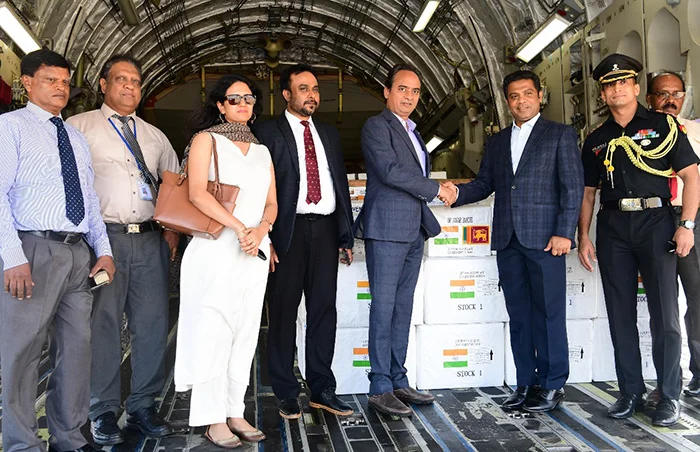
Deputy Indian High Commissioner Pandey shaking hands with Health Minister Dr. Nalinda Jayathissa
Foreign Secretary Misri reiterated the condolences of the Government and people of India for the tragic loss of lives and the extensive damage to infrastructure caused by the Cyclone. He reaffirmed India’s steadfast commitment to supporting Sri Lanka’s immediate humanitarian needs as well as rebuilding and reconstruction efforts. He also highlighted India’s readiness to work with Sri Lanka on a mix of initiatives tailored to the needs of affected communities.
High Commissioner Colonne conveyed the sincere appreciation of the President, Government, and people of Sri Lanka for India’s timely, continuous, and sustained support, and handed over to the Foreign Secretary, a letter of gratitude from the President of Sri Lanka to the Prime Minister of India.
Describing the extensive nature of the damage, the High Commissioner appreciated the ongoing and consistent engagement of the Indian High Commission in Colombo, in collaboration with government officials and local authorities in coordinating relief, rescue, and recovery efforts.
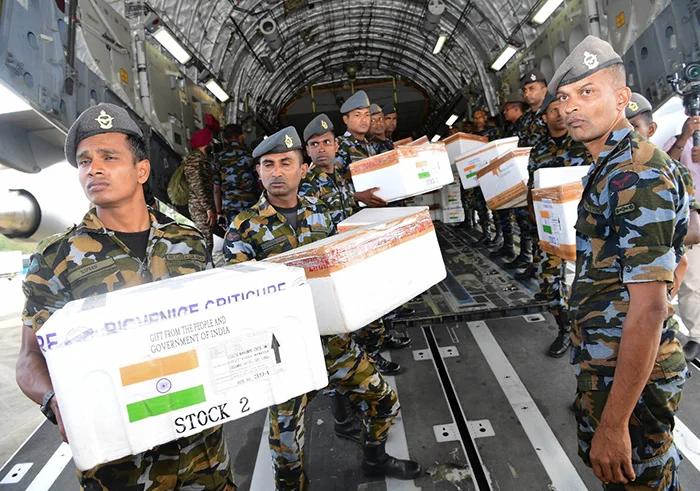
SLAF personnel unloading medicine from IAF transport plane
The High Commissioner also requested India’s support in sharing its expertise and leadership in enhancing disaster-response capabilities and disaster-resilience frameworks, especially lessons from Odisha and Andhra Pradesh, both globally recognized for their advanced disaster resilience frameworks. Apart from this support that is under discussion, the New Delhi-based Coalition for Disaster Resilient Infrastructure (CDRI) has also been requested to undertake a visit to Sri Lanka to explore avenues for strengthening Sri Lanka’s disaster resilient infrastructure capacities. Noting the importance of having an effective and real-time warning system, efforts are being made to deploy a team to explore the establishment of an early warning system that would provide real-time geo-targeted alerts to citizens.
The High Commissioner reiterated Sri Lanka’s gratitude to the Government and people of India for their continued solidarity under Operational Sagar Bandhu, reaffirming the strength of the longstanding partnership between the two nations.”
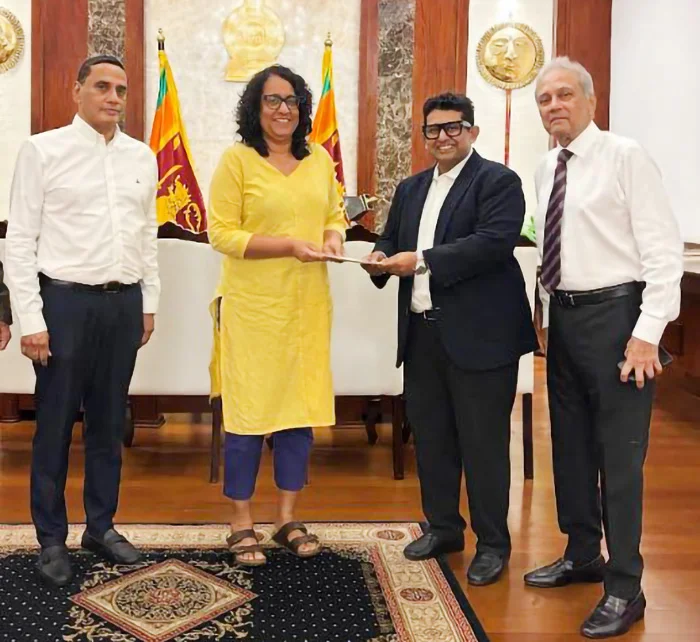
The George Keyt Foundation (GKF) has extended meaningful support to the Government of Sri Lanka’s disaster relief efforts following the severe devastation caused by Cyclone Ditwah.
The text of the press release issued by the GKF: “In 2023, the Foundation undertook its first major fundraiser in recent years by issuing 30 numbered limited edition prints of Kangodi Rangi, a painting by George Keyt entrusted to the Foundation. Twenty-eight prints were acquired by donors to support charitable causes, while another was gifted to the President’s collection. Print Number 1 of 30 was retained to support the Foundation’s long-term priorities.
In light of the unprecedented impact of Cyclone Ditwah and the urgent national need for disaster assistance, the trustees unanimously resolved to seek a donor for Print Number 1 of 30, with clear disclosure that the proceeds would be channeled directly to the Government’s disaster relief programme. This appeal received an immediate response, resulting in a private donation of Rs. 3 million.
The contribution was formally handed over to Prime Minister Harini Amarasuriya for utilisation in the Government’s ongoing relief and recovery efforts.
The George Keyt Foundation is honoured to support the people of Sri Lanka at this critical moment and reaffirms its commitment to serving national needs while preserving and promoting the artistic legacy of George Keyt.

Bondi Beach gunmen who killed 15 after targeting Jewish celebration were father and son, police say

Govt. urged to take action against deputy minister

India sends stock of life-saving medicines

George Keyt Foundation contributes to national disaster relief efforts

New Ambassador to South Korea appreciates job opportunities for Lankans

When crisis comes to classroom:

‘Dates have the highest sugar content to fight Coronavirus’

Sunday Island 27 December – Headlines

#SundayIsland 17th December – Headlines

Sunday Island – 28th March

Sunday Island Headlines – 21 March

Sunday Island – 21st February – Headlines
-
 Features5 days ago
Finally, Mahinda Yapa sets the record straight
-
 News6 days ago
Cyclone Ditwah leaves Sri Lanka’s biodiversity in ruins: Top scientist warns of unseen ecological disaster
-
 Features5 days ago
Handunnetti and Colonial Shackles of English in Sri Lanka
-
 Business4 days ago
Cabinet approves establishment of two 50 MW wind power stations in Mullikulum, Mannar region
-

 News7 days ago
Jetstar to launch Australia’s only low-cost direct flights to Sri Lanka, with fares from just $315^
-
 News4 days ago
Gota ordered to give court evidence of life threats
-
 Features6 days ago
An awakening: Revisiting education policy after Cyclone Ditwah
-

 Features4 days ago
Cliff and Hank recreate golden era of ‘The Young Ones’