
Latest News
Shai Hope, Jayden Seales flatten Pakistan to end West Indies’ 34-year drought

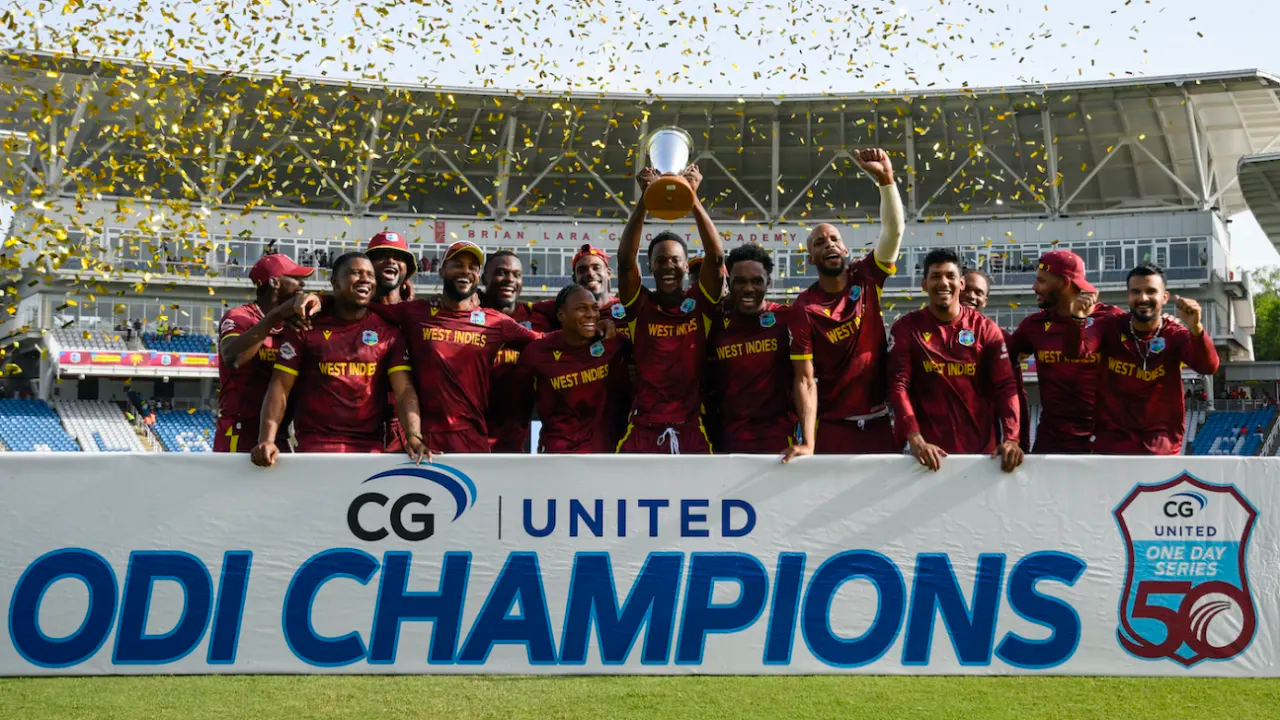
Knowing when it’s time to go is a valuable trait, and if Pakistan were in any doubt their time in the Caribbean was up, West Indies quashed them and sent the visitors out of town with a comprehensive trouncing.
Jayden Seales’; six-wicket haul – the joint second best figures by a West Indian in men’s ODI cricket – and an unbeaten hundred from Shai Hope put Pakistan to the sword in each innings. It was more than enough to secure West Indies’ first ODI series win over Pakistan in 34 years with their biggest ever win over Pakistan, scything through them for 92 having set them 295 to win.
It was a 15.2-over passage of play straddling both innings which lay at the heart of West Indies’ dominance, a stunning inversion of a script Pakistan thought they had been writing all along. West Indies struggled to get going on what looked a tricky pitch to negotiate against the slower bowlers, with Mohammad Rizwan greedily getting through as many of their part-time fifth bowling options as possible.
West Indies appeared to have sacrificed an ambitious innings total in exchange for conservatism that at least preserved their wickets, but as a result, they hadn’t yet crossed 200 by the start of the 44th over. It took one ball to change that, a smeared six from Hope off the first ball from Mohammad Nawaz bringing up that milestone. A second six off the next delivery emphasised his intent, and Pakistan watched frozen as West Indies shuffled themselves off the canvas and began landing body blows Pakistan one after the other.
Rizwan immediately turned to Abrar Ahmed, so effective through the middle of the innings that he’d conceded just five off his first six overs. But West Indies captain had redlined his game, turbocharging to a gear Pakistan believed he wasn’t capable of achieving on this surface. He would bleed a further 18 off the mystery spinner, with Greaves bursting into life from the other end, flaying Hasan Ali for as many. Naseem Shah, trying his best to land the kind of reverse swinging yorkers that had put paid to Roston Chase earlier, could not escape Hope’s wrath as he bore down on three figures, getting there with a crunching cover drive that put him third on the all time ODI West Indies century list.
That was just the start of a 21-run over, and by the time he caressed Hasan Ali over backward point off the final ball of the innings, 100 had come off the final seven. As Pakistan walked off dejected muttering amongst themselves, it was hard to escape the feeling this was about as poor a passage of play as they could endure.
And yet, Seales spent the next 8.2 overs disabusing them of that notion. For the third time in the series, the right-arm quick exploited the angle moving away to Saim Ayub, who nicked off in the first over. His fellow opener, Abdullah Shafique, would also leave without troubling the scorers, trying to whack Seales over mid-on, but couldn’t take into account the heavy ball he was bowling, ballooning it to Gudakesh Motie stationed perfectly in position.
But it was the third of his sixes which will serve as the jewel in the crown. Mohammad Rizwan can be tricky to settle on a length to for all his fidgetiness, and as he took a step out, he determined the fourth-stump line on a hard length was safe to leave on both counts. As he shouldered arms, he would have heard the mildest clink behind him, like ice-cubes tinkling in a glass. The ball had seamed back in and kissed the off bail without even touching the stumps; it could not have been dislodged more clinically if someone picked it up and set it on the ground.
A punch-drunk Pakistan were already dreaming up wild scenarios for how this match could turn, and it’s safe to say they all involved Babar Azam. Babar, though, was a mere plot-point to Seales’ perfect day as he trapped him in front with the batter still in single figures to leave Pakistan reeling at 23 for 4.
It was those 92 balls that defined the game. Pakistan may have started well, but it barely feels like it matters now. The cracks and weaknesses were apparent even then, when Rizwan turned to Hussain Talat for his first deliveries in international cricket after the Powerplay saw them constrict West Indies, only for Evin Lewis to pick him up for two sixes and break the shackles. Abrar was so accurate and menacing he often appeared on the verge of running through West Indies early, and the hosts spent much of the innings batting at a glacial pace well under four runs per over. It does not matter now.
Neither does whatever happened after that fourth Pakistan wicket fell. Salman Ali Agha and Hasan Nawaz had little ambition beyond stealing a few singles each over, even if that made the ultimately Herculean task even more insurmountable as the asking rate spiked. That Pakistan had stripped their side of full-time bowlers for superficial batting depth hardly seemed to matter. They knew they were never getting there anyway, and when the spin of Motie and Chase accounted for them in quick succession, West Indies could see the finish line.
To do the honours, they handed that baton to none other than Seales, who blew past Naseem and Hasan Ali before Abrar jogged through for a single that was never on. Chase effected a direct hit, that sharpness depriving Seales the opportunity to bag the best ever bowling figures in men’s ODIs by a West Indian. For all of the young speedster’s brilliance, the fact Pakistan ensured they had a final say in their own downfall felt somewhat apt.
Brief scores:
West Indies 294 for 6 in 50 overs (Evin Lewis 37, Shai Hope 120*, Roston Chase 36, Justin Greaves 43*; Naseem Shah 2-72, Abrar Ahmed 2-34) beat Pakistan 92 in 29.2 overs (Salman Agha 30, Mohannad Nawaz 23*; Jayden Seales 6-18, Gudakesh Motie 2-37) by 202 runs
[Cricinfo]


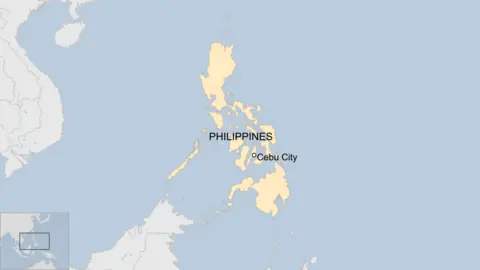
Rescue workers are racing to find dozens of people still missing following a landslide at a landfill site in the central Philippines that occurred earlier this week, an official has said.
Mayor Nestor Archival said on Saturday that signs of life had been detected at the site in Cebu City, two days after the incident.
Four people have been confirmed dead so far, Archival said, while 12 others have been taken to hospital.
Conditions for emergency services working at the site were challenging, the mayor added, with unstable debris posing a hazard and crew waiting for better equipment to arrive.
The privately-owned Binaliw landfill collapsed on Thursday while 110 workers were on site, officials said.
Archival said in a Facebook post on Saturday morning: “Authorities confirmed the presence of detected signs of life in specific areas, requiring continued careful excavation and the deployment of a more advanced 50-ton crane.”
Relatives of those missing have been waiting anxiously for any news of their whereabouts. More than 30 people, all workers at the landfill, are thought to be missing.
“We are just hoping that we can get someone alive… We are racing against time, that’s why our deployment is 24/7,” Cebu City councillor Dave Tumulak, chairman of the city’s disaster council, told news agency AFP.
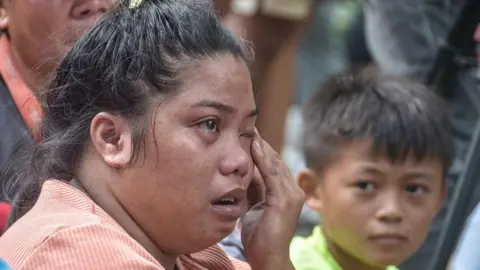
Jerahmey Espinoza, whose husband is missing, told news agency Reuters at the site on Saturday: “They haven’t seen him or located him ever since the disaster happened. We’re still hopeful that he’s alive.”
The cause of the collapse remains unclear, but Cebu City councillor Joel Garganera previously said it was likely the result of poor waste management practices.
Operators had been cutting into the mountain, digging the soil out and then piling garbage to form another mountain of waste, Garganera told local newspaper The Freeman on Friday.
The Binaliw landfill covers an area of about 15 hectares (37 acres).
Landfills are common in major Philippine cities like Cebu, which is the trading centre and transportation gateway of the Visayas, the archipelago nation’s central islands.
[BBC]

US President Donald Trump has asked for at least $100bn (£75bn) in oil industry spending for Venezuela, but received a lukewarm response at the White House as one executive warned the South American country was currently “uninvestable”.
Bosses of the biggest US oil firms who attended the meeting acknowledged that Venezuela, sitting on vast energy reserves, represented an enticing opportunity.
But they said significant changes would be needed to make the region an attractive investment. No major financial commitments were immediately forthcoming.
Trump has said he will unleash the South American nation’s oil after US forces seized its leader Nicolas Maduro in a 3 January raid on its capital.
“One of the things the United States gets out of this will be even lower energy prices,” Trump said in Friday’s meeting at the White House.
But the oil bosses present expressed caution.
Exxon’s chief executive Darren Woods said: “We have had our assets seized there twice and so you can imagine to re-enter a third time would require some pretty significant changes from what we’ve historically seen and what is currently the state.”
“Today it’s uninvestable.”
Venezuela has had a complicated relationship with international oil firms since oil was discovered in its territory more than 100 years ago.
Chevron is the last remaining major American oil firm still operating in the country.
A handful of companies from other countries, including Spain’s Repsol and Italy’s Eni, both of which were represented at the White House meeting, are also active.
Trump said his administration would decide which firms would be allowed to operate.
“You’re dealing with us directly. You’re not dealing with Venezuela at all. We don’t want you to deal with Venezuela,” he said.
The White House has said it is working to “selectively” roll back US sanctions that have restricted sales of Venezuelan oil.
Officials say they have been coordinating with interim authorities in the country, which is currently led by Maduro’s former second-in-command, Vice-President Delcy Rodríguez.
But they have also made clear they intend to exert control over the sales, as a way to maintain leverage over Rodríguez’s government.
The US this week has seized several oil tankers carrying sanctioned crude. American officials have said they are working to set up a sales process, which would deposit money raised into US-controlled accounts.
“We are open for business,” Trump said.
On Friday, Trump signed an executive order that seeks to prohibit US courts from seizing revenue that the US collects from Venezuelan oil and holds in American Treasury accounts.
Any court attempt to access those funds would interfere with US foreign relations and international goodwill, the executive order states.
“President Trump is preventing the seizure of Venezuelan oil revenue that could undermine critical US efforts to ensure economic and political stability in Venezuela,” the White House wrote in a fact sheet about the order.
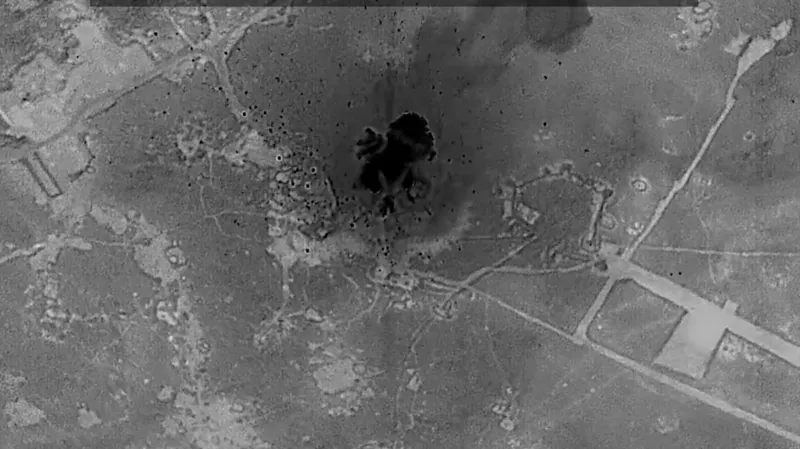
The US and its partner forces have carried out large-scale strikes against Islamic State (IS) group targets in Syria, the US Central Command (Centcom) has announced.
US President Donald Trump directed the strikes on Saturday, which are part of Operation Hawkeye Strike, in retaliation to the IS group’s deadly attack on US forces in Syria on 13 December, Centcom wrote on X.
The strikes were conducted in an effort to combat terrorism and protect US and partner forces in the region, according to Centcom.
“Our message remains strong: if you harm our warfighters, we will find you and kill you anywhere in the world, no matter how hard you try to evade justice,” Centcom said.
The US and its partner forces fired more than 90 precision munitions at more than 35 targets in an operation that involved more than 20 aircraft, an official told CBS News, the BBC’s US partner.
The official added that aircraft including F-15Es, A-10s, AC-130Js, MQ-9s and Jordanian F-16s had taken part in the strikes.
The location of the strikes and the extent of any casualties is not yet clear.
“We will never forget, and never relent,” Defence Secretary Pete Hegseth wrote on X on Saturday in reference to the military action.
The Trump administration first announced Operation Hawkeye Strike in December after an IS gunman killed two US soldiers and a US civilian interpreter in an ambush in Palmyra, located in the centre of Syria.
“This is not the beginning of a war – it is a declaration of vengeance,” Hegseth said when announcing the operation in December.
“The United States of America, under President Trump’s leadership, will never hesitate and never relent to defend our people.”
Prior to the latest strikes on Saturday, US forces killed or captured nearly 25 IS group members in 11 missions between 20 December and 29 December as part of Operation Hawkeye Strike, Centcom said.
In the operation’s first mission on 19 December, US and Jordanian forces carried out a “massive strike” against the IS group, deploying fighter jets, attack helicopters and artillery to strike “more than 70 targets at multiple locations across central Syria”, according to Centcom.
That operation, it said, “employed more than 100 precision munitions” targeting known IS infrastructure and weapons sites.
[BBC]

National Communication Programme for Child Health Promotion (SBCC) has been launched. – PM

Level I landslide early warnings issued to the Districts of Badulla, Kandy, Matale and Nuwara-Eliya extended

Rescuers race to find dozens missing in deadly Philippines landfill collapse

Trump seeks $100bn for Venezuela oil, but Exxon boss says country ‘uninvestable’

US military strikes Islamic State group targets in Syria, officials say

Gardner and Wareham lead Giants to opening-game victory

‘Dates have the highest sugar content to fight Coronavirus’

Sunday Island 27 December – Headlines

#SundayIsland 17th December – Headlines

Sunday Island – 28th March

Sunday Island Headlines – 21 March

Sunday Island – 21st February – Headlines
-

 News5 days ago
Interception of SL fishing craft by Seychelles: Trawler owners demand international investigation
-
 News9 hours ago
Sajith: Ashoka Chakra replaces Dharmachakra in Buddhism textbook
-
 News5 days ago
Broad support emerges for Faiszer’s sweeping proposals on long- delayed divorce and personal law reforms
-

 Opinion2 days ago
The minstrel monk and Rafiki, the old mandrill in The Lion King – II
-

 Features2 days ago
The Venezuela Model:The new ugly and dangerous world order
-

 Latest News2 days ago
Rain washes out 2nd T20I in Dambulla
-
 Business1 day ago
Sevalanka Foundation and The Coca-Cola Foundation support flood-affected communities in Biyagama, Sri Lanka
-

 Features9 hours ago
The Paradox of Trump Power: Contested Authoritarian at Home, Uncontested Bully Abroad