
Features
Science vs religion-I


Like oil and water, science and religion are immiscible and belong to mutually exclusive domains without any interface. Whenever they have been attempted to be brought together, the result invariably has been confusion, conflict, and bloodshed, of which there are too many gory examples in history. Allow religion to explain the origin of the Universe, according to its own ideas, and you end up with corpses of men and women burnt at stakes.
By GOVIND BHATTACHARJEE
In Tao of Physics, Fritzof Capra wrote that science does not need religion and religion does not need science, while a man needs both. I am not so sure. Again, in The Demon-Haunted World: Science as a Candle in the Dark, Carl Sagan wrote, “Science is not only compatible with spirituality; it is a profound source of spirituality.
“When we recognize our place in an immensity of light-years and in the passage of ages, when we grasp the intricacy, beauty, and subtlety of life, then that soaring feeling, that sense of elation and humility combined, is surely spiritual.” If spirituality implies appreciating our own insignificance in the Universe and the resulting feeling of humbleness, then this has nothing to do with religion.
But, leaving aside spirituality, religion and science have never been compatible. While science teaches us a systematic, rational way of exploring this universe to understand the laws of nature that guide life and non-life, religion has brought untold misery and suffering upon humanity. throughout the course of history. by claiming certainty in “information” and “facts” amenable neither to reason nor to observation.
Like oil and water, science and religion are immiscible and belong to mutually exclusive domains without any interface. Whenever they have been attempted to be brought together, the result invariably has been confusion, conflict, and bloodshed, of which there are too many gory examples in history.
Allow religion to explain the origin of the Universe, according to its own ideas, and you end up with corpses of men and women burnt at stakes. Same with politics. Allow religion to rule a nation, according to its own theories, and you end up with Afghanistan, Pakistan, or Iran where the laws of Sharia are more important than human life or human happiness.
Given the chance, religion would turn this world into a demon-haunted place in no time – in fact it has attained a remarkable degree of success in doing so. But, what exactly is science, and what is religion? According to The Stanford Encyclopaedia of Philosophy, “One way to distinguish between science and religion is the claim that science concerns the natural world, whereas religion concerns the supernatural world and its relationship to the natural. Scientific explanations do not appeal to supernatural entities such as gods or angels (fallen or not), or to non-natural forces (such as miracles, karma, or qi).
“For example, neuroscientists typically explain our thoughts in terms of brain states, not by reference to an immaterial soul or spirit, and legal scholars do not invoke karmic load when discussing why people commit crimes.” Science concerns itself with what is or can be observed and seeks an immediate answer. Religion claims the answer is either unknowable or explained only with the help of faith, that is acceptance of something whose existence is indeterminate.
Science claims to explain phenomena or mysteries only through the tested method of empirical inquiry which is a series of steps involving observation-hypothesis-experiment-inference-theory-prediction-testing. This process is indispensable, even where it may not succeed in explaining all observed phenomena, whereas religion takes recourse to God and finds it absurd that by studying STEM subjects (Science-Technology, Engineering and Mathematics) alone, the concept of God can be reduced to irrelevance. Given the chance, it will subsume science, too.
In fact, a great deal of effort has already been invested towards this end, to start a dialogue between science and religion that is actually an exercise in futility.In 1998, the Harvard biologist Edward O. Wilson in his book, Consilience: The Unity of Knowledge, argued that knowledge is a unified system that embraces science, morality, and ethics as well. The aim was perhaps not to make science spiritual but to make religion scientific.
In the 1990s, with its multi-million-dollar grants, the John Templeton Foundation launched a magazine called Science & Spirit, “to explain what science cannot, and asking science to validate religious teachings”. The magazine died a natural death in 2009.The Foundation also financed several documentaries like “Faith and Reason”, “Cybergrace: The Search for God in the Digital World” or “God & the Big Bang: Discovering Harmony Between Science & Spirituality”.
Scores of bestselling books, written by eminent scientists, followed, like Belief in God in an Age of Science (1998) by John Polkinghorne, a Cambridge physicist turned Anglican priest, The Language of God: A Scientist Presents Evidence for Belief (2006) by Francis Collins, Director of the Human Genome Project, or Return of the God Hypothesis: Three Scientific Discoveries That Reveal the Mind Behind the Universe (2021) by Stephen Meyer, Director of the Center for Science and Culture of the Discovery Institute which is the main organization behind the so-called Intelligent Design Movement, according to which the universe was created by an intelligent designer, the God almighty.
But physics explains the origin of the universe convincingly from quantum electrodynamics as arising from a vacuum fluctuation and biology explains the evolution of all life, starting with a chance molecule that learned to replicate itself. But both intelligent design and evolution cannot be true at the same time, hence the attempt to find a middle path – an absurd one at that – that God created the universe and left it to the laws of nature, also designed by him, to run it, without any further interference in its future course.
As the New York Times science journalist George Johnson wrote, thus “God becomes a metaphor for the laws that science tries to uncover.” On the question of faith, there are deep divisions among the scientists themselves. While Einstein’s God was one “who reveals himself in the lawful harmony of all that exists”, and not one “who concerns himself with the fate and the doings of mankind”, many scientists hold radically different views. Some, like the cosmologist Allan Sandage, wonder: “‘How is it that inanimate matter can organize itself to contemplate itself? That’s outside of any science I know”, while others, like the Oxford biologist Richard Dawkins, believe that pursuing God is a “waste” of time that never has “added anything to the storehouse of human wisdom”.
Believers in God hold that a grand unified theory to explain the universe in terms of a single theory that is the holy grain of science would be incomplete without the integration of faith and ancient wisdom in it, while others, like Christians, were outraged when the radiocarbon dating of the shroud of Turin suggested it as a medieval forgery and not the burial cloth of Jesus, feel that as science develops more sophisticated techniques, their religious beliefs will be vindicated.
Fortunately, the endeavour of all these new-age scientists to blur and finally erase the boundary between science and pseudoscience has not yet succeeded. Similar efforts are on even in our own country. Religion is essentially about worship, and worship means surrender.
Faith is necessarily blind and has to disregard evidence in order to reinforce and validate its belief system. Human life is full of misery and suffering ~ indeed it is a “flash of occasional enjoyments lighting up a mass of pain and misery” from which faith alone can provide a temporary deliverance. “Happiness is but only an occasional episode in the general drama of pain” that surrounds us, as Thomas Hardy said, and if surrender could mitigate even a little of that pain, it should be welcome.
Surrender can also be made more convincing when imbued with love and fear that a God is capable of inspiring in human minds. Finally, if the surrender can hold out the promise of something eternal, like an eternal deliverance from pain or from the endless cycles of birth and death, such an eternal vision becomes too tantalising to resist by most.
All that remains is to remind and reinforce these ideas continually through repetitive rituals, meaningless though they are, and the whole package becomes so overwhelming that few could emerge out of its enchanting aura to be able to see the world and reality with objectivity.
After all, we still do not know how the objective reality conveyed to our brain through the senses acquires a subjective meaning in our mind, how the scent of a rose gets transformed into the memory of our first love, or a fading photograph brings back long-forgotten emotions.
Subjectivity rules the roost, everything else, even hard evidence, becomes mere speculation. Blind faith has no rival, and when blind faith masquerades as science, the conquest of the mind by religion becomes total, and all logic has been clinically erased. The evolution of life and that too on a tiny planet called earth that has just about the right conditions with the right values of fundamental constants among billions of such planets is an awesome mystery that the believers cite to establish intelligent design as the only explanation.
They ignore the fact that there are planets with all possibilities and ours happen to be the one with only just one of these permutations that made life – and God – possible. Logic and faith, like science and religion – are incompatible; if bring them together, there will be combustion and conflict.
But bring complexity to replace conflict, and the science-religion debate immediately acquires a political dimension ~ struggle between secular liberalism and traditional conservatism, authority versus individual liberty, herd mentality versus reason, and state versus individual. In each one of these struggles, rationality is the obvious victim that is left bleeding to die.
(The Statesman/ANN)


 ‘Adapt, shrink or die’ – thus runs the warning issued by the Trump administration to UN humanitarian agencies with brute insensitivity in the wake of its recent decision to drastically reduce to $2bn its humanitarian aid to the UN system. This is a substantial climb down from the $17bn the US usually provided to the UN for its humanitarian operations.
Considering that the US has hitherto been the UN’s biggest aid provider, it need hardly be said that the US decision would pose a daunting challenge to the UN’s humanitarian operations around the world. This would indeed mean that, among other things, people living in poverty and stifling material hardships, in particularly the Southern hemisphere, could dramatically increase. Coming on top of the US decision to bring to an end USAID operations, the poor of the world could be said to have been left to their devices as a consequence of these morally insensitive policy rethinks of the Trump administration.
Earlier, the UN had warned that it would be compelled to reduce its aid programs in the face of ‘the deepest funding cuts ever.’ In fact the UN is on record as requesting the world for $23bn for its 2026 aid operations.
If this UN appeal happens to go unheeded, the possibilities are that the UN would not be in a position to uphold the status it has hitherto held as the world’s foremost humanitarian aid provider. It would not be incorrect to state that a substantial part of the rationale for the UN’s existence could come in for questioning if its humanitarian identity is thus eroded.
Inherent in these developments is a challenge for those sections of the international community that wish to stand up and be counted as humanists and the ‘Conscience of the World.’ A responsibility is cast on them to not only keep the UN system going but to also ensure its increased efficiency as a humanitarian aid provider to particularly the poorest of the poor.
It is unfortunate that the US is increasingly opting for a position of international isolation. Such a policy position was adopted by it in the decades leading to World War Two and the consequences for the world as a result for this policy posture were most disquieting. For instance, it opened the door to the flourishing of dictatorial regimes in the West, such as that led by Adolph Hitler in Germany, which nearly paved the way for the subjugation of a good part of Europe by the Nazis.
If the US had not intervened militarily in the war on the side of the Allies, the West would have faced the distressing prospect of coming under the sway of the Nazis and as a result earned indefinite political and military repression. By entering World War Two the US helped to ward off these bleak outcomes and indeed helped the major democracies of Western Europe to hold their own and thrive against fascism and dictatorial rule.
Republican administrations in the US in particular have not proved the greatest defenders of democratic rule the world over, but by helping to keep the international power balance in favour of democracy and fundamental human rights they could keep under a tight leash fascism and linked anti-democratic forces even in contemporary times. Russia’s invasion and continued occupation of parts of Ukraine reminds us starkly that the democracy versus fascism battle is far from over.
Right now, the US needs to remain on the side of the rest of the West very firmly, lest fascism enjoys another unfettered lease of life through the absence of countervailing and substantial military and political power.
However, by reducing its financial support for the UN and backing away from sustaining its humanitarian programs the world over the US could be laying the ground work for an aggravation of poverty in the South in particular and its accompaniments, such as, political repression, runaway social discontent and anarchy.
What should not go unnoticed by the US is the fact that peace and social stability in the South and the flourishing of the same conditions in the global North are symbiotically linked, although not so apparent at first blush. For instance, if illegal migration from the South to the US is a major problem for the US today, it is because poor countries are not receiving development assistance from the UN system to the required degree. Such deprivation on the part of the South leads to aggravating social discontent in the latter and consequences such as illegal migratory movements from South to North.
Accordingly, it will be in the North’s best interests to ensure that the South is not deprived of sustained development assistance since the latter is an essential condition for social contentment and stable governance, which factors in turn would guard against the emergence of phenomena such as illegal migration.
Meanwhile, democratic sections of the rest of the world in particular need to consider it a matter of conscience to ensure the sustenance and flourishing of the UN system. To be sure, the UN system is considerably flawed but at present it could be called the most equitable and fair among international development organizations and the most far-flung one. Without it world poverty would have proved unmanageable along with the ills that come along with it.
Dehumanizing poverty is an indictment on humanity. It stands to reason that the world community should rally round the UN and ensure its survival lest the abomination which is poverty flourishes. In this undertaking the world needs to stand united. Ambiguities on this score could be self-defeating for the world community.
For example, all groupings of countries that could demonstrate economic muscle need to figure prominently in this initiative. One such grouping is BRICS. Inasmuch as the US and the West should shrug aside Realpolitik considerations in this enterprise, the same goes for organizations such as BRICS.
The arrival at the above international consensus would be greatly facilitated by stepped up dialogue among states on the continued importance of the UN system. Fresh efforts to speed-up UN reform would prove major catalysts in bringing about these positive changes as well. Also requiring to be shunned is the blind pursuit of narrow national interests.

 Hi! Great to be back after my Christmas break.
Thought of starting this week with egg white.
Yes, eggs are brimming with nutrients beneficial for your overall health and wellness, but did you know that eggs, especially the whites, are excellent for your complexion?
OK, if you have no idea about how to use egg whites for your face, read on.
Egg White, Lemon, Honey:
Separate the yolk from the egg white and add about a teaspoon of freshly squeezed lemon juice and about one and a half teaspoons of organic honey. Whisk all the ingredients together until they are mixed well.
Apply this mixture to your face and allow it to rest for about 15 minutes before cleansing your face with a gentle face wash.
Don’t forget to apply your favourite moisturiser, after using this face mask, to help seal in all the goodness.
Egg White, Avocado:
In a clean mixing bowl, start by mashing the avocado, until it turns into a soft, lump-free paste, and then add the whites of one egg, a teaspoon of yoghurt and mix everything together until it looks like a creamy paste.
Apply this mixture all over your face and neck area, and leave it on for about 20 to 30 minutes before washing it off with cold water and a gentle face wash.
Egg White, Cucumber, Yoghurt:
In a bowl, add one egg white, one teaspoon each of yoghurt, fresh cucumber juice and organic honey. Mix all the ingredients together until it forms a thick paste.
Apply this paste all over your face and neck area and leave it on for at least 20 minutes and then gently rinse off this face mask with lukewarm water and immediately follow it up with a gentle and nourishing moisturiser.
Egg White, Aloe Vera, Castor Oil:
To the egg white, add about a teaspoon each of aloe vera gel and castor oil and then mix all the ingredients together and apply it all over your face and neck area in a thin, even layer.
Leave it on for about 20 minutes and wash it off with a gentle face wash and some cold water. Follow it up with your favourite moisturiser.

 Superlatives galore were used, especially on social media, to highlight R&B singer Ne-Yo’s trip to Sri Lanka: Global superstar Ne-Yo to perform live in Colombo this December; Ne-Yo concert puts Sri Lanka back on the global entertainment map; A global music sensation is coming to Sri Lanka … and there were lots more!
At an official press conference, held at a five-star venue, in Colombo, it was indicated that the gathering marked a defining moment for Sri Lanka’s entertainment industry as international R&B powerhouse and three-time Grammy Award winner Ne-Yo prepares to take the stage in Colombo this December.
What’s more, the occasion was graced by the presence of Sunil Kumara Gamage, Minister of Sports & Youth Affairs of Sri Lanka, and Professor Ruwan Ranasinghe, Deputy Minister of Tourism, alongside distinguished dignitaries, sponsors, and members of the media.
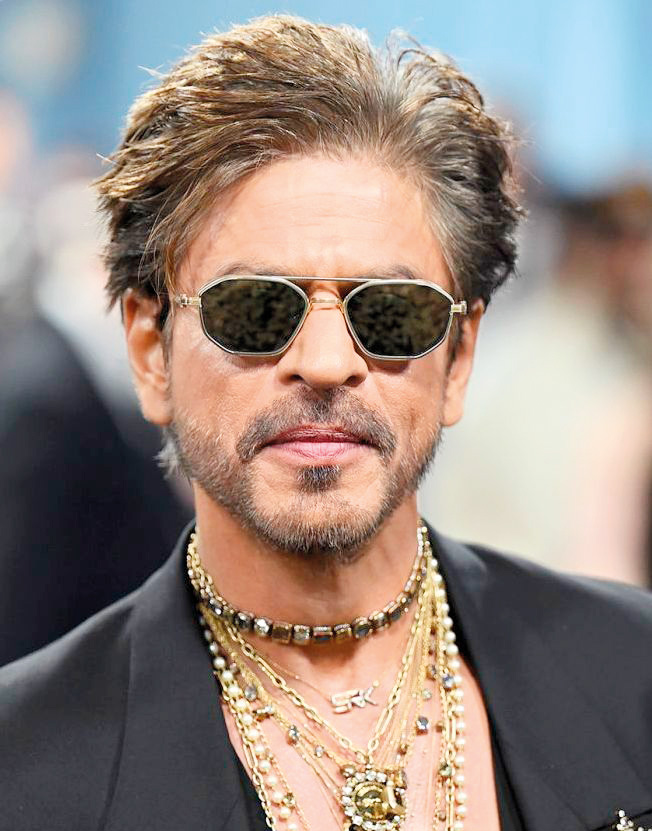
Shah Rukh Khan: Disappointed his fans in Sri Lanka
According to reports, the concert had received the official endorsement of the Sri Lanka Tourism Promotion Bureau, recognising it as a flagship initiative in developing the country’s concert economy by attracting fans, and media, from all over South Asia.

Nick Carter: His concert, too, was cancelled due to “Unforeseen circumstances
However, I had that strange feeling that this concert would not become a reality, keeping in mind what happened to Nick Carter’s Colombo concert – cancelled at the very last moment.
Carter issued a video message announcing he had to return to the USA due to “unforeseen circumstances” and a “family emergency”.
Though “unforeseen circumstances” was the official reason provided by Carter and the local organisers, there was speculation that low ticket sales may also have been a factor in the cancellation.
Well, “Unforeseen Circumstances” has cropped up again!
In a brief statement, via social media, the organisers of the Ne-Yo concert said the decision was taken due to “unforeseen circumstances and factors beyond their control.”
Ne-Yo, too, subsequently made an announcement, citing “Unforeseen circumstances.”
The public has a right to know what these “unforeseen circumstances” are, and who is to be blamed – the organisers or Ne-Yo!
Ne-Yo’s management certainly need to come out with the truth.
However, those who are aware of some of the happenings in the setup here put it down to poor ticket sales, mentioning that the tickets for the concert, and a meet-and-greet event, were exorbitantly high, considering that Ne-Yo is not a current mega star.
We also had a cancellation coming our way from Shah Rukh Khan, who was scheduled to visit Sri Lanka for the City of Dreams resort launch, and then this was received: “Unfortunately due to unforeseen personal reasons beyond his control, Mr. Khan is no longer able to attend.”
Referring to this kind of mess up, a leading showbiz personality said that it will only make people reluctant to buy their tickets, online.
“Tickets will go mostly at the gate and it will be very bad for the industry,” he added.

In pictures: New Year welcomed around the world

Foreign warships commended for their assistance during weather disaster in Sri Lanka

Machu Picchu train crash leaves one dead and dozens injured

I invite you to step into 2026 with renewed energy, hope, and determination – PM

Fairly heavy showers about 75 mm are likely at some places in the Central and Uva provinces and in Batticaloa and Ampara districts

National Audit Office reveals NHSL lapses

‘Dates have the highest sugar content to fight Coronavirus’

Sunday Island 27 December – Headlines

#SundayIsland 17th December – Headlines

Sunday Island – 28th March

Sunday Island Headlines – 21 March

Sunday Island – 21st February – Headlines
-
 News6 days ago
Street vendors banned from Kandy City
-

 Sports3 days ago
Gurusinha’s Boxing Day hundred celebrated in Melbourne
-

 News6 days ago
Lankan aircrew fly daring UN Medevac in hostile conditions in Africa
-

 News1 day ago
Leading the Nation’s Connectivity Recovery Amid Unprecedented Challenges
-

 Sports4 days ago
Time to close the Dickwella chapter
-

 Features2 days ago
It’s all over for Maxi Rozairo
-

 Features6 days ago
Rethinking post-disaster urban planning: Lessons from Peradeniya
-

 Opinion6 days ago
Are we reading the sky wrong?