
Sports
Schools cricket’s age limit change from Under-19 to 20 just not numbers

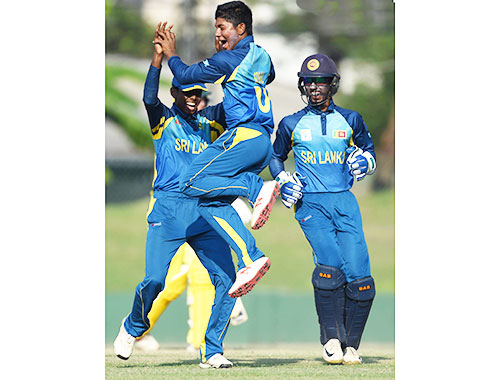
Will a change of age limit benefit cricketers aspiring to represent the country at the ICC Youth World Cup where Sri Lanka is the only Test playing nation in the South Asian region to have not tasted victory in this more than three decades old tournament.
by Reemus Fernando
Schools cricket has been in limbo for more than six months now due to the Covid 19 pandemic. Though there had been no action discussions were underway to find means of improving standards. One of the suggestions received by an eminent panel consisting of former national cricketers is to change the age limit of the premier schools cricket tournament from Under-19 to Under-20. When some school sports, including rugby and track and field have Under-20 as their highest age group then why not cricket? Will a change of age limit benefit cricketers aspiring to represent the country at the ICC Youth World Cup where Sri Lanka is the only Test playing nation in the South Asian region to have not tasted victory in this more than three decades old tournament.
“There is something wrong in our system. Former Sri Lanka Under-19 coach Naveed Nawaz could guide Bangladesh to Youth World Cup victory. It was something he could not do with a team here. You have to seriously take note of our Under-19 cricket structure. An age limit change will help our young cricketers get mature. It will also help reduce the gap between the Under-23 tournament conducted by Sri Lanka Cricket and the highest age group tournament of the schools association,” says Dinesh Kumarasinghe, the head of Sports of S. Thomas’ College, Mount Lavinia. Kumarasinghe has been involved in schools cricket as a coach for nearly three decades now.
The suggestion to change the age limit is learnt to have come from influential schools cricket coaches who are eager to make amends for dropping standards.
It is not the first time that such a change had been suggested. Four years ago the Ministry of Education changed the age limit only to withdraw the circular within months for reasons best known to them.
The last time the tournament had been played as an Under-20 tournament was nearly one and a half decade ago. It is widely believed in schools cricket circles that the change (to Under-20) was to facilitate a politico’s son to captain his alma mater. That Under-20 rule lasted only a year and the tournament reverted to Under-19.
“The suggestion to increase the age limit to Under-20 had been opposed vehemently at SLSCA meetings on many previous occasions due to the administrative difficulties and problems relating to maintaining discipline,” a former official of the SLSCA says.
Currently the Under-19 tournament is played by cricketers who are not over the age of 20 on September 1 of the concluding year of the tournament. Unlike tournaments of other sports cricket’s highest age group tournament had been played for decades from September to April.
“Though the tournament is called Under-19, we have players over the age of 19 when the tournament concludes in April. It is actually an Under-20 tournament already. Why do you need to further extend it,” a former official of the SLSCA questions.
If not for the Covid 19 pandemic the 2020/21 Under-19 tournament would have commenced by now with players born after September 1, 2001 being eligible to compete. Which means some players would be already 19 plus when the tournament starts.
Those who are pushing for the change argue that by extending the age limit (from September 1 to April 1) more players, who are still in school would be eligible to compete.
When contacted, Thilak Waththuhewa, the president of the SLSCA said that the proposal to extend the age limit will soon be discussed at the SLSCA Executive Committee meeting and the decision will be known sooner rather than later.
A former official who had served at the SLSCA when the age limit was extended to Under-20 one and half decades ago said that a number of schools found it difficult to address discipline issues that year. “We received complaints against players who had already found employment at private firms still playing for schools,” says the former official.
However, this time the decision to change the age limit has been put forward for discussion and a knowledgeable panel of former cricketers are considering the pros and cons. Enthusiasts believe that the decision would be taken with the best interest of country’s cricket in mind.
It should be noted here that the ICC’s Under-19 age limit date for the Youth World Cup is also compatible with Sri Lanka’s schools tournament age limit date of September 1.








All of Pakistan’s squad members from the T20 World Cup have been fined PKR 5 million (US$ 18,000 approx.) each by the PCB following their underwhelming campaign. Pakistan were eliminated from the tournament following the Super Eight stage, missing out on the semi-finals of an ICC men’s event for the fourth successive time – the first such instance in Pakistan’s history.
ESPNcricinfo has learnt that the fines are not for disciplinary reasons, but specifically for what the board deems poor performance at the event. They were imposed immediately following Pakistan’s match against India in the group stages, where a meek showing resulted in a 61-run defeat. They were further told the fines may end up being waived off if Pakistan reached the tournament semi-finals.
Pakistan did get to the second round, thus avoiding a third straight first-round exit, but ran into trouble in the Super Eight group after a washout against New Zealand was followed by defeat to England. New Zealand’s crushing win over Sri Lanka left them relying on other results and a huge victory over Sri Lanka to sneak into the last four. However, their winagainst Sri Lanka was much too narrow to prevent an early exit.
The PCB has come down hard on players in the past, though sanctions have generally been framed as disciplinary. ESPNcricinfo has learned there were no disciplinary issues within the team throughout the tournament, and the fines have been levied specifically for the quality of their on-field performances. That makes the sanctions handed out by the PCB particularly rare, and potentially unprecedented.
The current PCB administration, though, does have form for imposing punishments in the wake of disappointments at major tournaments. Five months earlier, following a narrow defeat to India in the Asia Cup final, the PCB had briefly suspended all No-Objection Certificates (NOCs) issued to players that would have allowed them to take part in T20 leagues through the winter. That suspension, though, was lifted soon after as some of the top players headed to Australia for the BBL.
While the fines will be imposed on all players, Pakistan did have players who enjoyed individual success at the tournament. Sahibzada Farhan broke the record for most runs at a T20 World Cup, and became the only player to score two hundreds at the same event.
[Cricinfo]
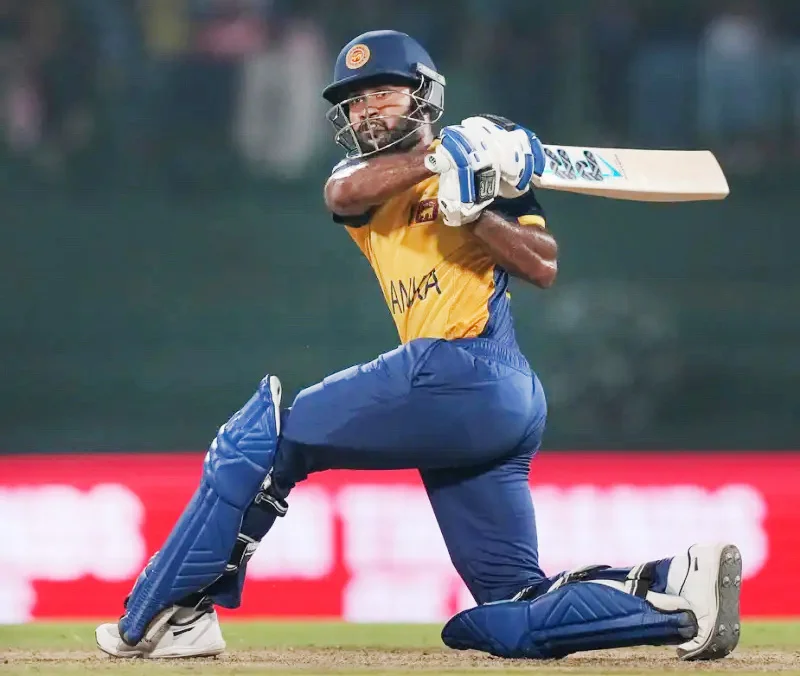
If you are late for work and fancy beating every red light on Galle Road to clock in on time, you are chasing a mirage. Try the same stunt on Baseline Road and you will learn soon enough that Colombo traffic plays by its own rules. Sri Lanka’s World Cup campaign was much the same. When you are ranked eighth in the world and expect to waltz into the semi-finals, that is wishful thinking. And as the old saying goes, if wishes were horses, beggars would ride.
Reaching the Super Eight was no mean feat. Heavyweights like Australia were bundled out in the first round, while Afghanistan, tipped as dark horse, never quite got out of the paddock. On paper, Sri Lanka did what was expected of them. So why the hue and cry?
Because this was a home World Cup. England and New Zealand were served up on a silver platter in familiar conditions and Sri Lanka dropped the ball at the business end. Those were games there for the taking, matches where one nerveless knock could have turned the tide. Instead, they blinked. The final Super Eight clash against Pakistan, however, offered a glimpse of what this side can do when the pitch suits their armoury. On helpful tracks, they have begun to punch above their weight, trading blows with sides ranked well above them.
Yet the turbulence off the field continues to undo the good work on it. Perhaps it is time to think outside the box and appoint captains specifically for World Cups, leaders given a fixed tenure for the tournament cycle, empowered to plan without looking over their shoulders. Sri Lankan cricket has witnessed enough bloodless coups over the past 15 years to fill a political thriller.
In the past, it was established players, permanent fixtures in the XI, who engineered these power shifts when a younger man was handed the reins. Now the worrying trend is different. Even those unsure of their own places in the side are sharpening knives behind closed doors. That is a slippery slope and a dangerous precedent for a team trying to build a culture of accountability.
Not everything about this campaign was doom and gloom. Far from it. The fielding, for one, was razor sharp. Half-chances stuck, direct hits flew in like guided missiles and the athleticism in the ring saved crucial runs. For years this was Sri Lanka’s Achilles’ heel. Now it is fast becoming a strength, the result of sustained emphasis and hard graft behind the scenes.
Then there was young Pavan Rathnayake. Drafted into the squad barely a week before the tournament, the 23-year-old was expected to soak in the atmosphere and learn the ropes. Instead, he walked in at the deep end and swam like a seasoned pro. Rathnayake not only held the middle order together but finished as Sri Lanka’s second highest run-getter behind Pathum Nissanka, striking at over 150. He counter-punched spinners, found gaps with soft hands and cleared the ropes with fearless intent. It was a breakout campaign that left many wondering why he had been warming the benches for so long.
True, his domestic T20 numbers were hardly headline-grabbing. But selectors are paid to look beyond spreadsheets and see temperament, technique and ticker. Thank God Sri Lanka once had a man like Duleep Mendis backing a young Sanath Jayasuriya when the numbers did not stack up. Duleep saw the bigger picture and refused to lose faith.
by Rex Clementine

Former Nannapurawa MV athlete Madushani Herath established a new Sri Lanka record in the women’s triple jump on the final day of the selection trial held at Diyagama on Sunday.
Currently, a management student of University of Kelaniya, Madushani cleared 13.68 metres to erase the record held by Vidusha Lakshani. Lakshani’s 13.66 metres record remained unshaken since 2019.
Madushani’s coach Krishantha Kumara said that the record breaking performance was a result of hardwork and combined coaching effort.

PCB fines Pakistan players for underwhelming T20 World Cup campaign

Iran strikes Qatar and Saudi energy sites as US jets shot down by Kuwaiti ‘friendly fire’

India and Canada agree series of deals as Carney and Modi reset ties in Delhi

Oil prices rise after ships attacked near Strait of Hormuz

War photographer Paul Conroy dies as tributes paid

Allies of US in the Gulf bear brunt of Iran attacks

‘Dates have the highest sugar content to fight Coronavirus’

Sunday Island 27 December – Headlines

#SundayIsland 17th December – Headlines

Sunday Island – 28th March

Sunday Island Headlines – 21 March

Sunday Island – 21st February – Headlines
-

 Opinion4 days ago
Jamming and re-setting the world: What is the role of Donald Trump?
-

 Features4 days ago
An innocent bystander or a passive onlooker?
-

 Features6 days ago
Building on Sand: The Indian market trap
-

 Features5 days ago
Ratmalana Airport: The Truth, The Whole Truth, And Nothing But The Truth
-

 Opinion6 days ago
Future must be won
-

 Business6 days ago
Dialog partners with Xiaomi to introduce Redmi Note 15 5G Series in Sri Lanka
-

 Business5 days ago
IRCSL transforms Sri Lanka’s insurance industry with first-ever Centralized Insurance Data Repository
-

 Sports7 days ago
CEA halts development at Mandativu grounds until EIA completion