
Sports
Sanath calls for consistency as Sri Lanka eye upward climb


Head Coach Sanath Jayasuriya has called for greater consistency as Sri Lanka look to build on their recent resurgence in ODI cricket following a sharp turnaround over the past year.Once languishing at number nine in the ICC rankings and missing out on the Champions Trophy, Sri Lanka have climbed to fourth under Jayasuriya’s watch — a revival the former skipper attributes to trust, hard work and a clear plan.
“It was a steep hill to climb,” Jayasuriya told reporters ahead of the second ODI against Bangladesh, to be played at the R. Premadasa Stadium on Saturday. “We were in a tough situation, but every window we got, we used to breathe new life into the ODI team.”
Charith Asalanka, who took over the captaincy reins during a difficult phase, has been central to that effort.
“What we’ve done is back our players, build confidence, and bring the best out of them,” Jayasuriya added. “There’s still room to tighten up in areas like fielding and middle-order batting. If we want to go the distance, consistency is key.”
Sri Lanka lead the three-match series 1-0 after a clinical 77-run win in the opener — a contest that saw Bangladesh go from cruising to collapsing in the blink of an eye.
Chasing 245, the visitors were well-placed at 100 for one before a moment of madness — a run out of skipper Najmul Hossain Shanto — sparked an almighty meltdown. They lost seven wickets for just five runs in a span of 26 balls, folding for 167.
“Chasing totals can be tricky. All it takes is one crack and the floodgates open,” Jayasuriya said. “Milan (Rathnayake) gave us a sniff with that run out, and the spinners did the rest. We held our nerve, kept things tight and didn’t let the game drift. That discipline in the field made the difference.”
Jayasuriya hinted at possible changes for the second match, with young all-rounder Dunith Wellalage in contention to return after sitting out the opener.
“We’ll have a look at the pitch. Dunith was our 12th man and if conditions suit, he’ll come into the mix,” the coach said.
Bangladesh, meanwhile, are in a transitional phase following the exits of senior pros Tamim Iqbal, Shakib Al Hasan, Mushfiqur Rahim and Mahmudullah Riyad — a reality Jayasuriya says requires patience and perspective.
“Every team has to pass through the revolving door of transition,” he said. “We’ve been there too, and it’s not an easy ride. The important thing is how you manage that phase — backing your youngsters, giving them rope and allowing them to grow.”
With the World Cup cycle underway, Sri Lanka’s focus appears clear: keep climbing, stay sharp in the field, and strike the right balance between experience and youth. The long road back to the top, it seems, is well underway.
by Rex Clementine ✍️


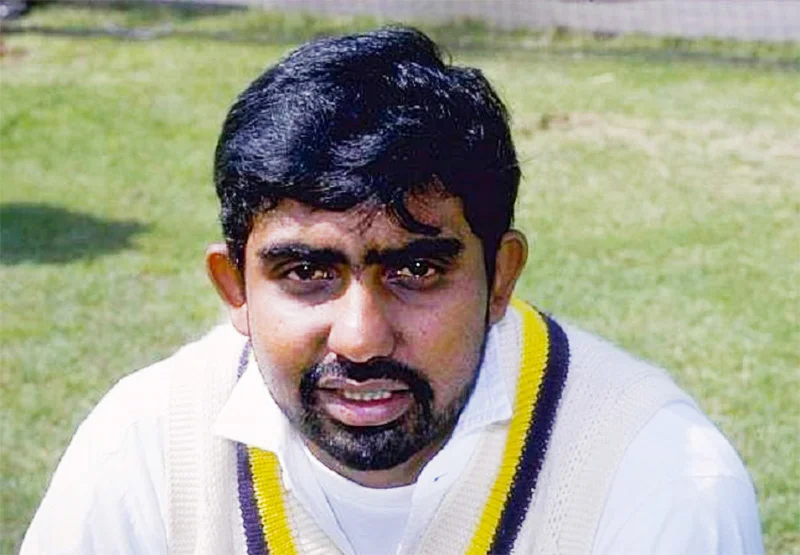
A private function will be held on Monday, December 29 at Melbourne’s Spicy Wicket Restaurant to celebrate Asanka Gurusinha’s iconic Boxing Day century at the MCG, the first and still the only hundred by a Sri Lankan at the grand old ground that staged the game’s inaugural Test and has long been cricket’s festive showpiece in Australia.
Sri Lanka featured in the 1995 Boxing Day Test against Australia at the Melbourne Cricket Ground, a match remembered as much for controversy as for courage. Umpire Darrel Hair repeatedly no-balled Muttiah Muralitharan for throwing in front of a stunned crowd of 55,000, turning the contest into a cauldron.
It was a one-sided affair dominated by Mark Taylor’s Australians. Forced to follow on, Sri Lanka were staring down the barrel before Gurusinha dug in to produce a back-to-the-wall 143. It was the left-hander’s career-best Test score and more importantly helped Sri Lanka avoid the ignominy of an innings defeat.
“Any Test hundred is a moment to remember, but to do it against Australia, facing McDermott, McGrath, Warne and Reifel at the MCG is very special,” Gurusinha told Telecom Asia Sport. “It didn’t sink in 30 years ago, but I know now why it’s special. I always enjoyed batting on pitches with bounce and seam and Australia was a place I loved playing.”
“Coming up against the best team in the world at the time and that formidable bowling attack is something that will stay with me forever,” he added.
Gurusinha also paid tribute to those behind the celebration. “I want to thank my good friends David and Cathy Cruse for organising this event. All my family will be there and it’s great to have Aravinda de Silva as chief guest. I played against him at school level for eight years and then alongside him for 12 years for Sri Lanka. He’s a dear friend.”
Gurusinha made his Test debut in 1985, straight out of school as a 19-year-old wicketkeeper-batter. His sound technique soon demanded promotion and he settled into the No. 3 slot, becoming the side’s human sandbag, valuing his wicket, batting time and wearing down attacks during marathon vigils that tested bowlers’ patience as much as their stamina.
A key member of Sri Lanka’s World Cup-winning squad in 1996, Gurusinha willingly shelved his natural strokeplay to play the anchor’s role, allowing the likes of Sanath Jayasuriya and Aravinda de Silva to cut loose. He struck a vital half-century in the final against Australia, earning praise from captain Arjuna Ranatunga, who famously labelled him the unsung hero of Sri Lanka’s World Cup triumph.
Gurusinha retired prematurely at the age of 30 soon after that World Cup success, migrated to Australia and has since made Melbourne his adopted home, fitting, perhaps, that the city where he played his finest innings will now raise a glass to a knock that has aged like fine wine.
Royal scored a first innings win over Gurukula after they restricted the team from Kelniya to 215 runs in reply to their 302 in the Under 19 Division I Tier ‘A’ match at Reid Avenue on Sunday.
For the home team open bat Hirun Liyanarachchi scored back to back half centuries. He remained unbeaten on 56 in the second innings.
For the visitors Ohas Sadew picked up six wickets.
Scores
Royal 302 for 9 decl. in 80 overs (Hirun Liyanarachchi 50, Dushen Udawela 25, Ramiru Perera 60, Yasindu Dissanayake 41, Thevindu Wewalwala 36, Manuth Disanayake 42, Udantha Gangewatta
22n.o.; Ohas Sadew 6/101) and 130 for 2 in 39 overs (Hirun Liyanarachchi 56n.o., Rehan Peiris 59)
Gurukula
215 all out in 75.2 overs (Sahas Induwara 35, Denura Dimansith 79, Janith Mihiranga 44; Himaru Deshan 2/65, Ramiru Perera 2/58) (RF)

Sri Lanka’s selectors have a long history of springing surprises that leave the public blinking in disbelief. Some in the present generation may find it hard to imagine that in 1968, three members of the national selection panel picked themselves for a tour of England, dumping popular Ceylon captain Michael Tissera in the process. All hell broke loose. Chandra Schaffter resigned in protest, calling out an unprecedented farce. The government stepped in, introduced the Sports Act and mandated that every national team required Sports Ministry approval — a necessary set of checks and balances to stop cricket from becoming a self-selecting club.
Fast forward to 2025 and the preliminary squad for the upcoming T20 World Cup has once again raised eyebrows. Dasun Shanaka, who not too long ago was struggling to hold onto his place, is now Sri Lanka’s captain. You can just about live with that call. After Charith Asalanka’s excesses in Pakistan, his position as skipper had become untenable, and Shanaka emerged as a Hobson’s choice. But the bigger takeaway is damning: Sri Lanka have done a poor job grooming leaders over the past five years. When Plan A collapses, there is no Plan B and the selectors are left scrambling.
What truly stopped people in their tracks, however, was news that Niroshan Dickwella is closing in on a comeback. That alone suggested the selectors care two hoots about public sentiment.
We have seen enough of Dickwella over more than a decade. The wicketkeeper-batter showed us his ceiling and his limitations. Having been discarded, there is little logic in reopening that chapter.
With Kusal Mendis doing a commendable job behind the stumps in white-ball cricket, there is no need to get carried away with Dickwella’s inclusion, especially when backups like Kusal Janith Perera and Kamil Mishara are waiting in the wings. What the selectors owe the public is an explanation: why exactly was Dickwella needed in the preliminary squad?
Instead, they could have tipped the cap to an up-and-coming player and signalled a shift towards the future. Sri Lanka have moved on from Dickwella; there is no point dragging the past back to the crease.
After 54 Test matches, the absence of a single hundred tells its own story. Dickwella had ample chances to break three figures but repeatedly threw his wicket away, reinforcing the impression of a player who often seemed to play without a care. Talent alone doesn’t win matches; temperament does.
Some may argue that Test numbers are irrelevant in the T20 format. Fair point, except that T20s are where Dickwella has struggled the most. Clearing the ropes has never been his strength. Yes, his sweeps and reverse sweeps allow him to milk spinners, but the negatives far outweigh the positives. With Kusal Mendis as wicketkeeper, Sri Lanka’s DRS record has been impressive; with Dickwella behind the stumps, it has been downright horrendous.
More worrying is the distraction Dickwella brings to the dressing room. The selectors should have learnt their lesson after the bio-bubble breach in England, which saw him sent home along with two others. A retired judge who conducted the inquiry recommended a one-year ban, only for authorities to play soft hands and reduce it to barely three months.
If that wasn’t enough, alarm bells should have rung louder when he was appointed captain of a Lanka Premier League side, only for it to emerge that he had tested positive for drugs in August last year, earning another suspension. That should have been the last straw.
Yet, remarkably, Dickwella keeps finding his way back into the frame.
At some point, authorities must draw a firm line. The game is not short of talent, but it is short of accountability. And until selectors learn to value both, the same old mistakes will keep being replayed, like a bad highlight reel no one wants to watch again.
by Rex Clementine ✍️

Delay in govt. response to UK sanctions on ex-military chiefs, and others causes concern

Sri Lanka outlines seven key vectors of international cooperation at Moscow forum

Sri Lanka third most preferred destination for Indians

Ondansetron controversy: Health Minister explores interim measures to address growing concerns

Post-Ditwah tourism: Govt. to retain UK interest in SL as key destination

Gurusinha’s Boxing Day hundred celebrated in Melbourne

‘Dates have the highest sugar content to fight Coronavirus’

Sunday Island 27 December – Headlines

#SundayIsland 17th December – Headlines

Sunday Island – 28th March

Sunday Island Headlines – 21 March

Sunday Island – 21st February – Headlines
-

 News6 days ago
Members of Lankan Community in Washington D.C. donates to ‘Rebuilding Sri Lanka’ Flood Relief Fund
-

 News4 days ago
British MP calls on Foreign Secretary to expand sanction package against ‘Sri Lankan war criminals’
-

 Features6 days ago
General education reforms: What about language and ethnicity?
-
 News6 days ago
Suspension of Indian drug part of cover-up by NMRA: Academy of Health Professionals
-
 Sports4 days ago
Chief selector’s remarks disappointing says Mickey Arthur
-
 News3 days ago
Street vendors banned from Kandy City
-

 News6 days ago
US Ambassador to Sri Lanka among 29 career diplomats recalled
-

 Editorial6 days ago
A very sad day for the rule of law