
News
Sajith flays govt. for broken promises

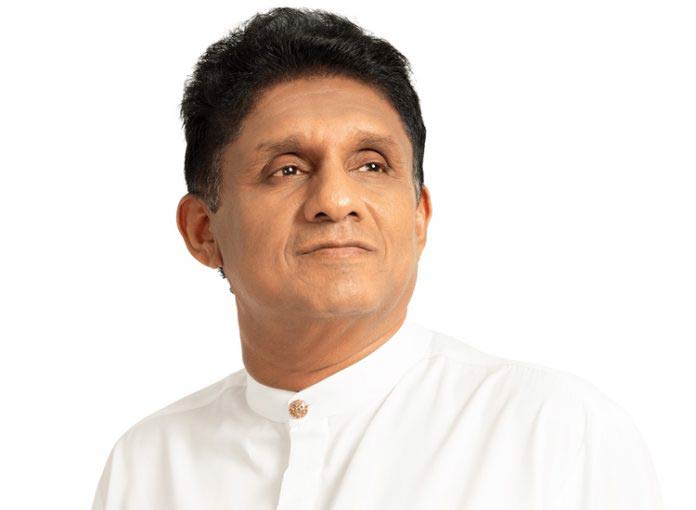
Opposition and SJB leader Sajith Premadasa on Sunday (02) demanded that the NPP government address issues faced by farmers.
“The government must end its theatrics and fulfill its promise of ensuring a fair price for paddy. During the elections, the President pledged to eliminate the rice mafia and guarantee higher prices for farmers. However, these commitments have proven to be empty words,” he has said in a media statement.
In just one month, the government, represented by NPP had misled farmers multiple times with shifting justifications, Premadasa said. The actions of Minister of Agriculture Lal Kantha and Deputy Minister Namal Karunaratne regarding the Maha season paddy harvest clearly demonstrated their failure to ensure a just price for farmers, he added.
“Initially, Deputy Minister Karunaratne assured farmers that a guaranteed price would be set, adding 30% to the production cost. However, on January 11, 2025, he backtracked, saying only a minimum price would be provided. By January 27, he claimed that no price had been set because farmers were supposedly able to sell their paddy without issue.
“Meanwhile, middlemen are exploiting farmers, purchasing wet paddy at Rs. 80-95 per kilo and dry paddy at around Rs. 100. Large-scale mill owners are buying these stocks at higher prices—Rs. 110 for wet paddy, Rs. 135 for dry paddy, Rs. 115 for wet Samba, and Rs. 140 for dry Samba. The absence of a government-set price has allowed this exploitation to continue unchecked.
“Adding to this injustice, both the Minister and Deputy Minister of Agriculture have made threatening statements against farmers. On January 28, Deputy Minister Karunaratne dismissed demands for a fair price, contradicting his earlier stance. The following day, Minister Lal Kantha went further, suggesting that farmers should surrender a portion of their harvest to the government in exchange for fertiliser subsidies.
“The government’s strategy is now evident. Farmers, fearing these threats and lacking storage facilities, are being forced to sell their paddy to middlemen at low prices. Later, the government will set a minimum price—once most farmers have already sold their harvest—allowing officials to claim they offered a fair rate, while in reality, farmers will have no stocks left to benefit from it.
“This deception is already being promoted through pro-government farmer groups on social media, falsely suggesting that farmers are willingly selling to private buyers instead of the government. Meanwhile, the government is using this opportunity to let large-scale mill owners buy paddy at low prices while pretending to have allocated funds for paddy purchases—only to ultimately save Rs. 5 billion at the farmers’ expense.
“The farming community, which feeds the nation, is being betrayed and driven into hardship. We, the opposition, demand that the government immediately provide a fair price of Rs. 140 per kilo, as requested by farmers, in line with the 30% production cost increase promised during the election.
“Furthermore, we urge the government to stop this deceit and establish a mechanism where the state competes with the private sector in purchasing paddy, as promised by the President. Lastly, we call for the immediate fulfillment of the promised additional Rs. 2 per kilo.”

News
Development activities in schools within plantation areas should be carried out in coordination with District Coordinating Committees – PM

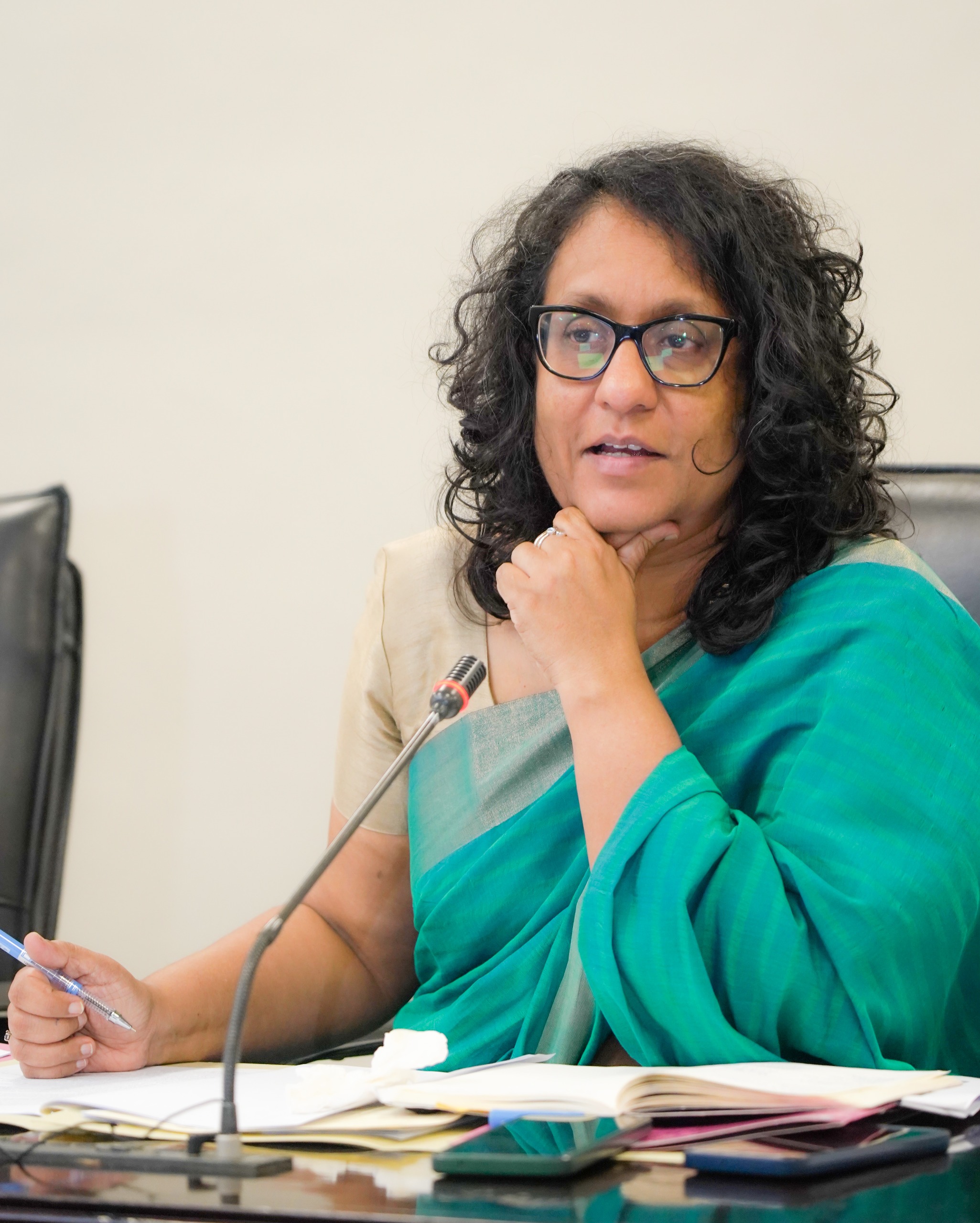
Prime Minister Dr. Harini Amarasuriya stated that development activities in schools within plantation areas should be carried out in coordination with District Coordinating Committees, and that further recruitments to the teaching service will be undertaken in the future according to existing vacancies.
The Prime Minister made these remarks at a meeting held on Thursday [19 February] at the Parliament of Sri Lanka, attended by officials of the Ministry of Education, Higher Education and Vocational Education and the Ministry of Plantation and Community Infrastructure, convened to identify solutions to issues affecting schools within plantation areas.
During the meeting, special attention was drawn to identifying schools in plantation areas; improving infrastructure, sanitary facilities and security within those schools; confirming lands of school premises; filling existing vacancies of teachers, principals and sports instructors; and providing transportation facilities of schools within the plantation areas.
Officials also drew the Prime Minister’s attention to challenges faced by students in Grade 13 in studying science and mathematics streams in estate schools, as well as issues related to language. The need for Tamil-medium support in teacher-training programmes was also emphasized during the meeting.
The Prime Minister stressed that resolving issues related to lands belonging to the schools in plantation areas require collection of data at district-level, and that the suitability of each school site should be considered when relocating or regularizing schools, taking into account the impacts caused by Cyclone Ditwah. She instructed officials to formulate an efficient mechanism to collect the necessary data.
She further noted that schools within plantation areas are government schools and that due consideration should be given to how these schools are identified and referred to in the future.
The Prime Minister instructed officials to keep District Coordinating Committees informed and to collaborate with them in carrying out development activities related to estate schools, emphasizing that this would enable closer monitoring of school development initiatives.
She also expressed confidence that the planned recruitment of 23,000 teachers would help address the existing teacher shortages to a considerable extent, and stated that further annual recruitment would be undertaken in the future to fill remaining vacancies.
The meeting was attended by the Minister of Fisheries, Aquatic and Ocean Resources, Ramalingam Chandrasekar; Deputy Minister of Education and Higher Education, Dr. Madhura Senevirathne; Deputy Minister of Plantation and Community Infrastructure, Sundaralingam Pradeep; Members of Parliament; and officials of the relevant ministries.
[Prime Minister’s Media Division]


Trade unions of the Ceylon Electricity Board (CEB), backed by the powerful Ceylon Electricity Board Engineers’ Union, have warned of accelerated trade union action following the collapse of crucial discussions held on Monday (16) with the CEB Chairman, who also serves as Secretary to the Ministry of Power and Energy.
The issue is expected to take centre stage at today’s press conference, with unions signalling that a token strike, possibly a 12-hour countrywide action, could be staged next week unless authorities urgently intervene.
The meeting earlier this week ended without what union representatives described as any “positive or constructive outcome.”
Trade union leaders expressed disappointment that their key concerns had not been substantively addressed during discussions with the Chairman.
At the heart of the dispute is the unions’ demand for a collective agreement in accordance with Section 18(j) of the Sri Lanka Electricity Act No. 36 of 2024. Trade union representatives maintain that the law provides for structured engagement between management and employees and that a formal collective agreement is necessary to ensure transparency and industrial stability within the institution.
The unions also submitted what they termed a reasonable proposal to safeguard the CEB Employees’ Provident Fund (EPF), voicing concerns over the long-term security of workers’ retirement benefits.
However, according to trade union sources, those proposals were not adequately taken up during the discussions.
A senior electrical engineer told The Island that further internal consultations were being held to decide the next course of action. “There is growing frustration among employees. The issues raised are fundamental and relate directly to statutory compliance and the financial security of staff,” he said.
The Island learns that unless there is meaningful engagement from the authorities, the proposed token strike could mark the beginning of more stringent industrial action.
Energy sector observers warn that any escalation of trade union unrest at the CEB could have serious implications for the country’s power sector stability at a critical time.Further developments are expected following today’s media briefing.
By Ifham Nizam

Prime Minister Dr. Harini Amarasuriya yesterday (19) revealed allowances and benefits provided to Members of Parliament at present.She did so while responding to a question raised by Samagi Jana Balawegaya MP Chaminda Wijesiri.
According to the disclosure:
An MP receives a monthly allowance of Rs. 54,285, with an entertainment allowance of Rs. 1,000 per month.
Driver allowance is Rs. 3,500 per month; however, if the MP is provided with a driver by the Ministry of Public Security and Parliamentary Affairs, no driver allowance is paid.
Telephone allowance is Rs. 50,000, while transport allowance is Rs. 15,000 per month.
Office allowance amounts to Rs. 100,000.
MPs attending parliamentary sessions receive Rs. 2,500 per day, while Rs. 2,500 per day are given for MPs attending committee meetings on non-sitting days.
Meanwhile, Members of Parliament also receive a fuel allowance based on the distance from their elected district to Parliament.
For national list MPs, this is calculated as 419.76 liters of diesel per month, paid at the approved market rate on the first day of each month.Dr. Amarasuriya also emphasised that these allowances are structured to cover official duties and transportation costs.

Bowlers, Marsh orchestrate consolation Australia win

Development activities in schools within plantation areas should be carried out in coordination with District Coordinating Committees – PM

Asos co-founder dies after Thailand apartment block fall

BCB central contracts: Taskin, Mushfiqur demoted; no player in A+ category

ECB push back at Pakistan ‘shadow-ban’ reports ahead of Hundred auction

Mystery donor gives Japanese city $3.6m in gold bars to fix water system

‘Dates have the highest sugar content to fight Coronavirus’

Sunday Island 27 December – Headlines

#SundayIsland 17th December – Headlines

Sunday Island – 28th March

Sunday Island Headlines – 21 March

Sunday Island – 21st February – Headlines
-

 Life style6 days ago
Marriot new GM Suranga
-

 Business5 days ago
Ministry of Brands to launch Sri Lanka’s first off-price retail destination
-

 Features6 days ago
Monks’ march, in America and Sri Lanka
-

 Features6 days ago
The Rise of Takaichi
-

 Features6 days ago
Wetlands of Sri Lanka:
-

 News6 days ago
Thailand to recruit 10,000 Lankans under new labour pact
-

 News6 days ago
Massive Sangha confab to address alleged injustices against monks
-
 Sports1 day ago
Old and new at the SSC, just like Pakistan