
News
Sabry questions rationale behind Ravi, Shani supervising Easter Sunday carnage probe after filing FR petitions to prevent their own arrest over same terror attacks

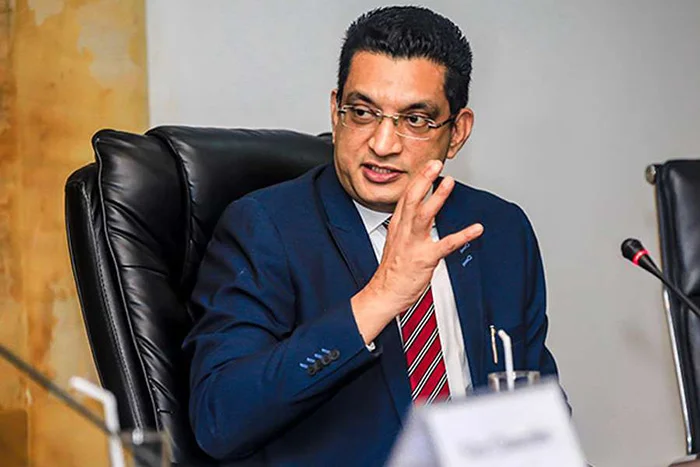
President’s Counsel Ali Sabry has told the Court of Appeal that two respondents in a petition filed by Col. Kelum S. Maddumage to prevent his arrest in connection with the ongoing 2019 Easter Sunday carnage investigation––namely, Public Security Ministry Secretary Ravi Seneviratne (retired SDIG) and retired CID Director Shani Abeysekara–– had previously filed fundamental rights petitions in the Supreme Court to prevent their own arrests over the same attacks.
Sabry pointed out that the Attorney General had given an undertaking to the Supreme Court, on 20 October, 2024, that Seneviratne and Abeysekera wouldn’t be arrested.
Sabry said so appearing for Col. Maddumage, formerly of the Directorate of Military Intelligence (DMI) and current Commanding Officer of the Diyatalawa Military Academy.
The Court of Appeal extended the interim injunction against the arrest of Col. Maddumage till 11 November. The two-judge bench, consisting of Court of Appeal President Justice Rohan Abeysooriya and Justice Priyantha Fernando, issued the order on Tuesday (21) after having considered a writ petition filed by the ex-DMI officer.
Deputy Solicitor General Suharshi Herath, who appeared for the respondents, asked the two-judge bench to lift the ex parte interim injunction that prevented the serving officer’s arrest.
Sabry emphasised that there is no evidence whatsoever to arrest the officer.
The counsel for petitioner questioned the rationale in those who had been under investigation for the lapses on the part of police in the run up to the Easter Sunday attacks supervising the investigations. Declaring that the victims of the Easter Sunday carnage wanted the truth, Sabry alleged that the investigation has now turned into a political game.
Sabry told court that DMI had provided information 11 days before the Easter attack that such an attack was imminent, and Indian intelligence also provided detailed information about the locations and individuals involved. The PC accused the police of being inefficient, thereby paving the way for the attack.
The President’s Counsel, who had also served as the Foreign Minister, pointed out that the current investigation had been based on an unsubstantiated statement made by one Azad Maulana to the UK’s Channel 4. Emphasising that the Channel 4’s source had fled Sri Lanka and was seeking political asylum in Switzserland, the PC said that a commission, headed by Supreme Court Justice Imam that investigated Maulana’s claims, unanimously concluded that the claims had no basis or validity.
At this point, the President of the Court of Appeal asked the Deputy Solicitor General if there was an intention to arrest the petitioner. She replied that the decision to arrest, or not, rests with the investigating officers.
However, she stated that the CID had submitted a 68-page detailed “B report” to the Fort Magistrate’s Court, on 22 July, which includes extensive evidence summaries, including investigative information about the petitioner.
She informed the court that the petitioner is being investigated in connection with an incident where, in December 2018, information was allegedly provided to mislead investigators that the murder of two police officers in Vavunathivu was carried out by the LTTE.
Consequently, two former LTTE members were arrested and detained for investigation. However, investigations conducted after the Easter Sunday attack revealed that the police officers’ murders were carried out by Zahran’s group, the Deputy Solicitor General said. The first arrest had been made by the Vavunathivu police on the same day the two police personnel were killed.
In response, President’s Counsel Ali Sabry stated that it was initially believed the LTTE was responsible for the Vavunathivu murders. Sabry said that it was the police, not the petitioner, who first arrested the two former LTTE members and obtained detention orders from the Secretary of Defence to investigate them.
The PC reiterated that such politically motivated investigations will not allow the victims to find out the truth and that his client, an experienced Army intelligence officer, is being made a scapegoat.
The first clear information that Zahran Hashim’s group had carried out the Vavunathivu killings was received by the DMI (Batticaloa) on 09 April, 2019, and the CID informed of the development on 12 April, 2019, through proper channels.
By Shamindra Ferdinando



Former first lady Shiranthi Rajapaksa, wife of former President Mahinda Rajapaksa was produced before the Hulftsdorp court, after being arrested by officers of the Commission to Investigate Allegations of Bribery or Corruption (CIABOC) and produce
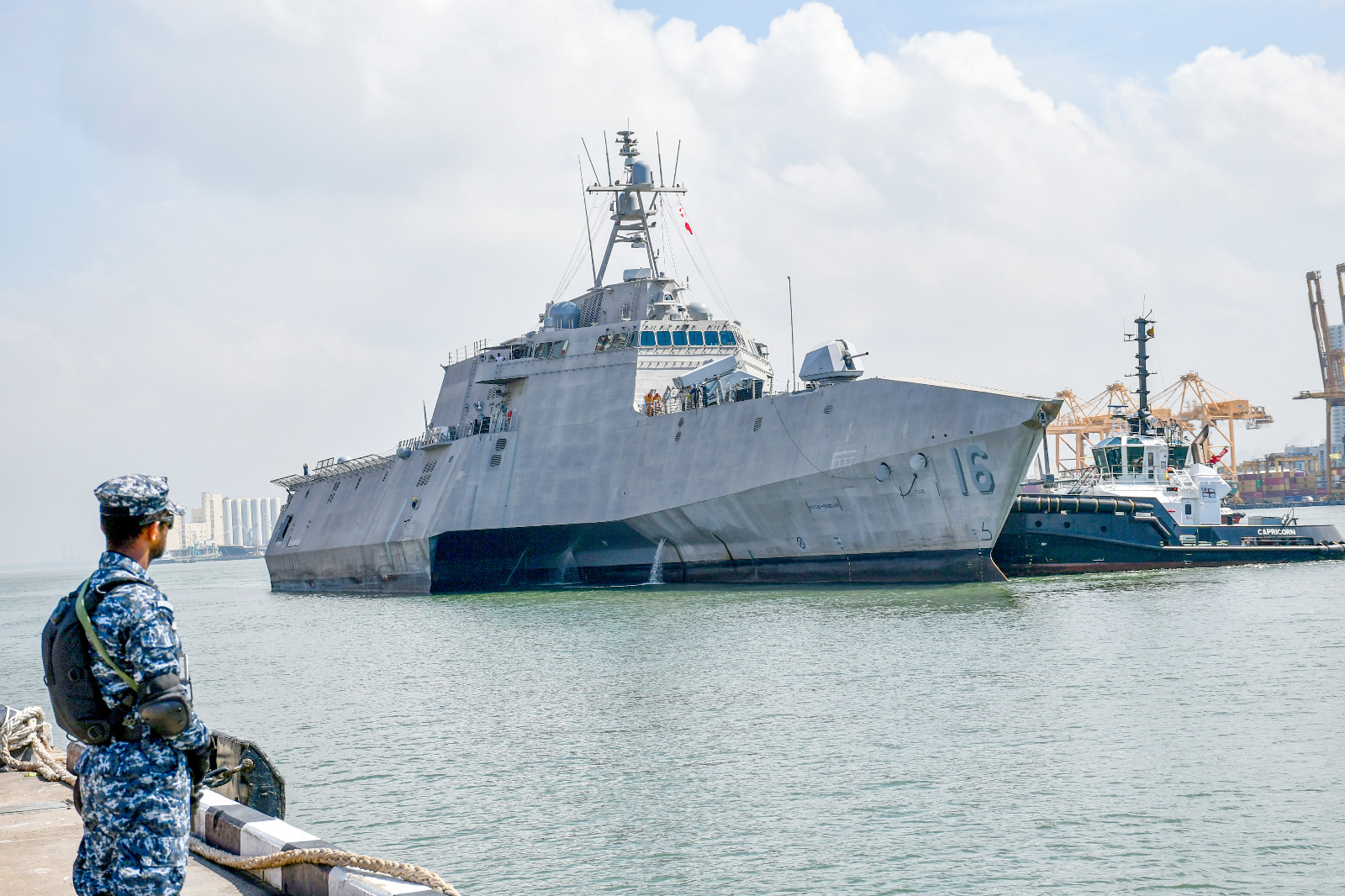
The U.S. Navy ship USS Tulsa (LCS 16) arrived at the Port of Colombo this morning, 7 October 2026 for replenishment purposes.
The visiting ship was welcomed by the Sri Lanka Navy in accordance with naval traditions.
The 127.7-metre-long platform is a Littoral Combat Ship commanded by Commander BM Wanier. Commissioned on 16 February 2019, USS Tulsa has since been in service with the US Navy.
The ship previously made a port call in Sri Lanka on 27 August 2025.
Govt. tells fuel distributors to maintain stocks to ensure uninterrupted supplies
by Saman Indrajith and Norman Palihawadane
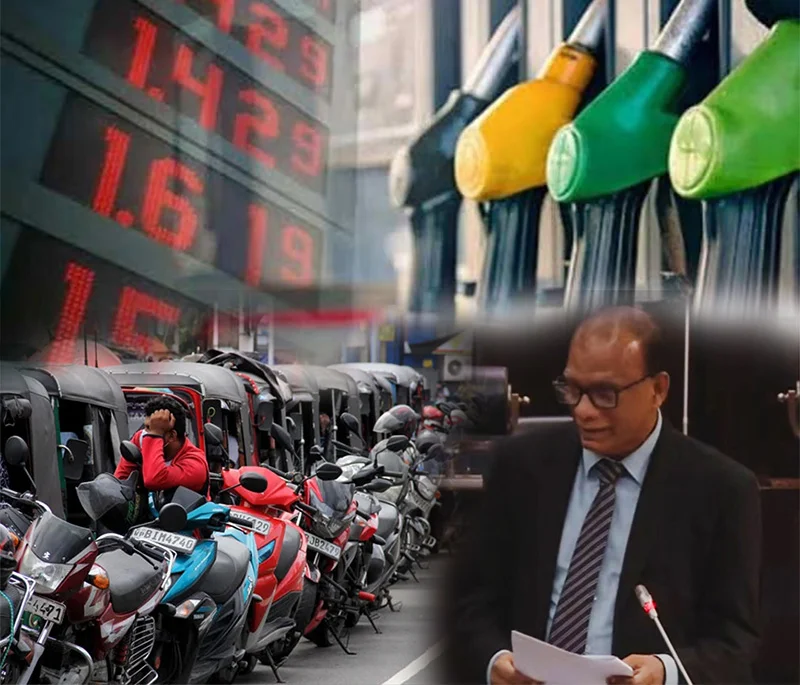
The government had instructed private fuel distributors to maintain minimum stocks and ensure uninterrupted supplies to the market, Energy Minister Anura Karunathilaka told Parliament yesterday (06).
Karunathilaka said the Ministry of Energy Secretary had notified the relevant companies of the requirement, following a reduction in supplies by some private distributors, amid higher international fuel prices.
The Minister said private companies had informed the government that they were facing losses because international prices had risen while fuel was being sold, locally, at prevailing prices. As a result, some companies had reduced the volumes released to the market.
The reduced supplies had increased the burden on the Ceylon Petroleum Corporation (CPC), whose share of the diesel market had risen from about 54% to 82%, the Minister said.
“The CPC currently holds an 82% share of the market,” he said, adding that it had increased its supplies, compared with February, to compensate for the reduction by private distributors.
Karunathilaka said the government could not, under the existing agreements with private companies, specify the quantities they should supply to individual filling stations. However, it could require them to maintain minimum stocks in the country.
The Minister said the Energy Ministry had already instructed companies that had failed to maintain the required stocks to take steps to prevent supply disruptions.
The Minister attributed the queues reported at some filling stations to reduced supplies from private distributors, as well as normal variations in fuel distribution. He also said demand for CPC fuel had increased because private companies generally did not provide fuel to dealers on credit, while the CPC offered a three-day credit facility.
“We expect that, as the Ceylon Petroleum Corporation takes on this additional burden, the problem will ease to some extent by Wednesday or Thursday,” Karunathilaka said.
He said instructions had also been issued to increase supplies to CPC filling stations. A special discussion on the issue is scheduled for today (07), with officials of the Energy Ministry and CPC expected to participate,
along with President Anura Kumara Dissanayake.
Meanwhile, Petroleum Dealers’ Association officials have called for an early solution to the supply issue. Association Chairman D.V. Shantha Silva said queues had been reported at many filling stations, mainly those operated by private distributors.
He said the situation was not due to an overall shortage of fuel, but was linked to reduced orders by Lanka IOC, Sinopec and R.M. Parks amid concerns over losses incurred on fuel sales.
The Ceylon Petroleum Private Tanker Owners Association has urged motorists to refrain from panic buying, saying there was no nationwide disruption to fuel supplies.
The government earlier increased fuel prices and introduced a per-litre diesel subsidy following concerns raised by distributors over rising international prices.

Remembering Juvenal, Coke, Acton and Machiavelli

West Asian conflict undergoing manifold complications

Nissanka absence opens door for Sri Lanka’s young guns

The prelate who walked the talk

Needs of populace hit by Cyclone Ditwah seen as waiting to be addressed

Future of Sri Lanka’s state university system: Should it be shut down and reopened?

‘Dates have the highest sugar content to fight Coronavirus’

Sunday Island 27 December – Headlines

#SundayIsland 17th December – Headlines

Sunday Island – 28th March

Sunday Island Headlines – 21 March

Sunday Island – 21st February – Headlines
-

 News7 days ago
US-assisted ‘Ice’ detection: NPC to examine IGP’s move to transfer drug-busting team
-

 Editorial6 days ago
Colombo Port drug bust: The plot thickens
-

 Features4 days ago
The first woman in the foreign service or Ceylon Overseas Service it was then called
-

 Editorial5 days ago
Fuelling discontent and protest
-

 News3 days ago
Geneva takes up Sallay’s case and govt. ignores opportunity to answer accusations
-

 Latest News5 days ago
Tharindu Rathnayake, bowlers secure Asian Games Bronze for Sri Lanka
-
 Foreign News5 days ago
Ten injured after car crashes into rugby supporters in Australia
-

 Features3 days ago
Sri Lanka Cricket Bill: Governance reform is not yet a cricket strategy