
News
Russia warns Lanka of Islamic extremists channeling funds to local counterparts

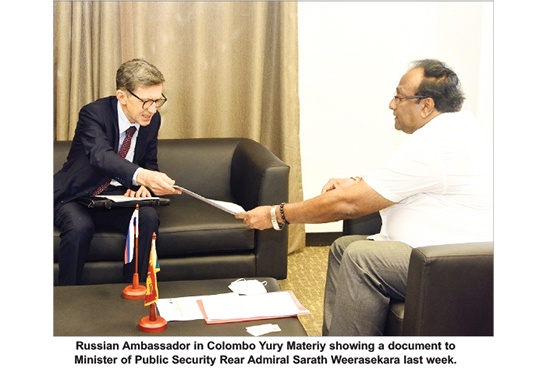
Russian Ambassador in Colombo Yury Materiy has warned that extremist Islamic terrorist organizations may channel funds to their Lankan counterparts on the pretext of extending COVID-19 aid.
The warning was issued by Ambassador Materiy when he met Minister of Public Security Rear Admiral Sarath Weerasekara at his ministry last week, the ministry sources said yesterday.
Sources said that Ambassador Materiy had told Minister Weerasekera that many extremist groups were moving funds for terror activities and had carried out such operations via the trade and trafficking of narcotics under the cover of humanitarian assistance for Muslim organisations and charities.
In response the Minister said that after the war a new strategy had been formulated by the then Sri Lankan government to increase the intelligence battalions from 3-7 and deported nearly 160 madrasa scholar leaders who under the guise of religious studies were spreading hate and extremist propaganda.
Unfortunately, the yahapalana government had dismantled the intelligence network. The new government had taken action to remedy the situation, he added.
The Ambassador lso inquired into the progress in investigations on Easter Sunday bomb attacks of 2019, and Minister Weerasekara responded stating that 267 suspects had been remanded after the 8 blasts and currently all criminal investigations had been completed and handed over to the Attorney general’s Department for further action.
The Russian Home Ministry continued to work closely with the Ministry of Public Security, the Ambassador said, adding that Russia was now a member of the United Nations Human Rights Council. Minister Weerasekara congratulated both President Vladimir Putin the President and the ambassador on Ruassia’s appointment.
In relation to the resolutions to be passed on Sri Lanka Minister Weerasekera reminded the Ambassador how the previous Secretary General of the United Nations violated the United Nations Charter by making unsubstantiated comments in regards to the Sri Lankan humanitarian operation at the closing stages of the Civil war. The Minister reminded the Ambassador that part of the resolution of 30/1 stated that a deliberate attempt had been taken by the Sri Lankan government to prevent much needed food and essential supplies from reaching the war affected.
The Minister went on to clearly and evidentially dismiss that claim.

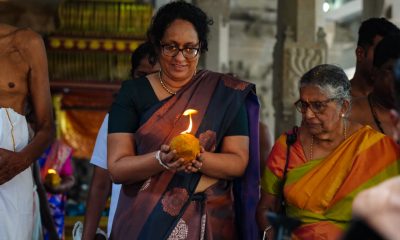


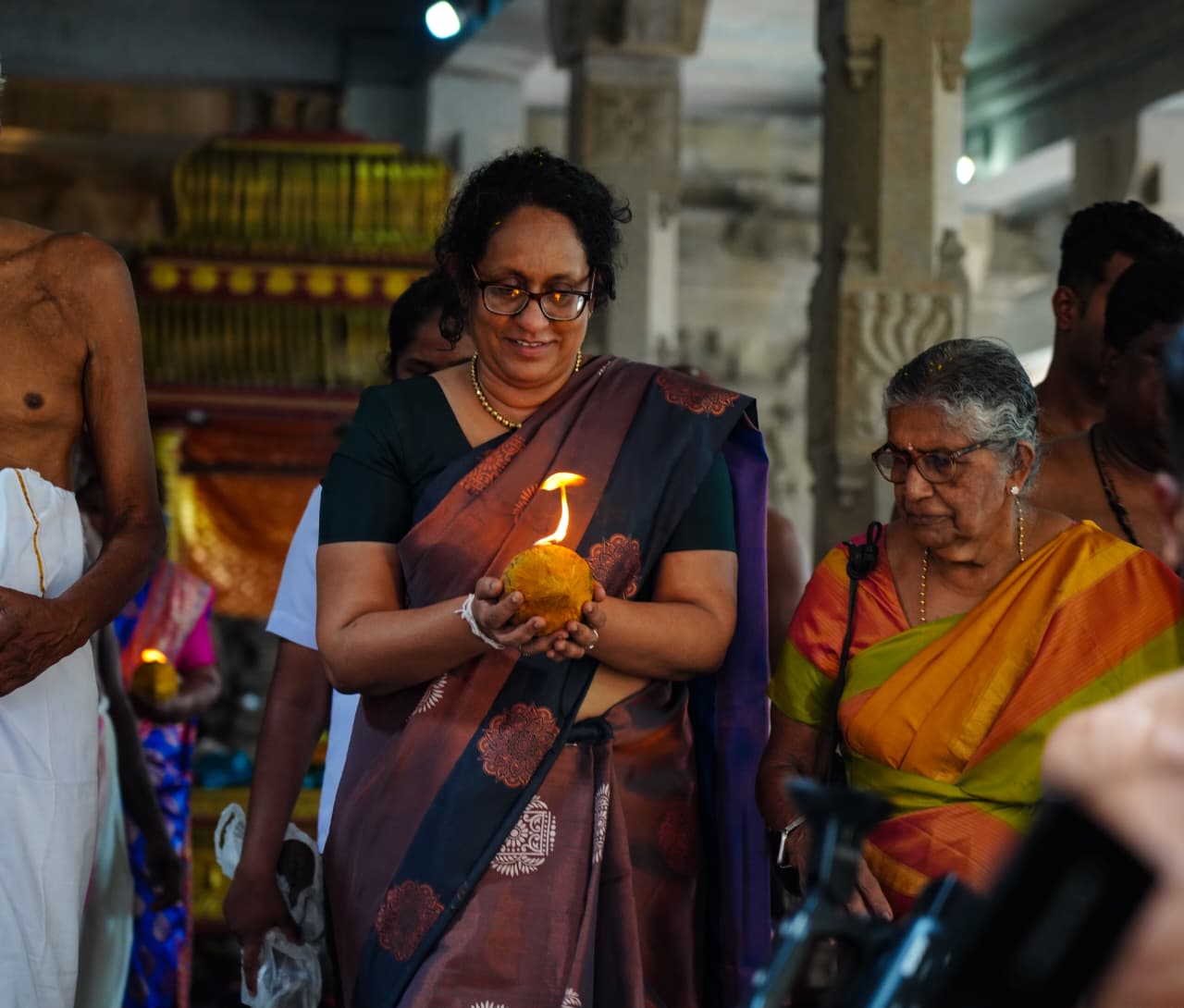
The Prime Minister Dr. Harini Amarasuriya participated in the special Shiva pooja held on at the Thiruketheeswaran Kovil in Mannar, in observance of Maha Shivaratri, a day celebrated with deep devotion by Hindu devotees
Latest News
“Sri Lanka Set to Become the First South Asian Country to Enter the Global Charter on Children’s Care Reform”


Today (17), Sri Lanka officially expressed its Intent to Enter into Global Charter on Children’s Care Reform at the United Nations Compound, Bauddhaloka Mawatha, Colombo 07.
The event was attended by the David Lammy, Member of Parliament, Lord Chancellor and Secretary of State for Justice and Deputy Prime Minister of the United Kingdom. On behalf of Sri Lanka, the official Expression of Intent was made by the Minister of Women and Child Affairs, Saroja Savithri Paulraj.
Sri Lanka has long been a State Party to the United Nations Convention on the Rights of the Child (UNCRC) and remains committed under international law to protecting and promoting children’s rights. The Global Charter for on Children’s Care Reform has been developed based on existing international commitments, including the 2009 United Nations General Assembly Guidelines for the Alternative Care of Children; the 2019 UN General Assembly resolution focusing on the rights of children without parental care (A/RES/74/133); the CRPD/C/5: Guidelines on de-institutionalization, including in emergencies (2022); the 2022 Kigali Declaration of Commonwealth States; and the 2024 1st Global Ministerial Conference on Ending Violence Against Children, which called for action. To date, 34 countries around the world have endorsed this Charter.
As no South Asian country has yet joined this Charter, Sri Lanka is set to become the first South Asian nation to do so.
The primary objective of joining this Charter is to further strengthen Sri Lanka’s national child Care policies and align their implementation with international standards.
The event was collaboratively organized by UNICEF and the British High Commission in Sri Lanka. Among those present were the British High Commissioner to Sri Lanka, Andrew Patrick; British Deputy High Commissioner to Sri Lanka, Theresa O’Mahony; UN Resident Coordinator in Sri Lanka, Marc-André Franche; UNICEF Representative to Sri Lanka, Emma Brigham; Secretary to the Ministry of Women and Child Affairs, Tharanganie Wickramasinghe; government officials; representatives of non-governmental organizations; and civil society representatives.

Convenor of the Samagi Joint Trade Union Alliance affiliated with the Samagi Jana Balawegaya, Ananda Palitha, yesterday (16) said that the Ceylon Electricity Board was seeking to raise electricity tariffs by 13.56% percent although it had earned a profit of more than Rs 22,000 mn.
The CEB recently submitted its proposal to the Public Utilities Commission of Sri Lanka (PUCSL) for an electricity tariff revision for the second quarter of this year – the period effective from April 1 to June 30.
Palitha alleged that the PUCSL, in spite of knowing the massive profit earned by the CEB, at the expense of the hapless public, had chosen to allow the state enterprise to propose an additional burden.
The economic, technical and safety regulator of the electricity industry, and the designated regulator for petroleum and water services industries, should exercise its powers in terms of the PUCSL Act No. 35 of 2002 and the Sri Lanka Electricity Act No. 20 of 2009 to provide relief, the veteran trade unionist said.
Palitha emphasised that the PUCSL had the right to intervene on behalf of electricity consumers but, unfortunately, chose to facilitate the CEB’s despicable strategy. “The proposal to increase tariffs by 13.56% was meant to divert attention. The real issue at hand is the percentage of electricity tariff reduction,” Palitha said. The former UNPer found fault with the Opposition for failing to expose the CEB.
Taking into consideration the Rs 22,000 millionplus profit, the PUCSL could order the CEB to grant relief to consumers, Palitha said, adding that the CEB and PUCSL, together, deprived electricity consumers tariff reduction in the first quarter of this year, too.
In January this year, the CEB asked for a 11.59% tariff increase though it was enjoying Rs 22,000 mn profit at that time, the trade unionist said.
Palitha said that as the PUCSL received all data available to the CEB it was fully aware of the finances of the state enterprise.
In January, 2025, regardless of the NPP government floating the idea regarding as much as a 37% tariff increase, the PUCSL granted a 20% tariff reduction (25% of Rs 22,000 mn profit), Palitha said.
According to him, as a result of relief granted to the consumers, the profits had been reduced to Rs 16,000 mn but by June 2025 profits had increased to Rs 18,000 mn and there was a need to grant tariff reduction. But, the NPP, having always lashed out at the International Monetary Fund (IMF) in the run up to the presidential election, held in September 2024, started playing a different tune.
Responding to The Island queries, Palitha said that contrary to claims that the CEB proposed a 13.56% tariff increase to cover up losses caused by the importation of low-quality coal for the Norochcholai Lakvijaya coal-fired power plant, the current strategy seemed to have been adopted at the behest of the IMF.
Instead of granting tariff reduction for the third quarter in 2025, the PUCSL ordered an 18% increase, Palitha said. The trade unionist claimed that the Finance Ministry, at the behest of the IMF, directed both the CEB and the PUCSL to increase electricity tariffs by 20% in violation of the relevant Acts, he said.
Then in Oct, 2025, the CEB proposed a 6.8 % tariff increase at a time its profits were around Rs 22,000 mn. The CEB and PUCSL staged a drama over that proposal and finally, on the false pretext of the CEB’s failure to furnish its proposal on time, the revision was dropped, Palitha said. The SJB activist pointed out that the Opposition failed to highlight that consumers had been deprived of downward revision in spite of massive profits earned by the Board. “In fact, when Energy Minister Kumara Jayakody met trade unions, he very clearly declared that they were considering electricity power reduction, perhaps by 10%, 12% or 15%. But in the end nothing happened.”
Now the same drama is being enacted by the government, the CEB and the PUCSL, Palitha said.
By Shamindra Ferdinando

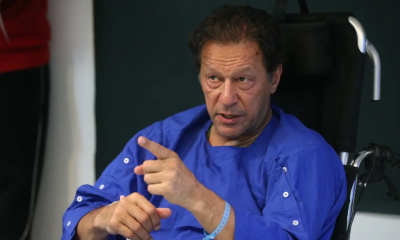
‘Treat him with dignity’ – Gavaskar, Chappell among 14 former captains to come out in support of Imran Khan

PM participates in special Shiva Pooja held at the Thirukedeswaran Temple in Mannar

Rain ends Ireland and Australia’s T20 World Cup hopes

“Sri Lanka Set to Become the First South Asian Country to Enter the Global Charter on Children’s Care Reform”

Incoming Bangladesh PM Tarique Rahman, lawmakers sworn into parliament

Samra’s record 110 in vain as Phillips and Ravindra put New Zealand in Super Eights

‘Dates have the highest sugar content to fight Coronavirus’

Sunday Island 27 December – Headlines

#SundayIsland 17th December – Headlines

Sunday Island – 28th March

Sunday Island Headlines – 21 March

Sunday Island – 21st February – Headlines
-
 Life style3 days ago
Marriot new GM Suranga
-

 Business2 days ago
Ministry of Brands to launch Sri Lanka’s first off-price retail destination
-

 Features3 days ago
Monks’ march, in America and Sri Lanka
-
 Midweek Review7 days ago
A question of national pride
-
 Business7 days ago
Autodoc 360 relocates to reinforce commitment to premium auto care
-
 Opinion6 days ago
Will computers ever be intelligent?
-
 Features3 days ago
The Rise of Takaichi
-

 Features3 days ago
Wetlands of Sri Lanka: