
News
Ruination of CEB blamed on yahapalana minister


SJB won’t take responsibility: Siyambalapitiya hits back
By Shamindra Ferdinando
Kegalle District MP Ranjith Siyambalapitiya, strongly denied accusations that in his capacity as the then Minister of Power and Renewable Energy, during the yahapalana administration (2015-2019), thousands of persons had been absorbed illegally into cadre of the cash-strapped Ceylon Electricity Board (CEB).
MP Siyambalapitiya stressed that he had not recruited a single person without the approval of the Department of Management Services of the Finance Ministry. Ravi Karunanayake and the late Mangala Samarawaeera held the finance portfolio during the UNP-led yahapalana administration. The SLFP was the junior partner.
The SLFPer said so when The Island sought his response to the accusations made by Kegalle District SJB MP Kabir Hashim and incumbent Power and Energy Minister Kanchana Wijesekera, in Parliament, on Monday (Aug 29).
Lawmaker Hashim alleged that those who sought to secure the parliamentary seat, and certain political parties that followed political agendas at the expense of the national economy, ruined the CEB. The former UNP Chairman accused them of having clandestine deals with the CEB’s top management, as well as trade unions. All of them should accept responsibility for the current crisis as they quite conveniently failed to introduce much required reforms, the one -time Petroleum Minister alleged.
A smiling Wijesekera reminded Hashim that the one who recruited the largest group of workers, too, represented the Kegalle district. MP Hashim hit back pointing out that the person the minister referred to is on the government side now.
They were referring to Ranjith Siyambalapitiya who contested the last general election on the SLPP ticket.
Of the 14 SLFPers in current parliament, except for Angajan Ramanathan, all others, including the party leader Maithripala Sirisena contested on the SLPP ticket.
Lawmaker Hashim emphasized that the breakaway UNP group, the SJB wouldn’t accept the responsibility for the actions of the Kegalle District member.
Responding to another query, MP Siyambalapitiya said that he wasn’t in parliament during the exchange between Minister Wijesekera and MP Hashim. Acknowledging that persons from the Kegalle district had been recruited to the CEB during his tenure as the minister in charge of the institution, MP Siyambaalapitiya denied accusations as regards violations of Treasury directives in doing so.
Perhaps the minister and the MP had referred to the CEB taking approximately 6,000 workers who had been employed via ‘manpower’ companies 15 to 20 years ago, MP Siyambalapitiya said. The failure on the part of successive administrations to resolve that issue caused frequent strikes and work stoppages, the SLFPer said, questioning the rationale in finding fault with him for settling a long-standing issue.
The former minister said that during his period the CEB had to be further expand as the then government took tangible measures to provide electricity for all those who sought the service. Of those who requested the facility, the CEB up to that time had provided connections to 94%-95% and action was taken to provide electricity for the remaining lot. Therefore, additional workers had to be recruited, the then power minister said.
MP Siyambalapitiya said that UNPer Attorney-at-Law Ajith. P. Perera served as the State Minister of Power. Had I abused my office; he would have brought that to the notice of his party.
Reiterating in parliament the urgent need to restructure the CEB, Minister Wijesekera questioned the rationale in outsourcing work to the private sector that should have been handled by the state enterprise. The Matara district MP placed the number of CEB and LECO workers at over 26,000.
JVP’s Vijitha Herath has told parliament that the proposed restructuring was nothing but a prerequisite for the finalization of RFI (Rapid Financing Instrument) with the IMF.

By Shamindra Ferdinando
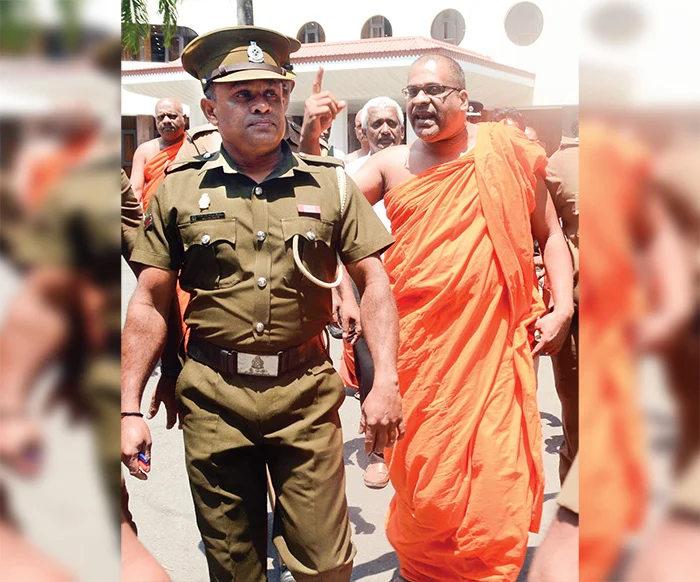
The government is coming under pressure from civil society organisations to formulate a clear ‘mechanism’ to deal with requests for presidential pardons.
Representing civil society organisations, Gamini Viyangoda yesterday flayed the NPP government for the delay in taking action against Ven. Galagoda Aththe Gnanasara Thera, after the Supreme Court declared the 2019 presidential pardon granted to him by President Maithripala Sirisena null and void. He said successive Presidents had abused their executive power to release convicted persons from prison.
Purawesi Balaya activist Viyangoda pointed out that the Supreme Court ruled that President Sirisena had acted arbitrarily and failed to independently consider the relevant materials before exercising his executive power.
The Court of Appeal, in August 2018, sentenced Gnanasara Thera, General Secretary of the Bodu Bala Sena (BBS), to six years rigorous imprisonment for contempt of court over his conduct during proceedings concerning missing journalist Prageeth Ekneligoda. Viyangoda said that those who had been affected by the monk’s conduct have the right to know on what basis the President released him, in May 2019.
The Court of Appeal yesterday (05) ordered the relevant authorities to enforce the remaining period of imprisonment imposed on the Thera.
Gnanasara Thera, who had been subject to an open warrant for his arrest, was produced before the Court of Appeal, today, by prison officials.
Having considered the submissions made before it, the Court of Appeal directed the Commissioner General of Prisons to take the necessary steps to enforce the remaining period of the sentence imposed on Gnanasara Thera. Police on Saturday (03) apprehended the monk at a forest monastery in Kalutara. The Colombo Magistrate’s Court on Sunday (04) ordered the Thera to be remanded in custody till Monday.
Appearing for Gnanasara Thera, Attorney-at-Law Iresh Seneviratne, together with Attorney-at-Law Pasan Karunaratne, told the court yesterday that his client had been experiencing severe mental distress and had therefore gone to an ‘Aranya Senasanaya’, where he had been staying.
Viyangoda said that examination of presidential pardons, executed over the years, would reveal how successive leaders exploited the executive power to appease their own. Responding to The Island queries, Viyangoda said that Sirisena, in Sept. 2019, just two months before the presidential election, granted Jude Shramantha Jayamaha a Presidential pardon.
Jude Shramantha Jayamaha was sentenced to 12 years by the High Court, but the Court of Appeal revised that sentence to death, in July 2012, which the Supreme Court later upheld. Viyangoda said that though the Supreme Court, in June 2024, declared that the particular Presidential action was illegal and arbitrary, law enoforcement authorities were yet to take tangible measures to enforce the court directive.
Viyangoda stressed that no President should exercise the right to pardon a convicted on his or her own without following laid out procedures. According to him, Sirisena appeared to have simply ordered the monk, and the convicted murderer, released in response to appeals received by him. A comprehensive investigation could identify those who had been involved in these wrongdoings.
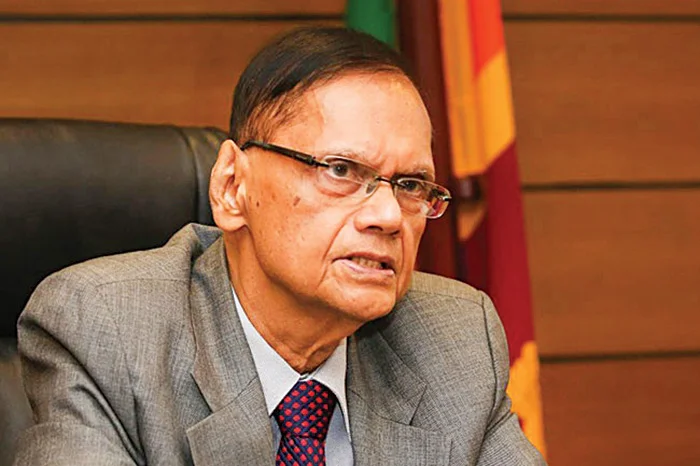
Convenor of Janathawadi Joint Opposition, Prof. G. L. Peiris, yesterday (05) emphasised the responsibility on the part of the government and others to act cautiously when making representations in respect of Sivarasa Anojan facing death sentence in Saudi Arabia over a controversial social media post.
Addressing the media at former President Ranil Wickremesinghe’s Flower Road Office, Prof. Peiris emphasised that whatever representations should be made through the Foreign Ministry.
The one-time External Affairs Minister warned of dire consequences of political party leaders, members of Parliament and civil society making direct representations and trying to get in touch with various Saudi authorities over the phone.
Prof. Peiris said that those who intervened on behalf of Anojan should keep in mind that Sri Lanka should be mindful of the Saudi way of governance and sensitivities.
The former Minister questioned the circumstances Sri Lanka was left out of the recent BRICS summit held in New Delhi. He recalled how former President Wickremesinghe discussed Sri Lanka’s entry into BRICS with Russian President Putin and received an invitation for the Summit there but as a result of the change of government, in Sept. 2024, Sri Lanka ignored that invitation.
That resulted in Sri Lanka being left out from the New Delhi summit, Prof. Peris said.
Prof. Peiris pointed out the absurdity in sending the Foreign Secretary to the BRICS Summit in Russia instead of the President, PM or the Foreign Minister to represent the country.
Referring to the forthcoming conclusion of the current IMF programme, initiated during Wickremesinghe’s time, Prof. Peiris said that Sri Lanka lost a great opportunity to benefit from BRICS by failing to represent the country at a higher level at the Russian summit.
The BRICS nations established the New Development Bank (NDB), originally called the BRICS Development Bank, Prof. Peiris said.
Dismissing NPP government’s explanation regarding Iranian ships awaiting necessary supplies but deprived by US imposed restrictions, the former Minister strongly criticised the administration’s response. According to him, this government responded in a similar manner when the US sank an unarmed Iranian frigate just outside Sri Lankan territorial waters in March this year.
Prof. Peiris declared that the government’s assertion that the US restrictions weren’t only directed at Sri Lanka but all Iranian vessels in other regions as well was not acceptable (SF)
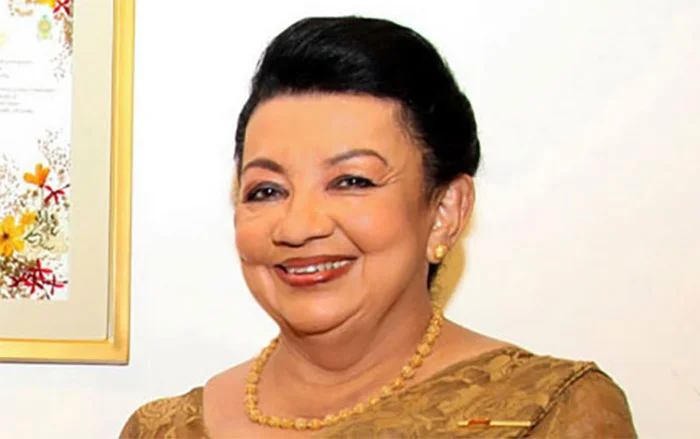
Former First Lady Shiranthi Rajapaksa, who is in Singapore, has filed an anticipatory bail application before the Maligakanda Magistrate’s Court, seeking an order preventing her arrest in connection with an ongoing investigation into the financial affairs of the Siriliya Saviya organisation.
The former First Lady left for Singapore on 16 Sept., and the police handed her a notice at the airport, directing her to appear before the Financial Crimes Investigation Division (FCID).
Attorney-at-Law Jayabalan has filed the petition, naming the Director of the Criminal Investigation Department as the respondent.
The petition states that Shiranthi Rajapaksa is currently overseas receiving medical treatment and fears that she may be arrested at the airport upon her return to Sri Lanka.

Showers above 75 mm are likely at some places in the Western, Sabaragamuwa, Central, and Southern provinces after 1.00 pm

Govt. urged to halt ‘illegal’ presidential pardons

GL urges cautious handling of Saudi death row case, blasts govt. over BRICS affair

Shiranthi files anticipatory bail application

Sri Lanka renews Honorary Consul appointment in Mombasa

Govt. plans to amalgamate NDF and ‘Api Wenuwen Api’ Fund

‘Dates have the highest sugar content to fight Coronavirus’

Sunday Island 27 December – Headlines

#SundayIsland 17th December – Headlines

Sunday Island – 28th March

Sunday Island Headlines – 21 March

Sunday Island – 21st February – Headlines
-

 Latest News6 days ago
Gold winner Tharanga gets brand-new Honda Vezel from SLAAJ
-

 Features6 days ago
Why Sri Lanka needs an Inclusive Civic Nationalism – urgently
-

 News5 days ago
US-assisted ‘Ice’ detection: NPC to examine IGP’s move to transfer drug-busting team
-

 Editorial4 days ago
Colombo Port drug bust: The plot thickens
-

 News6 days ago
Civil society activist accuses govt. of favouring Ven. Gnanasara
-

 Editorial6 days ago
When crime bosses rise above law and shrines
-
 Midweek Review6 days ago
Dappula’s Easter Sunday ‘grand conspiracy’ claim demolished
-
Editorial5 days ago
Drug busting, transfers and trust deficit