
Features
Roots at Home and Thoughts in the world:

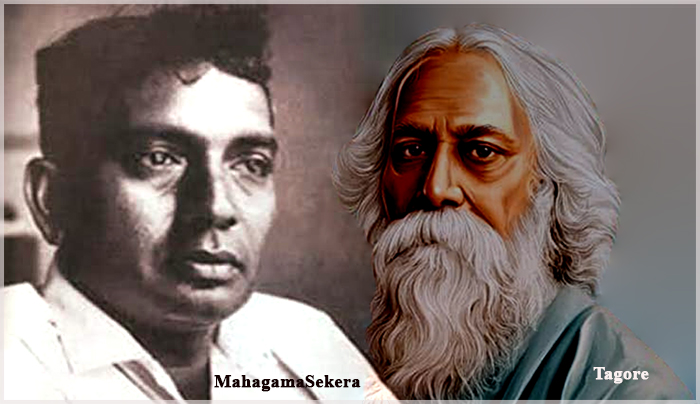
The influence of Tagore on Mahagama Sekera
by Liyanage Amarakeerthi
(Text of the speech delivered at a Panel Discussion held at Svami Vivekanda Cultural Center in Colombo, on January 12, 2024 to commemorate Mahagama Sekera. Sekera was an influential a poet, a novelist, a painter, a lyricist, a filmmaker, and a literary scholar, and he died in 1976 at the age of 47)
This panel is primarily about the ways in which Mahagama Sekera’s art was shaped by Indian thought. Since ‘Indian thought’ encompasses a great deal of philosophical schools and religions, including Buddhism, there is no Sinhala art which has not been shaped, one way or another, by something ‘Indian.’ So, I must be specific and quite narrow in my focus. Hence, the focus on Tagore.
Gurudeva Ravindranath Tagore has inspired us, Sinhala people or Sri Lankans in multiple ways. As the panel today will amply demonstrate, Tagore’s influence can be seen in nearly all domains of our art scene. In the field of music, perhaps, his influence is the most pronounced. The Sinhala term for influence is abhasaya – a Sanskrit word, and it means ‘light’ or ‘reflection’. Gurudeva’s light has been quite pervasive in Sinhala art scene, though in recent times the significance of that light has been forgotten to some extent.
In this speech, I want to remind ourselves of that significance by focusing on the poetry and literary thought of Mahagama Sekera – one of our greatest modern poets. In doing so, however, I will be highlighting what I consider to be the most important lesson we could have learnt from Gurudeva Tagore. I have been arguing for more than a decade now in my Sinhala writing that Tagore’s strong critique of ethnic and cultural nationalism, a line of thought that could have enriched our cultural and political thought, failed to make a significant impact on the Sinhala language intellectual world. But it is never too late to rediscover that aspect of Tagore, and Mahagama Sekera’s work provides us with an opening into that rediscovery.
Many are Sri Lankan scholars and artistes who studied at Shanti Niketan, and all of them brought back some of aspects of Tagore’s thought. The most influential among them is perhaps, Ediriveera Sarachchandra, who later became a great playwright, a novelist, and a scholar in literature. And he is, arguably, the most important renaissance figure in the 20th century.
His days at Shanti Niketan are beautifully described in his memoir, Pin aeti Sarasavi varamak Denne. The influence of Tagore has certainly helped Sarachchandra and others to discover ‘our own traditions’ in art. Sarachchandra’s turn to folk theater to find an indigenous form of modern theater may have been encouraged by what Gurudeva did in the field of theater in the early 20th century. Tagore’s influence on the field of Sinhala music has been pointed out by many knowledgeable scholars.
While paying tribute to Gurudeva for everything we have learnt from him, one must also recognize the fact that we have also missed one of the key lessons of Tagore. The lesson is the importance of cultivating a critical distance from nationalism, especially from ethnic nationalism, and the need of learning critically from Western modernity, especially science.
Tagore saw Western scientific, technological, and artistic achievements as human achievements that can be shared with all humanity. While critiquing Western colonialism and fighting to defeat it, Gurudeva had this to say, “Neither the colourless vagueness of cosmopolitanism, nor the fierce self-idolatry of nation-worship, is the goals of human history. And India has been trying to accomplish her task through social regulation of differences on the one hand, and the spiritual recognition of unity on the other. She has made grave errors in setting up the boundary walls too rigidly between races…”(Tagore. Nationalism. 2009: 34).
Gurudeva’s belief in our shared humanity did not make him a thinker floating in the sky, and he was an inter-culturalist thinker. The rooted cosmopolitanism of Tagore is a lesson we have either overlooked or insufficiently learnt. Sarachchandra, who was the most known intellectual to be influenced by Tagore and his legacy never mentioned Gurudeva’s brilliant critique of nationalism. The renaissance generation of Sinhala literary culture in the middle of the 20th century, especially the intellectuals associated with the University of Peradeniya, were ready to learn from the world rather than being parochially restricting themselves to what was taken as indigenous tradition. But their openness was not articulated as it was often done by Tagore. For example, Gurudeva once said,
“That our forefathers, 3,000 years ago, has finished extracting all that was of value from the universe, is not a worthy thought. We are not so unfortunate, nor the universe so poor. Had it been true that all that is to be done has been done in the past, once for all, then our continued existence could only be a burden to the earth…( The Makers of Modern India. 2012: 188).”
Sekeara did not live long enough to articulate his intellectual positions in non-literary writings- a mode in which Tagore was remarkably prolific. But Sekera’s worldview is quite close to Tagore’s.
Mahagama Sekera, to repeat my main argument, provides us with an opportunity to revisit the Tagore we have missed. At numerous places in Sekera’s poetry one finds moving calls for an ethnic unity and harmony in Sri Lanka. For example, in Mak Nisada Yath, he imagines that Sri Lanka’s scientific and technological development would result in greater ethnic unity and stronger integration of diverse cultures:
“From the exhaust pipes
Of hydro-powerhouses
Comes out the rings of white fumes
Like an embryo of a future dream.
Seen on the other side,
Is the mountain rage of sapphire,
And this river descends from
Under the shadow of the mountain peak
Adorned with the Buddha’s footprint.
Sebastian.Nadaraja Mohamad
When this electricity
Lightens up
This country tomorrow
We will unite
At the peak of Sri Pada mountains!!
Constant call for ethnic unity is found in many other poems of Sekera. Originally published in 1964, many years before the beginning of Sri Lanka’s civil war, these poems indicate an impending danger of ethically motivated political violence. Perhaps, the resurgence of Sinhala ethnic nationalism in the decade of 1950 has made Sekera worried about the eventuality that ethnic and cultural hype would bring about.
In addition to expressing his fears about the rise of ethnic nationalism, Sekera’s rooted cosmopolitanism is seen in his openness to the literary developments in the West and elsewhere.
Sekera’s poetry during the 1960s shows that he has been interested in what was happening in Western poetry. His collection, Heta Irak Payai (1963) attests to the fact that modernist poems of Ezra Pound, E.E. Cummings, or the French symbolists have shaped his art during that decade. Sekera was one the first Sinhala poet to experiment with the way poems are printed on page. Many poems in that collection are printed to make poems to something look at rather than something to be read.
When matured as a poet, he gradually moved away from such modernist experimentalism to Sinhala folk traditions and to narrative poems but without losing touch with the literary developments after modernism. In his narrative poems, he was still within the modernist tradition by using style of free verse which came into Sinhala in the early 1940s. The ‘free verse’ is a style defended and promoted by the ‘Peradeniya School’- a group of poets and critics who were educated at Western universities. Sekera seems to have kept close contact with such Avant Garde groups in Sri Lanka and elsewhere.
Though he was still using free verse style in the main, Sekera’s thematic vision was shaped by Asian philosophical traditions. For example, the narrative poem, Prabuddha, what considers to be his masterpiece, has numerous references to Upanishad, Bhagavat Geeta, Dhammapada, and other such texts. And the poem portrays a musician, who attempts to lead a refined and enlightened life without getting caught in capitalist consumerism and Westernized individualist life. Thus, Sekera has made a conscious attempt to learn from both the West and the East.
Sekera’s work, to sum up this section, demonstrates a cosmopolitan literary and artistic vision, which was not the mainstream of his time, especially during the 1970s. That literary cosmopolitanism has been directly and indirectly shaped by Gurudeva Tagore. If Sekera’s sensibilities, to be specific, are not shaped by Tagore, one sees a remarkable kinship between the thoughts of the two literary figures. Much like Tagore, Sekera was a poet, a writer of short fiction, a novelist, a lyricist, a filmmaker, a painter, and so on. In that sense too, Sekera looks to be modeling himself on Tagore. With his openness to new media, new art forms, I am sure Tagore would have made films if he were to live a decade or more.
Tagore was a rich thinker in whose fertile mind the best of the West or of modernity mingled into a fine synthesis with Asian thought. As Amartya Sen correctly puts it, Tagore was not just a rationalist objectivist. He believed in epistemological heterodoxy i.e. the existence of many forms of truth. “…While Tagore believed that modern science was essential to understanding physical phenomena, his views on epistemology were interestingly heterodox.
He did not take the simple ‘realist’ position often associated with modern science” (Argumentative Indian. 2005: 104.). In Sekera, I see a beginning of a wonderful synthesis of rationalist thought and visionary qualities found in Asian thought that cannot be rationally explained. All his narrative poems, Nomiyemi (1973) in particular, move away from naturalist realism into a realm of poetry where rationality and irrationality meet in a fine synthesis. This aspect of Sekera would have refined so much better in the next decade of his life. Sadly, that crucial decade never arrived.
In addition, in creating that poetic realm, Sekera often taps into Sinhala folk wisdom. In the famous section his mother the narrator of Prabuddha says,
‘Having walked over forests and jungles,
bringing all kinds of reeds home,
dying them in red, green, and so on
weaving mats in various designs,
You showed me, my mother,
This entire universe also has a certain design.
I did not know my mother,
That your face was a mirror
that reflected those days,
My own mind these days,
In those sunken eyes
I never saw happiness nor sadness.
Did you take in all suffering and comforts,
With a great sense of equanimity?
And, by doing so, did you gain peace and calmness of mind?
I earned money, fame, and glory.
I had palatial houses, cars, vehicles, and so on.
But none of them gave me peace of mind.
Had you realized that truth,
Without any of those material things?
Maknisada yath , (It was because..,) 1964 , the first of his long poems (or narrative poems) makes it abundantly clear that he has been heavily influenced by Ravindranath Tagore, especially by Geethanjali. For one thing, Sekera sees the divine in the everyday life of working people. For him divine is not necessarily in a supernatural place beyond this world.
“…when I open my eyes and look around
This is what I see:
Tractors
Factories
Airplanes
Machines
Electrical lights
The greatest secret of the world,
Electricity,
are gods.
The factories
Are the temples.
If there is an all-powerful god
Who creates this mother earth
And trees and plants
And all beings on it,
Who created machines
Rockets
I plead to Him
For one thing
Please grant us a powerful hand
And powerful mind.”
It is not difficult to see a shadow of Tagore’s though in these lines. Gurudeva Tagore, unlike Mahatma Gandhi, defended the technological advances of modernity. After this opening section Sekera explains why he is asking for a ‘powerful mind:’
Where there is a mind without fear
And no head is bent down [in submissiveness],
Where awareness is independent
And the world is not divided by narrow walls of indigenousness
Where there are words spring from the depths of truth
…
Where, the pure stream of water, which is reason,
Has not evaporated in the deadly dessert of outdated conventions,
Where you have led human minds forward towards
refined thoughts and actions
to such a kingdom liberation
My father, please wake my country up!! (71-2).
All of us know that the ideas and words in this excerpt are taken from Tagore- the famous 35th poem of Gitanjali. To the contemporary reader this section might look like plagiarism. Typically, poets borrow things from other poets without being accused of stealing. After all, the idea of plagiarism is something quite modern and Western. All South Asian classics, especially the classics in modern South Asian languages such as Sinhala, have borrowed metaphors, stories, and even entire sections from the classical literary works in Pali and Sanskrit. Numerous sections of classical Sinhala poems are re-tellings of some sort. But to be fair by Sekera, when this section was turned into a song and the lyrics were published in a book, he acknowledged the fact that it was adaptation.
Though indebted to Tagore in the section above, Sekera pushes Tagore’s poetic thought a bit further.
“It was the man who,
Made the world emerge from the darkness.
It was the man who made the world fertile up to this day
It was the man who created God.
To create the mental kingdom of liberation
At least partially,
It was the man who shed
tears,sweat and blood up to this point (72).”
It is clear here that Sekera sees humanity to be more powerful than divinity. In fact, divinity is an offshoot of human efforts to make the world a better place. He goes onto celebrate the scientific advances humans have made. In fact, in the book cited, originally published in 1964, Sekera says, “in 25 years, humans will go to the moon,.. by that time, there will green grasses growing on the moon to welcome humans.’
Barely four years after the book’s publication, humans indeed landed on the moon, and, though for the green grass on the moon we will have to wait a while, Sekera’s optimism about human capabilities has a strong foundation. In that too, one can see the influence of Tagore. In many literary works of Tagore, one finds divine-like power among ordinary, working people, and the supernatural powers emerge out of extremely mundane situations. Some short stories of Tagore, such as “A single night,” are wonderful examples of such instances. This essay does not have space to deal with those stories.
Though Tagore was not entirely a rationalist thinker and an objectivist, he believed that science could help human beings to create a better life for themselves. His belief in modern science was one of the key points at which he differed from Mahatma Gandhi. Tagore and Gandhi disagreements on science have been documented by scholars and numerous times by Amartya Sen.
In 1934, Bihar was struck by an earthquake that killed thousands of people. Gandhi said that it was divine punishment for untouchability. Tagore, who was also working on untouchability along with Gandhi disagreed strongly and argued that such unscientific views about natural phenomena could propagate such interpretations among masses (Sen 2005: 103-4). For Tagore, untouchability was something to be defeated by socio-political reforms. In that sense, Sekera is much closer to Nehru than to Gandhi among the makers of modern India.
**
I argued earlier that Sekera’s attitude towards modernity and science is akin to that of Tagore’s. Sekera may have recognized that Pundit Nehru inherited Tagore’s appreciation of modern science and technology. In hearing Nehru’s death, Sekera wrote a song in which he correctly recognizes some salient aspects of the first prime minister of India.
The great river of thought
that comes from the past to the future
overflowed your noble heart and came forward.
Without dividing the humanity
Into segment with its many branches
That river of thought flowed treating everyone equally.
With your eyes that sees
All three times
You saw today
The world that comes into being tomorrow.
Tagore’s novels such as The Home and the World, and Gora that turn his cosmopolitan sensibilities into arresting literary expressions are much superior literary works compared even to the best of Sinhala literature. And there is nothing comparable with Tagore’s books Nationalism, The Religion of the Man among the books written by Sinhala literary writers. Sekera’s work too shows such limits. Though some of them are local masterpieces, we would expect much greater work from him. Unlike Tagore, Sekera died young. It seems to me that by the time he died, he was looking for the best modes to turn his sensibilities into literary or artistic expressions.
One can easily detect a major reason for Tagorean cosmopolitanism to be overshadowed in Sinhala cultural and political scene: the most important founding father of Sinhala nationalism, Anagarika Dharmapala, intensely disliked Tagore. And Dharmapala’s modern day disciples such as Gunadasa Amarasekara propagated for decades a kind of extreme nationalism that has no regard or understanding of rooted cosmopolitanism of Tagore.

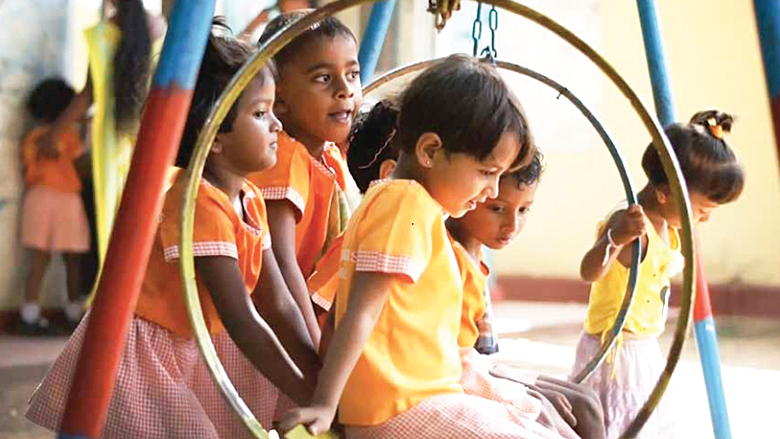
In infancy and childhood is laid the groundwork for an integrated personality in the making, in preparation for adaptation to the outside world. The malleability of the nervous system [neuroplasticity] due to its extensive growth during early childhood, considered to be the critical period for learning, offers the potential to bring about lifelong benefits in terms of social, emotional and intellectual development.
My goal in this brief article is to reflect on the essential elements [‘building blocks’] of education in early childhood which help to lay the foundation for positive outcomes in later life. It is intended to encourage conversation amongst the general readership of this important topic, especially the parents of young children, as learning begins at home.
Critical Period for learning
Early childhood usually covers the age range from infancy to about eight years of age, during which period most of the brain growth takes place. The prefrontal cortex of the brain responsible for higher cognitive functions [e. g. planning, decision making etc.] continues to mature into the mid-twenties. That isn’t to say that learning processes could not continue throughout life.
Current Community Attitudes towards Education
Let us first examine the current public attitudes towards education in general. Proficiency in reading, writing, math and science are regarded as the core academic literacies on which all other learning rests, and on which future success in life depends. The Arts and Humanities, a group of disciplines that study aspects of human society and culture, are placed lower in the hierarchy in the academic curriculum and are often considered supplementary. Their value in enhancing human ideals is often ignored. In a technologically advancing world we live in, the contribution of the study of the arts and humanities towards boosting the economy is brought into question.
The above attitude has created a highly competitive, exam driven, and hence stressful, academic environment for our children in their formative years. There are excessive demands placed upon them to achieve academically, exacerbated by parental pressure – overt or covert. Attendance at paid ‘tuition classes’, after hours, to supplement learning at school is considered essential to gain higher grades at exams, in order to be competitive in entering tertiary institutions and in enhancing career prospects. The love of learning is lost.
Many children find no time for reflection, or to read outside the curriculum to broaden their understanding about life. There is a perception in the community of a decline in literacy and sensibility in the young and their tendency to lean towards much less civilising forms of entertainment and communication, which is at the root of most of our social ills, compounded by the economic ills that currently plague us. Alarmingly, a recent survey by the College of Community Physicians of Sri Lanka has revealed that over 200 adolescents have committed suicide in 2024, which they, reportedly, attribute to their indulgence in social media. But at the heart of it is the breakdown of social order resulting in a lack of ‘meaning’ in life, as once postulated by the renowned French Sociologist, Emile Durkheim.
Family Milieu
The developing child requires the provision of certain environmental conditions, based on common principles, to complement the innate biological drive which we call instinct. Of vital importance is the family milieu, its stability and its ability to meet the child’s emotional needs. From an emotional point of view, the child needs to feel safe, and experience the contentment in the parent’s inter-relationship, in order to set the ground for learning. In addition, it helps for the parents to model the love of learning and of knowledge through communication in words and in actions.
In an ideal world, a child’s parents and teachers ought to be equally committed towards helping the child develop a love of learning. In some instances a teacher must shoulder most of the work – for instance, when parents are busy making a living or have had a limited education themselves.
Enrichment Strategies
Let us reflect on some of the enrichment strategies in early childhood education which would bring about a balance in the curriculum.
The Arts
“Engagement of children in the arts has the power to console, transform, welcome, and heal. It is what the world needs now” [Yo Yo Ma, Cellist]
The arts are commonly used as enrichment strategies in Early Childhood Education. They include music, dance, drama, and Visual and literary arts. The strengths developed through the arts during the early formative years have the potential to enhance other spheres of learning, and performance in later life. By eliciting emotions in the listener, the arts, as both Aristotle and Freud asserted, has the capacity to be therapeutic by being cathartic.
Music
Neuroscientists have shown that, due to the plasticity of the brain in young children, music training tended to enhance the auditory [hearing] pathways in the brain, and hence, the development of phonological awareness [responsiveness to contrasting sounds]. Phonological awareness is considered to be an important precursor to reading skill and the ability to rhyme. In addition, ‘Music is the language of emotions’, encouraging children to gain awareness of their own emotions in addition to making aesthetic judgements.
Drama
Research studies show that enacting stories in the classroom in comparison to dramatic performances on stage by children have several beneficial effects such as better understanding of the stories enacted and the appreciation of new stories. In addition, such classroom performances of stories enriched oral language development and reading skills, including an eagerness to read, and surprisingly, even writing skills.
Visual Arts
Engagement of children in visual art involves much more than learning the techniques of drawing and painting. Long periods of engagement in the craft provides a framework for enhancing thinking skills – to be more focussed and persistent in one’s work; to enhance the power of imagination; to generate a personal viewpoint or express a feeling state; and to encourage the child to reflect on and to make a critical judgement of their own work. Similarly, by entering into a conversation with the children after encouraging them to look closely at a piece of art, tended to heighten their observation skills. There is evidence that these habits of mind acquired from the engagement of children in visual arts could be ‘transferred’ to other areas of learning, and stand in good stead in employment in later life.
Reading
According to the British neuropsychologist, Andrew Ellis, the brain was never meant to read, in terms of human evolution: “There are no genes or biological structures specific to reading.” Reading had to be learned, requiring the integration and synchronisation of several systems of the brain acquiring a new neuronal circuitry for the purpose – perceptual, cognitive, phonemic, linguistic, emotional and motor. Reading, as it develops, aided by an environment that lures the child to read would lead to further enhancement of the cognitive capacity of the brain – an important dynamic in childhood education.
The more young children, are read to, and are engaged in conversation that flows on from stories read [‘conversational reading’], the more they begin to love books, increase their vocabulary and their knowledge of grammar, and appreciate the sounds that words generate – evidently, best predictors of later reading interest and critical thinking. Conversational reading is a technique where the parent or educator engages with the child in a conversation while reading a book, asking open-ended questions to encourage active participation and deeper comprehension, eg. entering into a dialogue about the story while reading it together.
In addition, reading enhances the child’s self-worth and personal identity [emotional experience of reading].
What better way for children to be introduced to the world that they are to be part of than to be immersed in a story that is all about beings and the environment that surrounds them? What better way for children to learn about ideas and speech patterns, how people react and interact, and how dialogue reveals more about a person than what they say, and about interpersonal relationships. Sadly, children with reading disability have a greater tendency to develop emotional and conduct disorders needing remedial support.
Children’s Literature
It is claimed that appropriate works of children’s literature, read or enacted, help the developing children build empathy and compassion – desirable human ideals that can persist through to adult life – by placing themselves in the shoes of fictional characters and simulating what the characters in the narrative are experiencing. One could argue that the same could be achieved in real life by interacting with others but does not have the advantage of having access to the inner lives of individuals as depicted in well-crafted fictional works.
There is no better way to convey moral instruction than by vicarious learning through reading. As the legendary Russian author, Leo Tolstoy, propounded in his popular monograph, ‘What Is Art?’, the value in a piece of literary art is to be judged by its ability to make the reader morally enlightened.
There is no better way for children, while gaining the aesthetic rewards of a narrative, to enhance their thinking and reasoning, generate creativity, and introduce them to a life rich in meaning.
“There are perhaps no days of our childhood we lived fully as those we spent with a favourite book…they have engraved in us so sweet a memory, so much more precious to our present judgement than what we read then with such love…”
[‘On Reading’, by Marcel Proust 1871-1922, French novelist and literary critic]
Children’s Poetry
We are endowed with a rich poetic tradition that extends as far back as the Sinhala language and its precursors. Over the centuries the lyrical content mirrored the changing socio-cultural and political landscape of our country. During the pre-independence era, there was a revival of lyrical output from men of vision aimed at enhancing the creativity and sensibility of the young, to prepare them for the challenges of a free nation, and enhance their sensibility. Foremost among this group of poets were: ‘Tibetan’ [Sikkimese] monk, Ven. S. Mahinda, Ananda Rajakaruna and Munidasa Kumaratunga. Their poems that lured the children most were about nature. Simple and well crafted, they were designed to draw children to the lap of Mother Nature, to admire her beauty and to instil in them a lasting imagery and a feeling of tranquillity. Ananda Rajakaruna’s ‘Handa’ [the moon], ‘Tharaka’ [Stars], ‘Kurullo’ [birds], ‘Ganga’ [The river]; Rev. S. Mahinda’s ‘Samanalaya’ [The Butterfly], ‘Rathriya’ [The Night]; Munidasa Kumaratunga’s ‘Morning’, which captures the breaking dawn, ‘Ha Ha Hari Hawa’ [About the Hare], are amongst the most popular. They are best recited in the original language as any attempt at translation would seriously damage their musical and lyrical qualities.
Narrative Art
Martin Wickremasinghe [1890-1976] was ahead of his time in recognising the importance of children’s literature and its positive impact on their psychosocial and intellectual development. He argued a case for establishing a tradition of children’s literature anchored in our heritage, and in keeping with the degree of maturity of the child; and that the work be presented in a simple and pleasurable form mixed with moral instruction in the right measure. He observed that a nation without children’s literature rooted in its heritage may face intellectual and moral decline. He asserted that children’s books should only be written by those who understood the developing mind.
In his publication, ‘Apey Lama Sahithyaya’ [Our Children’s Literature] Martin Wickremasinghe acknowledges past contributions to our children’s literature by prominent writers. Piyadasa Sirisena, Munidasa Kumaratunga, G. H. Perera and others transformed folk tales into prose and poetry for children. V, D, de Lanarolle was a pioneer in writing children’s stories for supplementary reading, naming his series, ‘Vinoda Katha’ [Pleasurable Stories]. Edwin Ranawaka translated children’s stories, from English to Sinhala, to suit the local readership. Martin Wickremasinghe’s own Madol Duwa, and G. B. Senanayake’s Ranarala and Surangana Katha were significant contributions to our children’s literature. Munidasa Kumaratunga took an innovative approach in producing ‘Hath Pana’ [Seven Lives], ‘Heen Seraya’ {Slow Pace], ‘Magul Kema’ [Wedding Feast] and ‘Haawage Waga’ [The Hare’s Tale] which gained immense popularity.
Despite the above, Martin Wickremasinghe argued that we have been slow in developing children’s literature of our own, although such a literary genre has been established in the west, for example, the Aesop’s Fables and the Fairy Tales of Hans Christian Anderson.
Aesop’s Fables, thought to have been narrated by a slave who lived in ancient Greece [whose identity remains obscure in history], have survived the test of time as a conveyor of values and virtues for children to reflect on, and to generate a conversation facilitated by their teacher. The allegorical tales, much admired by children [and adults!], are aimed at both entertaining and imparting moral wisdom with the use of animal characters having human attributes [Anthropomorphism] and their social interactions. The brief and lucidly told tales – 200 or more – laden with worldly wisdom, have the potential to generate a literate population, when introduced during early childhood. Let me remind you of few popular fables with their core messages: ‘The Hare and the Tortoise’ [Slow and steady wins the race]; ‘The Lion and the Mouse’ [No act of kindness, no matter how small, is ever wasted]; ‘The Cock and the Jewel’ [The value of an object lies in the eyes of the beholder]
The Fairy [fantasy] Tales of Hans Christian Andersen [1805-1875] continues to feed the imagination of growing-up children through his portrayal of unique and unforgettable characters – witches, beasts and fairies – with features of human life. The tales of the Danish master story-teller, translated into many languages, have gained universal appeal amongst children as he weaves his vastly entertaining stories such as Thumbelina, The Tin Soldier, and The Emperor’s New Clothes etc. based on fantasies with a lesson to convey. In addition to entertainment and instruction, his tales portray universal human conditions such as joy, sorrow, fear, pride, abandonment, resoluteness etc. and allow children to recognise their own feeling states, which the psychoanalysts believe is therapeutic.
The above shows that the east and west can meet on the ground of universal values, exemplified by the arts, and that human reason – the capacity of humans to think, understand and form judgement – is the true guide in life.
In sum, although reading, writing and mathematics in early childhood education are considered the core academic literacies on which other learning rests, and on which success in life depends, current research indicates that arts education through the development of certain habits of the mind could enhance academic achievement. It is thought that high arts involvement in children tend to augment their cognitive functions [eg. attention and concentration], thinking and imaginative skills, organisational skills, reflection and evaluation, which could be ‘transferred’ to other domains of the school curriculum, including science. This is in addition to the role the arts could play in enhancing interpersonal skill and emotional well-being, in conveying moral instruction, and in the exercise of empathy. As such, one could argue a case for a well-rounded system of education incorporating the arts to be introduced during early childhood.
I apologise for my ignorance in the Arts and Literature in Tamil.
Desirable Qualities of Educators
The above ideal could only be achieved through greater investment in training competent teachers in early childhood education. What ought to be the desirable qualities of an early childhood educator? It is my view that the teacher should a] have a good understanding of childhood development – physical, psychological and intellectual – and have the capacity to appreciate individual differences; b] possess ‘age-related’ conversational skills with the children – to listen and to allow free expression, with the aim of encouraging self-exploration of their work; c] have the ability to enhance children’s self-esteem while being able to set limits when necessary, within a framework of caring; d] understand the need to liaise with the parents; and, most of all, e] have a passion for educating children.
Educational Reform
Our nation is in need of a national policy on early childhood education as part of an overall plan on educational reform. It is expected that the powers that be will address a range of issues in planning of services: the inequity in access to Early Childhood Education; integration of early childhood education with the mainstream educational facilities; quality assurance and monitoring; and most importantly, greater investment in training of competent instructors in early childhood education, and creating opportunities for the teachers to be engaged in continuing education and peer review. It is hoped that the government will be able to create a framework for laying the groundwork for restructuring Early Childhood Education – a worthy cause in nation building.
Source Material
Winner, E. [2019]. How Art Works – A psychological Exploration. Oxford University Press.
Willingham, Daniel T. [2015]. Raising Kids Who Read. Jossey Bass – A Wiley Brand.
Wickremasinghe, Martin. [Second Edition 2015]. Apey Lama Sahithya [Our Children’s Literature]. Sirasa Publishers and Distributors.
Hans Christian Andersen. Andersen’s Fairy Tales. Wilco Publication 2020 Edition.
Aesop’s Fables. Wilco Publication 2020 Edition
[The writer is a retired Consultant Psychiatrist with a background of training in Adult General Psychiatry with accredited training in Child and Adolescent Psychiatry, in the UK. He is an alumnus of Thurstan College, Colombo, and the Faculty of Medicine, University of Peradeniya. Resident in Perth, Western Australia, he is a former Examiner to The Royal Australian and New Zealand College of Psychiatrists, and the recipient of the 2023 Meritorious Award of the RANZCP [WA Branch]]
by Dr. Siri Galhenage ✍️
sirigalhenage@gmail.com
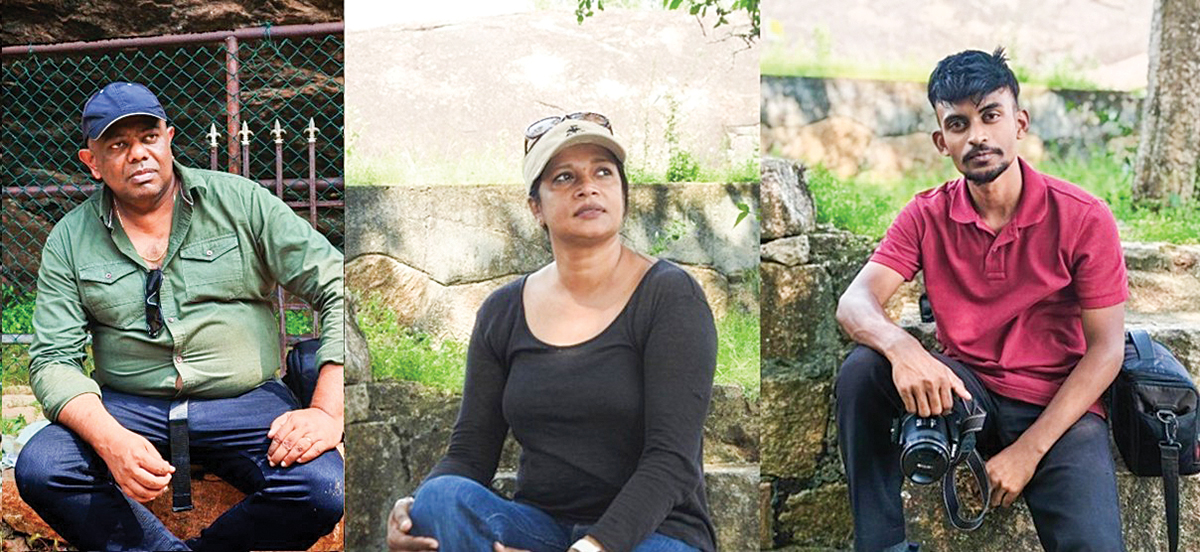
At the northern boundry of Anuradhapura, where the Malwathu Oya curves through scrubland and forest and the wilderness of Wilpattu National Park presses close, the vast rock outcrop of Tantirimale rises quietly from the earth.
Spread across nearly 200 acres within the Mahawilachchiya Divisional Secretariat Division, this ancient monastic complex is more than a place of worship. It is a layered archive of Sri Lanka’s deep past — a place where prehistoric life, early Buddhist devotion, royal legend and later artistic traditions coexist within the same stone landscape.
“Thantirimale is not a site that belongs to a single period,” says Dr. Nimal D. Rathnayake, one of the principal investigators who has been studying the area together with Ayoma Rathnayake and Eranga Sampath Bandara. “What we see here is continuity — people adapting to the same environment across thousands of years, leaving behind traces of belief, survival and creativity.”
Traditionally, the Thantirimale temple is believed to date back to the third century BC, placing it among the earliest Buddhist establishments in Sri Lanka.
The Samadi Buddha Statue
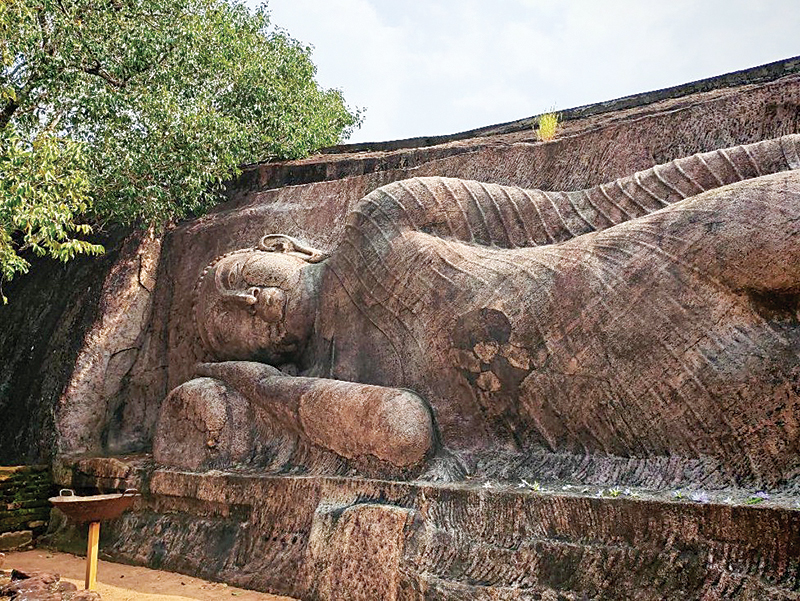
The Reclining Buddha Statue
The Mahavansa records that civilisation in this region developed following the arrival of Prince Vijaya, whose ministers were tasked with establishing settlements across the island. One such settlement, Upatissagama, founded by the minister Upatissa, is often identified as the ancient precursor to present-day Thantirimale.
Yet archaeology offers a deeper and more complex story. Excavations conducted in and around the rock shelters reveal that indigenous tribal communities lived at Thantirimale long before the rise of the Anuradhapura kingdom. These early inhabitants — likely ancestors of today’s Veddas — used the caves as dwellings, ritual spaces and meeting points thousands of years before organised monastic life took root.
“The rock shelters were not incidental,” Dr. Rathnayake explains. “They were deliberately chosen spaces — elevated, protected and close to water sources. This landscape offered everything prehistoric communities needed to survive.”
Over centuries, Thantirimale accumulated not only material remains, but also names and legends that reflect shifting political and cultural realities.
During the reign of King Devanampiyatissa, the area was known as Thivakkam Bamunugama, suggesting a Brahmin presence and ritual importance. Another strand of tradition links Thantirimale to Prince Saliya and Ashokamala, the royal lovers exiled for defying caste conventions.
Folklore holds that they lived in this region for a time, until King Dutugemunu eventually pardoned them and presented a golden butterfly-shaped necklace — the Tantiri Malaya — believed to have given the site its present name. Linguistic traditions further suggest an evolution from “Thangaathirumalai”, pointing to South Indian cultural influences.
Tantirimale also occupies a revered place in Buddhist memory. According to tradition, Sanghamitta Maha Theri rested here for a night while transporting the sacred sapling of the Jaya Sri Maha Bodhi from Jambukola to Anuradhapura. That brief pause transformed the rock into sacred ground, forever linking Tantirimale to one of the most powerful symbols of Sri Lankan Buddhism.
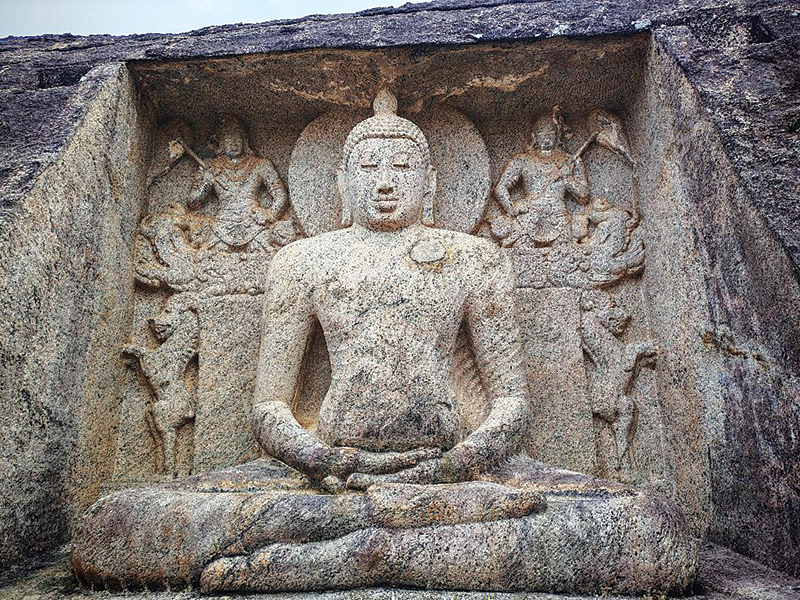
Among the most striking monuments at the site is the unfinished Samadhi Buddha statue, carved directly from a massive cube-shaped rock.
-
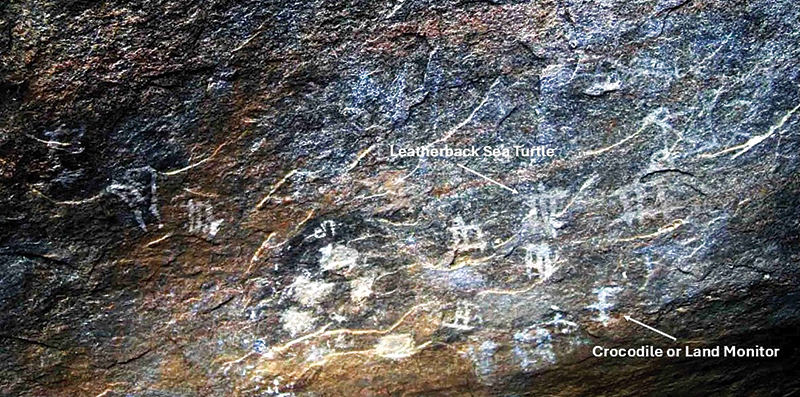
- A greater Portion of the Painted Surface of Cave NO.2
-
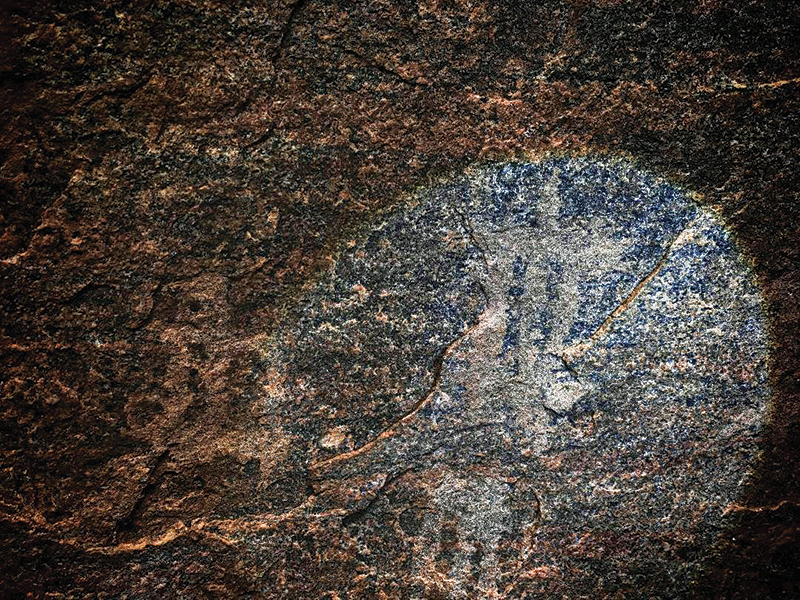
- Leatherback Sea Turtle
-
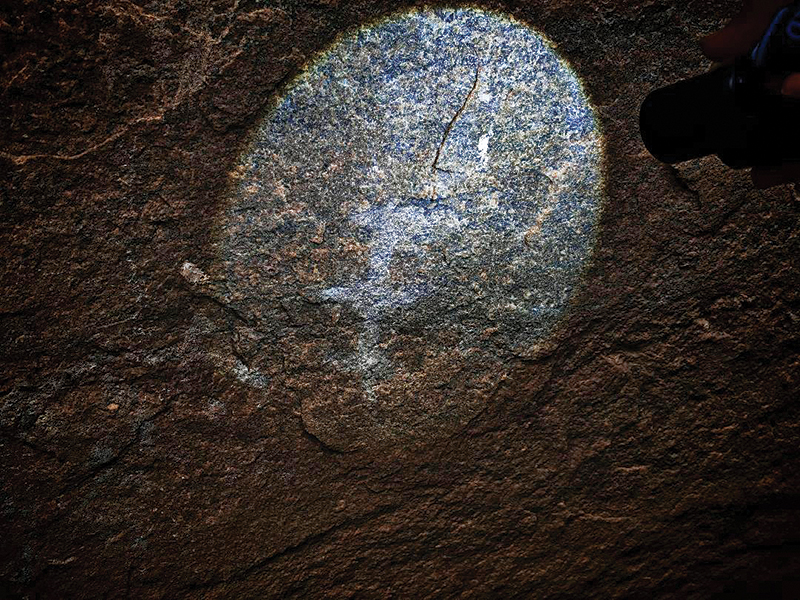
- The Crocodile or Land Monitor
Standing about eight feet tall, the statue bears a remarkable resemblance to the celebrated Samadhi Buddha of the Polonnaruwa Gal Viharaya. Guardian deities flank the central figure, while behind it a dragon pearl is supported by two lions — a motif associated with protection, sovereignty and cosmic balance. Dwarf figures decorate the seat, adding layers of symbolic meaning and artistic refinement.
“What is extraordinary here is the ambition of the sculpture,” says Dr. Rathnayake. “This was clearly intended to be a monumental work.” Excavations around the statue have uncovered stone pillars and evidence of a protective roof, indicating that artisans worked under shelter as they shaped the figure.
The statue’s incomplete state is most plausibly explained by the foreign invasions and political instability that marked the later Anuradhapura period. Stylistic features suggest that the work continued into, or was influenced by, the Polonnaruwa period, underscoring Thantirimale’s enduring importance long after Anuradhapura’s decline.
Nearby lies another monumental expression of devotion — the reclining Buddha statue, measuring approximately 45 feet in length. Unlike the Samadhi statue, this figure has been detached from the living rock and is dated to the late Anuradhapura period. Its scale and proportions closely resemble Polonnaruwa sculpture, reinforcing the idea of a continuous artistic and religious tradition that transcended shifting capitals and dynasties.
Yet the most ancient and fragile heritage of Thantirimale is found not in its monumental statues, but in two adjacent caves within the monastic complex. Their walls still bear the fading traces of prehistoric rock paintings dating back nearly 4,000 years. First recorded by John Still in 1909, these paintings were later documented and analysed by scholars such as Somadeva.
The paintings include human figures, animals, geometric patterns and symbolic motifs, suggesting ritual practices, storytelling and shared cultural memory. “If Tantirimale functioned as a common meeting place for independent territorial groups,” Dr. Rathnayake observes, “then these images may represent a shared visual narrative — a way of communicating identity and belief beyond spoken language.”
One of the caves, previously known to contain both human and animal figures, has deteriorated significantly and now requires urgent conservation intervention. The second cave, however, offers a rare and intriguing glimpse into prehistoric ecological awareness.
Among the animal figures are two images believed to represent a Leatherback Sea Turtle and either a crocodile or land monitor, measuring 18 and 13 centimetres respectively. The turtle depiction is particularly striking for its anatomical accuracy — the ridges on the carapace are clearly visible, aligning closely with known herpetological characteristics.
“These details suggest close observation of nature,” says Dr. Rathnayake. Archaeological evidence supports this interpretation. According to earlier studies, sea turtles were transported to Anuradhapura as early as 800 BC. During the Gedige excavations in 1985, bones of the Olive Ridley sea turtle were discovered, possibly used for ornaments or utilitarian objects. Images of land monitors and crocodiles are common in dry-zone rock art, reflecting both ecological familiarity and subsistence practices, as Veddas are known to have consumed the flesh of land monitors.
Today, Thantirimale stands at a critical crossroads. Encroaching vegetation, weathering stone, fading pigments and increasing human pressure threaten a site that encapsulates millennia of human adaptation, belief and artistic expression. For Dr. Rathnayake and his team, the need for protection is urgent.
“Thantirimale is not just an archaeological site or a temple,” he says. “It is a living record of how humans have interacted with this landscape over thousands of years. Preserving it is not simply about protecting ruins — it is about safeguarding the long memory of this island.”
In the quiet of the rock shelters, where prehistoric hands once painted turtles, hunters and symbols of meaning, Thantirimale continues to whisper its story — a story written not in ink or inscription, but in stone, pigment and belief.
By Ifham Nizam ✍️
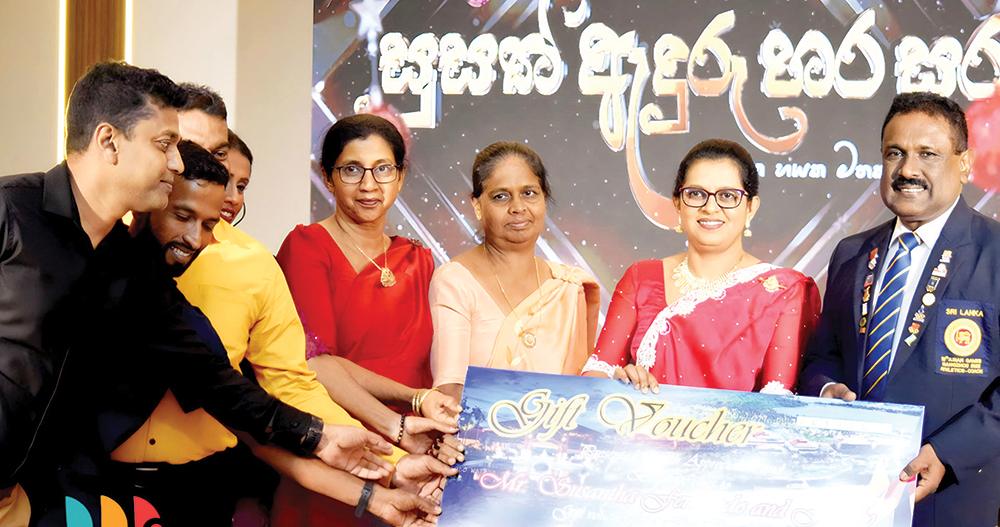
Veteran athletic coach Susantha Fernando called time on his illustrious career in the state service recently. Fernando, who began his career as a physical education teacher was the Assistant Director of Education (Sports and Physical Education- Central Province Sports Schools) at the time of his retirement last month.
Susantha was responsible for transforming the then little known A. Ratnayake Central, Walala, into an athletics powerhouse in the schools sports arena. His sheer commitment in nurturing the young athletes at Walala not only resulted in the sports school winning accolades at national level but also produced champions for Sri Lanka in the international arena.
These pictures are from the event to launch his autobiography Dekumkalu Kalunika and the felicitation ceremony organised by Tharanga Gunaratne, Director of Education at Wattegama Zone to felicitate him following his retirement.
Former Walala athletes, his fellow officials and a distinguished gathering including former Director of Education Sunil Jayaweera were gathered at the venue to felicitate him.
-
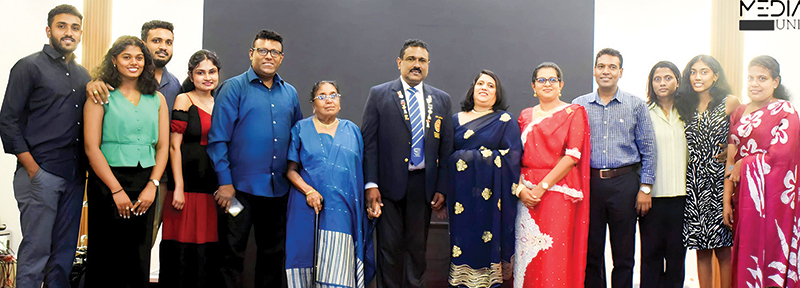
- Susantha Fernando with his family members
-
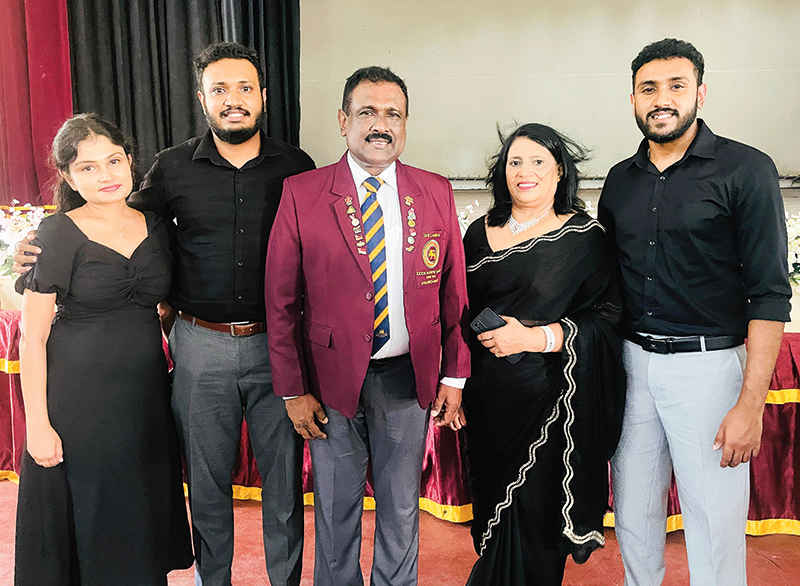
- Susantha with his wife, Ranjani, sons, Shane and Shamal and daughter Nethmi
-

- Tharanga Gunaratne, Director of Education at Wattegama Zone addressing the gathering
-
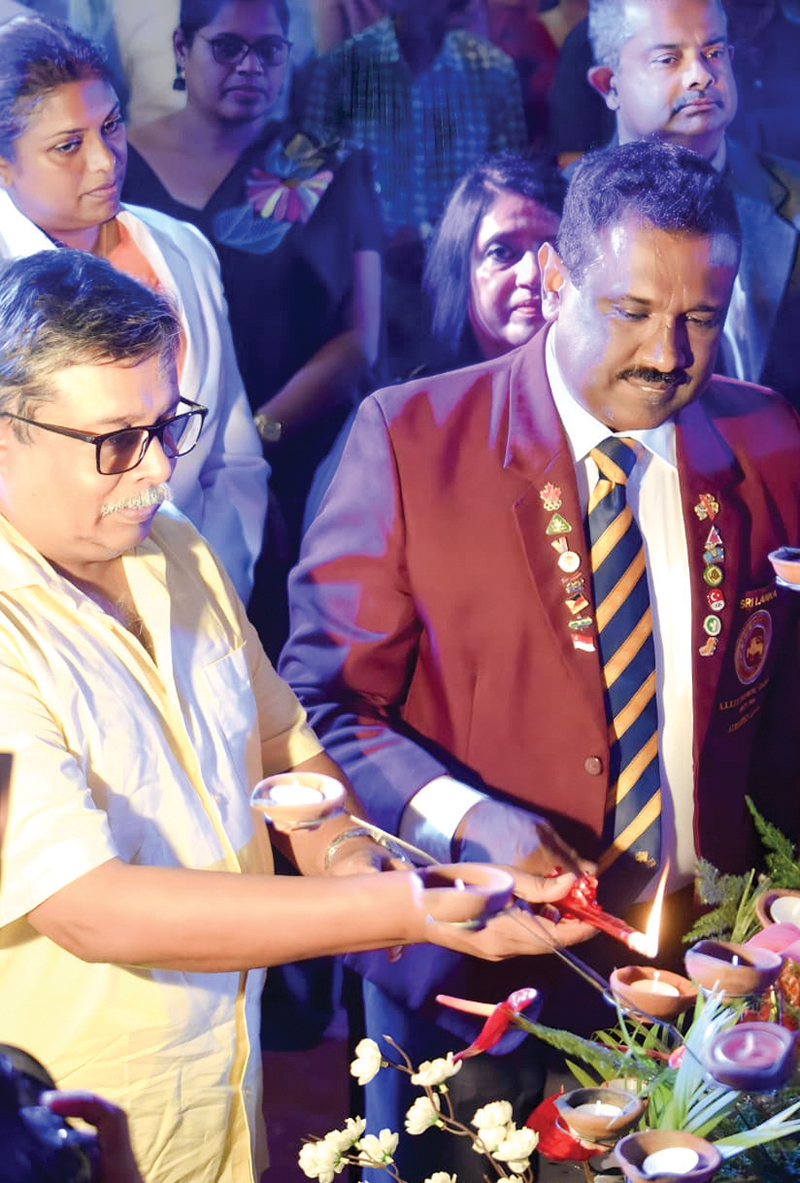
- Sisira Yapa, who delivered the keynote address at the book launch
-
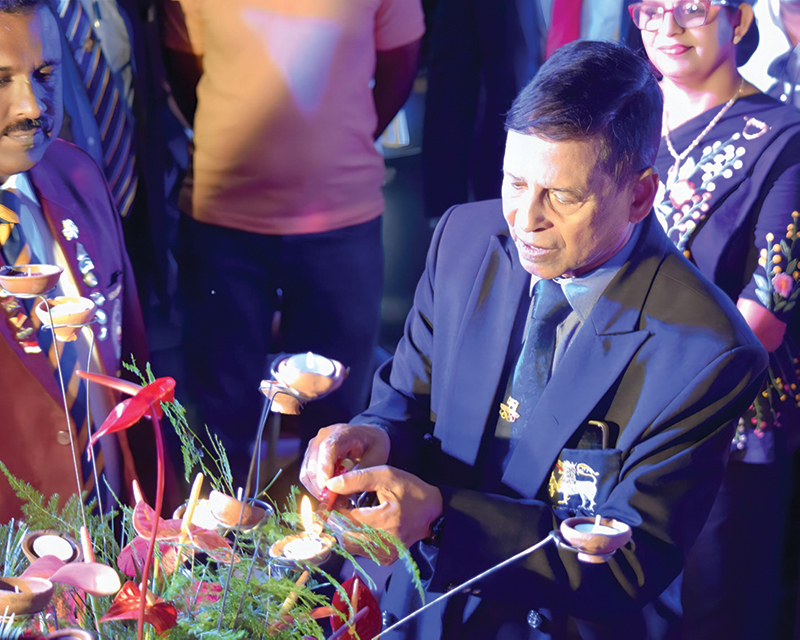
- Former Director of Sports of the Ministry of Education Sunil Jayaweera
-

- Susantha’s first international medallist marathoner D.A. Inoka
-
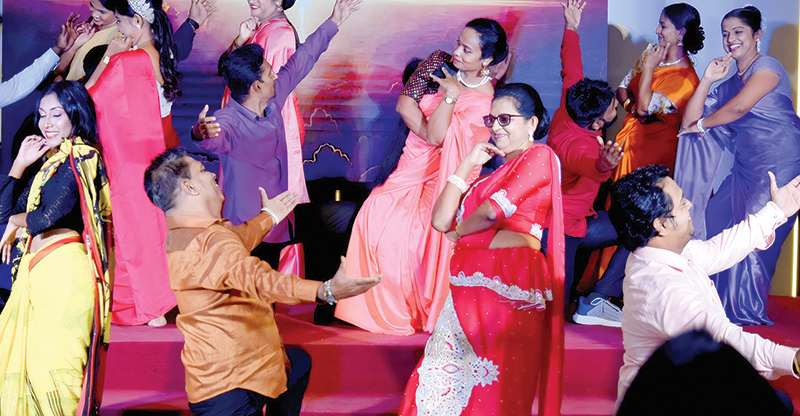
- A dance item in progress
-
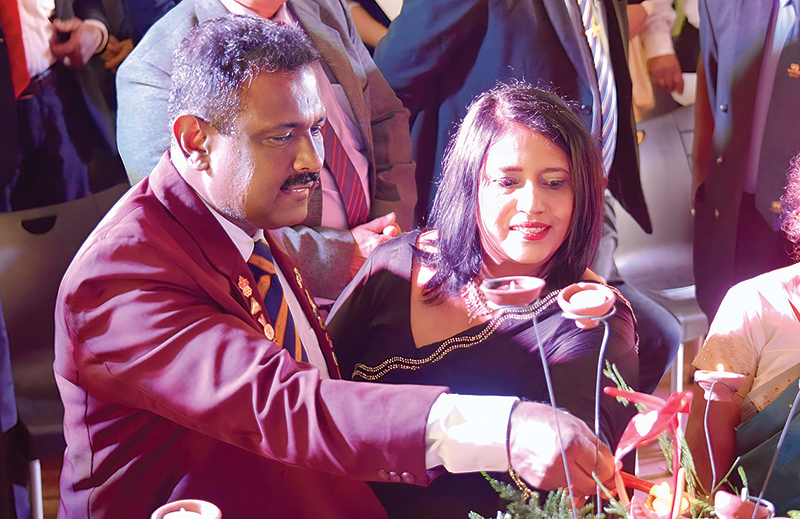
- Susantha Fernando with his wife Ranjani
-
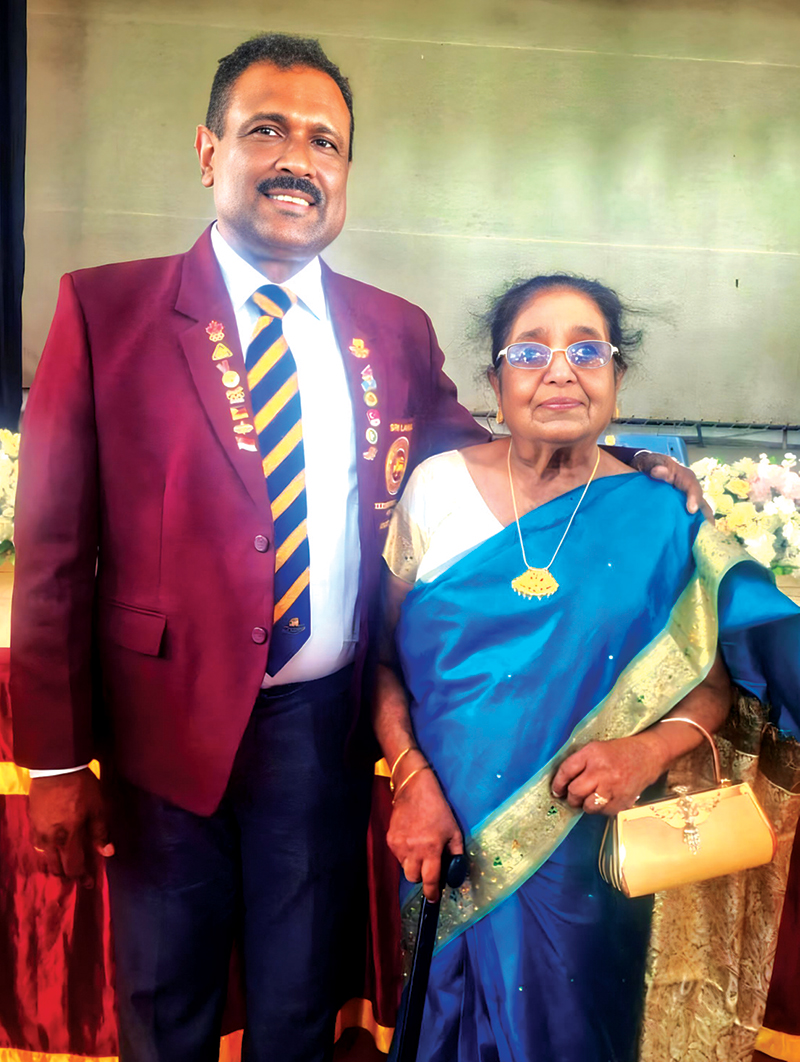
- Susantha with his mother

After fall from grace, Asalanka aims to bat on for Sri Lanka

PM holds High-Level meetings with EU, UNDP, and corporate leadership at World Economic Forum

Trump withdraws Canada’s invite to join Board of Peace

Vampire film Sinners breaks Oscar nominations record

Showers will occur at times in the Northern, North-central, North-western,Eastern and Uva provinces and in Matale and Nuwara-Eliya districts

Opposition slams sitting HC judge’s appointment as Justice Ministry Additional Secretary

‘Dates have the highest sugar content to fight Coronavirus’

Sunday Island 27 December – Headlines

#SundayIsland 17th December – Headlines

Sunday Island – 28th March

Sunday Island Headlines – 21 March

Sunday Island – 21st February – Headlines
-

 Editorial5 days ago
Illusory rule of law
-
 News6 days ago
UNDP’s assessment confirms widespread economic fallout from Cyclone Ditwah
-

 Editorial6 days ago
Crime and cops
-
 Features5 days ago
Daydreams on a winter’s day
-
 Features5 days ago
Surprise move of both the Minister and myself from Agriculture to Education
-
 Features4 days ago
Extended mind thesis:A Buddhist perspective
-
 Features5 days ago
The Story of Furniture in Sri Lanka
-

 Opinion3 days ago
American rulers’ hatred for Venezuela and its leaders