
Life style
Rice morning , noon ,and night in Sri Lanka

By Zinara Rathnayake
My mother is a good cook. My father is just slightly better. That’s how my younger sister would always describe my parents’ food. She’s right. My mother cooked delicious curries. But my father cooked the food we hold dear.My father grew up in Nabiriththawewa, a small village in Kurunegala.
Unlike his two older brothers who were more interested in going out with their friends, my father accompanied my grandfather to every village wedding. From what I could gather, my grandfather was the chef at every function in the village. He had cooked to feed hundreds.
“I followed him like a thread follows the needle. That’s how I learned to cook,” my father would say.
Although I wish I had met him, I never saw my grandfather, he was already a distant memory when I came to this world.When I was eight years old, my family lived in a small house by the rice fields in my father’s village. My father worked a tedious office job, commuting for hours on a passenger train every day.But when he was home, he would spend time doing two things: gardening and cooking.My father lived a frugal life so he could build a secure future for his two daughters.
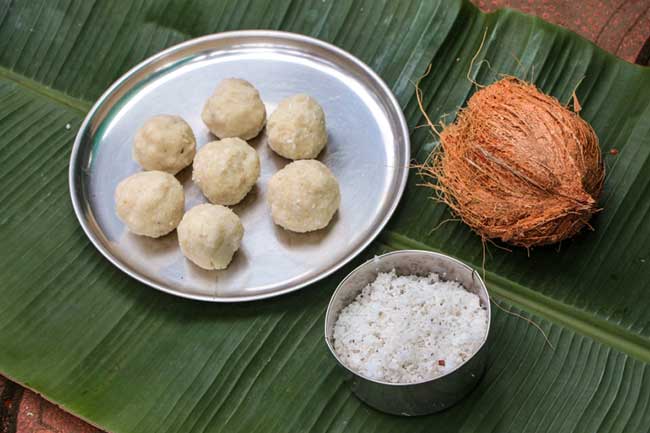
He was also a frugal cook, making use of every ingredient so nothing in his kitchen ended up in the waste pit. He mastered the art of delicious snacks, like bath aggala, a Sri Lankan sweet he makes using coconut and leftover rice and that marked our teatime ritual growing up. In Sinhala, aggala are sweet ball-shaped snacks and bath is cooked rice.
At home, teatime was when I cycled home through the rice paddies from the neighbours’ to find my little sister still in her bright sequined nursery dress with her colouring books. Outside, kids would be flying kites as men worked in the fields and women in colourful headwraps reaped golden-yellow paddy with their sharp sickles.
My mother, who was a government school teacher, would be just getting up from her afternoon nap to make tea with powdered milk for us.During the week, teatime meant a cup of tea with a packet of biscuits or a loaf of white bread to dip. But on the weekends, it was my father’s bath aggala, eaten as we sat on the verandah watching the world. Sometimes, my parents would tell us about their childhood. Or we would just watch colonies of bats dart across the evening sky as night fell, and giggle over something my little sister said.
As I look back on those teatimes spent at home, I miss the sounds and colours of those evenings that held us together, and the taste of my father’s bath aggala.It is only now that I understand that, for my father, bath aggala was more than sweet rice balls he made for his family. For him, it was making the most of rice: a grain beloved to him and all Sri Lankans.
The beloved grain
“Udetath bath, dawaltath bath, retath bath”
is a popular Sinhala saying that means “Rice for the morning, afternoon, and night.”
Nothing reflects the essence of my island and people better than that. Rice is not only the main staple for Sri Lankans, it’s more than that.In island kitchens, rice boils every day in clay pots over firewood or steams in electric rice cookers. A pot of steamed rice dominates our tables often, paired with other dishes and condiments. When rice is not cooked this way for breakfast or dinner, another rice-based food blesses our empty plates.
It could be kiribath, a sticky blend of rice and coconut milk eaten for breakfast. Or rice flour is used to make idi appa or idiyappam, discs of steamed thin noodles. Or appa or appam, bowl-shaped snacks with crispy edges and fluffy centres. Or dosa, thin, crisp flatbreads made with a fermented rice-lentil mix. Or levariya, sweet-savoury pockets of rice noodles filled with caramelised coconut.
We use soaked, ground rice to prepare sweetmeats for our New Year every April and when guests come over, we cook rice with aromatics like curry leaves and cinnamon and garnish it with crunchy cashews to prepare golden kaha bath.
When food is scarce, families soak leftover rice to eat in the morning with kiri hodi, a turmeric-infused coconut gravy soured with lime. This modest meal was my father’s favourite breakfast, paired with fresh green chilli.
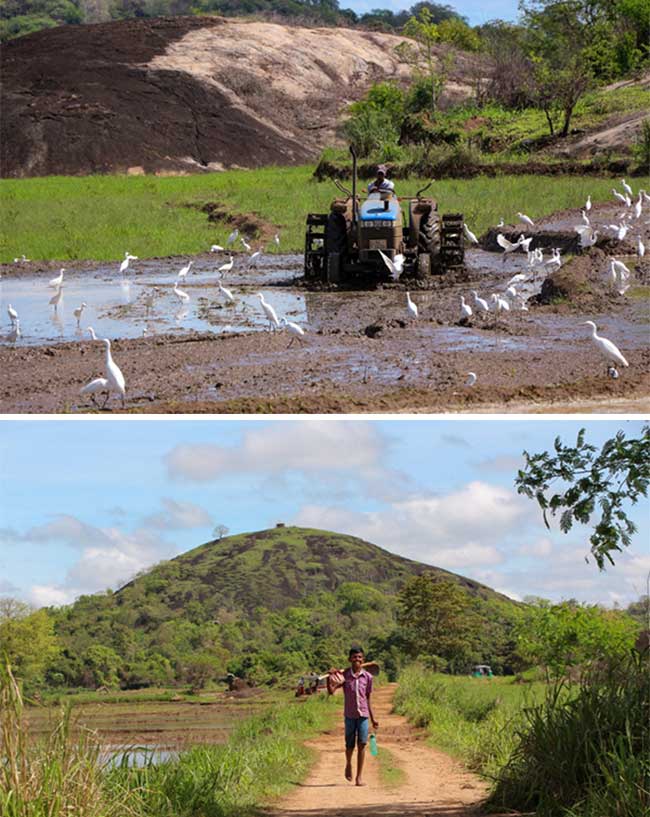
Rice feeds us, builds us, and shapes us in many ways. This humble grain that thrives in the mud holds a place in every Sri Lankan meal and has crept into every nook and cranny of our society.Rice has a large share of the island’s agriculture, frames its economy, and unpacks our history. And our love for it has given birth to a host of flavourful dishes.I learned how rice grew when we moved to our father’s village. Paddy – the word for the plant and the grain before removing the hull – flourished in the fields thanks to the farmers toiling in the sun.
My father grew paddy in a small field inherited from his parents, which grew enough rice for us. While he readied the field, I would run behind him, getting my feet muddy. Once or twice, I helped him plant seedlings.The earliest stone carving of paddy cultivation in Sri Lanka dates back to 939-940 AD, says Professor Buddhi Marambe, who specialises in weed science and food security. Ancient Sri Lankan rulers built reservoirs to harness rainwater while people developed and preserved rice varieties for more than 3,000 years.
But when the island was colonised by the British in 1815, cash crops like tea and rubber were imposed on farmers to make money for the colonisers. British propaganda campaigns also encouraged people to replace rice with wheat in their diet. “By the 1940s, Sri Lanka had to import 60 percent of the rice needed for the country’s meagre six million population,” says Marambe.In the following decades, refined wheat flour and white bread rose in popularity while native rice was replaced by high-yield varieties to sustain the growing population – varieties that needed chemical fertilisers and pesticides.
In 2020, there was enough locally produced rice to feed Sri Lanka’s population of 21 million, Marambe says. But the then-government abruptly banned synthetic fertilisers in April 2021, forcing farmers to turn to organic fertilisers they were not used to. Farmers lost their harvest, and many deserted their rice fields.
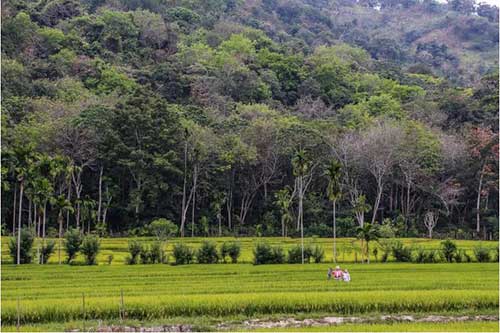
By the time the ban was lifted in November last year, Sri Lanka did not have enough foreign currency to import chemical fertilisers and pesticides. The hard currency shortage also resulted in a fuel crisis, and farmers have to pay more now for reaping and threshing machines.
“Most people [in our village] are abandoning their fields now,” my mother said when I rang her recently. “The machine is charging 240 rupees [$0.66] per minute. They can’t afford it.”
Sri Lanka’s future rice production now depends on a crippled economy and tentative foreign loans that may or may not come.In the past, leftover rice was considered “poor man’s food”, so people stopped eating foods like diya bath (fermented rice porridge with coconut milk) for breakfast, reaching for refined white bread slathered in preservative-laden bottled jam instead.
But, in June, food inflation was more than 60 percent in Sri Lanka and has since kept climbing. Prices soar daily, and most low-income families eat just one or two meals a day. As people rethink their food choices, frugal cooking has made a comeback.
My parents no longer buy biscuits or white bread. A packet of biscuits that cost 200 Sri Lankan rupees ($0.55) a week ago is now 600 rupees ($1.65). “Who would pay that much for biscuits,” my mother said. She wants me to bring her some from India, where I’m currently travelling.My father makes bath aggala more often now. It’s a dish he learned to make by watching his parents and older sisters, he told me recently on the phone.
When my father was a teenager, Sri Lanka was battling drought and an economic crisis in the 1970s. Even though his family had land to grow rice, there wasn’t enough water. So my grandparents made the most of what was available.
“They told us never to throw away rice, not even a single grain of it,” my father said. “When I saw a little boy digging in a dustbin for food at school, I realised what it means to have food on the table.”
Rice and coconuts
I don’t remember us ever buying rice. Even when I left home to live in Colombo, my parents would visit me with tightly packed grocery bags of rice from my father’s fields. But recently when I called home, my mother said she might have to buy rice for the first time in her life.
“The [threshing] machine will only come if we give them diesel,” my mother said. “And we can’t get diesel.”
Many families in the village are now eating diya bath in the morning, my mother said.
Making diya bath involves a few steps if you, like my father, want to eat it hot. Many people eat diya bath cold, which is faster.
If there is rice left over after dinner, my father soaks it in water, letting it soak overnight and draining it the next morning. Then he heats up the coconut milk in a pot, adds dried red chilli, curry leaves, onion, salt, half a teaspoon of turmeric powder, and Maldive fish flakes (dried, cured tuna fish), and lets it simmer.
For sourness, he squeezes in half a lime or adds a few pods of dark brown sun-dried tamarind. (This concoction alone is called kiri hodi). When it’s ready, my father pours it, piping hot, onto a bowl of rice and eats it with fresh green chilli and, sometimes, fried dried fish.
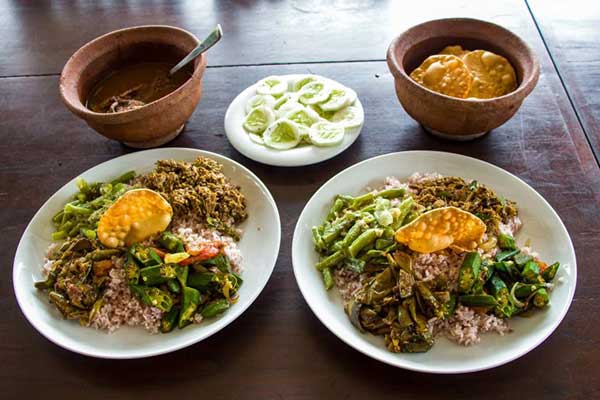
Cold diya bath
is a no-cook meal: mix two cups of coconut milk with one cup of soaked rice. Then add thinly-sliced red onion, two tablespoons of lime juice, three-four roasted dried red chillies, one teaspoon of grated Maldive fish, and salt to taste. If you like it sourer, squeeze in some more lime juice.
Some people like fresh green chilli instead of dried red chilli. Maldive fish is optional, but it adds a nice umami punch. Many elders believe that diya bath, with its fermented rice and coconut milk, cools the body and prevents heartburn.
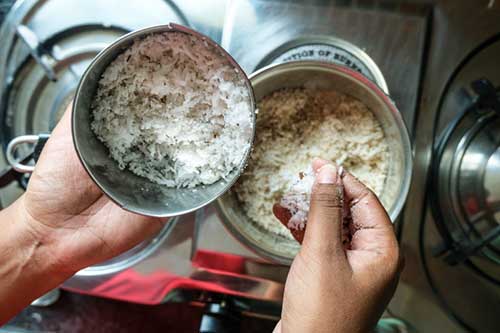
Speaking of coconut milk, when I make diya bath, I reach for coconut milk that comes in sealed cardboard containers but my parents have never bought coconut milk in their life, they make it. My father plucks coconuts from our garden, removes the fibrous outer husk, halves the nut, and scrapes it with a hiramanaya – a traditional grater with a wooden seat for the person to sit while grating. He mixes the grated coconut with water, squeezing it several times with his hands to make coconut milk.
Making coconut milk is laborious, but my parents still do it. If rice is our staple, coconut is its mate. It thickens our curries, binds our sambals, flavours our foods, and balances meals with healthy fats. Coconuts also make our condiments richer to pair with humble rice.
More than aggala
While people usually boil fresh rice for aggala, my father soaks leftover rice to make sugary, coconutty balls with a slight crunch. For him, bath aggala is food security. It is minimising waste.To make this teatime snack, he ferments leftover cooked rice overnight in water. In the morning, he drains and sun-dries the rice until it is crisp, then roasts it for about 20 minutes in a skillet on a low flame, until it turns brown.
When I made bath aggala recently, I roasted the rice for five to eight minutes and switched off the stove before it changed colour, so it stayed white. Do as you like, roasting for longer gives aggala a golden-brown colour and nutty flavour.Using a pestle and mortar, my father grinds the warm, roasted rice until he gets an uneven texture with pieces of broken rice that add a delightful crunch. You can use an electric grinder as I do, just don’t grind it into powder.
Take 250g of this ground rice and add about 100g of grated coconut, half a cup of sugar, half a teaspoon of salt, and half a cup of water. Mix it well with your hands and shape it into little balls. Some people prefer a bit of a spice kick to their aggala, which is easily done by sprinkling a hint of black pepper into the mix.Once ready, always serve with a cup of tea.
My father’s bath aggala is a testimony to Sri Lanka’s longstanding relationship with rice. It bears witness to the island’s often troubled history and present, twisted and framed by politics and economic interests.The road to recovery is long. But for now, I’d like to be lulled into sweet teatimes at home. One bath aggala at a time.
– Al Jazeera


Representation matters:
By Ifham Nizam
“There are no books written about pirates with prosthetic limbs, sporting blades, or racing wheelchairs—that is, until now,” says award-winning international children’s author Jann Weeratunga, whose Polly’s Piralympics series is challenging conventional ideas about who gets to be the hero in children’s literature.
For Weeratunga, representation is not simply about placing a disabled character somewhere in a story. It is about putting that character at the centre—leading, competing, winning, making friends, overcoming challenges and, most importantly, having adventures on their own terms.
Her books are designed not merely to be read, but to be experienced. Through interactive pages, children can colour, draw, write and respond to the stories, leaving something of themselves behind as they explore themes, ranging from disability and bullying to friendship, resilience and family.
At the heart of her growing literary brand is Polly’s Piralympics, a series in which disability is not presented as a limitation, but as part of a character’s identity and adventure.
The inspiration came from an unexpected moment during the closing speech of the 2012 London Paralympic Games by Sir Philip Craven. He recalled a young boy looking at an illustration of a pirate with an eye patch, a hook, a parrot and a wooden leg.
When his mother asked who the figure was, the boy replied that because the man had only one leg, “he must be an Olympian.”
The story moved Weeratunga deeply.
That moment of innocent perception—where disability was associated with sporting achievement rather than limitation—sparked the idea of Polly and her extraordinary Piralympic world.
In the series, Polly, a bird-napped African parrot, finds herself bullied in a Scottish pet shop before being rescued by Captain Hake. Their shared one-eyed view of the world becomes the beginning of an unusual friendship. Captain Hake teaches Polly the ways of a pirate, while Polly creates the Fellowship of Pirates and the Pirates Paralympics.
Soon, pirates from around the world are competing in events ranging from three-legged races and climb-the-rigging gymnastics to walk-the-plank diving and even a MasterChef competition.
It is an imaginative world, but behind the humour and adventure lies a serious message about inclusion and leadership.
Weeratunga recalls one school visit that brought home to her exactly why the books mattered.
A student with a prosthetic leg embraced her and said: “Thank you for writing these books for me, Auntie.”
The words left her overwhelmed.
“That was why I had written these books,” Weeratunga reflects.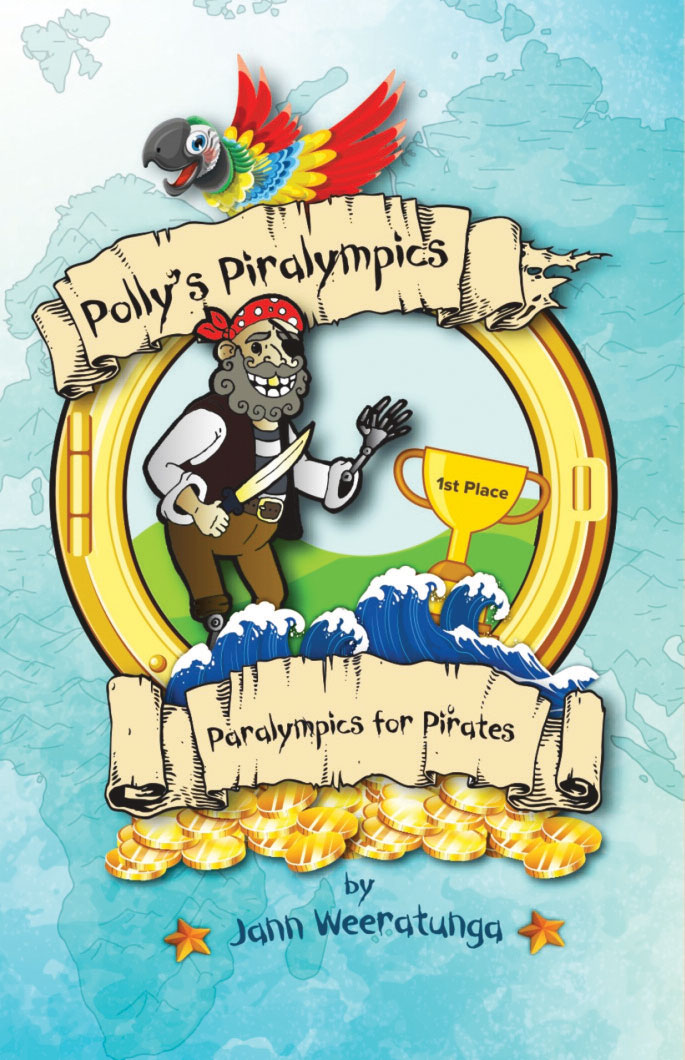
Her journey towards becoming an author, however, began long before Polly sailed into the world of children’s fiction.
Earlier in her life, Weeratunga was a Scout Leader in the UK, where volunteering became a way of life. She subsequently spent a decade in Sri Lanka, falling in love not only with a Sri Lankan, but with the country itself.
After her husband died just four years into their marriage, she joined five other women to establish a small school in Senarathwela to teach English to those who wanted to learn. Many of her pupils, subsequently, found employment at the newly opened Victoria Golf Course.
When she returned to Sri Lanka in 2025 and revisited the village and golf course, she found a landscape transformed by new roads, homes, shops and businesses. But the people she had taught remained.
“The village is unrecognisable, with new roads, homes, shops and businesses, but my dear pupils were still there as Caddies, Caddy Master and Golf Pro. I was so proud of them,” she says.
Her connection with Sri Lanka deepened further during one of the country’s darkest moments.
On Boxing Day 2005, while holidaying in the UK with her recently widowed mother, Weeratunga was woken by the words: “Something terrible has happened in Sri Lanka.”
She rushed to the television and witnessed the devastating aftermath of the Indian Ocean tsunami.
That very day, she established a non-profit organisation to raise funds and take relief to Sri Lanka. With support from local McDonald’s franchises, schools in Ferndown, the Mayor of Ferndown, freight companies and her friend Mr Wijekoon, a local Grama Niladhari, she helped rebuild lives in Arugam Bay.
The experience was hands-on and deeply personal. A family’s home had been swept away, and days were spent persuading surfers to help construct a future for her adopted family.
A Montessori was established on the hill, within the Buddhist temple grounds, while evenings were spent crafting, building and working with a small but effective generator.
Meals of rice and curry, prepared by the family’s sisters, using provisions donated from Senarathwela, brought the long days to a close.
When Weeratunga returned to the family, in 2025, she was able to see how far they had come.

Jann Weeratunga
Today, living in South Africa, she continues to draw inspiration from the landscape around her.
“Travelling—it leaves you speechless and then turns you into a storyteller,” she says, echoing the famous words attributed to Ibn Battuta.
And storytelling has become her way of opening conversations with a new generation.
While Polly’s Piralympics remains the flagship of her children’s publishing brand, Weeratunga’s wider collection explores a range of issues that matter to children and parents.
Terry and the Bully gives children practical and empowering ways to stand up for themselves, transforming a difficult subject into a story through which young readers can explore courage and self-confidence.
In Evie Visiting Grandma, children encounter the sensitive experience of visiting a loved one who now lives in a residential home. Rather than avoiding a potentially difficult subject, the story gently opens the door to conversations about ageing, family and change.
Terry the Toucane explores another universal childhood experience—the challenge and beauty of being different. Its central message is simple: being different should never prevent us from developing deep and lasting friendships.
Then there is Captain Bluebird, a resilient and entertaining adventure exploring what happens when Captain Bluebird receives a brand-new ship.
Across the collection, Weeratunga combines entertainment with meaningful life lessons, while her interactive approach gives children an opportunity to become participants rather than passive readers.
They can colour illustrations, draw pictures and respond to pages, making each reading experience personal.
That approach also gives the books an added value for parents and educators. They can become conversation starters—helping adults discuss subjects that children may find difficult to raise directly.
For Weeratunga, this is part of the larger purpose of her work.
Her books seek to fill a gap in children’s literature where diverse characters are not simply included for the sake of inclusion, but are given agency, personality and leadership.
In Polly’s Piralympics, disabled characters are not watching from the sidelines. They are the stars.
They lead.
They compete.
They win.
They champion their own adventures.
And that, ultimately, is the brand Weeratunga is building: children’s stories in which every child can find a place, a voice and perhaps even a little courage to become the hero of their own story.
Representation matters.
For young readers in Sri Lanka, Weeratunga’s books are now available through Sarasavi Bookshop, Vijitha Yapa Bookshop, M. D. Gunasena and Expo Graphics, Battaramulla.

By Zanita Careem
Music, laughter and a generous spirit filled Raflfles Hotel Colombo as Heart to Heart sing along brought together a vibrant gathering for an evening of melody, friendship and giving. The elegant ballroom reverberated with familiar lyrics as guests joined in, sang along and simply let their hair down. Adding to the infections atmosphere was the talented Rajiv and Clan, whose lively performance kept the energy soaring and had the gathering singing to some much loved favourites.
Keeping the evening moving with plenty of wit and warmth was the compere Mirzab Sherifdeen who ensured there was never a dull moment between the music, laughter and spontaneous sing-along moments, Guests were also treated to prizes galore adding an extra element of excitement to an already festive evening. There was cheers as winners stepped forward to collect their prizes, while friends and families aplauded and celebrated every winning moment.
Yet beneath all the sparkle was the meaningful purpose of Heart to Heart Trust Fund, founded by Dr. Rajitha Y de Silva and Dr. Ruwan Ekanayake, bringing people together in support of a cause built on compassion and care.
The dedications and the volunteering was evident throughout the evening with their commitment adding a special warmth to this special event.
Adding to the evening’s indulgence was a sumptous spread of cuisine by the Raffles, Hotel with an enticing selectiom that kept guests happily returning for more. From savoury favourites to tempting desserts, the food complemented the festive mood perfectly.
As the final song faded and the evening drew to a close, there was a quiet sense of gratitude. Behind the music, laughter, prizs and beautiful memories was a cause built as compassion, a cause that has continued to touch lives through the dedication of Dr. Rajitha de Silva and everyone who has stood beside him in the journey of Heart to Heart.
And as guests left Raffles Hotel with the last melodies still lingering in the air the most beautiful note of the evening remained – the sound of hearts earning for hearts. At the very heart of Hearts to Heart is Dr. Rajitha whose compassion has become the soul of the initiative. Dr. Rajitha’s work reminds us that medicine is not only about repairing what is broken. It is about giving people the courage to believe in tomorrow. And perhaps that is the greatest gift he offers. This spirit was beautifully reflected throughout the evening.It was a beautiful evening of music, friendship and generosity, with every contribution going towards a worthy cause- keeping alive a legacy built one one simple but powerful belief that every heart deserves a chance to beat on.
-
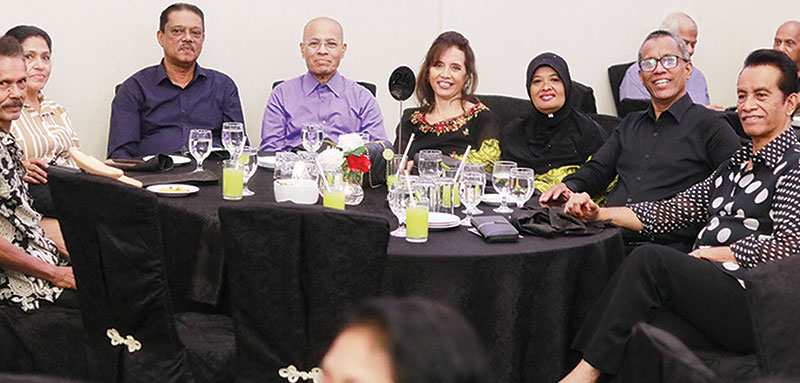
- Ramzi Rahaman with friends and family enjoying an evening of music
-

- Sarath Wimalaratne, Chandra and Bunny Bohoron
-

- Brigadier Bohoron
-

- Shanti Fernando shares a warm and happy moment with volunteers, adding to the camaraderie and cheerful spirit
-
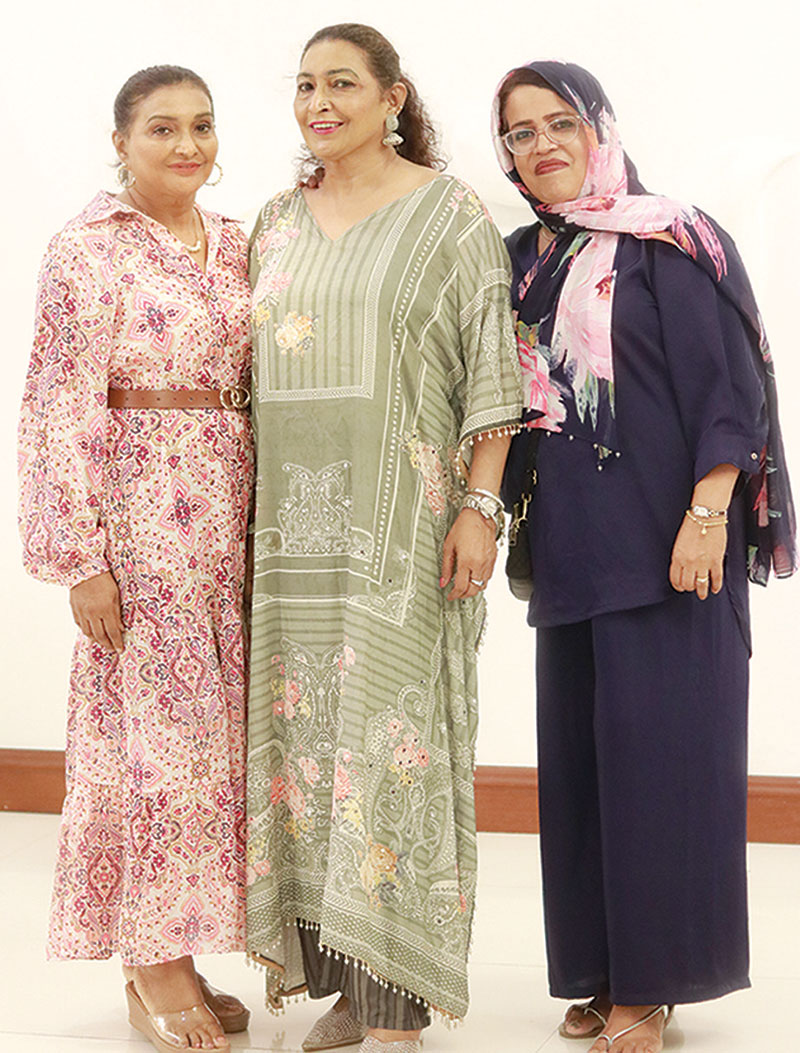
- Shahana, Sherin and Shahareen
-

- Lakshmie with her graceful moves
-

- Onitha Gurugalle with Arujana Ranasinghe
-

- Cardiologist and Senior Consultant Dr. Ruwan Ekanayake
-

- Dr. Rajitha Y de Silva and Dr. Arunie
-
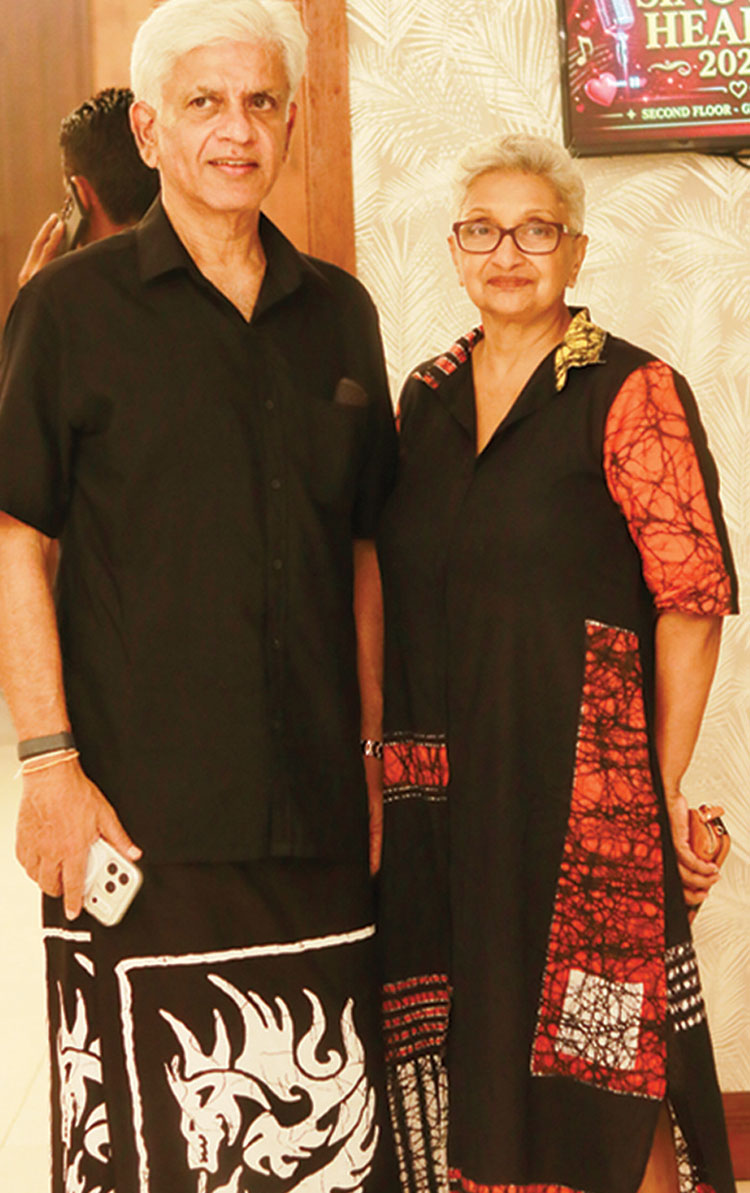
- Former Cricketer with spouse
-

- A guest takes centre stage

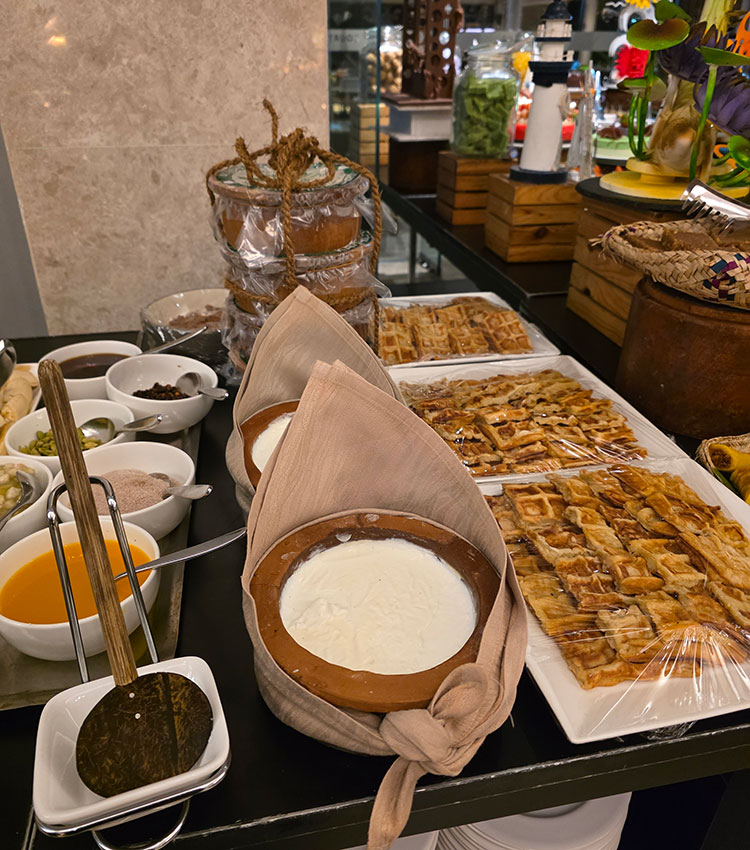
Taste of Ceylon opened its doors at Beira Kitchen, Courtyard by Marriott Colombo, on September 3rd; a festival of Southern, Central, Uva and Northern regional food, brought together on one table.
Four Regions, One Unforgettable Table
Each night, guests moved between four distinct culinary worlds. From the South came the deep, coconut-rich flavours of malu abulthiyal and Negombo pork curry with pineapple, alongside a lively fish polla roti action station. The Central province brought Kandalama lake fish, black octopus curry and carrot kalupol; dishes rooted in the region’s lakes and forests. Uva’s table leaned rustic and warming, with village chicken stew, prawn curry with murunga, and a coconut pittu drawing steady queues. And from the North came bold, unmistakable flavours of Jaffna crab curry, Jaffna mutton curry, and a dosai action station that quickly became one of the evening’s most talked-about corners.
Layered around the four regional stations was a spread that told its own story of Sri Lankan hospitality, from belimal herbal welcome drinks and a bread corner stretching from curry leaves rolls to kurakkan viyana rolls, to a dessert corner where watalappan, wood-apple coconut wandu and king coconut jelly sat alongside a full spread of traditional Sri Lankan sweets like kokis, athirasa and aluwa.
What the guests had to say
The feedback on opening night carried a common thread: guests were struck by just how different each region’s food tasted, side by side, on the same table. What could easily have blurred into “just Sri Lankan food” instead came through as four distinct culinary identities; the fire of the North, the coastal warmth of the South, the earthiness of the Central hills, and the rustic comfort of Uva, each unmistakably its own.
A Word from the team
Reflecting on the festival, the team at Courtyard by Marriott Colombo shared that Taste of Ceylon was designed from the start to be more than a menu. It was meant to be an experience guests could travel through, one region at a time, without leaving Beira Kitchen. Judging by the response over the four nights, that’s exactly how it landed.
There were many rave reviews and as the Taste of Ceylon experience at Beira Lake drew to a close, the flavours, aromas and vibrant spirit of Sri Lanka lingered on.

Advisory for strong winds and rough seas for Multi-day boats in the Bay of Bengal

Showers in the Western, Sabaragamuwa and North-western provinces and in Galle, Matara, Kandy and Nuwara-Eliya Districts

Some NPP manifesto promises may be difficult to fulfil – CIABOC DG

Yoshitha and ex-Navy chief Karannagoda’s case fixed for PTC

Court orders probe into Wimal’s rally speech

Court to rule on Dilith’s writ petition on September 30

‘Dates have the highest sugar content to fight Coronavirus’

Sunday Island 27 December – Headlines

#SundayIsland 17th December – Headlines

Sunday Island – 28th March

Sunday Island Headlines – 21 March

Sunday Island – 21st February – Headlines
-

 News7 days ago
Gnanasara Thero absconding after SC ruling
-

 Opinion6 days ago
From Galkissa (Mount Lavinia) to Tambuttegama
-

 Business7 days ago
HNB Finance strengthens Board with four independent directors
-

 News3 days ago
US embassy won’t comment on IGP’s probe into joint drug raid
-
 Sports7 days ago
Culture within cricket team worrying authorities
-

 Features6 days ago
Sri Lanka’s university crisis: Brain drain and union action demand urgent reform
-

 Features5 days ago
The emptying university: why are academics leaving?
-

 News7 days ago
House to debate 22A, Judicature Bill next week