
Features
Rethinking global order in the precincts of Nalanda


It has become fashionable to criticise the US for its recent conduct toward Iran. This is not an attempt to defend or rationalise the US’s actions. Rather, it seeks to inject perspective into an increasingly a historical debate. What is often missing is institutional memory: An understanding of how the present international order was constructed and the conditions under which it emerged.
The “rules-based order” was forged in the aftermath of two catastrophic wars. Earlier efforts had faltered. Woodrow Wilson’s proposal for a League of Nations after World War I was rejected by the US Senate. Yet, it introduced a lasting premise: International order could be consciously designed, not left solely to shifting power balances. That premise returned after World War II. The Dumbarton Oaks process laid the groundwork for the UN, while Bretton Woods established the global financial architecture.
These frameworks shaped modern norms of security, finance, trade, and governance. The US played the central role in this design, providing leadership even as it engaged selectively- remaining outside certain frameworks while shaping others. This underscored a central reality: Power and principle have always coexisted uneasily within it.
This order most be understood against the destruction that preceded it. Industrial warfare, aerial bombardment, and weapons capable of unprecedented devastation reshaped both the ethics and limits of conflict. The post-war system emerged from this trauma, anchored in a fragile consensus of “never again”, even as authority remained concentrated among five powers.
The rise of China, the re-emergence of India, and the growing assertiveness of Russia and regional powers are reshaping the global balance. Technological disruption and renewed competition over energy and resources are transforming the nature of power. In this environment, some American strategists argue that the US risks strategic drift Iran, in this view, becomes more than a regional issue; it serves as a platform for signalling resolve – not only to Tehran, but to Beijing and beyond. Actions taken in one theatre are intended to shape perceptions of credibility across multiple fronts.
Recent actions suggest that while the US retains unmatched military reach, it has exercised a level of restraint. The avoidance of escalation into the most extreme forms of warfare indicates that certain thresholds in great-power conflict remain intact. If current trends persist-where power increasingly substitutes for principle — this won’t remain a uniquely American dilemma.
Other major powers may face similar choices. As capabilities expand, the temptation to act outside established norms may grow. What begins as a context-specific deviation can harden into accepted practice. This is the paradox of great power transition: What begins as an exception risk becoming a precedent The question now is whether existing systems are capable of renewal. Ad hoc frameworks may stabilise the present, but risk orphaning the future. Without a broader framework, they risk managing disorder rather than designing order. The Dumbarton Oaks process was a structured diplomatic effort shaped by competing visions and compromise. A contemporary equivalent would be more complex, reflecting a more diffuse distribution of power and lower levels of trust Such an effort must include the US, China, India, the EU, Russia, and other key powers.
India could serve as a credible convenor capable of bridging divides. Its position -engaged with multiple powers yet not formally aligned – gives it a degree of convening legitimacy. Nalanda-the world’s first university – offers an appropriate symbolic setting for such dialogue, evoking knowledge exchange across civilisations rather than competition among them.
Milinda Moragoda is a former cabinet minister and diplomat from Sri Lanka and founder of the Pathfinder Foundation, a strategic affairs think tank could be contacted atemail@milinda.org. This article was published in Hindustan Times on 2026.04.19)
By Milinda Moragoda

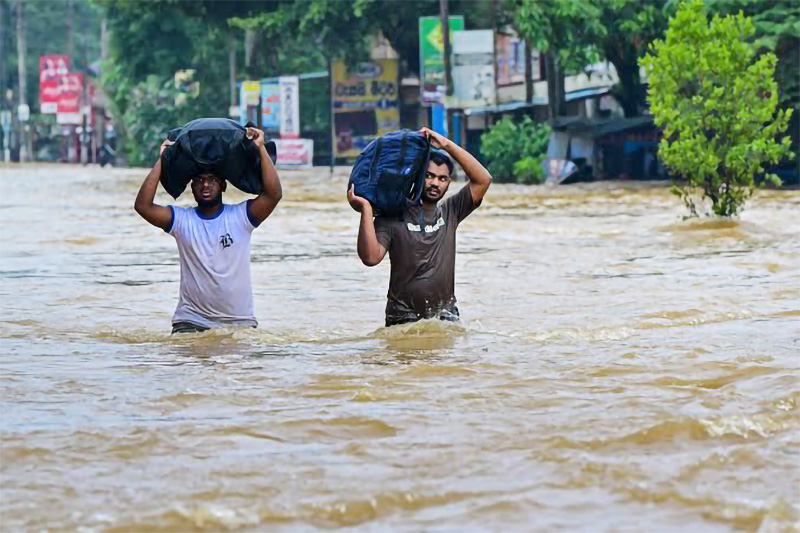
Cyclone Ditwah was the most destructive natural disaster to strike Sri Lanka since the 2004 tsunami. More than 640 people lost their lives, over 170 remain missing and more than 2.2 million people throughout the country were affected. Estimates placed the economic cost at over US$4 billion, equivalent to about four percent of Sri Lanka’s Gross Domestic Product. Sri Lanka could not cope with a disaster of this scale alone. International assistance was essential and it came quickly. India was the first country to send emergency relief, technical expertise and assistance to restore damaged infrastructure. Other South Asian countries also contributed humanitarian assistance. The Maldivian people collected and gave more than their government. This response was significant for reasons that went beyond humanitarian relief. It showed that person-to-person sympathies in South Asia can transcend nationality and religion.
South Asia is more often associated with political rivalry than regional cooperation. Relations between countries in the region have been shaped by wars, border disputes, security concerns and political mistrust. These divisions have also prevented the region from developing effective institutions for cooperation. The experience of the South Asian Association for Regional Cooperation (SAARC) illustrates this problem. Established in 1985, SAARC was expected to promote cooperation in trade, agriculture, education, health, poverty reduction and disaster management. Four decades later its record has been disappointing. Political disagreements between member states have stalled summit meetings with the last being held in 2014 and prevented many regional initiatives from moving beyond declarations.
The contrast with ASEAN is striking. Southeast Asia has also experienced territorial disputes, ideological divisions and political differences. But ASEAN chose to separate economic and functional cooperation from political disagreements wherever possible. As a result, trade within ASEAN today accounts for around one quarter of the region’s total trade. In South Asia the equivalent figure remains about five percent. The economic cost of this failure has been borne by every country in the region. Climate change offers an opportunity to adopt a different approach. It is not a substitute for resolving political disputes, but it provides an area in which cooperation is both necessary and politically possible. Floods, cyclones, droughts and heatwaves do not recognise national boundaries. Countries may disagree on political issues while still recognising that they face the same environmental risks.
Ditwah Effects
A conference on Climate, Peace and Security held, in Kathmandu, organised by the Global Partnership for the Prevention of Armed Conflict (GPPAC), recently, reflected a growing recognition that climate change is no longer only an environmental issue. The meeting of practitioners, academics, government officials and youth from the South Asian countries was a meeting of hearts and minds that transcended national differences. It also highlighted another important point. Effective responses to climate change cannot come from governments alone. They need to be informed by the experiences of the communities that are most directly affected. One of the case studies was Sri Lanka’s experience following Cyclone Ditwah which illustrates why community participation needs to be part of climate policy. Recovery is not simply about rebuilding damaged infrastructure. It is also about restoring livelihoods, resolving land issues and rebuilding confidence between affected communities and public institutions.
In their presentations at the conference, the Regional Centre for Strategic Studies (RCSS) and the National Peace Council (NPC) provided the experiences in Sri Lanka of communities affected by Cyclone Ditwah to identify lessons for future disaster responses. Their work was presented at the Kathmandu conference and brought community voices into a discussion that is often dominated by technical experts and policymakers. The research focused on communities that had experienced severe flooding and landslides. Rather than looking only at the physical destruction, it examined the impact on livelihoods, land ownership, relocation, compensation and social cohesion. The findings showed that recovery is often slowed not by a lack of humanitarian assistance but by unresolved social and administrative issues.
Many of those surveyed had lost crops, farming land and sources of income, in addition to their homes. Some families continued to live in schools, temporary shelters or with relatives months after the disaster. Although most accepted that relocation from high risk areas was necessary, they wanted assurance that they would not lose their livelihoods or become separated from their communities. For many, the greatest concern was not the move itself but uncertainty about access to farmland, schools, health services and places of worship after relocation.
The survey also highlighted weaknesses in the decision-making process. More than half of those interviewed said they had not been consulted before relocation decisions were taken, while only a very small minority believed their views had been properly considered. The strongest message from the communities was that relocation should take place with their participation and, wherever possible, keep existing communities together rather than dispersing them.
Beyond Lanka
Another issue brought out by the research was the particular vulnerability of plantation communities in Sri Lanka. Families whose homes had been damaged found that they could not always receive the full compensation available because they did not possess legal title to the houses they had occupied for generations. Climate-related disasters therefore exposed long standing issues relating to land ownership and equal access to state assistance that had existed long before the cyclone. Based on these findings, recommendations included that relocation programmes should preserve community networks and livelihoods, that plantation families should receive greater security of land tenure, that compensation procedures should be simplified, and that communities should participate more fully in disaster planning. They also called for stronger early warning systems, better communication in both Sinhala and Tamil, and greater transparency in the management of disaster recovery funds.
These problems are not unique to Sri Lanka. Across South Asia, climate-related disasters are exposing similar weaknesses. Whether it is flooding in Bangladesh, glacial melting in Nepal, heatwaves in India or coastal erosion in the Maldives, governments are finding that recovery depends as much on effective public institutions and community participation as on financial resources. There is considerable scope for countries to learn from one another’s experience. This is where SAARC could regain some of the relevance it has lost. It already has agreements and institutions dealing with disaster management, food security and regional cooperation. Rather than allowing broader political disputes to prevent progress in every area, member states could focus on issues where cooperation benefits everyone. Joint disaster preparedness, regional early warning systems, scientific collaboration, humanitarian assistance and climate adaptation are practical areas where progress is possible. As a recent beneficiary of South Asian solidarity and concern, Sri Lanka has a special obligation in this regard.
As a friend of all South Asian countries, Sri Lanka can play a facilitative role in the revival of SAARC cooperation. By sharing their experiences and lessons learned with counterparts elsewhere, civil society organisations can help to strengthen regional cooperation from the ground up, complementing cooperation between governments. Climate change will not remove the political disagreements that divide South Asia. But it does create a compelling reason for governments to work together where their interests coincide. Cyclone Ditwah demonstrated both Sri Lanka’s vulnerability and the willingness of neighbouring countries to respond when disaster struck. The next step should be to convert that humanitarian response into sustained regional cooperation. Climate cooperation could become an initiative in which South Asian governments and civil societies work together.
by Jehan Perera
Features
The Digital Menace: Safeguarding Sri Lanka’s future generations – act now before it’s too late

In homes across Sri Lanka, a quiet tragedy unfolds daily. Children once filled with curiosity and play now sit glued to screens, their laughter replaced by the glow of notifications and endless scrolls. What began as a lifeline during the COVID-19 pandemic, devices enabling remote education when schools closed, has morphed into something far darker. Today, these same technologies, designed for connection and progress, fuel addiction, erode family bonds, spread hatred, and claim young lives.
The world is waking up. Countries from Australia to parts of Europe and Asia are imposing strict age limits on social media for minors, doubling fines on non-compliant platforms, and treating this as the serious non-traditional security threat it is. Sri Lanka cannot afford to lag behind. The stakes are nothing less than the mental health, social cohesion, and national security of our future.
Technology, at its core, serves humanity. Smartphones, social platforms, and digital tools have democratised knowledge, enabled commerce, and bridged distances. Yet, in their unregulated form,driven by profit-maximising algorithms that reward outrage, addiction, and sensationalism, these creations have become a social menace.
Global evidence is stark and mounting. Adolescents spending more than three hours daily on social media face double the risk of symptoms of depression and anxiety. The average teenager logs around 3.5 hours, with many reporting that platforms worsen their body image and self-worth. Meta-analyses link problematic use to heightened stress, sleep disruption, cyberbullying, and exposure to harmful content promoting self-harm or extremism.
The negativity has overtaken the positivity. What was meant for leisure and learning now fosters dependency. Young minds, wired for reward during critical developmental years, become trapped in cycles of comparison, validation-seeking, and dopamine hits from likes and comments. The result? Deteriorating parent-child relationships, as dinner tables turn into silent scrolling sessions. Social discipline frays. Families fracture under the weight of isolation masked as connection.
Sri Lanka feels this acutely. The pandemic forced a necessary pivot to online learning, preventing total educational collapse. Yet the aftershocks persist. Increased screen time has correlated with rising stress, anxiety, poor sleep, and aggression among schoolchildren. In Eastern Sri Lanka, surveys showed 75% of students experiencing heightened stress and anxiety linked to disrupted routines and digital overload. Nationally, the Global School-Based Student Health Survey reveals alarming figures: among students aged 13–17, more than one in five report loneliness, nearly 18% persistent feelings of depression, 15% have seriously considered suicide in the past year, and nearly one in ten have attempted it, with rates often higher among girls.()
We have witnessed the devastating endpoint: schoolchildren ending their precious lives. These are not isolated tragedies but symptoms of a deeper malaise. Academic pressure compounds digital addiction; cyberbullying and exposure to toxic content amplify despair. Post-pandemic economic strains and social isolation have only accelerated the trend. What was a temporary survival tool has entrenched itself as a default for both leisure and learning, with dire consequences for the well-being of families and the fabric of society.
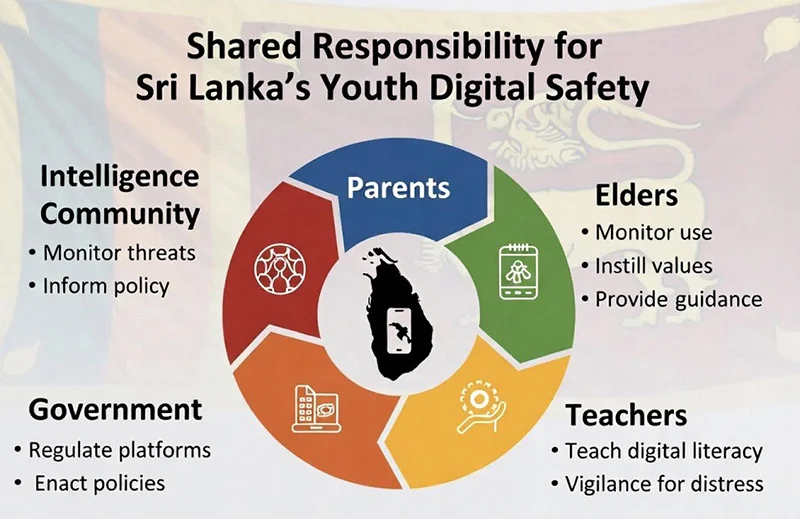
Beyond individual mental health lies a broader threat: the spread of hatred and radicalisation. Unregulated platforms amplify divisive narratives, sowing seeds of communal discord that can germinate into extremism. In a multi-ethnic, multi-religious nation like ours, this is especially perilous. Algorithms prioritise engagement over truth, pushing inflammatory content that deepens divides rather than fostering understanding. The intelligence communities in forward-thinking nations recognized this early, monitoring online radicalisation pathways, informing policymakers, and advocating regulations that balance innovation with protection. They treated it not merely as a social issue but as a non-traditional security threat capable of undermining stability from within.
Sri Lanka’s intelligence apparatus must elevate this to a priority. Visualizing future threats means anticipating how today’s unchecked digital ecosystems could radicalize disaffected youth, erode social cohesion, or fuel unrest. “Better late than never” is no longer sufficient; the time for vigilance was yesterday. National security encompasses more than borders and conventional forces. It demands safeguarding the psychological and social resilience of our people, especially the young, who are the foundation of tomorrow’s prosperity, stability, and development.
Compounding these challenges is our education system. While institutions exist and opportunities for primary and secondary learning are in place, fragmentation persists. Schools often reflect and reinforce community and religious lines, Sinhala-medium and Tamil-medium streams, alongside denominational or religious institutions. Curricula and environments can inadvertently promote insular ideologies rather than a shared national ethos. This segregation, a legacy of historical policies, risks deepening divisions instead of building the common identity essential for a united Sri Lanka. Education’s fundamental purpose is to forge a stable, disciplined, educated society capable of critical thinking and harmonious coexistence. When the system itself divides, the consequences ripple into national security, weakening the very social capital needed to withstand external and internal pressures.
Reform is urgent. A common core curriculum emphasising shared values, critical digital literacy, multicultural understanding, and emotional resilience must take precedence. Regulation of school management and supervision through coherent national policy, without stifling diversity, can transform education from a potential vector of division into a bulwark of unity. Integrating digital citizenship education, teaching responsible technology use from an early age, and training teachers to recognise signs of distress are practical steps.
The global momentum offers both warning and inspiration. Australia’s under-16 social media ban, with investigations into major platforms and recently doubled penalties reaching AUD 99 million for breaches, demonstrates political will. Similar moves in Malaysia, Indonesia, France, the UK, and elsewhere signal that unregulated tech giants can no longer operate with impunity where children are concerned. These nations recognize that protecting future generations is a governance imperative, not an optional extra.
For Sri Lanka, the path forward requires coordinated action across stakeholders:
• Government and Regulators: Enact and enforce age-appropriate restrictions, mandate robust age verification, and hold platforms accountable for harmful algorithms and content. Learn from international models while tailoring to local realities.
• Intelligence and Security Community: Intensify monitoring of online spaces for radicalisation signals, disinformation, and grooming. Provide timely assessments to policymakers and collaborate on preventive strategies.
• Education Authorities: Accelerate integration efforts, develop a unifying curriculum framework, and embed mental health and digital literacy across subjects.
• Parents and Communities: Reclaim agency through screen-time boundaries, open dialogues, and modeling healthy habits. Community programs can support families navigating these challenges.
• Civil Society and Tech Sector: Promote ethical platform design, local content moderation sensitive to Sri Lankan contexts, and public awareness campaigns.
Crucially, while the state and its institutions bear a solemn duty to regulate and protect, the ultimate safeguard for our children rests in the hands of parents, elders, and teachers, the first line of defense in every home and classroom. Parents must reclaim their rightful role as gatekeepers of screen time, engaging in open, judgment-free conversations about the digital world rather than abdicating oversight to devices. Simple practices such as family media curfews, co-viewing content, and modeling mindful technology use can rebuild eroded bonds and instill discipline.
Elders, as custodians of wisdom and cultural values, have a profound responsibility to guide younger generations away from virtual escapism toward real-world relationships, community service, and spiritual grounding. Teachers, too, stand at the forefront: beyond academic instruction, they must weave digital literacy, critical thinking about online content, and emotional resilience into the curriculum, while remaining vigilant for signs of distress among students.
This is not a burden to be shouldered by the government alone but a collective moral imperative. When families, schools, and communities unite in proactive guardianship, technology becomes a servant rather than a master, nurturing disciplined, empathetic youth who strengthen rather than strain the social fabric. Only through this shared vigilance can we truly safeguard the future generations who will define Sri Lanka’s destiny.
The consequences of inaction are already evident and will only intensify. Disastrous outcomes for mental health, family structures, social discipline, and national cohesion are not hypothetical, they are unfolding. Yet this is not a story of inevitable decline. Technology remains a powerful tool for good when guided by wisdom, regulation, and human values. By acting decisively now, Sri Lanka can harness its benefits while mitigating harms, ensuring our children inherit a society that is not only prosperous but also peaceful, united, and resilient.
The future of our nation rests with its youth. They are not merely statistics or problems to manage; they are the carriers of our collective hopes. We owe them environments that nurture rather than exploit their vulnerabilities. The intelligence to foresee threats, the courage to regulate boldly, and the commitment to holistic education are within our grasp. The clock is ticking. The choice is clear: Act now, or risk paying an unbearable price later.
Sri Lanka has overcome immense challenges before through unity and foresight. This digital crisis demands the same resolve. Let us rise to it, for our children, our families, and the enduring strength of our nation. The time for meaningful, immediate remedies is upon us.
Writer ,Mahil Dole is Former Head of Counter Terrorism State Intelligence Service, former First Secretary (Defence) – Sri Lanka Embassy in Thailand and present Member of the Waqfs Board.
This opinion draws on public records and professional experience. Views are personal.
by Mahil Dole
SSP Rtd – Senior Security Analyst & Former Head of Counter-Terrorism Division, State Intelligence Service Sri Lanka.
“It began with a spark, in March 2025,” says Gamini Hemalal, renowned Chef and well known businessman, in Toronto, Canada, who is also a singer.
“I was wandering through Toronto, a city full of dreams, and I kept bumping into Sri Lankans — students burning midnight oil, professionals chasing careers, families building new lives. But every single one of them carried the same thing in their veins: music. Raw, talented, Sri Lankan music.
“They had a dream. A band. A piece of home in a cold city. I heard it, felt it… and I raised my hand. Someone had to take the first step, and so I did.”

And it came in the form of Ceymphony who took their bow on the grand stage of Angus Glen Golf Club, in Toronto, backing Sri Lankan mega stars — back to back, for two unforgettable nights.
The big names included Gypsies’ Piyal Perera and Sohan Weersinghe … and guiding their hands that very first time, according to Gamini, was Ravi Terrence from the Gypsies.
“He mentored us, steady as an elder brother, as we learned what it means to hold the stage for legends.”
Since then, Ceymphony has become a monthly fixture at Base Kitchen and Bar in Toronto, cultivating a loyal fan base that grows with every show.
The stages kept calling: Dinner dances for the Canada-Sri Lanka Women’s Association, The Seniors Association, Christmas parties, birthdays, weddings, Angus Glen’s Annual Staff Party… every event became a memory.
Moreover, Mega Stars Spring Blast 2026, in Toronto, went down in history when Ceymphony sold out the same venue, with the same artistes, two nights in a row.
Canada’s prime Sri Lankan media channel, Rupane, kept featuring Ceymphony, on a regular basis, and they have also backed several superstars during the short period they have been in existence.
Ceymphony celebrated Avurudhu with Ruk Sevene 2026, and Wasantha Udhane 2026, and are now counting the days for two more mega events, in Toronto – the legendary Sohan Weerasinghe Show, on July 31, 2026, and “Matheke Padhe,” in October, 2026. Also on the cards is the return of Halloween Pissu Baila Party, for its second consecutive year.
The band’s commitment to community runs just as deep. They joined 12 other Sri Lankan bands for the Handhe Gasme Live Show, performing free of charge to raise $12,000 for recovery efforts in Sri Lanka after Ditwah.
Ceymphony alone has donated over $2,000 to Sri Lankan causes through Lion Sudusinghe Chandrasena, President of Lions Club Mount Lavinia, and a respected community pillar.
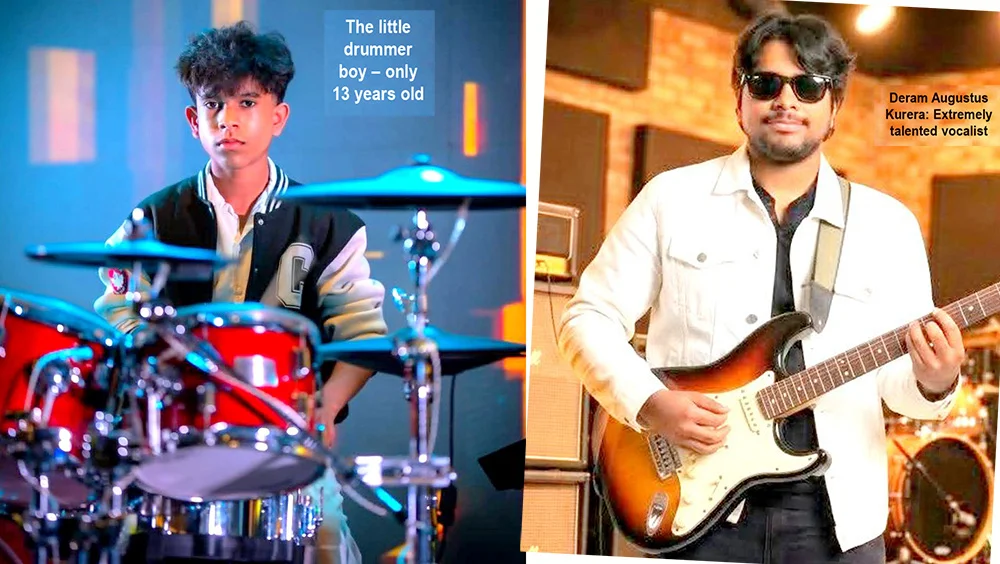
The musicians behind the music of Ceymphony are: Deshan Joseph Perera (Keys/Leader/Vocals), Deram Augustus Kurera (Main Male Vocals, Rhythm/Co-Leader), Dineth Gunarathna (Lead), Jalitha Hettiarachchi (Bass/Vocals), Pasindu Dharmadasa/Dushan Induwara (Drums), Kasun Mihiranga Herath (Percussion), Malika Hemal, Resendie Ruwansa, Sinethmie and Ruwansa Omethma (Female Vocals), Rohan Kurera (Vocals), and Gamini Hemalal (Mentor/MC English/Vocals).
The band’s second drummer, Dushan Induwara, is still in grooming, just 13 years old, and their main drummer, Pasindu, is shaping him under his wings.
Dushan, they say, is already close to senior level.
“We want to gift the world a drummer”, at 16, that Toronto will never forget,” says Gamini Hemal.
Female vocalist Resendie Ruwansa also made waves recently, singing “Kiyanne Sulange,” alongside legend Annesly Malawana at a ’70s show, in Toronto, with 1,300 fans in attendance.
They are also working on their first original — a romantic, catchy song that sounds very much like what Ceymphony is known for.
The band’s stage presence is matched by a full in-house production — the first Canadian-Sri Lankan band to offer complete sound, lighting, LED walls, and onstage technical support as a single package.
The concept has helped associations, clubs, and societies reduce event costs — savings passed directly to fans through more affordable tickets.
Yes, Ceymphony started as a dream in March 2025. Today, it’s the sound of home, 7,000 miles away.
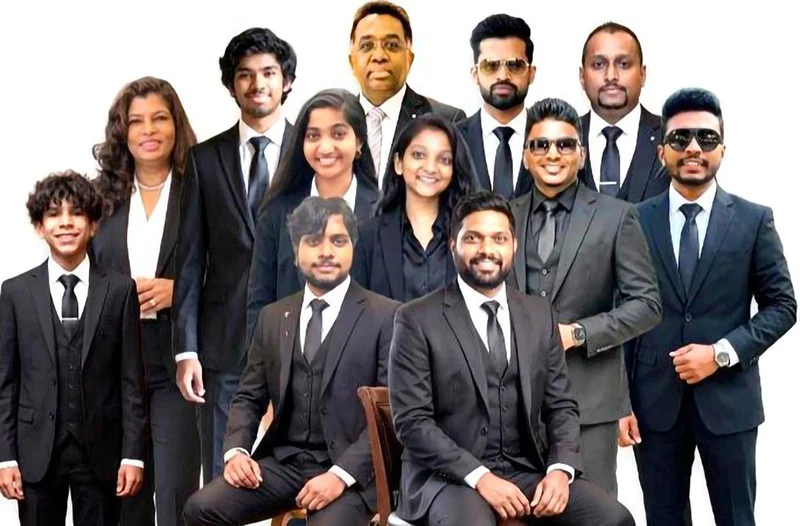
The Sri Lankans who make up Ceymphony, operating in Toronto, Canada, with Gamani Hemalal (back row, centre)

Morocco beat Netherlands in dramatic World Cup shootout to reach last 16

Marco Rubio meets Libyan commander as US pushes to resolve Libya crisis

Paraguay shock Germany in shootout win for one of all-time World Cup upsets

Keiko Fujimori leads in Peruvian presidential race as vote count concludes

Showers will occur at times in the Western, Sabaragamuwa and North-western provinces and in Galle, Matara, Kandy and Nuwara-Eliya districts

‘Illegal USD 1 bn transfers since 2023’: UNP challenges Prez to reveal identities of culprits

‘Dates have the highest sugar content to fight Coronavirus’

Sunday Island 27 December – Headlines

#SundayIsland 17th December – Headlines

Sunday Island – 28th March

Sunday Island Headlines – 21 March

Sunday Island – 21st February – Headlines
-

 News1 day ago
LAWASIA warns against ad hoc initiative to increase judges’ retirement ages
-

 Opinion6 days ago
Sri Lanka’s national security: Justice, reconciliation, and forward-looking vigilance
-
 News3 days ago
Another 1,132 Sri Lankan Personnel to be deployed for United Nations Peacekeeping Missions
-

 News4 days ago
Kelaniya emerges as highest ranked Lankan uni in Times Higher Education Sustainability Impact Ratings
-

 News7 days ago
US Assistant Secretary of State for South and Central Asian Affairs meets President
-
 Opinion5 days ago
A triumph for Pakistan’s skilled diplomacy at Iran-US talks
-

 Features2 days ago
People’s Bank expands digital banking network with 125th cheque deposit kiosk
-

 News3 days ago
FSP complains of irregularities in a Guinness World Record event held in Sri Lanka