
Features
Research and Development in Crisis: Structural Failures and Economic Consequences in Sri Lanka – Part I


Research and Development (R&D) constitutes the intellectual and technological foundation upon which modern economies are built. Nations that invest strategically in R&D consistently outperform those that rely primarily on resource extraction, low-wage labour, or import-driven consumption. For Sri Lanka, a country with limited natural resources, a small domestic market, and high vulnerability to external shocks, knowledge-driven development is not merely desirable but indispensable. R&D underpins advances in agriculture, livestock production, healthcare, renewable energy, industrial manufacturing, and digital technologies sectors that directly affect national resilience and social wellbeing.
Despite this reality, Sri Lanka’s development trajectory has not sufficiently prioritised R&D as a central pillar of economic planning. Innovation is frequently invoked in policy speeches and national plans, yet it remains peripheral in budget allocations and institutional reform. Research is often treated as an academic exercise rather than a strategic national investment. This disconnect between rhetoric and reality has left the R&D ecosystem fragile, fragmented, and poorly integrated with industrial and development objectives.
The consequences of neglecting R&D extend far beyond universities and laboratories. Weak research capacity undermines food security by limiting local solutions to human health, animal health, crop productivity, and climate adaptation. It constrains industrial competitiveness by forcing dependence on imported technologies and inputs. It erodes foreign exchange stability through import substitution failure and export underperformance. Ultimately, the absence of a strong R&D foundation compromises Sri Lanka’s long-term sovereignty, economic independence, and capacity for inclusive growth.
Chronic Underfunding of Research in Sri Lanka
One of the most persistent and structurally damaging constraints on R&D in Sri Lanka is chronic underfunding. National expenditure on research remains far below global and regional benchmarks, even when compared with countries at similar income levels. While advanced economies invest between two and four percent of GDP in R&D, Sri Lanka’s allocation remains marginal, fragmented across ministries, and vulnerable to fiscal tightening during economic crises. This signals to researchers and investors alike that innovation is not a national priority.
The inadequacy of funding manifests in multiple ways at institutional level. Competitive research grants are few in number, small in scale, and often delayed in disbursement, disrupting research timelines and experimental continuity. Laboratories struggle to maintain even basic functionality due to shortages of reagents, consumables, spare parts, and technical staff. Capital-intensive research particularly in biotechnology, veterinary science, engineering, and medical sciences becomes nearly impossible without external funding.
Over time, chronic underinvestment has normalised low expectations within the research community. Researchers are compelled to design projects around what is financially feasible rather than what is scientifically necessary or nationally relevant. Ambitious, multidisciplinary, and long-term research agendas are abandoned in favour of modest, low-risk studies that fit within constrained budgets. This adaptation to scarcity, while understandable, ultimately limits innovation depth, global competitiveness, and societal impact.
Impact on Human Capital and Research Continuity
The funding crisis in R&D has had a profound and lasting impact on human capital development in Sri Lanka. Young academics, postdoctoral researchers, and early-career scientists find it extraordinarily difficult to establish sustainable research programmes. Without reliable funding, access to modern facilities, or institutional support, many abandon active research soon after completing postgraduate training. This results in a generation of academically qualified but research-inactive faculty.
This environment fuels a silent yet continuous brain drain. Talented researchers seek opportunities abroad where research ecosystems are stable, predictable, and adequately resourced. Unlike visible migration waves, this loss is gradual and often unnoticed, yet its cumulative effect is devastating. The departure of skilled researchers weakens mentorship capacity, disrupts research groups, and erodes institutional memory essential for long-term scientific advancement.
Even researchers who remain in the system operate under constant uncertainty. The inability to plan multi-year projects discourages international collaboration and deters high-quality postgraduate students. Doctoral and master’s research becomes fragmented, delayed, or abandoned altogether. Over time, this instability undermines the continuity of national research programmes and weakens Sri Lanka’s capacity to respond to emerging challenges such as climate change, disaster management, engineering breakthroughs zoonotic diseases, antimicrobial resistance, emerging diseases, and food system disruptions.
Patent Generation Without Commercialisation
Sri Lankan universities and public research institutes generate a steady stream of innovative ideas, prototypes, formulations, and process improvements. These innovations arise primarily from publicly funded research, postgraduate theses, and problem-driven investigations in agriculture, health, and industry. However, the overwhelming majority fail to progress beyond the laboratory or pilot scale, resulting in minimal societal or economic return on national research investment.
Patent filing itself remains limited due to high costs, weak institutional incentives, and inadequate access to intellectual property (IP) expertise. Many researchers have limited familiarity with patenting procedures, while most institutions lack dedicated, professionally staffed patent or technology transfer offices with a strong commercial orientation. Even when patent applications are submitted, the patent examination process is often excessively slow, with initial feedback from relevant authorities commonly taking several months to years or longer. For underfunded or time-bound research projects, this delay creates a critical disconnect between innovation and protection.
In several documented cases, pre-screening results, examiner comments, or requests for amendments are received only after the funded project period has ended. At this stage, research teams frequently lack financial resources to undertake additional experiments, refine claims, conduct validation studies, or engage legal support required to respond effectively to patent office feedback. Consequently, potentially valuable inventions are abandoned, allowed to lapse, or inadequately protected, not due to lack of scientific merit but because of procedural and funding misalignment.
Even when patents are granted, ongoing costs related to maintenance, prosecution, and enforcement quickly become prohibitive in the absence of sustained institutional or government support. Commercialisation pathways remain weak or fragmented. Technology transfer offices, where they exist, are typically understaffed and under-resourced, with limited expertise in licensing negotiations, IP valuation, market assessment, or venture creation. As a result, much intellectual property remains dormant, or is disclosed prematurely through academic publication, rendering it unprotectable. Collectively, these challenges represent a systemic failure to translate publicly funded research outputs into tangible economic and industrial value, undermining the role of R&D as a driver of national development.
Absence of a National Innovation-to-Market Strategy
Sri Lanka lacks a coherent and coordinated national strategy to translate research outputs into marketable products and services. Innovation policies remain fragmented across ministries, funding agencies, and institutions, with little alignment between research priorities and industrial needs. There is no integrated pipeline linking laboratory research, pilot production, regulatory approval, market entry, and scale-up. Early-stage commercialization support is particularly weak. Risk-sharing mechanisms that could encourage private sector participation such as matching grants, innovation vouchers, or public–private partnerships are largely absent or unsupported. Researchers are often expected to become entrepreneurs without training, capital, or institutional backing. This unrealistic expectation results in high failure rates and discourages future innovation attempts.
Without state-backed incubation and protection, new technologies are exposed prematurely to open-market competition. Imported alternatives, often subsidised and mass-produced, quickly displace local innovations before they reach maturity. This systemic exposure discourages both researchers and investors, reinforcing a cycle in which innovation is generated but never sustained.
Failure of Post-Commercialisation Sustainability
Even when locally developed R&D products successfully reach commercial production, sustainability remains elusive. Local innovators face structural disadvantages, including high input costs, limited access to affordable credit, and weak distribution networks. Brand recognition is minimal, and marketing resources are scarce, particularly for research-origin products emerging from universities or public institutes.
In contrast, imported products benefit from economies of scale, long-established supply chains, and often hidden subsidies from their countries of origin. These products can be sold at prices below local production costs, irrespective of quality differentials. The playing field is fundamentally unequal, yet local producers are expected to survive without transitional protection. Without temporary safeguards such as targeted tariffs, public procurement preferences, or time-bound subsidies, locally developed products rarely survive beyond their initial market entry. This repeated pattern of post-commercialisation failure sends a clear signal to researchers: even successful innovation does not guarantee viability. Over time, this discourages applied research and reinforces dependence on imports.
Furthermore, the absence of structured post-commercialisation support such as scale-up financing, market linkage facilitation, and regulatory fast-tracking means that innovators are effectively abandoned once initial production begins. Institutional responsibility for innovation often ends at “commercial launch,” with no agency accountable for ensuring market survival or competitive maturation. In such an environment, failure is systemic rather than entrepreneurial, reflecting policy neglect rather than product inadequacy.
Low-Cost Imports and Market Distortion
The Sri Lankan market has become increasingly saturated with low-cost imported goods, particularly from India and China. These imports span multiple sectors, including agriculture inputs, animal feed, pharmaceuticals, machinery, and consumer goods. While lower prices provide immediate relief to consumers facing declining purchasing power, they simultaneously distort the domestic market by undercutting locally produced alternatives that operate under higher compliance, labor, and production standards.
The dominance of low-cost imports discourages domestic investment in R&D-driven production. Local producers who attempt to innovate face a paradox: higher-quality, research-based products often cost more to produce, yet the market overwhelmingly rewards the cheapest option. In such an environment, innovation becomes a commercial liability rather than an advantage. Over time, this erodes incentives for quality improvement, standard compliance, and technological upgrading.
Market distortion is further aggravated by weak enforcement of quality standards. Imported products are rarely subjected to rigorous post-market surveillance, allowing inferior or inconsistent-quality goods to circulate freely. The long-term consequences ranging from reduced productivity to biosecurity risks are externalised, while local producers bear the full cost of compliance. This imbalance undermines the sustainability of domestic R&D and production ecosystems.
Government to Government Economic Cooperation and Producer Vulnerability
Recent government-to-government economic cooperation between Sri Lanka and neighbouring countries have been promoted as a mechanism to stabilise supply chains and reduce consumer prices. From a short-term macroeconomic perspective, such arrangements may alleviate inflationary pressures and ease foreign exchange constraints. However, their impact on domestic producers, particularly those dependent on R&D-driven value addition, has been profoundly adverse.
The animal feed sector illustrates this vulnerability clearly. Until a few years ago, Sri Lanka restricted the importation of certain feed ingredients from nearby countries due to legitimate concerns regarding disease transmission, contamination, and quality variability. These restrictions supported local feed manufacturers who invested in quality control, formulation research, and biosecurity. Today, liberalised imports have flooded the market with cheaper alternatives, rendering many local operations economically unviable.
This shift has transferred risk from the state to producers and farmers. While imports reduce immediate costs, they expose livestock systems to long-term vulnerabilities related to animal health, productivity, and disease outbreaks. The absence of compensatory support for local producers reflects a policy imbalance that prioritises short-term consumer benefit over long-term sectoral sustainability.
Quality Standards Versus Cost Obsession
Public policy in Sri Lanka has increasingly equated affordability with efficiency, often at the expense of quality and safety. This cost-obsessed approach fails to recognise that low upfront prices can mask substantial downstream costs. In sectors such as agriculture, livestock, and health, compromised quality can result in reduced productivity, increased disease burden, and higher long-term expenditures.
Cheaper inputs, particularly in animal production systems, may reduce feed or medication costs in the short term but can impair growth rates, fertility, immunity, and product quality. These hidden costs are rarely quantified in policy discussions. Farmers and producers, under economic pressure, often have little choice but to opt for cheaper inputs, even when aware of potential risks.
Without strict enforcement of quality standards and scientifically informed import controls, Sri Lanka risks institutionalizing a race to the bottom. R&D-based solutions, which inherently prioritise quality, consistency, and long-term performance, cannot survive in a policy environment that values cost alone. Sustainable development requires recalibrating policy frameworks to balance affordability with quality assurance.
Fiscal Policy Instability and Its Impact on Innovation
Frequent changes in fiscal policy have created a climate of uncertainty that is fundamentally incompatible with innovation-driven growth. Sudden adjustments to tax rates, import duties, subsidies, and procurement guidelines disrupt long-term planning and deter investment in research-based enterprises. Innovation requires predictability, yet Sri Lanka’s fiscal environment remains volatile and reactive.
For researchers and innovators, fiscal instability translates into heightened risk. Changes in import duties on research equipment, reagents, or raw materials can abruptly inflate project costs. Shifts in tax incentives may render business models unviable overnight. This uncertainty discourages private sector collaboration with research institutions and undermines confidence in long-term innovation investments.
At a systemic level, fiscal instability signals a lack of strategic commitment to R&D. When innovation-related policies change frequently, stakeholders perceive them as temporary or politically expedient rather than structural. This perception weakens institutional trust and reinforces a short-term survival mindset among researchers and entrepreneurs.
Need for Strategic Tariff Protection for Local Products
Strategic tariff protection is essential for nurturing domestically developed products during their formative years. This approach does not constitute economic isolationism but reflects a well-established principle of development economics: infant industries require temporary protection until they achieve scale, efficiency, and competitiveness. Sri Lanka’s failure to adopt such measures has repeatedly undermined R&D-based enterprises.
Imported goods that are locally producible through research-driven innovation should carry higher tariff margins, particularly when domestic alternatives meet acceptable quality standards. Such differentiation creates policy space for local producers to stabilize production, recover R&D investments, and refine processes. Without this buffer, domestic innovations are exposed to predatory competition before they mature.
History offers clear evidence that all successful industrial economies employed strategic protection at critical stages of development. Sri Lanka’s reluctance to do so reflects ideological inconsistency rather than economic necessity. A calibrated, time-bound tariff strategy would significantly enhance the survival prospects of locally developed technologies. (To be continued)
Prof. M. P. S. Magamage is a senior academic and former Dean of the Faculty of Agricultural Sciences at the Sabaragamuwa University of Sri Lanka. He has also served as Chairman of the National Livestock Development Board of Sri Lanka and is an accomplished scholar with extensive national and international experience. Prof. Magamage is a Fulbright Scholar, Indian Science Research Fellow, and Australian Endeavour Fellow, and has served as a Visiting Professor at the University of Nebraska–Lincoln, USA. He has published both locally and internationally reputed journals and has made significant contributions to research commercialisation, with patents registered under his name. His work spans agricultural sciences, livestock development, and innovation-led policy engagement. E-mail: magamage@agri.sab.ac.lk
by Prof. MPS Magamage
Sabaragamuwa University of Sri Lanka


 The hype around educational reforms has abated slightly, but the scandal of the reforms persists. And in saying scandal, I don’t mean the error of judgement surrounding a misprinted link of an online dating site in a Grade 6 English language text book. While that fiasco took on a nasty, undeserved attack on the Minister of Education and Prime Minister Harini Amarasuriya, fundamental concerns with the reforms have surfaced since then and need urgent discussion and a mechanism for further analysis and action. Members of Kuppi have been writing on the reforms the past few months, drawing attention to the deeply troubling aspects of the reforms. Just last week, a statement, initiated by Kuppi, and signed by 94 state university teachers, was released to the public, drawing attention to the fundamental problems underlining the reforms https://island.lk/general-educational-reforms-to-what-purpose-a-statement-by-state-university-teachers/. While the furore over the misspelled and misplaced reference and online link raged in the public domain, there were also many who welcomed the reforms, seeing in the package, a way out of the bottle neck that exists today in our educational system, as regards how achievement is measured and the way the highly competitive system has not helped to serve a population divided by social class, gendered functions and diversities in talent and inclinations. However, the reforms need to be scrutinised as to whether they truly address these concerns or move education in a progressive direction aimed at access and equity, as claimed by the state machinery and the Minister… And the answer is a resounding No.
The statement by 94 university teachers deplores the high handed manner in which the reforms were hastily formulated, and without public consultation. It underlines the problems with the substance of the reforms, particularly in the areas of the structure of education, and the content of the text books. The problem lies at the very outset of the reforms, with the conceptual framework. While the stated conceptualisation sounds fancifully democratic, inclusive, grounded and, simultaneously, sensitive, the detail of the reforms-structure itself shows up a scandalous disconnect between the concept and the structural features of the reforms. This disconnect is most glaring in the way the secondary school programme, in the main, the junior and senior secondary school Phase I, is structured; secondly, the disconnect is also apparent in the pedagogic areas, particularly in the content of the text books. The key players of the “Reforms” have weaponised certain seemingly progressive catch phrases like learner- or student-centred education, digital learning systems, and ideas like moving away from exams and text-heavy education, in popularising it in a bid to win the consent of the public. Launching the reforms at a school recently, Dr. Amarasuriya says, and I cite the state-owned broadside Daily News here, “The reforms focus on a student-centered, practical learning approach to replace the current heavily exam-oriented system, beginning with Grade One in 2026 (https://www.facebook.com/reel/1866339250940490). In an address to the public on September 29, 2025, Dr. Amarasuriya sings the praises of digital transformation and the use of AI-platforms in facilitating education (https://www.facebook.com/share/v/14UvTrkbkwW/), and more recently in a slightly modified tone (https://www.dailymirror.lk/breaking-news/PM-pledges-safe-tech-driven-digital-education-for-Sri-Lankan-children/108-331699).
The idea of learner- or student-centric education has been there for long. It comes from the thinking of Paulo Freire, Ivan Illyich and many other educational reformers, globally. Freire, in particular, talks of learner-centred education (he does not use the term), as transformative, transformative of the learner’s and teacher’s thinking: an active and situated learning process that transforms the relations inhering in the situation itself. Lev Vygotsky, the well-known linguist and educator, is a fore runner in promoting collaborative work. But in his thought, collaborative work, which he termed the Zone of Proximal Development (ZPD) is processual and not goal-oriented, the way teamwork is understood in our pedagogical frameworks; marks, assignments and projects. In his pedagogy, a well-trained teacher, who has substantial knowledge of the subject, is a must. Good text books are important. But I have seen Vygotsky’s idea of ZPD being appropriated to mean teamwork where students sit around and carry out a task already determined for them in quantifying terms. For Vygotsky, the classroom is a transformative, collaborative place.
But in our neo liberal times, learner-centredness has become quick fix to address the ills of a (still existing) hierarchical classroom. What it has actually achieved is reduce teachers to the status of being mere cogs in a machine designed elsewhere: imitative, non-thinking followers of some empty words and guide lines. Over the years, this learner-centred approach has served to destroy teachers’ independence and agency in designing and trying out different pedagogical methods for themselves and their classrooms, make input in the formulation of the curriculum, and create a space for critical thinking in the classroom.
Thus, when Dr. Amarasuriya says that our system should not be over reliant on text books, I have to disagree with her (https://www.newsfirst.lk/2026/01/29/education-reform-to-end-textbook-tyranny ). The issue is not with over reliance, but with the inability to produce well formulated text books. And we are now privy to what this easy dismissal of text books has led us into – the rabbit hole of badly formulated, misinformed content. I quote from the statement of the 94 university teachers to illustrate my point.
“The textbooks for the Grade 6 modules . . . . contain rampant typographical errors and include (some undeclared) AI-generated content, including images that seem distant from the student experience. Some textbooks contain incorrect or misleading information. The Global Studies textbook associates specific facial features, hair colour, and skin colour, with particular countries and regions, and refers to Indigenous peoples in offensive terms long rejected by these communities (e.g. “Pygmies”, “Eskimos”). Nigerians are portrayed as poor/agricultural and with no electricity. The Entrepreneurship and Financial Literacy textbook introduces students to “world famous entrepreneurs”, mostly men, and equates success with business acumen. Such content contradicts the policy’s stated commitment to “values of equity, inclusivity and social justice” (p. 9). Is this the kind of content we want in our textbooks?”
Where structure is concerned, it is astounding to note that the number of subjects has increased from the previous number, while the duration of a single period has considerably reduced. This is markedly noticeable in the fact that only 30 hours are allocated for mathematics and first language at the junior secondary level, per term. The reduced emphasis on social sciences and humanities is another matter of grave concern. We have seen how TV channels and YouTube videos are churning out questionable and unsubstantiated material on the humanities. In my experience, when humanities and social sciences are not properly taught, and not taught by trained teachers, students, who will have no other recourse for related knowledge, will rely on material from controversial and substandard outlets. These will be their only source. So, instruction in history will be increasingly turned over to questionable YouTube channels and other internet sites. Popular media have an enormous influence on the public and shapes thinking, but a well formulated policy in humanities and social science teaching could counter that with researched material and critical thought. Another deplorable feature of the reforms lies in provisions encouraging students to move toward a career path too early in their student life.
The National Institute of Education has received quite a lot of flak in the fall out of the uproar over the controversial Grade 6 module. This is highlighted in a statement, different from the one already mentioned, released by influential members of the academic and activist public, which delivered a sharp critique of the NIE, even while welcoming the reforms (https://ceylontoday.lk/2026/01/16/academics-urge-govt-safeguard-integrity-of-education-reforms). The government itself suspended key players of the NIE in the reform process, following the mishap. The critique of NIE has been more or less uniform in our own discussions with interested members of the university community. It is interesting to note that both statements mentioned here have called for a review of the NIE and the setting up of a mechanism that will guide it in its activities at least in the interim period. The NIE is an educational arm of the state, and it is, ultimately, the responsibility of the government to oversee its function. It has to be equipped with qualified staff, provided with the capacity to initiate consultative mechanisms and involve panels of educators from various different fields and disciplines in policy and curriculum making.
In conclusion, I call upon the government to have courage and patience and to rethink some of the fundamental features of the reform. I reiterate the call for postponing the implementation of the reforms and, in the words of the statement of the 94 university teachers, “holistically review the new curriculum, including at primary level.”
(Sivamohan Sumathy was formerly attached to the University of Peradeniya)
Kuppi is a politics and pedagogy happening on the margins of the lecture hall that parodies, subverts, and simultaneously reaffirms social hierarchies.
By Sivamohan Sumathy
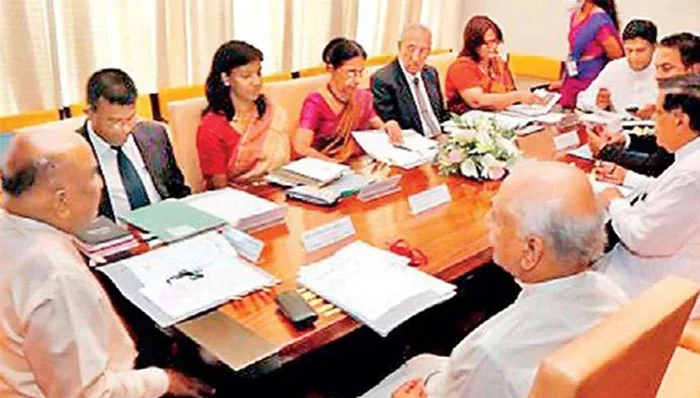
The Constitutional Council stands out as one of Sri Lanka’s most important governance mechanisms particularly at a time when even long‑established democracies are struggling with the dangers of executive overreach. Sri Lanka’s attempt to balance democratic mandate with independent oversight places it within a small but important group of constitutional arrangements that seek to protect the integrity of key state institutions without paralysing elected governments. Democratic power must be exercised, but it must also be restrained by institutions that command broad confidence. In each case, performance has been uneven, but the underlying principle is shared.
Comparable mechanisms exist in a number of democracies. In the United Kingdom, independent appointments commissions for the judiciary and civil service operate alongside ministerial authority, constraining but not eliminating political discretion. In Canada, parliamentary committees scrutinise appointments to oversight institutions such as the Auditor General, whose independence is regarded as essential to democratic accountability. In India, the collegium system for judicial appointments, in which senior judges of the Supreme Court play the decisive role in recommending appointments, emerged from a similar concern to insulate the judiciary from excessive political influence.
The Constitutional Council in Sri Lanka was developed to ensure that the highest level appointments to the most important institutions of the state would be the best possible under the circumstances. The objective was not to deny the executive its authority, but to ensure that those appointed would be independent, suitably qualified and not politically partisan. The Council is entrusted with oversight of appointments in seven critical areas of governance. These include the judiciary, through appointments to the Supreme Court and Court of Appeal, the independent commissions overseeing elections, public service, police, human rights, bribery and corruption, and the office of the Auditor General.
JVP Advocacy
The most outstanding feature of the Constitutional Council is its composition. Its ten members are drawn from the ranks of the government, the main opposition party, smaller parties and civil society. This plural composition was designed to reflect the diversity of political opinion in Parliament while also bringing in voices that are not directly tied to electoral competition. It reflects a belief that legitimacy in sensitive appointments comes not only from legal authority but also from inclusion and balance.
The idea of the Constitutional Council was strongly promoted around the year 2000, during a period of intense debate about the concentration of power in the executive presidency. Civil society organisations, professional bodies and sections of the legal community championed the position that unchecked executive authority had led to abuse of power and declining public trust. The JVP, which is today the core part of the NPP government, was among the political advocates in making the argument and joined the government of President Chandrika Bandaranaike Kumaratunga on this platform.
The first version of the Constitutional Council came into being in 2001 with the 17th Amendment to the Constitution during the presidency of Chandrika Bandaranaike Kumaratunga. The Constitutional Council functioned with varying degrees of effectiveness. There were moments of cooperation and also moments of tension. On several occasions President Kumaratunga disagreed with the views of the Constitutional Council, leading to deadlock and delays in appointments. These experiences revealed both the strengths and weaknesses of the model.
Since its inception in 2001, the Constitutional Council has had its ups and downs. Successive constitutional amendments have alternately weakened and strengthened it. The 18th Amendment significantly reduced its authority, restoring much of the appointment power to the executive. The 19th Amendment reversed this trend and re-established the Council with enhanced powers. The 20th Amendment again curtailed its role, while the 21st Amendment restored a measure of balance. At present, the Constitutional Council operates under the framework of the 21st Amendment, which reflects a renewed commitment to shared decision making in key appointments.
Undermining Confidence
The particular issue that has now come to the fore concerns the appointment of the Auditor General. This is a constitutionally protected position, reflecting the central role played by the Auditor General’s Department in monitoring public spending and safeguarding public resources. Without a credible and fearless audit institution, parliamentary oversight can become superficial and corruption flourishes unchecked. The role of the Auditor General’s Department is especially important in the present circumstances, when rooting out corruption is a stated priority of the government and a central element of the mandate it received from the electorate at the presidential and parliamentary elections held in 2024.
So far, the government has taken hitherto unprecedented actions to investigate past corruption involving former government leaders. These actions have caused considerable discomfort among politicians now in the opposition and out of power. However, a serious lacuna in the government’s anti-corruption arsenal is that the post of Auditor General has been vacant for over six months. No agreement has been reached between the government and the Constitutional Council on the nominations made by the President. On each of the four previous occasions, the nominees of the President have failed to obtain its concurrence.
The President has once again nominated a senior officer of the Auditor General’s Department whose appointment was earlier declined by the Constitutional Council. The key difference on this occasion is that the composition of the Constitutional Council has changed. The three representatives from civil society are new appointees and may take a different view from their predecessors. The person appointed needs to be someone who is not compromised by long years of association with entrenched interests in the public service and politics. The task ahead for the new Auditor General is formidable. What is required is professional competence combined with moral courage and institutional independence.
New Opportunity
By submitting the same nominee to the Constitutional Council, the President is signaling a clear preference and calling it to reconsider its earlier decision in the light of changed circumstances. If the President’s nominee possesses the required professional qualifications, relevant experience, and no substantiated allegations against her, the presumption should lean toward approving the appointment. The Constitutional Council is intended to moderate the President’s authority and not nullify it.
A consensual, collegial decision would be the best outcome. Confrontational postures may yield temporary political advantage, but they harm public institutions and erode trust. The President and the government carry the democratic mandate of the people; this mandate brings both authority and responsibility. The Constitutional Council plays a vital oversight role, but it does not possess an independent democratic mandate of its own and its legitimacy lies in balanced, principled decision making.
Sri Lanka’s experience, like that of many democracies, shows that institutions function best when guided by restraint, mutual respect, and a shared commitment to the public good. The erosion of these values elsewhere in the world demonstrates their importance. At this critical moment, reaching a consensus that respects both the President’s mandate and the Constitutional Council’s oversight role would send a powerful message that constitutional governance in Sri Lanka can work as intended.
by Jehan Perera

 The scene has certainly changed for the Gypsies and today one could consider them as awesome crowd-pullers, with plenty of foreign tours, making up their itinerary.
With the demise of Sunil Perera, music lovers believed that the Gypsies would find the going tough in the music scene as he was their star, and, in fact, Sri Lanka’s number one entertainer/singer,
Even his brother Piyal Perera, who is now in charge of the Gypsies, admitted that after Sunil’s death he was in two minds about continuing with the band.
However, the scene started improving for the Gypsies, and then stepped in Shenal Nishshanka, in December 2022, and that was the turning point,
With Shenal in their lineup, Piyal then decided to continue with the Gypsies, but, he added, “I believe I should check out our progress in the scene…one year at a time.”
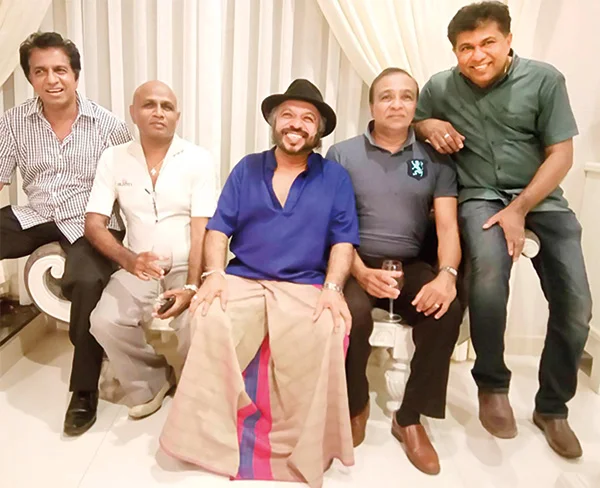
The original Gypsies: The five brothers Lal, Nimal, Sunil, Nihal and Piyal
They had success the following year, 2023, and then decided that they continue in 2024, as well, and more success followed.
The year 2025 opened up with plenty of action for the band, including several foreign assignments, and 2026 has already started on an awesome note, with a tour of Australia and New Zealand, which will keep the Gypsies in that part of the world, from February to March.
Shenal has already turned out to be a great crowd puller, and music lovers in Australia and New Zealand can look forward to some top class entertainment from both Shenal and Piyal.
Piyal, who was not much in the spotlight when Sunil was in the scene, is now very much upfront, supporting Shenal, and they do an awesome job on stage … keeping the audience entertained.
Shenal is, in fact, a rocker, who plays the guitar, and is extremely creative on stage with his baila.

‘Api Denna’ Piyal and Shenal
Piyal and Shenal also move into action as a duo ‘Api Denna’ and have even done their duo scene abroad.
Piyal mentioned that the Gypsies will feature a female vocalist during their tour of New Zealand.
“With Monique Wille’s departure from the band, we now operate without a female vocalist, but if a female vocalist is required for certain events, we get a solo female singer involved, as a guest artiste. She does her own thing and we back her, and New Zealand requested for a female vocalist and Dilmi will be doing the needful for us,” said Piyal.
According to Piyal, he originally had plans to end the Gypsies in the year 2027 but with the demand for the Gypsies at a very high level now those plans may not work out, he says.

Crown Princess’s son arrested for alleged assault before rape trial in Norway

Shower will occur in the Northern, North-central, Eastern and Uva provinces and in Nuwara-Eliya and Matale districts

Interpol crackdown: Sri Lankan man among seven arrested in UK for human smuggling

Sri Lanka calls on global consular corps to protect nationals amid fishermen incident

Korean boost for Thriposha programme: Partnership worth USD 10 mn

Development Officers’ Association steps up protest campaign

‘Dates have the highest sugar content to fight Coronavirus’

Sunday Island 27 December – Headlines

#SundayIsland 17th December – Headlines

Sunday Island – 28th March

Sunday Island Headlines – 21 March

Sunday Island – 21st February – Headlines
-
 Opinion4 days ago
Sri Lanka, the Stars,and statesmen
-
 Business5 days ago
Climate risks, poverty, and recovery financing in focus at CEPA policy panel
-

 Business3 days ago
Hayleys Mobility ushering in a new era of premium sustainable mobility
-

 Business3 days ago
Advice Lab unveils new 13,000+ sqft office, marking major expansion in financial services BPO to Australia
-

 Business3 days ago
Arpico NextGen Mattress gains recognition for innovation
-

 Business2 days ago
Altair issues over 100+ title deeds post ownership change
-

 Business2 days ago
Sri Lanka opens first country pavilion at London exhibition
-

 Editorial3 days ago
Govt. provoking TUs