
News
Reconstitution of COPE, COPA in limbo

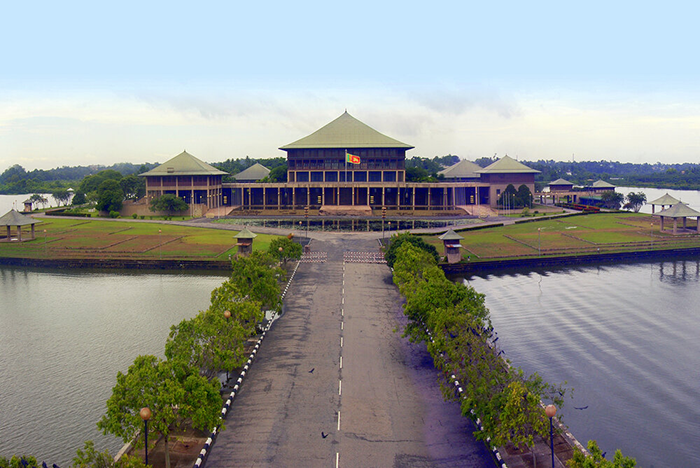
Bid to scuttle probes alleged
By Shamindra Ferdinando
The reappointment of two key parliamentary watchdog committees, COPE (Committee on Public Enterprises) and COPA (Committee on Public Accounts) has been further delayed for want of a consensus among political parties on who should head them.In spite of earlier indications that the ruling SLPP might go ahead with the original plan to give leadership of COPE and COPA, in addition to that of the Committee on Public Finance (COPF) to the Opposition, the government seems to have second thoughts, political sources said.
Late last month, SJB heavyweight, Dr. Harsha de Silva, received the appointment as Chairman of the COPF, a post previously held by SLPP MP Anura Priyadarshanaya Yapa.All other parliamentary committees, except the COPE and the COPA, had been reconstituted, following the opening of the third session of the ninth Parliament on 03 August.
President of the Sri Lanka Audit Service Association (SLASA), Prasad Prasanna, yesterday (04), said that the country was in such a desperate financial situation, the government and the Opposition should not delay taking tangible measures to restore economic stability. The parliamentary watchdog committees would have to play a significant role in the anti-corruption drive, the official said, expressing concern over the inordinate delay in setting up the COPE and the COPA. The SLASA Chief said so in response to The Island query regarding unbridled public sector corruption.
Prasad Prasanna said that the SLASA was yet to receive a response from President Ranil Wickremesinghe’s Office to their letter, dated 15 Aug, requesting the re-appointment of Prof. Charitha Herath and Prof. Tissa Vitharana as heads of the COPE and the COPA, respectively.
“The SLASA really appreciates the stand taken by Governor, CBSL, Dr. Nanadalal Weerasinghe, as regards the accountability on the part of lawmakers and Parliament as the country struggled to cope up with an unprecedented crisis.
We sincerely hope Dr. Weerasinghe’s timely intervention would make a difference,” Prasad Prasanna said.Sources said that both the government and the Opposition had left Professors Charitha Herath and Tissa Vitharana out of their nomination lists. SLPP General Secretary Sagara Kariyawasam told The Island that those who declared themselves as independent members couldn’t expect the government to nominate them. They shouldn’t expect a privileged status after having quit the government parliamentary group, Kariyawasam said.
Prof. Herath declined to comment on the inordinate delay in reconstituting the two watchdog committees. However, he stressed the need to continue the work initiated during the previous sessions of the ninth Parliament. Dr. Weerasinghe’s views couldn’t be ignored by political parties, Prof. Herath said.Some sources attributed the delay in reconstituting the two watchdog committees to Speaker Mahinda Yapa Abeywardena’s visit to New Delhi and the presentation of an interim Budget by President Ranil Wickremesinghe, in his capacity as the Finance Minister.
SLASA President Prasad Prasanna urged the government not to suppress investigations undertaken by the COPE. It would be a grave mistake, on the part of the government, to derail watchdog committees as such a course of action would cause further deterioration of public sector finance.




Sri Lanka’s environmental protection framework is rapidly eroding, with weak law enforcement, politically driven development and the routine sidelining of environmental safeguards pushing the country towards an ecological crisis, leading environmentalists have warned.
Dilena Pathragoda, Managing Director of the Centre for Environmental Justice (CEJ), has said the growing environmental damage across the island is not the result of regulatory gaps, but of persistent failure to enforce existing laws.
“Sri Lanka does not suffer from a lack of environmental regulations — it suffers from a lack of political will to enforce them,” Pathragoda told The Sunday Island. “Environmental destruction is taking place openly, often with official knowledge, and almost always without accountability.”
Dr. Pathragoda has said environmental impact assessments are increasingly treated as procedural formalities rather than binding safeguards, allowing ecologically sensitive areas to be cleared or altered with minimal oversight.
“When environmental approvals are rushed, diluted or ignored altogether, the consequences are predictable — habitat loss, biodiversity decline and escalating conflict between humans and nature,” Pathragoda said.
Environmental activist Janaka Withanage warned that unregulated development and land-use changes are dismantling natural ecosystems that have sustained rural communities for generations.
“We are destroying natural buffers that protect people from floods, droughts and soil erosion,” Withanage said. “Once wetlands, forests and river catchments are damaged, the impacts are felt far beyond the project site.”
Withanage said communities are increasingly left vulnerable as environmental degradation accelerates, while those responsible rarely face legal consequences.
“What we see is selective enforcement,” he said. “Small-scale offenders are targeted, while large-scale violations linked to powerful interests continue unchecked.”
Both environmentalists warned that climate variability is amplifying the damage caused by poor planning, placing additional strain on ecosystems already weakened by deforestation, sand mining and infrastructure expansion.
Pathragoda stressed that environmental protection must be treated as a national priority rather than a development obstacle.
“Environmental laws exist to protect people, livelihoods and the economy,” he said. “Ignoring them will only increase disaster risk and long-term economic losses.”
Withanage echoed the call for urgent reform, warning that continued neglect would result in irreversible damage.
“If this trajectory continues, future generations will inherit an island far more vulnerable and far less resilient,” he said.
Environmental groups say Sri Lanka’s standing as a biodiversity hotspot — and its resilience to climate-driven disasters — will ultimately depend on whether environmental governance is restored before critical thresholds are crossed.
By Ifham Nizam ✍️

IGP Priyantha Weerasooriya has issued a letter, warning police officers against presenting gifts to senior officers during festivals or special occasions.
The letter, dated December 24, notes that some officers have reportedly offered hampers to senior officers during events such as the New Year and Sinhala and Hindu New Year, and some senior officers have accepted them.
The IGP has stressed that no officer should present hampers to him or any other senior police officer under any circumstances, and that senior officers must not accept such gifts.
Instead of in-person visits or physical gifts, officers have been instructed to convey their greetings through phone calls or WhatsApp messages, with personal visits deemed unnecessary.

NDF MP Ravi Karunanayake has called for the savings from MPs’ insurance coverage and allowances to be redirected to a relief fund for the public.
Addressing a press conference in Colombo on Thursday, Karunanayake stressed that the coverage reserved for MPs should be withdrawn and the funds transferred to a welfare and disaster relief fund. He mphasised that money allocated for double-cab vehicles for politicians should also be diverted to the national reconstruction fund at this critical time.
Highlighting the country’s ongoing economic and crisis situation, Karunanayake said that public representatives and senior state institutions must make significant sacrifices, and the perks and insurance benefits of MPs should be used for the welfare of the people.
He underlined that the task of rebuilding the country must start with the politicians themselves.
Commenting on state institution inefficiencies, he stated:
“Bonuses and allowances paid to officials of loss-making institutions such as SriLankan Airlines must be immediately stopped. Those funds should be redirected for the welfare of ordinary citizens currently under severe hardship—this is the responsibility of the government.”
Regarding Sri Lanka’s current foreign currency reserves, Karunanayake pointed out that, relative to their expenditure, there is no mechanism in place to replenish them—a serious problem. He urged that export performance be increased rapidly. He also suggested that renewable energy be used instead of oil-based electricity generation to save foreign exchange.
Karunanayake further revealed that, given the country’s ongoing disaster conditions, sufficient foreign aid has not yet been received. He recalled that the sixth tranche of the International Monetary Fund (IMF) was due to be received in December and stated that obtaining relief in installments would be more beneficial to the country than seeking emergency loans.
On dealing with the IMF, he added:
“Even if the IMF comes through under Ranil Wickremesinghe, we must ensure we engage properly and clearly with them. We must stick to our terms and execute them without confusion or compromise.”

Showers will occur in the Northern, North-central, Eastern, Uva, Southern and Central provinces and in Kaluthara district

Environmentalists warn Sri Lanka’s ecological safeguards are failing

IGP warns cops against presenting hampers or gifts to superiors

Ravi K urges slash of politicians’ perks to fund national relief and reconstruction

Kandy District Secretariat targeted a second time with a bomb threat

Cardinal warns sex education reforms threaten family values

‘Dates have the highest sugar content to fight Coronavirus’

Sunday Island 27 December – Headlines

#SundayIsland 17th December – Headlines

Sunday Island – 28th March

Sunday Island Headlines – 21 March

Sunday Island – 21st February – Headlines
-

 News5 days ago
Members of Lankan Community in Washington D.C. donates to ‘Rebuilding Sri Lanka’ Flood Relief Fund
-

 News3 days ago
British MP calls on Foreign Secretary to expand sanction package against ‘Sri Lankan war criminals’
-

 News6 days ago
Air quality deteriorating in Sri Lanka
-

 News6 days ago
Cardinal urges govt. not to weaken key socio-cultural institutions
-

 Features5 days ago
General education reforms: What about language and ethnicity?
-
 News5 days ago
Suspension of Indian drug part of cover-up by NMRA: Academy of Health Professionals
-

 News6 days ago
CID probes unauthorised access to PNB’s vessel monitoring system
-

 Opinion6 days ago
Ranwala crash: Govt. lays bare its true face