
Features
RAPE OF BENGAL


Birth of Bangladesh – Part IV
By Jayantha Somasundaram
(Continued from December 23)
“No people have had to pay as high a price in human life and suffering as the people of Bangladesh,” lamented Mujib in an interview in London soon after his release in early January 1972.
On December 16, 1971, the Pakistan Armed Forces surrendered and a ceasefire came into effect. Within days of the ceasefire Sheikh Mujibur Rahman, in an attempt to heal the wounds of the brutal civil war proclaimed that Bengali women raped by Pakistani soldiers were heroines of the war of independence. His statement appeared in The New York Post which explained that “in traditional Bengali village society where women lead cloistered lives, rape victims often are ostracised.”
Soon after Indian troops, along with the Mukthi Bahini, had liberated Jessore, Joseph Fried of The New York Daily News reported, ‘A stream of victims and eyewitnesses tell how truckloads of Pakistani soldiers and their hireling Razakars swooped down on villages in the night, rounding up women by force. Some were raped on the spot. Others were carried off to military compounds. Some women were still there when Indian troops battled their way into Pakistani strongholds. Weeping survivors of villages razed because they were suspected of siding with the Bahini freedom fighters, told of how wives were raped before the eyes of their bound husbands who were then put to death.’
 Since journalists had been barred from Bangladesh during the Civil War, few reports on the atrocities committed against Bengali women leaked out. But by January 1972 volunteers began assessing the scale of the tragedy. An Asian Relief Secretary from the World Council of Churches, Rev Kentaro Buma on his return from Bangladesh reported that more than 200,000 Bengali women had been raped, some estimated that the toll was nearer 400,000.
Susan Brownmiller in her 1975 seminal work on men, women and rape, titled ‘Against Our Will’, claimed that “girls of eight and grandmothers of seventy five had been assaulted…Eighty percent of the raped women were Moslems, reflecting the population of Bangladesh, but Hindu and Christian women were not exempt….Despite a shared religious heritage Punjabi Pakistanis are taller, lighter-skinned and ‘rawboned’ compared to dark small boned Bengalis. This racial difference would provide added anguish to those Bengali women who found themselves pregnant after their physical ordeal.”
Berengera d’Aragon, a Photo Reporter for Black Star, explained that as the Pakistani regulars swept through the tiny hamlets of rural Bangladesh, a high incidence of forcible rape took place. The Razakars (pro-Pakistan Bengalis and Urdu-speakers in Bangladesh) who acted as mercenaries were even worse offenders. The Bahini also committed rape in the process of ‘liberation.’
Khadiga and Kamala
d’Aragon tells the story of 13-year-old Khadiga walking home from school when she, along with four others, was kidnapped by a gang of Pakistani soldiers and put in a military brothel at Mohammadpur, where she was held captive for six months till the end of the war. She was abused by two soldiers a day, others had to service seven to ten daily. “At first Khadiga said the soldiers tied a gag around her mouth to keep her from screaming. As months wore on and the captives’ spirit was broken, the soldiers devised a simple quid pro quo. They withheld the daily ration of food till the girls submitted to the full quota.”
d’ Aragon also wrote about Kamala Begum, a wealthy widow living in a Dacca suburb, who had packed her two daughters to the countryside for safety, confident that she was ‘too old’ to attract attention. But she was assaulted by two Pakistani soldiers and a Razakar in her home.
In the New York Times Magazine Aubrey Menen recorded the case of a 17-year-old Hindu bride living with her parents. “At ten one night a truckload of six soldiers burst into their home. Two went into the room that had been built for the bridal couple. The others stayed behind, one of them covering the family with his gun. They heard a barked order, the groom’s voice protesting, then silence until the bride screamed. In a few minutes one of the soldiers exited the room, his uniform in disarray, grinned to his companions and another soldier took his place.
“And so on until all six had raped the belle of the village. Then they hurriedly left. The father found his daughter lying on the string cot unconscious and bleeding. Her husband was crouched on the floor, kneeling over his vomit.”
Susan Brownmiller wrote that “the most serious crises was pregnancy…25,000 is the generally accepted figure…the bastard children with their fair Punjabi features would never be accepted into Bengali culture – and neither would their mothers.”
Unwanted babies
The stigma of rape in traditional Muslim societies and the appalling consequences were grotesquely displayed in Bangladesh where Mujibur’s plea on behalf of the victims, that the victims be reintegrated into society by their husbands and families taking them back, and by marriage for those who were single, to suitors from among Bahini combatants, fell on deaf ears.
Susan Brownmiller says that sadly “the marry-them-off campaign never got off the ground. Few prospective bridegrooms stepped forward, and those who did made it plain that they expected the government as the father figure to present them with handsome dowries.”
“The demands of the men have ranged from the latest model of Japanese car, painted red, to the publication of unpublished poems,” a government official bitterly complained.
Robert Trumbull in the New York Times quoted an Australian physician in Bangladesh who said that “almost every rape victim had a venereal disease.” The other horrific consequence was mass abortion. Planned Parenthood offered terminations in Dacca and seventeen provincial centres. Indigenous terminations were widespread. Dr. Geoffrey Davis of the International Abortion Research and Training Centre also reported that countless incidents of suicide and infanticide were recorded.
Overcoming their conservative aversion to abortion, Bengali women volunteers set up indigenous facilities on their own. Tahera Shafiq who headed the work was adamant. Rape was the wrong word, she said torture better described the experience of Bengali women.
Meanwhile Mother Theresa’s shelters opened their doors in Dacca to accept babies for adoption.
Was the rape of women in the East by Pakistan’s own army something inevitable, ad hoc, an unavoidable consequence of war? The renowned Indian novelist Mulk Raj Anand asserts that the rapes were so systematic and pervasive that they had to be the result of conscious policy, a “planned attempt by the West Pakistanis to create a new race or at least to dilute Bengali nationalism.”
(Concluded)









Three hours after the spectacular Artemis II flight launch in Florida, US President Donald Trump delivered a forlorn speech from Washington. Thirty three days after starting the war against Iran as Epic Fury, the President demonstrated on national and global televisions the Epic Fumble he has made out of his Middle East ‘excursion’. It was an April Fool’s Day speech, 20 minutes of incoherent rambling with the President looking bored, confused, disengaged and dispirited. He left no one wiser about what will come next, let alone what he might do next.
There was more to April Fool’s Day this year in that it brought out the nation’s good, bad and the ugly, all in a day’s swoop. The good was the Artemis II flight carrying astronauts farther from the Earth’s orbit and closer to the moon for the first time in over 50 years. The mission is a precursor for future flights and will test the performance of a new spacecraft, gather new understanding of human conditioning, and extend the boundaries of lunar science. It is a testament to humankind being able to make steady progress in science and technology at one end of a hopelessly uneven world, while poverty, bigotry and belligerence simmer violently at the other end.
Terrible Trump
The four Artemis II astronauts, three Americans, Reid Wiseman, Victor Glover, and Christina Koch, and one Canadian, Jeremy Hansen, are also symptomatic of the endurance of America’s inclusive goodness in spite of efforts by the Trump Administration to snuff the nation’s fledgling DEI (Diversity, Equity and Inclusion) ethos. To wit, of the four astronauts, Victor Glover, a Caribbean American, is the first person of colour, Christina Koch the first woman, and Jeremy Hansen of Canada the first non-American – to fly this far beyond the earth’s orbit. All in spite of Trump’s watch.
Yet Trump managed to showcase his commitment to America’s ugliness, on the same day, by presenting himself at the Supreme Court hearing on the constitutionality of his most abominable Executive Order – to stop the American tradition of birthright citizenship. He keeps posting that America is Stupid in being the only country in the world that grants citizenship at birth to everyone born in America, regardless of the status of their parents, except the children of foreign diplomats or members of an occupying enemy force. In fact, there are 32 other countries in the world that grant birthright citizenship, a majority of them in the Americas indicating the continent’s history as a magnet for migrants ever since Christopher Columbus discovered it for the rest of the world.
And birthright citizenship in the US is enshrined in the constitution by the 14th Amendment, supplemented by subsequent legislation and reinforced by a century and a half of case law. Trump wants to reverse that. Thus far and no further was the message from the court at the hearing. A decision is expected in June and the legal betting is whether it would be a 7-2 or 8-1 rebuke for Trump. In a telling exchange during the hearing, when the government’s Solicitor General John Sauer quite sillily dramatized that “we’re in new world now … where eight billion people are one plane ride way from having a child who’s a US citizen,” Chief Justice John Roberts quietly dismissed him: “Well, it’s a new world. It’s the same Constitution!”
Trump’s terrible ‘bad’ is of course the war that he started in the Middle East and doesn’t know how to end it. Margaret MacMillan, acclaimed World War I historian and a great grand daughter of World War I British Prime Minister Lloyd George from Wales, has compared Trump’s current war to the origins of the First World War. Just as in 1914, small Serbia had pulled the bigger Russia into a war that was not in Russia’s interest, so too have Netanyahu and Israel have pulled Trump and America into the current war against Iran. World War I that started in August, 2014 was expected to be over before Christmas, but it went on till November, 2018. Weak leaders start wars, says MacMillan, but “they don’t have a clear idea of how they are going to end.”
There are also geopolitical and national-political differences between the 1910s and 2020s. America’s traditional allies have steadfastly refused to join Trump’s war. And Trump is under immense pressure at home not to extend the war. This is one American war that has been unpopular from day one. The cost of military operations at as high as two billion dollars a day is anathema to the people who are aggravated by rising prices directly because of the war. Trump’s own mental acuity and the abilities of his cabinet Secretaries are openly under question. There are swirling allegations of military contract profiteering and selective defense investments – one involving Secretary of War Pete Hegseth.
Trump’s Administration is coming apart with sharp internal divisions over the war and government paralysis on domestic matters. There are growing signs of disarray – with Trump firing his Attorney General for not being effective prosecuting his political enemies and Secretary Hegseth ordering early retirement for Army Chief of Staff Randy George. In America’s non-parliamentary presidential system, Trump is allowed to run his own forum where he lies daily without instant challenger or contradiction, and it is impossible to get rid of his government by that simple device called no confidence motion.
Asian Dilemmas
Howsoever the current will last or end, what is clear is that its economic consequences are not going to disappear soon. Iran’s choke on the Strait of Hormuz has affected not only the supply and prices of oil and natural gas but a family of other products from fertilizers to medicines to semiconductors. The barrel price of oil has risen from $70 before the war to over $100 now. After Trump’s speech on April 1, oil prices rose and stock prices fell. The higher prices have come to stay and even if they start going down they are not likely to go down to prewar levels.
There are warnings that with high prices, low growth and unemployment, the global economy is believed to be in for a stagflation shock like in the 1970s. Even if the war were to end sooner than a lot later, the economic setbacks will not be reversed easily or quickly. Supplies alone will take time to get back into routine, and it will even take longer time for production in the Gulf countries to get back to speed. Not only imports, but even export trading and exports to Middle East countries will be impacted. The future of South Asians employed in the Middle East is also at stake.
In 1980, President Carter floated the Carter Doctrine that the US would use military force to ensure the free flow of oil through the Strait of Hormuz. Trump is now upending that doctrine – first by misusing America’s military force against Iran and provoking the strait’s closure, and then claiming that keeping the strait open is not America’s business. Ever selfish and transactional, Trump’s argument is that America is now a net exporter of oil and is no longer dependent on Middle East oil.
To fill in the void, and perhaps responding to Trump’s call to “build up some delayed courage,” UK has hosted a virtual meeting of about 40 countries to discuss modalities for reopening the Strait of Hormuz. US was not one of them. While Downing Street has not released a full list of attendees, European countries, some Gulf countries, Canada, Australia, Japan and India reportedly attended the meeting. Which other Asian countries attended the meeting is not known.
British Foreign Secretary Yvette Cooper has blamed Iran for “hijacking” an international shipping route to “hold the global economy hostage,” while insisting that the British initiative is “not based on any other country’s priority or anything in terms of the US or other countries”. French President Emmanuel Macron now visiting South Korea has emphasized any resolution “can only be done in concert with Iran. So, first and foremost, there must be a ceasefire and a resumption of negotiations.”
Prior to the British initiative focussed on the Strait of Hormuz, Egypt, Pakistan and Türkiye have been playing a backdoor intermediary role to facilitate communications between the US and Iran. Trump as usual magnified this backroom channel as serious talks initiated by Iran’s ‘new regime’, and Trump’s claims were promptly rejected by Iran. There were speculations that Pakistan would host a direct meeting between US Vice President JD Vance and an Iranian representative in Islamabad. So far, only the foreign ministers of Egypt, Pakistan, Saudi Arabia and Türkiye have met in Islamabad, and Pakistan’s Foreign Minister Ishaq Dar flew to Beijing to brief his Chinese counterpart, Wang Yi, of Pakistan’s diplomatic efforts.
The Beijing visit produced a five-point initiative calling for a ceasefire, the opening of the Strait of Hormuz and diplomacy instead of escalation. The five-point pathway seems a follow up to the 15-point demand that the US sent to Iran through the three Samaritan intermediaries which Iran rejected as they did not include any of Iran’s priorities. The state of these mediating efforts are now unclear after President Trump’s April Fool’s Day rambling. In fairness, Pakistan’s Ministry of Foreign Affairs has announced that his country intends to keep ‘nudging’ the US and Iran towards resuming negotiations and ending the war.
While these efforts are welcome and deserve everyone’s best wishes, they have also led to what BBC has called the “chatter in Delhi” – “is India being sidelined” by Pakistan’s intermediary efforts? Indian Foreign Minister Jaishankar’s rather undiplomatic characterization of Pakistan’s role as “dalali” (brokerage) provoked immediate denunciation in Islamabad, while Indian opposition parties are blaming the Modi Government’s foreign policy stances as an “embarrassment” to India’s stature.
The larger view is that while it is Asia that is most impacted by the closure of Hormuz, with Singapore’s Foreign Affairs Minister Vivian Balakrishnan calling it an “Asian crisis”, Asia has no leverage in the matter and Asian countries have to make special arrangements with Iran to let their ships navigate through the Strait of Hormuz. There is no pathway for co-ordinated action. China is still significant but not consequentially effective. India’s all-alignment foreign policy has made it less significant and more vulnerable in the current crisis. And Pakistan has opened a third dimension to Asia’s dilemmas.
In the circumstances, it is fair to say that Sri Lanka is the most politically stable country among its South Asian neighbours. Put another way, Sri Lanka has a remarkably consensual and uncontentious government in comparison to the old governments in India and Pakistan, and even the new government in Bangladesh. But that may not be saying much unless the NPP government proves itself to be sufficiently competent, and uses the political stability and the general goodwill it is still enjoying, to put the country’s economic department in order. More on that later.
by Rajan Philips

From Parliament to Fruit Grove:
After more than two decades in politics, rising to the positions of Cabinet Minister and Deputy Speaker of Parliament, Ranjith Siyambalapitiya has turned his attention to a markedly different arena — one far removed from parliamentary debate and political intrigue.
Today, Siyambalapitiya spends much of his time tending to a sprawling 15-acre home garden at Vendala in Karawanella, near Ruwanwella, nurturing what has gradually evolved into one of the most remarkable private fruit collections in the country.
Situated in Sri Lanka’s Wet Zone Low Country agro-ecological region (WL2), Ruwanwella lies at an elevation of roughly 100–200 metres above sea level. Deep red-yellow podzolic soils, annual rainfall exceeding 2,500 millimetres, and a warm humid tropical climate combine to create conditions that make the region one of the richest areas in the island for fruit tree diversity.
Within this favourable ecological setting, Siyambalapitiya has become what may best be described as a custodian of a living collection—a fruit grove that now contains around 554 fruit trees and vines, many of them rare or seldom seen in contemporary agriculture.
Of these, 448 varieties have already been properly identified and documented with the assistance of agriculturist Dr. Suba Heenkenda, a retired expert of the Department of Agriculture. Together they have undertaken the painstaking task of cataloguing the plants by their botanical names, common Sinhala names, and the names used in ancient Ayurvedic and indigenous medical texts, assigning each species a unique identification number.
According to Siyambalapitiya, the Vendala estate is possibly the only single location in Sri Lanka where such a large number of fruit varieties—particularly rare and underutilized species—are maintained within one property.
“This garden came down to me through my grandfather, grandmother, mother and father,” he says. “It is a place shaped by three generations.”
The estate, he explains, began as a traditional home garden where crops such as tea, coconut and rubber were cultivated alongside fruit trees planted by family members over decades. Over time, however, it evolved into something much larger: a carefully nurtured grove preserving both common and obscure fruit species.
Siyambalapitiya recalls with affection one of the oldest trees in the garden—a honey-jack tree known locally as “Lokumänike’s Rata Kos Gaha.”
The story behind it has become part of family lore. According to village elders, his grandmother had brought home the sapling after visiting the Colombo Grand Exhibition in 1952 many decades ago and planted it near the house.
The tree soon gained fame in the village. Its tender jackfruit proved ideal for curry and mallum, while the ripe fruit was renowned for its sweetness.
“Ripe jackfruit from this tree tastes like honey itself,” Siyambalapitiya says. “Even the seeds are full of flour and can be eaten throughout the year.”
Yet age has not spared the venerable tree. It now shows signs of disease, and Siyambalapitiya and his staff have had to treat old wounds and monitor unusual bark damage.
“Once lightning struck it,” he recalls. “The largest branch began to die. Saving the tree required what I would call a kind of surgical operation.”
Such care, he says, reflects the deep attachment he feels toward the collection.
His fascination with fruit trees began in childhood. While attending Royal College in Colombo and living in a boarding house he disliked, Siyambalapitiya would insist that the family procure new fruit saplings for him to plant during his weekend visits home.
“That was the only ‘price’ I demanded for going to school,” he laughs.
Over the years the collection expanded steadily as he encountered new plants in forests, nurseries, and rural landscapes across the island.
The result today is a grove that includes traditional Sri Lankan fruit species, underutilized native varieties, forest fruits, and plants introduced from overseas.
Some species originate in Arabian deserts, while others thrive naturally in cooler climates such as Europe. Certain plants require greenhouse-like conditions, while others are hardy forest trees.
Managing such diversity is no easy task.
“One plant asks for rain, another asks for cold, and yet another prefers heat,” Siyambalapitiya explains. “Too much rain makes some sick, too much sun troubles others. The older trees overshadow the younger ones. You cannot feed or medicate them all in the same way.”
He compares the task to caring for a household filled with people from many nations and ages—each with different needs.
Despite the challenges, he believes the effort is worthwhile, particularly because many of the trees are native species that have become increasingly rare.
“If things continue as they are, some of these plants may disappear from our lives,” he warns.
To preserve knowledge about them, Siyambalapitiya is preparing to launch a book titled “Mage Vendala Palathuru Arana” (My Vendala Fruit Grove), which serves as an introductory guide to the collection.
The book, scheduled for release on April 18 at the Vendala estate, will be attended by Ven. Dr. Kirinde Assaji Thera, Chief Incumbent of Gangaramaya Temple,
Uruwarige Wannila Aththo, the leader of the Indigenous Vedda Community,
a long-serving former employee who helped maintain the plantation, and Sunday Dhamma school students from the region, who will participate as guests of honour.
The publication will also mark Siyambalapitiya’s eighth book. Previously he authored seven works and wrote more than 500 weekly newspaper columns offering commentary on politics and current affairs.
While working on the fruit catalogue, he is simultaneously writing another volume reflecting on his 25-year political career, including his tenure as Deputy Finance Minister during Sri Lanka’s most severe economic crisis.
For Siyambalapitiya, however, the fruit grove represents more than a hobby or academic exercise.
“The fruit we enjoy is the result of a tree’s effort to reproduce,” he says. “Nature has given fruits their taste, fragrance and colour to attract us. All the tree asks in return is that its seeds be carried to new places.”
That simple cycle of life, he believes, has continued for tens of thousands of years.
“And those who love trees,” he adds, “are guardians of the world’s survival.”
by Saman Indrajith
Pix by Tharanga Ratnaweera
-
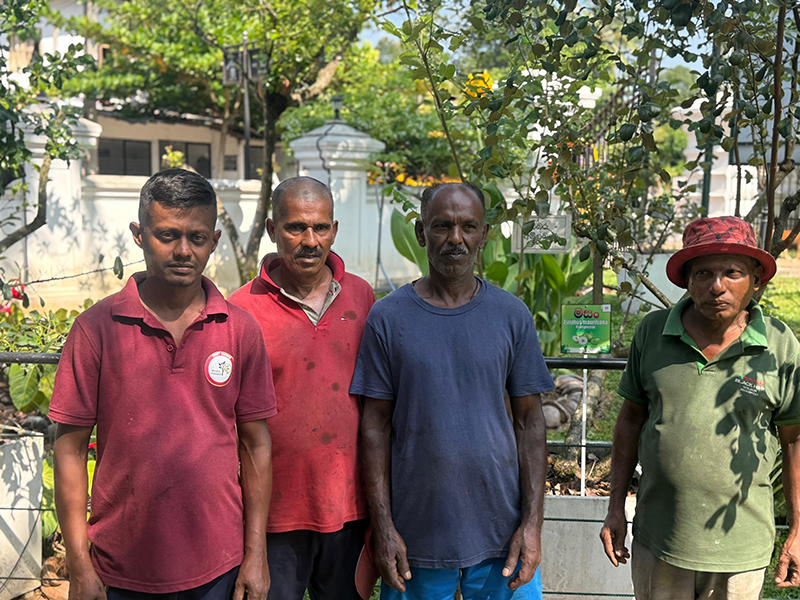
- Four workers in charge of the four zones of the plantation
-

- Siyamabalapitiya explaning the evolution of plantation


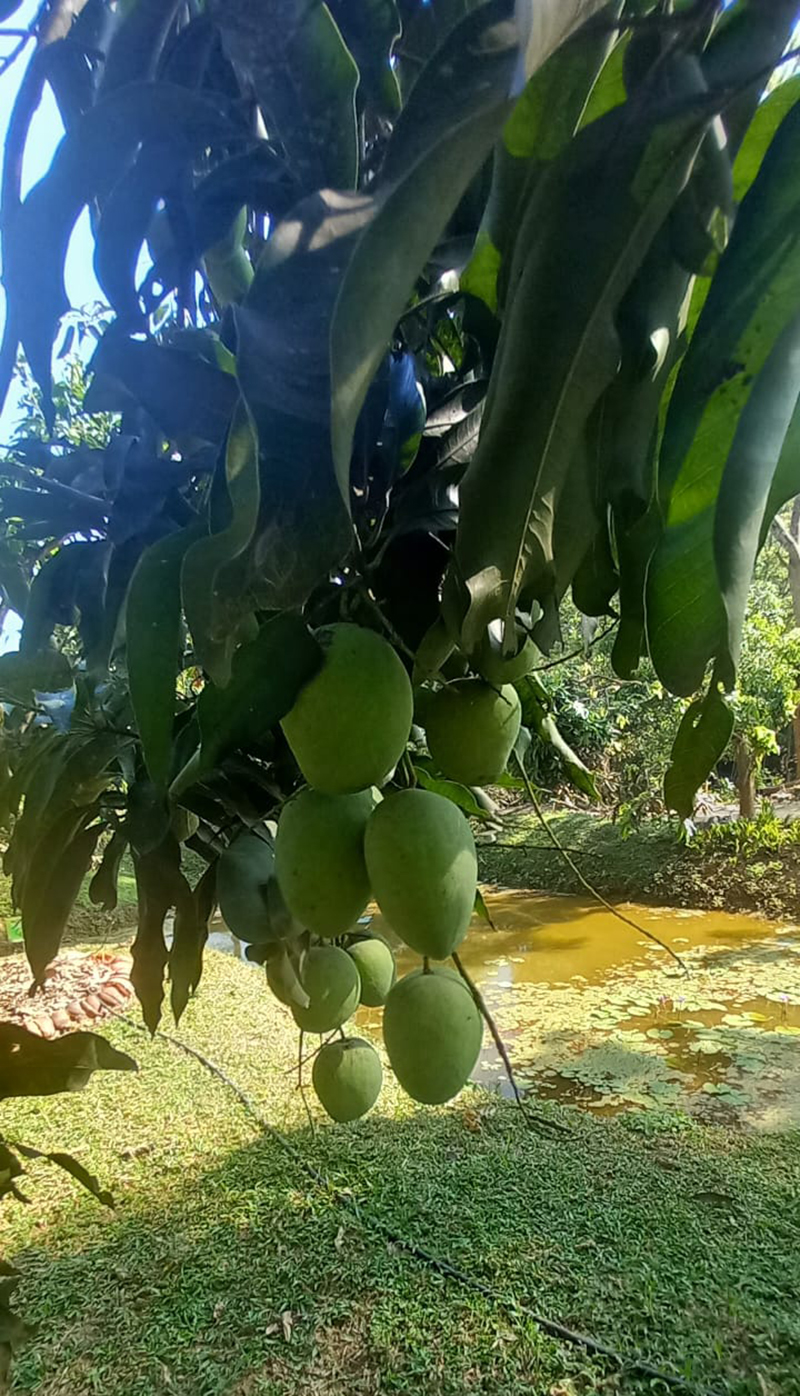
-

- A foreign berry plant
-

- A Bakumba plant
-
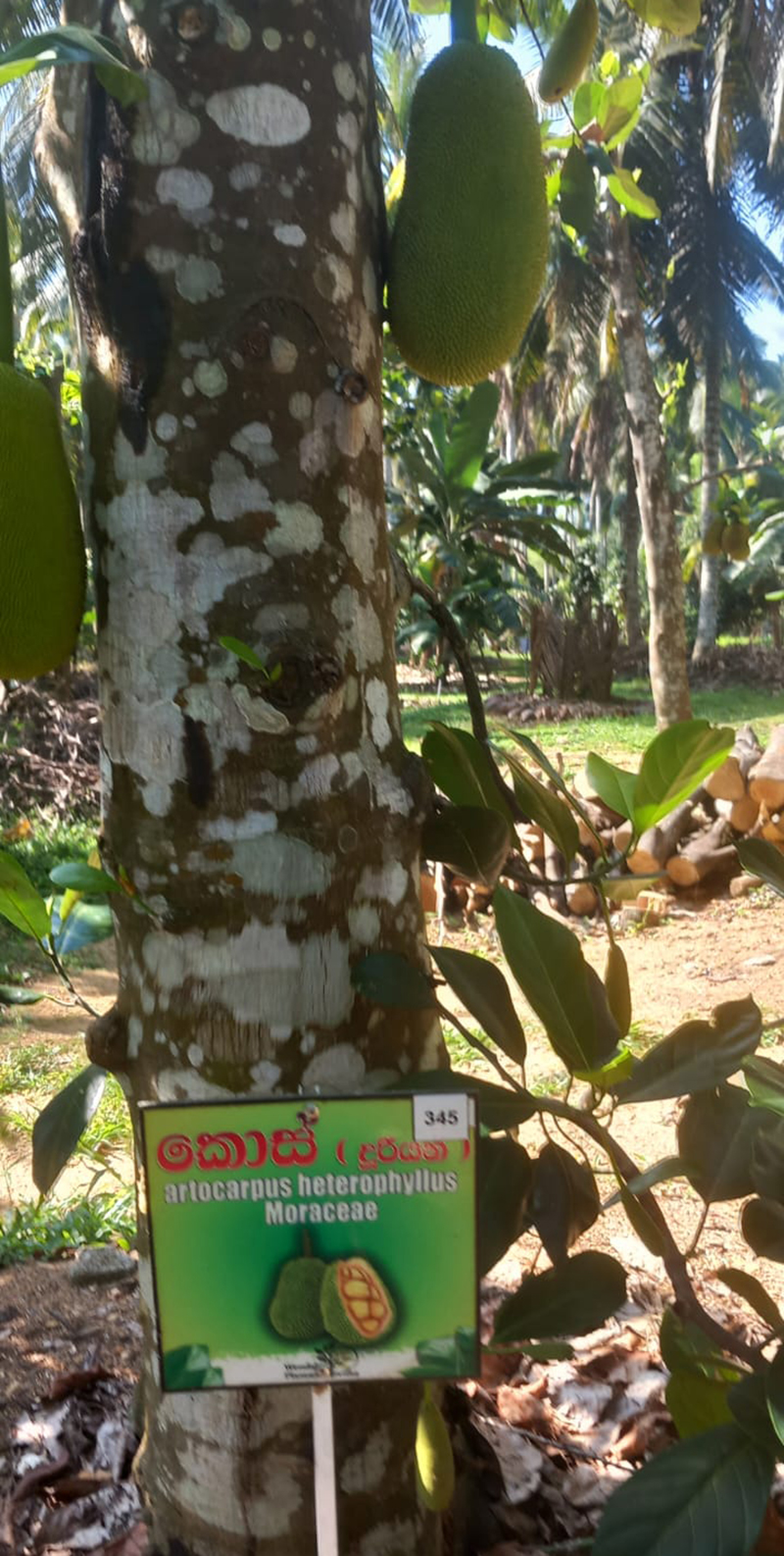
- A rare jackfruit tree
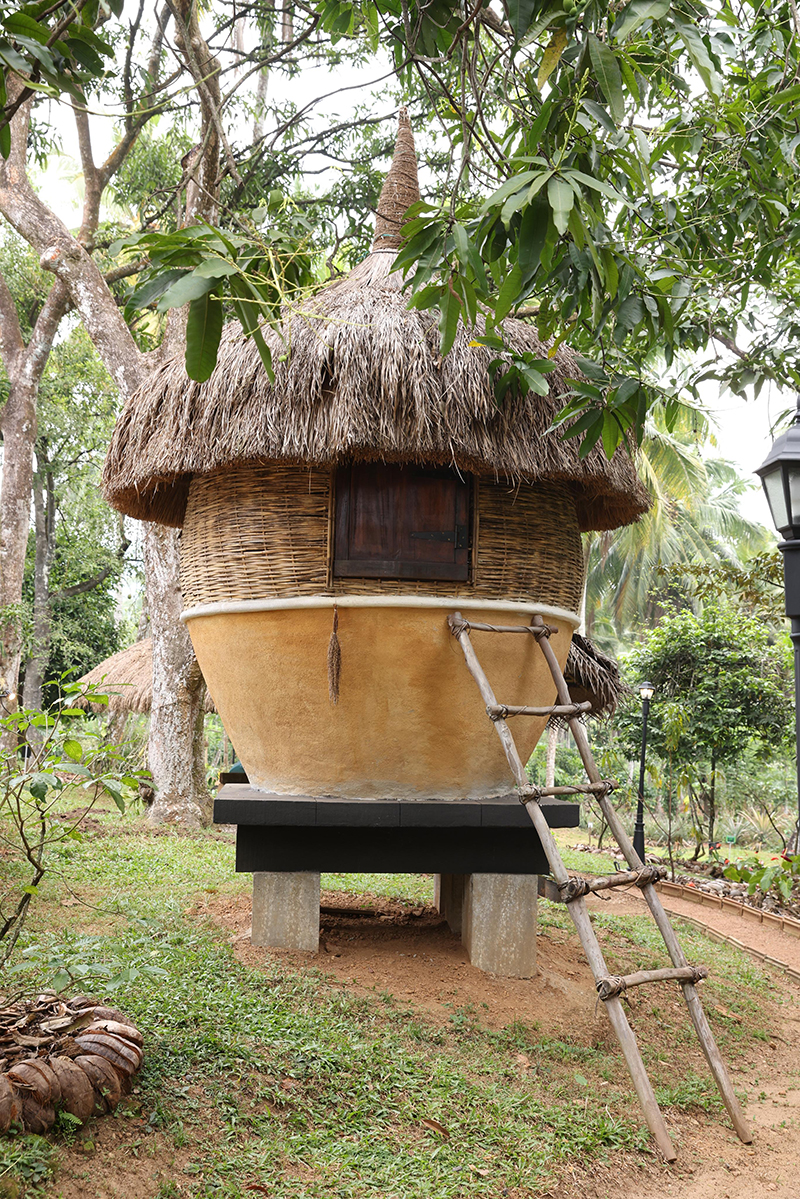
-

- Siyambalapitiya pruning Pumkin Lemon plant
-

- Siyamabalapitiya explaning the evolution of plantation

It has been reported by the international advocacy initiative, ‘Smoke Free Sweden’ (‘SFS’) that many International health experts have begun criticizing the World Health Organization (WHO) for presenting safer nicotine alternatives rather than recognizing its role in accelerating decline in smoking.
As the world’s premier technical health agency, the WHO is empowered to support strategies that reduce morbidity and mortality even if they do not eliminate the underlying behaviour. Furthermore, it should base its guidance on evolving scientific knowledge, which includes comparative-risk assessments. Equating smoke-free nicotine alternatives with combustible cigarettes, is essentially putting lives at risk, according to the health experts contacted by SFS.
The warning follows recent WHO comments suggesting that vaping and other non-combustible nicotine products are driving tobacco use in Europe. This narrative ignores real-world evidence from countries like Sweden where access to safer alternatives has coincided with record low smoking rates.
A “Smoke-Free” status is defined as an adult daily smoking prevalence below 5% and Sweden is on the brink of officially achieving this milestone. This is clear proof that pragmatic harm-reduction policies work. Sweden’s success has been driven by adult smokers switching to lower-risk alternatives such as oral tobacco pouches (Snus), oral nicotine pouches and other non-combustible products.
“Vapes and pouches are helping to reduce risk, and Sweden’s smoke-free transition proves this,” said Dr Delon Human, leader of Smoke Free Sweden. “We should be celebrating policies that help smokers quit combustible tobacco, not spreading fear about the very tools that are accelerating the decline of cigarettes.”
It is further reported by health experts that conflating cigarettes with non-combustible alternatives risks deterring smokers from switching and could slow progress toward reducing tobacco-related disease.
Dr Human emphasized that youth protection and harm reduction are not mutually exclusive.
“It is critically important to safeguard against underage use, but this should be done by targeted, risk-proportionate regulation and proper enforcement, not by sacrificing the right of adults to access products that might save their lives,” he said.
Smoke Free Sweden is calling on global health authorities to adopt evidence-based policies that distinguish clearly between combustible tobacco – the primary cause of tobacco-related death – and lower-risk nicotine alternatives.
“Public health policy must be grounded in science and real-world outcomes,” Dr Human added. “Sweden’s experience shows that when adult smokers are given legal access to safer nicotine alternatives, smoking rates fall faster than almost anywhere else in the world.”

Sameer Rizvi aces another tricky chase as Delhi Capitals floor Mumbai Indians

Sun directly overhead Dodanduwa, Rathgama, Yakkalamulla, Akuressa, Mulgirigala, Ranna, Kalamatiya and Ussangoda at about 12:13 noon today (05th April)

Showers expected in the Western, Sabaragamuwa, Central, Southern, Uva, Eastern and Northcentral provinces after 2.00 p.m.

Heat Index at Caution Level in the Western, Sabaragamuwa, Southern, Eastern, North-western, Northern and North-central provinces and in Monaragala district

Global ‘Walk for Peace’ to be held in Lanka

World Bank launches new 5-year partnership framework with Lanka

‘Dates have the highest sugar content to fight Coronavirus’

Sunday Island 27 December – Headlines

#SundayIsland 17th December – Headlines

Sunday Island – 28th March

Sunday Island Headlines – 21 March

Sunday Island – 21st February – Headlines
-

 News4 days ago
2025 GCE AL: 62% qualify for Uni entrance; results of 111 suspended
-

 News6 days ago
Tariff shock from 01 April as power costs climb across the board
-
 News7 days ago
Inquiry into female employee’s complaint: Retired HC Judge’s recommendations ignored
-

 Business5 days ago
Hour of reckoning comes for SL’s power sector
-
 Features7 days ago
New arithmetic of conflict: How the drone revolution is inverting economics of war
-

 Editorial4 days ago
Search for Easter Sunday terror mastermind
-

 Sports7 days ago
Sri Lanka’s 1996 World Cup heroes to play exhibition match in Kuala Lumpur
-

 Features6 days ago
Seychelles … here we come