
News
Pujith now says he should have done more


By Rathindra Kuruwita
Former Commandant of the Police Special Task Force (STF), SDIG, M. R. Latheef was informed of the possibility of a terror attack, after he had received information from the SIS, both in writing and over the phone, former IGP Pujith Jayasundara, on Monday, told the Presidential Commission of Inquiry (PCoI) investigating the Easter Sunday attacks.
Jayasundera said so when a Commissioner pointed out that SDIG Latheef had told the Commission that he had not been informed of a possible terrorist attack by the IGP over the phone.
“This is his opinion, but I informed him of it over the phone,” the witness said. Jayasundara added that Latheef was among the first officers he had conveyed the information about a possible terrorist attack to. Latheef had been informed because he as the STF Commandant was a capable officer with a wealth of experience, the former IGP said.
“I received the information from then SIS Director SDIG Nilantha Jayawardena on 9 April, 2019 and I forwarded it to four senior police officers on the same day. I, as the IGP, believed that they would take appropriate action,” the witness said.
Commissioners asked the witness why he had not given specific instructions to the Police officers. Jayasundara said those SDIGs had a lot of experience and expertise. Moreover, given the political climate at that time, there was nothing more he could do, the former IGP said.
However, given the turn of events, he now felt that he should have given specific instructions.
Jayasundara added that he had realised the seriousness of the information on a possible terrorist attack and conveyed it to officers under him on the same day he received it.
Officers had taken steps to inform security officers of VIPs and the Indian High Commission. Additional security officers had been detailed to protect the Indian High Commission since it had been mentioned as one of the targets of the bombers.
The Commissioners then asked the witness on why he had not informed the Senior DIG in charge of the Eastern Province of that information since Zahran Hashim, Rilwan Hashim, Army Mohideen and Milhan, whose names were mentioned in the intelligence information, were from the Eastern Province. Jayasundera said he had not done so.
“At that time it did not occur to me to inform SDIG – East of it. But now I think it would have been much better if he had been informed.”



MONETABRIEF –The prosecution of high-profile individuals from the former Rajapaksa administrations is set to escalate this month with the clearing of legal hurdles and administrative bottlenecks, according to officials involved in the process.
Former president Gotabaya Rajapaksa’s attempt to secure an order preventing his arrest in connection with the Easter Sunday massacre was turned down by the Court of Appeal on Thursday.
An overseas travel ban has been in operation against Rajapaksa since June, but the Criminal Investigations Department made no move to question him. He instead filed a writ application seeking an order preventing his possible arrest.
President of the Court of Appeal Rohantha Abeysuriya noted that the court would not interfere with the investigative process. Any attempt by the court would amount to an obstruction of the investigation.
In an unrelated case, the same court rejected an application by opposition legislator Dilith Jayaweera seeking the quashing of a contempt charge filed against him by the Fort magistrate. The charges against Jayaweera and a few other opposition politicians are expected to be taken up in the coming week.
Jayaweera and other opposition politicians — Wimal Weerawansa, Udaya Gammanpila, Sugeeshwara Bandara, and Asanka Navaratne
— were hauled up over their remarks relating to the arrest of Suresh Sallay, the former head of the State Intelligence Service.
SLPP academic Mahinda Pathirana is also charged over his public comments about Sallay’s arrest in February under the draconian Prevention of Terrorism Act.
Former president Mahinda Rajapaksa’s son, legislator Namal Rajapaksa, is already in remand custody following his arrest in connection with three cases of bribery and money laundering relating to the 2013 Airbus deal and the Krrish property development in Colombo.
Although Namal has been granted bail in the Airbus money laundering charge, he is in custody until October 13 over the bribery charge relating to the same Airbus transaction. His arrest is under a provision of the Anti-Corruption Act that does not allow a magistrate to grant bail unless under exceptional circumstances.
Meanwhile, his mother Shiranthi Rajapaksa, who had been asked to report to the Financial Crimes Investigations Division on September 24, was a no-show and was yet to return from Singapore.
She had travelled overseas on September 16, and a family spokesman said she was handed the FCID summons at the departure lounge of Bandaranaike International Airport just before she boarded a flight to Singapore.
At the time, the family spokesman said she was due to return in three days.
“We will see greater momentum in the legacy cases in the coming weeks,” an official involved in the prosecutions said.
“We have cleared the legal hurdles to press ahead with more arrests,” he said.
“We are working on a few administrative issues which will be resolved very soon.”
The controversial prosecution of former President Ranil Wickremesinghe is dragging on without him being formally indicted since his arrest in August last year. The Fort magistrate has listed the case again for November 11, when the Attorney-General is expected to report on his decision regarding action against Wickremesinghe.
Police have reminded the public that courts have the power to take legal action against individuals who evade arrest or remain in hiding after warrants have been issued against them.
Police said that under Section 60 of the Code of Criminal Procedure Act No. 15 of 1979, a court could issue a written proclamation requiring a person evading arrest under a warrant to appear at a specified place and time.
The proclamation must allow the person at least 30 days to appear before court, Police said.
If the person fails to appear even after the proclamation has been issued, the court may take further action under Section 61 of the Act.
This includes issuing an order for the attachment of the movable or immovable property belonging to the person concerned.Police issued the reminder highlighting the legal measures available against persons who deliberately evade arrest and remain in hiding after warrants have been issued.
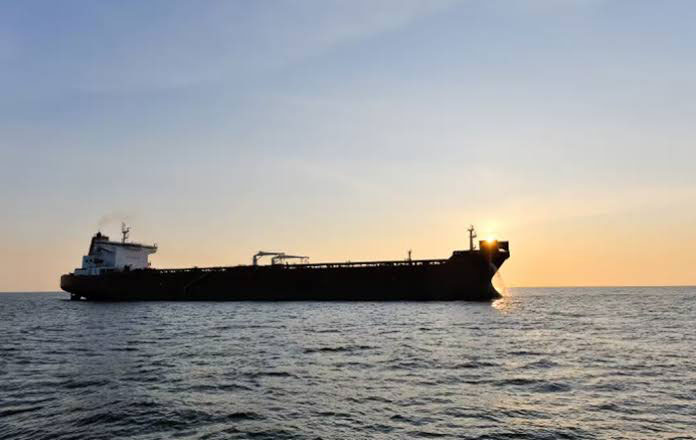
Around 20 Iranian oil tankers are reportedly stranded about 15 nautical miles off Sri Lanka’s southwestern coast, with several vessels facing shortages of food, fuel and fresh water amid tightening US sanctions and maritime restrictions, The Wall Street Journal reported.
According to the report published on Thursday (1), US officials have in recent weeks urged Sri Lanka to prevent local vessels from supplying essential provisions to the tankers and their crews.
The report, citing Sri Lankan Government documents and companies involved in supplying the vessels, said the US had raised concerns over assistance being provided to the sanctioned tankers.
The situation follows the United States’ decision to reimpose a maritime blockade of the Strait of Hormuz in July, which has reportedly left dozens of Iranian and Iran-linked tankers involved in transporting sanctioned oil to China stranded near Asian countries, including Sri Lanka and Malaysia.
Most of the vessels are reportedly empty tankers that had previously transported Iranian crude to Asia, often through ship-to-ship transfers, before preparing to return to Iran for additional cargo.
The WSJ reported that the US Embassy had warned Sri Lanka in August that it was monitoring 19 Iranian tankers off the country’s western coast and had raised the possibility of secondary sanctions against companies providing services to sanctioned vessels.
Sri Lankan authorities have maintained that the vessels are located outside the country’s 12-nautical-mile territorial waters and that the Government is not providing them with logistical assistance.
Meanwhile, shipping companies told the WSJ that obtaining approval to supply essential items, including food, drinking water and fuel, as well as repair services, to the Iranian vessels had become increasingly difficult.
Separately, Reuters reported in late August that 27 sanctioned Iran-linked tankers were waiting off Sri Lanka without cargo.
The Trump administration has also imposed additional sanctions on Iran and warned countries and companies trading with Tehran of potential consequences, as Washington seeks to pressure Iran to make concessions amid the ongoing conflict.
Similar concentrations of Iranian-linked tankers have been reported off Malaysia, where waters have historically been used for ship-to-ship transfers of Iranian crude destined mainly for China.

Landslide Early Warnings issued to the Districts of Kandy, Kegalle, Matale and Ratnapura

No handshakes and a delayed ceremony as India beat Pakistan at Asian Games

Showers or thundershowers will occur in most parts of the island after 1.00 p.m

Lanka enters new phase of prosecutions as hurdles clear

Police warn: Court evaders face property seizure

Nearly 20 Iranian tankers stranded off Lanka amid US sanctions

‘Dates have the highest sugar content to fight Coronavirus’

Sunday Island 27 December – Headlines

#SundayIsland 17th December – Headlines

Sunday Island – 28th March

Sunday Island Headlines – 21 March

Sunday Island – 21st February – Headlines
-

 News6 days ago
Police remove Thileepan statue in Jaffna
-

 Features6 days ago
The 22nd Amendment, constitutional recovery and illiberal slippage
-

 Features6 days ago
Of foreigners as CEOs of Lankan ventures
-

 Latest News4 days ago
Gold winner Tharanga gets brand-new Honda Vezel from SLAAJ
-

 News6 days ago
Sajith rejects Jt. Opp. protest sabotage claim; SJB TU chief demands remedial action
-

 Features4 days ago
Why Sri Lanka needs an Inclusive Civic Nationalism – urgently
-

 News3 days ago
US-assisted ‘Ice’ detection: NPC to examine IGP’s move to transfer drug-busting team
-

 Features5 days ago
Thailand’s biggest new global star …