
News
PUCSL reveals CEB’s questionable bids to purchase power

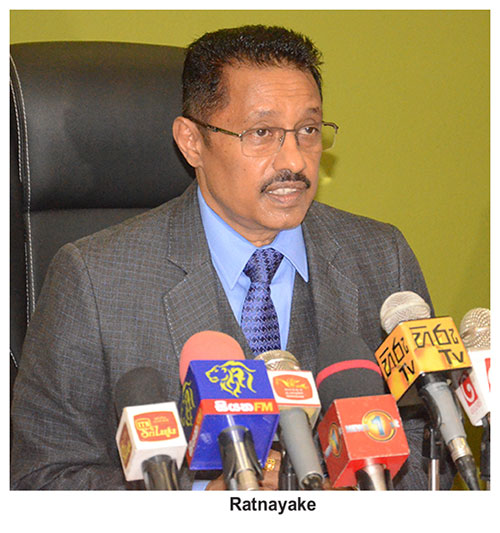
‘15 out of 16 requests rejected, but there were no blackouts’
By Rathindra Kuruwita
The Ceylon Electricity Board (CEB) had made 16 requests to Public Utilities Commission of Sri Lanka (PUCSL) between 2016 and 2020, seeking permission for power purchases, Chairman of the PUCSL Janaka Ratnayake said yesterday.
Ratnayake said that PUCSL had rejected those requests outright on 13 occasions and turned down two requests after discussions. PUCSL had approved the purchase of emergency power only once, he said.
“The funny thing is that our rejections did not lead to power cuts although those requests were made to avoid potential power cuts. We saved Rs. 571 billion by rejecting these requests. If the PUCSL had not existed, power purchases would have been made and the people would have been compelled to bear the burden. Therefore, it’s important to have regulators like the PUCSL. In other sectors we see ad hoc purchases and price hikes,” he said.
The PUCSL chairman said that they had warned about possible power cuts circa 2020 because the long-term generation plans were not implemented. The PUCSL, the Cabinet and the CEB Board of Directors had approved several power plants over the years. “For several reasons, none of these plants have been built. Thus, we have been having issues for a long time. Our power issues are man-made. PUCSL has called for building power plants, the Cabinet and CEB board approval have also been given but power plants are not built. But over the years there have been a lot of requests for purchasing emergency power,” he said.
Ratnayake said that the CEB had not made a request to buy emergency power now. This is because the issue right now is financial and not related to production.
“I think all of us remember the blackout on December 03, 2021. Was that accidental or was it sabotage? This is what we are looking into. When the blackout took place, two plants at Norochcholai broke down. We lost about 570 megawatts of power and it took almost a week to get the plants back online. Again on December 23 to 24, 2021, CEB, without any warning and without our approval initiated power cuts across the country. We wrote to CEB immediately and asked why you are shedding power? They didn’t reply. They did the same thing again on January 06, 2022. This time we asked them more aggressively,” the PUCSL chairman said.
The CEB had responded to the PUCSL a few days later and claimed that they were having issues with power generation, Ratnayake said. The CEB said some plants were not operating due to various reasons and wanted the PUCSL to approve power cuts.
“Now, the CEB is receiving fuel from the CPC and by the end of January the third power plant at Norochcholai will be back online. This will add 270 megawatts to the grid. So, I think we can stop the power cuts,” he said.
The Chairman of the PUCSL added that the CEB had not provided adequate information about the blackouts in December 2021 and soon the PUCSL will hold a public hearing on this. “We will take evidence and take steps to ensure that this doesn’t happen in the future,” he said.

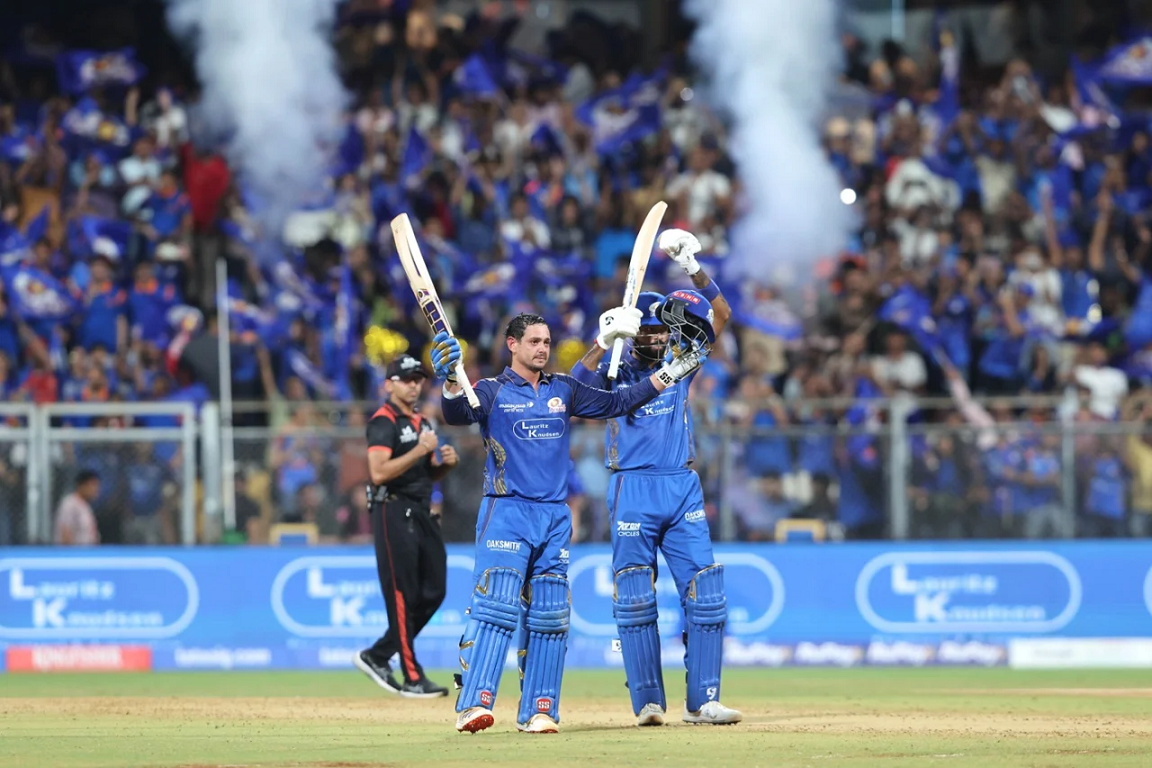
Quinton de Kock’s hundred on his comeback to the Mumbai Indians XI was overshadowed by Prabhsimran Singh and Shreyas Iyer’s demolition of the chase of 196 with 21 balls to spare to keep Punjab Kings unbeaten five games into the season. Arshdeep Singh swung the new ball, reversed the old one, and bowled a quiet over in the middle to lead PBKS’ strangle job on MI, who suffered their fourth successive defeat.
An injury to Rohit Sharma opened the door for de Kock to play his first match of this season and become only the third batter to score a century for three different IPL teams. He scored 112 off 60 balls, Naman Dhir was promoted to No. 4 and scored 50 off 31, but the rest of the MI innings never got going.
Allah Ghazanfar briefly threatened to scupper a typically boisterous PBKS chase with two wickets in the powerplay, but Prabhsimran and Iyer never let MI back in. Like Dhir and de Kock before him, Prabhsimran enjoyed a reprieve on 11, and finished unbeaten 80 off 39 to take his sensational IPL 2026 tally to 211 runs in 122 balls. It was the first time he stayed unbeaten in a successful chase in the IPL.
Iyer scored an equally important 66 off 35, his third consecutive half-century, starting with a four first ball when MI had taken two quick wickets.
Arshdeep came into the match with two wickets and an economy rate of 10.6 in four games this season. Two left-hand openers were the ideal setting for him to improve his performance. The new ball swung in the air and moved off the surface, and Arshdeep kept taking it away from Ryan Rickelton. He beat the bat three times in the first over. In his second, he bowled a wobble-seam ball that ended up on the pads, but Rickelton found deep square leg to perfection.
Arshdeep backed Suryakumar Yadav to walk out expecting movement from left to right, but he angled the seam away, drew a thick edge and doubled his season’s wickets tally in two balls, and also went past 100 IPL wickets.
Even before those two wickets, de Kock signalled dangerous intent with a silken, aerial extra-cover drive first ball off fellow South African Marco Jansen. In Jansen’s next over, Yuzvendra Chahal lost the ball in the lights and missed a sitter from Naman Dhir. In the last over of the powerplay, de Kock gave up on making his ground but Iyer missed the stumps from mid-off.
That drop wasn’t the last error Chahal made. He started his spell by searching and frequently over-pitching and ended up conceding five sixes in his three overs for 45. Dhir hit two of those, the one over extra cover the highlight of his innings.
By the time de Kock got to fifty, MI looked set for a total in excess of 200. From 97 for 2 in 10 overs, de Kock went up a gear even as Dhir caught up with him. At 125 for 2 in 12 overs, PBKS were looking at a challenging target.
The comeback for PBKS began with Jansen conceding just seven in the 13th over, but like in the game against Sunrisers Hyderabad, the lack of pace from Shashank Singh once again produced a game-changing wicket. In his 31-ball 50, Dhir evoked a lot of Hardik Pandya with a compact bat swing and shots that looked quite like the MI captain’s. Pandya himself, though, hardly got anything out of the middle of the bat. He eventually fell for 14 off 12 to what could well end up as the catch of the tournament.
Iyer didn’t even get his name on the scoreboard for this effort at long on: he went full length as he leaped to rein the ball in, caught it in his left hand while airborne, transferred it to his right even as he came down over the boundary, and managed to throw it to Xavier Bartlett before he touched ground.
With the ball reversing, Jansen and Arshdeep bowled excellent yorkers, going for eight and nine in overs 18 and 19. Sherfane Rutherford got four tailing pinpoint yorkers during his five-ball stay for one run. Only 70 came in the last eight, prompting Dhir to say during the innings break that MI were 20 runs short.
The way Priyansh Arya and Prabhsimran tucked into some buffet bowling from Deepak Chahar, it looked like 195 was not 20 short but 40. However, led by Jasprit Bumrah who bowled four straight dots to Arya, Ghazanfar ended up with two wickets in the powerplay: Arya caught at midwicket and Cooper Connolly caught behind.
There was a time when MI had strung together 10 balls for one run and a wicket across the second and third overs of the chase. Prabhsimran cut the 11th for a regulation catch to backward point but Bumrah, wicketless in six straight IPL matches now, dropped it.
When Connolly fell, MI were still hopeful of a comeback. Iyer, though, brought a sense of calm, playing Ghazanfar’s mystery spin like you would offspin. He cover-drove the first ball he faced for four, and PBKS never looked back.
Prabhsimran faced just six balls in the first five overs, which means he did most of the damage with the field spread out. It started when Chahar came back to bowl the eighth over. Prabhsimran charged at him to hit a 90-metre six over wide long-off before tucking one off the hip for four.
Now Prabhsimran began to dominate the strike and the scoring, bringing up his fifty with successive fours off Shardul Thakur in just 23 balls.
Bumrah might be wicketless but his bowling has been good through the season. However, when Iyer pulled him for a disdainful six in the 13th over, it was all over for MI. If there were any doubts remaining with 50 needed off the last seven overs, Prabhsimran dispelled them with a four and a six off Pandya. The end was swift and brutal with even Bumrah finishing with 0 for 41 in his four overs.
Brief scores:
Punjab Kings 198 for 3 in 16.3 overs (Priyansh Arya 15, Prabhsimran 80*, Cooper Connolly 17, Shreyas Iyer 66, Marcus Stoinis 10*; AM Ghazanfar 2-31, Shardul Thakur 1-42 ) beat Mumbai Indians 195 for 6 in 20 overs (Quinton De Kock 112*, Naman Dhir 50, Hardik Pandya 14; Arshdeep Singh 3-22, Marco Jansen 1-30, Shahshank Singh 1-19) by seven wickets
[Cricinfo]
Latest News
Heat Index at Caution Level in the Northern, North-central, North-western, Western, Sabaragamuwa, Eastern and Southern provinces and in Monaragala district

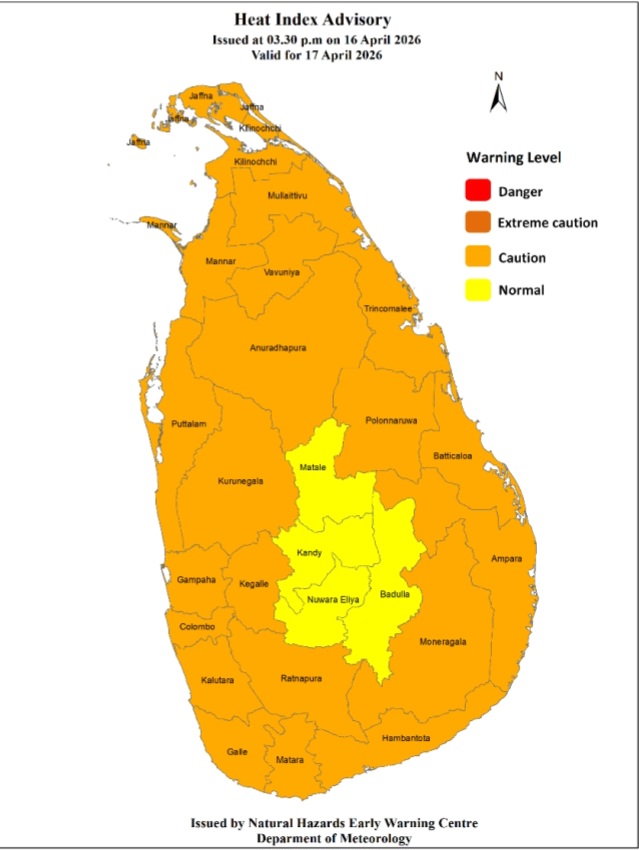
Warm Weather Advisory
Issued by the Natural Hazards Early Warning Centre
Issued at 3.30 p.m. on 16 April 2026, valid for 17 April 2026.
The Heat index, the temperature felt on human body is likely to increase up to ‘Caution level’ at some places in the Northern, North-central, North-western, Western, Sabaragamuwa, Eastern
and Southern provinces and in Monaragala district.
The Heat Index Forecast is calculated by using relative humidity and maximum temperature and this is the condition that is felt on your body. This is not the forecast of maximum temperature. It is generated by the Department of Meteorology for the next day period and prepared by using global numerical weather prediction model data.

Effect of the heat index on human body is mentioned in the above table and it is prepared on the advice of the Ministry of Health and Indigenous Medical Services.
ACTION REQUIRED
Job sites: Stay hydrated and takes breaks in the shade as often as possible.
Indoors: Check up on the elderly and the sick.
Vehicles: Never leave children unattended.
Outdoors: Limit strenuous outdoor activities, find shade and stay hydrated.
Dress: Wear lightweight and white or light-colored clothing.
Note:
In addition, please refer to advisories issued by the Disaster Preparedness & Response Division, Ministry of Health in this regard as well. For further clarifications please contact 011-7446491.

“Auditor General’s reports a matter for Legislature not the Executive”
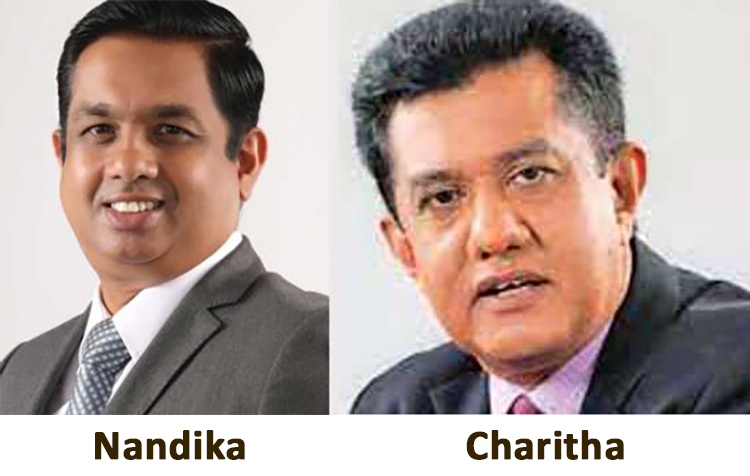
Former Chairman of the Committee on Public Enterprises (COPE) Charitha Herath has said it is the COPE, and not the Secretary to the President, that should have asked the CID to probe irregularities in the procurement of coal for the Lakvijaya power plant.
Dr. Nandika Sanath Kumanayake, who is the Secretary to the President, lodged a complaint with the CID last week seeking an investigation into coal procurement.
No previous Secretary to a President had done so, the former parliamentarian and the Samagi Jana Balawegaya (SJB) Working Committee member said. Herath said so responding to The Island query regarding Kumanayake calling for a probe into coal procurement, since 2009, following the National Audit Office (NAO) report on the controversial procurement process for the 2025/2-26 period.
Herath emphasised that COPE, taking into consideration the growing discontent over coal procurement, especially after the NAO exposed serious irregularities, should have initiated action. Herath cited the National System Operator’s (NSO) seeking an additional electricity tariff increase of 15%, in addition to 10% increase announced on 01 April, for the second quarter, to cover-up Rs 16 bn deficit in power generation, as a matter of grave concern. NSO has cited the prevailing dry weather, the continuing crisis in West Asia, and the low-grade coal that had been procured as primary reasons for the unanticipated shortfall in electricity generation.
Herath said that as the Secretary to the Ministry concerned was the Chief Accounting Officer, the actions of the Secretary to the President caused a technical issue. Prof. Udayanga Hemapala, now under a cloud over the violation of procurement procedures, as confirmed by the NAO, is the Secretary to the Energy Ministry. Herath emphasised the importance of the procedure adopted in appointing a Secretary to a Ministry. “President issues one letter making the appointment. Secretary to the Finance Ministry issues a second letter underscoring the responsibilities of a Ministry Secretary as the Chief Accounting Officer of a particular Ministry,” Herath said.
The second letter emphasised the accountability on the part of the Ministry Secretary regarding public finance and his direct answerability to Parliament.
The ex-COPE Chief pointed out that the Secretary to the President was part of the executive. He was not part of the legislature. If there had been a directive from COPE, that should have been issued to the Secretary to the Energy Ministry, Herath said, emphasising the entire process had to be led by the legislature not the executive. In this instance to make matters worse the finger is also pointed at the executive for being part of the alleged cover up.
The Auditor General, who heads the NAO, is answerable to Parliament, Herath said, pointing out that the AG never sent reports to the Secretary to the President, who, too, comes under the purview of the NAO. The intervention made by the Secretary to the President could set a very bad precedent and it was unfortunate that the NPP, having campaigned on an anti-corruption platform at national elections in 2024 was now struggling to cope up with the major post-Aragalaya coal scandal.
The NAO undertook the examination of the 2025/2-26 coal procurement on a request made by Dr. Nishantha Samaraweera, Galle District lawmaker, representing the ruling NPP.
Lakvijaya, the country’s sole coal power plant, situated at Norochcholai, requires approximately 2.25 mt million annually and is credited with generating 30% to 40% of the overall national electricity requirement.
According to the NAO report, the Energy Ministry had awarded the term tender for the supply of coal to India’s Trident Chemphar Ltd., though it wasn’t properly registered. The NAO also pointed out the failure on the part of the supplier to follow proper procedure in respect of loading and unloading at respective ports.
Herath said that intentionally, or inadvertently, the NPP had erred in handling the investigation. He said after receiving the NAO’s report, COPE could have averted unnecessary controversy by following the laid down procedures. The COPE Chairman could direct the Energy Secretary to inquire into the coal procurement within seven days and submit a report to Parliament. In addition, if there had been any wrongdoing on the part of officials, relevant documents/files should be sent to the CIABOC or the CID.
The COPE, in consultation with the Speaker, could also take up in Parliament as an urgent/emergency issue at the onset of the proceedings, Herath said, adding that an interim report could be presented. On the basis of that report, in terms of the Standing Orders the Parliament could immediately decide to send it to the CID.
In addition to the above mentioned procedures, the COPE could on its own initiate a fresh inquiry and submit a report to Parliament and the country, Herath said. Pointing out that the coal company comes under the purview of the executive and not the legislature, Herath said that actions of the executive could be investigated. Herath explained how the British and the US responded to such situations. Unfortunately, here in Sri Lanka apparently the COPE was being used to clear the Minister concerned while holding the officials responsible for the coal scandal.
In the wake of the NAO report signed by Auditor General Samudrika Jayarathne, the defeat of the no-confidence motion moved against Energy Minister Kumara Jayakody couldn’t be considered a victory for the government, the ex-MP said. In fact, the coal scam has challenged the NPP’s much propagated anti-corruption stance, Herath said, adding that the issue couldn’t be examined without discussing the Energy Minister being indicted over corruption by the Colombo High Court recently.
By Shamindra Ferdinando

Minister of Power and Energy and Ministry Secretary resign from posts

Rwanda to host inaugural ICC Women’s Challenge Trophy from April 18

Canada T20 World Cup match under ICC corruption investigation

No date set for US-Iran talks, as Pakistan pushes to keep diplomacy alive

Arshdeep and Prabhsimran star as Punjab Kings hammer Mumbai Indians

Showers expected in the Western, Sabaragamuwa, Southern and Uva provinces and in Kandy and Nuwara-Eliya districts after 1.00 pm

‘Dates have the highest sugar content to fight Coronavirus’

Sunday Island 27 December – Headlines

#SundayIsland 17th December – Headlines

Sunday Island – 28th March

Sunday Island Headlines – 21 March

Sunday Island – 21st February – Headlines
-

 News6 days ago
CEB orders temporary shutdown of large rooftop solar systems
-
 Features6 days ago
From Royal College Platoon to National Cadet Corps: 145 years of discipline, leadership, and modern challenges
-

 Latest News5 days ago
PNS TAIMUR & ASLAT arrive in Colombo
-

 News7 days ago
Anura Solomons passes away
-

 Features6 days ago
CIA’s hidden weapon in Iran
-
 Latest News4 days ago
Prasidh, Buttler set up comfortable win for Gujarat Titans
-

 News2 days ago
PNS TAIMUR & ASLAT set sail from Colombo
-

 Business7 days ago
SL’s economic outlook for 2026 being shaped by M-E conflict