
News
Protest against setting up of cement factory in highly populated area near BIA

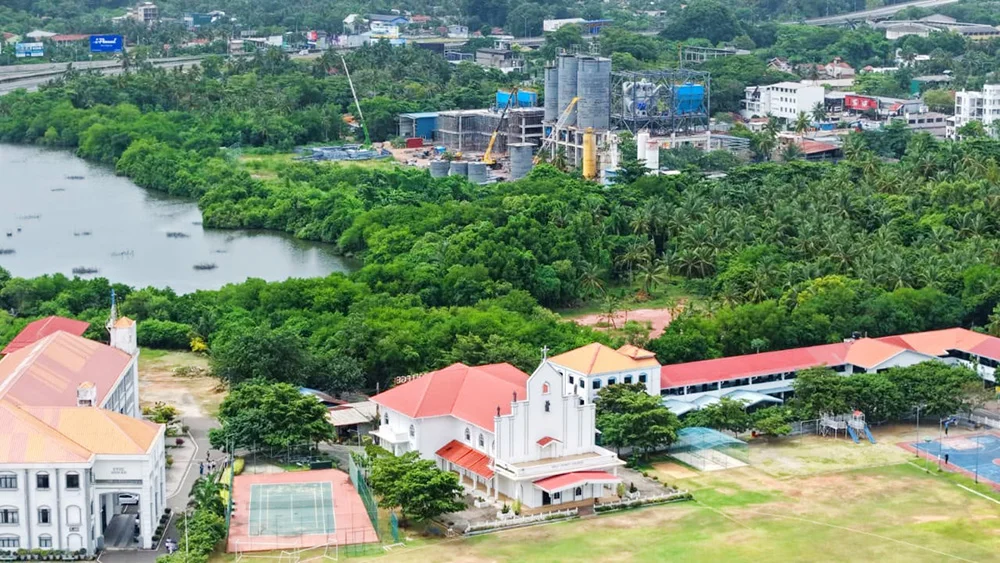
… school alleges deception
What began quietly as a single-storey tourist hotel, on the edge of Katunayake-Seeduwa has, five years later, morphed into a looming five-storey cement factory and with it, a storm of fear, anger and unanswered questions.
At a media briefing held on 19 September at St. Thomas International School, Seeduwa, the community finally found its voice. The gathering included priests, school principals, environmental defenders, and parents whose children study within a few hundred metres of the site.
The briefing was led by Rev. Fr. Jude Chrishantha Fernando, Director of National and Archdiocesan Catholic Social Communications, Rev. Fr. Nilantha Heshan, Director of the Archdiocesan Sethsarana Institute, Dinusha Nanayakkara, Convener of the Archdiocesan Committee for the Protection of Muthurajawela, and Attorney-at-Law Ms. Isuri Rodrigo.
Their message was clear: This is not a campaign against development.
“We Are Not Against Cement. We Are Against Deception.”
“Cement is an essential raw material for the country. We have no opposition to any such factory or production plant,” they told the media. “But what we cannot agree to is a project of this magnitude, in this location, without any proper environmental assessment.”
The speakers alleged a textbook case of deception, obtaining approvals for a low-impact tourist hotel, in one of the most densely populated educational zones in the Katunayake-Seeduwa Municipal Council area, and then transforming it into a heavy industrial plant.
“In an area where thousands of schoolchildren study, to show one thing on paper and build another is a highly fraudulent procedure. It is clear that the real environmental damage and the truth have been hidden from the people,” they said.
With the sea and lagoon winds that sweep across Seeduwa, experts fear these fine particles will not stay confined to the factory walls. They will drift across classrooms, homes, and the Katunayake Free Trade Zone, where thousands of workers, representing all 25 districts of Sri Lanka, work every day.
“The risk is not local. It is national. We are talking about a future generation of children with respiratory illnesses, and workers developing chronic breathing disorders,” one speaker warned.
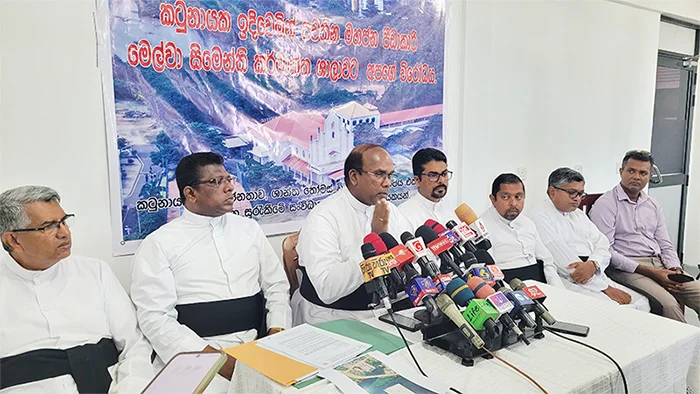
Rev. Fr. Jude Chrishantha Fernando, Director of National & Archdiocesan Catholic Social Communications, responding to journalists
Then there is the proximity that defies logic, just 500 metres from the Bandaranaike International Airport.
The panel presented a scientific concern that has aviation experts worried: a significant drop in air quality around the airport and its runway, and the severe risk to highly sensitive aircraft engines when they ingest air mixed with cement dust. What is at stake, they argued, is not just health but the economy itself.
“When you weigh it deeply, the economic contribution of an international airport is far higher than that of a cement factory. If international airlines start to avoid Katunayake due to safety and air quality concerns, it will be a fatal blow to our country’s economy,” they emphasised.
A few minutes away lies another victim the Negombo Lagoon and the Muthurajawela wetlands, Sri Lanka’s largest and most sensitive coastal ecosystem.
The panel warned that cement dust settling on the mangrove system could degrade water quality, disrupt the delicate salinity balance, and directly interfere with fish breeding grounds. For the fishing communities of Negombo, whose lives depend on the lagoon, this is an existential threat.
“The lagoon is a nursery. If its water quality drops, fish will not breed. If fish do not breed, an entire fishing community collapses,” they said.
The speakers alleged that while the developers claim to have approvals from various state institutions, many of the mandatory clearances, particularly comprehensive Environmental Impact Assessments and feasibility reports, have not been obtained.
They stressed they are not calling for an end to investment, but for it to be done right.
“We have no objection to this factory being started in another suitable location where it will not cause these environmental impacts, based on proper feasibility and assessment reports. Stop this construction here and move it,” was the unanimous demand.
The appeal has now been directed again to the President, the government, and all responsible state institutions and officials.
As the briefing ended, one image lingered — a school playground, a lagoon, and a towering cement structure rising between them. It is a scary picture for the people of Seeduwa; they asks a simple question: What price are we willing to pay for development that doesn’t breathe?









By Anuradha Hiripitiyage
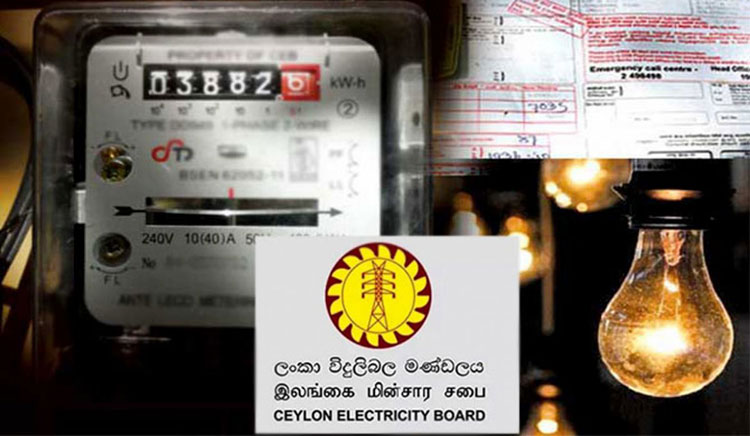
Electricity tariffs should be reduced by between 3 and 5 percent instead of being increased by 2.88 percent in the fourth quarter, as proposed by the National System Operator (NSO), Electricity Consumers’ Association Secretary Sanjeewa Dhammika said.
Addressing a media briefing in Maradagahamula, Divulapitiya, Gampaha, yesterday (16), Dhammika said a proper assessment of electricity generation costs, including the contribution of hydropower, could justify a reduction in tariffs.
He said the NSO had sought approval from the Public Utilities Commission of Sri Lanka (PUCSL) for a 2.88 percent tariff increase, which was expected to generate an additional Rs. 4,438 million.
However, the Commission had indicated that an increase of only 1.46 percent was warranted, amounting to Rs. 2,245 million, he said, adding that even this increase was unnecessary.
Dhammika alleged that the proposed revision sought to pass on to electricity consumers the financial burden arising from the non-arrival of five coal shipments and failed tenders.
“The Government had said that the burden of coal-related losses would not be passed on to the public. It is therefore unjust to make consumers bear these costs,” he said.
He pointed out that the PUCSL had forecast that hydropower would account for 32.34 percent of total electricity generation in the coming quarter, while the cost of such generation would represent only 3.45 percent of the overall cost of electricity production.
Consumers should benefit from the lower cost of hydropower generation rather than bear the burden of more expensive thermal power generation, he said.
Dhammika also questioned the inclusion of Rs. 669 million in capacity charges that had not been approved by the PUCSL, as well as a further Rs. 1,069 million to repay loans relating to incomplete projects.
Including such charges in the proposed tariff revision was unjustifiable, he said.
The PUCSL has given the public until October 30 to submit their views on the proposed tariff revision.
Dhammika said the possibility of increased hydropower generation in the coming weeks, as reservoir levels rise, should also be taken into account when determining electricity tariffs.
He maintained that tariffs could be reduced by 3 to 5 percent if hydropower generation was properly assessed and coal-related losses and unapproved charges were excluded from the calculations.
He further claimed that electricity tariffs could be reduced by as much as 10 percent through the promotion of renewable energy and the effective use of solar power and battery storage systems.
The Electricity Consumers’ Association urged the Government to withdraw the proposed tariff increase, insisting that consumers should not be made to bear costs arising from coal supply problems and other disputed charges.

By S.K. Samaranayake
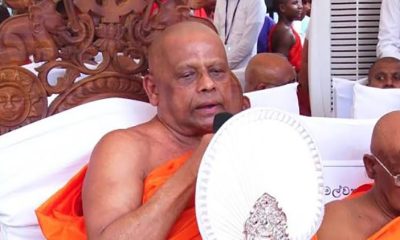
Most Ven. Warakagoda Sri Gnanaratana Mahanayake Thera of the Asgiri Chapter has called for the immediate release of Ven. Galagodaaththe Gnanasara Thera, who is currently serving a prison sentence, following a court ruling.
The Asgiri Mahanayake made the appeal when a delegation of senior prison officials, including Assistant Commissioner of Prisons and Director of Operations Senaka Pallegedara, called on him on the 16th.
During the meeting, the prelate warned that the continued incarceration of Ven. Gnanasara Thera could lead to a volatile situation and cause public agitation.
Responding to the appeal, the prison officials informed the Mahanayake Thera that the authority to order the release of Ven. Gnanasara Thera did not rest with the Prisons Department but with the President.
Other senior prison officials, including Rajeev Srimal Silva, Sampath Warnakulasooriya and Mangala Welivita, were also present at the meeting.
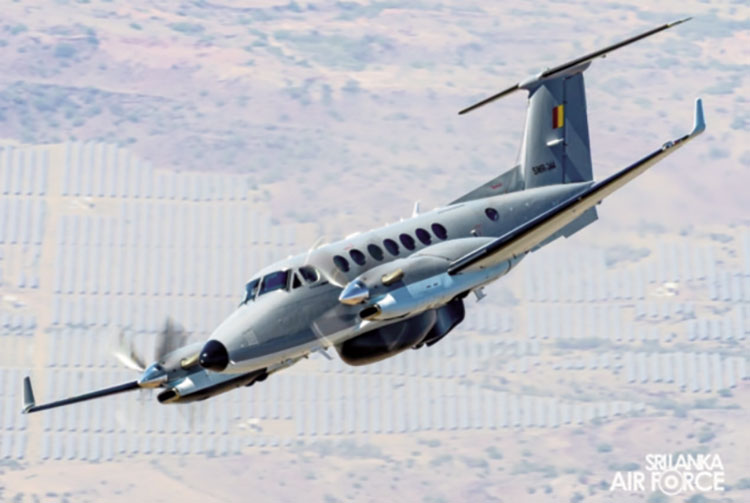
The Sri Lanka Air Force participated in a multinational air exercise in India, alongside the air forces of the United States, France and Germany, as Sri Lanka continues to expand military cooperation with foreign countries.
A Sri Lankan Air Force Beechcraft King Air 360ER aircraft, and a six-member crew, took part in Exercise Tarang Shakti 2026, held at Air Force Station Jodhpur, from September 26 to October 12.
The exercise was hosted by the Indian Air Force, under the theme “Power in Partnership,” and involved Australia, Bangladesh and the United Arab Emirates, among other participating countries.
According to the Sri Lanka Air Force, the exercise was aimed at enhancing operational cooperation and interoperability among participating air forces and providing opportunities to share tactics and operational experience.
India’s public broadcaster reported that the exercise included training and experience in planning and conducting joint multinational combat operations, including counter-air, air defence, reconnaissance and air-to-air refuelling missions.
The exercise also involved 32 countries as observers.
Sri Lanka’s participation comes amid increased military engagement with foreign partners. India and Sri Lanka recently exchanged 240 military personnel under a tri-service exchange programme.
Sri Lankan military personnel also recently participated in a counter-terrorism exercise with Russia, while a senior US Army Pacific official visited Sri Lanka and discussed opportunities for greater joint training.
-

 News6 days ago
Sri Lanka escalates anti-graft drive with Shiranthi’s jailing
-

 Latest News5 days ago
Farhan and Sadaqat help Pakistan seal series in style
-

 News6 days ago
Iranian ships stranded, Lanka fears US sanctions
-

 Latest News4 days ago
Nissanka’s return headlines Sri Lanka’s Test squad against Pakistan
-

 Features5 days ago
Intake 16: 45 years of duty and honour
-

 News5 days ago
Malwathu Chapter issues statement on talks with President over Gnanasara Thera’s robes
-

 News5 days ago
CP alleges NPP has taken the blame for illegal US sanctions on Iranian vessels
-

 News6 days ago
Navi Pillay’s Lankan affairs in focus as she wins 2026 Nobel Peace Prize