
News
Proper enforcement of election laws following removal of IGP – Harini

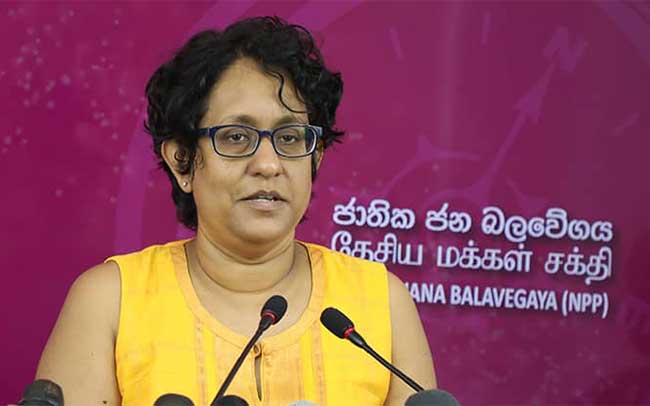
By Saman Indrajith
National People’s Power (NPP) MP Dr. Harini Amarasuriya yesterday said the police had been impartial in enforcing election laws following the temporary removal of Deshabandu Tennakoon as Inspector General of Police (IGP).
Speaking to The Island, Dr. Amarasuriya said the majority of voters had already decided whom to support.
She pointed out that the political empowerment of Sri Lankans, especially women, was important for the NPP. In this country, women’s political empowerment was often judged by how many of them were elected to parliament, provincial, or local councils. “However, this is not a reliable indicator of women’s political empowerment. Sri Lanka has had the world’s first female prime minister and one of the first female presidents, yet can we truly claim that women are politically empowered? We have a female quota for local councils too. We believe that the level of politically engaged women is a more accurate gauge,” she said.
Dr. Amarasuriya said the NPP had been encouraging women who participate in its activities to view themselves not merely as voters, but as citizens. “We tell them that as citizens, they have the responsibility to make positive contributions to society. Over the past few years, we believe many Sri Lankans have been empowered by our actions,” she said.
The NPP MP noted that for almost a year, people had been asking about the principles on which the NPP would govern. “People would ask, what distinguishes the NPP from other parties? The NPP leaders can speak well, but where are your policy documents? A few weeks ago, we presented our manifesto, which has also been condensed into an eight-page document that many people have read,” she said.
The manifesto, which took two and a half years to prepare, is endorsed by the NPP, with the party standing by every word, Dr. Amarasuriya stated. “This manifesto is the NPP’s contract with the people of the country,” she added. The MP further elaborated that around 400 individuals were involved in creating the manifesto, with 20 committees engaged in consultations, debates, and research.
Dr. Amarasuriya also observed that most NPP offices outside of the cities have become community hubs, where people gather to discuss, debate, share meals, and engage in various communal activities. She attributed the peaceful nature of the current election to the NPP’s growing popularity and the discipline of its members. “We do not put up millions of posters or instigate conflicts. On the contrary, those who previously engaged in election law violations and violence have been silent, as people no longer tolerate such behaviour. Typically, the NPP faces some violence during elections, but this time we have not,” she said.
She also commended the police for enforcing election laws more strictly than in the past, particularly after the temporary removal of Deshabandu Tennakoon as IGP. “The police have been very transparent and approachable. At our rallies, if they feel we are overstepping the guidelines set by the elections commission, they communicate with us clearly and respectfully. They have handled situations very well. It seems they too feel they can act independently in the future,” she added.
According to Dr. Amarasuriya, this election represents a shift in power—not from one group of politicians to another, but from politicians to the people. “The average Sri Lankan now seeks policies-based governance and a disciplined political culture,” she said. “The public has rejected politics based on false promises and violence.”
It is very likely that NPP will win the 21 September presidential election and once NPP candidate Anura Kumara Dissanayake is sworn in as president, the party intends to dissolve parliament as soon as possible, she revealed. “A mandate for the NPP is a mandate against this parliament. Neither the current parliament nor the cabinet of ministers aligns with the NPP’s vision for the country. We have three constitutional options for governing during the interim period before a general election. The first option is a very small cabinet of ministers to administer the country for approximately 50 days until the general election. The second option is for the president to appoint secretaries to manage these duties. The third option, which is highly unlikely, is to form a Cabinet that includes a few non-NPP MPs,” she said.






The National Business Facilitation Centre (NBFC), which is being established under the Presidential Secretariat with the aim of removing administrative and regulatory barriers that exist among government institutions in relation to investment and industry and expediting these processes, will be opened tomorrow (22).
The centre is being established on the President’s initiative with the aim of bringing about a positive transformation in the industrial sector. The centre will provide solutions to issues that arise in dealing with the government machinery when starting and operating a business, while also coordinating with the relevant government institutions to provide the necessary facilities.
The “ViYASA” National Business Facilitation Centre (NBFC) has been established at Building C-80, Hector Kobbekaduwa Mawatha, Colombo 07, and is headed by Senior Additional( Secretary to the President, Seevali Arukgoda.
The centre will be opened under the patronage of Minister of Labour and Deputy Minister of Finance and Planning Dr Anil Jayantha Fernando and Minister of Industry and Entrepreneurship Development Sunil Handunnetti, with the participation of Secretary to the President Dr Nandika Sanath Kumanayake.
The website https://nbfc.presidentsoffice.gov.lk is also scheduled to be officially launched on the occasion.
President’s Media Division)
Latest News
Court of Appeal Judge M. Sri Mevan Anthony Edirimannasuriya Corea appointed as Acting President of the Court of Appeal

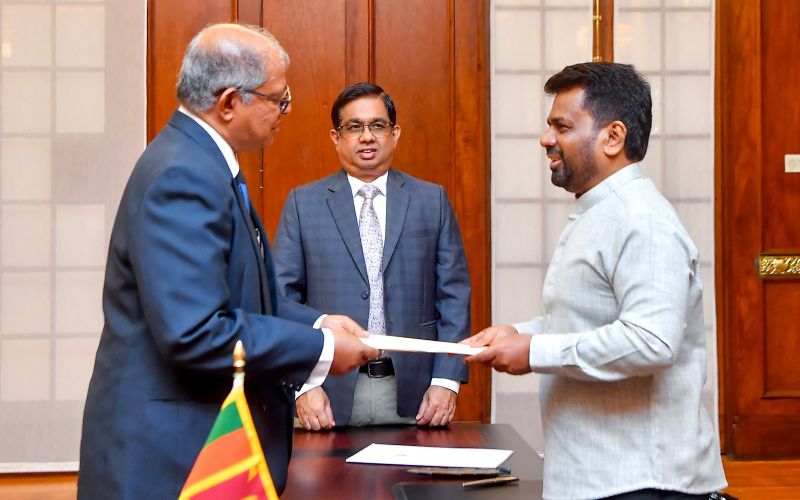
President Anura Kumara Dissanayake has appointed Court of Appeal Judge Mayadunna Sri Mevan Anthony Edirimannasuriya Corea as the Acting President of the Court of Appeal.
The appointment has been made as President’s Counsel Nalin Rohantha Abeysuriya, who currently serves as President of the Court of Appeal, will be overseas until the 24th.
Accordingly Judge Mayadunna Corea was sworn in as Acting President of the Court of Appeal before President Anura Kumara Dissanayake at the Presidential secretariat this morning (21).
Secretary to the President Dr Nandika Sanath Kumanayake was also present at the occasion.
(President’s Media Division)
Latest News
President instructs expediting further measures concerning Sivarasa Anojan, sentenced to death in Saudi Arabia
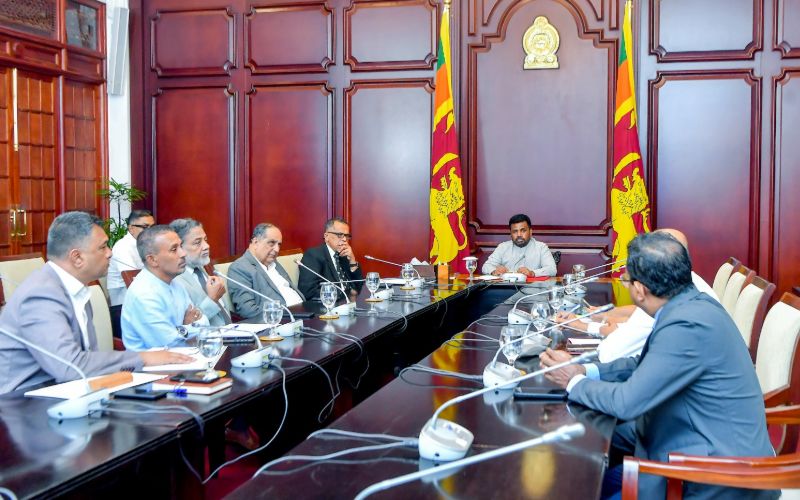
A discussion to review the further measures that could be taken regarding Sivarasa Anojan, a young Sri Lankan national who has been sentenced to death in Saudi Arabia, was held at the Presidential Secretariat this afternoon (21), under the patronage of President Anura Kumara Dissanayake.
The discussion focused on the measures taken to date concerning Sivaraasa Anojan and the further diplomatic and legal steps that could be pursued. Attention was also given to expediting the necessary further measures that could be taken to secure his release.
President Anura Kumara Dissanayake instructed officials to continue the necessary diplomatic engagement with the relevant authorities in Saudi Arabia and to maintain close and continuous involvement in all further measures concerning the case.
Reaffirming the Government’s continued attention to the safety and welfare of Sri Lankans living and working overseas, the President also stressed the need for the relevant ministries and institutions to work in close coordination and pursue all possible measures that could be taken in connection with the case.
Deputy Speaker Rizvie Salih, Deputy Minister of Religious and Cultural Affairs Muneer Mulaffer, Governor of the Western Province Hanif Yusoof, Secretary – Ministry of Foreign Affairs, Foreign Employment and Tourism Aruni Ranaraja, Secretary to the Ministry of Defence Air Vice Marshal Sampath Thuyacontha (Retd), Attorney General Parinda Ranasinghe and officials of the Ministry of Foreign Affairs, Foreign Employment and Tourism were also present at the discussion.
(President’s Media Division)

“ViYASA” National Business Facilitation Centre (NBFC) to be opened tomorrow (22)

Court of Appeal Judge M. Sri Mevan Anthony Edirimannasuriya Corea appointed as Acting President of the Court of Appeal

President instructs expediting further measures concerning Sivarasa Anojan, sentenced to death in Saudi Arabia

It’s Shafali vs Athapaththu as Sri Lanka seek to stop India juggernaut

Trophy row unlikely to repeat in Japan

Powerful explosions at Syrian army site near Aleppo injure at least four

‘Dates have the highest sugar content to fight Coronavirus’

Sunday Island 27 December – Headlines

#SundayIsland 17th December – Headlines

Sunday Island – 28th March

Sunday Island Headlines – 21 March

Sunday Island – 21st February – Headlines
-

 News5 days ago
US embassy won’t comment on IGP’s probe into joint drug raid
-

 News4 days ago
Bid for Basil’s extradition nears final stage: Police
-

 News3 days ago
Shanakiyan urges urgent action over reported death sentence for Lankan in Saudi Arabia
-

 Features7 days ago
The emptying university: why are academics leaving?
-

 Business5 days ago
All-new Bolero MaXX unveiled in Sri Lanka
-

 Opinion7 days ago
Who committed genocide and created mass graves in Sri Lanka?
-

 News2 days ago
Namal Rajapaksa Buddhist gambit fails, bail denied
-

 Opinion5 days ago
A journalist who wrote across the divide