
Business
Prof. EOE Pereira’s legacy to the nation


(Excerpted from a speech made last week by his son, Lorenz Pereira, MA, Cambridge, at the Engineering Faculty of the University of Peradeniya)
My father would want me to humbly express his gratitude, appreciation and sincere thanks for this magnanimous gesture by the Dean, Faculty of Engineering, Dr Udaya Dissanayake, professors, staff and students for inviting me and my wife here today to speak a few words about him. It’s a privilege and honor that I will forever cherish.
I remember very well walking these grounds with my father and other pioneers many times during the early construction days of the campus. They worked hard despite obstacles to establish this Faculty of Engineering at Peradeniya. Today standing here among you, I feel extremely emotional and sentimental. Please forgive me if I ramble incoherently.
My father would be delighted that I have been able to sneak in through the back door and, at long last, rub shoulders and be part of this elite engineering fraternity in this country, even for a brief moment.
To the young engineers here, I say you will be playing a key role in shaping our world for the next 50 years and beyond. Engineers are the architects of progress, the innovators who push the boundaries of what is possible, and the visionaries who transform ideas into reality. As we stand at the cusp of a new era of technological advancements and societal changes, engineers are at the cutting edge, leading the way in shaping the future of our world.
In the coming decades, engineers will be instrumental in addressing some of the most pressing challenges facing humanity, from climate change and sustainable energy solutions to advancement in healthcare and transportation. With their expertise, creativity, and problem-solving skills, engineers are at the forefront of developing innovative solutions that will shape the way we live, work, and interact with each other.
As we look to the future, it is clear that engineers have a critical role to play in building a more sustainable, equitable, and prosperous world for all. By harnessing the power of technology, embracing creativity and collaboration, and upholding the highest standards of ethics and integrity, engineers have the opportunity to make a lasting impact on society and leave a legacy that will endure for generations to come.
So, to all the engineers out there, I urge you to embrace the challenges and opportunities that lie ahead, to push the boundaries of what is possible, and to lead with passion, purpose, and integrity. The future is in your hands, and it is up to you to shape a world that is brighter, more innovative, and more sustainable for all.
Turning to my father, for the benefit of those who never met him, it is easy to talk about him for he was a very simple man, uncomplicated in the way he lived his life. I feel the best way to portray some of his qualities is by relating a relevant anecdote from his Cambridge days.
My father had one great disappointment in his life. It was the pain and emotional trauma that followed when he left this Faculty of Engineering and his beloved students to become Vice Chancellor of the University of Peradeniya. He refused to accept the post on many occasions until one Sunday morning there was a knock on the front door of his bungalow at Peradeniya that changed his life thereafter.
Before I tell you why, let me relate a yarn about his time at Cambridge involving his friend Dudley Senanayake, later to become Prime Minister of Ceylon. Dudley and he were was stopped by the police whilst cycling, without lights at night. As Dudley was to later relate, the policeman had Dudley’s front wheel between his knees and his hands firmly on the handle bar. EOE made a break for it.
“What is your friend’s name?,” the cop asked. “I can’t tell you that,” Dudley answered without blinking an eye. “But my name is EOE Pereira, from Downing College”. The next day, two policemen appeared at my dad’s door and issued him a fine.
That, of course was an undergrad prank with absolutely no malice and a formidable foundation for an intimate life-long friendship between my father and Dudley Senanayake was laid at Cambridge.
Back to the knock on the front door. It was the Prime Minister of Ceylon, the Hon. Dudley Senanayake, who had come unannounced to persuade his old friend to accept the post of Vice Chancellor of the Peradeniya University “for the sake of the country.” My father finally accepted under much pressure, making a decision that he regretted and haunted him for the rest of his life.
The all-consuming passion of his life was, of course, teaching, not administration. He relished the dynamics of teaching and that magical chemistry of interaction between his students and himself. He was not a one-eyed single focused teacher, but an educator in the broad sense. He did not attempt to impose his ideas on others, but valued and without prejudice assessed another’s point of view. He never humiliated anyone due to their ignorance on any issue. For him teaching was a two-way process – to impart knowledge and to acquire knowledge.
I would not be standing here today, if the consideration of financial wealth was of any importance to my father. During the early stages of the emerging new Faculty of Engineering being built, Prime Minister Lee Kuan Yew of Singapore visited Ceylon to study the highly successful socio-economic model in operation, and visited the new University of Ceylon in Peradeniya. He also visited the Faculty of Engineering then being built and was so impressed that he took my father aside and offered him an exceptional lucrative financial package to come over to Singapore and do the same.
In a most polite and humble manner Dad declined the generous offer of a “pot of gold” stating that he still has unfinished business at Peradeniya. He always believed that his “wealth” was not in the accumulation of financial assets, but in the investment in his students.
There was this other instance, where a blind student girl in one of the Halls of Residence became unfortunately pregnant by her boyfriend, also a student and also blind. The hall warden insisted on removing her from the hall and sending her in disgrace back to her village.
On hearing of the plight of this young rural student, my parents immediately drove to the hall, met the warden and ascertained the facts of the case. As a result, this unfortunate girl was invited to live with them at the Vice-Chancellor’s Lodge until an appropriate time to leave arrived. to leave. This humanitarian act by my parents possibly saved the lives of the young couple and set them on a proper course in life including a happy marriage.
The last few years of my father’s life was unpleasant in many ways, particularly having to cope with much continuous physical pain. He underwent a hip operation that was a total failure, resulting in a wound that never healed and confined him to a wheel-chair. Financially his only source of income was his meagre pension which barely sustained his family’s basic needs.
On hearing of my Father’s plight, President J R Jayawardene sent a Personal Assistant to visit my father. He was seated in his wheel-chair in the front verandah with his beloved pipe in his mouth. The official handed my father an envelope. He opened it, looked at what was inside and not showing any emotion closed the envelope and returned it to the official.
The President had sent dad a most generous cheque for one million rupees which was a substantial amount at that time. He said: “Please convey my sincere thanks to the president for his generosity that I highly value and appreciate. But, I am afraid that I am unable to accept money I have not earned.” When my mother later found out, she was furious.
The two great loves of my father’s life were his family and the Faculty of Engineering, and not necessarily in that order. As a father, he provided us with a home full of caring, love and encouragement at all times despite his three sons, letting him down badly in one not becoming an engineer. I, in particular, focused on sport a the expense of my studies. Many years after my father’s passing, I met Prof. Mahalingam when I visited the faculty. He came up to me and said, “you know Lorenz you thought that you were fooling your father pretending to study. Every time he passed you at your desk, the page was the same and often the book was upside down”. But Dad, never pulled me up, embarrassed or humiliated me. That was the essence of his character.
His bad habit was his pipe which was literally glued to his mouth and became an unmistakable additional feature sculpted on his face. All the titles he received, including the Vidya Jyothi, the road opposite the Engineering Faculty at Peradeniya being named after him, Prime Minister Lee Kuan Yew’s glowing reference to him in his autobiography etc. would have rested lightly on his shoulders.
Finally, and most importantly, what was his single most outstanding legacy? Some might say it was his contribution to establishing the Faculty of Engineering; also it may be said it was his overall contribution to education in Sri Lanka; others might say it was his human attributes of love, caring and kindness, or his total disinterest in seeking personal recognition and wealth.
To me it is none of the above. I have thought about it a lot, mainly in search of a lasting light to guide my own future. I did finally find that light. His entire life, at every level and on every possible occasion, was dedicated solely to ADDING VALUE TO THE LIVES OF OTHERS.
I leave you with that blessing from my father.



Janashakthi Life, the flagship company of JXG (Janashakthi Group), delivered a strong first-half performance in 2026, with Gross Written Premiums (GWP) increasing by 36% year-on-year to Rs. 5.11 billion. The Company’s growth significantly outpaced the industry’s 20.8% growth during the period, reflecting continued demand for its life insurance solutions and progress in expanding its customer base and strengthening its market presence.
The Company’s balance sheet also continued to expand, with total assets increasing to Rs. 41.14 billion as at Q2 2026, compared to Rs. 40.37 billion at the end of 2025. The growth reflects the continued scale of the business and provides a stronger platform to serve an expanding policyholder base while investing in the capabilities required to support its next phase of growth.
During the first half, Janashakthi Life paid Rs. 2.24 billion in claims and benefits, reaffirming its commitment to supporting policyholders when it matters most. These payments provide essential financial support at critical moments in the lives of individuals and families, highlighting the vital role of life insurance in protecting their financial wellbeing and long-term security.
The Company remained profitable during the period, recording Profit Before Tax (PBT) of Rs. 271 million, excluding the surplus transfer for the period. With the declaration of the surplus transfer, profitability is expected to be substantially higher. Janashakthi Life remains focused on strengthening earnings quality, managing costs effectively, and translating business growth into sustained improvements in overall performance.
Annika Senanayake, Chairperson of Janashakthi Insurance PLC, said, “The performance in the first half reflects the strength of Janashakthi Life’s business and the opportunities that exist to further develop the life insurance market in Sri Lanka. We remain focused on building a business that combines sustainable growth with sound fundamentals, while making insurance more accessible to a wider segment of the population. As part of JXG, Janashakthi Life is well positioned to leverage the Group’s financial services ecosystem and continue strengthening its position in the market.”
Ravi Liyanage, Director/CEO of Janashakthi Insurance PLC, said, “The first half delivered strong growth across key areas of the business, with GWP increasing 36% to Rs. 5.11 billion. In all key segments, namely regular business, group life business and single premium business, the Company has outperformed the industry significantly, demonstrating its market challenger behaviour. The Company is strengthening its stability, crossing LKR 41 billion in assets under management. Our focus now is on building on this momentum through stronger distribution, improved productivity and disciplined cost management, while continuing to enhance the customer experience by providing an unmatched service throughout the lifespan of the service contract.”
The first-half performance provides a strong platform for Janashakthi Life to build on its growth plans for the remainder of the year. The Company will continue to focus on expanding access to life insurance, strengthening customer relationships and developing solutions that respond to changing financial priorities.
With GWP growth significantly ahead of the industry, a growing asset base and increased claims and benefits delivered to policyholders, Janashakthi Life continues to build scale across its core operations. The Company remains focused on disciplined growth, stronger execution and improving the quality of its performance, with the objective of creating sustainable value for policyholders, shareholders and the wider business.
Further reinforcing its strong market standing, Janashakthi Life was recognised among Sri Lanka’s 50 Best Workplaces™ for 2026 by Great Place To Work® Sri Lanka and was also named among Brand Finance’s Sri Lanka 100 Most Valuable Brands. These recognitions reflect the Company’s continued focus on building a strong brand, delivering value to customers and creating a high-performing organisation. (JXG)
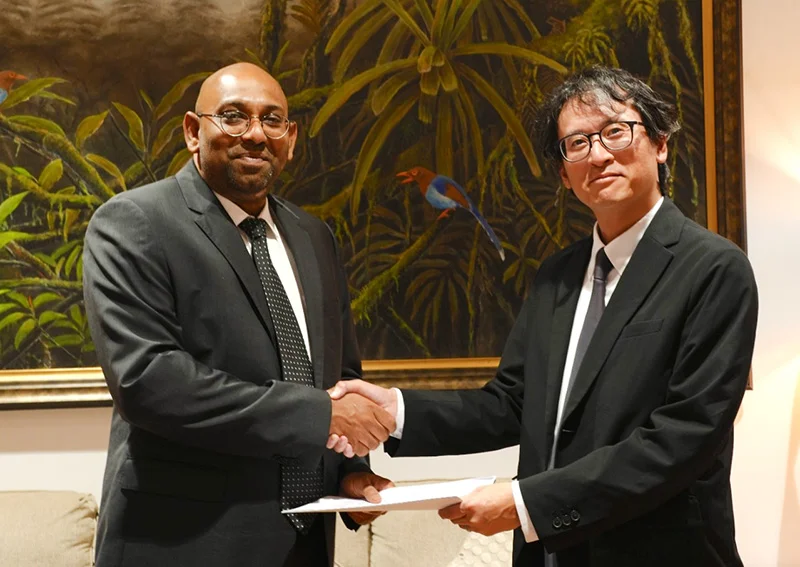
Major Japanese business group sees long-term potential in Hunas Holdings as the two organisations explore new opportunities for growth in Sri Lanka
Hunas Holdings PLC is entering a new phase of growth through a collaborative partnership with CCH Co., Ltd. (CCH INC.), a major Tokyo-based business group with experience across business process outsourcing (BPO), in-house services, investment, mergers and acquisitions, and business development.
The partnership follows a period in which Hunas Holdings maintained a measured approach to new investments amid volatile market conditions, focusing on identifying the right opportunities and international relationships capable of creating sustainable long-term value.
Founded in Japan in 2008, CCH has grown into a significant and diversified business group with interests across multiple industries. Its approach combines investment with M&A, business development and operational expertise, enabling the company to play an active role in the businesses and markets it enters.
For CCH, the partnership represents an opportunity to bring this experience to Sri Lanka through Hunas Holdings, an established local group with a strong platform and long-term growth ambitions.
Yoshihiko Tanabe, Director of CCH Co., Ltd., said: “Through our discussions with Hunas Holdings, we see a company with strong foundations, local expertise and a clear ambition for growth. We believe there is meaningful potential in bringing the strengths of CCH and Hunas Holdings together. I am excited about this partnership, and particularly about some of the projects and opportunities we are already exploring together. There is much to look forward to soon”
For Hunas Holdings, the collaboration marks a renewed chapter of investment and international partnership, while for CCH, it reflects confidence in Hunas Holdings and the opportunities presented by the Sri Lankan market.
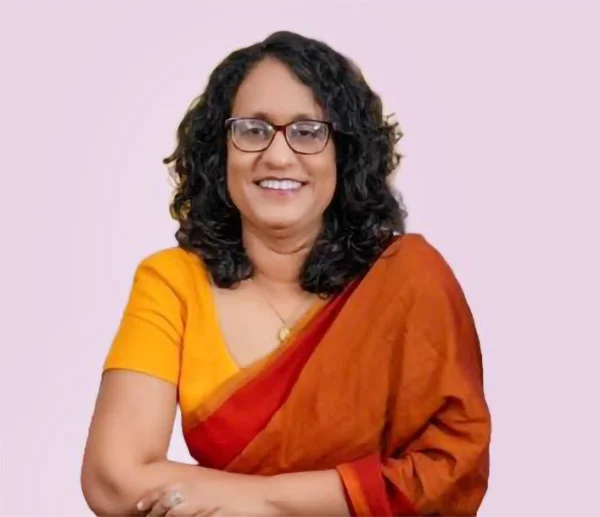
Dr. Harini Amarasuriya, Prime Minister of Sri Lanka, will deliver the keynote address at a special session on day 2 of the Sri Lanka Economic & Investment Summit 2026 organised by The Ceylon Chamber of Commerce, titled “Nation Building in the Digital Age”, on 13 October 2026 at the Shangri-La Colombo.
The session will examine how Sri Lanka can use artificial intelligence, digital transformation, innovation and education to accelerate economic growth, improve productivity and build a knowledge-driven economy. As technology reshapes industries and the nature of work, the discussion will focus on how Sri Lanka can develop the capabilities needed to remain competitive and create opportunities for future generations.
The Prime Minister will be joined by Waruna Sri Dhanapala, Secretary, Ministry of Digital Economy; Prof. Roshan Ragel, Senior Lecturer in Computer Engineering, University of Peradeniya; and Sanjay Shah, Founder and CEO, Elevante AI, who together will add perspectives from government, academia, and industry. Vinod Hirdaramani, Chairman of Hirdaramani Group and Deputy Vice Chairperson of The Ceylon Chamber of Commerce, will moderate the session.
The discussion will look at the opportunities and challenges presented by emerging technologies, including artificial intelligence and automation, and their potential to transform industries and create new areas of economic activity. It will also consider the role of digitalisation in improving public services and supporting entrepreneurship.
Education and skills development will be another important part of the conversation, particularly as the demand for new capabilities grows alongside technological change. The panel will consider how Sri Lanka can prepare its workforce for future jobs while developing an environment that supports innovation and technology-led businesses.
The session will also look beyond technology itself to the wider conditions needed for a digital economy to grow. Policy, investment, infrastructure, education and collaboration between government, industry and academia will all have a role in determining how effectively Sri Lanka can turn technological change into economic opportunity.
Held under the theme “Positioning Sri Lanka in a Changing Global Economy: Resilience, Reform, and the Future of Economic Policy,” SLEIS 2026 will offer perspectives from senior policymakers, business leaders, investors and international experts over two days of discussions on Sri Lanka’s economic direction, investment opportunities and the reforms needed to support future growth.
Registrations are now open at https://sleis.chamber.lk/. For more information, contact Alikie on 011 558 8805 (alikie@chamber.lk) or Shanuka on 0701082541 (events.division@chamber.lk).

New Court of Appeal Judge Sajeewani Dilka Lakmali Sworn In

India to host inaugural Women’s Champions Trophy in February

Sun directly overhead Madampe, Thorayaya, Thotagamuwa, Rattota and Kalavanchikudy about 12.09 noon today (03)

Afternoon thundershowers in the Northern, North-central, Eastern and Uva provinces in next few days, starting from today (03).

22A: SC urged to suspend hearing, appoint full bench

Govt. seeks NATO assistance

‘Dates have the highest sugar content to fight Coronavirus’

Sunday Island 27 December – Headlines

#SundayIsland 17th December – Headlines

Sunday Island – 28th March

Sunday Island Headlines – 21 March

Sunday Island – 21st February – Headlines
-

 News7 days ago
Eight politicians in drug kingpin probe
-

 Features5 days ago
“Wrap Me Up in My Blazer”— A Gentlemanly Bradby Reminiscence
-

 Business7 days ago
Sri Lanka opens up: A new season of direct connectivity
-

 Features4 days ago
When Sri Lankan stories find their own voice
-

 Features7 days ago
Redefining ageing in Sri Lanka
-

 Editorial7 days ago
The toxic legacy of two lakes
-
 Business7 days ago
Jaffna Teaching Hospital secures lifeline water supply via ADB-funded Thalaiyadi sea water desalination plant
-
 Features5 days ago
JVP/NPP government as seen from outside by Lionel Bopage now domiciled in Australia