
News
Prince William’s docuseries shines global spotlight on Lankan rangers saving endangered elephants

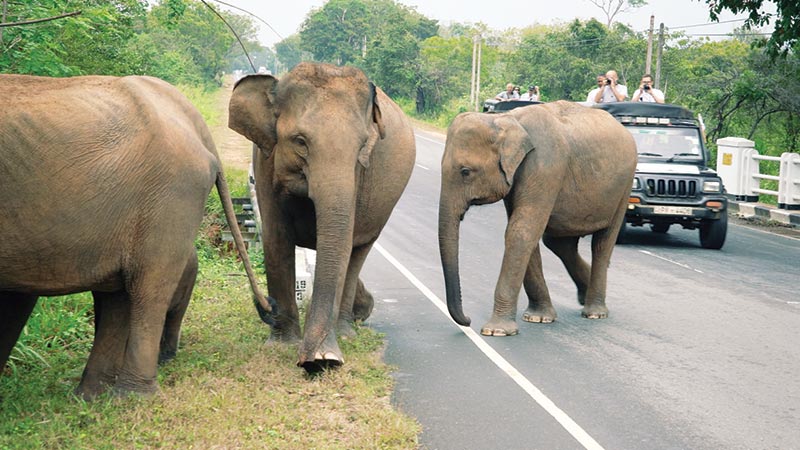
London, United Kingdom, 20th June 2025: Today, Prince William and The Royal Foundation’s United for Wildlife programme have released the newest episode of its groundbreaking docuseries, Guardians, highlighting the individuals at the forefront of wildlife protection and conservation. This week’s episode focuses on an incredible team of rangers in Sri Lanka working to minimise threats of human-elephant conflict, fostering a more peaceful coexistence between wildlife and the communities living to help save this much-loved species from extinction.
Guardians, which launched in May, seeks to change the narrative around rangers, driving recognition and pride in the vital yet often misunderstood work they do to protect our planet. In this moving episode, we meet ranger Chinthaka Pathirana, who, for over 20 years, has been a veterinary expert within the Department of Wildlife Conservation’s (DWC) Veterinary Clinic in Randenigala. Renowned for his leadership and integrity, viewers learn of the work of Chinthaka and his team as they bravely risk their lives to rescue and monitor elephants, alongside balancing patrolling duties and mitigating conflict.
Sri Lanka is home to the highest density of wild elephants per square mile, with a species population of between 5,000 and 6,000. For decades, humans and elephants have peacefully co-existed, but habitat encroachment, deforestation and agricultural expansion have made this enduring relationship more fragile. Communities in the region are now experiencing one of the highest rates of elephant-human conflict globally and in 2023, 176 humans and 470 elephants tragically lost their lives. Through immersive film footage, and powerful interviews, this film highlights the emotional and technical efforts of ranger teams as they work to reduce harm to animals whilst minimising impact on humans.
The groundbreaking docuseries was the brainchild of Prince William and to which he has voiced the trailer and individual episode introductions. Each episode focuses on a different ranger community from across the globe and the specific challenges they face in safeguarding often endangered species and fragile ecosystems.
Prince William said: “I’ve had the privilege of meeting a number of rangers throughout my life and have seen firsthand the vital work they do. Yet their stories are often overlooked or misunderstood. The reality is that protecting our natural world has become one of the most dangerous jobs on the planet. We need to understand and recognise Nature’s Guardians, and the critical work they do.
“The rangers we meet in this series are an inspiration to us all. Every day, they take huge risks as nature’s frontline of defence, standing between poachers and endangered species, supporting sustainable human-animal coexistence and fighting habitat loss.
“As they work to protect our oceans, our forests, our plains, our mountains and biodiversity, they are also educating, community building and furthering science. These are the unsung heroes — the true Guardians of the natural world, defending nature and the future of the planet for all of us.”
Elephants are vital to the broader environment in Sri Lanka, acting as “ecosystem engineers,” influencing forest structure by creating clearings and pathways and dispersing seeds which diversifies plant life. Without this crucial species, the delicate balance of the local environment would unravel.
Tracking and monitoring elephant movements and behaviour is a central focus for conservation efforts in Sri Lanka, affording rangers crucial information on when and where elephant-human conflict is happening. The episode shows Chinthaka and his team putting themselves in the path of danger as they fit a GPS collar onto a recently spotted elephant. These cutting-edge GPS technologies provide a lifeline in building a map for coexistence but with each elephant weighing between two and five tonnes, fitting them comes with a very real threat of rangers being tramples or charged. In the gripping sequence, audiences have the rare opportunity to see how the highly skilled team work quickly to attach the collar, whilst minimising the impact to the elephant.
Chinthaka Pathirana, veterinary expert within the Department of Wildlife Conservation said:
“From a young age, we had a connection with the forest. Elephant – human conflicts were not as intense as they are now. Our main objective is to minimise the impact on people and reduce the harm to animals. Looking forward, we hope to increase forest coverage and ensure that wild animals have adequate habitats. So, the role of the ranger is vital.”
The series was co-produced by The Royal Foundation with award-winning studio Zandland and follows the extraordinary stories from rangers across the globe. In addition to the episode based in Sri Lanka, other instalments will explore ranger communities in:
Central African Republic and the breathtaking Dzangha-Sangha protected area, following a reformed poacher who now dedicates his life to protecting the wildlife he once hunted.
The Himalayas, India where high in the Spiti Valley rangers are working to bring co-existence between the snow leopards known as ‘Ghosts of the Himalayas’, and local communities.
Mexico’s Sea of Cortez once called ‘the world’s aquarium’ – and the story of a reformed illegal fisherman now working to protect this threatened ecosystem.
Kruger National Park in South Africa where teams work round the clock to protect, rescue and rehabilitate critically endangered rhinos which face daily poaching threats.
Caru Indigenous Land, Brazil and the community-led fight to preserve their heritage and protect ancestral lands from environmental destruction.
Benjamin Zand, Series Director & Executive Producer, ZANDLAND said:
“Sri Lanka is a country that has always captivated me, ever since I first visited in 2018 — stunningly beautiful, but facing a complex challenge when it comes to coexistence between people and wildlife. Chinthaka and his team are doing one of the toughest jobs out there: protecting one of the world’s most iconic animals while navigating real tensions with local communities. His warmth, commitment and belief in coexistence deserve to be championed. At Zandland, we’re proud to tell stories like these — stories that don’t just show the beauty of wildlife, but the human struggle behind protecting it.”
The series will be available to watch across all of BBC Earth’s YouTube and social channels with a new episode landing weekly. Episodes will also be screened at Adventure Cinema locations across the UK.

News
GMOA warns of trade union action unless govt. urgently resolves critical issues in health sector

Influx of substandard drugs is of particular concern
The Government Medical Officers’ Association (GMOA) has warned of renewed and intensified trade union action if the government fails to fulfil its promise to resolve the ongoing crisis in the health sector within the next few days.
GMOA Executive Committee member Dr. Prasad Colombage said his association was hopeful that commitments made by the government, including those formally stated by the Minister of Health in Parliament and recorded in the Hansard, would be implemented.
He called for urgent remedial action in view of the influx of substandard medicines into the country, patient deaths linked to such drugs, difficulties faced by doctors in prescribing medicines, and disruptions to patient care services caused by the continued migration of medical professionals. These factors, he warned, had placed patients’ lives at serious risk.
Dr. Colombage said discussions had already been held with all relevant authorities, including the President and the Minister of Health. He expressed hope that swift solutions would be forthcoming based on agreements reached at discussions. However, he cautioned that the GMOA would not hesitate to resort to strong trade union action if tangible progress was not seen in the coming days.
Meanwhile, the Federation of Medical and Civil Rights Professional Associations yesterday (01) handed over a special memorandum to President Anura Kumara Dissanayake, calling for immediate action to resolve the deepening crisis in the health sector.
Federation President, Consultant Dr. Chamal Sanjeewa, said Sri Lanka’s health system was currently facing a severe crisis and had sought an opportunity to hold discussions with the President on the matter.
The memorandum calls for the President’s direct and immediate intervention on several key issues, including the Indo–Sri Lanka health agreement, shortages of essential medicines including cancer drugs, continued allegations surrounding the administration of the Ministry of Health, reported irregularities at the National Hospital, Colombo, and the absence of an internationally accredited quality control laboratory for the National Medicines Regulatory Authority to test medicines. The Federation has also requested a meeting with the President to discuss these concerns in detail.
By Sujeewa Thathsara ✍️

Sri Lanka’s latest elephant census must result in immediate policy action, not remain a paper exercise, Centre for Environmental Justice (CEJ) Managing Director Dilena Pathragoda warned, as nearly 400 wild elephants have already died in 2025 alone amid escalating human–elephant conflict.
With the national elephant population estimated at around 5,879, Pathragoda said the figures would be meaningless unless they shape land-use planning, habitat protection and enforcement.
“As of mid-December, close to 397 elephants have died in 2025, mostly due to shootings, electrocution, train collisions and other human-related causes,” he told The Island. “When deaths continue at this scale, census numbers alone offer little reassurance.”
Official data show that 388 elephants died in 2024, while 2023 recorded a staggering 488 deaths, one of the highest annual tolls on record. Conservationists warn that the trend reflects systemic failure to secure habitats and elephant corridors, despite repeated warnings.
“An elephant census should not end with a headline figure,” Pathragoda said. “If these statistics do not influence development approvals, infrastructure planning and land-use decisions, they fail both elephants and rural communities.”
Elephant populations remain unevenly distributed, with higher densities in the Mahaweli, Eastern and North Western regions, while other areas face sharp declines driven by habitat fragmentation and unplanned development.
Pathragoda said recurring fatalities from gunshots, illegal electric fences, improvised explosive devices along with poisonings and rail collisions expose the limits of short-term mitigation measures, including ad hoc fencing projects.
“The crisis is not a lack of data, but a lack of political will,” he said, calling for binding conservation policy, transparent environmental assessments and accountability at the highest level.
He urged authorities to treat elephant conservation as a national governance issue, warning that failure to act would only see future censuses record further decline of these majestic animals.
“Elephants are part of Sri Lanka’s natural heritage and economy,” Pathragoda said. “Ignoring these warning signs will come at an irreversible cost.”
By Ifham Nizam ✍️

The Ministry of Education has yet to clarify whether school hours will be extended by 30 minutes from next Monday (05) under the proposed new education reforms, Ceylon Teachers’ Union (CTU) General Secretary Joseph Stalin has said.
Stalin told The Island that the Ministry should reconsider the planned reforms, warning that decisions taken without adequate study and consultation could have serious repercussions for nearly four million schoolchildren.
He said the Education Ministry had announced that education reforms would be implemented in Grades from 1 to Grade 6, but it had not said anything about the Grades above 6. This lack of clarity, he said, had created confusion among teachers, parents and students.
Stalin also noted that although learning modules had been issued, students are required to obtain photocopies based on the codes introduced in these modules. However, the Ministry had not revealed who would bear the additional financial burden arising from those costs, raising further concerns over the practical implementation of the reforms.
by Chaminda Silva ✍️

GMOA warns of trade union action unless govt. urgently resolves critical issues in health sector

Elephant census urged as death toll nears 400

CTU raises questions about education reforms

Navy lauds foreign warships that came to assist in disaster relief ops here

It’s PC polls, stupid

Sri Lanka’s economy: A slow healing journey in 2026

‘Dates have the highest sugar content to fight Coronavirus’

Sunday Island 27 December – Headlines

#SundayIsland 17th December – Headlines

Sunday Island – 28th March

Sunday Island Headlines – 21 March

Sunday Island – 21st February – Headlines
-

 Sports4 days ago
Gurusinha’s Boxing Day hundred celebrated in Melbourne
-

 News2 days ago
Leading the Nation’s Connectivity Recovery Amid Unprecedented Challenges
-

 Sports5 days ago
Time to close the Dickwella chapter
-

 Features3 days ago
It’s all over for Maxi Rozairo
-

 News5 days ago
Environmentalists warn Sri Lanka’s ecological safeguards are failing
-

 News3 days ago
Dr. Bellana: “I was removed as NHSL Deputy Director for exposing Rs. 900 mn fraud”
-
 Features5 days ago
Digambaram draws a broad brush canvas of SL’s existing political situation
-
 News2 days ago
Dons on warpath over alleged undue interference in university governance