
News
Prez to attend COP26 in Glasgow

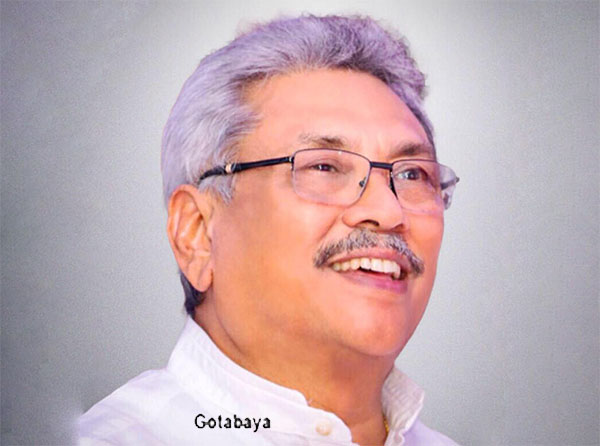
by Sujeeva Nivunhella reporting from London
President Gotabaya Rajapaksa is to attend the UN Climate Change Conference (COP26) scheduled to be held at the Scottish Event Campus in the city of Glasgow, Scotland from next Sunday (31) to Nov 12.
Diplomatic sources said that the President would be accompanied by Foreign Minister G.L. Peiris, Environment Minister Mahinda Amaraweera, State Minister of Solar, Wind and Grid Power Generation Projects Development Duminda Dissanayake, Foreign Secretary Admiral Jayanath Colombage and Lankan High Commissioner in London Saroja Sirisena.
COP26 is the 26th United Nations Climate Change conference bringing parties together to accelerate action towards the goals of the Paris Agreement and the UN Framework Convention on Climate Change.
World Leaders will agree to step up efforts to adapt to the impacts of climate change and to make finance flows consistent with a pathway towards low greenhouse gas emissions and climate-resilient development and by uniting behind a green recovery from coronavirus, which creates sustainable jobs and addresses the urgent and linked challenges of public health, climate change, and biodiversity loss, we can safeguard the environment for future generations.
There will be around 120 heads of state attending this summit. Queen Elizabeth II has confirmed her attendance. While former US President Donald Trump decided to withdraw from the Paris Agreement, incumbent President Joe Biden is planning to rejoin and said that he cannot wait to attend the Glasgow summit.
The summit took an early blow as the Russian President Vladimir Putin rejected the British Prime Minister Boris Johnson’s invitation and the Kremlin confirmed that he would not attend. So far, Chinese President Xi Jinping has not confirmed his participation and it is widely expected that he too would turn down the invitation.
Observers note that while the conference is aimed at tackling global carbon emissions, it will be harder to make meaningful international progress if big emitters like China and Russia fail to participate.

Latest News
Sun directly overhead Dodanduwa, Rathgama, Yakkalamulla, Akuressa, Mulgirigala, Ranna, Kalamatiya and Ussangoda at about 12:13 noon today (05th April)


On the apparent northward relative motion of the sun, it is going to be directly over the latitudes of Sri Lanka during 05th to 15th of April in this year.
The nearest areas of Sri Lanka over which the sun is overhead today (05th) are Dodanduwa, Rathgama, Yakkalamulla, Akuressa, Mulgirigala, Ranna, Kalamatiya and Ussangoda at about 12:13 noon
Latest News
Heat Index at Caution Level in the Western, Sabaragamuwa, Southern, Eastern, North-western, Northern and North-central provinces and in Monaragala district

Warm Weather Advisory
Issued by the Natural Hazards Early Warning Centre
Issued at 3.30 p.m. on 04 April 2026, valid for 05 April 2026
The Heat index, the temperature felt on human body is likely to increase up to ‘Caution level’ at some places in the Western, Sabaragamuwa, Southern, Eastern, North-western, Northern and North-central provinces and in Monaragala district.
The Heat Index Forecast is calculated by using relative humidity and maximum temperature and this is the condition that is felt on your body. This is not the forecast of maximum temperature. It is generated by the Department of Meteorology for the next day period and prepared by using global numerical weather prediction model data.

Effect of the heat index on human body is mentioned in the above table and it is prepared on the advice of the Ministry of Health and Indigenous Medical Services.
ACTION REQUIRED
Job sites: Stay hydrated and takes breaks in the shade as often as possible.
Indoors: Check up on the elderly and the sick.
Vehicles: Never leave children unattended.
Outdoors: Limit strenuous outdoor activities, find shade and stay hydrated.
Dress: Wear lightweight and white or light-colored clothing.
Note:
In addition, please refer to advisories issued by the Disaster Preparedness & Response Division, Ministry of Health in this regard as well. For further clarifications please contact 011-7446491.


The internationally recognized “Walk for Peace,” originating from the United States, is set to take place in Sri Lanka starting April 21, 2026, led by the Most Venerable Paññakara Thero and a delegation of twelve monks from the Maha Sangha, President’s Media Division said.
Spanning seven days across the island, this pilgrimage’s purpose and concept are guided by the Buddha’s teaching, “Caratha bhikkhave carikam bahujana hitaya bahujana sukhaya lokanukampaya” (Wander forth, O Monks, for the welfare and happiness of the many, out of compassion for the world).
This program aims to promote peace and lovingkindness within society. It serves as a practical demonstration that peace cannot be attained by force, but must be cultivated step-by-step through mindfulness.
The inaugural event of this program is scheduled to be held in Anuradhapura on April 21, 2026. A ceremony to receive the sacred sapling of the Jaya Sri Maha Bodhi will take place at 4:00 PM, followed by special religious observances at the sacred Ruwanweliseya premises at 5:00 PM.
Thereafter, the walk will commence from the ancient Dambulla Royal Cave Temple and proceed towards Kandy. Upon reaching Kandy, the Maha Sangha will pay their respects to the Chief Prelates (Maha Nayaka Theros) of the Malwatta and Asgiriya Chapters, before visiting the Sri Dalada Maligawa (Temple of the Sacred Tooth Relic) to receive blessings.
Throughout the journey, the procession will carry the sacred sapling of the Jaya Sri Maha Bodhi, along with venerated relics from the historic Nilagiri Cetiya, Madanwala Raja Maha Viharaya in Hanguranketa, Mahiyangana Raja Maha Viharaya, and the Hunupitiya Gangaramaya.
The walk will conclude at Independence Square in Colombo on April 28, 2026. Subsequently, the venerated relics and the sacred sapling of the Jaya Sri Maha Bodhi are to be carried from Independence Square to Gangaramaya Temple, Hunupitiya, Colombo by a procession.
The Sri Lankan coordination of the event is spearheaded by Venerable Melpitiye Wimalakirti Thera. The Government of Sri Lanka’s flagship national program, “Clean Sri Lanka,” serves as the principal state partner.
Additionally, the event receives extensive support from various state institutions, including the National Design Centre, the Tri-Forces, and the Department of Information.
At the conclusion of the seven-day walk, a special State Ceremony will be held at Independence Square in Colombo on April 28, 2026. Concurrently, a special exhibition showcasing Sri Lanka’s Buddhist heritage and traditional handicrafts will be organized by the National Design Centre at the Gangaramaya premises on April 28 and 29, 2026.
This exhibition will feature brass items (ceremonial fans, flags, statues, bowls, and pinnacles), lacquerwork (caskets and boxes), clay crafts (bowls and statues), palm leaf crafts (fans and sesath), natural dyeing of robes, Dumbara wall hangings, traditional drums, and traditional paintings.
The primary objective of this cultural program is to contribute Sri Lanka’s Buddhist and cultural heritage to a project in Texas, USA, where the Tripitaka is being inscribed in 10 languages and enshrined within 840 stupas to create a centre for Buddhist education.

Sameer Rizvi aces another tricky chase as Delhi Capitals floor Mumbai Indians

Sun directly overhead Dodanduwa, Rathgama, Yakkalamulla, Akuressa, Mulgirigala, Ranna, Kalamatiya and Ussangoda at about 12:13 noon today (05th April)

Showers expected in the Western, Sabaragamuwa, Central, Southern, Uva, Eastern and Northcentral provinces after 2.00 p.m.

Heat Index at Caution Level in the Western, Sabaragamuwa, Southern, Eastern, North-western, Northern and North-central provinces and in Monaragala district

Global ‘Walk for Peace’ to be held in Lanka

World Bank launches new 5-year partnership framework with Lanka

‘Dates have the highest sugar content to fight Coronavirus’

Sunday Island 27 December – Headlines

#SundayIsland 17th December – Headlines

Sunday Island – 28th March

Sunday Island Headlines – 21 March

Sunday Island – 21st February – Headlines
-

 News4 days ago
2025 GCE AL: 62% qualify for Uni entrance; results of 111 suspended
-

 News6 days ago
Tariff shock from 01 April as power costs climb across the board
-
 News7 days ago
Inquiry into female employee’s complaint: Retired HC Judge’s recommendations ignored
-
 Business5 days ago
Hour of reckoning comes for SL’s power sector
-
 Features7 days ago
New arithmetic of conflict: How the drone revolution is inverting economics of war
-

 Editorial4 days ago
Search for Easter Sunday terror mastermind
-

 Sports7 days ago
Sri Lanka’s 1996 World Cup heroes to play exhibition match in Kuala Lumpur
-

 Features6 days ago
Seychelles … here we come