
News
Prez polls: Ex-STF Chief warns of serious security threats


Former Commandant of the elite Special Task Force (STF) retired Senior DIG Nimal Lewke said that those in charge of VIP security should take utmost measures to prevent any untoward incident in the run-up to the Presidential Election.
Lewke, who served as the STF commandant during the 2002-2007 period, said that with the Presidential Election just three weeks away the government should appraise security of those vulnerable to threats.
Referring to the recent attempt made on the life of Republican presidential candidate Donald Trump in Butler, Pennsylvania. Lewke urged the political leaders, and the police and military top brass, to remain vigilant.
Lewke called for sound intelligence, proper security threat assessment, analysis, command precept deployment and very effective close monitoring and supervision to ensure an incident-free campaign.
Responding to The Island queries, Lewke, who served the STF during the 1984-2009 period, said that Sri Lanka couldn’t under any circumstances forget how several party leaders and prominent politicians had been assassinated on the eve of various elections during the conflict.
“In spite of the eradication of separatist terrorism and the southern insurgency, the possibility of some sinister forces seeking to cause chaos cannot be ruled out,” Lewke said.
The retired senior DIG is one of those who received specialised training in the US, Israel and the UK. “Do not forget that ours is a country that faced a brutal war for 30 years and recently a huge riot/insurgency where the President had to flee the country. Large numbers of arms/ammo, explosives from the war, is still in the society and the knowledge of handling and making explosive devices being widespread, is a matter that needs close screening and supervision,” Lewke said.
Lewke pointed out that Sri Lankan authorities should closely examine the bid to assassinate Trump.
There are few basics that must be cleared. Did the relevant intelligence report issued ahead of Trump’s arrival at the rally, where he was targeted, indicate any threat to him? If not, it is a huge issue that should be investigated. What are the reconnaissance report findings? And suggestions? Did the report cover the high-rise buildings in the vicinity of the meeting location? Did they receive feedback from the local Police regarding the scheduled event?
Why was the building that had been used by the assassin not been secured? Lewke said that Trump had been lucky the assassin used an AR15 assault rifle with a telescope. If the assassin had used a weapon specialized to take such long range targets, the result could have been devastating, Lewke said.
The ex-commando said that immediately after the bid on the former US president, Wickremesinghe had announced the appointment of a top level committee, chaired by the Secretary to the Ministry of Public Security and comprising the Chief of Defence Staff, Inspector General of Police (IGP), Chief of National Intelligence and the Senior Deputy Inspector General (SDIG) of Police in charge of Elections, to oversee the personal security arrangements of candidates contesting the upcoming presidential election.
The government owed an explanation to the public regarding the outcome of the deliberations, Lewke said. (SF)



News
Establishment of an Institutional Framework to Inagurate Upper Hydro Catchment Areas Management Authority

Policy approval of the Cabinet of Ministers was granted at their meeting held on 08.06.2026 to establish the Upper Hydro Catchment Areas Management Authority for identification and
execution of a formal and long – lasting remedy to secure the central hills including the upper hydro catchment areas enabling them to sustain amidst extreme weather conditions
due to natural calamities and human activities as well as to be used for the sustainable development of the country.
Accordingly, a concept paper has been prepared including
institutional structure, activities, powers, active subject area as well as administrative and coordination mechanism for the proposed authority by an expert technical committee appointed by the Secretary to the President.
Based on the said concept paper, the Cabinet of Ministers granted approval to the resolution furnished by the President to instruct the Legal Draftsman to prepare a draft bill including legal provisions required for the establishment of Upper Hydro Catchment Areas Management Authority.
News
Introduction of Flora and Fauna (Regulation of actions of the Indigenous Community within the nominated areas) Regulations
With the objective of securing the traditional livelihood and the eco system of the indigenous community, it has been recognized the necessity of introducing a formal regulation methodology to secure their engagement in livelihood activities by being more sensitive to the existing laws.
Thereby, the Fauna and Flora (regularizing) regulations under the Fauna and Flora Protection Ordinance (Authority 469) have been prepared so that nominated activities within the prescribed area to a member of the indigenous community
who has been registered for securing the rights acquired from law or custom or usage or traditional stance to execute an act within a certain state land that is fundamental to the survival of the indigenous community permission can be granted
Accordingly, the Cabinet of Ministers granted approval to the resolution furnished by the Minister of Environment to publish the said regulations in the government gazette notification and thereby submit to the Parliament for its concurrence.
Latest News
M. M. D. J. Senarathne, appointed Director General of the Department of National Botanical Gardens
The Cabinet of Ministers approved the resolution furnished by the Minister of Environment to appoint M. M. D. J. Senarathne, who is the senior most officer in Grade I of Sri Lanka Scientific Service se

Establishment of an Institutional Framework to Inagurate Upper Hydro Catchment Areas Management Authority
Introduction of Flora and Fauna (Regulation of actions of the Indigenous Community within the nominated areas) Regulations
M. M. D. J. Senarathne, appointed Director General of the Department of National Botanical Gardens

Harmanpreet Kaur steps down as India captain

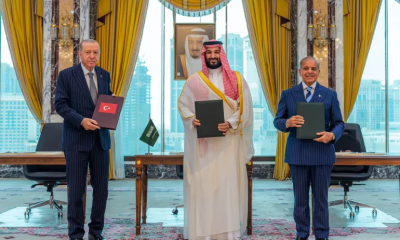
Turkiye, Pakistan agree Saudi Arabia military deployment under Mecca pact

Rumesh Tharanga among nominees announced for World Athlete of the Year 2026

‘Dates have the highest sugar content to fight Coronavirus’

Sunday Island 27 December – Headlines

#SundayIsland 17th December – Headlines

Sunday Island – 28th March

Sunday Island Headlines – 21 March

Sunday Island – 21st February – Headlines
-

 Latest News7 days ago
Gold winner Tharanga gets brand-new Honda Vezel from SLAAJ
-

 News6 days ago
US-assisted ‘Ice’ detection: NPC to examine IGP’s move to transfer drug-busting team
-

 Features7 days ago
Why Sri Lanka needs an Inclusive Civic Nationalism – urgently
-

 Editorial5 days ago
Colombo Port drug bust: The plot thickens
-

 News7 days ago
Civil society activist accuses govt. of favouring Ven. Gnanasara
-
 Midweek Review7 days ago
Dappula’s Easter Sunday ‘grand conspiracy’ claim demolished
-

 Editorial7 days ago
When crime bosses rise above law and shrines
-
Editorial6 days ago
Drug busting, transfers and trust deficit