
News
Pressure mounts on govt. to halt Operation Yukthiya

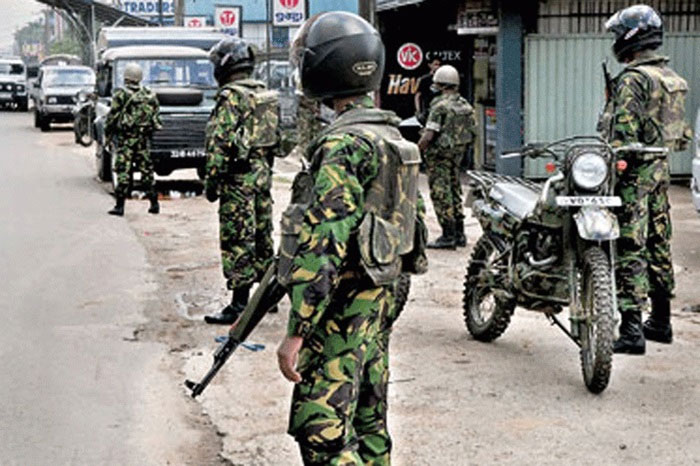
The Amnesty International, Human Rights Watch and International Commission of Jurists have joined over 30 international human rights organisations to pressure the Wickremesinghe-Rajapaksa government to halt the ongoing ‘Yukthiya’ operation.
The grouping has expressed serious concern over what it called “drastic intensification” of anti-drug operations in Sri Lanka leading to significant human rights violations.
The grouping demanded that the Sri Lankan government stop the ‘abusive anti-drug operation’ and release the arbitrarily detained individuals.
The statement highlighted that this operation is unfolding in a context of already severe repression against persons who use or are suspected of using drugs, and who suffer discrimination and stigma within the Sri Lankan criminal justice system and society.
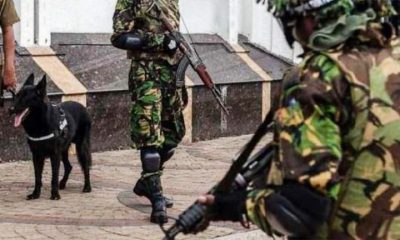
 “Alongside the Sri Lankan police, members of the armed forces have been supporting this operation, during which several human rights violations have been reported. These violations include alleged arbitrary arrests, primarily against individuals from marginalised socio-economic communities; searches conducted without warrants or reasonable suspicion; and degrading treatment, including strip searches in public, as well as cavity searches. The searches and arrests have been televised, in violation not only of the right to privacy (and of basic human dignity) but also of a person’s right to be presumed innocent”, the joint statement added.
The global organizations, which also point out that according to lawyers, persons are being arrested even when no drugs are found in their possession, simply for having been arrested for drug offences or having been sent to compulsory rehabilitation in the past, mention that the arrests of main livelihood earners and mothers have adversely impacted the ability of families to meet their basic needs during a time of economic crisis in Sri Lanka, and the wellbeing of children.
 “Persons are being arrested primarily under Section 54A of the Poisons, Opium and Dangerous Drugs Ordinance, an offence which is non-bailable. As a result, those arrested are bound to spend time (sometimes months) in pretrial detention, thereby exacerbating already poor conditions of imprisonment in an overburdened prison system.”
Furthermore, the statement has drawn attention to the fact that the level of overcrowding of the prison system is at nearly 200% – with punitive drug policies playing a significant role: as of 2022, 63% of convicted persons were sentenced for drug-related offences, as per the statistics issued by the Department of Prisons.
The aforesaid organizations have also expressed, in this joint statement, that the total number of arrests pursuant to operation “Yukthiya” has exceeded 29,000 as of January 09, 2024, while nearly 1,500 people are in administrative detention in police custody for further investigation, and at least 1,600 more persons have been sent for compulsory drug rehabilitation, “in violation of several fundamental rights; including the right to the highest attainable standard of health, which includes the right to consent to and withdraw from medical treatment”.
“‘Drug treatment’ in these centres is abstinence-based, essential harm reduction services are not available, and persons undergo severe withdrawal symptoms without any medical assistance while in detention.”
“The use of violence to discipline and punish has been reported in at least two compulsory drug rehabilitation centres which are within the purview of the Bureau of the Commissioner General for Rehabilitation and are operated by the military, which is in itself a violation of international standards”, it added.
“The UN Working Group on Arbitrary Detention in its statement at the conclusion of its visit to Sri Lanka in 2017 expressed concern regarding the involvement of military personnel in drug treatment and rehabilitation, the fact that strenuous physical exercise was the core component of compulsory drug treatment, and the lack of trained professionals to monitor the health of people in detention. Furthermore, the statement highlighted the irregularities in the judicial process by which persons were sent to drug rehabilitation centres without a medical assessment”, the statement mentioned.
In addition, the organizations say that since the 2016 UN General Assembly Special Session on drugs, there is international consensus on pursuing a holistic and health and human rights-based approach to drugs, which encompasses supply and demand reduction as well as harm reduction.
“The 2019 Ministerial Declaration on drugs – the current global drug policy document – as well as multiple resolutions of the UN General Assembly, the UN Commission on Narcotic Drugs, and the UN Human Rights Council reiterate and recommend a similar approach”, it added.
Further, the joint statement clarified: “a punitive and militarised approach to drug control contravenes recognised international human rights standards and guidelines, is ineffective to protect individual and public health, and ultimately fails to make communities safer”.
Thereby, the 33 global organizations call upon the Government of Sri Lanka to immediately cease operation “Yukthiya” and release persons who have been arrested without evidence or reasonable suspicion. The government should ensure that those arrested who do not have access to legal representation are provided legal aid, they stressed.
Through the statement, it is also demanded to immediately release persons arrested or sent to compulsory drug rehabilitation for using drugs/having a drug dependence, cease involving the armed forces in drug control and treatment activities as consistent with human rights law, repeal laws that allow compulsory drug rehabilitation, close compulsory treatment centres and release persons presently held at the centres within the purview of the Bureau of Commissioner General for Rehabilitation.
They have also urged the government to ensure that any law enforcement operation to address the supply side is conducted respecting due process standards and constitutionally protected fundamental rights.






Former first lady Shiranthi Rajapaksa, wife of former President Mahinda Rajapaksa was produced before the Hulftsdorp court, after being arrested by officers of the Commission to Investigate Allegations of Bribery or Corruption (CIABOC) and produce
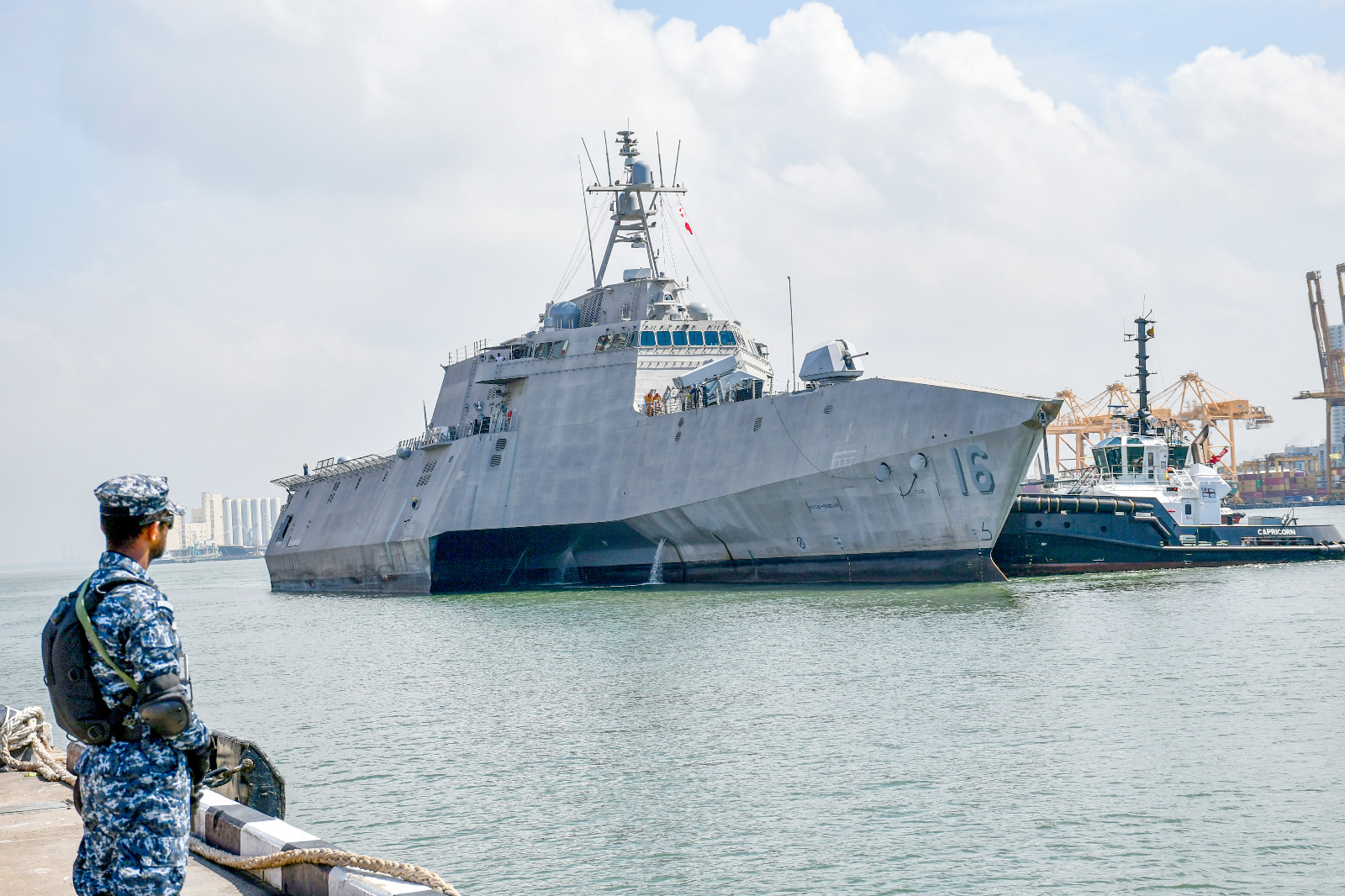
The U.S. Navy ship USS Tulsa (LCS 16) arrived at the Port of Colombo this morning, 7 October 2026 for replenishment purposes.
The visiting ship was welcomed by the Sri Lanka Navy in accordance with naval traditions.
The 127.7-metre-long platform is a Littoral Combat Ship commanded by Commander BM Wanier. Commissioned on 16 February 2019, USS Tulsa has since been in service with the US Navy.
The ship previously made a port call in Sri Lanka on 27 August 2025.
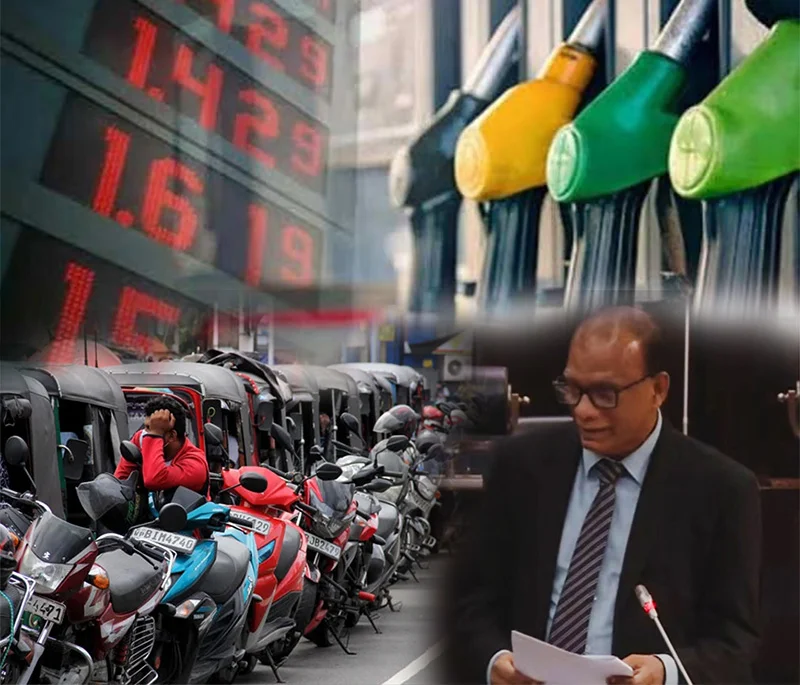
Govt. tells fuel distributors to maintain stocks to ensure uninterrupted supplies
by Saman Indrajith and Norman Palihawadane
The government had instructed private fuel distributors to maintain minimum stocks and ensure uninterrupted supplies to the market, Energy Minister Anura Karunathilaka told Parliament yesterday (06).
Karunathilaka said the Ministry of Energy Secretary had notified the relevant companies of the requirement, following a reduction in supplies by some private distributors, amid higher international fuel prices.
The Minister said private companies had informed the government that they were facing losses because international prices had risen while fuel was being sold, locally, at prevailing prices. As a result, some companies had reduced the volumes released to the market.
The reduced supplies had increased the burden on the Ceylon Petroleum Corporation (CPC), whose share of the diesel market had risen from about 54% to 82%, the Minister said.
“The CPC currently holds an 82% share of the market,” he said, adding that it had increased its supplies, compared with February, to compensate for the reduction by private distributors.
Karunathilaka said the government could not, under the existing agreements with private companies, specify the quantities they should supply to individual filling stations. However, it could require them to maintain minimum stocks in the country.
The Minister said the Energy Ministry had already instructed companies that had failed to maintain the required stocks to take steps to prevent supply disruptions.
The Minister attributed the queues reported at some filling stations to reduced supplies from private distributors, as well as normal variations in fuel distribution. He also said demand for CPC fuel had increased because private companies generally did not provide fuel to dealers on credit, while the CPC offered a three-day credit facility.
“We expect that, as the Ceylon Petroleum Corporation takes on this additional burden, the problem will ease to some extent by Wednesday or Thursday,” Karunathilaka said.
He said instructions had also been issued to increase supplies to CPC filling stations. A special discussion on the issue is scheduled for today (07), with officials of the Energy Ministry and CPC expected to participate,
along with President Anura Kumara Dissanayake.
Meanwhile, Petroleum Dealers’ Association officials have called for an early solution to the supply issue. Association Chairman D.V. Shantha Silva said queues had been reported at many filling stations, mainly those operated by private distributors.
He said the situation was not due to an overall shortage of fuel, but was linked to reduced orders by Lanka IOC, Sinopec and R.M. Parks amid concerns over losses incurred on fuel sales.
The Ceylon Petroleum Private Tanker Owners Association has urged motorists to refrain from panic buying, saying there was no nationwide disruption to fuel supplies.
The government earlier increased fuel prices and introduced a per-litre diesel subsidy following concerns raised by distributors over rising international prices.

Former first lady Shiranthi Rajapaksa arrested by CIABOC

U.S. Navy ship USS Tulsa arrives in Colombo for replenishment visit

Smriti Mandhana appointed India captain across formats

Ronaldo apologizes for Portugal walkout; says Jesus broke promise

Showers in the Western, Sabaragamuwa, Central, Uva, North-western and Southern provinces and in Anuradhapura and Mannar districts

Fuel crunch looms

‘Dates have the highest sugar content to fight Coronavirus’

Sunday Island 27 December – Headlines

#SundayIsland 17th December – Headlines

Sunday Island – 28th March

Sunday Island Headlines – 21 March

Sunday Island – 21st February – Headlines
-

 News7 days ago
US-assisted ‘Ice’ detection: NPC to examine IGP’s move to transfer drug-busting team
-

 Editorial6 days ago
Colombo Port drug bust: The plot thickens
-

 Editorial7 days ago
Drug busting, transfers and trust deficit
-

 Features4 days ago
The first woman in the foreign service or Ceylon Overseas Service it was then called
-
 News7 days ago
Sri Lankan facing death penalty in Saudi Arabia: Mano G appeals to Crown Prince
-

 Editorial5 days ago
Fuelling discontent and protest
-

 News3 days ago
Geneva takes up Sallay’s case and govt. ignores opportunity to answer accusations
-

 Latest News4 days ago
Tharindu Rathnayake, bowlers secure Asian Games Bronze for Sri Lanka