
News
Pressure mounts on govt. to halt Operation Yukthiya

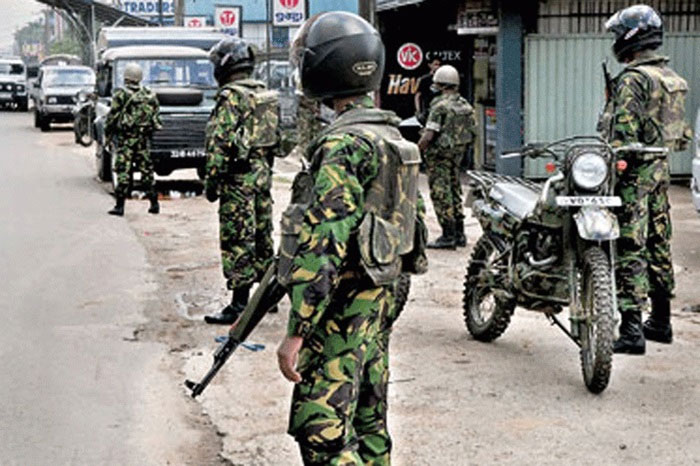
The Amnesty International, Human Rights Watch and International Commission of Jurists have joined over 30 international human rights organisations to pressure the Wickremesinghe-Rajapaksa government to halt the ongoing ‘Yukthiya’ operation.
The grouping has expressed serious concern over what it called “drastic intensification” of anti-drug operations in Sri Lanka leading to significant human rights violations.
The grouping demanded that the Sri Lankan government stop the ‘abusive anti-drug operation’ and release the arbitrarily detained individuals.
The statement highlighted that this operation is unfolding in a context of already severe repression against persons who use or are suspected of using drugs, and who suffer discrimination and stigma within the Sri Lankan criminal justice system and society.
 “Alongside the Sri Lankan police, members of the armed forces have been supporting this operation, during which several human rights violations have been reported. These violations include alleged arbitrary arrests, primarily against individuals from marginalised socio-economic communities; searches conducted without warrants or reasonable suspicion; and degrading treatment, including strip searches in public, as well as cavity searches. The searches and arrests have been televised, in violation not only of the right to privacy (and of basic human dignity) but also of a person’s right to be presumed innocent”, the joint statement added.
The global organizations, which also point out that according to lawyers, persons are being arrested even when no drugs are found in their possession, simply for having been arrested for drug offences or having been sent to compulsory rehabilitation in the past, mention that the arrests of main livelihood earners and mothers have adversely impacted the ability of families to meet their basic needs during a time of economic crisis in Sri Lanka, and the wellbeing of children.
 “Persons are being arrested primarily under Section 54A of the Poisons, Opium and Dangerous Drugs Ordinance, an offence which is non-bailable. As a result, those arrested are bound to spend time (sometimes months) in pretrial detention, thereby exacerbating already poor conditions of imprisonment in an overburdened prison system.”
Furthermore, the statement has drawn attention to the fact that the level of overcrowding of the prison system is at nearly 200% – with punitive drug policies playing a significant role: as of 2022, 63% of convicted persons were sentenced for drug-related offences, as per the statistics issued by the Department of Prisons.
The aforesaid organizations have also expressed, in this joint statement, that the total number of arrests pursuant to operation “Yukthiya” has exceeded 29,000 as of January 09, 2024, while nearly 1,500 people are in administrative detention in police custody for further investigation, and at least 1,600 more persons have been sent for compulsory drug rehabilitation, “in violation of several fundamental rights; including the right to the highest attainable standard of health, which includes the right to consent to and withdraw from medical treatment”.
“‘Drug treatment’ in these centres is abstinence-based, essential harm reduction services are not available, and persons undergo severe withdrawal symptoms without any medical assistance while in detention.”
“The use of violence to discipline and punish has been reported in at least two compulsory drug rehabilitation centres which are within the purview of the Bureau of the Commissioner General for Rehabilitation and are operated by the military, which is in itself a violation of international standards”, it added.
“The UN Working Group on Arbitrary Detention in its statement at the conclusion of its visit to Sri Lanka in 2017 expressed concern regarding the involvement of military personnel in drug treatment and rehabilitation, the fact that strenuous physical exercise was the core component of compulsory drug treatment, and the lack of trained professionals to monitor the health of people in detention. Furthermore, the statement highlighted the irregularities in the judicial process by which persons were sent to drug rehabilitation centres without a medical assessment”, the statement mentioned.
In addition, the organizations say that since the 2016 UN General Assembly Special Session on drugs, there is international consensus on pursuing a holistic and health and human rights-based approach to drugs, which encompasses supply and demand reduction as well as harm reduction.
“The 2019 Ministerial Declaration on drugs – the current global drug policy document – as well as multiple resolutions of the UN General Assembly, the UN Commission on Narcotic Drugs, and the UN Human Rights Council reiterate and recommend a similar approach”, it added.
Further, the joint statement clarified: “a punitive and militarised approach to drug control contravenes recognised international human rights standards and guidelines, is ineffective to protect individual and public health, and ultimately fails to make communities safer”.
Thereby, the 33 global organizations call upon the Government of Sri Lanka to immediately cease operation “Yukthiya” and release persons who have been arrested without evidence or reasonable suspicion. The government should ensure that those arrested who do not have access to legal representation are provided legal aid, they stressed.
Through the statement, it is also demanded to immediately release persons arrested or sent to compulsory drug rehabilitation for using drugs/having a drug dependence, cease involving the armed forces in drug control and treatment activities as consistent with human rights law, repeal laws that allow compulsory drug rehabilitation, close compulsory treatment centres and release persons presently held at the centres within the purview of the Bureau of Commissioner General for Rehabilitation.
They have also urged the government to ensure that any law enforcement operation to address the supply side is conducted respecting due process standards and constitutionally protected fundamental rights.






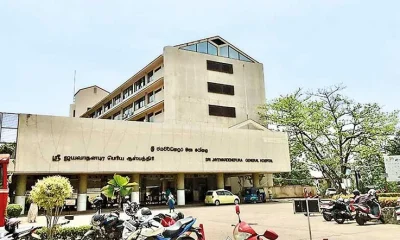
The special ward at Sri Jayewardenepura General Hospital, which had until now been reserved exclusively for the use of the Executive President, was opened for the public for the provision of medical treatment to the general public from Tuesday (24).
This decision was taken jointly by the Ministry of Health and the hospital administration, in accordance with instructions given by President Anura Kumara Dissanayake.
Constructed in 1984 with a grant from the Government of Japan, Sri Jayewardenepura General Hospital was originally established with a capacity of 1,000 beds. However, in line with the initial design, an additional special unit, designated as Room No. 1001, was included exclusively for the personal use of the Executive President.
Over the 42 years since the hospital’s establishment, this facility has been utilised only on a very limited number of occasions. Nevertheless, it has been maintained over the years in anticipation of a possible visit by a sitting President, without being made available for patient use.
With effect from today, this special unit will be utilised for the benefit of general patients receiving treatment at the hospital. This step has been taken in line with the Government’s policy of ensuring the more efficient use of public assets and resources to meet the healthcare needs of the people.

The second meeting of the Cabinet Sub-Committee appointed to ensure the orderly functioning of the public service was held on Tuesday (24) afternoon at the Presidential Secretariat, under the patronage of Prime Minister Dr Harini Amarasuriya.
Extensive discussions were held on the immediate measures required to ensure the uninterrupted delivery of government services to the public and to address the challenges faced by public servants.
Attention was also drawn to maintaining the continuous operation of services under the Ministries of Public Administration, Provincial Councils and Local Government, Health, Education, and Justice. Accordingly, it was decided to ensure that examinations are conducted as scheduled and that essential medicines are supplied to hospitals without disruption.
The challenges in passenger transport services and the railway transport system, as well as future measures, were also discussed at length. Focus was also placed on the steps to be taken regarding the transportation of essential goods.
In addition, attention was given to introducing digital service systems to facilitate working from home and to enhance the efficiency of existing services. It was also noted that these activities would be supervised under the Ministry of Digital Economy.
Instructions were further issued to review the current energy management practices across all ministries and departments and to take steps to implement necessary policy changes.
Minister of Public Administration, Provincial Councils and Local Government A. H. M. M. H. Abeyaratne, Secretary to the Prime Minister Pradeep Saputhanthri, Chief of Staff to the President Prabath Chandrakeerthi, Secretary to the Ministry of Public Administration, Provincial Councils and Local Government S. Aloka Bandara, Secretary to the Ministry of Health and Mass Media Dr Anil Jasinghe, Secretary to the Ministry of Energy Professor T. M. Udayanga Hemapala, Secretary to the Ministry of Digital Economy T. R. W. S. Dhanapala, Secretary to the Ministry of Justice and National Integration Ayesha Jinasena, PC, Senior Additional Secretary to the President Roshan Gamage, and Chairman of the Ceylon Petroleum Corporation D. J. A. S. S. Rajakaruna, along with other committee members, were also present at the occasion.

… first NPPer to face charges under Section 70 of Bribery Act
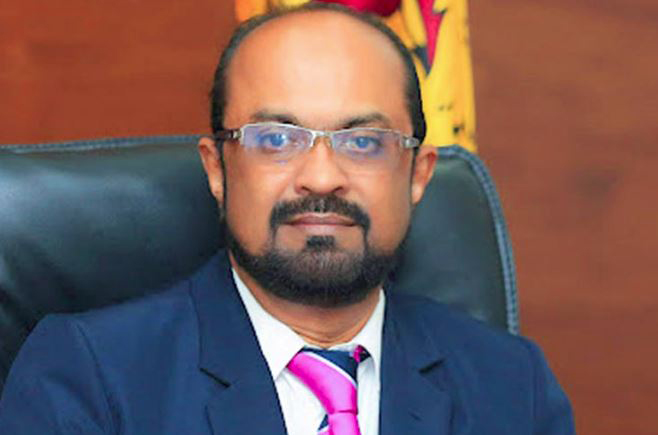
Colombo High Court has issued summons on Energy Minister Kumara Jayakody to appear in court today (27) to serve indictment in a corruption case filed by the Commission to Investigate Allegations of Bribery or Corruption (CIABOC). Action has been taken under Section 70 of the Bribery Act. The losses suffered by the government have been estimated at Rs. 8,859,708.
National List (NL) MP Jayakody is the first NPP minister or politician at any level to be indicted for corruption. The NPP parliamentary group consists of 159 including 18 NL members.
The summons has been issued by High Court judge Rashantha Godawalage.
Although CIABOC previously in many instances arrested those who had been under investigation and produced them before Magistrate courts, Minister Jayakody has been directly summoned by the Colombo High Court.
The investigation into alleged corruption in procurement during the time Jayakody served the Ceylon Fertilizer Corporation (CFC) started after the change of government in 2015.
According to the CIABOC investigation, the alleged instance of corruption took place in early 2014 towards the tail end of Mahinda Rajapaksa’s second term. At that time Jayakody was CFC’s Procurement Manager, and the CIABOC dragged the investigation until its current leadership under overall speeding up of the cases recently completed the inquiry.
Parliament recently announced that the debate on no-faith motion moved against Minister Jayakody over alleged irregularities in the procurement of substandard coal for the country’s only coal-fired power station at Norochcholai.
SJB MP Mujibur Rahman said that the NPP, having campaigned on an anti-corruption platform during presidential and parliamentary polls in 2025 couldn’t under any circumstances shield minister Jayakody. The indictment of Jayakody over a corruption case that had happened in 2014 and the failure on his part to fulfill obligations as Energy Minister under the current dispensation couldn’t be considered separately, the Colombo District MP said.
The issue at hand is whether the NPP would try to protect Jayakody at the expense of the government, MP Rahman said. Once the NPPer is formally charged in a corruption case the government would find it extremely difficult to keep him in the cabinet, the former UNPer said.
SJB lawmaker S.M. Marrikar recently warned Minister Jayakody that he should be prepared to serve a jail term. The warning was issued at a media briefing that primarily dealt with the alleged irregularities in the procurement of coal and their decision to move a no-faith motion against the minister. Marrikar explained how the crisis coupled with the growing diesel shortage could compel the government to increase electricity tariffs by as much as 18 percent next week. MP Marikkar said that they were eagerly waiting to see who backs Jayakody at the expense of the government during the upcoming vote on the no-faith motion.
There had been a previous case of a sitting minister being charged under the Bribery Act in respect of corruption perpetrated as a government servant. MP Rahman said that they intended to intensify the ongoing campaign against the government on the strength of the unprecedented corruption case and the outcome of the no-faith motion. “Of course, they have the numbers to defeat our no-faith motion. But, in doing so, they end up with egg on their face. That is the reality,” Rahman said, adding that those responsible for waste, corruption and irregularities whichever political parties they represented shouldn’t expect special status.
MP Rahman alleged that the CIABOC granted special status to Minister Jayakody. All those who had been indicted previously were first called to the CIABOC, recorded their statements and then arrested, handcuffed and produced in court. The media was afforded the opportunity to cover their humiliation, MP Rahman said, but in this case the powers that be paved the way for the accused to receive indictments directly from the Colombo High Court.
“Let us see whether the Bar Association of Sri Lanka responds to this development,” MP Rahman said.
By Shamindra Ferdinando

Presidential Suite at Sri Jayewardenepura General Hospital opened to the public

Cabinet Sub-Committee appointed to streamline the Public Service meets for the second time

PSL 2026: Teams allowed to submit two XIs and pick one after toss

Japan Premier League [JPL], building cricket from the ground up

Showers may occur at a few places in the Sabaragamuwa province and in Galle, Matara, Kalutara and Nuwara-Eliya districts in the evening

Energy Minister indicted on corruption charges ahead of no-faith motion against him

‘Dates have the highest sugar content to fight Coronavirus’

Sunday Island 27 December – Headlines

#SundayIsland 17th December – Headlines

Sunday Island – 28th March

Sunday Island Headlines – 21 March

Sunday Island – 21st February – Headlines
-

 News3 days ago
Senior citizens above 70 years to receive March allowances on Thursday (26)
-

 Features5 days ago
Trincomalee oil tank farm: An engineering marvel
-
 News16 hours ago
Energy Minister indicted on corruption charges ahead of no-faith motion against him
-

 News2 days ago
US dodges question on AKD’s claim SL denied permission for military aircraft to land
-

 Features5 days ago
The scientist who was finally heard
-

 Business2 days ago
Dialog Unveils Dialog Play Mini with Netflix and Apple TV
-

 News3 days ago
CEB Engineers warn public to be prepared for power cuts after New Year
-
 News3 days ago
Japanese boost to Sri J’pura Hospital, an outright gift from Tokyo during JRJ rule