
Opinion
Presidential authority in times of emergency: A contemporary appraisal – II


Keynote Address Delivered at the International Research Conference of the Faculty of Law, University of Colombo, on 12 December 2025.
(Continued from yesterday)
V. Usage Down the Ages
Empirical evidence during all epochs of history, and in a vast array of legal cultures, establishes without doubt the need for far-reaching executive powers during times of crisis.
The legal acumen of the Roman Republic did not recoil from conferment of even dictatorial powers on its principal executive officials—the two consuls—during periods of breakdown. They wielded life and death powers over Roman citizens, but the right balance was struck. Extraordinary authority was limited to the brief span of six months, and the appointing official could not select himself. Checks and balances assured success of the system: although 90 dictators were appointed under the Roman Republic during a period of 300 years, not one dictator attempted to perpetuate the system at the end of his tenure.
The English common law is certainly no exception to this tradition. The essence of the English doctrine is that the Executive has “an inherent constitutional authority to proclaim martial law when it deems there to be a public emergency, a proclamation that entitles the Executive to act as it sees fit to respond to the emergency” (Dyzenhaus).This power has been applied by the United Kingdom to her colonies, including Ceylon, where Governor Sir Robert Chalmers, for example, made ruthless use of it during the Sinhala-Muslim riots under the cloud of World War I.
In the United States, Congress has passed no fewer than 470 statutes granting authority to the President to use extraordinary powers during a declared state of national emergency. An egregious instance is Executive Order 9066 issued by President Roosevelt just two months after the Japanese attack on Pearl Harbour. This resulted in the mass incarceration of approximately 120,000 Japanese Americans from the western United States, over 70,000 of whom were American citizens(Amanda Tyler).
In the aftermath of 9/11, one of the gravest global emergencies in our time, American and British courts, for compelling reasons, showed marked solicitude for executive authority. A plurality of the Supreme Court of the United States held that the Congressional Resolution, Authorization for Use of Military Force, permitted the detention of enemy combatants, such power being recognized as “fundamental” and “a necessary and appropriate use of force” (Hamdi v. Rumsfeld). In the United Kingdom, in the first decision after 9/11, the House of Lords, grounding its decision in the separation of powers, held that it is for the Executive to decide what is in the interest of national security (The Belmarsh case).In doing so, the House of Lords had no hesitation in overruling the decision to the contrary by an administrative tribunal, the Special Immigration Appeals Commission.
VI. Imaginative Features of the Evolving Law
The limits of judicial review in this setting emerge clearly from impeccable precedents across the world. Legitimacy of the Proclamation of Emergency issued in Sri Lanka by the Acting President on 17 July 2022, assessed in light of these precedents, admits of no doubt.
The dominant test is that based on proportionality. The salient requirement is that the impugned measure should clearly realize or advance its underlying purpose, that “the use of such means would rationally lead to realization of the law’s purpose”(A. Barak). In terms of a comparative assessment of the harm inflicted on constitutional rights and the benefit accruing to the public interest, intervention by the Executive should come down heavily on the side of the latter, as opposed to the former(A.P. Brady).
The basis of justification is that the risk of harm sought to be averted should be very high, an overriding public interest being placed at stake in a situation where the outcome is perilously uncertain (J. Zander).Gravity of the risk and the extent of impending harm are the governing factors.
Evaluated against these criteria, the Sri Lankan Emergency Proclamation of 17 July 2022 passes the test with ease. In the backdrop of the nerve centres of the Executive Administration having fallen to the control of a violent mob, and the attempted extension of their initiative to the precincts of Parliament, where a crucial vote was scheduled within a matter of days for the election of the President of the Republic, in keeping with constitutional procedure, the Proclamation clearly served the purpose of ensuring unimpeded access to Parliament for legislators to perform their constitutional duty. Prevention of this by unlawful force would have presaged nothing less than the collapse of constitutionalism and the descent of the country into anarchy.
While recourse to the proportionality test would inevitably yield this result, it is worth noting a further refinement in the developing law. This has taken the form of modifying the criterion of proportionality by the application of a “precautionary principle” in suitable contexts.
The effect of this principle, now fortified by reliable antecedents, is “to favour the governmental objective (to mitigate or avert a crisis) over fundamental rights” (Ondrejek and Horak). This approach, militating against the postulate, in dubio pro libertate, has been described as “a rational and prudent response in the face of uncertainty”(Renn).
The precautionary principle, as a feature of contemporary jurisprudence, has its origin in international environmental law. Its substance is captured in the Rio Declaration on Environment and Development, 1992, which states: “In order to protect the environment, the precautionary approach shall be widely applied by States according to their capabilities. Where there are threats of serious or irreversible damage, lack of full scientific certainty shall not be used as a reason for postponing cost-effective measures to prevent environmental degradation”. Lack of epistemic certainty, then, must not forestall preventive action against grave damage. This principle has currently received acceptance outside the domain of environmental law as the anchor of a pragmatic mediating technique, of particular value in our time.
Applied to the Sri Lankan situation, it should conclusively govern the outcome, in that pre-emptive action in the face of impending disruption of a crucial meeting of Parliament is obviously a measure of prudence.
VII. A Realistic Assessment
The ratio decidendi of the majority decision of the Supreme Court is that, even after the President had reached a proper conclusion about the existence of a state of public emergency, he is still compulsorily required to consider whether other options are available to deal adequately with the crisis. This finding is demonstrably at variance with established authority.
The view has been persuasively taken that “There is usually more than one decision compatible with the complainant’s rights,
and it is for the public body rather than the court to choose between them”(T. R. S. Allen). Thus, “when there is scope for different answers or approaches, it is right that the court accept the solution favoured by the public authority”. Sir Thomas Bingham (as he then was) has referred in this context to “the range of options open to a reasonable decision maker”(R v. Ministry of Defence, ex parte Smith).Accordingly, there should not be “too narrow a space for the discretion of the primary decision maker”(Ondrejek and Horak).
The Supreme Court of the United States has declared: “It is no part of the function of a court to determine which one of two modes was likely to be the most effective for the protection of the public”(Jacobson v. Massachusetts). The Court spelt out the rationale for its ruling: the contrary decision could well lead to “disorder and anarchy”.
In a well-known ruling in 2018, in a case involving a travel ban imposed by President Trump, the Supreme Court observed: “Whether the President’s chosen method of addressing perceived risks is justified from a policy perspective, is irrelevant”(Trump v. Hawaii).The Court therefore refused the plaintiffs’ request for “a searching inquiry” on the ground of “the deference traditionally accorded to the President in the sphere of national security”.
This approach has cogency, for at least four compelling reasons.
First, the need for expeditious intervention is paramount. This is tied to the essential “reassurance function” of the Executive. “The government must act visibly and decisively to demonstrate to its terrorized citizens that the breach was only temporary, and that it is taking aggressive action to contain the crisis”(Ackerman).Speedy action on the spur of the moment, in an atmosphere far removed from one conducive to meticulous weighing of alternatives ex post facto, in a relaxed and unhurried setting, is the critical need.
Second, the consequences of delay should be evaluated against the prudence of prompt action. The reflection by Obeyesekere J. carries conviction: “In the event the Acting President did not take decisive steps, and further elected representatives were murdered, or Parliament was stormed, this Court may have had to consider whether there was a dereliction of duty in failing to act on the advice of pivotal officers responsible for maintaining law and order”. This was a situation in which the Minister of Public Security, the Secretary to the Ministry of Defence, and the Inspector General of Police had all recommended to the Acting President the declaration of a State of Emergency.
Third, in this instance, the effect of Presidential intervention was required only for a strikingly brief duration—until Parliament met within two days. Professor Bruce Ackerman of Yale University has offered the sapient comment: “The Executive should be given the power to act unilaterally only for the briefest period—long enough for the Legislature to convene and consider the matter, but no longer”.
Fourth, the rigidly circumscribed scope of judicial review in this setting is indicated by the narrow window for application of the Wednesbury test of reasonableness. In the evolving law, the impugned action is no longer required to be “suitable”, as a matter of judicial proof. All that is required is that it should “not be manifestly unsuitable”. This involves, from a practical standpoint, shifting of the burden of proof from the decision maker to those assailing the decision; and the threshold of proof is dauntingly exacting. The preferred principle in modern law is that “the courts should not quash or declare illegal any emergency measure or decision unless it is very likely(based on the already available data and evidence) that it cannot contribute to the legitimate aim in any way”(Ondrejek and Horak).
The Supreme Court of India has determined that there is no warrant for judicial intervention unless it is clear from the material on record that there is “absolutely no justification” for the Proclamation (Bhagvati J in Minerva Mills).Stringency of the test for availability of judicial review is laid bare by the example given by Bhagwati J—the Chief Minister of the state in question being below five feet in height(State of Rajasthan v. Union of India).This bears comparison with the famous illustration of the red-headed schoolteacher in the Wednesbury case. The trend, then, is unmistakably hostile to expansion of judicial review on this ground.
In our own country, this predisposition is reinforced by a firmly entrenched constitutional norm. A foundational principle of our public law is the vesting of judicial power, not in the courts but in Parliament, which exercises judicial power through the instrument of the courts. This is made explicit by Article 4(c) of the Constitution which provides: “The judicial power of the People shall be exercised by Parliament through courts, tribunals and institutions created and established, or recognized by the Constitution, or created and established by law, except in regard to matters relating to the privileges, immunities and powers of Parliament and of its members, wherein the judicial power of the People may be exercised directly by Parliament according to law”.
VIII. Conclusion
One of the most influential academic contributions to this subject in our time is the paper recently published in the University of Queensland Journal by Richard Ekins, Associate Professor of Law in the University of Oxford, and Graham Gee, Professor of Public Law in the University of Sheffield. The view is there articulated with exceptional force that there is reason to entertain deep suspicion regarding “a vague freewheeling judicial power”, which is seen at bottom as “antithetical to the rule of law”. This has been trenchantly denounced as “a lawless grab for power, unrooted in our constitutional tradition”.
The overarching problem is one of legitimacy. It should certainly give us pause that “this dangerous stretch of legal technique” carries with it the risk of displacing the proper exercise of political accountability and, in doing so, compromising basic constitutional principle.
This kind of judicial overreach has many undesirable consequences beyond the crisp question of the legality of the declaration of a state of emergency in 2022, including:
a) Traducing constitutional tradition;
b) Subverting the specific model of separation of powers reflected in our Constitution;
c) Undermining the established rule of interpretation that the courts construe the law from the face of the statutory and/or constitutional text, including due respect for ouster clauses;
d) Eroding established principles of public law in respect of the legality of executive or administrative actions; and
e) Inappropriately invoking doctrines such as those relating to ‘public trust’ and ‘just and equitable’ remedies to justify judicial overreach when those doctrines are there to ensure the common good and institutional role morality.
By Professor G. L. Peiris ✍️
D. Phil. (Oxford), Ph. D. (Sri Lanka);
Rhodes Scholar, Quondam Visiting Fellow of the Universities of Oxford, Cambridge and London;
Former Vice-Chancellor and Emeritus Professor of Law of the University of Colombo.

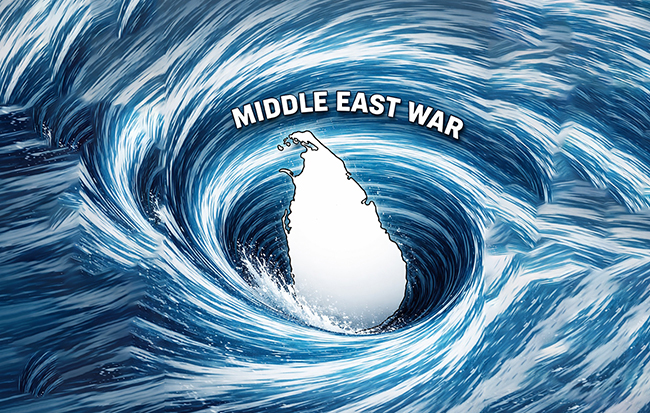
“As a small and open country, Singapore will always be vulnerable to what happens around us. As Lee Kuan Yew used to say: “when elephants fight, the grass suffers, but when elephants make love, the grass also suffers“. Therefore, we must be aware of what is happening around us, and prepare ourselves for changes and surprises.” – Prime Minister Lee Hsien Loong, during the debate on the President’s Address in Singapore Parliament on 16 May, 2018, commenting on the uncertain external environment during the first Trump Administration.
“When elephants fight, it is the grass that suffers”
is a well-known African proverb commonly used in geopolitics to describe smaller nations caught in the crossfire of conflicts between major powers. At the 1981 Commonwealth conference, when Tanzanian President Julius Nyerere quoted this Swahili proverb, the Prime Minister Lee Kuan Yew famously retorted, “When elephants make love, the grass suffers, too”. In other words, not only when big powers (such as the US, Russia, EU, China or India) clash, the surrounding “grass” (smaller nations) get “trampled” or suffer collateral damage but even when big powers collaborate or enter into friendly agreements, small nations can still be disadvantaged through unintended consequences of those deals. Since then, Singaporean leaders have often quoted this proverb to highlight the broader reality for smaller states, during great power rivalry and from their alliances. They did this to underline the need to prepare Singapore for challenges stemming from the uncertain external environment and to maintain high resilience against global crises.
Like Singapore, as a small and open country, Sri Lanka too is always vulnerable to what happens around us. Hence, we must be alert to what is happening around us, and be ready not only to face challenges but to explore opportunities.
When Elephants Fight
To begin with, President Trump’s “Operation Epic Fury”.
Did we prepare adequately for changes and surprises that could arise from the deteriorating situation in the Gulf region? For example, the impact the conflict has on the safety and welfare of Sri Lankans living in West Asia or on our petroleum and LNG imports. The situation in the Gulf remains fluid with potential for further escalation, with the possibility of a long-term conflict.
The region, which is the GCC, Iraq, Iran, Israel, Jordan, Syria and Azerbaijan (I believe exports to Azerbaijan are through Iran), accounts for slightly over $1 billion of our exports. The region is one of the most important markets for tea (US$546 million out of US$1,408 million in 2024. According to some estimates, this could even be higher). As we export mostly low-grown teas to these countries, the impact of the conflict on low-grown tea producers, who are mainly smallholders, would be extremely strong. Then there are other sectors like fruits and vegetables where the impact would be immediate, unless of course exporters manage to divert these perishable products to other markets. If the conflict continues for a few more weeks or months, managing these challenges will be a difficult task for the nation, not simply for the government. It is also necessary to remember the Russia – Ukraine war, now on to its fifth year, and its impact on Sri Lanka’s economy.
Mother of all bad timing
What is more unfortunate is that the Gulf conflict is occurring on top of an already intensifying global trade war. One observer called it the “mother of all bad timing”. The combination is deadly.
Early last year, when President Trump announced his intention to weaponise tariffs and use them as bargaining tools for his geopolitical goals, most observers anticipated that he would mainly use tariffs to limit imports from the countries with which the United States had large trade deficits: China, Mexico, Vietnam, the European Union, Japan and Canada. The main elephants, who export to the United States. But when reciprocal tariffs were declared on 2nd April, some of the highest reciprocal tariffs were on Saint Pierre and Miquelon (50%), a French territory off Canada with a population of 6000 people, and Lesotho (50%), one of the poorest countries in Southern Africa. Sri Lanka was hit with a 44% reciprocal tariff. In dollar terms, Sri Lanka’s goods trade deficit with the United States was very small (US$ 2.9 billion in 2025) when compared to those of China (US$ 295 billion in 2024) or Vietnam (US$ 123 billion in 2024).
Though the adverse impact of US additional ad valorem duty has substantially reduced due to the recent US Supreme Court decision on reciprocal tariffs, the turbulence in the US market would continue for the foreseeable future. The United States of America is the largest market for Sri Lanka and accounts for nearly 25% of our exports. Yet, Sri Lanka’s exports to the United States had remained almost stagnant (around the US $ 3 billion range) during the last ten years, due to the dilution of the competitive advantage of some of our main export products in that market. The continued instability in our largest market, where Sri Lanka is not very competitive, doesn’t bode well for Sri Lanka’s economy.
When Elephants Make Love
In rapidly shifting geopolitical environments, countries use proactive anticipatory diplomacy to minimise the adverse implications from possible disruptions and conflicts. Recently concluded Free Trade Agreement (FTA) negotiations between India and the EU (January 2026) and India and the UK (May 2025) are very good examples for such proactive diplomacy. These negotiations were formally launched in June 2007 and were on the back burner for many years. These were expedited as strategic responses to growing U.S. protectionism. Implementation of these agreements would commence during this year.
When negotiations for a free trade agreement between India and the European Union (which included the United Kingdom) were formally launched, anticipating far-reaching consequences of such an agreement on other developing countries, the Commonwealth Secretariat requested the University of Sussex to undertake a study on a possible implication of such an agreement on other low-income developing countries. The authors of that study had considered the impact of an EU–India Free Trade Agreement on the trade of excluded countries and had underlined, “The SAARC countries are, by a long way, the most vulnerable to negative impacts from the FTA. Their exports are more similar to India’s…. Bangladesh is most exposed in the EU market, followed by Pakistan and Sri Lanka.”
So, now these agreements are finalised; what will be the implications of these FTAs between India and the UK and the EU on Sri Lanka? According to available information, the FTA will be a game-changer for the Indian apparel exporters, as it would provide a nearly ten per cent tariff advantage to them. That would level the playing field for India, vis-à-vis their regional competitors. As a result, apparel exports from India to the UK and the EU are projected to increase significantly by 2030. As the sizes of the EU’s and the UK’s apparel markets are not going to expand proportionately, these growths need to come from the market shares of other main exporters like Sri Lanka.
So, “also, when elephants make love, the grass suffers.”
Impact on Sri Lanka
As a small, export dependent country with limited product and market diversification, Sri Lanka will always be vulnerable to what happens in our main markets. Therefore, we must be aware of what is happening in those markets, and prepare ourselves to face the challenges proactively. Today, amid intense geopolitical conflicts, tensions and tariff shifts, countries adopt high agility and strategic planning. If we look at what our neighbours have been doing in London, Brussels and Tokyo, we can learn some lessons on how to navigate through these turbulences.
(The writer is a retired public servant and can be reached at senadhiragomi@gmail.com)
by Gomi Senadhira

The introduction of the QR code–based fuel quota system can be seen as a timely and necessary measure, implemented as part of broader austerity efforts to manage limited fuel resources. In the face of ongoing global fuel instability and economic challenges, such a system is aimed at ensuring equitable distribution and preventing excessive consumption. While it is undeniable that this policy may disrupt the daily routines of certain segments of the population, it is important for citizens to recognize the larger national interest at stake and cooperate with these temporary measures until stability returns to the global fuel market.
At the same time, this initiative presents an important opportunity for the Government to address long-standing gaps in regulatory enforcement. In particular, the implementation of the QR code system could have been strategically linked to the issuance of valid revenue licenses for vehicles. Restricting QR code access only to vehicles that are properly registered and have paid their revenue dues would have helped strengthen compliance and improve state revenue collection.
Available data from the relevant authorities indicate that a significant number of vehicles—especially three-wheelers and motorcycles—continue to operate without valid revenue licences. This represents a substantial loss of income to the State and highlights a weakness in enforcement mechanisms. By integrating the fuel quota system with revenue license verification, the government could have effectively encouraged vehicle owners to regularise their documentation while simultaneously improving fiscal discipline.
In summary, while the QR code fuel system is a commendable step toward managing scarce resources, aligning it with existing regulatory requirements would have amplified its benefits. Such an approach would not only support fuel conservation but also enhance government revenue and promote greater accountability among vehicle owners.
Sariputhra
Colombo 05

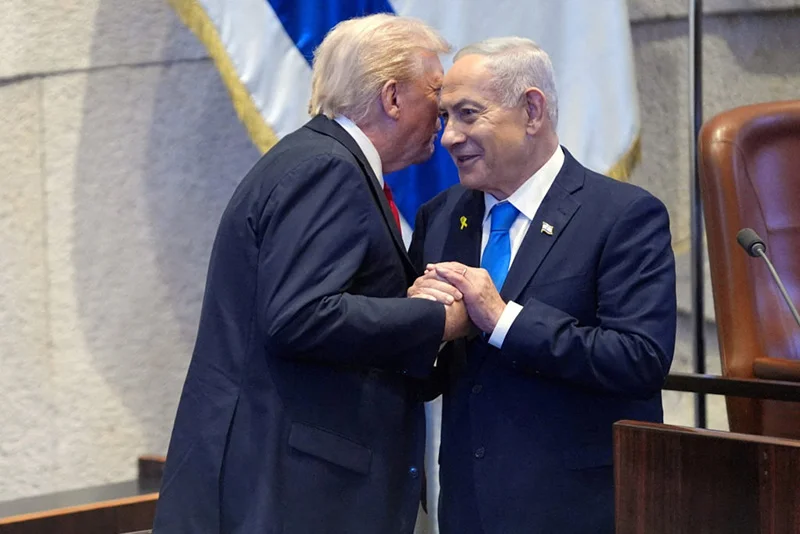
First, let us see why the war started by Israel and the US against Iran may be seen as a stupid undertaking. Israel was aiming for regional hegemony and US world dominance, which could be called an utterly foolish dream in today’s multipolar world order, which the theatre of war now reveals. They may have underestimated Iran’s capacity and also the economic fallout due to its ability to control the Strait of Hormuz.
In February 2026, reports emerged that General Dan Caine, the U.S. Chairman of the Joint Chiefs of Staff, privately warned President Trump about the significant risks of a major war with Iran, including potential U.S. casualties, depleted ammunition stockpiles and entanglement in a prolonged conflict. However, President Trump publicly dismissed these reports as incorrect. General Caine’s appointment by President Trump was considered controversial, as Caine was chosen over many active-duty four-star generals and lacks experience as a combatant commander or service chief. Under these circumstances Caine would have been expected to be subservient to Trump, yet he opted to disagree as he saw the danger. Trump countered his arguments saying it would be a quick job, take out the leadership, destroy the military structure and the people will take over the country. This did not happen and now most of the scenarios that Caine said was possible are gradually coming true.
Israel suffers damage
For Israel, too, damage is much more than expected and could prove to be decisive in its expansionist ambitions in the region if not its very existence. It had previously tried to drag former US presidents, Bush, Obama and Biden into a war with Iran, but they were aware of the underlying danger. The Gulf countries too were hit hard and the US could not protect them, and they may be regretting that they ever let the US set up military bases on their soil. Former US secretary of state Henry Kissinger once famously said, “To be America’s enemy is dangerous, to be its friend is fatal”.
The US may have succeeded in making states, such as Iraq, Syria and Libya, fail, but Iran is a different kettle of fish. Trump was jubilant after capturing the Venezuelan president and may have been planning to lay his hands on Cuba and Turkey and then try to annex Canada and Greenland. A man who promised a “no war” policy in his presidential campaign has converted his department of defence into a department of war in the real sense of the term. Trump must realise that he cannot act like a global policeman and undermine the sovereignty of other nations with impunity. Trump says “we have won” but has nothing to show as gains in the Iran war.
Trump’s concern about BRICS
Another factor in the equation is that Trump may have been concerned about the growing influence and membership of BRICS, which in effect appears to be anti-American if one were to go by its attempt to de-dollarise world trade. Of particular concern may have been the recent admission into BRICS, of several countries supposed to be staunch US allies, such as Saudi Arabia, UAE, and Egypt. Iran is an active member and was mending its fences with Saudi Arabia under the mediation of China. Further, two of the arch rivals of the US, China and Russia, are leading members of BRICS, which has become the meeting ground for the friends as well as foes of the US, under the stewardship of China. The US saw all this as a huge challenge to its dominant position in the world and Trump, who was trying to “make America great again”, saw that his dream may go up in smoke. He threatened countries which tried to adopt an alternative to the dollar with sanctions. He may have thought if Iran could be destabilised and structurally broken up, he would be able to kill two birds with one stone. He may have se an enemy of both the US and also its ally Israel and disrupt the BRICS organisation.
The war is affecting the economy of the BRICS countries quite badly. The fuel shortage due to closure of Strait of Hormuz has hit India hard and also China. The economies of the Gulf countries, whose oil is transported via the Persian Gulf and the Gulf of Oman, have also suffered immensely. South Africa, a founding member of BRICS imports oil mainly from the Middle East. Brazil, another founder member, though an exporter of oil, imports refined fuels from the Middle East. A large portion of food requirements also of the Gulf countries come through these sea routes. Thus, the BRICS organisation must be concerned about the consequences of the war if it drags on. It obviously augers ill for the BRICS, and it must act quickly to bring about a ceasefire and an amicable settlement as soon as possible.
Jeffrey Sachs’ opinion
Prof. Jeffrey Sachs, the eminent American economist, has argued that BRICS nations have a critical responsibility to play a leading role in stopping the war in the Middle East, particularly regarding the escalating conflict between the US/Israel and Iran. He contends that because the US is pursuing “global hegemony” and attempting to control the region, BRICS serves as the only effective “standing bulwark” against American domination.
Sachs has stated that if BRICS countries, particularly India, China, and Russia, stand together and demand an end to the war, “it will actually end”. He has described this collective action as the only way to make the world safe. Arguing that the Middle East conflict is a planned campaign by the US and Israel for regional dominance rather than a defensive action, he has called on BRICS to stop the US from running the world. He warned that a continued conflict, especially one that disrupts energy supplies, will cause enormous economic costs for Asia, Europe, and the US.
Sachs has argued that India should not have joined Quad, as he views Washington as using a “divide and conquer” strategy. He has characterised the BRICS countries as a fast-growing, multipolar bulwark that rejects the notion of a single “emperor” (referring to US influence). Sachs has warned that if the conflict is not stopped, it could lead to World War III and catastrophic regional consequences (India Today).
China and Russia, though rivals of the US, have the economic and military clout to exert pressure on the US. India is a friend of both the US and Israel and could act as a mediator to bring about an end to this meaningless war. Gulf countries, some of whom are BRICS members, could make a strong appeal to their friend and benefactor, the US, to see what its senseless aggression is doing to their countries.
Unity of BRICS essential
As of 2026, the expanded BRICS group (including Brazil, Russia, India, China, South Africa, Egypt, Ethiopia, Iran, Saudi Arabia, UAE, and Indonesia) represents approximately 49% of the world’s population. Moreover, its collective GDP is 35 – 40% of the global GDP when measured in PPP terms, which may be considered as higher compared to G7 countries which record 30%. Thus, BRICS is a force to be reckoned with provided its members stand together. However, they have not been able to do so though it is obvious that it would be beneficial to all of them. Bilateral conflicts within the BRICS, apparently intractable, are preventing any concerted action by these countries. In this regard, as Prof. Sachs says the onus is on China, Russia and India to come together to stop the war, which if allowed to drag on, will irreparably damage the economy and unity of BRICS and worse it would never be possible to attain any of its objectives. It is time the founder members Brazil, Russia, India, China and South Africa got together and review its goals, the need for such an organisation as BRICS, and the present danger it faces and take remedial steps as soon as possible if it is to remain a viable force with the potential to counter the hegemonic imperialist forces.
Further, the BRICS, as it consists of stakeholders of a new world order and also countries directly involved in the Middle East turmoil, may have an important role to play in working out an arrangement that could bring permanent and stable peace to the region. Once the dust settles on the military front, and the futility of war becomes apparent it may be time for the BRICS countries to raise a voice to demand a settlement based on the two-state solution that was adopted by the UN. Though Trump brushed this UN resolution aside and started taking over Gaza, once the war is over and he contemplates the economic cost of it to the US public – it costs US 1 – 2 billion dollars a day – he may realize the need for a solution acceptable to all. There have been several US presidents who were strong proponents of the two-state solution—an independent Palestinian state alongside Israel—as a core policy goal. Key proponents included George W. Bush (who first formally backed it in 2002), Bill Clinton, Barack Obama, and Joe Biden; they have viewed it as the most viable path to peace. Israel too after sustaining enormous damage may be forced to agree to a solution, if the US pressures it. Both Trump and Netanyahu, perhaps for personal reasons, wanted a war but they did not expect it to take the turn it has taken. Netanyahu’s days in power may be numbered and Trump may be forced by Republicans to change course as the majority of the US public does not approve of the war.
Therefore, time may be opportune for BRICS to stand together and call for a permanent solution to the Palestinian problem which is at the core of the Middle East conflict. Peace in the Middle East is vital for the further development of BRICS.
by N. A. de S. Amaratunga

Showers may occur at a few places in the Sabaragamuwa province and in Galle, Matara, Kalutara and Nuwara-Eliya districts in the evening

Energy Minister indicted on corruption charges ahead of no-faith motion against him

Over 1000 complaints of misuse of QR quotas

Fuel bowser operators demand 25% hike in haulage charges

Charge sheet issued against former NIE Director for contempt of court

Sallay sent back to CID after being discharged from National Hospital

‘Dates have the highest sugar content to fight Coronavirus’

Sunday Island 27 December – Headlines

#SundayIsland 17th December – Headlines

Sunday Island – 28th March

Sunday Island Headlines – 21 March

Sunday Island – 21st February – Headlines
-

 News2 days ago
Senior citizens above 70 years to receive March allowances on Thursday (26)
-

 Features4 days ago
Trincomalee oil tank farm: An engineering marvel
-

 Business1 day ago
Dialog Unveils Dialog Play Mini with Netflix and Apple TV
-

 Features4 days ago
The scientist who was finally heard
-

 News1 day ago
US dodges question on AKD’s claim SL denied permission for military aircraft to land
-
 News2 days ago
Japanese boost to Sri J’pura Hospital, an outright gift from Tokyo during JRJ rule
-

 News2 days ago
CEB Engineers warn public to be prepared for power cuts after New Year
-

 News6 days ago
Colombo, Oslo steps up efforts to strengthen bilateral cooperation in key environmental priority areas