
News
Power cuts certain as it stands- CEBEU

Crisis management committee has not met for three months
By Ifham Nizam
The Country would experience rotational power cuts due to the negligence of some top officials of the Ceylon Electricity Board (CEB), the powerful Ceylon Electricity Board Engineers Union (CEBEU) warned yesterday.
A senior Electrical Engineer and one time President of CEBEU told The Island that masses would experience more power cuts unless immediate action was taken.
“The Power Crisis Committee Meeting has not been held for three months by the CEB General Manager M.R. Ranatunga despite our warnings,” a committee member of the CEBEU said.
The power shortage would be due to shortage in the installed power generating capacity to meet the forecasted demand and also due to a possible fuel shortage affecting power generation, they said.
“Despite repeated warnings by the CEBEU as a Trade Union and our members in their official capacities, CEB Chairman and outgoing General Manager Eng. M.R. Ranatunga had not taken any steps to plan and prepare for such an eventuality. Despite repeated requests, no “Power Crisis Meetings”, a regular meeting convened by all past GMs to identify impending power shortages and to make any adjustments early, has not been held during the term of present GM,” a senior engineer said.
CEBEU also said it was critically important for all authorities to identify at least now itself why there was a severe project implementation delay in the country and address the Causes of such Problems (to eliminate the Problem) instead of blaming the Effects/Results of the problem.
“We wish to caution authorities not to allow a crisis to take place and thereafter resort to very expensive short-term solutions such as supplementary power (popularly referred to as emergency power) purchasing to overcome only the effects of the problem,” the Union added.
Non-implementation or the delaying of scheduled power plants and the cancellation of finalised power plants had resulted in the imminent crisis, the union said. Withholding 150MW ground mounted solar tender by the State Ministry of Renewable Energy Projects Development for more than 15 months and inexcusable dragging of already finalized 350 MW CCY power plant at Kerawalapitiya (Sobadhavi) are some examples of the most recent root causes which are to be readily attended as long-term solutions, the union said, adding that the authorities should conserve fuel for power generation by taking measures to cut down fuel on transport use by resorting to innovative measures such as encouraging and facilitating work from home arrangements immediately.
The Union also pointed out that all authorities should follow the Sri Lanka National Energy Policy recommendations, which were published in 2019 and well before the COVID Pandemic.
“We urge authorities to run this country based on such long-term policies and actions already identified instead of managing from crisis to crisis basis,” the Union added.


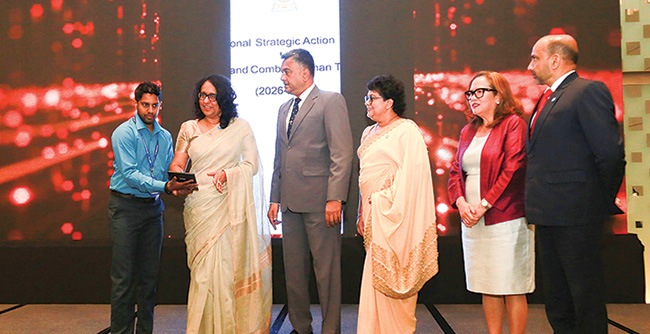
The National Anti-Human Trafficking Task Force (NAHTTF), on 28 January, 2026, officially launched the National Strategic Action Plan to Monitor and Combat Human Trafficking (2026–2030), reaffirming Sri Lanka’s strong commitment to eliminating all forms of human trafficking and strengthening coordinated national responses.
The launch was held under the patronage of Prime Minister Dr. Harini Amarasuriya. The event was also attended by the Secretary to the Ministry of Defence and Chair of the NAHTTF, Air Vice Marshal (retd) Sampath Thuyacontha, and Kristin Parco, IOM Chief of Mission in Sri Lanka and Maldives. Members of the NAHTTF, representing 23 key government entities, along with representatives of the diplomatic community, United Nations entities and Civil Society Organisations (CSOs).
The Prime Minister stated “Caring for trafficking survivors in Sri Lanka requires a holistic, gender-sensitive, and survivor-centered approach that addresses both immediate protection and long-term recovery. This includes safe shelter, medical care, and trauma-informed psychological support, with particular attention to women and girls who experience more severe and gendered forms of violence, alongside legal assistance, economic empowerment, and skills development to prevent re-trafficking”.
The five-year Action Plan was unveiled under the leadership of the Ministry of Defence, in its capacity as Chair of the NAHTTF, the national multi-stakeholder mechanism responsible for strategic guidance, coordination, and oversight of counter-trafficking efforts in Sri Lanka.
Air Vice Marshal (retd) Sampath Thuyacontha, Secretary, Ministry of Defence and Chair of the NAHTTF remarked, “As Chair of the National Anti-Human Trafficking Task Force, we remain firmly committed to safeguarding the dignity, safety, and security of all individuals. This National Action Plan reflects our shared responsibility to prevent and combat trafficking in persons through coordinated and sustained action. By raising public awareness, strengthening intersectoral collaboration, and ensuring accountability, we are working towards a Sri Lanka where exploitation has no place, perpetrators are brought to justice, and survivors receive the comprehensive protection and support they deserve.”
Developed with technical support from the International Organisation for Migration (IOM), the National Strategic Action Plan 2026-2030 establishes a unified national framework to prevent human trafficking, protect and assist victims, strengthen law enforcement responses, and enhance accountability. The plan draws on extensive consultations with NAHTTF, CSOs, frontline responders, and international partners.
It builds lessons from previous action plans and aligns with international standards, addressing emerging challenges, such as cyber-enabled trafficking and the misuse of digital platforms and artificial intelligence for recruitment and exploitation. “For over a decade, IOM has worked alongside the Government of Sri Lanka, and is honoured to have supported the development of this Action Plan and strengthened national systems. The result is a plan that is both ambitious, practical and grounded in global standards yet firmly rooted in Sri Lanka’s realities,” said Kristin Parco, IOM Chief of Mission in Sri Lanka and the Maldives. “Together, with shared purpose, we are one step closer to eradicating human trafficking in Sri Lanka”
The Action Plan is structured around four key pillars: • Prevention through community awareness-raising and risk-reduction measures • Victim-centred protection and assistance, including access to comprehensive support services • Strengthened investigations and prosecution, supported by improved inter-agency coordination and cross-border cooperation • Improved policy, data, and national coordination mechanisms through enhanced partnerships with civil society, the private sector, international organisations, and regional networks, coordinated through the NAHTTF.
IOM will continue to work in close partnership with the Government of Sri Lanka and the NAHTTF to support the effective implementation of the National Strategic Action Plan to Monitor and Combat Human Trafficking (2026–2030). The organisation supports all counter-trafficking and victim protection efforts that will strengthen national and district-level mechanisms, ensuring comprehensive support for front-line responders and providing protection, return and reintegration services for survivors of internal and crossborder trafficking.
The Government of India has proposed grants and loans totalling 4 billion Indian rupees for Sri Lanka under its 2026 Budget.
Unveiling the annual Budget yesterday (01 Feb.), Indian Finance Minister Nirmala Sitharaman placed renewed emphasis on strengthening India’s manufacturing sector as part of efforts to accelerate growth amid global economic volatility.
She said the Budget for the next fiscal year would prioritise structural reforms, particularly in manufacturing, the development of a robust financial sector, and increased investment in emerging technologies, such as artificial intelligence.
The Modi administration has been seeking to raise manufacturing’s share of gross domestic product to 25 percent from the current level of under 20 percent, aiming to generate employment for the millions entering the workforce each year.
India’s economy is projected to grow by 7.4 percent in the current financial year, with inflation expected to remain close to 2 percent. The fiscal deficit is forecast at 4.4 percent of GDP.
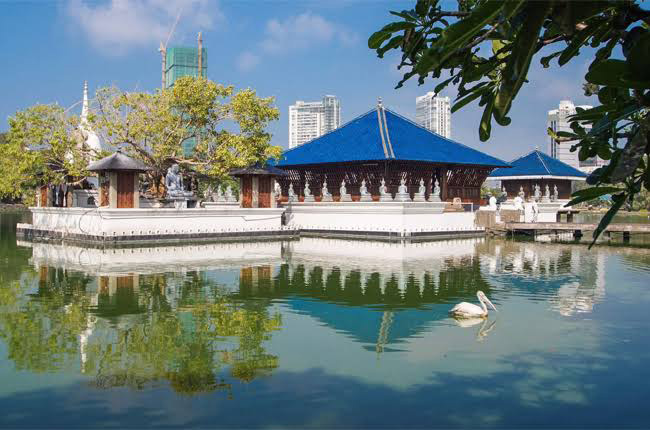
Arrangements have been finalised to bring the sacred bodily relics of the Buddha to Sri Lanka, according to the President’s Media Division.
The relics were first discovered in the 1960s in the Gujarat region of India, the home state of Indian Prime Minister Narendra Modi. These sacred relics, which have never previously been taken outside India, will be made available for veneration by the people of Sri Lanka.
A special District Coordination Committee meeting to discuss preliminary arrangements was held on January 31 at the Colombo District Secretariat, under the patronage of Prime Minister Dr Harini Amarasuriya, with the participation of the Chairman of the Colombo District Coordination Committee, MP Lakshman Nipuna Arachchi.
Following discussions between President Anura Kumara Dissanayake and Indian Prime Minister Narendra Modi, and with the support of the Government of India, the sacred relics will be brought to Sri Lanka and displayed for public veneration for seven days, from February 4 to 11, at the Gangaramaya Temple in Hunupitiya, Colombo.
The exhibition will remain open 24 hours a day. A special priority queue system will be implemented for foreign tourists, pregnant mothers and persons with disabilities.
All relevant government institutions have jointly prepared comprehensive plans to ensure adequate transport, sanitation and security facilities for devotees attending the event. Accordingly, the Department of Railways, the Sri Lanka Transport Board and private bus operators will implement a special transportation plan, while the Police and the Tri-Forces will enforce enhanced security and traffic management measures.
Members of the district’s business community will organise dansal and refreshment services for devotees waiting in queues.
Taking possible weather conditions into consideration, all essential arrangements have been completed to ensure that devotees can venerate the sacred relics with ease.
The meeting was attended by the Chief Incumbent of the Gangaramaya Temple, Venerable Dr Kirinde Assaji Thera, members of the Maha Sangh, Minister Harshana Nanayakkara, Deputy Minister Sunil Watagala, Members of Parliament, local government representatives, Colombo District Secretary Prasanna Janaka Kumara, and other state officials.

Reform controversy: The plot thickens

Sri Lanka’s 2.3% inflation is a useful macro indicator, but it acts as a veil, says analyst

Lanka unveils 5-year national action plan to strengthen anti-human trafficking efforts

India pledges INRs 4bn aid to Lanka in 2026 Budget

English as used in scientific report writing

Gangaramaya to host sacred Buddha relics from Gujarat

‘Dates have the highest sugar content to fight Coronavirus’

Sunday Island 27 December – Headlines

#SundayIsland 17th December – Headlines

Sunday Island – 28th March

Sunday Island Headlines – 21 March

Sunday Island – 21st February – Headlines
-
 Business4 days ago
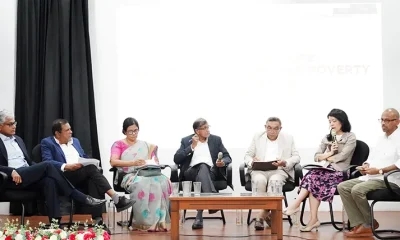
Climate risks, poverty, and recovery financing in focus at CEPA policy panel
-
 Opinion3 days ago
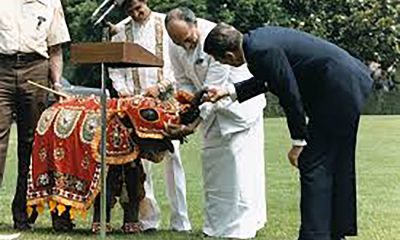
Sri Lanka, the Stars,and statesmen
-

 Business2 days ago
Hayleys Mobility ushering in a new era of premium sustainable mobility
-
 Opinion7 days ago
Luck knocks at your door every day
-

 Business2 days ago
Advice Lab unveils new 13,000+ sqft office, marking major expansion in financial services BPO to Australia
-
 Business2 days ago
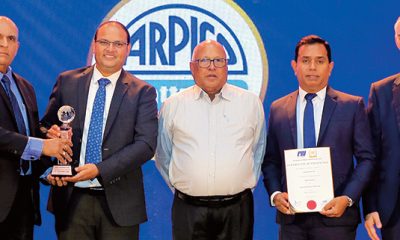
Arpico NextGen Mattress gains recognition for innovation
-

 Business1 day ago
Altair issues over 100+ title deeds post ownership change
-

 Business1 day ago
Sri Lanka opens first country pavilion at London exhibition