
Features
Port City hurry, Pandemic sorry, Palestinian misery

by Rajan Philips
The government may have wanted to change the political channel from gloomy pandemic news to hopefully sunshine Port City news. Instead, the government is stuck on a split screen with double-whammy news stories. On the left half, you can see a botched-up Port City Bill, heavily bandaged by the Supreme Court, limping through parliament with as many amendments as there are commas. On the right half, is the daily and depressing news of rising Covid-19 infections, mounting deaths, multiplying variants, shortage of hospital beds, long winding queues for short supplies of vaccine, and new restorations of old restrictions. In the background, you can see the burning silhouette of Modi’s India, a subcontinent of mass cremations. The images sum up the Sri Lankan government’s quandary. Desperate for China’s helping hand in Port City, the government’s default setting for managing the pandemic in Sri Lanka has been to follow Modi’s disastrous footsteps in India.
There are always competing news stories in the globalized news media. The present juncture is no exception, except there is the exception of Covid-19. It is not often in a millennium of years do you see the whole planet caught up in a pandemic. But even the pandemic has not been a strong enough deterrent to stop the current flareup in the Middle East. The ‘next’ Palestinian intifada was always expected after the failure of the earlier Israeli-Palestinian accords, and the decade-long machinations of Benjamin Netanyahu as Israel’s Prime Minister. The recent ‘Abraham Accords’ brokered by Trump’s son-in-law, establishing new ‘deals’ between Israel and less than a handful of Arab states, have been comical overall but provocative to the Palestinians. The Biden Administration wouldn’t even call them ‘Abraham Accords’, only “normalization process.’
Palestinian Misery
Yet, the timing of the current outbreak raises some valid questions for conspiracy followers. Why now when Netanyahu’s future as Prime Minister has never been as precarious as it is now? Buffeted by corruption allegations and a trial to boot, and unable to form a government after yet another election, Mr. Netanyahu is hanging in as PM only because he has started a fight with Hamas. Why now, and not earlier when Trump was President? President Biden is rightly being criticized for not being hard enough on Netanyahu to force a ceasefire. The US is also blocking a potential UN Security Council resolution calling for ceasefire. A US President arguably has some leverage over Netanyahu given America’s annual bankrolling of USD 3.8 billion as military assistance to Israel, although under Trump there would have been full-throated US support for Netanyahu and his government. President Biden has reportedly taken four calls to the Israeli Prime Minister, apparently getting more insistent with each call.
What is new this time is that the calls for a more balanced US approach (i.e., to lean a little hard on Israel) are coming from within the US, more stridently from among the Democratic Party progressives, and even from within the Administration. There are expectations that if the scale of fighting were to exacerbate, social media could play a heightened role in mobilizing public opinion in the US against Israeli attacks on Palestinian civilians. What is new within Israel unlike in past intifadas is the specter of mob violence between Israeli extremists and Arab citizens of Israel. As against these new developments stand the old geopolitical realities. The PLO which has its contacts with the west and the US is a spent force among Palestinians. On the other hand, Hamas which controls Gaza has no window with the west given its total dependence on Iran. The US officially dismisses Hamas as a terrorist organization, but the Biden Administration does not want to totally alienate Iran because it is keen to restore President Obama’s agreement with Iran that Trump rescinded to please Netanyahu and the Republicans in the US. The vicious circle goes on.
For Sri Lankans, in the days of the Old Left and non-alignment, taking a principled position on the Middle East was much more straightforward as the world then was in the grips of a Cold War between two ideologically opposite superpowers. Except for universal principles, Sri Lanka was not implicated in anything external. Not anymore. Given Sri Lanka’s recent history of civil war and current goings on over human rights violations, anything anywhere in the world is naturally viewed through the lens of the country’s experience. That experience also includes closer relationships with Israel that grew during the war. But the people’s current experience is only about the pandemic and the government’s handling of it. For the second year in succession the government has not been able to lavishly celebrate the war victory of 2009 because of Covid-19.
And new detractions will keep coming, courtesy this time of the recent passage in the Legislative Assembly of the Province of Ontario in Canada of “An Act to proclaim Tamil Genocide Education Week,” in that Province. Not to be outdone, former Chief Minister CV Wigneswaran has called for an “internationally supervised referendum” to end the suffering of the Tamils in Sri Lanka. This is puerile Tamil diasporic politics, but one that will have equal and opposite reactions among no less immature Sinhala nationalists. Midsummer madness produces midweek reactions. Already Canada’s history from birth to its current politics has been given a rather harsh but wholly ignorant archaeological treatment. No one is wiser from these exchanges.
For people everywhere including Ontario, and including Tamils living in Sri Lanka, the need of the hour is not education on genocide or referendums that will never happen, but protection from Covid-19. People in Sri Lanka have only the government of Sri Lanka to turn to for protection from Covid-19. So, the only question that now matters in Sri Lanka is – how well or ill equipped the government of Sri Lanka is to protect Sri Lankans from the global pandemic. As the Sunday Times editorially put it last week, “there’s little point any more in blaming the Government for allowing the COVID-19 pandemic to slip into virtual free fall. Reports coming in from all parts of the country are distressing. The time for blame-games is over, it’s time for action.” But is the government up to it? Will it play port city politics to improve its pandemic image, or seriously take a new direction for managing Covid-19?
Port City Questions
By the time this column appears in print, parliament would have passed the Port City legislation by a simple majority, if not a simpletons’ majority, as a result of the government accepting all the amendments that were marked up in the Supreme Court’s ruling. I do not think Minister GL Peiris was quite accurate in saying that all the amendments in the ruling had been proposed by the Attorney General before the Court. In addition to AG’s amendments the Court added its own in a number of instances. But the real question that Minister Pieris as a former law professor needs to answer to the country is how come a bill that needed so many amendments could have left the drawing board to become law, and would have become law without any amendment were it not for its objectors and the Courts intervention.
Worse, in its original form the bill stood for weakening Sri Lanka’s economic interests and enhancing foreign investors’ profit making interests by withdrawing oversight across the board and offering incentives with no one to oversee. It is a sad commentary on the government’s usual apologists, who brought the sky down over the Millennium Corporation Compact screaming sovereignty, that they were ready to give this bill a pass and give abuse to those who raised valid questions about the bill. Even the epithet Sinophobia got flung in the melee, likely for strawman effect. Sovereignty has been reduced to a worthless red herring, and the referendum mechanism is not a real safeguard. A successful referendum cannot turn a bad bill into good law; it will only enshrine it as bad law.
No one in the government has been able to explain why the bill was presented in its original form in the first place. And as far as I can say there are still a few questions that have not been persistently (or rather not at all) asked; and only someone like Anura Kumara Dissanayake can vigorously pursue THEM in parliament. Opposition MPs like Champika Ranawaka, Harsha de Silva and Eran Wickramaratne are eminently knowledgeable, but they have all had their right hands in port city during their time in government and seem to be having only their left hands to swing at the blunders of this government.
The CHEC (China Harbour Engineering Company) Port City Colombo website includes plenty of information about the discussions and agreements reached between the private company and the previous government of Sri Lanka. There is a sense that the bill drafted by the present government significantly deviates from the earlier understandings and documentations. This point was publicly asserted by Yuthukama Group leader Gevindu Cumaratunga, who is also a government National List MP. But no one has described what this deviation is and why it was made. Champika Ranawaka or Ranil Wickremesinghe should be able to shed light on this matter. Neither has, nor likely will. Hopefully, the JVP leader will add this to his list of national questions.
The second question is about the Port City Bill’s deviations from the financial and economic assumptions underlying the Economic Impact Assessment of the Port City Colombo, a report prepared in February 2020 by PricewaterhouseCoopers (PwC) Colombo. The government has been using PwC’s assessment to make its economic case but then went ahead and invalidated the report’s assumptions by the tax exemptions included in its Bill. With the new amendments, parliament’s approval will be needed but getting a simple majority will not be a problem for this government. Economic assessments are good as the assumptions on which they are made, and as far as I know no one in parliament has brought attention to PwC’s report and the need to provide updates on how its assumptions are faring as port city developments get under way.
So far, much has been made of CHEC’s initial USD 1.4B investment in the Port City venture, but nothing has been said about how much the government Sri Lanka has spent, directly and indirectly, in cash as well as in kind. And how much more the government is on the hook for spending in the future. I do not think PwC’s report sheds any light on this matter. There is also no clarity about how rate payments for utilities and services to the Port City lands will be determined and payments collected by Sri Lanka’s service agencies. Extending infrastructure to provide service connections to a new luxury city is an expensive undertaking. Who is paying for it? And where is the capacity to expand these services coming from? I am not suggesting that these details have not been worked out. But in the new culture of sovereignty assertion over technical projects, technical details and their significant costs are getting sidelined not only from public’s view but also from the scrutiny of parliament.
Pandemic Humility
There is no need to recount how Prime Minister Modi and the BJP have turned India into a pandemic crematorium. As “India’s utmost isle,” Sri Lanka has the advantage of being small to get away with manageable difficulties. Even as the Covid-19 situation is getting worse by the day, government policy can draw some consolation if Sri Lanka’s numbers (of infections and deaths) stay under India’s totals divided by 70. India’s population is 70 times Sri Lanka’s. India’s current totals are 25.7 M infections and nearly 300,000 deaths. Sri Lanka at just over 150,000 infections and 1,000 deaths, is still well under the threshold totals of nearly 400,00 infections and 4,000 deaths. However, the proportionality threshold is in danger of being breached.
According to Dr Hemantha Herath, of the Ministry of Health, Sri Lanka is facing the risk of surpassing one million COVID-19 cases within the next 100 days. Independently, forecasting done by the Institute of Health Metrics and Evaluations (IHME) at the University of Washington has reportedly indicated that Sri Lanka may experience over 20,000 COVID-19 deaths by September. So, by more than reasonably reliable predictions, Sri Lanka could have reached one million infection and 20,000 death totals by August/September. And Sri Lanka would be far worse off on a per capita basis than where India is now. India’s case total is showing a declining trend, whereas cases are going up in Sri Lanka.
The fallouts will be catastrophic in every respect. One would hope that the government will not waste time arguing that these projections are not correct, but make every effort to prevent them from occurring. Since it has been a virtual one-man show, or no show, so far, it is up to the President to show the greatness of humility and think of a new approach by taking good advice from people who know more about public health. He should seriously think about and seek advice on striking an All-Party Parliamentary Committee that could function as a pandemic cabinet (without perks or titles, for god’s sake) under the President’s direct leadership. Medical professionals will report to this committee and will be responsible for all the medical public health decisions and communications. The Armed Services could operate in parallel providing practical and logistical support.
The President should invite Dr. Tissa Vitarana to serve on this committee. The President would do well to read the two public statements by Dr. Vitarana on pandemic management, both of which were published in the Sunday Island. The statements are expert applications of the current state of knowledge of the pandemic to Sri Lanka’s specific circumstances. They include the following propositions which have also been expressed by other experts in every other country: (1) There is no permanent state of herd immunity for this global pandemic. But the virus can be contained and controlled. (2) Vaccines are not the panacea for this virus. They are currently effective and useful, but their long term effectiveness is still a study in progress. (3) For potential herd immunity at the global level, at least 12 billion doses will be required for full (two-shot) vaccination. The total global production is still under 1.5 billion doses. Their distribution is another story. (4) Vietnam, South Korea, Taiwan, New Zealand, and Australia have shown that Covid-19 can be managed through effective public health measures and public participation. There is no reason why Sri Lanka should not follow their example, while securing whatever vaccines it can get.



 ‘Adapt, shrink or die’ – thus runs the warning issued by the Trump administration to UN humanitarian agencies with brute insensitivity in the wake of its recent decision to drastically reduce to $2bn its humanitarian aid to the UN system. This is a substantial climb down from the $17bn the US usually provided to the UN for its humanitarian operations.
Considering that the US has hitherto been the UN’s biggest aid provider, it need hardly be said that the US decision would pose a daunting challenge to the UN’s humanitarian operations around the world. This would indeed mean that, among other things, people living in poverty and stifling material hardships, in particularly the Southern hemisphere, could dramatically increase. Coming on top of the US decision to bring to an end USAID operations, the poor of the world could be said to have been left to their devices as a consequence of these morally insensitive policy rethinks of the Trump administration.
Earlier, the UN had warned that it would be compelled to reduce its aid programs in the face of ‘the deepest funding cuts ever.’ In fact the UN is on record as requesting the world for $23bn for its 2026 aid operations.
If this UN appeal happens to go unheeded, the possibilities are that the UN would not be in a position to uphold the status it has hitherto held as the world’s foremost humanitarian aid provider. It would not be incorrect to state that a substantial part of the rationale for the UN’s existence could come in for questioning if its humanitarian identity is thus eroded.
Inherent in these developments is a challenge for those sections of the international community that wish to stand up and be counted as humanists and the ‘Conscience of the World.’ A responsibility is cast on them to not only keep the UN system going but to also ensure its increased efficiency as a humanitarian aid provider to particularly the poorest of the poor.
It is unfortunate that the US is increasingly opting for a position of international isolation. Such a policy position was adopted by it in the decades leading to World War Two and the consequences for the world as a result for this policy posture were most disquieting. For instance, it opened the door to the flourishing of dictatorial regimes in the West, such as that led by Adolph Hitler in Germany, which nearly paved the way for the subjugation of a good part of Europe by the Nazis.
If the US had not intervened militarily in the war on the side of the Allies, the West would have faced the distressing prospect of coming under the sway of the Nazis and as a result earned indefinite political and military repression. By entering World War Two the US helped to ward off these bleak outcomes and indeed helped the major democracies of Western Europe to hold their own and thrive against fascism and dictatorial rule.
Republican administrations in the US in particular have not proved the greatest defenders of democratic rule the world over, but by helping to keep the international power balance in favour of democracy and fundamental human rights they could keep under a tight leash fascism and linked anti-democratic forces even in contemporary times. Russia’s invasion and continued occupation of parts of Ukraine reminds us starkly that the democracy versus fascism battle is far from over.
Right now, the US needs to remain on the side of the rest of the West very firmly, lest fascism enjoys another unfettered lease of life through the absence of countervailing and substantial military and political power.
However, by reducing its financial support for the UN and backing away from sustaining its humanitarian programs the world over the US could be laying the ground work for an aggravation of poverty in the South in particular and its accompaniments, such as, political repression, runaway social discontent and anarchy.
What should not go unnoticed by the US is the fact that peace and social stability in the South and the flourishing of the same conditions in the global North are symbiotically linked, although not so apparent at first blush. For instance, if illegal migration from the South to the US is a major problem for the US today, it is because poor countries are not receiving development assistance from the UN system to the required degree. Such deprivation on the part of the South leads to aggravating social discontent in the latter and consequences such as illegal migratory movements from South to North.
Accordingly, it will be in the North’s best interests to ensure that the South is not deprived of sustained development assistance since the latter is an essential condition for social contentment and stable governance, which factors in turn would guard against the emergence of phenomena such as illegal migration.
Meanwhile, democratic sections of the rest of the world in particular need to consider it a matter of conscience to ensure the sustenance and flourishing of the UN system. To be sure, the UN system is considerably flawed but at present it could be called the most equitable and fair among international development organizations and the most far-flung one. Without it world poverty would have proved unmanageable along with the ills that come along with it.
Dehumanizing poverty is an indictment on humanity. It stands to reason that the world community should rally round the UN and ensure its survival lest the abomination which is poverty flourishes. In this undertaking the world needs to stand united. Ambiguities on this score could be self-defeating for the world community.
For example, all groupings of countries that could demonstrate economic muscle need to figure prominently in this initiative. One such grouping is BRICS. Inasmuch as the US and the West should shrug aside Realpolitik considerations in this enterprise, the same goes for organizations such as BRICS.
The arrival at the above international consensus would be greatly facilitated by stepped up dialogue among states on the continued importance of the UN system. Fresh efforts to speed-up UN reform would prove major catalysts in bringing about these positive changes as well. Also requiring to be shunned is the blind pursuit of narrow national interests.
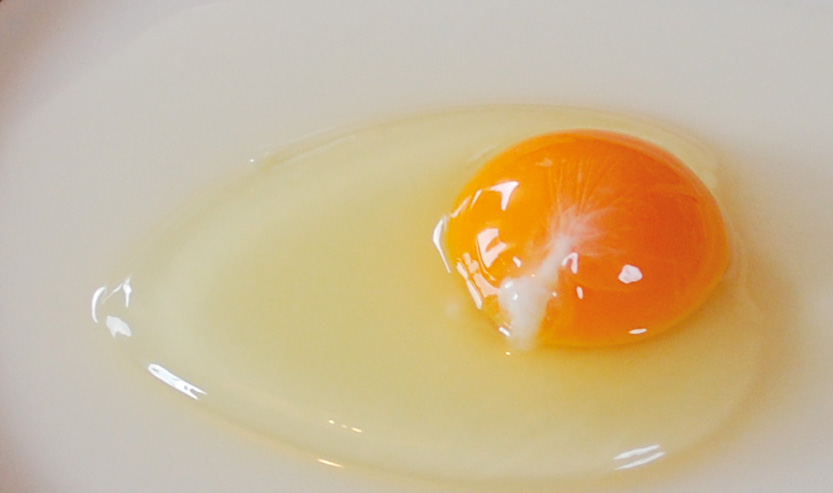
 Hi! Great to be back after my Christmas break.
Thought of starting this week with egg white.
Yes, eggs are brimming with nutrients beneficial for your overall health and wellness, but did you know that eggs, especially the whites, are excellent for your complexion?
OK, if you have no idea about how to use egg whites for your face, read on.
Egg White, Lemon, Honey:
Separate the yolk from the egg white and add about a teaspoon of freshly squeezed lemon juice and about one and a half teaspoons of organic honey. Whisk all the ingredients together until they are mixed well.
Apply this mixture to your face and allow it to rest for about 15 minutes before cleansing your face with a gentle face wash.
Don’t forget to apply your favourite moisturiser, after using this face mask, to help seal in all the goodness.
Egg White, Avocado:
In a clean mixing bowl, start by mashing the avocado, until it turns into a soft, lump-free paste, and then add the whites of one egg, a teaspoon of yoghurt and mix everything together until it looks like a creamy paste.
Apply this mixture all over your face and neck area, and leave it on for about 20 to 30 minutes before washing it off with cold water and a gentle face wash.
Egg White, Cucumber, Yoghurt:
In a bowl, add one egg white, one teaspoon each of yoghurt, fresh cucumber juice and organic honey. Mix all the ingredients together until it forms a thick paste.
Apply this paste all over your face and neck area and leave it on for at least 20 minutes and then gently rinse off this face mask with lukewarm water and immediately follow it up with a gentle and nourishing moisturiser.
Egg White, Aloe Vera, Castor Oil:
To the egg white, add about a teaspoon each of aloe vera gel and castor oil and then mix all the ingredients together and apply it all over your face and neck area in a thin, even layer.
Leave it on for about 20 minutes and wash it off with a gentle face wash and some cold water. Follow it up with your favourite moisturiser.

 Superlatives galore were used, especially on social media, to highlight R&B singer Ne-Yo’s trip to Sri Lanka: Global superstar Ne-Yo to perform live in Colombo this December; Ne-Yo concert puts Sri Lanka back on the global entertainment map; A global music sensation is coming to Sri Lanka … and there were lots more!
At an official press conference, held at a five-star venue, in Colombo, it was indicated that the gathering marked a defining moment for Sri Lanka’s entertainment industry as international R&B powerhouse and three-time Grammy Award winner Ne-Yo prepares to take the stage in Colombo this December.
What’s more, the occasion was graced by the presence of Sunil Kumara Gamage, Minister of Sports & Youth Affairs of Sri Lanka, and Professor Ruwan Ranasinghe, Deputy Minister of Tourism, alongside distinguished dignitaries, sponsors, and members of the media.
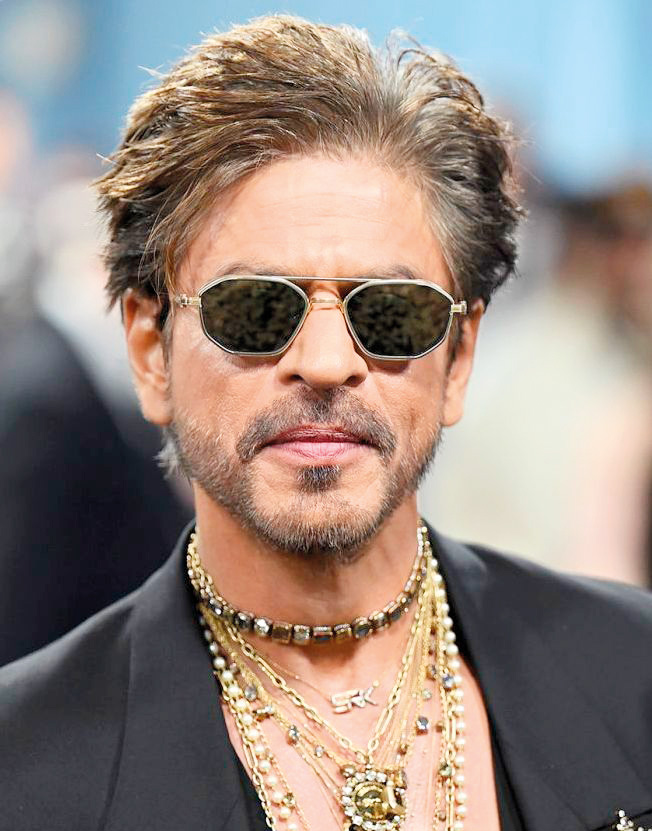
Shah Rukh Khan: Disappointed his fans in Sri Lanka
According to reports, the concert had received the official endorsement of the Sri Lanka Tourism Promotion Bureau, recognising it as a flagship initiative in developing the country’s concert economy by attracting fans, and media, from all over South Asia.

Nick Carter: His concert, too, was cancelled due to “Unforeseen circumstances
However, I had that strange feeling that this concert would not become a reality, keeping in mind what happened to Nick Carter’s Colombo concert – cancelled at the very last moment.
Carter issued a video message announcing he had to return to the USA due to “unforeseen circumstances” and a “family emergency”.
Though “unforeseen circumstances” was the official reason provided by Carter and the local organisers, there was speculation that low ticket sales may also have been a factor in the cancellation.
Well, “Unforeseen Circumstances” has cropped up again!
In a brief statement, via social media, the organisers of the Ne-Yo concert said the decision was taken due to “unforeseen circumstances and factors beyond their control.”
Ne-Yo, too, subsequently made an announcement, citing “Unforeseen circumstances.”
The public has a right to know what these “unforeseen circumstances” are, and who is to be blamed – the organisers or Ne-Yo!
Ne-Yo’s management certainly need to come out with the truth.
However, those who are aware of some of the happenings in the setup here put it down to poor ticket sales, mentioning that the tickets for the concert, and a meet-and-greet event, were exorbitantly high, considering that Ne-Yo is not a current mega star.
We also had a cancellation coming our way from Shah Rukh Khan, who was scheduled to visit Sri Lanka for the City of Dreams resort launch, and then this was received: “Unfortunately due to unforeseen personal reasons beyond his control, Mr. Khan is no longer able to attend.”
Referring to this kind of mess up, a leading showbiz personality said that it will only make people reluctant to buy their tickets, online.
“Tickets will go mostly at the gate and it will be very bad for the industry,” he added.

Zohran Mamdani sworn in as New York City mayor

In pictures: New Year welcomed around the world

Foreign warships commended for their assistance during weather disaster in Sri Lanka

Machu Picchu train crash leaves one dead and dozens injured

I invite you to step into 2026 with renewed energy, hope, and determination – PM

Fairly heavy showers about 75 mm are likely at some places in the Central and Uva provinces and in Batticaloa and Ampara districts

‘Dates have the highest sugar content to fight Coronavirus’

Sunday Island 27 December – Headlines

#SundayIsland 17th December – Headlines

Sunday Island – 28th March

Sunday Island Headlines – 21 March

Sunday Island – 21st February – Headlines
-
 News7 days ago
Street vendors banned from Kandy City
-

 Sports4 days ago
Gurusinha’s Boxing Day hundred celebrated in Melbourne
-
 News2 days ago
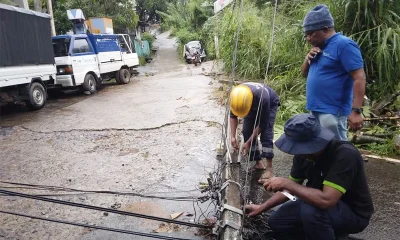
Leading the Nation’s Connectivity Recovery Amid Unprecedented Challenges
-

 News7 days ago
Lankan aircrew fly daring UN Medevac in hostile conditions in Africa
-

 Sports5 days ago
Time to close the Dickwella chapter
-

 Features3 days ago
It’s all over for Maxi Rozairo
-

 Features7 days ago
Rethinking post-disaster urban planning: Lessons from Peradeniya
-

 Opinion7 days ago
Are we reading the sky wrong?