
Sports
Plight of school coaches Some working as pump attendants

by Reemus Fernando
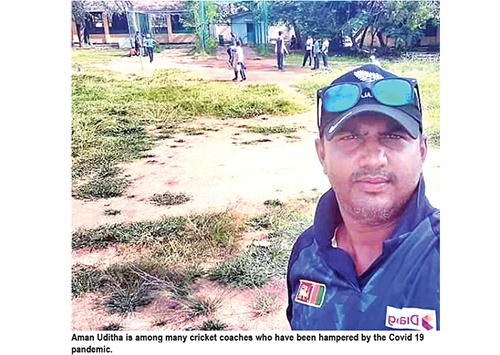
His love for the game of cricket forced Aman Uditha to take up one of the toughest coaching assignments at Vijayaba National School, Hungama (Hambantota District), a place that does not have a strong cricket culture to attract highly qualified coaches. The school which has produced a pace bowler in the Sri Lanka Under-19 team in recent times is one of the many lower division schools struggling to pay their coaches after the outbreak of the COVID-19 pandemic.
Coaches in almost all the Division III and a majority of Division II cricket playing schools and some Division I schools are paid by the School Development Societies (SDS), which largely rely on contributions from parents. Schools have found it difficult to sustain these funds due to the Covid 19 pandemic.
Many such schools have either totally stopped paying their coaches or have reduced their salaries by big margins, forcing them to look elsewhere for a living. Unlike well-established schools, those in the lower divisions depend on a single coach to train all age group teams in the school. Uditha is responsible for coaching the Under-13, 15 and 17 teams of Vijayaba National School.
Affairs in some of the premier Division I cricket playing schools too have fallen to the same level as the underprivileged schools thanks to the pandemic. Many coaches, contacted comment, lamented about the unprecedented salary cuts they had been compelled to bear with in the recent months.
Sri Lanka Schools Cricket Association with the help of Sri Lanka Cricket recently granted some concessions to coaches affected by the pandemic but it is just a short-term measure, and the coaches continue to suffer.
“I have been a cricket coach for years. I do not have experience in any other field and at this age, I cannot train myself for any other job; I am in a dilemma,” a level I coach of a Big Match playing school from the suburbs of Colombo told The Island. The coach of the premier cricket playing school has been training all age group teams (U13, 15, 17 and 19). His salary was first reduced by 25% due to the pandemic; it has been reduced by 50% during the recent months.
A group of coaches mentioned that some of their colleagues from underprivileged schools had been compelled to work at filling stations to keep home fires burning.
Meanwhile, some coaches whose contracts were terminated following the first wave of the pandemic are looking forward to securing new contracts elsewhere for the new season. But a recent Ministry of Education circular, which canceled all sports competitions in schools, has shattered their hopes.
However, a few coaches have been lucky. All coaches contracted by S. Thomas’ College Mount Lavinia continue to receive their full remuneration. The 70 plus coaching staff, training young Thomian sportsmen in 27 sports, are lucky while hundreds of their counterparts, employed by public and private schools are experiencing severe hardships.
A senior sports administrator of S. Thomas’ College told The Island: “We have paid all coaches their full salaries though we had to cancel training following Ministry of Education directives. We are paying them through the budget allocated in December,”
Uditha comes from the same district Suranga Lakmal, who was lucky to find a place in the Richmond College team before earning a place in the Sri Lanka team. Uditha found a place for his medium pace at Devananda College, Ambalangoda before taking up coaching. It is coaches like Uditha who spot talent like that of Lakmal for Sri Lanka Cricket. Sri Lanka Cricket, which is the richest sports body of the country and the Ministry of Education, should, therefore, look into the grievances of coaches and redress them.



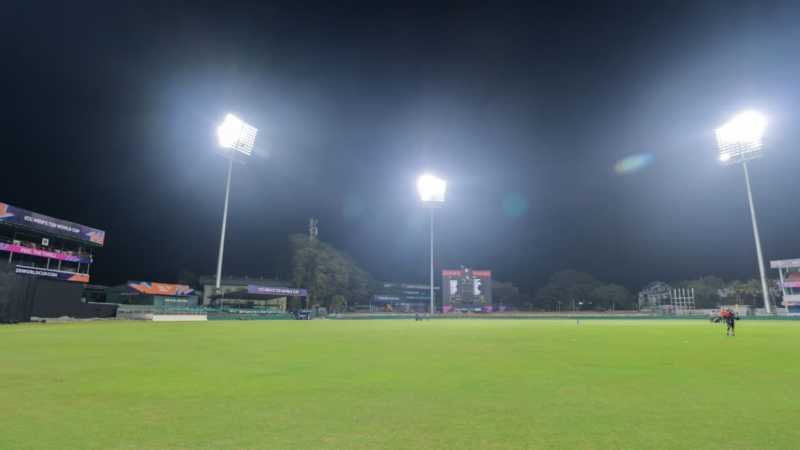
For over a century, the Sinhalese Sports Club (SSC) has been the quiet, dignified heartbeat of Sri Lankan cricket. To walk through its gates is to walk through a gallery of greats, and ghosts. This is where Muthiah Muralidaran turned the ball as if by magic, claiming 166 of his 800 Test wickets – a world record for a single venue to date. It is where Mahela Jayawardene and Kumar Sangakkara built their 624 run monument to patience, and where Chaminda Vaas’ 8 for 19 left Zimbabwe in ruins.
But for all the prestige the SSC had as the ‘Lord’s of Sri Lanka,’ the modern game had begun to grow beyond its reach. For years, the ground was a sanctuary for the traditionalist, a place of white kits and long afternoon shadows. One that has fed more players and captains to the national team than any other. But while the world embraced the floodlit frenzy of T20 cricket, the SSC remained a daytime relic.
The last limited-overs international hosted there was a women’s T20I in 2023, while the last men’s white-ball game was an ODI in 2020. Its T20I history, meanwhile, frozen in time, preserved in the memory of Associate clashes between Canada, Ireland, and Afghanistan in the afternoon heat of 2010.
This Saturday, while the sun will still be high over Colombo, the 16-year drought finally ends. As the rumble of the T20 World Cup curtain-raiser between Pakistan and the Netherlands echoes across the ground, six towering sentinels will stand watch over the turf – an LKR. 1.8 billion crown of LED floodlights waiting to signal the club’s belated arrival to the present. The journey to this moment, though, has been long.
“My God, for the last two decades,” exclaimed SSC cricket committee chairman Samantha Dodanwela, his voice carrying the relief of a man who has finally crossed the finish line.
Since 2009, the dream of floodlights was mired in the complexities of a private members’ club – disputes, corporate hesitancy, and protective instincts of a historic membership. It took the backing of Sri Lanka Cricket and the skills of a legal firm to ensure that this modernisation wouldn’t cost the club its soul or autonomy.
The result is a venue that feels both intimate and international. With a capacity of 12,000, it is a ’boutique’ World Cup experience, though a plan for a 6000-seater three-tier stand is already moving from the boardroom to the western hill.
“This venue is in the heart of the city,” Dodanwela noted, eyeing the urban sprawl of Colombo that surrounds the club. “You will see members patronising the club in the evenings; the crowd will always be there.”For Dodanwela, who joined the club in 1990 and took stewardship of its Cricket Committee in 2011 – albeit with a short gap when Jayawardene took over briefly from 2020-22 – the lights are a guarantee of relevance. While the heritage of the SSC is built on the craft of Test cricket, he knows the future is T20.
“The SSC pitch is the best in Sri Lanka. If you are a good bowler, there is life early on. But if you survive? There are loads of runs. And in T20, what we need is runs.”
As the Oman vs Zimbabwe clash kicks off at 3pm on February 9, and Pakistan vs USA plays out fully under lights the following night, the transition will be complete.
The membership may look back fondly on a past defined by Test cricket, but the SSC’s future is set to begin with the glow of flood-lit mayhem in the heart of Colombo.
(Cricinfo)

The Under-19 World Cups come thick and fast: once every two years. Soon enough, most of the players appearing in today’s final will graduate, their cricket limited by franchises and passports rather than age limits. But for now, India and England’s roads at this World Cup finally converge.
Both teams are unbeaten in the tournament so far. England stormed into the final after their captain, Thomas Rew, starred with a 110 that took them to a 27 run victory against defending champions Australia.
India were faced with a tall task of chasing down a record setting 311, against Afghanistan. However, India’s batters – led by a swashbuckling century by opener Aaron George raced to the target with 53 balls and seven wickets to spare, to lay down the marker on a Harare pitch that should continue to have plenty in it for the batters.
India and England have met once in the recent past: they faced off in a warm-up match right before the tournament proper. In the rain interrupted encounter, James Rew starred with a 66-ball 71* to take England home. This time around, there will be plenty more stakes involved for either side. They might as well be facing each other for the first time.
Aaron George was having an underwhelming Under-19 World Cup at the top of the order for India. His scores at the tournament had been 7, 23, and 16 when he came out to bat against Afghanistan. Under the spotlight, though, he put in his most impressive showing of the tournament. He led the chase with poise, being the last wicket to fall with just 11 runs left to knock off. By then, he had peppered the Afghan bowlers around the ground for 15 fours and two sixes during a classy 104-ball 115. He might revel under the spotlight some more in the final.
Thomas Rew has led England from the front in more ways than one. He is the fourth highest run-getter in the tournament, with 299 runs at an average of 74.75 and an equally impressive strike rate of 101.01. His footwork has been a class above his fellow England batters against spin especially, and if the Harare surface decides to spin and bounce, he will be keen to take off from where he left during his century against Australia in the first semi-final.
The Harare Sports Club has served up fast-paced pitches in the tournament so far. The semi-final between India and Afghanistan was a belter in particular, with the ball coming onto the bat and seeing an aggregate of 621 runs scored between both sides at a run rate of 6.81. If the final happens on a similar surface, conditions will favour the batters again.
The weather today [Friday] has a chance of light rain: the match will begin at 9.30am local time; shower and thunder might roll in after 5pm. The temperature will hover around the mid-20s (Celsius) throughout.
[Cricinfo]
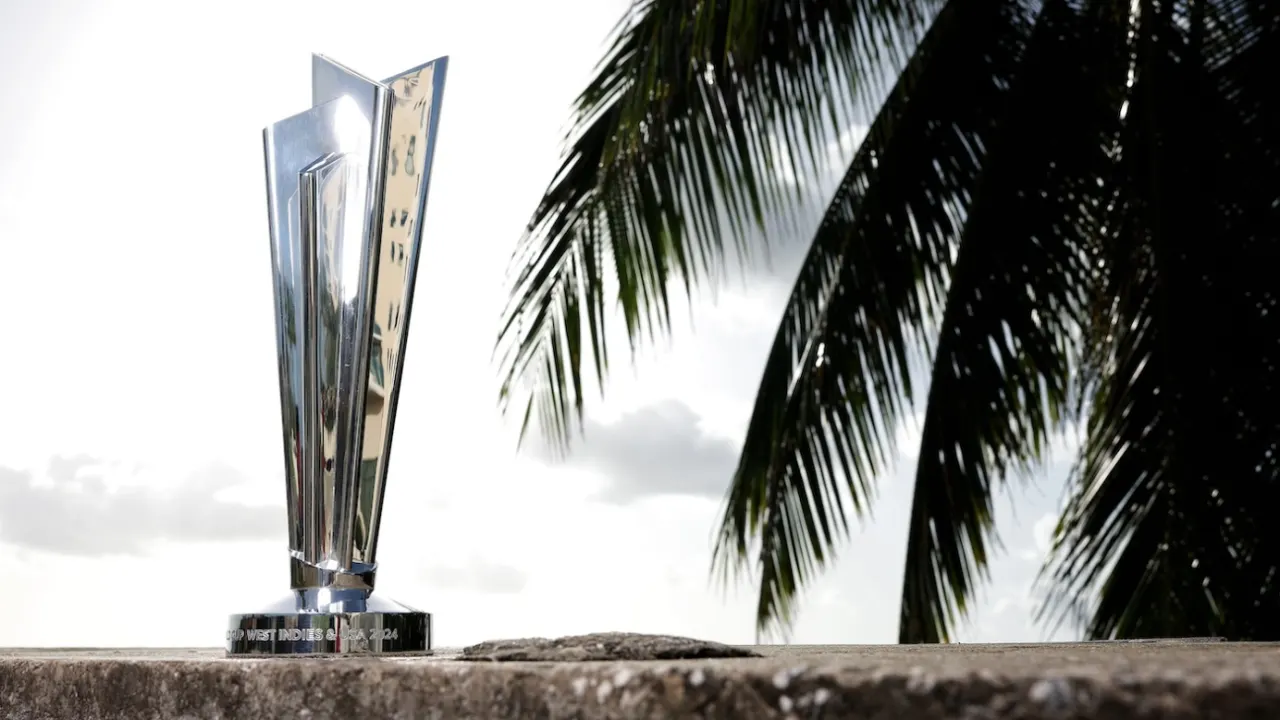
The ICC and PCB are engaged in back-channel communications as the global governing body tries to find a way for its showpiece group match at the 2026 T20 World Cup between Pakistan and India to go ahead.
On instructions from their government, Pakistan will not take the field against India in Colombo on February 15, though they will play their other matches. The Pakistan Prime Minister Shehbaz Sharif said the decision was to show solidarity with Bangladesh, who were excluded from the T20 World Cup because they did not want to play in India, one of the co-hosts along with Sri Lanka.
Though the PCB has not publicly commented on the boycott of the group match against India, the ICC responded to the decision – originally conveyed by the Government of Pakistan on its ‘X’ account – saying it expected the PCB to “explore a mutually acceptable resolution, which protects the interests of all stakeholders.”
That resolution has been the subject of calls and meetings between Imran Khwaja, the ICC deputy chair, and Mubashir Usmani of the Emirates Cricket Board, who is also on the ICC Board. They have been in communication with PCB chairman Mohsin Naqvi and Salman Naseer, who is the PSL head but also a senior advisor to Naqvi.
The efforts had begun a week before the boycott was announced, when Naqvi had first raised doubts over Pakistan’s participation in the T20 World Cup and said it would depend on the government. Naqvi travelled to the UAE that week as part of a state visit but is believed to have sought advice from officials there and met Khwaja on that trip. With Khwaja back in Singapore, where he is based, and Naqvi in Pakistan, discussions have since continued.
Initially the PCB was informed of potential sanctions Pakistan could face should they withdraw from the tournament entirely, though its response was that the issue is not about financial consequences. After the decision to exclude Bangladesh was taken, Naqvi criticised it, accusing the ICC of “double standards” and of doing an “injustice” to Bangladesh.
Since the announcement of the boycott, however, contact from the ICC has focused on addressing PCB’s grievances so that the game goes ahead. Khwaja has stepped in as a mediator in other recent disputes involving the PCB, BCCI and the ICC.
[Cricinfo]

The SSC finally steps out of the sunshine and into the floodlights

SAARC journalists meet in New Delhi

Governor of Gujarat met with Sri Lanka PM to discuss exposition of Devnimori Relics

India chase sixth Under-19 World Cup title, England their first since 1998

Meet the women protecting India’s snow leopards

Louvre Museum crown left crushed but ‘intact’ after raid

‘Dates have the highest sugar content to fight Coronavirus’

Sunday Island 27 December – Headlines

#SundayIsland 17th December – Headlines

Sunday Island – 28th March

Sunday Island Headlines – 21 March

Sunday Island – 21st February – Headlines
-

 Business6 days ago
Hayleys Mobility ushering in a new era of premium sustainable mobility
-

 Business3 days ago
SLIM-Kantar People’s Awards 2026 to recognise Sri Lanka’s most trusted brands and personalities
-

 Business6 days ago
Advice Lab unveils new 13,000+ sqft office, marking major expansion in financial services BPO to Australia
-

 Business6 days ago
Arpico NextGen Mattress gains recognition for innovation
-

 Business5 days ago
Altair issues over 100+ title deeds post ownership change
-

 Editorial6 days ago
Govt. provoking TUs
-

 Business5 days ago
Sri Lanka opens first country pavilion at London exhibition
-

 Business4 days ago
All set for Global Synergy Awards 2026 at Waters Edge