
Editorial
Passing grade for AKD


Monday 23rd September, 2024
Sri Lankans spoke on Saturday, and it took the system a while to figure out what they had said. NPP leader Anura Kumara Dissanayake was finally declared President on Sunday night after a preferential vote count, which was a novel experience.
The wave of popular support Dissanayake claimed to be riding was not as huge as it was made out to be; however, its outcome was quite impressive, especially for a person who could obtain only 418,553 votes (3.16%) in the 2019 presidential race. On Saturday, Dissanayake polled as many as 5740179 votes, inclusive of preferential votes.
The NPP leader benefited from a huge protest vote against the mainstream parties that had been in power and their offshoots. A split in the ITAK’s block vote owing to the participation of Pakkiyaselvam Ariyanenthiran, described as the common Tamil presidential candidate, in Saturday’s presidential race, stood Dissanayake in good stead; it apparently dampened the Tamil voters’ enthusiasm to some extent, as evident from a drop in the voter turnout in some parts of the North and the East, where the ITAK backed SJB presidential candidate Sajith Premadasa.
Dissanayake has done for the JVP what its slain leader Rohana Wijeweera failed to do in 1982. However, he won the presidency by dissociating himself from the JVP’s core Marxist ideology. The JVP/NPP succeeded in reimaging and repackaging Dissanayake with special emphasis on sartorial and tonsorial elegance. But a snap general election is expected soon, and the question is whether the JVP/NPP will be able to make all its candidates similarly appealing to the public. Dissanayake will have to obtain at least a working majority in Parliament to implement his pledges and retain popular support.
The SLPP-UNP regime, which survived an attempt to behead it in 2022, like Miracle Mike, the headless chicken, has suffered the coup de grace at the hands of the JVP/NPP, so to speak. Now that there has been a clean break from the former dispensation, Dissanayake will have to make good on his promises. The people have a long wish list, but they may not be so unfair as to demand that all promised relief be granted forthwith, but there are pledges they expect him to honour fast, action against the corrupt being a case in point.
Parliament is expected to be dissolved shortly. It is hoped that the NPP will not make the same mistakes as the Gotabaya Rajapaksa government, which resorted to ill-conceived measures such as haphazard tax cuts in a bid to win the 2020 general election. President Dissanayake will have to tread cautiously.
The people have given Dissanayake a passing grade, and if he is desirous of bettering it and consolidating his electoral grains, he will have to live up to the people’s expectations, which are extremely high. Otherwise, his political rivals may pull a surprise on him come the next presidential election, or the very people who voted for him on Saturday might take to the streets, the way they did in 2022 against Gotabaya.
President Wickremesinghe would have been able to win Saturday’s contest hands down if he had not ruined things for himself politically. He misused his executive powers to defend the corrupt Sri Lanka Cricket officials despite a unanimous parliamentary resolution calling for their removal. He even undermined the judiciary on several occasions. First, he defied a Supreme Court (SC) order pertaining to the allocation of funds for the Local Government elections in 2023, and then he ignored an SC directive that IGP Deshabandu Tennakoon be suspended and an Acting IGP appointed. It is only natural that the people were wary of giving him a mandate.
Interestingly, in some areas, SJB candidate Sajith Premadasa and President Wickremesinghe, between them, polled more votes than Dissanayake. But they apparently thought that united they would fall and divided they could stand; Dissanayake benefited from their enmity.
The SLPP, which secured the presidency and mustered a two-thirds majority in Parliament in 2019 and 2020 respectively, has been reduced to a mere 342,781 votes (2.57%). Namal Rajapaksa lost ignominiously in the districts organised by his father and uncles for the party––Kurunegala, Hambantota and Gampaha.
It is heartening that the presidential election ended without any incidents of violence or serious malpractices. Democracy has triumphed, and praise should go to all candidates and their parties and independent groups, the Election Commission, the police, the armed forces, polls monitors, public officials and the public.
Let all political parties and their leaders be urged to take cognisance of the poor state of the economy and cooperate to steer the country out of the present crisis.


A group of Buddhist monks and laypersons were staging a sit-in near the Presidential Secretariat at the time of going to press. The police obtained a court order yesterday morning prohibiting the protest on the grounds that it was being held in a high-security zone. Speculation was rife that the police would be able to disperse the protesters. However, all indications are that the campaign for the release of Ven. Galagoda Aththe Gnanasara Thera from prison is unlikely to end, and the current protest may be shifted to some other venue.
Ironically, the monks’ staged their sit-in at the cradle of Aragalaya, which paved the way for the JVP-NPP’s meteoric rise to power. What began to unfold near the Presidential Secretariat yesterday is more than a protest; it is a test of strength for the government, which may try every trick in the book to prevail in the current dispute.
Opinion may be divided on the protesting monks’ demand for a presidential pardon for Gnanasara Thera, but the current crisis has stemmed from the government’s mishandling of the decision to produe him in court in lay attire. The government first sought to justify the prison officers bringing him to court, dressed in a sarong and shirt. Then, it made an about-turn and changed the prison rules and regulations, allowing monks in jail to appear in court, wearing saffron robes. The Opposition and independent legal experts have argued that there was no need for President Anura Kumara Dissanayake to appoint a committee to review prison regulations, and the Minister of Justice could have simply directed the prison authorities to do what the committee took days to recommend. The government’s delayed action drove the protesters to launch a march from Kandy to Colombo and escalate their demand, calling for the immediate release of Gnanasara Thera. This is what happens when governments overestimate their strength, ignore the ground reality and refuse to take prompt action to resolve issues.
Sri Lankan governments with two-thirds majorities paradoxically become their own enemies. Impervious to reason, they act according to the whims and fancies of their leaders and take unnecessary risks much like drunk drivers recklessly speeding across unprotected level crossings. The SLFP-led United Front government (1970-77) succumbed to the arrogance of power and its two-thirds majority became its undoing, as it were. President J. R. Jayewardene’s government (1977-88) plunged itself as well as the entire country into chaos by misusing its supermajority. President Mahinda Rajapaksa suffered a painful pratfall in 2015 as his government misused its two-thirds majority, and President Gotabaya Rajapaksa had to head for the hills, together with his siblings, and resign although his government had mustered a supermajority. The incumbent government has not learnt from the predicament of its predecessors.
Political rhetoric may be effective in the short term, but it cannot help suppress the truth or obscure reality. At a recent meeting with a group of representatives of the Maha Nayake Theras, who argued that Gnanasara Thera should be allowed to wear his robe, President Anura Kumara Dissanayake said he did not want to issue an order making an exception for one individual while prison regulations remained unchanged and he would appoint a committee to look into the matter and make recommendations. The committee recommended that Buddhist monks and other members of the clergy serving jail terms be permitted to appear in courts in their robes. It was obvious that the President had the prison regulations amended primarily to benefit Gnanasara Thera, while extending the same benefit to other imprisoned monks. The President said something similar when he met a delegation of the Bar Association of Sri Lanka over his government’s move to raise the retirement ages of the superior court judge. He insisted that it was not for the benefit of any particular individual that the 22nd Amendment (22A) would be enacted. But it was obvious that although the government moved to increase the retirement ages of all judges subsequently, 22A was primarily intended to benefit one particular judge who was reaching the age of 65.
The government may have thought trouble would end for it with Gnanasara Thera’s return to prison, but his imprisonment has become an even bigger problem, with President Dissanayake coming under increasing pressure to grant him a presidential pardon. If he gives in, the government will face serious questions over its reversal of policy on presidential pardons and what its supporters may view as a capitulation to the very forces it pledged to defeat. He thus finds itself in a dilemma.

Saturday 17th October, 2026
There seems to be no end in sight to controversies the JVP-NPP government creates. It has been reported that the ruling party parliamentary group has proposed that the no-confidence motion (NCM) submitted by the Opposition against Speaker Jagath Wickramaratne be referred to the Attorney General for his opinion and recommendations. Some Opposition politicians have claimed on social media that this move could be a bid to block the debate on the NCM. This is something that not even the SLPP-UNP government contemplated. The previous administration allowed an NCM to be moved against Speaker Mahinda Yapa Abeywardena in 2024 and defeated it.
Minister Bimal Rathnayake has gone on record as saying that the government is ready for a debate on the NCM against the Speaker. This is the government’s official position, but anything is possible in Sri Lankan politics characterised by about-turns. The government is wary of taking up the NCM at issue, which is a can of worms. Therefore, the possibility of the NPP doing everything possible to prevent a debate on it cannot be ruled out. It may have sent a trial balloon by leaking information about how it is planning to set about the task.
One may recall that in August 2025, the government effectively blocked an NCM against Deputy Defence Minister Aruna Jayasekara, with the Speaker ruling that the motion was out of order. Thirty-two Opposition MPs, including Opposition Leader Sajith Premadasa, had submitted that motion against Jayasekara, raising serious concerns about a potential conflict of interest arising from his former military role and the ongoing investigations into the 2019 Easter Sunday bombings. But the allegations against Jayasekera have not gone away.
If the government is planning to seek the Attorney General’s opinion as part of a strategy to scuttle the NCM against the Speaker, as reported, such action will be far more politically damaging than facing a debate on it. Legal experts inform us that there are no grounds on which the NCM at issue can be rejected.
Powerful governments have made a mockery of their commitment to upholding parliamentary traditions and good governance by playing politics with NCMs. One may recall that the JVP was among the political parties that condemned the J. R. Jayewardene government for abusing its steamroller majority to do something despicable to an NCM. In 1980, the Opposition sought to postpone the debate on an NCM it had moved against the then Speaker Bakeer Markar for backing President Jayewardene’s efforts to retain Abeyratne Pilapitiya as a UNP MP by nominating him to the Kalawana electorate despite a Supreme Court ruling that his election was void. Speaker Markar echoed President Jayewardene’s assertion that the Kalawana seat had not fallen vacant, and therefore a by-election was not warranted. The NCM against the Speaker was scheduled to be debated on 23 December, 1980, but the Opposition wanted it postponed in view of possible legal implications of the by-election the UNP was trying to avoid. But claiming that the NCM, moved by the Opposition, was of utmost national importance and therefore had to be debated urgently, the UNP government took it up, put it to the vote and defeated it! All UNP MPs, including the proposer and the seconder, voted against the NCM! The Opposition boycotted the NCM debate. The UNP will never be able to live down its shameful action.
The JVP-NPP government would do well to refrain from resorting to tactics that evoke memories of the governments the JVP vehemently condemned as dictatorial regimes and doing what not even its predecessors did. It is fervently hoped that the allegations about a move to block the NCM against the Speaker are not true.
Friday 16th October, 2026
Glad tidings come occasionally amidst doom and gloom. Sri Lankans are elated that the Supreme Court of Saudi Arabia has set aside the death sentence imposed on Anojan Sivarasa. He was initially sentenced to five years’ imprisonment and fined three million Saudi riyals over a Facebook comment deemed insulting to the Prophet Muhammad. The death sentence was subsequently imposed on appeal, forcing Sri Lanka to redouble its efforts to save him. The Opposition lost no time in raking the government over the coals, claiming that it had ruined the chances of saving Anojan.
Anojan has been spared the death penalty, but that does not mean his freedom has been secured. His legal fate remains uncertain. Conflicting interpretations of the Saudi Supreme Court ruling and media reports based on them do not establish whether he will face another sentence at the rehearing or incur other legal consequences for the offence of which he was convicted. A prolonged stay in a Saudi prison could prove a fate worse than death. Anojan has already suffered an assault at the hands of a fellow inmate. His ordeal, therefore, is far from over. It is fervently hoped that he will secure his freedom, return to Sri Lanka and be reunited with his family.
It is both heartening and ironic that a government led by the JVP, an organisation with a history of kangaroo trials and extrajudicial executions, has striven to save a life, and rightly so. One hopes that the government will continue to uphold the same respect for the right to life in its broader sense, a fundamental human rights principle that encompasses not only protection against arbitrary deprivation of life but also the state’s duty to safeguard life. Saving Anojan from the executioner’s blade is therefore a welcome act. But respect for the right to life must extend beyond a single individual facing execution abroad. According to the UN Human Rights Committee, the right to life encompasses protection against unlawful killing, foreseeable threats to life, and conditions that prevent people from living with dignity. These include access to essential healthcare and other basic services, protection against environmental degradation and public hazards, and safeguards against deaths in state custody. The principle applies to everyone, including suspects and convicted criminals, regardless of the gravity of their offences.
It is said that victory has a thousand fathers but defeat is an orphan. So, it is only natural that both the government and the Opposition are claiming credit for saving Anojan. If the Saudi Supreme Court had upheld the death sentence, they would have blamed each other.
Sri Lankan taxpayers, who are struggling to keep their heads above water amidst numerous economic hardships and crying out for relief, have a right to know how much the legal and diplomatic efforts to save Anojan from execution have cost the public purse. The government must disclose the expenditure incurred, including legal fees, travel and other related expenses, and explain the principles governing the use of public funds for such interventions.
The government should also make it very clear that all Sri Lankans working or living abroad must understand that they are subject to the laws of their host countries and that insulting religions or committing other offences can have grave consequences. Those who knowingly violate such laws must be prepared to face the legal consequences. At the same time, any policy must allow for exceptional cases in which fundamental rights, access to justice or the risk of disproportionate punishment warrant direct state intervention.
One important lesson that Anojan’s predicament holds for social media users is that freedom of expression is not the freedom of the wild ass. It has limits, and, as the familiar saying goes, one person’s freedom ends where another person’s nose begins.

Record 1,600 students take Russian Classical Ballet examination in Sri Lanka

Half a million people join protests in France, but some turn violent

Deadly fire breaks out at Canada military base

Showers or thundershowers will occur in most parts of the island after 1.00 p.m.

Buddhist hierarchy demands prison perks for monk convicts

Debate on NCM against Speaker postponed indefinitely

‘Dates have the highest sugar content to fight Coronavirus’

Sunday Island 27 December – Headlines

#SundayIsland 17th December – Headlines

Sunday Island – 28th March

Sunday Island Headlines – 21 March

Sunday Island – 21st February – Headlines
-

 Latest News5 days ago
Nissanka’s return headlines Sri Lanka’s Test squad against Pakistan
-

 Latest News7 days ago
Farhan and Sadaqat help Pakistan seal series in style
-
 Features6 days ago
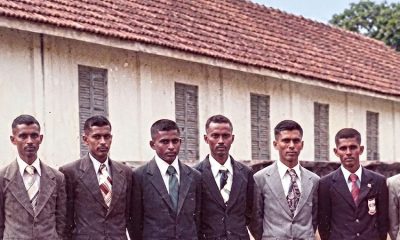
Intake 16: 45 years of duty and honour
-
 News6 days ago
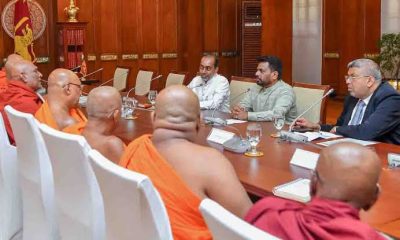
Malwathu Chapter issues statement on talks with President over Gnanasara Thera’s robes
-
 News6 days ago
CP alleges NPP has taken the blame for illegal US sanctions on Iranian vessels
-

 Opinion6 days ago
How long can Sri Lanka remain silent on its demographic crisis?
-

 News4 days ago
Sri Lanka, India caught in US-Iran ship crisis
-
 Latest News5 days ago
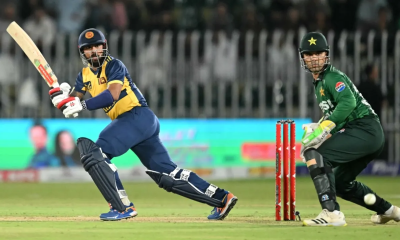
Kusal Mendis’ unbeaten 87 hands Sri Lanka consolation win