
News
Parliament: Two-day debate on President’s policy statement begins tomorrow

By Saman Indrajith
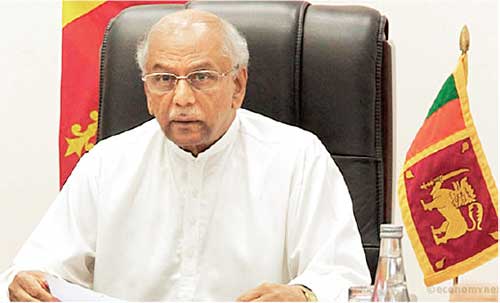
The second session of the Ninth Parliament would commence with a two-day adjournment debate on the government’s Policy Statement, beginning tomorrow at 1 pm, following its delivery by President Gotabaya Rajapaksa today, Leader of the House Education Minister Dinesh Gunawardena said yesterday.
The first session of the Ninth Parliament had recorded gains for democracy in the country despite the effects of the pandemic obstructing the proceedings from time to time, the Minister said.
The first session started on 20 Aug, 2020 ended on 31 Dec. 2021 with the prorogation of Parliament by the President.
During the first session, 840 questions were raised by government and Opposition MPs for oral answers and 731 of them were answered. Of those answered questions 73 percent of answers were for questions raised by the Opposition MPs. It was a record number if compared with statistics of the recent past, the Minister said, adding that the percentage of questions answered during the period from 2015 to 2020 was only 52 percent.
Minister Gunawardena said that on a proposal by him three special sitting days had been allocated in 2021 to answer the questions of MPs.
During the period of the first session of the Ninth Parliament, the government had allocated the opportunity for the MPs to raise questions at the time of the adjournment and both government and Opposition MPs raised 42 questions. As at the end of the first session of Ninth Parliament, a total number of 80 motions had been taken up for debate at the time of the adjournment of the House. In 2021 alone there had been 47 adjournment debates.
During the same period, party leaders had been given the opportunity to raise questions by making special statements on matters of national importance as per the provisions of the Standing Orders 27 (2) and they made 85 such statements. The government had responded to 76 such questions.
In 2021, arrangements were made for the public to meet their MPs at the parliamentary complex; seven rooms on the ground floor of the parliamentary complex had been allocated for that purpose, the Minister said.
During the first session, the Committee on Public Accounts had held 33 meetings while the Committee on Public Enterprises held 37 meetings and the Committee on Public Finance held 36 meetings.
Reports of the meetings had been presented to the House and posted on the parliament official web site for the public to download and peruse, the Minister said.

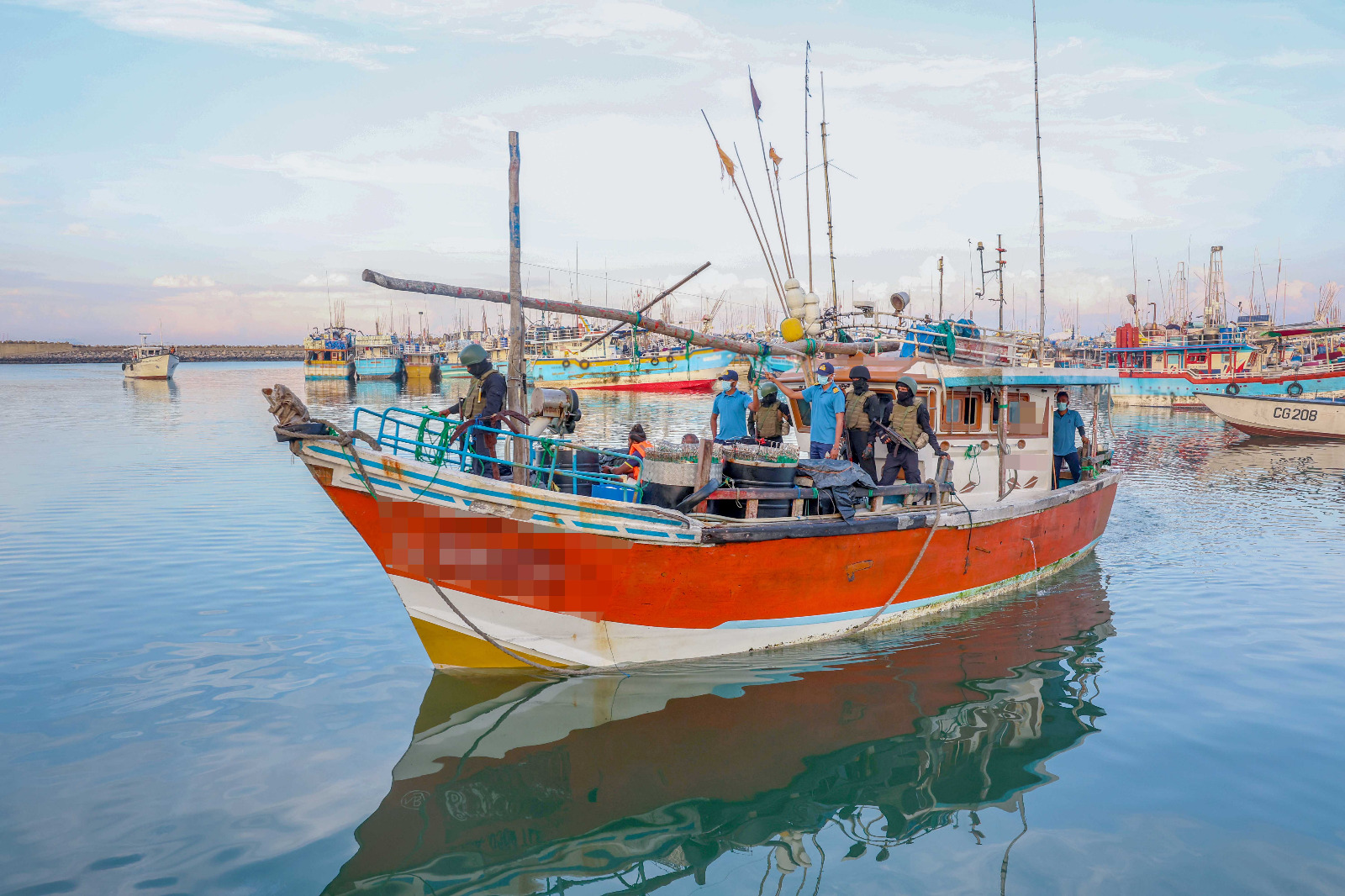
Being a key frontline stakeholder in the national mission, ‘A Nation United,’ the Navy continues to maintain a vigilant maritime shield to eradicate the drug menace from society.
During yet another successful operation on the high seas south of Sri Lanka, the Navy intercepted a local multi-day fishing trawler and apprehended four suspects in connection with the
smuggling of a stock of suspected narcotics.
The intercepted trawler, along with the suspects, was escorted to the Dikowita Fisheries Harbour today, (17 April 2026).
During a special inspection at the fisheries harbour, the Police Narcotic Bureau (PNB) confirmed the presence of over 161kg of heroin.
The Deputy Minister of Defence, Major General Aruna Jayasekera (Retd), and the Commander of the Navy, Vice Admiral Kanchana Banagoda, to inspect seized narcotics.
Addressing the media, the Deputy Minister emphasized that drug trafficking has long persisted as an organized and sophisticated criminal enterprise. He highlighted that under the current government’s national mission, ‘A Nation United,’ a robust state mechanism is now in motion, integrating the Tri-Forces, Police, Special Task Force, PNB, and international agencies to dismantle these networks.
Underscoring the Navy’s operational success, the Deputy Minister revealed that in 2025 alone, the Navy seized narcotics valued at over Rs. 75,000 million. In the first four months of 2026, the momentum has continued with nearly Rs. 50,000 million worth of drugs intercepted and produced for legal action.
During this short period, 14 local multi-day trawlers and 127 suspects have been apprehended. He issued a stern assurance that seized drugs would never find their way back into society, as they are systematically destroyed under strict protocols.
“Human capital is our nation’s most vital asset,” the Deputy Minister noted, adding that a healthy population leads to a quality workforce and a resilient economy. He further remarked that the vision of a “A Thriving Nation – A Beautiful Life”, extends beyond financial stability to include the dignity, discipline, and mindset of the citizenry.
“On the instructions of the President, new legislation is being drafted for Parliamentary approval to further empower this national mission and ensure a law-abiding, civilized society for future generations”, he stated.
Concluding the briefing, the Deputy Minister lauded the media for their role in drug prevention and urged continued responsible journalism to educate the public on the dangers of narcotics.
Meanwhile, the apprehended suspects, the multi-day trawler, and the 161kg heroin shipment were handed over to the Police Narcotic Bureau for onward investigation and legal proceedings.
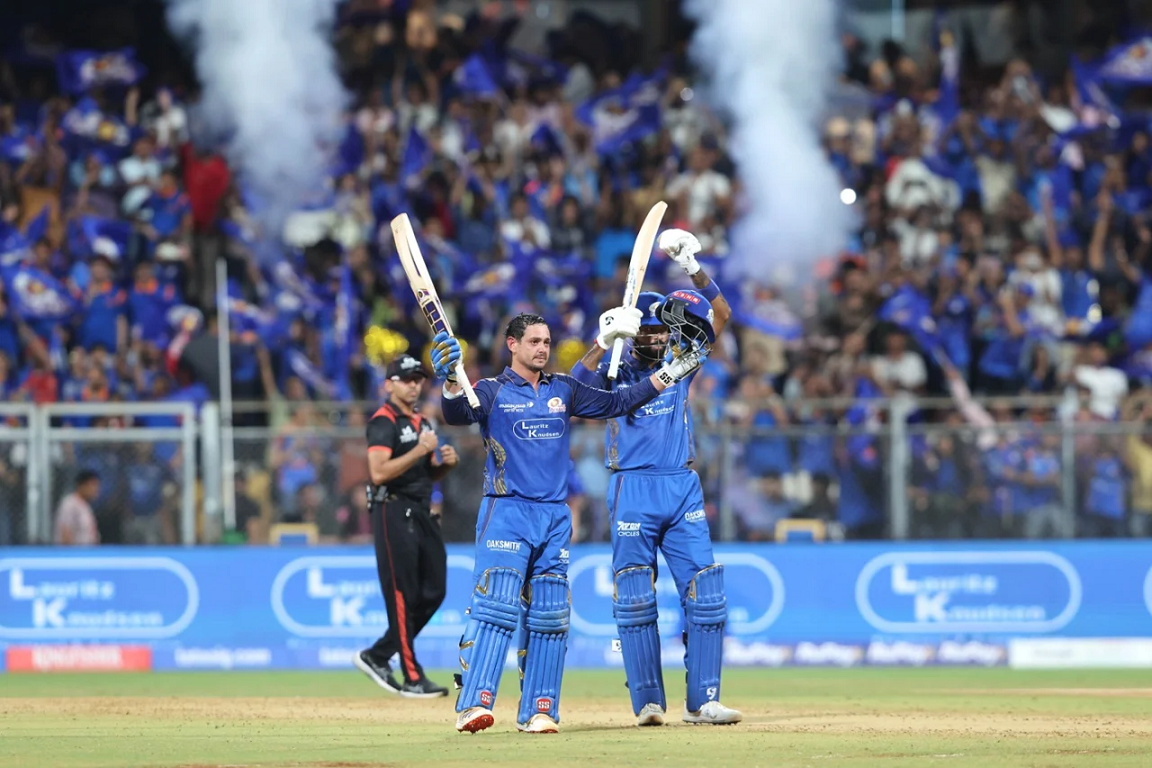
Quinton de Kock’s hundred on his comeback to the Mumbai Indians XI was overshadowed by Prabhsimran Singh and Shreyas Iyer’s demolition of the chase of 196 with 21 balls to spare to keep Punjab Kings unbeaten five games into the season. Arshdeep Singh swung the new ball, reversed the old one, and bowled a quiet over in the middle to lead PBKS’ strangle job on MI, who suffered their fourth successive defeat.
An injury to Rohit Sharma opened the door for de Kock to play his first match of this season and become only the third batter to score a century for three different IPL teams. He scored 112 off 60 balls, Naman Dhir was promoted to No. 4 and scored 50 off 31, but the rest of the MI innings never got going.
Allah Ghazanfar briefly threatened to scupper a typically boisterous PBKS chase with two wickets in the powerplay, but Prabhsimran and Iyer never let MI back in. Like Dhir and de Kock before him, Prabhsimran enjoyed a reprieve on 11, and finished unbeaten 80 off 39 to take his sensational IPL 2026 tally to 211 runs in 122 balls. It was the first time he stayed unbeaten in a successful chase in the IPL.
Iyer scored an equally important 66 off 35, his third consecutive half-century, starting with a four first ball when MI had taken two quick wickets.
Arshdeep came into the match with two wickets and an economy rate of 10.6 in four games this season. Two left-hand openers were the ideal setting for him to improve his performance. The new ball swung in the air and moved off the surface, and Arshdeep kept taking it away from Ryan Rickelton. He beat the bat three times in the first over. In his second, he bowled a wobble-seam ball that ended up on the pads, but Rickelton found deep square leg to perfection.
Arshdeep backed Suryakumar Yadav to walk out expecting movement from left to right, but he angled the seam away, drew a thick edge and doubled his season’s wickets tally in two balls, and also went past 100 IPL wickets.
Even before those two wickets, de Kock signalled dangerous intent with a silken, aerial extra-cover drive first ball off fellow South African Marco Jansen. In Jansen’s next over, Yuzvendra Chahal lost the ball in the lights and missed a sitter from Naman Dhir. In the last over of the powerplay, de Kock gave up on making his ground but Iyer missed the stumps from mid-off.
That drop wasn’t the last error Chahal made. He started his spell by searching and frequently over-pitching and ended up conceding five sixes in his three overs for 45. Dhir hit two of those, the one over extra cover the highlight of his innings.
By the time de Kock got to fifty, MI looked set for a total in excess of 200. From 97 for 2 in 10 overs, de Kock went up a gear even as Dhir caught up with him. At 125 for 2 in 12 overs, PBKS were looking at a challenging target.
The comeback for PBKS began with Jansen conceding just seven in the 13th over, but like in the game against Sunrisers Hyderabad, the lack of pace from Shashank Singh once again produced a game-changing wicket. In his 31-ball 50, Dhir evoked a lot of Hardik Pandya with a compact bat swing and shots that looked quite like the MI captain’s. Pandya himself, though, hardly got anything out of the middle of the bat. He eventually fell for 14 off 12 to what could well end up as the catch of the tournament.
Iyer didn’t even get his name on the scoreboard for this effort at long on: he went full length as he leaped to rein the ball in, caught it in his left hand while airborne, transferred it to his right even as he came down over the boundary, and managed to throw it to Xavier Bartlett before he touched ground.
With the ball reversing, Jansen and Arshdeep bowled excellent yorkers, going for eight and nine in overs 18 and 19. Sherfane Rutherford got four tailing pinpoint yorkers during his five-ball stay for one run. Only 70 came in the last eight, prompting Dhir to say during the innings break that MI were 20 runs short.
The way Priyansh Arya and Prabhsimran tucked into some buffet bowling from Deepak Chahar, it looked like 195 was not 20 short but 40. However, led by Jasprit Bumrah who bowled four straight dots to Arya, Ghazanfar ended up with two wickets in the powerplay: Arya caught at midwicket and Cooper Connolly caught behind.
There was a time when MI had strung together 10 balls for one run and a wicket across the second and third overs of the chase. Prabhsimran cut the 11th for a regulation catch to backward point but Bumrah, wicketless in six straight IPL matches now, dropped it.
When Connolly fell, MI were still hopeful of a comeback. Iyer, though, brought a sense of calm, playing Ghazanfar’s mystery spin like you would offspin. He cover-drove the first ball he faced for four, and PBKS never looked back.
Prabhsimran faced just six balls in the first five overs, which means he did most of the damage with the field spread out. It started when Chahar came back to bowl the eighth over. Prabhsimran charged at him to hit a 90-metre six over wide long-off before tucking one off the hip for four.
Now Prabhsimran began to dominate the strike and the scoring, bringing up his fifty with successive fours off Shardul Thakur in just 23 balls.
Bumrah might be wicketless but his bowling has been good through the season. However, when Iyer pulled him for a disdainful six in the 13th over, it was all over for MI. If there were any doubts remaining with 50 needed off the last seven overs, Prabhsimran dispelled them with a four and a six off Pandya. The end was swift and brutal with even Bumrah finishing with 0 for 41 in his four overs.
Brief scores:
Punjab Kings 198 for 3 in 16.3 overs (Priyansh Arya 15, Prabhsimran 80*, Cooper Connolly 17, Shreyas Iyer 66, Marcus Stoinis 10*; AM Ghazanfar 2-31, Shardul Thakur 1-42 ) beat Mumbai Indians 195 for 6 in 20 overs (Quinton De Kock 112*, Naman Dhir 50, Hardik Pandya 14; Arshdeep Singh 3-22, Marco Jansen 1-30, Shahshank Singh 1-19) by seven wickets
[Cricinfo]
Latest News
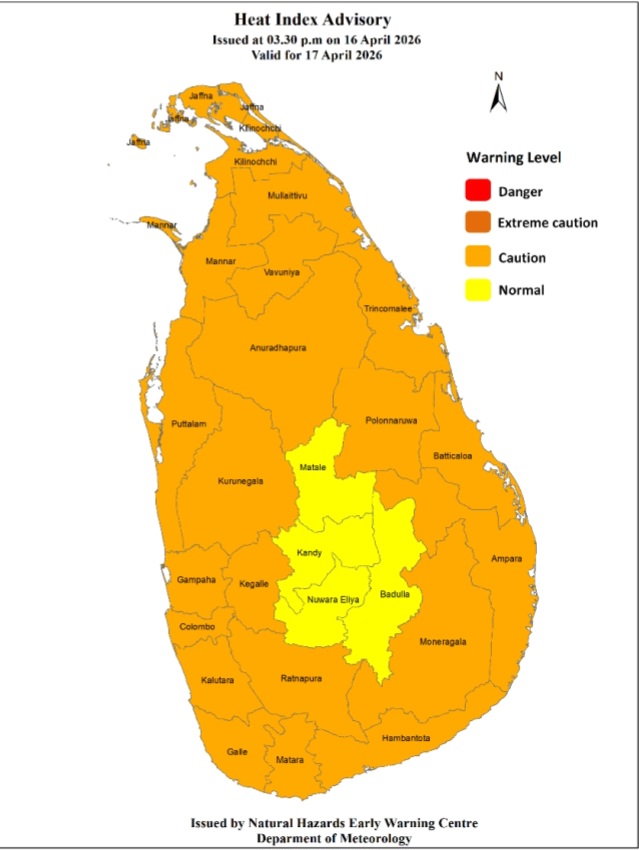
Heat Index at Caution Level in the Northern, North-central, North-western, Western, Sabaragamuwa, Eastern and Southern provinces and in Monaragala district

Warm Weather Advisory
Issued by the Natural Hazards Early Warning Centre
Issued at 3.30 p.m. on 16 April 2026, valid for 17 April 2026.
The Heat index, the temperature felt on human body is likely to increase up to ‘Caution level’ at some places in the Northern, North-central, North-western, Western, Sabaragamuwa, Eastern
and Southern provinces and in Monaragala district.
The Heat Index Forecast is calculated by using relative humidity and maximum temperature and this is the condition that is felt on your body. This is not the forecast of maximum temperature. It is generated by the Department of Meteorology for the next day period and prepared by using global numerical weather prediction model data.

Effect of the heat index on human body is mentioned in the above table and it is prepared on the advice of the Ministry of Health and Indigenous Medical Services.
ACTION REQUIRED
Job sites: Stay hydrated and takes breaks in the shade as often as possible.
Indoors: Check up on the elderly and the sick.
Vehicles: Never leave children unattended.
Outdoors: Limit strenuous outdoor activities, find shade and stay hydrated.
Dress: Wear lightweight and white or light-colored clothing.
Note:
In addition, please refer to advisories issued by the Disaster Preparedness & Response Division, Ministry of Health in this regard as well. For further clarifications please contact 011-7446491.

Iran says $270bn war loss must be compensated, as fresh talks with US loom

Navy seize 161kg heroin shipment in high-seas operation

Minister of Power and Energy and Ministry Secretary resign from posts

Rwanda to host inaugural ICC Women’s Challenge Trophy from April 18

Canada T20 World Cup match under ICC corruption investigation

No date set for US-Iran talks, as Pakistan pushes to keep diplomacy alive

‘Dates have the highest sugar content to fight Coronavirus’

Sunday Island 27 December – Headlines

#SundayIsland 17th December – Headlines

Sunday Island – 28th March

Sunday Island Headlines – 21 March

Sunday Island – 21st February – Headlines
-

 News6 days ago
CEB orders temporary shutdown of large rooftop solar systems
-
 Features6 days ago
From Royal College Platoon to National Cadet Corps: 145 years of discipline, leadership, and modern challenges
-

 Latest News5 days ago
PNS TAIMUR & ASLAT arrive in Colombo
-

 News7 days ago
Anura Solomons passes away
-

 Features6 days ago
CIA’s hidden weapon in Iran
-
 Latest News4 days ago
Prasidh, Buttler set up comfortable win for Gujarat Titans
-

 News2 days ago
PNS TAIMUR & ASLAT set sail from Colombo
-

 Business7 days ago
SL’s economic outlook for 2026 being shaped by M-E conflict