
Features
Pandemic pall over Christmas, Left Cheer in Chile, Going pro-Rogue in Sri Lanka


by Rajan Philips
For a second year in succession Christmas has come under the pall of a global pandemic. It is not just Christmas, for the festivals of all religions have fallen under the same pandemic pall. But Christmas is more global than other religions if only because it is also the most commercial. So being is really an affront to its namesake, the Man from Nazareth. One week before his crucifixion and death, Jesus demonstrated a rare instance of inspired anger when he whipped and chased away a motley crowd of merchants and traders in the great Temple of Jerusalem. “My house shall be a house of prayer,” he scolded, “but you are making it a den of thieves.” The symbolism of that anger against the forces of market in Jerusalem’s place of worship has not prevented the birth of Christ being commercialized two millennia later. Christianity may have rid itself of its colonial complicity, but it is still gift-wrapped in global consumerism in the celebration of Christmas.
But the heavy wrap this year, as it was last year, continues to be the pandemic. Many in the West, especially governments, were hoping that with full vaccination they would have seen the back of Covid-19. But Omicron has dashed all hopes for a winter of reprieve. Instead, it is another winter of despair and discontentment. Another new phase or wave in the relentless battle that the world’s medical professionals and scientists are waging against an almost mythically self-reproducing virus. Three factors, vaccine apartheid, vaccine hesitancy and public health hostility are making it difficult for medical professionals and scientists to subdue this pathogen. All three are sociopolitical, and none of them technical or unavoidable. Because of them, the world might end up having variants after every letter in the Greek Alphabet.
Vaccine Scrooges
The WHO estimates that the current global vaccine production capacity is 1.5 billion doses a month, and the total global production by mid-2022 is expected to reach 24 billion. Enough to double-doze every person in the world and leave a good balance for boosters. Yet, the disparity in vaccine administration between high-income and low-income countries is staggering. At the end of October, 133 doses have been administered to 100 people in wealthy countries, and a mere four doses per 100 in the poorer countries.
In South Africa, where Omicron was first detected on November 24, only 26 percent of the population have received full vaccination (two doses), whereas the rate of full vaccination in most Western countries is higher than 80%. More than a half of the world’s population has not received any dose at all. Only 58% have received a single dose and 52% none at all. WHO set a minimum target of 10% vaccination for every country to be reached by the end of September, but 56 countries (mostly in Africa and the Middle East) have failed to reach the target. The new wave of Omicron is a direct result of the global vaccine disparity, which really is vaccine apartheid.
The WHO, its Director General, Tedros Adhanom Ghebreyesus – the Tigrayan from the now beleaguered Ethiopia, and medical scientists in almost every Western country have been pleading with Western governments to expand the global supply of vaccine and ensure a more uniform vaccine distribution between countries. They have been warning that no country can be protected until every country is vaccinated. But there is no change in the mindset of Western governments. They are now focused on rapid administration of booster shots in their own countries and there is hardly any indication of expanding vaccine supply in low-income countries. There are American medical experts who are questioning the wisdom of diverting resources to give booster shots to the vaccinated instead of vigorously targeting the unvaccinated to get their two-dose vaccines.
Israel is already starting the fourth dose for 60+ age groups. This should boost Pfizer and Moderna to get busy lobbying for and marketing a fourth dose in North America and Europe. The two companies have shown no urgency or even interest in sending anything to the vaccine-deprived countries. Moderna is already in a court battle with the US government for excluding US National Institutes of Health (NIH) scientists in patent accreditations for its mRNA vaccine. Moderna’s vaccine is being valued at $18 billion for 2021 only. Not a small amount for Moderna not to fight its own government for monopoly over royalties. Never mind Moderna’s research was massively supported by the American taxpayers. It was a different age in the US in 1955 when Jonas Salk, the “miracle worker” who developed the polio vaccine, declined to patent the vaccine or profit from it.
Now, Pfizer and Moderna have become the new vaccine scrooges of pandemic Christmas. Not even Pope Francis would be able to redeem these scrooges to become globally generous with their vaccines. Nor can the Pope persuade Western governments to allow vaccine production in developing countries. With the surprising exception of the Biden Administration, every Western government is being pushed by corporate interests to oppose global production of vaccines. Nonetheless, Christmas pleas and Papal admonitions and should keep coming. And if prayers would work, God speed to them.
Vaccine apartheid is one side of the Covid-19 coin, the other side belongs to vaccine hesitancy and public health hostility. Vaccine hesitancy is no longer the benign domain of the cautious. It is now a malignant movement of anti-vaxxers. They are universal, and every society has an unfair share of them. The country that suffers them most is also the country that is awash in vaccines – the United of States America. Only 61.5% Americans are fully vaccinated and 76.5% of them have received only one dose. The culture of political correctness and the laxity of relativism might be partly blamed for the failure of Western governments to aggressively counter the false narratives of anti-vaxxers in the social media and check their activities for the greater good of society. It is easily said and done in authoritarian societies.
Left Cheer in Chile, Coup Fears in the US
For more than 30 years civil society organizations have been campaigning for transparency in government. Covid-19 has brought about transparency of the unexpected kind, the transparency of government incompetence. Quite a few governments have tried hard and tried sincerely to contain the virus, but no government has been conclusively successful. Not even New Zealand. China officially stands for zero-Covid, but what is unofficially predictable is zero-information. Most governments have been muddling through with transparent incompetence. Some of them are being made to pay the price by their electors.
Right-wing zealots and charlatans who came to power with big acclaims have been cut to size or sent packing. Donald Trump lasted only one term, but nobody is writing him off. 2024 could be another Biden-Trump runoff. May be, Trump deserves a more lasting punishment with an even more disastrous second term as his permanent legacy. Narendra Modi, who tried hard to be peas in the same Indo-American pod with Trump, is now being forced to try even harder to protect his political bases in India. The most spectacular falling from grace is the lot of British Prime Minister Boris Johnson. His buffoonery and incompetence are costing Britain dearly.
Governing Tory MPs in the British parliament are voting against their own government’s Covid-19 measures. The Johnson cabinet needed the support of opposition Labour to pass new public health regulations. And the people have had it with Johnson two years after giving him a thumping majority. In a recent by-election the Tories lost a seat (North Shropshire) for the first time in 200 years. They blew a majority of 23,000 in the general election and lost to Liberal Democrats by 6,000 votes. A turnaround of nearly 30,000 votes. As Lib-Dem’s winning candidate Helen Morgan declared, the “party is over” for Prime Minister Johnson.
While the UK and much of Europe are in convulsions, Germany, the villain of 20th century Europe, is emerging as the new example of political maturity and stability. To wit, the very consociational transition from Chancellor Angela Merkel and Christian Democratic Union after 16 years to new a coalition government led by Chancellor Olaf Scholz of the Social Democratic Party and including Germany’s Green Party and the new pro-business Free Democratic Party. Stranger things might be happening across the (Atlantic) pond in the Americas.
At one end, really in the southwestern corner of the continent, in Chile, a leftist millennial was elected last Sunday as its new President handsomely defeating a free-market buccaneer 56% to 44% in the binary vote. Gabriel Boric is a 35 year old Chilean political activist and unfinished law graduate of Croatian-Spanish origin.
He became prominent during the 2019 civil disobedience protests in Chile against inequality. Mr. Boric ran on an anti-Pinochet platform, pledging to end Chile’s vaunted neoliberal economic model. “If Chile was the cradle of neoliberalism, it will also be its grave,” he has vowed. But there is nothing grave about the transition of power, however. Both the defeated candidate, Antonio Kast, and outgoing President Sebastian Pinera (a conservative billionaire) have pledged their support to the new President. And the President elect has promised, “I am going to be the president of all Chileans.” For a country once notorious for its coups, Chile has become a “model of civility.”
It is quite a different story in the United States of America, once the fomenter of coups in Latin America. An old running joke among Latin American diplomats was the question: “Why are there are no coups in the US?” And the answer, “because, there is no American Embassy in Washington.” Well, there might be one now. While the Chileans were celebrating democracy, Washington Post ran an op-ed by three retired US military generals, warning the imminence of a coup attempt in the US by disgruntled sections of the military if Donald Trump or a candidate like him were to lose the next presidential election in 2024. Such a prospect is not “outlandish” according to the generals, with the “military hobbled and divided” after its politicization under Trump. A coup may not come to pass in the US, but the historical irony in the political transposition between Chile and the US should not be missed.
Pre-Christmas Prorogue
When General Augusto Pinochet overthrew the democratically elected socialist government of Dr. Salvador Allende in Chile, on 11 September 1973, Sri Lanka was under a popularly elected socialist government (of the United Front Parties). The island had survived the insurrection of 1971 and had become a Republic in 1972. Soon after the coup in Chile, the Left leaders of the United Front government organized a massive political rally in Colombo, and warned of the threat of American imperialism facing the island. No such threat materialized then or later. And nearly 50 years later, as Chile celebrates rediscovery of democracy, there are many rumblings in Sri Lanka about its political future. There is no threat from the military to the government, but the fear is whether the government will use the military against the people. Or a self-coup or autocoup staged by the government, withdrawing its own legal legitimacy.
My contention has been that the Sri Lankan military is far too socialized and is tied up in myriads of kinship knots, and any attempt by the government to pit the military against the people will only backfire against the government. Another saving grace is in the proven incompetence of the government in an area of action, and a military action will be no exception. That does not mean, the government will not try something stupid. Right now, the government seems to be running scared, out of ideas, and out of money, most importantly foreign exchange money.
It can barely muster $1.6 billion in foreign exchange to buy a month of imports. The loquacious Governor of the Central Bank is promising to up the reserve to $3 billion by year end. He had better, given the double dipping salary and pension benefits he has helped himself to after his re-appointment. But his assured sources for foreign funding are pathetic – SWAP facilities from Middle Eastern countries and South Asian neighbours. China is not in any mood to give, but only to demand. Foreign exchange is only one of the government’s many worries. There are too many of them.
So much so, the President seems to have taken the advice of whomsoever and prorogued parliament until 18 January in the New Year. Parliament was going to be on vacation till January 11, and extending it by one more week by proroguing it did not make much sense to many people. Except for the government to bury its head in sand, ostrich wise. Speculations are that the government will use the interval to dissolve its bothersome parliamentary committees and get rid of their out-of-control Chairs. In addition, there could be a cabinet shuffle and some of the current Ministers are apparently not sure if they will be shuffled around or sacked altogether.
There is no Pieter Keuneman around in parliament to offer the old wisecrack that there is no point in shuffling a pack of jokers without any aces. The latest joke to come out of the current parliament is the purported action plan of the Ministry of the Environment to convert Sri Lanka’s parliament into a “Paperless Parliament.” Why not a speechless parliament? Should people be thankful that government leaders are unlimited in their resources to make them laugh? That might be the only positive Christmas note in the midst of misfiring cooking gas cylinders, soaring prices, and universal cuts of power, water and fertilizer.


THE GREAT DIGITAL RETHINK : PART III OF V
The Teenage Battleground
Secondary school has always been a battlefield of sorts, competing loyalties, volatile friendships, the daily theatre of adolescent identity. But in the past decade it acquired a new and uniquely modern dimension: the smartphone in the pocket, the social media feed refreshing every few minutes, the group chat that never sleeps.
The numbers, when they arrived, were not subtle. PISA 2022 data, drawn from students in over 80 countries, found that around 65 percent of students reported being distracted by their own digital devices in mathematics lessons, and 59 percent said a classmate’s device had pulled their attention away. Students who reported being distracted by peers’ phones scored, on average, 15 points lower in mathematics than those who said it never happened. Fifteen points is not a rounding error. It is a meaningful, measurable, recurring gap that appears consistently across countries with very different education systems.
Governments took notice of the situation. In a pattern that will be familiar to readers of this series, a number of them reached for the most visible, most politically satisfying tool available – the ban in Finland, Sweden, Australia, and France. The UK, in a characteristically chaotic way, involving years of guidance, and pilots, eventually legalised. One by one, secondary schools across the wealthy world have begun confiscating phones at the gate, storing them in pouches, locking them up in boxes, and discovering, somewhat to their own surprise, that this works.
When the Ban Actually Works
A 2025 survey of nearly a thousand principals in New South Wales found that 87 percent reported students were less distracted after the ban was introduced, and 81 percent said learning had improved. South Australia recorded a 63 percent decline in critical incidents involving social media and a 54 percent reduction in behavioural issues. These are striking figures, and they align with what common sense would predict: if you remove the distraction, concentration improves.
What is also emerging from Australian, Finnish and Swedish schools is something less expected and more interesting: the character of break times has changed. Teachers and principals report that when phones disappear from pockets, something older reappears in their place. Students talk to each other. They play. They argue, resolve disputes, make and lose friendships in the ancient, messy, face-to-face way that adolescence has always demanded but that the smartphone had been quietly crowding out. The playground, it turns out, was not broken. It was just occupied.
Sweden’s nationwide policy, coming into effect in autumn 2026, will require schools to collect phones for the full day, not just during lessons. This is the more ambitious intervention, and the one that addresses what the Australian experience has already demonstrated: that the damage done by constant connectivity is not confined to the classroom. It happens at lunch. It happens between periods. It happens in the 10 minutes before the bell when a group of 14-year-olds are supposedly in the building but are actually, in every meaningful sense, somewhere else entirely.
87% of Australian principals said students were less distracted after the ban. The other 13% presumably hadn’t tried it yet.
But Here Is What Nobody Wants to Talk About
Here is the part that the ministers’ press releases do not mention. While the smartphone, the device the student owns, controls and carries, has been banned from the secondary classroom, the institution’s own digital apparatus has been expanding at an impressive pace throughout the same period. Learning management systems now mediate most of secondary school life in high-income countries. Assignments are distributed digitally. Work is submitted digitally. Attendance is recorded digitally. Grades are published on portals that students, parents and administrators can access in real time. The school that bans your personal phone may simultaneously be recording precisely how long you spent on each page of the online reading assignment last Tuesday.
Learning analytics, the practice of harvesting data from student interactions with digital platforms to inform teaching and school management, has moved from a niche research curiosity to a mainstream tool. PISA 2022 data show that virtually all 15-year-olds in OECD countries attend schools with some form of digital infrastructure. Behind that infrastructure sits a layer of data collection that most students and many parents are only dimly aware of: log-in times, click patterns, quiz scores, time-on-task measures, platform engagement metrics. These are assembled into dashboards, fed into algorithms, and used, with genuinely good intentions, in most cases, to identify struggling students early.
The genuinely good intentions do not resolve the underlying problem. Research on learning analytics raises serious concerns about privacy, about the opacity of algorithmic decision-making, and about what happens when a teenager is quietly flagged as ‘at risk’ by a system they never knew was watching. The irony of secondary de-digitalisation is not lost on those paying attention: we have removed the device the student controls, while expanding the systems that observe and score them.
The AI Proctor in the Room
 During the pandemic, when exams moved online, a number of education authorities adopted software that monitored students through their webcams, flagging unusual eye movements, background sounds, or the presence of other people in the room as potential signs of cheating. The systems were sold as efficient, scalable and objective. They were, in practice, frequently absurd.
The software flagged students who looked away from the screen to think. It penalised students whose rooms were small, shared or noisy, disproportionately those from less privileged backgrounds. It struggled with students of colour, whose features were less well-represented in the training data. It was contested, appealed, gamed, and eventually abandoned by a significant number of institutions that had initially adopted it with enthusiasm. By 2024 and 2025, the rollback was visible. Universities and some school systems were returning, with minimal fanfare, to supervised in-person examinations, handwritten, on paper, in a room with a human invigilator, partly to solve the AI cheating problem, partly to solve the AI proctoring problem. The wheel had, somewhat dizzingly, turned full circle.
We banned the student’s phone. We kept the webcam that monitors their eye movements during exams. Progress.
The Equity Problem That Bans Cannot Solve
Beneath the headline politics of phone bans lies a more uncomfortable question about who, exactly, benefits from secondary school de-digitalisation, and who pays a cost that is rarely acknowledged. The argument for phone bans on equity grounds is real: unrestricted phone use in schools amplifies social hierarchies. The student with the latest device, the most followers, the most compelling social media presence occupies a different social universe from the student without. Removing phones during the school day levels that particular playing field.
But the equity argument runs the other way, too, once you look beyond school hours. Secondary schools in high-income systems have steadily increased their dependence on digital platforms for homework, assessment preparation and communication. If a school bans phones during the day and then sends students home to complete digitally-mediated assignments, the burden of that homework falls unequally.
There is also the growing phenomenon of what researchers are beginning to call ‘shadow digital education’: the private online tutoring platforms, AI-powered study tools and exam preparation services that affluent families use to supplement and extend what school provides. While secondary schools debate whether students should be allowed to use AI for essay drafts, some of those students’ wealthier peers are already using it, skillfully, privately and with considerable academic advantage. The phone ban, whatever its merits in the classroom, does not touch this market. It may even quietly accelerate it.
Two Worlds, Still Diverging
In Finland, Sweden and Australia, the policy conversation is about how to manage the excesses of a generation that grew up digitally saturated, how to restore concentration, how to protect wellbeing, how to ensure that institutional platforms serve learning rather than merely monitor it.
Elsewhere, across much of Southeast Asia, Sub-Saharan Africa, Latin America and parts of the Middle East, the secondary school conversation remains anchored to a different set of concerns: how to get enough devices into enough classrooms, how to train enough teachers to use them, how to ensure that the smartboard contract does not expire before the teachers learn to turn it on. Vendors are present, helpful and commercially motivated. Development banks are funding rollouts. Government ministers are visiting showrooms. The playbook being followed is the one that Finland and Sweden wrote in 2010 and are now revising.
SERIES ROADMAP:
Part I: From Ed-Tech Enthusiasm to De-Digitalisation | Part II: Phones, Pens & Early Literacy | Part III: Attention, Algorithms & Adolescents (this article) | Part IV: Universities, AI & the Handwritten Exam | Part V: A Critical Theory of Educational De-Digitalisation
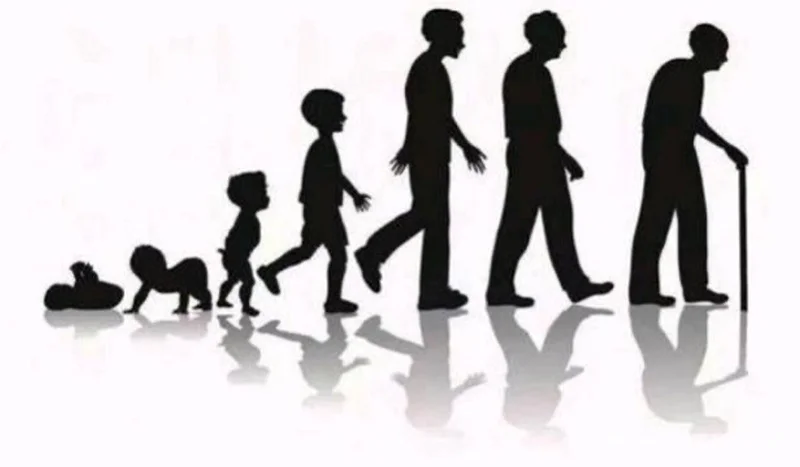
Buddhism is renowned for its profound insights into ageing and decay, known as jara in Pali. Through its teachings and practices, Buddhism cultivates the wisdom and mental clarity necessary to accept and prepare for the inevitability of ageing. The formula jati paccayaā jaraāmaranaṃ translates to “dependent on birth arise ageing and death,” clearly illustrating that birth inevitably leads to ageing and death, accompanied by sorrow, lamentation, pain, grief, and despair. Without birth, there would be no ageing and death. Therefore, ageing is a fundamental aspect of suffering as outlined in the Four Noble Truths.
Buddhism encourages us to confront the realities of ageing, illness, and mortality head-on. Old age is recognised as an unavoidable aspect of dukkha (suffering). Old age is fundamentally and inextricably entwined with the concept of impermanence(annicca), serving as the most visible, undeniable evidence that all conditioned things are in a state of flux and decay. Ageing, illness and death create in us an awareness not only of dukkha but also impermanence. The Buddha taught, “I teach suffering and the way out of suffering.” Here, “suffering” encompasses not only physical pain but also the profound discomfort that arises when our attempts to escape or remedy pain stemming from old age are thwarted. Instead of fearing old age, Buddhists are encouraged to embrace it, release attachments to youth, and cultivate wisdom, gratitude, and inner peace.
Ageing is a complex process shaped by both genetic and environmental factors. From a Buddhist viewpoint, we should perceive the body realistically. Fundamentally, the human body can be seen as a vessel of impurities, subject to old age, disease, decay, and death. The natural process of ageing is gradual, irreversible, and inevitable. Every individual must ultimately come to terms with the reality of growing old, as change is an essential fact of life.
In Buddhism, impermanence (anicca) holds a central position. Everything that exists is unstable and transient; nothing endures forever—including our bodies and all conditioned phenomena. Thus, anicca, dukkha, and anattaā (non-self or selflessness) are the three characteristics common to all conditioned existence. The reality of impermanence can often evoke pain, yet a wise Buddhist fully understands and appreciates this simple yet profound truth.
The Greek philosopher Heraclitus encapsulated this notion when he stated, “No man ever steps in the same river twice, for it is not the same river, and he is not the same man.” Old age was one of the four sights that prompted Prince Siddhartha Gautama to seek enlightenment, alongside sickness, death, and the wandering ascetic. Coming to terms with these aspects of existence was pivotal in his transformation into the Buddha.
At Sāvatthi, King Pasenadi of Kosala once asked the Buddha, “Venerable sir, is there anyone who is born who is free from old age and death?” The Buddha replied, “Great King, no one who is born is free from ageing and death. Even those affluent khattiyas—rich in wealth and property, with abundant gold and silver—are not exempt from ageing and death simply because they have been born.” This interaction underscores the universal challenge of ageing, transcending societal divisions of wealth or status.
Ageing presents one of the greatest challenges in human experience. Physically, the body begins to deteriorate; socially, we may find ourselves marginalised or discounted, sometimes subtly and sometimes explicitly. Some may encounter dismissal or condescension. Ageism remains one of the most persistent forms of discrimination. The physical and social difficulties associated with ageism can undermine our self-image and sense of self-worth. Common perceptions often portray old age as a stage where the best years are behind us, reducing the remaining years to a form of “bonus years” frequently presented in sentimental or patronising ways.
The suffering associated with ageing can serve as a powerful motivation to engage in practices that directly address this suffering, allowing us to gradually transform it or, at the very least, make it more bearable and manageable. We must recognise that this principle applies equally to our own bodies. The human body undergoes countless subtle changes every moment from the time you are born, never remaining the same even for two consecutive moments, as it is subject to the universal law of impermanence.
Whatever your age. However young-looking you try to remain through external means, the truth is that you are getting older every minute. Every minute, every second, our lives are getting shorter and closer to death. Since you were conceived in your mother’s womb, your life is getting shorter. We see external things going by rapidly, but never reflect on our own lives. No matter what we do, we cannot fully control what happens in our lives or to our bodies. With time, we all develop lines and wrinkles. We become frail, and our skin becomes thinner and drier. We lose teeth. Our physical strength and sometimes our mental faculties decline. In old age, we are subject to multiple diseases.
Many people live under the illusion that the body remains constant and is inherently attractive and desirable. Modern society, in particular, has become increasingly obsessed with the quest for eternal youth and the reversal of the ageing process. Many women feel inadequate about their physical appearance and constantly think about how to look younger and more attractive. Enormous sums of money are spent on cosmetic procedures, skincare, and grooming products to remain presentable and desirable. The global beauty and cosmetics industries thrive on this ideal, often promoting unrealistic standards of beauty and youthfulness. But no amount of products available in the world can truly restore lost youth, as time inevitably leaves its mark.
Therefore, in Buddhism, mindful reflection on ageing and the human body is considered essential for overall well-being. This contemplation provides insight into impermanence as we navigate life. Reflecting on the nature of the body—its true condition and its delicate, changing state—is a fundamental aspect of the Buddha’s teachings. By understanding the body accurately, we support both wisdom and peace of mind.
Buddhism recognises forty subjects of meditation which can differ according to the temperaments of persons. Contemplation of the human body is one of them. Of all the subjects of meditation, reflection on the human body as a subject is not popular among certain people particularly in the western world as they think such contemplation would lead to a melancholic morbid and pessimistic outlook on life. They regard it as a subject that may be somewhat unpleasant and not conducive to human wellbeing. Normally, people who are infatuated and intoxicated with sensual pleasures develop an aversion towards this subject of meditation. In Buddhism this mode of contemplation is called asuba bhavana or mindfulness of the impurities of the body. It is all about our physiology and individual body parts and organs internal as well as external. This subject of meditation is unique to the Buddhist teachings.
To appreciate the body as it truly is, we must set aside preconceived notions and engage in a calm and honest inquiry: Is this body genuinely attractive or not? What is it composed of? Is it lasting or subject to decay?
In embracing the teachings of Buddhism, we find the wisdom to navigate the journey of ageing with grace, transforming our understanding of this natural process into an opportunity for growth and acceptance.
When our fears centre on ageing, decay, and disease, we cannot overcome them by pretending they do not exist. True relief comes only from facing these realities directly.
Reflecting on the body’s unattractive and impermanent nature can help us gain a realistic perspective. In an age when the mass media constantly bombards people with sensual images, stimulating lust, greed, and attachment, contemplation of the body’s true nature can bring calm and clarity.
All beings that are born must eventually die. Every creature on earth, regardless of status, shares this common fate. After death, the body undergoes a series of biological changes and decomposes, returning to the earth as organic matter. It is part of the earth and ultimately dissolves back into it.

Understanding this, we can meet ageing, decay, and death with greater wisdom, less fear, and a deeper sense of peace.
by Dr. Justice Chandradasa Nanayakkara
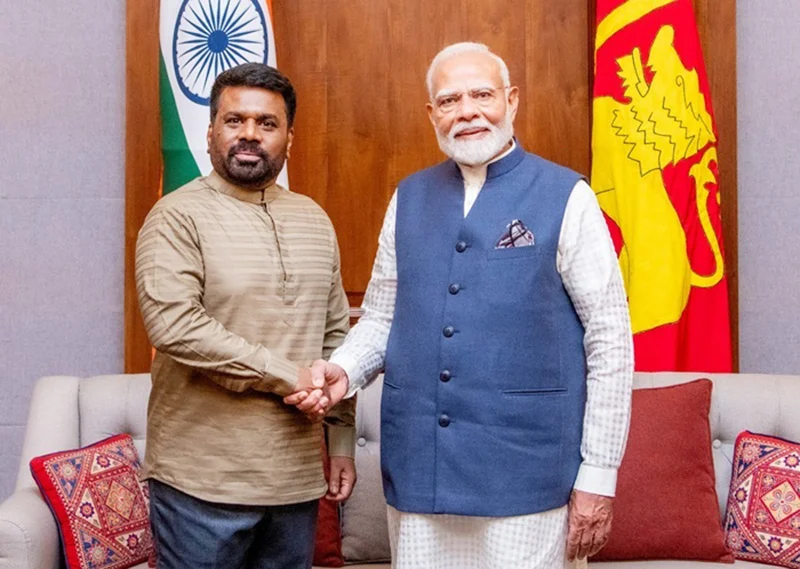
Indian Prime Minister Narendra Modi once again signaled the priority India places on Sri Lanka by swiftly dispatching a shipload of petrol following a telephone conversation with President Anura Kumara Dissanayake. The Indian Prime Minister’s gesture came at a cost to India, where there have been periodic supply constraints and regional imbalances in fuel distribution, even if not a countrywide shortage. Under Prime Minister Modi, India has demonstrated to Sri Lanka an abundance of goodwill, whether it be the USD 4 billion it extended in assistance to Sri Lanka when it faced international bankruptcy in 2022 or its support in the aftermath of the Ditwah cyclone disaster that affected large parts of the country four months ago. India’s assistance in 2022 was widely acknowledged as critical in stabilising Sri Lanka at a moment of acute crisis.
This record of assistance suggests that India sees Sri Lanka not merely as a neighbour but as a partner whose stability is in its own interest. In contrast to Sri Lanka’s roughly USD 90 billion economy, India’s USD 4,500 billion economy, growing at over 6 percent, underlines the vast asymmetry in economic scale and the importance of Sri Lanka engaging India. A study by the Germany-based Kiel Institute for the World Economy identifies Sri Lanka as the second most vulnerable country in the world to severe food price surges due to its heavy reliance on imported energy and fertilisers. Income per capita remains around the 2018 level after the economic collapse of 2022. The poverty level has risen sharply and includes a quarter of the population. These indicators underline the urgency of sustained economic recovery and the importance of external partnerships, including with India.
It is, however, important for Sri Lanka not to abdicate its own responsibilities for improving the lives of its people or become dependent and take this Indian assistance for granted. A long unresolved issue that Sri Lanka has been content to leave the burden to India concerns the approximately 90,000 Sri Lankan refugees who continue to live in India, many of them for over three decades. Only recently has a government leader, Minister Bimal Rathnayake, publicly acknowledged their existence and called on them to return. This is a reminder that even as Sri Lanka receives support, it must also take ownership of its own unfinished responsibilities.
Missing Investment
A missing factor in Sri Lanka’s economic development has long been the paucity of foreign investment. In the past this was due to political instability caused by internal conflict, weaknesses in the rule of law, and high levels of corruption. There are now significant improvements in this regard. There is now a window to attract investment from development partners, including India. In his discussions with President Dissanayake, Prime Minister Modi is reported to have referred to the British era oil storage tanks in Trincomalee. These were originally constructed to service the British naval fleet in the Indian Ocean. In 1987, under the Indo Lanka Peace Accord, Sri Lanka agreed to develop these tanks in partnership with India. A further agreement was signed in 2022 involving the Ceylon Petroleum Corporation and the Lanka Indian Oil Corporation to jointly develop the facility.
However, progress has been slow and the project remains only partially implemented. The value of these oil storage tanks has become clearer in the context of global energy uncertainty and tensions in the Middle East. Energy analysts have pointed out that strategic storage facilities can provide countries with greater resilience in times of supply disruption. The Trincomalee tanks could become a significant strategic asset not only for Sri Lanka but also for regional energy security. However, historical baggage continues to stand in the way of Sri Lanka’s deeper economic linkage with India. Both ancient and modern history shape perceptions on both sides.
The asymmetry in size and power between the two countries is a persistent concern within Sri Lanka. India is a regional power, while Sri Lanka is a small country. This imbalance creates both opportunities for partnership and anxieties about overdependence. The present government too has entered into economic and infrastructure agreements with India, but many of these have yet to move beyond initial stages. This has caused frustration to the Indian government, which sees its efforts to support Sri Lanka’s development as not being sufficiently appreciated or effectively utilised. From India’s perspective, delays and hesitation can appear as a lack of commitment. From Sri Lanka’s perspective, caution is often driven by domestic political sensitivities and concerns about sovereignty.
Power Imbalance
At the same time, global developments offer a cautionary lesson. The behaviour of major powers in the contemporary international system shows that states often act in their own interests, sometimes at the expense of smaller partners. What is being seen in the world today is that past friendships and commitments can be abandoned if a bigger and more powerful country can see an opportunity for itself. The plight of Denmark (Greenland) and Canada (51st state) give disturbing messages. Analysts in the field of International Relations frequently point out that power asymmetries shape outcomes in bilateral relations. As one widely cited observation by Lord Parlmeston, a 19th century prime minister of Great Britain is that “nations have no permanent friends or allies, they only have permanent interests.” While this may be an overly stark formulation, it captures an underlying reality that small states must navigate carefully.
For Sri Lanka, this means maintaining a balance. It needs to clearly acknowledge the partnership that India is offering in the area of economic development, as well as in education, connectivity, and technological advancement. India has extended scholarships, supported digital infrastructure, and promoted cross border links that can contribute to Sri Lanka’s long term growth. These are tangible benefits that should not be undervalued. At the same time, Sri Lanka needs to ensure that it does not become overly dependent on Indian largesse or drift into a position where it functions as an appendage of its much larger neighbour. Economic dependence can translate into political vulnerability if not carefully managed. The appropriate response is not to distance itself from India, but to broaden its partnerships. Engaging with a diverse range of countries and institutions can provide Sri Lanka with greater autonomy and resilience.
A hard headed assessment would recognise that India’s support is both genuine and interest driven. India has a clear stake in ensuring that Sri Lanka remains stable, prosperous, and aligned with its broader regional outlook. Sri Lanka needs to move forward with agreed projects such as the Trincomalee oil tanks, improve implementation capacity, and demonstrate reliability as a partner. This does not preclude it from actively seeking investment and cooperation from other partners in Asia and beyond. The path ahead is therefore one of balanced engagement. Sri Lanka can and should welcome India’s partnership while strengthening its own institutions, fulfilling its domestic responsibilities, and diversifying its external relations. This approach can transform a relationship shaped by asymmetry into one defined by mutual benefit and confidence.
by Jehan Perera

Amelia Kerr hits 139-ball 179* as New Zealand pull off record chase to level series

Punjab Kings fined for slow over-rate

Ice-cool Connolly leads nervy Punjab Kings home on IPL debut

Showers expected in the Western, Sabaragamuwa and Southern provinces in the evening or night

Heat Index at Caution Level in the Western, Sabaragamuwa, Southern, Eastern, North-western, Northern and North-central provinces and in Monaragala district

Urea shortage threatens Yala harvest: Experts

‘Dates have the highest sugar content to fight Coronavirus’

Sunday Island 27 December – Headlines

#SundayIsland 17th December – Headlines

Sunday Island – 28th March

Sunday Island Headlines – 21 March

Sunday Island – 21st February – Headlines
-

 Features5 days ago
A World Order in Crisis: War, Power, and Resistance
-

 News6 days ago
Energy Minister indicted on corruption charges ahead of no-faith motion against him
-

 News7 days ago
US dodges question on AKD’s claim SL denied permission for military aircraft to land
-

 Business7 days ago
Dialog Unveils Dialog Play Mini with Netflix and Apple TV
-

 Sports6 days ago
SLC to hold EGM in April
-

 Opinion6 days ago
When elephants fight, it is the grass that suffers
-
 Latest News6 days ago
A strong Technical and Vocational Education and Training (TVET) system equips individuals with practical, relevant, and future-oriented skills helping to innovate responsibly towards a greener and sustainable future – PM
-

 Features6 days ago
Lest we forget