
Business
Pan Asia Bank partners global bank to launch unique gold loan solution

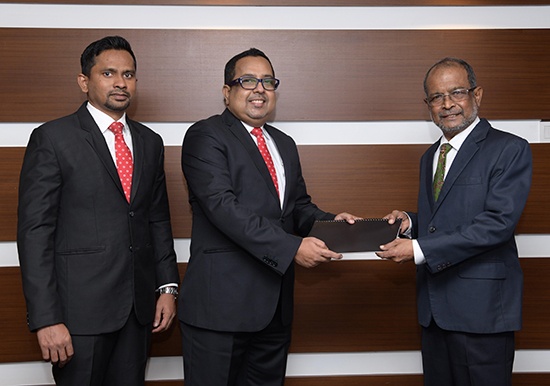
Pioneering another innovation in Sri Lanka’s banking industry, Pan Asia Bank has launched a superior Gold Loan product in partnership with a reputed global bank, which is a unique solution to protect the asset value of customers in fluctuating market conditions. Along with its global banking partner, Pan Asia Bank has devised this new product to take away the risk of asset devaluation due to market fluctuations. As a Truly Sri Lankan bank, Pan Asia Bank understands the customer point of view which is why it is offering this unique product proposition for the first time ever in Sri Lanka.
Gold loans have traditionally been a preferred mode of accessing loans by a wide swathe of customers but the volatility in gold prices in recent years has made this a risky proposition for both borrowers and lenders. Pan Asia Bank’s new proposition stabilizes uncertainty in gold prices, enabling the Bank to offer a higher value to customers whilst also protecting the asset value of their gold. With this unique Gold Loan product, Pan Asia Bank synergizes its decades-long experience in the industry and in-depth knowledge of consumers with the expertise of the leading global bank for a product that has been absent in the market, thereby effectively rendering gold loans a safe haven product.
Pan Asia Bank’s new gold loan is the first such product in the history of Sri Lanka’s banking sector. This innovative solution is also in line with the regulator’s vision to see local banks using more derivative options.



Samagi Spice Exports (Pvt) Ltd is set to introduce SPICEUP, a new Sri Lankan beverage brand, at its grand launch on Saturday 17 October 2026 at the University of Ruhuna, Matara.
With a history dating back to 1969, Samagi Spice is taking a new step in its business journey by expanding beyond traditional spice exports into value added consumer products.
Through SPICEUP, the company aims to connect Sri Lanka’s internationally recognized cinnamon heritage with contemporary beverage innovation, creating a distinctive identity in the country’s beverage market.
The SPICEUP range will feature a variety of products, including Original, Cream Soda, Power, GO, Cool, Burn, Memo+ and Zingy. Designed to offer consumers a range of refreshment experiences, the products will be available in two packaging formats: cans and plastic bottles, catering to different consumer preferences and occasions.
At the heart of the initiative is the potential of true Ceylon cinnamon as a value-added ingredient in the beverage industry. Rather than limiting cinnamon to its traditional uses, SPICEUP seeks to explore new opportunities for bringing this iconic Sri Lankan spice into everyday consumer experiences.
The initiative also highlights the broader potential of transforming the country’s agricultural resources into innovative products with commercial value.
The launch ceremony will be attended by legendary Sri Lankan cricketer Sanath Jayasuriya as the Chief Guest, alongside representatives from the Export Development Board (EDB), Industrial Development Board (IDB), Cinnamon Research Academy and other industry stakeholders.
A major highlight of the occasion will be the official unveiling of the SPICEUP product range, followed by the launch of the brand’s official website. The event will also feature the signing of a Memorandum of Understanding (MoU) between Samagi Spice Exports and the University of Ruhuna, marking an important step towards strengthening collaboration between industry and academia.
The proposed collaboration will provide a platform for future research, product innovation and value addition involving true Ceylon cinnamon. By bringing together business expertise and university-based knowledge, the initiative aims to support the development of innovative, value-added products and contribute to Sri Lanka’s potential in international markets.
With its roots in the country’s spice industry and its ambitions in the beverage sector, SPICEUP is poised to begin a new chapter in Samagi Spice’s journey—one that seeks to bring the distinctive identity of Ceylon cinnamon to a new generation of consumers.

Business
Indian business leader urges SL entrepreneurs to tap into India’s rapidly expanding consumer market


By Sanath Nanayakkare
Speaking at the Sri Lanka Economic and Investment Summit 2026, T. Krishnakumar, Chief Executive Officer of Reliance Consumer Products Ltd (RCPL), emphasised that local enterprises can unlock substantial economic benefits by strategically aligning with India’s booming consumer base.
Addressing business leaders and policymakers at the Shangri-La Hotel in Colombo, Krishnakumar highlighted that geographical proximity and rich cultural ties provide a natural foundation for deeper commercial collaboration.
He noted that instead of viewing bilateral trade narrowly, regional partnerships should act as conduits to build robust, scalable enterprises capable of plugging into wide-reaching regional value chains.
“For Sri Lankan exporters dealing in traditional staples as well as value-added goods, accessing India’s rising middle class presents a phenomenal growth window,” he said.
Drawing insights from Reliance Consumer Products’ rapid expansion – which scaled efficiently to thousands of employees and multi-billion-dollar metrics – Krishnakumar stressed that modern corporate success relies on disciplined execution, localised consumer understanding, and smart technology integration.
Furthermore, he underscored that while rapid growth is critical, businesses must consistently anchor their models in affordability and consumer trust.
Concluding his address at the summit, the RCPL chief noted that pairing regional trade integration with resilient business practices and predictable regulatory frameworks will be vital as Sri Lanka transitions firmly toward accelerated economic development.
Addressing the Summit during a subsequent fireside chat, President Anura Kumara Dissanayake underscored that a core concern currently being targeted by the government is developing a critical mass of local entrepreneurs equipped to engage with international enterprise counterparts.
Business
SriLankan Airlines wins prestigious SATA 2026 Visitors’ Choice Award for Leading International Airline

SriLankan Airlines has once again been honoured with the prestigious Visitors’ Choice Award for Leading International Airline at the South Asian Travel Awards (SATA) 2026, reaffirming its continued recognition in the regional travel and tourism industry. The airline, which has received this award in previous years, was the only international airline to be recognised in this category at this year’s event. The 10th anniversary edition of the awards ceremony was held earlier this month at Hotel Barcelo Nasandhura in Male, Maldives.
Recognised as one of the key events on the Maldivian tourism and travel industry calendar, SATA celebrated its 10th anniversary on a grand scale, bringing together prominent industry stakeholders, including Government Ministers, distinguished dignitaries, diplomats and senior representatives from leading airlines and their respective head offices.
Commenting on the achievement, Dimuthu Tennakoon, Head of Commercial, SriLankan Airlines, stated, “We are honoured to receive this recognition at the South Asian Travel Awards 2026. Being named the Leading International Airline in the Visitors’ Choice Awards once again is a meaningful acknowledgement of our commitment to serving our passengers and strengthening our presence in the region. This award inspires us to continue enhancing the travel experience we offer and to build stronger connections with the markets and communities we serve.”
Complementing its commitment to service excellence, SriLankan Airlines offers an extensive flight network with convenient connections to destinations across the globe. In South Asia, the airline operates nearly 130 flights each week to 15 destinations across India, Pakistan, the Maldives, Nepal, and Bangladesh. With schedules thoughtfully designed to suit the needs of travellers, SriLankan Airlines provides seamless connectivity for those visiting Colombo for business or leisure, as well as passengers travelling onwards to destinations worldwide.

Iyer to lead in last two New Zealand ODIs, Kushagra earns maiden call-up

Pope pictured for first time since surgery and cancer diagnosis

Qatar announces ‘massive’ solar plant project in Lebanon

Samagi Spice Exports to launch Ceylon Cinnamon based beverage range

Asian Cup in Saudi Arabia could be postponed by a year amid Houthi attacks

Houthi missile attack on Yemeni presidential palace kills five, minister says

‘Dates have the highest sugar content to fight Coronavirus’

Sunday Island 27 December – Headlines

#SundayIsland 17th December – Headlines

Sunday Island – 28th March

Sunday Island Headlines – 21 March

Sunday Island – 21st February – Headlines
-

 News6 days ago
Sri Lanka escalates anti-graft drive with Shiranthi’s jailing
-

 News7 days ago
NPP govt. reminded of its responsibilities as US warship leaves Colombo
-

 Latest News5 days ago
Farhan and Sadaqat help Pakistan seal series in style
-

 News6 days ago
Iranian ships stranded, Lanka fears US sanctions
-

 Latest News4 days ago
Nissanka’s return headlines Sri Lanka’s Test squad against Pakistan
-

 News7 days ago
Interdicted top House official Kularatne receives special recognition in Mexican Parliament
-

 Features5 days ago
Intake 16: 45 years of duty and honour
-

 News5 days ago
Malwathu Chapter issues statement on talks with President over Gnanasara Thera’s robes