
Features
Our Political Insanity


by Geewananda Gunawardana
The most relatable definition of being insane is given in the following quote: “doing the same thing over and over and expecting different results.” It has been attributed to the great thinker Albert Einstein, but no definitive proof has been found. Whatever the origin may be, why should it be relatable to us? Because there is every indication that we, as a nation, are on the verge of being the mascot for this famous quote in the way we are heading into the upcoming elections. Regardless of the polling data, it can be assured that there is a sizable segment of the voting age population that is committed to proving that they did not learn a thing from their past mistakes.
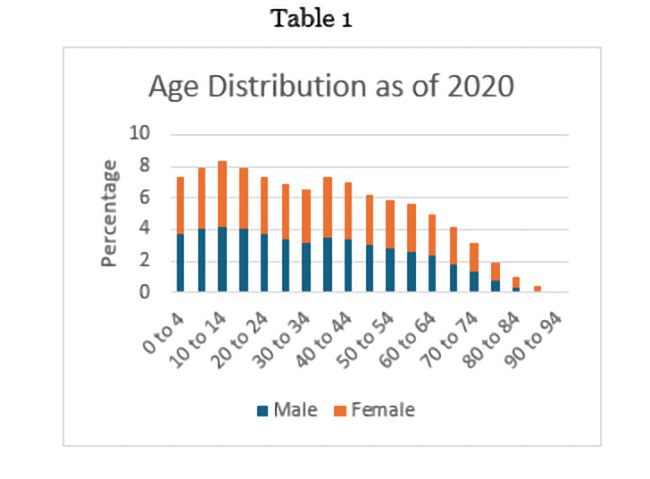
To put this situation in perspective, it is necessary to look at the current demographics of the country (Table 1). There are two key pieces of information: 78 % of the population has become eligible to vote, and it is estimated that a minimum of one million new voters will be casting their votes in this election. At the same time the median age of the population has reached 33.1 years, the highest in recorded history; for comparison, it was 18.5 years in 1965. Given the voting age is eighteen, it means that the proportion of young people who have a say in their destiny is much larger today than in 1965. This is a good thing for two reasons: it is this half of the population that will bear the brunt of the consequences of past mistakes and, for that reason alone, they should take a lead in the decision-making process, not the aging population that has let us down. The positive aspect is that based on the events in 2022, it is fair to assume that the young voters have learned from the past mistakes, and they will not let the outmoded and outdated continue the path to ruination. However, the young alone cannot turn this ship around as they constitute only one fifth of the voting population. Will the remaining four fifths come to their senses or fall for the same old trickery: false promises, divisive rhetoric, and trinkets?
Are the would-be saviours of the nation telling us the truth, or are they trying to deceive us once more and continue to plunder the nation’s wealth for the benefit of their own kith and kin? When they bring up divisive issues to get votes, do they realize that the mismanagement of the economy is the root cause of all our problems? Do they have realistic plans to save the country or are they just fairy tales? Can we trust them to keep their promises once in power? Are we sane enough to see fiction from facts? So many questions begging for answers before we go check the box.
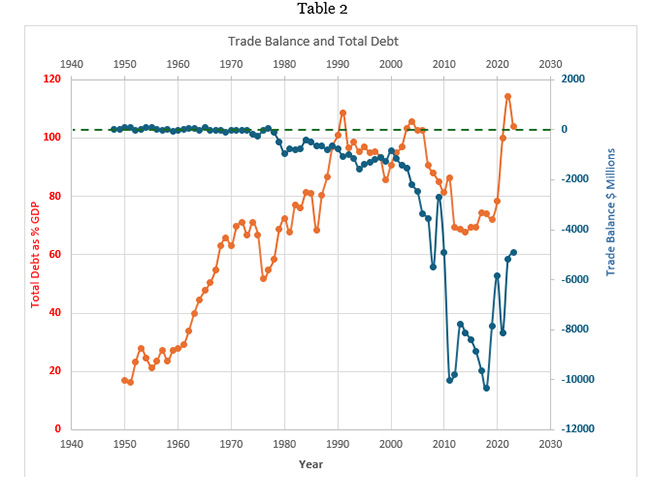
The year it gained independence, Sri Lanka had a trade surplus of $ 5.1 million ($65.5 million in today’s money), i.e., the value of country’s exports was more than the cost of imports. It fluctuated on the plus side till 1957. From there on it has gone into negative territory, except for the year 1977 when it reported a surplus of $ 60.5 million. Starting from 1991, the trade deficit had been in billions; and has grown to $ 10.3 billion by 2018, the worst year so far. Naturally, the country had to take loans to bridge this gap, and by the first quarter of 2024, the government debt has ballooned to an estimated $ 100,184 million (57% domestic, 37% external, and 6% guaranteed loans).
One does not need an economic degree to see what has happened. If my living expenses are more than I earn, I have two options: change my lifestyle and reduce the expenses or find an additional income. On the other hand, if I borrow money to cover the difference, I must make sure that there is a way to pay off the debt, including the principal and the interest. It should be noted that the interest alone can end up being higher than the principle depending on the interest rate and how long it takes to pay off the loan. It is quite legitimate to borrow money to invest in a business or other income generating programms. If I borrow, I must make sure to invest it in an income generating venture or on a marketable asset. I must also ensure that I will get enough income not only to pay the interest regularly and pay off the loan at a designated date, while supporting the improved lifestyle I desired. Otherwise, I will end up selling whatever assets I have, land, jewelry, etc., and end up in a situation worse than before. When it is a country, the assets are the harbours, oil tanks, natural resources, or the right to exploit the innocent. Sounds familiar? There is nothing wrong with borrowing, provided it is done responsibly; in fact, lending and borrowing are essential for economic growth, stability, and efficient resource allocation. Then the hundred-billion-dollar question is what did the country do with that borrowed money?
Was the money borrowed by Sri Lanka spent on failed or poorly managed businesses, spent on non-income generating luxuries, or stolen? Since year 1960, the country’s gross national product rate had stagnated around 4.2%. This means two things, obviously the borrowed money was not invested in improving the GDP at the desired rate. If money was borrowed at interest rates higher than 4.2%, then there is no way we could have afforded to pay off the debt. During the first two to three decades after independence, there had been a concerted effort to increase the manufacture of essential commodities and consumer goods locally.
A large number of state-owned enterprises were started, and policies that supported local industries were put in place. Not only essentials such as sugar, flour, and dairy products but also radios and cars were produced locally. Thanks to these efforts, the borrowing as a percentage of GDP was reduced and a trade surplus was reported for the years 1961 – 1963, and in 1977 (Table 2). Those interested in pragmatic economic policy should examine the policies in place that led to these two events that have become anomalies in Sri Lankan economic history. If such policies were allowed to continue, would the country be in a different place is anyone’s guess. Sadly, those who were instrumental in such visionary policies are no longer with us.
The country has not been able to recover from the dramatic downturn of the regressive trend started in 1977; pandits have analysed the minutia of the policy and politics that resulted in this downfall of both economic and social conditions. The state-owned enterprises have become hunting grounds of political cronies and are draining the nation’s coffers instead of adding to it. So do some of the infrastructure projects. However, the luxuries available to some have created the illusion of a flourishing economy despite the human tragedy unfolding behind that façade. The mantra is that being poor is bad karma, and economic policies and mismanagement have nothing to do with it: join the bandits!
The working people of the country have done their part to keep the GDP moving in the right direction despite enormous obstacles. But has their lot improved over the years? One can argue both ways. Sri Lanka’s quality of life had been higher than most other Asian neighbours; if that is the case, did we spend our borrowed money to improve our living equitably? People have more radios, phones, and refrigerators than they did in the sixties, but the disparity between haves and have nots has got worse over the same period. The so-called free education and free healthcare have become a mockery. On top of that, 37 % of tax money is used to bail out failing state own enterprises. That is equivalent to about Rs. 34,000 per person a year.
They may have more cell phones and TVs than ever, but if the quality-of-life of Sri Lankans have improved is another question. Do they reap the benefits of their hard work or have their purchasing power improved are other ways to look at it? Several indices used to measure it say no. The Gini index has gone from 3.9 to 5.1 over the last three decades. Gini is an indication of the income distribution: a value of zero means perfect income distribution while ten means complete polarization. According to the UNDP Regional Human Development Report – 2023, the richest one percent of Sri Lankans own 31 percent of the total personal wealth, while the bottom 50 percent only owns less than 4 percent of the overall wealth in the country. In simple terms, the rich got richer, and the poor got poorer. The middle class has shrunk: the poverty rate has gone from 11% to 26%. According to a survey, the happiest country in the world scored 7.7 while the unhappiest country scored 1.7 in the scale used; that is assuming happiness can be quantified. Sri Lanka scored 3.9; no wonder that those who can are fleeing.
While the bottom fifty percent is struggling to have one meal a day, skip medications and treatment, pawn their possessions to pay for education, and suffer and get humiliated in public transport, there is a class that feast on imported top notch food and drinks, go to Singapore for medical treatment, send their kids to private or overseas institutions, and drive the most luxurious vehicles available. Did they earn such wealth by legitimate means? Was it at the expense of the wretched housemaids in the mid-East or the near starving working people? Was the borrowed money stolen?
There is no argument that all this is the fault of those who governed the country during this steady decline, and the bureaucrats that aided and abated their misdeeds. The most important thing for the people to decide at this critical juncture is to identify the people who committed this crime against the country and do everything possible to stop them from ever again coming into power. With the habitual crossing of party lines and forming dubious coalitions, which is done solely for the proverbial saving their own skin, it has become increasingly difficult to identify those culprits. That is why remembering past politics is so important.
Whether the socialist or capitalist policies are suitable for Sri Lanka is a major deciding factor for some. It is true that the socialist system has failed. On the other hand, the capitalist system is not without its problems. For example, in 2023, the US debt to GDP ratio was 123%; that is not sustainable, and it will burst someday. What is more, whatever you call it, the Sri Lankan system has not worked either. Sri Lanka must find its own economic policy to suit its own conditions. They will say that China is a communist country, but they fail to recognise that it has a socialist market economy. As of July 2024, China has the second-largest economy in the world by nominal GDP, behind the United States. In 2024, China’s GDP was around $18.5 trillion, compared to the US’s GDP of almost $29 trillion. However, when measured by purchasing power parity (PPP), which accounts for price level differences between countries, China’s GDP has been larger than that of the US since 2016. Do our politicians and bureaucrats have the wisdom to find out what works for us rather than clinging to extremes and pointing fingers at the other? Isn’t our culture supposed to be shaped by the Middle Path?
The data provided in Table 2 has a wealth of information relevant to this topic. If one examines when the ups and downs of the two indices took place, it is not difficult to identify what policies could have worked if allowed to continue. That will also show who plundered the wealth, exploited the hard-working people, and pawned the nation’s future.
The immediate task at hand for the voters is to stop the culprits of the ruination and their henchmen from returning to power. If we do not select the right path, it is the younger generation that will end up paying for the crimes committed by their elders for decades. This is our rightful opportunity to bring about the changes we demand and deserve; it is our civic duty. If we neglect that sacred obligation to the country, we the voters will be as complicit as the wrong doers. The choices may be limited, and the options may not be perfect. Beggars cannot be choosers, and our situation is diabolical. One thing is certain, giving power to the same corrupt lot again is nothing but insanity.



 ‘Adapt, shrink or die’ – thus runs the warning issued by the Trump administration to UN humanitarian agencies with brute insensitivity in the wake of its recent decision to drastically reduce to $2bn its humanitarian aid to the UN system. This is a substantial climb down from the $17bn the US usually provided to the UN for its humanitarian operations.
Considering that the US has hitherto been the UN’s biggest aid provider, it need hardly be said that the US decision would pose a daunting challenge to the UN’s humanitarian operations around the world. This would indeed mean that, among other things, people living in poverty and stifling material hardships, in particularly the Southern hemisphere, could dramatically increase. Coming on top of the US decision to bring to an end USAID operations, the poor of the world could be said to have been left to their devices as a consequence of these morally insensitive policy rethinks of the Trump administration.
Earlier, the UN had warned that it would be compelled to reduce its aid programs in the face of ‘the deepest funding cuts ever.’ In fact the UN is on record as requesting the world for $23bn for its 2026 aid operations.
If this UN appeal happens to go unheeded, the possibilities are that the UN would not be in a position to uphold the status it has hitherto held as the world’s foremost humanitarian aid provider. It would not be incorrect to state that a substantial part of the rationale for the UN’s existence could come in for questioning if its humanitarian identity is thus eroded.
Inherent in these developments is a challenge for those sections of the international community that wish to stand up and be counted as humanists and the ‘Conscience of the World.’ A responsibility is cast on them to not only keep the UN system going but to also ensure its increased efficiency as a humanitarian aid provider to particularly the poorest of the poor.
It is unfortunate that the US is increasingly opting for a position of international isolation. Such a policy position was adopted by it in the decades leading to World War Two and the consequences for the world as a result for this policy posture were most disquieting. For instance, it opened the door to the flourishing of dictatorial regimes in the West, such as that led by Adolph Hitler in Germany, which nearly paved the way for the subjugation of a good part of Europe by the Nazis.
If the US had not intervened militarily in the war on the side of the Allies, the West would have faced the distressing prospect of coming under the sway of the Nazis and as a result earned indefinite political and military repression. By entering World War Two the US helped to ward off these bleak outcomes and indeed helped the major democracies of Western Europe to hold their own and thrive against fascism and dictatorial rule.
Republican administrations in the US in particular have not proved the greatest defenders of democratic rule the world over, but by helping to keep the international power balance in favour of democracy and fundamental human rights they could keep under a tight leash fascism and linked anti-democratic forces even in contemporary times. Russia’s invasion and continued occupation of parts of Ukraine reminds us starkly that the democracy versus fascism battle is far from over.
Right now, the US needs to remain on the side of the rest of the West very firmly, lest fascism enjoys another unfettered lease of life through the absence of countervailing and substantial military and political power.
However, by reducing its financial support for the UN and backing away from sustaining its humanitarian programs the world over the US could be laying the ground work for an aggravation of poverty in the South in particular and its accompaniments, such as, political repression, runaway social discontent and anarchy.
What should not go unnoticed by the US is the fact that peace and social stability in the South and the flourishing of the same conditions in the global North are symbiotically linked, although not so apparent at first blush. For instance, if illegal migration from the South to the US is a major problem for the US today, it is because poor countries are not receiving development assistance from the UN system to the required degree. Such deprivation on the part of the South leads to aggravating social discontent in the latter and consequences such as illegal migratory movements from South to North.
Accordingly, it will be in the North’s best interests to ensure that the South is not deprived of sustained development assistance since the latter is an essential condition for social contentment and stable governance, which factors in turn would guard against the emergence of phenomena such as illegal migration.
Meanwhile, democratic sections of the rest of the world in particular need to consider it a matter of conscience to ensure the sustenance and flourishing of the UN system. To be sure, the UN system is considerably flawed but at present it could be called the most equitable and fair among international development organizations and the most far-flung one. Without it world poverty would have proved unmanageable along with the ills that come along with it.
Dehumanizing poverty is an indictment on humanity. It stands to reason that the world community should rally round the UN and ensure its survival lest the abomination which is poverty flourishes. In this undertaking the world needs to stand united. Ambiguities on this score could be self-defeating for the world community.
For example, all groupings of countries that could demonstrate economic muscle need to figure prominently in this initiative. One such grouping is BRICS. Inasmuch as the US and the West should shrug aside Realpolitik considerations in this enterprise, the same goes for organizations such as BRICS.
The arrival at the above international consensus would be greatly facilitated by stepped up dialogue among states on the continued importance of the UN system. Fresh efforts to speed-up UN reform would prove major catalysts in bringing about these positive changes as well. Also requiring to be shunned is the blind pursuit of narrow national interests.

 Hi! Great to be back after my Christmas break.
Thought of starting this week with egg white.
Yes, eggs are brimming with nutrients beneficial for your overall health and wellness, but did you know that eggs, especially the whites, are excellent for your complexion?
OK, if you have no idea about how to use egg whites for your face, read on.
Egg White, Lemon, Honey:
Separate the yolk from the egg white and add about a teaspoon of freshly squeezed lemon juice and about one and a half teaspoons of organic honey. Whisk all the ingredients together until they are mixed well.
Apply this mixture to your face and allow it to rest for about 15 minutes before cleansing your face with a gentle face wash.
Don’t forget to apply your favourite moisturiser, after using this face mask, to help seal in all the goodness.
Egg White, Avocado:
In a clean mixing bowl, start by mashing the avocado, until it turns into a soft, lump-free paste, and then add the whites of one egg, a teaspoon of yoghurt and mix everything together until it looks like a creamy paste.
Apply this mixture all over your face and neck area, and leave it on for about 20 to 30 minutes before washing it off with cold water and a gentle face wash.
Egg White, Cucumber, Yoghurt:
In a bowl, add one egg white, one teaspoon each of yoghurt, fresh cucumber juice and organic honey. Mix all the ingredients together until it forms a thick paste.
Apply this paste all over your face and neck area and leave it on for at least 20 minutes and then gently rinse off this face mask with lukewarm water and immediately follow it up with a gentle and nourishing moisturiser.
Egg White, Aloe Vera, Castor Oil:
To the egg white, add about a teaspoon each of aloe vera gel and castor oil and then mix all the ingredients together and apply it all over your face and neck area in a thin, even layer.
Leave it on for about 20 minutes and wash it off with a gentle face wash and some cold water. Follow it up with your favourite moisturiser.
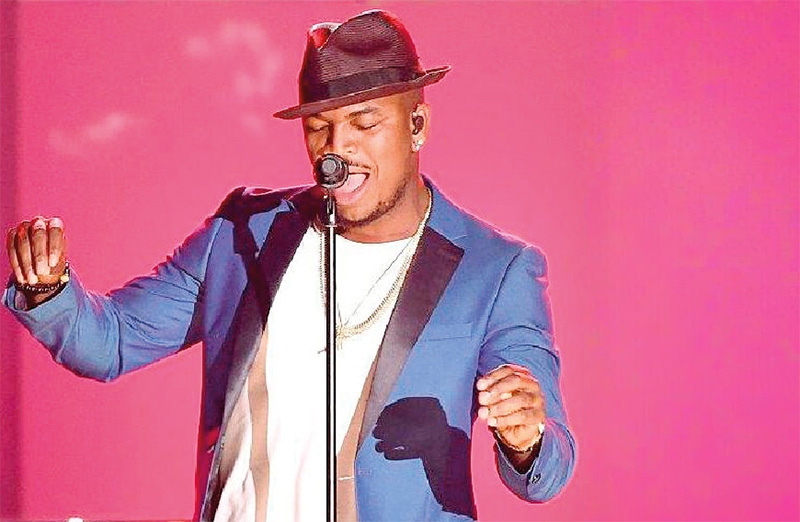
 Superlatives galore were used, especially on social media, to highlight R&B singer Ne-Yo’s trip to Sri Lanka: Global superstar Ne-Yo to perform live in Colombo this December; Ne-Yo concert puts Sri Lanka back on the global entertainment map; A global music sensation is coming to Sri Lanka … and there were lots more!
At an official press conference, held at a five-star venue, in Colombo, it was indicated that the gathering marked a defining moment for Sri Lanka’s entertainment industry as international R&B powerhouse and three-time Grammy Award winner Ne-Yo prepares to take the stage in Colombo this December.
What’s more, the occasion was graced by the presence of Sunil Kumara Gamage, Minister of Sports & Youth Affairs of Sri Lanka, and Professor Ruwan Ranasinghe, Deputy Minister of Tourism, alongside distinguished dignitaries, sponsors, and members of the media.
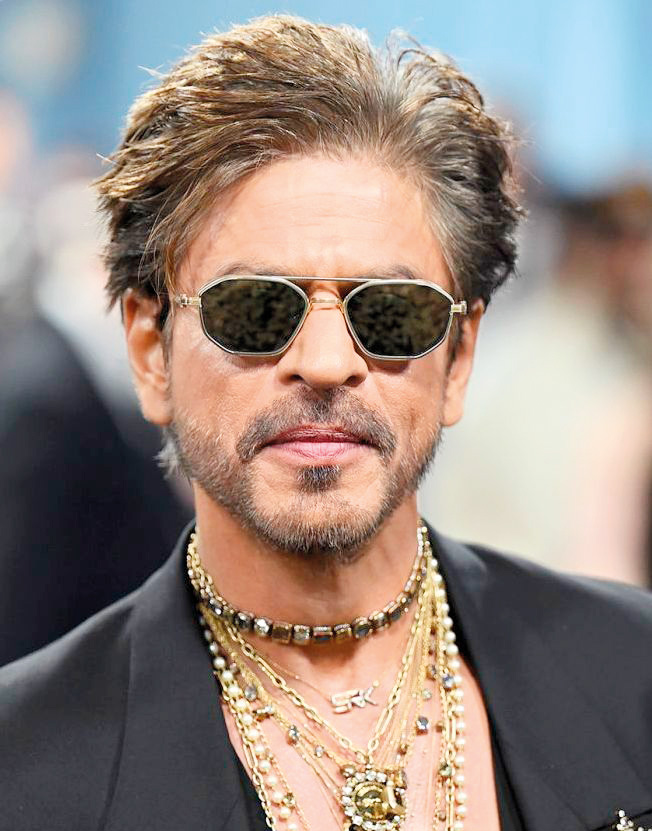
Shah Rukh Khan: Disappointed his fans in Sri Lanka
According to reports, the concert had received the official endorsement of the Sri Lanka Tourism Promotion Bureau, recognising it as a flagship initiative in developing the country’s concert economy by attracting fans, and media, from all over South Asia.
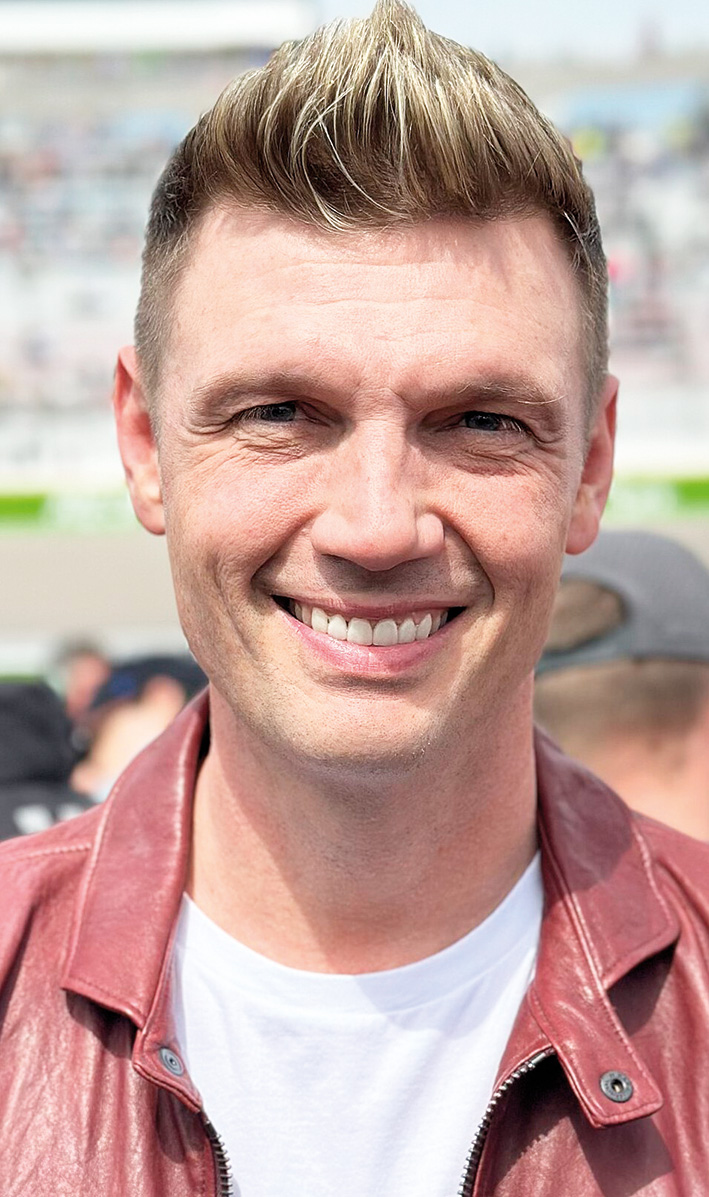
Nick Carter: His concert, too, was cancelled due to “Unforeseen circumstances
However, I had that strange feeling that this concert would not become a reality, keeping in mind what happened to Nick Carter’s Colombo concert – cancelled at the very last moment.
Carter issued a video message announcing he had to return to the USA due to “unforeseen circumstances” and a “family emergency”.
Though “unforeseen circumstances” was the official reason provided by Carter and the local organisers, there was speculation that low ticket sales may also have been a factor in the cancellation.
Well, “Unforeseen Circumstances” has cropped up again!
In a brief statement, via social media, the organisers of the Ne-Yo concert said the decision was taken due to “unforeseen circumstances and factors beyond their control.”
Ne-Yo, too, subsequently made an announcement, citing “Unforeseen circumstances.”
The public has a right to know what these “unforeseen circumstances” are, and who is to be blamed – the organisers or Ne-Yo!
Ne-Yo’s management certainly need to come out with the truth.
However, those who are aware of some of the happenings in the setup here put it down to poor ticket sales, mentioning that the tickets for the concert, and a meet-and-greet event, were exorbitantly high, considering that Ne-Yo is not a current mega star.
We also had a cancellation coming our way from Shah Rukh Khan, who was scheduled to visit Sri Lanka for the City of Dreams resort launch, and then this was received: “Unfortunately due to unforeseen personal reasons beyond his control, Mr. Khan is no longer able to attend.”
Referring to this kind of mess up, a leading showbiz personality said that it will only make people reluctant to buy their tickets, online.
“Tickets will go mostly at the gate and it will be very bad for the industry,” he added.

In pictures: New Year welcomed around the world

Foreign warships commended for their assistance during weather disaster in Sri Lanka

Machu Picchu train crash leaves one dead and dozens injured

I invite you to step into 2026 with renewed energy, hope, and determination – PM

Fairly heavy showers about 75 mm are likely at some places in the Central and Uva provinces and in Batticaloa and Ampara districts

National Audit Office reveals NHSL lapses

‘Dates have the highest sugar content to fight Coronavirus’

Sunday Island 27 December – Headlines

#SundayIsland 17th December – Headlines

Sunday Island – 28th March

Sunday Island Headlines – 21 March

Sunday Island – 21st February – Headlines
-
 News6 days ago
Street vendors banned from Kandy City
-

 Sports3 days ago
Gurusinha’s Boxing Day hundred celebrated in Melbourne
-

 News6 days ago
Lankan aircrew fly daring UN Medevac in hostile conditions in Africa
-
 News1 day ago
Leading the Nation’s Connectivity Recovery Amid Unprecedented Challenges
-

 Sports4 days ago
Time to close the Dickwella chapter
-

 Features6 days ago
Rethinking post-disaster urban planning: Lessons from Peradeniya
-

 Features2 days ago
It’s all over for Maxi Rozairo
-

 Opinion6 days ago
Are we reading the sky wrong?